
Crypto World
Will Ethereum price hit $2.5K as funding rates flip green?

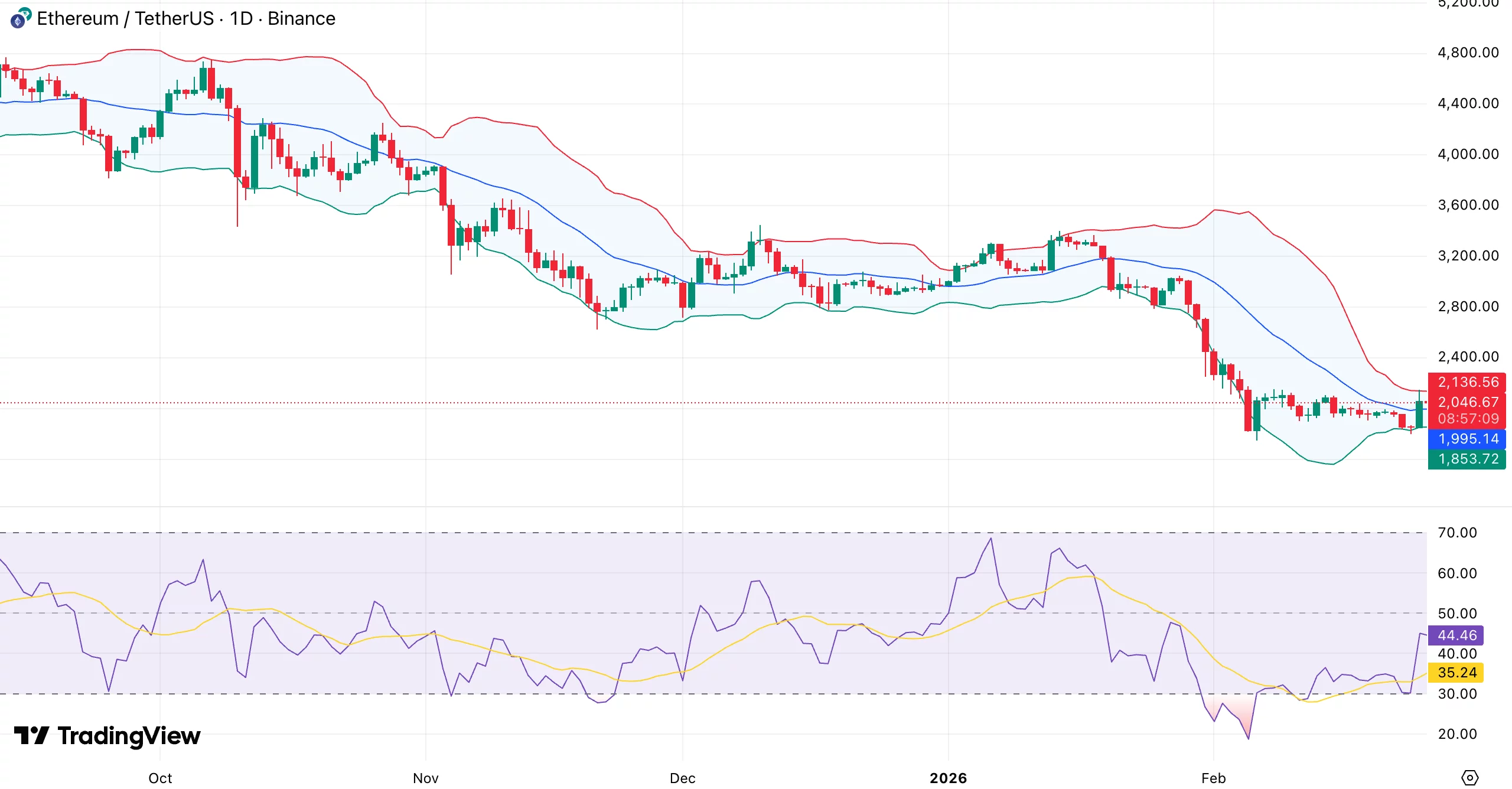
Ethereum price is trying to steady itself after a rough February, but the bigger question is whether this bounce has enough strength to push through the $2,500 ceiling.
Summary
- Ethereum has bounced above $2,000 after a sharp February drop but remains in a broader downtrend and well below the key $2,500 resistance.
- Funding rates on Binance have turned positive, easing short-term downside pressure, though high volatility suggests a bigger move is coming.
- To reclaim $2,500, ETH must hold $2,000 support and break above $2,200 with strong momentum
At press time, ETH was trading near $2,050, up about 3% over the past 24 hours. The move extends a week-long rebound of roughly 9%. Even so, the token is still down 30% over the past month and sits nearly 58% below its August 2025 peak of $4,946.
February started with Ethereum (ETH) trading between $2,200 and $2,400 before sellers took control mid-month. The slide accelerated around Feb. 24–25, when the price dipped toward $1,800. Since then, buyers have stepped back in, lifting the price back above the $2,000 mark.
Volatility spikes to highest level since March 2025
Derivative data shows a notable shift in positioning. According to a Feb. 26 analysis by CryptoQuant analyst PelinayPA, funding rates had remained positive for an extended period earlier this year, indicating that long traders were paying shorts.
Despite that optimism, the price failed to build a consistent rally. More recently, when short positions grew and the price faced pressure, funding went sharply negative.
Binance, which has the biggest share of global derivatives liquidity, often sets the tone during liquidation waves. The short- to mid-term trajectory of Ethereum is often affected by changes in Binance funding.
Funding has now flipped back to positive. This indicates that there is less immediate downside pressure now that many short positions have been cleared. Positive funding, however, does not prove a long-term recovery. The market could experience a long squeeze if it rises too quickly.
In a separate report, analyst Arab Chain revealed that Ethereum’s 30-day realized volatility on Binance has climbed to roughly 0.97, its highest level since March 2025.
Such high volatility often precedes a significant directional move, but if buying and selling pressure is evenly distributed, it can also occur during a prolonged period of sideways trading.
Ethereum price technical analysis
From a chart perspective, ETH is still in a clear daily downtrend, marked by lower highs and lower lows. Price recently bounced after touching the lower Bollinger Band near the $1,850–$1,900 zone. It now trades around $2,050, below key resistance areas.
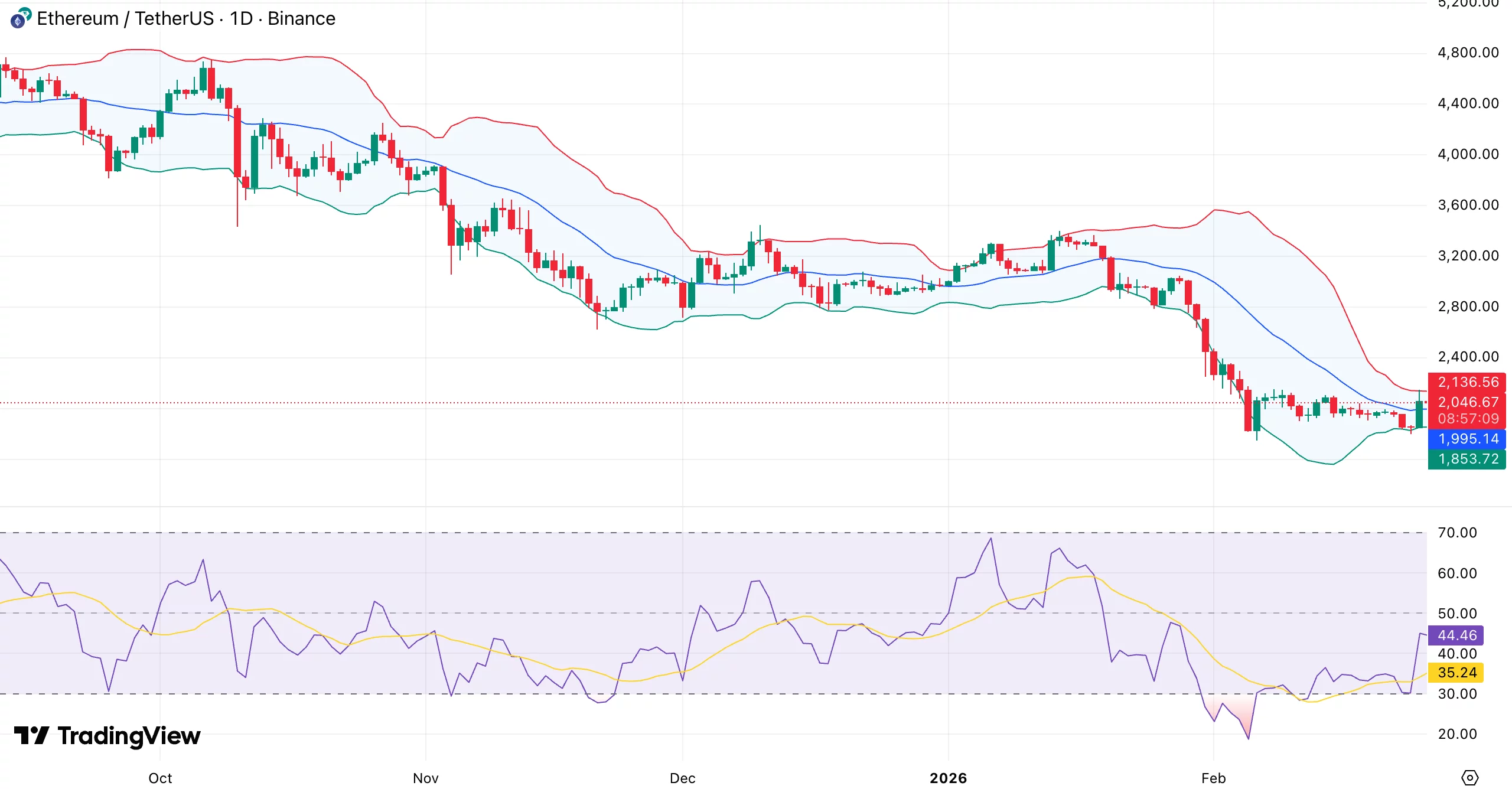
Immediate support sits near $2,000, followed by the recent low between $1,850 and $1,900. On the upside, supply is clustered around $2,130–$2,150, then $2,300–$2,350.
Because it corresponds with a previous breakdown area and has psychological weight, the $2,500 level continues to be the primary structural barrier.
Momentum is improving but not yet decisive. Following a recovery from oversold conditions, the relative strength index is close to 44.
A sustained move above 50 would strengthen the case for a shift in momentum. Bollinger Bands are starting to narrow after widening during the selloff, suggesting a possible attempt at a breakout.
For Ethereum to recover $2,500, it must clear the $2,200 area with substantial volume and maintain above $2,000 to form a higher low. The current move might turn out to be a relief bounce inside a bigger downward structure if there is no follow-through.


TLDR
- Pavel Durov said TON is now 10× faster after its latest blockchain upgrade.
- TON said the mainnet will begin sub-second finality on April 10 through Catchain 2.0.
- Durov said block production increased by 6× and transactions are now instant.
- TON said the faster network will support payments, trades, and Mini Apps inside Telegram.
- Durov said the next planned step will reduce TON transaction fees by
Pavel Durov said on Thursday that TON now processes transactions in about one second. He said the latest network upgrade raised block production and improved transaction speed. TON said the mainnet will gain sub-second finality on April 10 through Catchain 2.0.
TON Upgrade Raises Speed and Cuts Confirmation Time
Durov posted the update on Telegram and called the blockchain “10× faster.” He added, “Block rate increased 6× … Transactions are now instant, subsecond.”
TON said the upgrade already runs, yet the release is also named April 10 for mainnet sub-second finality. That wording placed the rollout details at the center of Thursday’s announcement.
The company said Catchain 2.0 powers the change and cuts confirmation times from about ten seconds. It said faster finality supports instant payments, quicker trades, and responsive Mini Apps.
Telegram uses TON for transactions and for Mini Apps inside its messaging platform. The blockchain operates separately, yet it remains closely linked to Telegram’s ecosystem.
TON said the upgrade targets scale inside Telegram’s user base of more than 1 billion people. It said lower delay makes in-app payments feel like sending a message.
The statement said earlier that confirmation times limited some app behavior inside Telegram. It said some trades and app responses could not feel instant at ten seconds.
Durov described the release as step one of seven in a plan he called MTONGA. He said the next step will cut TON transaction fees by 6×.
Telegram Link and TON Roadmap Remain in Focus
Telegram began work on blockchain tools in 2018 before U.S. regulators challenged the original project. Open-source developers revived the work in 2022 and renamed it The Open Network.
That effort produced TON, which now serves as infrastructure for payments and app activity around Telegram. Thursday’s upgrade marked the network’s latest technical change under that revived project.
TON said more blocks should raise validator rewards and increase staking incentives. It linked those economics to the higher block rate after the upgrade.
The release did not list new fee levels or a date for the planned fee cut. Durov only said the network would target fees that are already low.
The company framed the speed gain as a base for apps that need immediate user responses. It said those uses include payments, trading, and Mini App actions.
Durov repeated that TON had become faster and said the release started a seven-step roadmap. He gave no added technical details in his Thursday post. TON said sub-second finality on mainnet begins April 10 under Catchain 2.0.

TLDR
- BlackRock appointed Galaxy Digital as an approved validator for its iShares Staked Ethereum Trust ETF, ETHB.
- ETHB held more than $435 million in assets under management as of April 8.
- The fund had staked $339 million in Ether through institutional validators, including Figment, Attestant, and Galaxy.
- Galaxy ended 2025 with $5 billion in staked assets across Ethereum, Solana, and other proof-of-stake networks.
- BlackRock said ETHB will distribute staking rewards to investors on a monthly basis.
BlackRock has appointed Galaxy Digital as a validator for its iShares Staked Ethereum Trust ETF, ETHB. The move adds Galaxy to the fund’s validator roster after ETHB launched last month. BlackRock will distribute monthly staking rewards directly to investors through the ETF structure.
BlackRock Expands ETHB Validator Lineup
As of April 8, ETHB held more than $435 million in assets under management. The fund had also staked $339 million in Ether across approved institutional validators.
BlackRock selected Figment, Attestant, and Galaxy to stake most of the fund’s Ether. The company said those providers support the operational standards required for the product for BlackRock.
Steve Kurz said BlackRock chose Galaxy because it proved “systems, scale, and accountability.” He added, “That trust is something we’ve earned over years of building.”
Kurz serves as Galaxy’s global co-head of digital assets. His statement appeared in Thursday’s press release announcing Galaxy’s validator role for ETHB for the BlackRock fund.
BlackRock’s Bitcoin ETF remains one of the largest digital asset funds launched globally since 2024. ETHB now follows that expansion with a product built to generate staking income for shareholders.
Galaxy Builds out Institutional Staking Services
Galaxy ended 2025 with $5 billion in staked assets across Ethereum, Solana, and other networks. Its digital infrastructure unit manages validation services for several proof-of-stake blockchains and related infrastructure.
During 2025, Galaxy completed custodial integrations with BitGo, Zodia Custody, Fireblocks, and Coinbase Prime. Those links expanded access for institutions using Galaxy’s staking and digital asset services across major custody channels.
Galaxy also became the development company behind Liquid Collective, an institutional liquid staking protocol. The protocol targets clients seeking yield and liquidity at the same time for institutions.
Robert Mitchnick said staking is “a core component” of Ethereum and ETHB investor access. He leads BlackRock’s digital assets division.
Mitchnick added that experienced providers help BlackRock meet the structure and standards clients expect. BlackRock included that comment in the announcement.
Galaxy recently launched staking on GalaxyOne, its platform for institutional clients and counterparties. The company said clients can earn yield there without platform commissions.
Galaxy has also advanced proxy voting on blockchain through a partnership with Broadridge. That work uses the Avalanche network for on-chain corporate governance functions and shareholder voting.
The partnership extends Galaxy’s institutional blockchain services beyond validation and staking. Broadridge and Galaxy announced the effort separately earlier this year.
ETHB launched last month as BlackRock’s first crypto exchange-traded product with staking rewards. Galaxy now joins its approved staking validators.
TLDR
- The U.S. Treasury said eligible crypto firms can access its cybersecurity information-sharing service.
- Treasury will provide the crypto sector with cyber warnings already used by traditional financial institutions.
- The department asked interested companies and organizations to contact its cybersecurity office for access details.
- Treasury said the move followed a recommendation from the President’s Working Group on Digital Asset Markets.
- The announcement came as hackers continue to steal billions of dollars from digital asset platforms each year.
The U.S. Treasury will extend cyber threat alerts to eligible crypto businesses, it said Thursday. The step gives parts of the digital asset sector the same warnings used by banks. Treasury said companies and trade groups can contact its cybersecurity office to join the program.
U.S. Treasury Opens Cyber Warning Channel to Crypto Firms
The Treasury’s Office of Cybersecurity and Critical Infrastructure Protection will send timely cyber information to approved participants. Pettit said the service gives digital asset firms the same information available to traditional financial institutions.
Luke Pettit, assistant secretary for financial institutions, announced the change in Treasury’s statement on Thursday. He said, “Treasury is helping promote a secure and responsible digital asset ecosystem.”
The announcement did not define which firms qualify for the service. Treasury urged interested companies and organizations to contact the office directly for enrollment details.
The move follows a recommendation from the President’s Working Group on Digital Asset Markets. That report outlined ideas for sharing cyber threat information across the crypto sector.
Crypto platforms continue to face frequent attacks that drain funds and expose data. Those breaches shaped policy talks as lawmakers weigh rules for digital assets.
Last week, North Korea-linked hackers stole over $280 million from the decentralized platform Drift. The theft added to a long record of cybercrime tied to digital asset services.
This week, separate incidents pushed the Solana Foundation to pursue new security measures. The foundation said it wants stronger protections against future exploits on its network.
Hacks keep Pressure on Digital Asset Security
Hackers steal billions of dollars in digital assets each year, Treasury said. The statement said nation-backed groups, including actors linked to North Korea, drive many attacks.
Cybersecurity remains a central issue in congressional work on digital asset legislation. Lawmakers have cited thefts and system weaknesses while shaping federal oversight proposals.
Treasury offered the service as the sector takes a larger financial role. It said the outreach aims to improve defense against cyber threats.
Traditional financial firms already receive these alerts through Treasury’s information-sharing channels. Now, eligible crypto entities may receive the same material for free.
Treasury framed the change as a direct response to earlier federal recommendations. The department cited the working group report issued last year.
The statement arrived after another week of public reports about crypto-related hacks. Those reports included the Drift theft and new Solana security steps.
Interested firms can seek access now by contacting Treasury’s cybersecurity office, the statement said. The Treasury announced that it would open on Thursday and invited crypto organizations to apply.


A StarkWare researcher has published what he says is the first method for making bitcoin transactions quantum-safe on the live network today, without any changes to the Bitcoin protocol. The scheme, however, costs up to $200 per transaction and is designed as an emergency measure rather than a permanent fix.
In a paper published this week, StarkWare researcher Avihu Levy introduced Quantum Safe Bitcoin, or QSB, a scheme that aims to enable quantum-resistant transactions without requiring changes to the Bitcoin protocol, by replacing signature-based security assumptions with hash-based proofs within its design.
The hash-based design survives the kind of quantum attack that would break today’s cryptography, but shifts the burden from consensus to computation, requiring heavy off-chain GPU work for every transaction.
Think of traditional digital signatures as a handwritten signature on a cheque, which proves you authorized a transaction using a secret key that others can cross check with a public key.
In Bitcoin, these digital signatures are called ECDSA signatures. They are secure against today’s computers, but a sufficiently powerful future quantum computer could, in theory, derive the secret key from a public key and potentially compromise funds.
QSB addresses that flaw by redesigning the system around a different kind of cryptography, involving hash-based proofs, which are more like a tamper-proof fingerprint, where instead of relying on signature alone, a unique mathematical digest of data is created. This is said to be extremely difficult to forge or reverse, even for powerful computers.
QSB works entirely within Bitcoin’s existing consensus rules for legacy transactions. It requires no soft fork (software upgrade), no miner signaling, and no activation timeline. This is a sharp contrast to BIP-360, the quantum-resistance proposal that was merged into Bitcoin’s official improvement proposal repository in February but has no Bitcoin Core implementation and faces years of governance delay.
The proposal builds on an earlier idea known as Binohash, which added an extra layer of computational work to secure bitcoin transactions. The problem is that it depends on a type of cryptography that quantum computers are expected to break. In practice, that means the protection disappears in a quantum scenario. An attacker could bypass the system’s core security check entirely, making it ineffective.
Extra cost
The hash-based solution, however, means extremely expensive transactions.
Generating a valid transaction requires searching through billions of possible candidates, a process Levy estimates would cost between $75 and $200 using commodity cloud GPUs. Currently, the cost to send a bitcoin transaction through the blockchain is around 33 cents.
The system also comes with practical hurdles. QSB transactions wouldn’t move through Bitcoin’s normal blockchain like typical payments. Instead, users would likely need to send them directly to miners willing to process them.
They also don’t work with faster, cheaper layers like the Lightning Network, and are far more complicated to create. Generating a transaction would require outsourcing heavy computation to external hardware, rather than simply signing and sending from a wallet.
Levy describes the scheme as a “last resort measure,” not a replacement for protocol-level upgrades. Proposals such as BIP-360, which aim to introduce quantum-resistant signature schemes through a soft fork, remain the more scalable long-term solution but could take years to activate.
BIP-360’s activation timeline is uncertain. Polymarket bettors are pricing in low odds of it happening this year, and Bitcoin’s governance history offers little reason for urgency — Taproot took roughly seven and a half years from concept to deployment. Then again, mature quantum computers capable of breaking the encryption that secures the network are not arriving tomorrow either.
QSB instead offers something different: a way to survive a quantum break using today’s rules, if users are willing to pay for it.
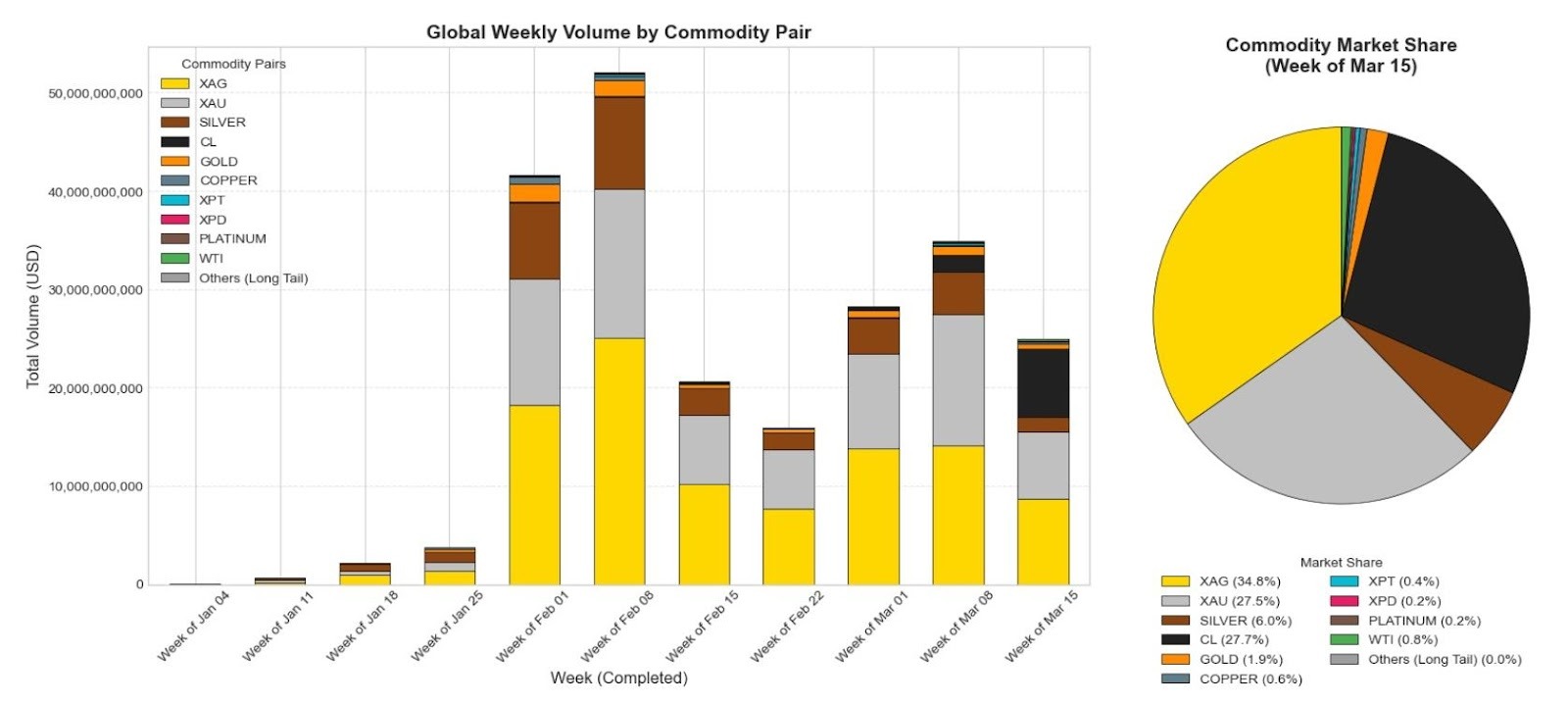
BitMEX said in a Thursday report that commodity perpetual swaps were the fastest-growing segment of TradFi perps in the first quarter of 2026, with weekly volume rising 65,463% from $38.1 million to $25.0 billion.
The report said silver, crude oil and gold drove most of that growth. By the week of March 15, Silver (XAG) accounted for 34.8% of the market share of tokenized commodities, followed by crude oil (CL) for 27.7%, gold (XAU) at 27.5% and Silver on Hyperliquid for 6%, according to a Thursday report.
BitMEX said the March entry of crude oil added a new leg to the market, attributing that move to Iran-related geopolitical tensions and broader demand for 24/7 commodity exposure on crypto-native venues.
The figures point to a fast-growing niche inside crypto derivatives markets.

Brent crude oil has risen by around 44% since the first US/Israeli strikes on Iran on Feb. 28, from around $69 to above $99 at the time of writing, according to data from Trading Economics. Oil prices peaked at around $114 on Tuesday, their highest level since the beginning of the conflict.

Weekend dislocations lifted commodity perps
Onchain TradFi perps are driving traders to “speculate and hedge against weekend geopolitical events like the recent Iran conflict, in real time,” Stephan Lutz, CEO at BitMEX, told Cointelegraph. “While the perpetual swaps model will continue to capture significant market share in commodities trading due to its 24/7 nature, we are highly skeptical about tokenising spot assets,” he said.
However, minting physical commodities on the blockchain is complicated by the legacy financial system’s “complex, arbitrary legal rules,” Lutz said, adding that onchain derivatives will continue to eat into the trading share of traditional commodities, until “legacy giants like the CME” launch their own 24/7 trading venues.
Related: Crypto exchanges gain as tokenized commodity market climbs to $7.7B
In the broader market, the total market capitalization of onchain commodities declined by 2.7% during the past 30 days to $7.34 billion as of Thursday, according to data aggregator RWA.xyz.

BitMEX, which says it launched the first perpetual swap in 2016, now offers more than 20 TradFi contracts, according to the report.
Binance, the world’s largest cryptocurrency exchange, introduced gold and silver perpetuals in January. It offers contracts spanning precious metals and tokenized equities. Its Silver (XAG) contract saw an average daily volume of $1.31 billion during the quarter, according to the report.
Magazine: Can Robinhood or Kraken’s tokenized stocks ever be truly decentralized?
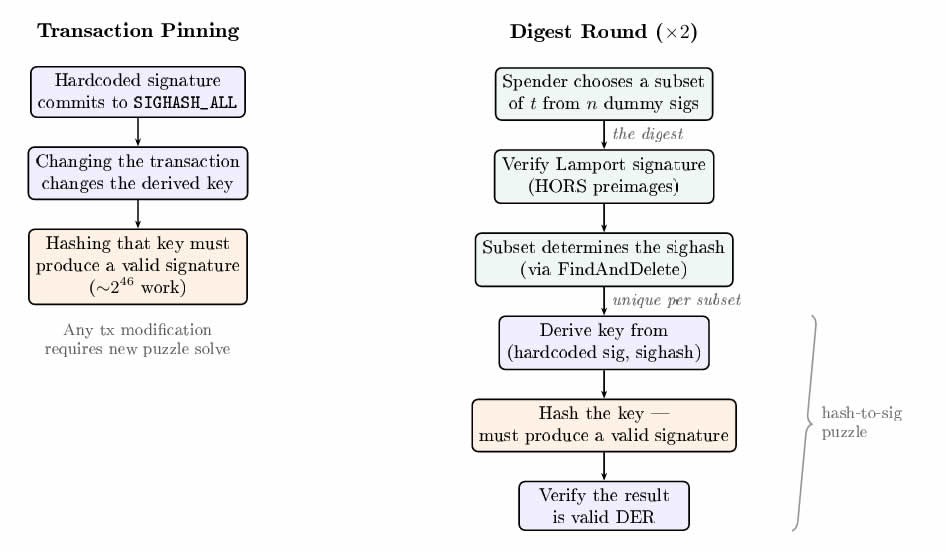
A Bitcoin researcher has come up with a way that could immediately make Bitcoin transactions quantum-safe without the need for a soft fork.
In a proposal published Thursday, StarkWare chief product officer Avihu Levy proposed a Quantum Safe Bitcoin (QSB) transaction scheme that he said would remain secure “even against an adversary with a large-scale quantum computer running Shor’s algorithm.”
He added that the scheme requires no changes to the Bitcoin protocol and operates entirely within the existing legacy script constraints. The downside is that it is costly and likely is not useful for everyday transactions, he said.
The Bitcoin community has been split on how to tackle the quantum problem. QSB presents a temporary solution while a long-term approach is ironed out.
The scheme’s main feature is replacing the proof-of-work signature-size puzzle with a hash-to-sig puzzle.
Instead of relying on elliptic curve math that quantum computers can break, the spender must find an input whose hash output randomly happens to resemble a valid ECDSA (elliptic curve digital signature algorithm) signature, requiring brute-force work that even a quantum computer cannot shortcut.

Quantum Safe Bitcoin not practical for everyday use
The proposal comes with caveats, however. It costs the sender between $75 and $150 per transaction in GPU compute and is more complex than a typical Bitcoin transaction, and thus would only make sense for securing large BTC transactions.
Related: Bitcoin’s quantum challenges are ‘more social than technical’: Grayscale
“This is huge,” said StarkWare CEO Eli Ben-Sasson, claiming that it essentially makes Bitcoin quantum-safe today.
However, Bitcoin ESG specialist Daniel Batten said it was “an overstatement” because exposed public keys and dormant wallets are “not addressed in the paper.”
Batten was referring to an estimated 1.7 million BTC locked in early P2PK addresses that could be cracked by a quantum computer.
Its existence has led to fierce debate about what to do with the dormant coins, with the community split between leaving Bitcoin as-is to preserve its core ethos, freezing or burning the vulnerable coins entirely or upgrading the protocol to support quantum-safe signatures.
Protocol changes are the preferred solution
The researchers acknowledged that this is a last-resort measure as transactions are non-standard, costs don’t scale to all users and use cases like Lightning Network are not covered.
They concluded that protocol-level changes remain the preferred long-term path.
“While this article describes a solution that works today for quantum-safe Bitcoin transactions, it should be treated as a last-resort measure.”
Google published a paper in March that unsettled the Bitcoin community as it suggested that a quantum computer could potentially crack Bitcoin’s cryptography using far fewer resources than previously thought.
Meanwhile, Lightning Labs chief technology officer Olaoluwa Osuntokun on Wednesday published a quantum “escape hatch” prototype that enables users to prove Bitcoin wallet ownership from the original seed phrase without revealing it, which could serve as an alternative Bitcoin authorization method.
Magazine: Nobody knows if quantum secure cryptography will even work


The latest crypto update from Washington reshaped the CLARITY Act debate on Wednesday when the White House Council of Economic Advisers published a 21-page analysis finding that banning stablecoin yield would increase bank lending by just 0.02 percent, directly undercutting the banking industry’s central argument for restricting the product.
Summary
- The CEA report finds that prohibiting stablecoin yield would boost traditional lending by approximately $2.1 billion, equal to 0.02 percent of total loans, with 76 percent of that benefit flowing to large banks rather than the community lenders whose protection has driven the banking lobby’s position
- A ban would produce a net welfare loss of $800 million, meaning consumer costs outweigh any benefit to the financial system; the report also warns that tightening the CLARITY Act’s yield language further would be counterproductive
- Coinbase CPO Faryar Shirzad welcomed the findings while the banking industry pushed back, calling the conclusions beside the point, and the Senate Banking Committee markup remains targeted for late April
The Bloomberg report on the CEA analysis landed as the CLARITY Act remained deadlocked over the same stablecoin yield dispute that has stalled it since January. The study uses a model calibrated with Federal Reserve and FDIC data on deposits, lending, and bank liquidity, alongside stablecoin industry disclosures and academic estimates of how consumers move funds between assets. Its core finding is that when consumers buy stablecoins, the funds are typically reinvested in Treasury bills and redeposited into the banking system, leaving aggregate deposit levels largely unchanged regardless of whether yield is permitted.
The report’s bluntest conclusion: “In short, a yield prohibition would do very little to protect bank lending, while forgoing the consumer benefits of competitive returns on stablecoin holdings.”
The analysis hands crypto firms a White House-backed economic rebuttal to the banking lobby’s primary argument. The American Bankers Association has warned for months that stablecoins paying yield could drain deposits from community lenders, with the Independent Community Bankers of America estimating losses as high as $1.3 trillion. The CEA tested those numbers and found them implausible. Even under a scenario where the stablecoin market grew sixfold, reserves became unlendable, and the Federal Reserve abandoned its current framework, the lending boost from a ban would reach only 6.7 percent. The report describes those conditions as simultaneously implausible. Coinbase CPO Faryar Shirzad called the findings confirmation “that stablecoins aren’t a threat to community banks.”
What the Banking Industry Is Saying Back
Banking sources immediately pushed back, arguing the report underestimates how deposit outflows change the form in which funds return to banks, shifting them from lendable deposits into reserve assets that cannot be lent out. The American Bankers Association and Financial Services Forum said they want any legislative deal to support “the local lending to families and small businesses that drives economic growth.” That structural distinction between deposit forms, which the CEA model does not fully address, remains the contested ground in the negotiation.
What Comes Next Before the May Window Closes
As crypto.news has reported, the CLARITY Act is caught between four factions each with effective veto power over different parts of the bill. As crypto.news has noted, missing the May Senate window risks pushing the bill into midterm season, where the legislative calendar and Democratic incentives to cooperate both narrow sharply. The White House report is the most significant shift in the negotiation since the markup collapsed in January, and whether it unlocks a Senate vote by May is the question the industry is now watching closest.
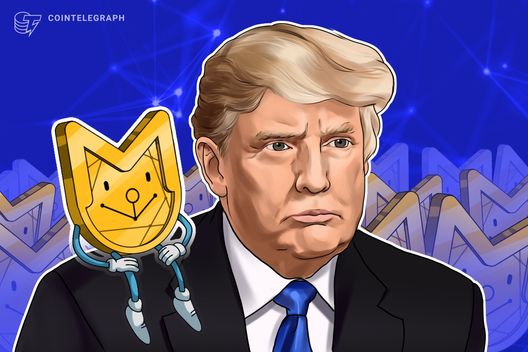

Three US senators have reportedly asked one of the people behind US President Donald Trump’s memecoin whether the president intends to “dangle access” to himself at a luncheon event, given he is already planning to attend the White House Correspondents’ Association Dinner the same day.
According to a Thursday Politico report, Senators Elizabeth Warren, Richard Blumenthal, and Adam Schiff sent a letter to Bill Zanker, the individual behind the launch of the memecoin Official Trump (TRUMP). The lawmakers questioned whether Trump had been leveraging his appearance at a luncheon event scheduled for April 25, which the memecoin project announced in March.
“[O]rganizers are promoting a conference by dangling access to President Trump to potential attendees (and in doing so, are encouraging purchases of his meme coin that will generate transaction fees for the President and his family) on a day he may not actually be able to attend,” said the letter to Zanker, according to Politico.
While the memecoin event at Trump’s Florida Mar-a-Lago property is scheduled for April 25, so, too, is the White House Correspondents’ Association Dinner in Washington, DC, which the president said on March 2 that he planned to attend for the first time after boycotting it in his first term. Even before taking office, Trump attended many crypto-themed events, from the Bitcoin 2024 conference to the first dinner for TRUMP memecoin holders in May 2025.
Related: Bessent ramps up pressure on Congress to pass CLARITY Act
According to the terms and conditions from the project behind the memecoin, Trump “may not be able to attend” the April 25 event, and it could be cancelled for any reason. Cointelegraph reached out to the White House for comment on the president’s schedule and travel costs, but did not receive an immediate response.
US crypto market structure discussions are still underway
Amid the concerns from senators over potential conflicts of interest and “selling access” to the presidency, lawmakers and industry leaders have yet to publicly announce a compromise to allow a digital asset market structure bill to advance in Congress and be signed into law.
In July 2025, the House of Representatives passed the CLARITY Act, a bill to establish a market structure framework for cryptocurrencies in the US. Once passed to the Senate, the chamber’s agriculture committee advanced the legislation in January, but its banking committee indefinitely postponed a markup amid concerns over tokenized equities, stablecoin yield, and ethics.
As of Thursday, the Senate Banking Committee had not scheduled a markup on the bill, necessary to address securities laws before a potential floor vote. The White House released a statement on Wednesday claiming that a ban on stablecoin yield in the bill “would do very little to protect bank lending” in response to concerns from the banking and crypto industries.
Magazine: Anger grows over Polymarket bets on Iran war: ‘Dystopian death market’

TLDR
- Potential buyers are evaluating parts of Gemini rather than the entire company.
- Interested bidders want Gemini’s closed Europe and U.K. operations for regulatory access.
- European and U.K. approvals do not transfer automatically in an acquisition.
- Gemini’s stock has fallen more than 80% from its $28 IPO price.
- Gemini disclosed the departures of its COO, CFO, and CLO in a February filing.
Potential buyers are assessing parts of Gemini after the crypto exchange closed operations in Europe, the U.K., and Australia. Sources said bidders want licenses, not the full company. Gemini declined to comment.
The New York company cut 25% of its workforce in February. It also exited the U.K., the European Union, and Australia, while keeping U.S. and Singapore operations.
A person with direct knowledge said some interested parties want the closed European and British units. They seek regulatory access and do not want a full takeover.
Gemini licenses draw buyer interest in Europe and the U.K.
Gemini ran those businesses through national registrations and a MiCA license in Europe. In Britain, it held EMI status and cryptoasset registration with the FCA.
The source said buyers value those approvals because applications can take years. That timing explains interest in the closed units, even without interest in Gemini overall.
Still, buyers cannot simply inherit those permissions after a sale. European rules treat any takeover as a “change of control” event that triggers review.
Acquirers must notify the relevant authority and may need approval before closing. The FCA uses a similar process and does not allow a direct license transfer.
Stock slide and executive exits add to Gemini pressure
Gemini has extended beyond exchange trading into custody, staking, yield products, and payments. It also built a brokerage, clearing, and a crypto rewards credit card.
Yet the company has faced pressure since its September 2025 Nasdaq listing. The stock priced at $28, opened above $37, and closed its debut near $32.
That early rise faded, and the shares later fell to about $4.36. The drop left the stock down more than 80% from the IPO price.
Gemini disclosed three senior departures in a February filing. COO Marshall Beard, CFO Dan Chen, and CLO Tyler Meade left effective immediately.
Beard also resigned from the board, and Gemini said no dispute caused his exit. The filing linked the departures to no disagreement over operations, policies, or practices.
The exits came days after Gemini announced the shutdowns in the U.K., EU, and Australia. A company spokesperson declined to comment on the sale discussions.
After the report, Gemini shares rose 11% afterward. FactSet data also showed short interest at 15% of the company’s float.
Gemini Space Station, Inc. Class A Common Stock, GEMI
The company now keeps only its U.S. and Singapore businesses active. Those remaining operations followed the February cuts and the closure of overseas exchange units.
Its European and British entities now draw interest from buyers seeking market access through acquisitions, subject to formal approval reviews.


A new crypto law introduced by Manhattan District Attorney Alvin Bragg and New York State Senator Zellnor Myrie would convert unlicensed virtual currency operations from a civil regulatory issue into a criminal offense, carrying up to 15 years in prison for operators moving $1 million or more in a single year.
Summary
- The CRYPTO Act, or Cryptocurrency Regulation Yields Protections, Trust, and Oversight, was introduced January 14 and would add Section 408-b to New York’s Financial Services Law, creating a new offense of Unlicensed Virtual Currency Business Activity with graduated criminal penalties that currently do not exist at the state level
- Charges scale from a Class A misdemeanor at baseline to a Class E felony for $25,000 or more within 30 days, and a Class C felony carrying 5 to 15 years imprisonment for $1 million or more in a year; 18 other states and the federal system already criminalize unlicensed crypto activity
- The bill is a direct counter to the Trump administration’s April 2025 decision to pull back federal crypto enforcement, with Bragg positioning state prosecution as the necessary backstop where federal action has retreated
The announcement from the Manhattan DA’s office frames the legislation as a correction to the gap between New York’s existing BitLicense framework, which requires registration for crypto businesses, and the complete absence of criminal consequence for ignoring that requirement. Bragg told an audience at New York Law School that the crypto space needs accountability “on steroids.” Currently, unlicensed crypto operators in New York face only civil penalties. The CRYPTO Act would change that structure entirely, aligning the state with the majority of US jurisdictions that already criminalize the same conduct.
Any unlicensed virtual currency operation begins as a Class A misdemeanor. The charge escalates to a Class E felony once a business moves $25,000 or more within 30 days, or $250,000 or more in a year. A Class C felony, the top tier, applies to $1 million or more in a year and carries a maximum of 5 to 15 years in prison. Bragg made the stakes explicit: “Crypto is the go-to means for bad actors to move and hide the proceeds of crime. It is long past time for businesses that operate without a virtual currency license and flout due diligence requirements to face criminal penalties.”
Why New York Is Moving While Washington Steps Back
The Trump DOJ disbanded its National Cryptocurrency Enforcement Team in April 2025, directing federal prosecutors to focus on terrorism and drug cases rather than unlicensed money transmission or exchange level violations. Six Democratic senators have since challenged that decision as a conflict of interest. New York is moving in the opposite direction at the state level, asserting that the federal retreat has created a gap that state prosecutors must now fill using criminal law rather than civil penalties alone.
What the Bill Still Needs to Become Law
As crypto.news has reported, the federal regulatory framework for crypto is being built out under GENIUS Act implementation, with the FDIC, OCC, and Treasury each advancing separate rulemaking processes that apply only to licensed entities. As crypto.news has noted, the GENIUS Act’s compliance architecture leaves unlicensed operators in a regulatory blind spot, precisely the gap the CRYPTO Act targets through state criminal law. The bill still requires passage through the New York State legislature, and a legislative timeline has not been announced.

‘Panic buying’ setting in on fourth day of fuel protest

Politics And The Markets 04/10/26
Pavel Durov says TON upgrade delivers near-instant transaction speed


-

 Fashion6 days ago
Weekend Open Thread: Spanx – Corporette.com
-

 Business4 days ago
Three Gulf funds agree to back Paramount’s $81 billion takeover of Warner, WSJ reports
-

 Sports5 days ago
India men’s 4x400m and mixed 4x100m relay teams register big progress | Other Sports News
-

 Business6 days ago
Expert Picks for Every Need
-

 Tech2 days ago
How Long Can You Drive With Expired Registration? What Florida Law Says
-

 Business5 days ago
No Jackpot Winner, Prize to Climb to $231 Million
-

 Fashion4 days ago
Massimo Dutti Offers Inspiration for Your Summer Mood Board
-

 Fashion2 days ago
Let’s Discuss: DEI in 2026
-
Politics7 days ago
Wings Over Scotland | The quality of mercy
-

 Crypto World2 days ago
Bitcoin recovers as US and Iran Agree a Ceasefire Deal
-
 Business5 days ago
Akebia Therapeutics, Inc. (AKBA) Discusses Pipeline Progress and Strategic Focus on Kidney Disease Treatments at R&D Day – Slideshow
-

 Politics7 days ago
Why so many children are now classified as ‘disabled’
-

 Crypto World16 hours ago
Canary Capital Files SEC Registration for PEPE ETF
-

 Politics6 days ago
The UK should not pay a penny in slavery reparations
-

 Tech4 days ago
Haier is betting big that your next TV purchase will be one of these
-

 Tech7 days ago
The Threadless Ball Screw Never Took Off, But Don’t Write It Off
-
 Business7 days ago
HPS FY 2025 slides: SaaS inflection drives 22% revenue growth
-

 Fashion7 days ago
Tory Burch’s Spring 2026 Campaign Goes on a Getaway
-

 Fashion7 days ago
Frugal Friday’s Workwear Report: Hammered Metallic Button Sweater Vest
-

 Fashion6 days ago
Weekly News Update, 4.3.26 – Corporette.com
You must be logged in to post a comment Login