
Entertainment
10 Most Visually Stunning Martial Arts Movies, Ranked

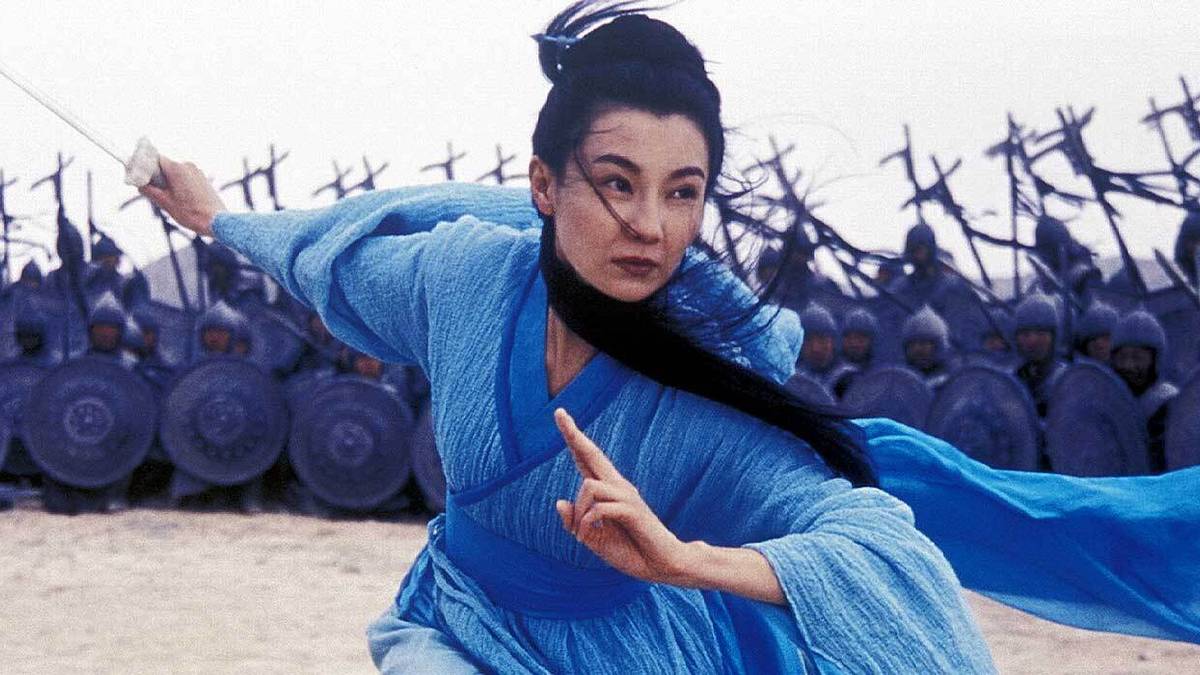
In martial arts cinema, violence is a craft. The strongest fight scenes are about rhythm, grace, and precision. It’s not just about the death-defying stunts or the hectic choreography, though. When handled right, the genre can be visually gorgeous as well as thrilling, with jaw-dropping stuntwork and vivid shot composition.
The following martial arts films are the rare ones that deliver both force and beauty. Every clash carries weight, every sword strike serves the plot, and their finest frames could hang in galleries. They will be ranked based on how awe-inspiring their visuals are, how ingrained they have become in our collective imagination and their impact on cinematic culture.
10
‘The Assassin’ (2015)

“The way of the sword is pitiless. Saintly virtues play no part in it.” The Assassin doesn’t follow the typical genre tempo. It’s quiet, patient, painterly, dealing in whispers rather than shouts. The plot centers on Nie Yinniang (Shu Qi), a trained killer who returns to the province of Weibo after years in exile. Her mission is to eliminate a powerful warlord (Chang Chen) who also happens to be the man she once loved. That tension, duty versus desire, drives the movie, leading to unexpected twists and turns.
That reflective tone carries over into the aesthetics. Instead of explosive choreography, director Hou Hsiao-hsien fills the film with long, meditative takes, letting the silence carry emotional heft. Every composition looks like silk-screen art brought to life, all candlelit rooms, drifting curtains, and mist-soaked mountains. When violence erupts, it’s sudden and razor-sharp, a striking counterpoint to the rest of the still beauty.
9
‘Shadow’ (2018)

“Without the real, there can be no shadow. A principle no one’s understood.” Zhang Yimou’s Shadow embraces the aesthetic of an ink wash scroll, every frame sculpted in stormcloud blacks and pale ivory. The story is about a brilliant military strategist (Deng Chao) who uses a lookalike (his “shadow”, also played by Chao) to navigate court politics and plot rebellion from within a fractured kingdom. Through him, the movie engages with themes of power, loyalty, freedom, and identity. It’s a tale of imperial intrigue punctuated by grand battles, expertly staged.
Working with cinematographer Zhao Xiaoding, Zhang creates a monochrome world that feels fittingly mythic and timeless. Indeed, almost all of the props and costumes are literally black and white but filmed in color, and most of the scenes were shot on rainy days with gray skies. The action is similarly carefully choreographed and a visual treat, consisting of fluid arcs, rippling cloth, and sudden, elegant strikes. This is calligraphic violence.
8
‘Ong-Bak’ (2003)

“Weapons are the tangible form of power.” In contrast to Shadow‘s elegance, Ong-Bak is raw and kinetic, leaning hard into pure physical intensity. The premise is simple: Ting (Tony Jaa), a young villager, travels to Bangkok to recover a stolen Buddha head sacred to his community. The lack of subplots and side characters becomes a virtue, letting the fights speak without clutter.
Jaa’s Muay Thai work arrives like thunder, elbows, knees, and bone-cracking force delivered with fearless athleticism. His athleticism is breathtaking, right up there with the genre’s greats. Ong-Bak wows visually through sheer impact, the sight of flesh meeting stone, bodies flying, and Jaa sprinting through obstacles with balletic recklessness. Refreshingly, these are real bodies doing real things. No wires, no illusions, just craftsmanship, devotion, and danger. It’s a throwback to the classic stuntwork of old, sure to please martial arts purists.
7
‘Ip Man’ (2008)
.jpg?q=49&fit=crop&w=500&dpr=2)
“Their deaths have got nothing to do with me. I’m just an interpreter.” Ip Man blends history and myth into a stirring portrait of Wing Chun master Ip Man (Donnie Yen), who trained Bruce Lee. Set in 1930s Foshan, the plot follows Ip as Japan’s invasion shatters his peaceful life. Once a humble martial artist who practiced for discipline rather than glory, he’s pulled into defending his community and dignity against an occupying force. Yen plays the part with quiet strength, while also flexing his considerable combat muscle. Compact yet explosive, refined yet devastating.
The fights are as much character study as spectacle, showing a man who fights not from ego, but necessity and honor. It’s a story about resilience and grace under pressure. IP Man’s beauty lies not only in the speed and precision of Wing Chun but also in the cinematography itself, immersing us in dusty courtyards, dim tea houses, and soft winter light falling over tragedy.
6
‘Enter the Dragon’ (1973)

“A good fight should be like a small play, but played seriously.” Perhaps the definitive classic of the genre, Bruce Lee’s final film remains a cultural touchstone; sleek, cool, and larger than life. The plot sends Lee undercover to a criminal island fortress, entering a martial arts tournament designed to mask darker operations. Alongside rivals and allies, he infiltrates the compound and dismantles corruption from within. This is Lee in his prime: his charisma and physical control are astounding, each of his strikes carved from lightning.
The movie became an international success, spawning countless copycats. Even today, it continues to exert a huge influence on action cinema, with scores of fight choreographers borrowing from its playbook. Enter the Dragon was also a big inspiration for fighting video games (most notably Street Fighter) and a ton of anime, including Dragon Ball. Tarantino has also cited it as a major influence.
5
‘Lady Snowblood’ (1973)

“You will live your life carrying out my vendetta.” Speaking of Tarantino, Kill Bill is an homage to this bloody but elegant revenge tale. Lady Snowblood revolves around Yuki (Meiko Kaji), a young woman born in prison and trained from childhood to avenge her family. We watch as she slices her way through with Meiji-era Japan, hunting down the men who tormented her mother and brother. The plot unfolds like a serialized folktale: her targets scattered across seasons, encounters staged with theatrical flair, blood arcing like red brushstrokes across white snow and temple walls.
The film’s painterly compositions and operatic violence are impressive, but in many ways, it’s the themes and emotions that hit harder. The protagonist’s quest is sorrowful rather than triumphant, radiating a quiet melancholy. Yuki doesn’t revel in violence; she endures it, shaped by a world that denied her mercy and continues to deny her peace. Here, vengeance brings no redemption.
4
‘House of Flying Daggers’ (2004)

“No one who falls in love can keep their sanity.” Zhang Yimou strikes again, this time with a more kaleidoscopic visual palette and a more romantic story. This epic follows two officers (played by Takeshi Kaneshiro and Andy Lau) tasked with investigating the mysterious House of Flying Daggers, a rebel faction resisting government rule in Tang dynasty China. When they encounter a beautiful blind dancer (Zhang Ziyi), suspected of revolutionary ties, a deceptive cat-and-mouse journey blooms into doomed love.
The story alternates between tragedy and hope, the characters’ journeys marked by revelations and betrayals. That said, it’s the aesthetics that truly leave their mark. The cinematography is vivid, embracing deep emeralds and crimson. It serves up dynamic camera moves, stunning slow-motion, and dizzying perspective. The imagery is gorgeous throughout, showing us swaying bamboo forests, autumn fields burning gold, and spinning daggers tracing luminous arcs through the air.
3
‘The Raid’ (2011)

“They’ll come here. They’ll tear this place to the ground.” Most of the movies on this list are operatic. By contrast, The Raid is industrial, a symphony of sweat, bone, and claustrophobic violence. The plot is brutally straightforward: a rookie SWAT officer (Iko Uwais) joins a raid on a criminal high-rise, only to find the team trapped inside. The building turns into a vertical battleground. What follows is a relentless gauntlet of Silat-driven combat, hallway brawls, shattered glass, and improvised weapons as the protagonists fight their way through floor after floor of enemies.
Director Gareth Evans mines the confined high-rise setting for maximum tension, transforming fluorescent hallways and grim stairwells into arenas. Beneath the brutality lies a purity: no politics, no mysticism, just “kill or be killed” survival. It’s exhausting, exhilarating, and unmistakably art. The Raid practically towers over most Hollywood action movies from the early 2010s.
2
‘Hero’ (2002)
“The sword is an extension of the arm, but the mind is the real weapon.” Zhang Yimou has crafted several visually impressive martial arts movies, but his magnum opus is undoubtedly Hero. In it, a swordsman named Nameless (Jet Li) stands before the Emperor (Chen Daoming), recounting how he defeated three legendary assassins. Yet, each retelling shifts, Rashomon-like, the truth taking on different contours each time. Plot twists reveal not only political strategy but personal heartbreak, turning the narrative into a moral puzzle.
The director builds this into a mythic parable about sacrifice, loyalty, and the slippery nature of heroism. Here, the bold, inventive cinematography is meant to serve narrative purposes rather than just look great. Colors carry meaning: crimson for passion, emerald for envy, and snowy white for purity. This approach makes each duel a living painting, a battle between conflicting philosophies. Fights occur in autumn gardens, mirror-like lakes, and silent courtyards.
1
‘Crouching Tiger, Hidden Dragon’ (2000)

“I would rather be a ghost drifting by your side as a condemned soul than enter heaven without you.” Ang Lee’s acclaimed wuxia masterpiece follows warriors bound by honor, regret, and longing. When a sacred sword, the Green Destiny, is stolen, it sets off a chain of pursuit across mountains, bamboo forests, and moonlit rooftops. Central to the narrative is Jen (Zhang Ziyi), a young noblewoman torn between duty and wild freedom, her fate entwined with master fighters harboring old wounds.
The film floats between earth and sky (literally) with wire-assisted combat that feels like dream logic rather than spectacle; characters dance above treetops and race across the roof tiles. Yet beneath the grace lies grief: love abandoned, vengeance inherited, identity fractured by expectation. Lee’s talent for balancing grandeur and emotion is very much on display. Arriving a year before The Lord of the Rings: The Fellowship of the Ring, Crouching Tiger, Hidden Dragon represented a huge leap forward at the time for martial arts movies and fantasy, and it more than holds up today.



