Francis Ford Coppola is one of the most important filmmakers to have ever lived. Over more than 60 years, he’s crafted some of the greatest movies of all time, with his run of work in the ’70s forever reshaping the medium. At that time, he was a walking embodiment of the New Hollywood sensibility, producing banger after banger, including an unprecedented run from 1972 to 1979.
The result was a body of work that felt bigger, darker, and more psychologically complex than almost anything Hollywood had produced before. With that in mind, this list looks at (and attempts to rank) the finest of the director’s masterpieces, from the paranoia of The Conversation to the gangster grandeur of The Godfather Part II.
Advertisement
5
‘Bram Stoker’s Dracula’ (1992)
Gary Oldman as Dracula kissing Winona Ryder as Mina Harker in Bram Stoker’s Dracula.Image via Columbia Pictures
“I have crossed oceans of time to find you.” Though divisive on release (and certainly not without some flaws), Coppola’s riff on Dracula boasts more than enough style and creativity to earn a spot among the director’s best work. The plot is fairly straightforward: the bloodsucking count (Gary Oldman) travels from Transylvania to Victorian England, driven by the belief that his long-dead wife (Winona Ryder) has been reincarnated.
It’s the execution that elevates things. Coppola rejects realism entirely, embracing theatrical sets, in-camera effects, and operatic performances to create. The result is a movie that feels handcrafted and mythic. At the same time, it gets more complex and interesting in the way it treats Dracula himself, largely thanks to Oldman’s terrific, larger-than-life performance. Instead of being a simple monster, he’s a tragic romantic figure, cursed by grief and eternal longing. His chemistry with Ryder is perfect, both haunting and passionate.
Advertisement
4
‘The Conversation’ (1974)
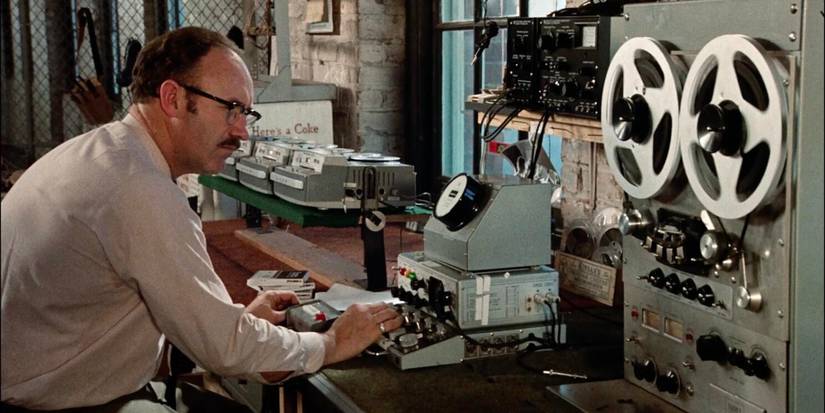
Gene Hackman in ‘The Conversation’Image via Paramount Pictures
“I don’t care what they’re talking about. I just want a nice, fat recording.” Coppola cranked out this gem between Godfathers, making for one of the most remarkable creative runs by any filmmaker ever. The Conversation centers on Harry Caul (Gene Hackman), a professional wiretapper obsessed with privacy, who becomes convinced that a recorded conversation he captured may lead to murder. Coppola spins this premise into one of the all-time greatest paranoid thrillers.
Sound becomes the film’s central weapon, mirroring Harry’s fractured mental state as he replays the same audio, searching for meaning that may not exist. Harry believes technology can deliver objective truth, yet the deeper he listens, the less certain everything becomes. Hackman is great in the part, communicating the character’s inner torment through tiny gestures, silences, and moments of panic. It’s a compelling portrait of isolation.
Advertisement
3
‘The Godfather’ (1972)
Marlon Brando with his arm around Salvatore Corsitto’s shoulder in The Godfather (1972)Image via Paramount Pictures
“I’m gonna make him an offer he can’t refuse.” You know you’ve got a legendary filmography when The Godfather isn’t even the best movie in it. This classic fuses gangster elements with Shakespeare family drama and a tragic character arc. Patriarch Vito Corleone (Marlon Brando) manages a criminal empire while attempting to protect his family from its consequences, only to inadvertently seal his son Michael’s (Al Pacino) grim fate.
Indeed, The Godfather is less about crime than about family and inheritance, how power is passed down and how morality erodes in the process. These themes come through beautifully thanks to strong acting across the board, with Brando, in particular, turning in perhaps the most iconic mobster performance ever. Crucially, he avoids caricature. Instead of playing Vito as a flamboyant gangster, he presents him as an aging man desperately trying to preserve order in a changing world.
Advertisement
Collider Exclusive · Oscar Best Picture Quiz Which Oscar Best Picture Is Your Perfect Movie? Parasite · Everything Everywhere · Oppenheimer · Birdman · No Country
Advertisement
Five Oscar Best Picture winners. Five completely different visions of what cinema can be — and what it can do to you. One of them is the film that was made for the way your mind works. Ten questions will figure out which one.
🪜Parasite
🌀Everything Everywhere
☢️Oppenheimer
🐦Birdman
Advertisement
🪙No Country for Old Men
Advertisement
01
What kind of film experience do you actually want? The best movies don’t just entertain — they leave something behind.
Advertisement
02
Which idea grabs you most in a film? Great films are driven by a central obsession. What’s yours?
Advertisement
03
How do you like your story told? Form is content. The way a story is shaped changes what it means.
Advertisement
04
What makes a truly great antagonist? The opposition defines the protagonist. What kind of opposition fascinates you?
Advertisement
05
What do you want from a film’s ending? The final note is the one that lingers. What do you want it to sound like?
Advertisement
06
Which setting pulls you in most? Where a film takes place shapes everything — mood, stakes, what’s even possible.
Advertisement
07
What cinematic craft impresses you most? Every great film has a signature — a technical or artistic element that makes it unmistakable.
Advertisement
08
What kind of main character do you root for? The protagonist is the lens. Who you choose to follow says something about you.
Advertisement
09
How do you feel about a film that takes its time? Pace is a choice. Some films sprint; others let tension accumulate slowly, deliberately.
Advertisement
10
What do you want to feel walking out of the cinema? The best films leave a mark. What kind of mark do you want?
Advertisement
The Academy Has Decided Your Perfect Film Is…
Your answers have pointed to one Oscar Best Picture winner above all others. This is the film that was made for the way your mind works.
Advertisement
Parasite
You are drawn to films that operate on multiple levels simultaneously — that begin in one genre and quietly, brilliantly migrate into another. Bong Joon-ho’s Parasite is a film about class, desire, and the architecture of inequality that manages to be darkly funny, deeply suspenseful, and genuinely shocking across a single extraordinary running time. Your instinct is for cinema that hides its true intentions until the moment it’s ready to reveal them. Parasite is exactly that — a film that rewards close attention and punishes assumptions, right up to its devastating final image.
Advertisement
Everything Everywhere All at Once
You want it all — and this film gives you all of it. The Daniels’ Everything Everywhere All at Once is one of the most maximalist films ever made: action comedy, multiverse sci-fi, family drama, existential crisis, and a genuinely earned emotional core that sneaks up on you amid the chaos. You are someone who responds to ambition, who doesn’t want cinema to choose between being entertaining and being meaningful. This film refuses that choice entirely. It is overwhelming by design, and its overwhelming nature is precisely the point — because the feeling of being crushed by infinite possibility is exactly what it’s about.
Advertisement
Oppenheimer
You are drawn to cinema on a grand scale — films that understand history not as a backdrop but as a force, and that place their characters inside that force and watch what happens. Christopher Nolan’s Oppenheimer is a film about the terrifying gap between what we can do and what we should do, told with the full weight of one of the most consequential moments in human history behind it. You want your films to feel important without feeling self-important — to earn their ambition through sheer craft and the gravity of their subject. Oppenheimer does exactly that. It is enormous, complicated, and refuses easy comfort.
Advertisement
Birdman
You are drawn to films that foreground their own construction — that make the how of the filmmaking part of the what it’s about. Alejandro González Iñárritu’s Birdman, shot to appear as a single continuous take, is cinema examining itself through the cracked mirror of a fading actor’s ego. You respond to formal daring, to the feeling that a film is doing something that probably shouldn’t be possible. Michael Keaton’s performance and Emmanuel Lubezki’s restless camera create something genuinely unlike anything else — a film that is simultaneously about creativity, relevance, self-destruction, and the impossibility of ever truly knowing if your work means anything at all.
Advertisement
No Country for Old Men
You are drawn to cinema that trusts silence, that refuses to explain itself, and that treats dread as a form of meaning. The Coen Brothers’ No Country for Old Men is a film about the arrival of a new kind of evil — implacable, arbitrary, and utterly indifferent to the moral frameworks we use to make sense of the world. It is one of the most formally controlled films ever made, and its controlled restraint is what makes it so terrifying. You want your films to haunt you, not comfort you. You are not interested in resolution if resolution would be dishonest. No Country for Old Men is honest in a way that most cinema never dares to be.
Advertisement
2
‘Apocalypse Now’ (1979)
“The horror… the horror.” Apocalypse Now is Coppola’s most ambitious project, one that almost broke him and his crew in the process. Typhoons destroyed sets, actors suffered breakdowns, and budgets spiraled out of control. Despite the chaos of its creation, however, the finished product is a towering achievement. The plot loosely follows a military mission to assassinate a renegade colonel (Brando), but the narrative quickly dissolves into a series of surreal encounters along a river in Vietnam.
Advertisement
Apocalypse Now is a psychological descent rather than a conventional war movie. By the time Willard reaches Kurtz’s compound, civilization itself feels impossibly distant. Along the way, the movie hits us with one memorable moment after another, from “Charlie don’t surf” and “I love the smell of napalm in the morning” to the “Ride of the Valkyries” helicopter assault and the haunting assassination of Kurtz.
1
‘The Godfather Part II’ (1974)
Michael Corleone looking intently in The Godfather Part IIImage via Paramount Pictures
“Keep your friends close, but your enemies closer.” Picking Coppola’s best movie is tough, though one can certainly make the case for The Godfather Part II. It’s a rare sequel that deepens and darkens its predecessor without rehashing it. The film intercuts Michael Corleone’s (Pacino) consolidation of power with flashbacks to Vito’s (Robert De Niro) rise, creating a devastating contrast between origins and outcomes. The seeds of the son’s moral collapse are sown in the father’s ascent to power.
Advertisement
Both stars are fantastic here. De Niro’s turn is masterful because he doesn’t imitate Marlon Brando superficially. Instead, he captures the essence of the character through mannerisms, patience, and quiet intelligence, while also putting his own stamp on him. Pacino, meanwhile, is utterly convincing as a man attaining domination, but becoming spiritually empty in the process. In short, no crime movie will ever top this one, a foundational entry not only to the genre but to cinema as a whole.




You must be logged in to post a comment Login