Entertainment
8 Most Universally Beloved Miniseries of All Time, Ranked

Sometimes, a show with six to ten seasons is just too much of a commitment. That’s probably why some of TV’s greatest stories come from miniseries that know exactly when to end a story before it overstays its welcome. This limited format is honestly fascinating. When done right, a miniseries can deliver the emotional payoff, character depth, and scale of a long-running show while still being completely self-contained with no filler or pressure to keep going.
Now, over the years, the idea of a miniseries has evolved into a space where storytellers can take creative risks and even reinvent entire genres. Here is a list of such universally beloved miniseries that have accomplished more in a handful of episodes than many shows can manage across multiple seasons
8
‘Watchmen’ (2019)

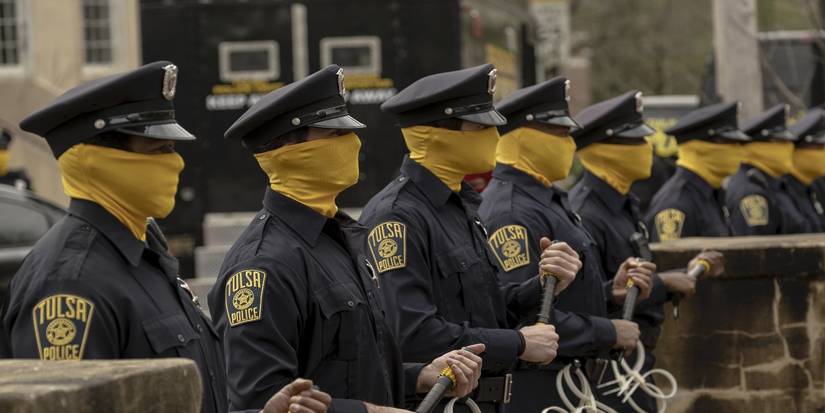
HBO’s Watchmen is a rare sequel that actually justifies returning to a story many people considered complete and borderline untouchable. The miniseries, created by Damon Lindelof, takes place decades after the events of Alan Moore and Dave Gibbons’ original graphic novel. However, instead of just recreating that world, it pushes the story into 2019 Tulsa, Oklahoma. The series follows Angela Abar (Regina King), a masked police detective known as Sister Night, who uncovers a much larger conspiracy tied to white supremacy, masked vigilantism, and the buried history of the 1921 Tulsa Race Massacre while investigating the murder of her police chief.
The show respects the original comic’s themes, but uses them to tell a story that feels extremely relevant to modern America. Watchmen begins as a murder mystery, but evolves into a much larger narrative that jumps between timelines, perspectives, and even genres. None of this ever feels disjointed, though, because Angela’s personal trauma and family history are at the center of it all. Watchmen won 11 Primetime Emmy Awards, including Outstanding Limited Series, which cemented its universal acclaim. Most importantly, the miniseries never relied purely on nostalgia but used familiar mythology to tell a story that felt genuinely ambitious and fresh.
7
‘Unbelievable’ (2019)
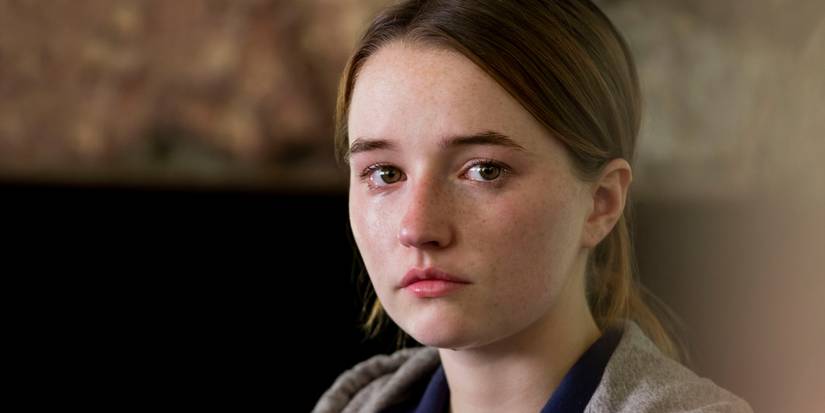
Unbelievable is an emotional rollercoaster of a miniseries. The show, based on a Pulitzer Prize-winning investigation and real events, follows Marie Adler (Kaitlyn Dever), a young woman who reports that she was assaulted, only to later be pressured into retracting her statement after detectives begin doubting her story. At the same time, in Colorado years later, detectives Karen Duvall (Merritt Wever) and Grace Rasmussen (Toni Collette) begin investigating a series of eerily similar assaults that slowly reveal the truth nobody wanted to believe. A premise like this is definitely controversial, but Unbelievable never sensationalizes its subject matter.
The series approaches every victim with empathy. It focuses less on shock value and more on the emotional aftermath of situations like these. Marie’s story is genuinely heartbreaking because the audience can practically feel her pain and isolation. Unbelievable grounds every element of its storytelling in unflinching realism, and that means it’s not an easy watch by any means. In fact, the first few episodes of the show are genuinely frustrating as Marie is forced to relive her trauma. However, that honesty is exactly why the show lands with such great impact.
6
‘The Night Of’ (2016)
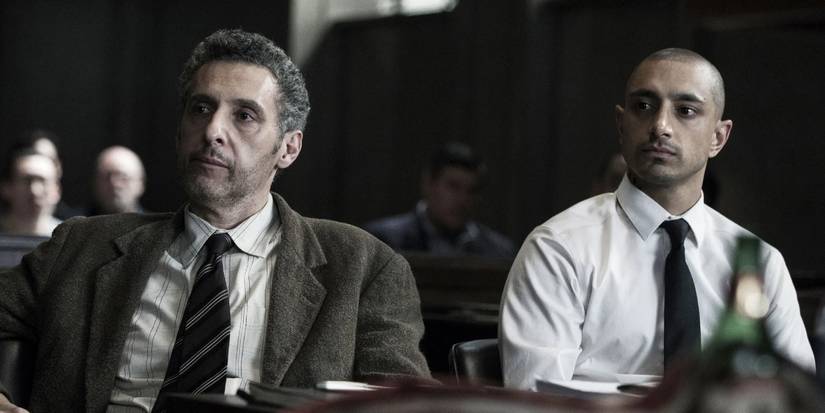
The Night Of tells a story that’s almost impossible to shake long after the credits roll. The series follows Pakistani-American college student Nasir “Naz” Khan (Riz Ahmed), whose life takes a turn when he spends the night with a young woman and wakes up the next morning to find her brutally murdered. Naz flees the scene in a panic, but is soon arrested and pulled into the justice system that seems less interested in what actually happened than in processing the case as quickly as possible. The Night Of is so gripping because it never treats the murder mystery as the only point of the story.
The miniseries explores what actually happens to a person once the system decides who they are. The story follows Naz’s journey from a soft-spoken student to a man hardened by prison, courtrooms, and legal offices. Ahmed delivers one of the finest performances of his career and perfectly captures Naz’s fear, confusion, and anger. John Turturro is equally memorable as John Stone, Naz’s attorney, who comes off as strange at first, but eventually becomes his only ally in this flawed system. A decade later, The Night Of remains one of HBO’s most impressive limited series because of how much it conveys in such a restrained format.
5
‘Midnight Mass’ (2021)
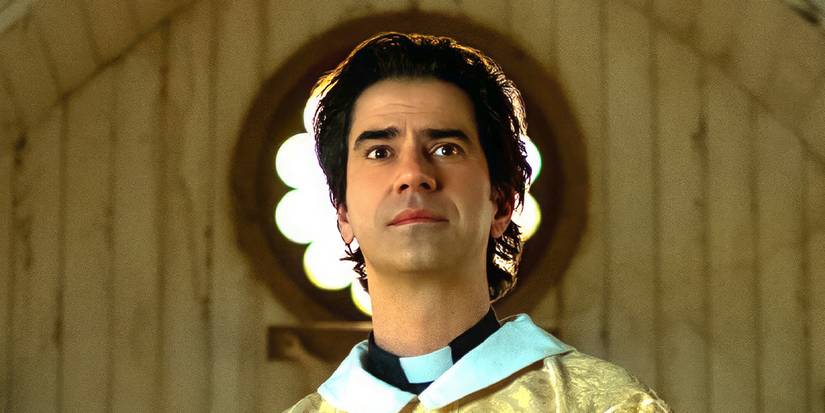
Mike Flanagan’s Midnight Mass is one of the most haunting horror miniseries of the last decade because it doesn’t rely on surface-level fears. The story takes place on the isolated Crockett Island and follows Riley Flynn (Zach Gilford), who returns home after serving time in prison for a fatal drunk-driving accident. Around the same time, the island welcomes a mysterious new priest, Father Paul Hill (Hamish Linklater), whose arrival coincides with a series of strange miracles that slowly transform the island’s deeply religious community. Soon enough, things take a disturbing turn as the townspeople become consumed by fanaticism and desperation. Midnight Mass is a slow-burning masterpiece that patiently builds its horror.
The series spends plenty of time exploring its characters alongside the central supernatural mystery. Everyone on the island is dealing with their fair share of grief, which is exactly why they are so consumed by Father Paul’s sermons and supposed miracles. The series is a thought-provoking exploration of religious fanaticism and constantly blurs the line between devotion and delusion. The dialogue-heavy structure also gives the series a unique identity, with the characters often engaging in long conversations about religion, mortality, and what happens after death. Those moments never feel pretentious, though, because they directly feed into the emotional core of the story. Midnight Mass builds toward a finale that feels tragic and beautiful at the same time, which is exactly why it continues to resonate with the audience to this day.
4
‘The Queen’s Gambit’ (2020)

The Queen’s Gambit is one of Netflix’s most-watched scripted miniseries, and for good reason. The show somehow managed to make chess feel as tense and engaging as a high-stakes sports drama. That’s not all there is to the story, though, because The Queen’s Gambit is also a deeply fascinating character study. The series follows Beth Harmon (Anya Taylor-Joy), an orphaned girl with an extraordinary talent for chess. As Beth rises through the competitive chess world and gains international recognition, the series also follows her struggles with addiction, loneliness, and the pressure that comes with being viewed as a genius from such a young age.
There’s no denying that chess is an important part of the storyline, but The Queen’s Gambit never treats it as the entire point. The matches are exciting only because the audience understands the emotional consequences they hold for Beth. Every victory and loss is tied to the very trauma she spends the entire show trying to suppress. She is brilliant, but the show never romanticizes. Instead, it focuses on just how isolating intelligence can be at times. Few modern miniseries have connected with audiences on such a massive scale while still feeling this intimate and character-driven.
3
‘The Haunting of Hill House’ (2018)

The Haunting of Hill House is another Mike Flanagan masterpiece that delivers more than just hollow jump scares. At its core, the story is about grief, trauma, and the way families carry pain for years without knowing how to deal with it. The miniseries is loosely inspired by Shirley Jackson’s novel of the same name, and follows the Crain family across two timelines. The audience follows Hugh (Henry Thomas) and Olivia Crain (Carla Gugino) as they move into the massive Hill House with their five children. They hope to renovate the mansion over the summer before selling it, but the house slowly begins affecting each family member in terrifying ways.
The present-day timeline shows the Crain siblings as adults who remain emotionally fractured as they try to process the time they spent in the house as well as the mysterious death of their mother. The Haunting of Hill House is brilliant in how it uses horror to explore relatable human emotions instead of relying purely on scares. The ghosts in the show are terrifying, but the real fear comes from watching this family fall apart. The story constantly jumps between timelines to slowly reveal what actually happened the night Olivia died. However, the narrative never feels confusing because the audience is almost desperate to discover the truth. The Haunting of Hill House set a new benchmark for the genre, one that very few series or films have reached.
2
‘Adolescence’ (2025)
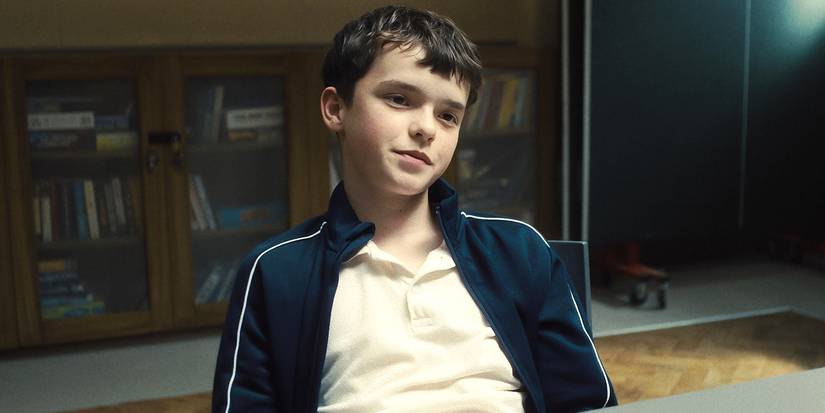
Netflix’s Adolescence became a cultural phenomenon overnight because it taps into a fear that feels terrifyingly real. The British miniseries follows 13-year-old Jamie Miller (Owen Cooper), whose family’s entire world collapses after he is arrested for the murder of a classmate. The show doesn’t unfold as a straightforward crime drama, though. The first episode spends most of its time establishing this world, and in doing so, it makes the audience sympathize with Jamie. The viewers are almost convinced that there is no way this young boy did something so heinous. However, the final moments of the episode deliver a devastating blow as the police officers play the footage, which clearly proves Jamie as the culprit.
From there, Adolescence shifts its focus in fascinating ways. One episode moves entirely through Jamie’s school environment to explore the influence of online radicalization, bullying, and the young boy’s distorted idea of masculinity that was shaped by the content he consumed. Another episode centers heavily on Jamie’s therapy sessions, while the last episode focuses on his family and their struggle to reconcile the boy they thought they knew with the reality that they now have to face. Adolescence is unapologetically immersive and emotionally exhausting. Each episode is filmed in one continuous take, which traps the audience inside every uncomfortable moment without giving them room to breathe. Yet the technical ambition never overshadows the emotional core of the story. Cooper’s performance is the soul of the show. It’s not easy to watch this innocent-looking boy playing such a messed-up character, but that’s the entire point.
1
‘Band of Brothers’ (2001)

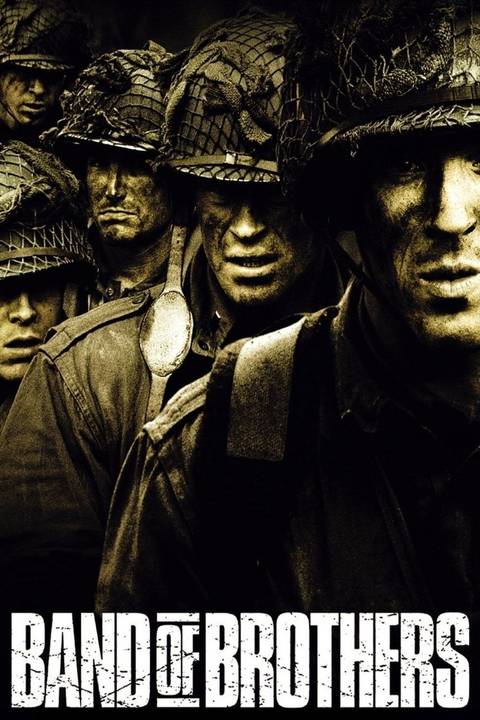
Band of Brothers practically set the standard for what prestige TV could be. There’s no denying that it remains one of the greatest war miniseries ever made. The story follows Easy Company, a unit of the 506th Parachute Infantry Regiment, from their brutal training days all the way through World War II. The narrative picks up at Camp Toccoa, where the soldiers are pushed to their physical and emotional limits before eventually being dropped into some of the war’s most horrifying battles, including D-Day, Operation Market Garden, and the Battle of the Bulge. The great thing about Band of Brothers is that it never treats war like a spectacle divorced from reality.
Sure, the large-scale battles are intense and incredibly realistic, but the emotional core of the series always comes from the relationships between the soldiers themselves. The audience watches these men evolve from nervous young recruits into exhausted survivors shaped by fear, loss, and loyalty to one another. The miniseries spends so much time developing each member of Easy Company, which makes every death and victory carry genuine emotional weight. This sense of humanity runs through every episode, and despite the scale of the war, the show never stops feeling personal. The fact that it includes interviews with real veterans before each episode adds another layer of authenticity to the entire story. Band of Brothers still hits just as hard over two decades later, which goes to show its incredible appeal and staying power.

Band of Brothers
- Release Date
-
2001 – 2001
- Network
-
HBO
- Directors
-
David Frankel, David Nutter, Mikael Salomon, Phil Alden Robinson, Richard Loncraine, Tom Hanks
-

-

Donnie Wahlberg
C. Carwood Lipton

You must be logged in to post a comment Login