
Entertainment
‘American Idol’ Alum Caleb Flynn Calls 911 to Report Wife Is Shot, Hear Audio


‘American Idol’ Alum Caleb Flynn
911 Audio … ‘SOMEBODY BROKE INTO MY HOME & SHOT MY WIFE’
Published

Miami County Communication Center
“American Idol” alum Caleb Flynn is under arrest for allegedly murdering his wife … but it looks like he’s the one who called 911 and claimed someone broke into their Ohio home and shot his wife, Ashley.
Listen to Flynn’s 911 call, obtained by TMZ … he’s emotional and borderline hysterical as he tells the dispatcher there’s blood everywhere and gunshots to his wife’s head.
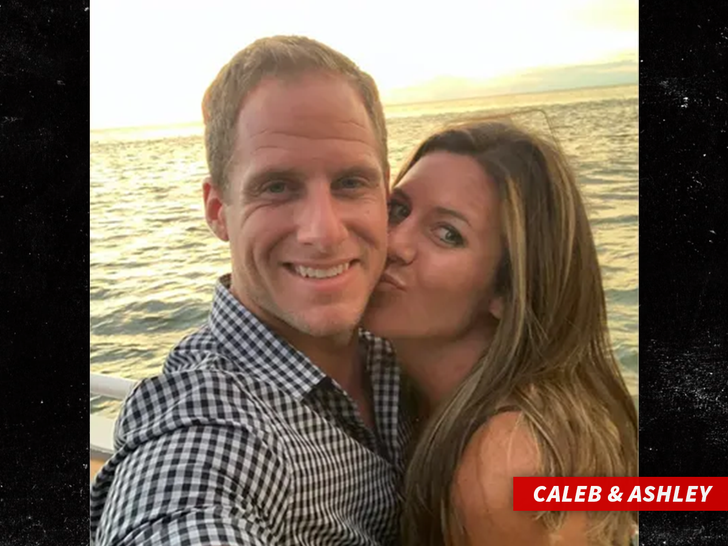
Flynn says the door to the garage is wide open and their kids are in the house asleep. He tells the dispatcher his wife’s face is “white as a ghost.”
He’s still on the call when cops arrive … and you hear him talking to officers.
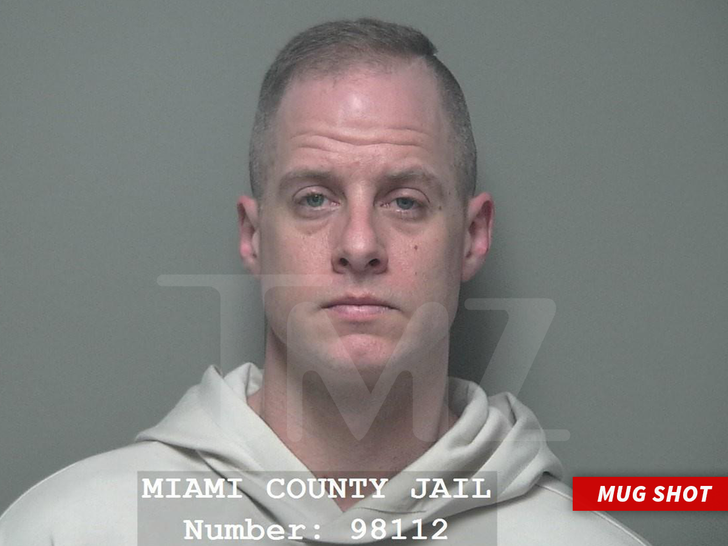
As we reported … Flynn was arrested Thursday by the Tipp City PD and booked into the county jail for murder, felonious assault, and tampering with evidence, according to official records. He posed for a mug shot with no expression on his face.
TMZ also obtained dispatch audio from the incident, and at one point you hear a dispatch officer report there’s a woman who was shot in the head and is not responding.
Broadcastify.com
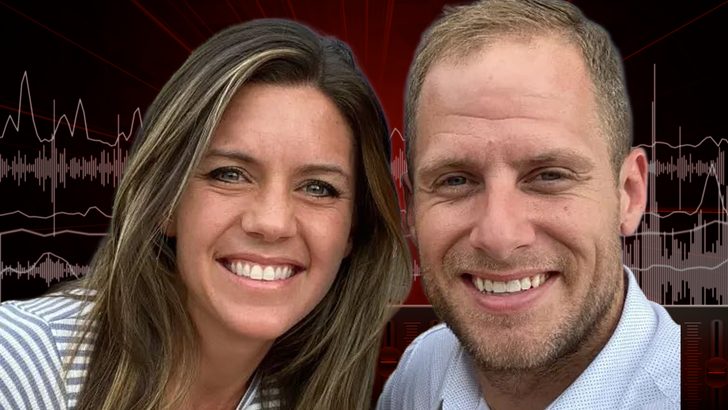
Law enforcement says Flynn shot 37-year-old Ashley using a 9mm semiautomatic handgun and then staged the crime scene.
Flynn auditioned for “American Idol” season 12 back in 2013 … he didn’t make the cut, but he gave an interview as part of his trial, gushing about his love for music and his wife.

Continue Reading

Brandi Glanville has Dorit Kemsley’s back as the Real Housewives of Beverly Hills star navigates her divorce and drama with PK Kemsley.
The former cast member, 53, defended the current Housewife, 49, after Dorit came to blows with her costars during the Thursday, April 2, episode of the reality show.
“Leave Dorit alone!” Brandi wrote via X on Thursday night. “When I was in her place I got a brand new vagina and put it on my ex-husband’s Amex. We all are a little erratic when we are heartbroken and going through divorce! Team Dorito!”
Brandi was referencing her vaginal rejuvenation surgery, which she got after her split from ex-husband Eddie Cibrian in 2009.
The reality TV star detailed her surgery in her 2013 memoir, Drinking and Tweeting and Other Brandi Blunders.
“I decided that since Eddie ruined my vagina for me, he could pay for a new one,” she wrote. “A week after the vaginal rejuvenation surgery, he was on the phone screaming, ‘What the f**k cost you $12,000? Did you get a nose job?’”
She continued, “I responded simply, ‘Yes. A nose job.’ And I hung up.”

Dorit Kemsley. (Photo by: Charles Sykes/Bravo via Getty Images)
In Thursday’s RHOBH episode, Erika Jayne took aim at Dorit for constantly being late and keeping the other Housewives waiting. Dorit defended her tardiness, claiming it was because she was on the phone with her kids, son Jagger, 12, and daughter Phoenix, 10. (Dorit filed for divorce from their father, PK, in April 2025.)
“Great, how long does that take? We all have kids. Why would you keep us all waiting? Because your kids are more important than everybody else’s kids?” Erika continued. “Send us a text and say, ‘Hey, I’m checking on my kids, I’ll be down in five.’ … You don’t think you need to do that?”

The highly anticipated fight between Dorit Kemsley, Kyle Richards and Erika Jayne is finally here. The Thursday, March 26, episode of The Real Housewives of Beverly Hills showed the three women reaching a breaking point during a cast trip to Italy. Kyle explained that she and Erika separated Dorit from the rest of the group […]
After Rachel Zoe suggested that Dorit was going through a lot due to the breakdown of her marriage to PK, Erika hit back.
“We’re all going through a f*** ton,” Erika began before Dorit interrupted to express her disbelief that Erika was also going through hard times.


“Are you kidding? What the f*** do you think it is? My husband went to prison. The f*** are you talking about? I’m going to trial,” Erika responded. “Your kids and your divorce are like — let’s not do the pain thing, like, where we do the pain Olympics.”
Erika’s estranged husband, Tom Girardi, was convicted of wire fraud in 2024 and sentenced to seven years in prison. While Erika was never charged with a crime, the trustee presiding over Tom’s bankruptcy case sued her for $25 million. That trial is set to start later this year.
In the episode, tensions ultimately escalated to the point where Erika and Dorit called each other “c***s” during the heated exchange.
Prince Archie is hitting the slopes with a little help from his dad, Prince Harry!
In a sweet video shared by doting mom Meghan Markle via Instagram on Thursday, March 2, Archie, 6, can be seen practicing his skiing skills with his father.
Archie follows behind the Duke of Sussex, who leads the way on the slopes, and appears to be picking up his new skill as he glides along the snow with ease.
“My boys. Quick learner, Archie! So proud ❤️,” Meghan, 44, captioned the video.
As well as Archie, Meghan and Harry are the parents of daughter Princess Lilibet, 4.
One of Meghan’s best friends, Kelly McKee Zajfen, recently gushed about the Duchess of Sussex’s parenting abilities exclusively to Us Weekly.
“She’s my best friend and such a support,” Kelly told Us at the Alliance for Children’s Rights 34th annual Champions for Children on March 19 in Beverly Hills. “It’s incredible to watch her as a parent.”
“She leads also by example, and she’s such a warm light, and she always says yes, so it means everything,” added Kelly, who was supported by Meghan at the event.

Meghan Markle is happily celebrating Mother’s Day 2025 with her two children, Prince Archie and Princess Lilibet — even if that means she’s more of a climbing gym than a human being. “Happy Mother’s Day! Cheers to juggling it all with joy,” Meghan, 43, gushed via Instagram on Sunday, May 11, sharing a new picture […]
Meghan and Harry, 41, also recently praised a landmark ruling against Meta and Google over social media addiction among minors.
On March 25, a Los Angeles jury ordered the two companies to pay $6 million in compensatory and punitive damages to a young woman who alleged that its platforms were designed to be addictive and caused her harm as a minor. Meta owns Instagram, while Google owns YouTube.
“This verdict is a reckoning,” the Duke and Duchess of Sussex said in a statement to Us at the time. “For too long, families have paid the price for platforms built with total disregard for the children they reach. We stand with every parent and young person who refused to be silenced. Today, the truth has been heard and precedent has been set.”
A jury ruled that Meta must pay the woman — identified as K.G.M. — $4.2 million in combined compensatory and punitive damages. Google was ordered to pay $1.8 million.

Meghan Markle and Prince Harry have “worries” about raising their two children in a social media-driven world. “Being a mom is the most important thing in my entire life,” Meghan, 42, said during a panel at Project Healthy Minds’ World Mental Health Day Festival on Tuesday, October 10. “Outside of course to being a wife […]
Both Meta and Google said they disagreed with the jury’s verdict and expressed plans to appeal.
“Teen mental health is profoundly complex and cannot be linked to a single app. We will continue to defend ourselves vigorously as every case is different, and we remain confident in our record of protecting teens online,” a Meta spokesperson told NBC News in late March.
Google spokesperson José Castañeda told NBC News that the case “misunderstands YouTube, which is a responsibly built streaming platform, not a social media site.”
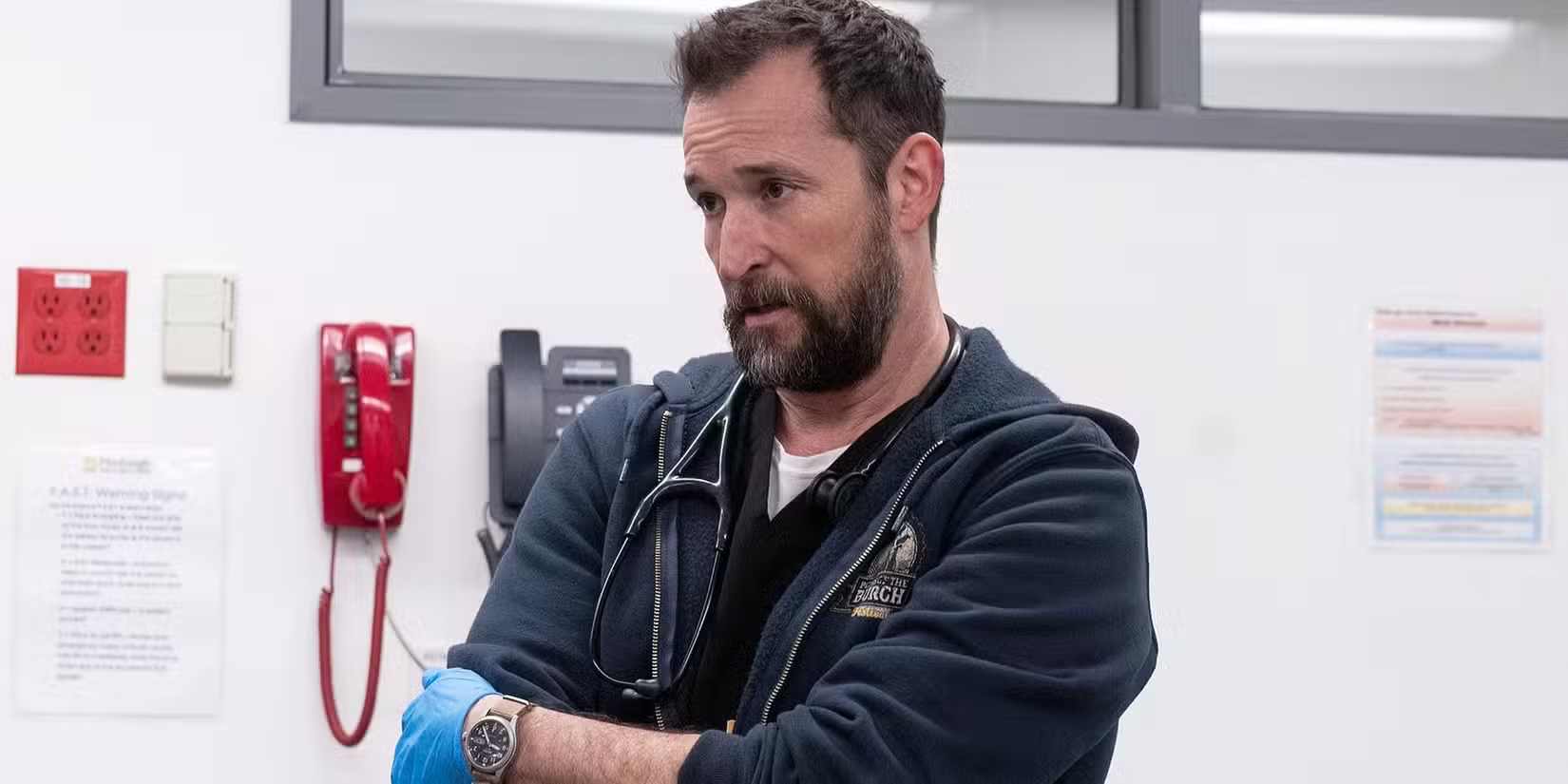
Everyone’s juggling a lot in The Pitt Season 2, but Isa Briones’ storyline as Trinity Santos feels especially full. Not only is being a second-year resident at Pittsburgh Trauma Medical Center’s Emergency Department especially taxing, but on this particular day, she also faces the return of Dr. Langdon (Patrick Ball), Dr. Robby’s (Noah Wyle) pending exit for his sabbatical, and the realization that she might not get precisely what she wants out of her relationship with Dr. Garcia (Alexandra Metz). As is very often the case with The Pitt, the writers do an exceptional job of blending workplace challenges with personal concerns to craft stories about fully realized people giving everything they’ve got to others, while trying to figure out how to care for themselves in the process.
With The Pitt closing in on its Season 2 finale, Briones carved out the time to swing by the Collider Ladies Night studio to discuss everything that’s happened through Episode 13, “7:00 PM,” before jetting off to New York City for her run in Just in Time on Broadway. We covered lessons learned from her father, Jon Jon Briones, takeaways from Star Trek: Picard, what it was like joining the cast of The Pitt, and, of course, everything Santos is trying to power through on July 4th.
Robby Leaving Is More Destabilizing for Santos Than You Might Think
“She’s losing a bit of a safe space.”

Dr. Robby is the Chief Attending Physician at the ED. Him leaving for a three-month sabbatical is bound to impact everyone working in the department, but it could prove especially trying for Santos.
In the middle of Episode 12, “6:00 PM,” Robby is supervising her, and when the patient embraces the risk he took that landed him in the hospital, Robby says, “Amor fait,” which means, “Love of fate.” Santos says back, “Memento mori,” which translates to, “Remember you must die.” Robby follows that up with, “Tomato, tomahto,” a response that leaves Santos speechless.
“Doing the scene, what we were really trying to solidify in these last few episodes was just how much she’s kind of clinging to Robby, and how him leaving is yet another destabilizing thing amongst so many destabilizing things in the day that she’s having. He’s one of the only people who knows what happened and who felt like was on her side with the Langdon stuff, and now she’s entering a world where he’s back and Robby’s gonna be gone. She’s losing a bit of a safe space, and so I think hearing him talk so morbidly about his trip is kind of like, ‘What the hell?’ It’s this like, ‘Oh, I might be really losing this person,’ and that just kind of digs it a little deeper for her to retreat into her little sadness shell.”

‘The Pitt’ Star Breaks Silence on The Show’s Divisive ICE Storyline
Fiona Dourif discusses Dr. McKay’s biggest Season 2 moments, including the Roxie storyline and her Episode 12 concern for Dr. Robby.
Santos Wants More from Garcia
“No one loves me, and I’m gonna be alone, and I should be alone.”

Another person Santos appears to be losing in Season 2 is Garcia. In Episode 10, “4:00 PM,” while passing in the hall, Santos calls Garcia out for criticizing her in front of Langdon and asks, “Whose side are you on?” Garcia tells her, “Langdon made a mistake and owned up to it. Let it go.” As one would expect, that doesn’t sit well with Santos and she continues to push her side of the argument. But, Garcia puts are hard stop on it by telling her, “You want to have sex and eat ramen in bed, I’m your girl, but if you want to talk about this Langdon shit again, call a therapist.”
Given the rocky state of their relationship and that it’s abundantly clear Santos isn’t getting everything she wants from it, I asked Briones to compare her relationship goals at the start of the show to what Santos’ is looking for from a partner now. She began:
“When you first meet her, she’s so go-getter and so coming-in-hot and wanting to prove herself, and I think there was obviously attraction there, but I also think it was like, oh, this is someone who is not off-put by my testing energy. She’s actually matching it and kind of likes it. So, I think there was kind of like an, ‘Oh, we feel like equals in a way, and we feel like we get each other.’ Also, ‘She’s in surgery. I want to go into surgery.’ There may be a little bit of that.”

What changed? As Briones put it, “I think now she’s caught feelings a bit.” She continued:
“You see that Whitaker has become a person that she is now kind of letting in reluctantly, and with Garcia, I think it’s like, this is someone who should be the person that I would let in, like a romantic partner. In her attempts, that has been shut down to make it go anywhere more serious. I think all of that compounding on this day is just leading her to further believe, ‘No one loves me, and I’m gonna be alone, and I should be alone.’ The one person who is showing her love and wants to be there for her is Whitaker, and she’s like, ‘Fuck you!’”
And this doesn’t just pertain to what’s happening in The Pitt Season 2, or even what’s happened since the beginning of the show. Santos’ frustrations are also connected to times in her life pre-The Pitt when she wasn’t heard. Briones explained:
“I think she’s felt not heard a lot in the past, obviously, about the Langdon stuff, but also about things far before the show starts that we hear a little bit about. I think she’s not been believed when she’s told the truth before, and so I think just wanting someone to hear her is a really big thing.”
Santos Needs Whitaker, And This Scene in Episode 12 Proves It
“Clearly everything is coming to the surface, and she has to spit this out at someone, and it’s gonna be him.”
As Briones noted, the one person who’s especially eager to hear her out and support her is a person she consistently pushes away — Whitaker (Gerran Howell).
Episode 12 concludes with a significant exchange between the two. It’s not just about Langdon. It’s about everything. It begins with Santos taking a blade from the suture cart and then when Whitaker asks her what’s going on, she lets it all out — the frustrations with the Langdon situation, feeling abandoned by The Pitt community, concerns about Robby leaving, pressure from Dr. Al-Hashimi (Sepideh Moafi), things not working out with Garcia the way she’d like, and then, to top it all off, she calls Whitaker out for not telling her about “squatting at Robby’s bachelor pad.”
It’s a phenomenal performance beat by Briones who imbues an exposition-heavy moment with significant emotion and subtext. When asked about tackling such a scene, Briones even mentioned, “Sometimes you have a dialogue like that where it’s clear you’re just trying to remind the audience what has happened, but it’s like, no, no, this was clearly everything is coming to the surface.” She continued:
“If you really look at the subtext of it, it shows how comfortable she is with him. She doesn’t really talk about anything with anyone else, but the fact that she’s willing to confront all this stuff to his face and accidentally show, ‘I’m scared to be alone,’ that’s really a very special character moment where you realize just how much she needs him.”
Looking for even more from Briones on Santos’ The Pitt Season 2 storyline? Be sure to watch her full Collider Ladies Night interview in the video at the top of this article.

- Release Date
-
January 9, 2025
- Network
-
Max
- Showrunner
-
R. Scott Gemmill
- Directors
-
Amanda Marsalis
- Writers
-
Joe Sachs, Cynthia Adarkwa
-

Noah Wyle
Dr. Michael ‘Robby’ Robinavitch
-

Tracy Ifeachor
Dr. Heather Collins

Y’all, the streets were buzzing on Thursday as Megan Thee Stallion made her highly anticipated return to Broadway. And let’s just say…she didn’t come to play. After a brief hospitalization due to health concerns, Megan stepped out looking fierce and fully back in the spotlight. And, she reminded everyone why she’s the definition of “Hot Girl Energy.”
RELATED: Megan Thee Stallion Speaks Out As More Details Are Reportedly Shared About What Led To Her Recent Hospitalization
Megan Thee Stallion Returns To Broadway After Health Scare
On Thursday, a clip shared to social media shows Meg dressed in a pink velour matching tracksuit as she hopped out of a sleek black SUV, phone in hand, staying lowkey with only a few people outside to witness her arrival. She didn’t seem to say much as she walked into what appeared to be the Broadway venue, but onlookers couldn’t help noticing her confident stride. And, the Houston-born rapper proved that even after a health scare, she is still bringing her signature style and presence wherever she goes.
Fans Send Love And Laughs Megan Thee Stallion’s Way
Fans online ran straight to TSR’s Instagram comment section to add in their two cents. Many pushed back at haters, pointing out that dehydration doesn’t take that long to bounce back from. Meanwhile, some questioned why people were shading her after a legitimate health scare. And of course, a few couldn’t resist cracking jokes, turning the moment into pure humor.
One Instagram user @adose.of.neci_ said, “Body tea!!! But I hope she listens to her body more and relax♥️”
This Instagram user @xleela94 added, “Yall do know you can bounce right back after being dehydrated 😂🤦🏾♀️”
And, Instagram user @mr_do_tooo_much shared, “Me after a hang over 😂 exhausted af“
Meanwhile, Instagram user @_mymflife_ commented, “Those stage lights are so hot! It’s easy to suffer exhaustion underneath them.“
While Instagram user @sauvion_kamaya joked, “Me after I leave his house at 5am😂”
Finally, Instagram user @theeecyn_city said, “At least she’s okay! 🙌🏽”
Hot Girl Meg Exits Broadway Show After Sudden Illness
Y’all, Broadway fans got a scare on Tuesday night when Megan Thee Stallion suddenly vanished mid-show during her debut as Zidler in ‘Moulin Rouge! The Musical.’ As previously reported, Megan became “very ill” during the performance and was rushed to a local hospital, with her symptoms reportedly including exhaustion, dehydration, and more.
Her hairstylist, Kellon Deryck, took to social media asking for prayers, while audience member Loren LoRosa tweeted about the sudden disruption and Meg’s unexpected exit. It was also reported that the FDNY responded to the theater for a female having trouble breathing, though it’s not officially confirmed if that was Megan. Despite the scary moment, Meg is set to continue her run in the show through May 17, proving Hot Girl Energy isn’t going anywhere—even on Broadway.
RELATED: Prayers Up! Megan Thee Stallion Reportedly Rushed To The Hospital In Middle Of ‘Moulin Rouge!’ Broadway Performance
What Do You Think Roomies?


Whether you’re an innie or an outie, you’ve undoubtedly enjoyed the workplace comedies of Adam Scott. Let’s all cater to this state auditor.

Don’t forget to sign in to your account in order to track your daily progress. If you need more trivia challenges, you can play today’s Movie Quiz, and you’ll find all of our current and archived quizzes here.
We’ve covered quite a bit this week. For today’s TV challenge, we’re testing you on Party Down and Parks and Recreation. It’s Adam Scott’s birthday, so why not check out his Lumon-ous television comedies? Scroll down for the cold open!
Entertainment
Meryl Streep is genetically related to “Devil Wears Prada” inspiration Anna Wintour: 'Explains everything' (exclusive)
:max_bytes(150000):strip_icc():format(jpeg)/anna-wintour-1-b04e194c1bec4e84a5f5c6517c1c40fe.jpg)
Streep tells EW in a statement that she’s “chuffed” to find out she’s related to the former “Vogue” head who inspired her character in the film.
Grey’s Anatomy is shaking things up at Grey Sloan Memorial Hospital with a concerning investigation ahead of the season finale.
During the Thursday, April 2, episode of the hit ABC series, Miranda (Chandra Wilson) tried to hide the fact that Kwan (Harry Shum Jr.) secretly gave a patient an experimental treatment that was denied by the FDA.
Miranda’s husband, Ben (Jason George), was the first to catch on and then Richard (James Pickens Jr.) caught wind of it. He called Miranda into his office — not knowing Kwan was at fault — to warn her of an official investigation into the incident.
Kwan’s future at Grey Sloan Memorial Hospital was called into question after news broke that Kevin McKidd and Kim Raver are leaving the show at the end of the season.

Grey’s Anatomy has been going through a surprising amount of cast exits and onscreen deaths. The medical drama, which premiered in 2005, is focused on the personal and professional lives of surgical interns, residents and attendings at the fictional Seattle Grace Hospital a.k.a Seattle Grace Mercy West Hospital a.k.a Grey Sloan Memorial Hospital. Due to […]
Creator Shonda Rhimes hinted at how the season will wrap up for Teddy (Raver) and Owen (McKidd) in a statement last month.
“Over the years, we have had the privilege of watching Owen and Teddy’s love story evolve and deepen — two characters who always seem to find their way back to each other. It is both bittersweet and joyful to give this couple the happy ending their story deserves,” she teased. “Kevin and Kim bring extraordinary talent, nuance and heart to their roles as Owen and Teddy. Their contributions leave an indelible mark on Grey’s Anatomy, both in front of and behind the camera. I’m so grateful to have had the opportunity to work with them both and to see them shine.”
She concluded: “While we will all miss seeing them in the halls of Grey Sloan Memorial each day, I am excited to witness where Kim’s and Kevin’s journeys will take them in the future.”
Grey’s Anatomy has faced plenty of cast shake-ups this season alone. Amelia (Caterina Scorsone) chose to take a sabbatical after the shocking death of her colleague Monica (Natalie Morales). It was subsequently reported that Scorsone’s break would last until the end of 2025 as the result of a cost-saving measure.

Katherine Heigl, Patrick Dempsey, Justin Chambers and more stars have left Grey’s Anatomy — for various reasons. Created by Shonda Rhimes and starring Ellen Pompeo, Grey’s Anatomy debuted on ABC in 2005. Pompeo (Meredith Grey) left the show as a series regular following season 19 but continued to provide voiceover narration and make special guest […]
The show is already reducing the minimum guarantees for its veteran cast members to 14 out of its 18 episodes per season. While some of Grey’s Anatomy‘s consistent stars will be missing for four episodes, Scorsone’s absence was doubled.
Showrunner Meg Marinis previously hinted that not every character would be safe this season.
“But even in the last two seasons with what you saw this year, we had to reduce the cast a little bit [because of industry-wide budget cuts], and everybody has very passionate feelings about their favorite characters,” Marinis told The Hollywood Reporter in May 2025. “But if we can get the writers upset then we know we’re doing it right. It’s not as satisfying a story if people aren’t upset when someone leaves. It’s supposed to make people upset and sad, so I’m sure there’ll be some arguments. But I’ve been persuaded before to change my mind on things.”
Grey’s Anatomy airs on ABC Thursdays at 10 p.m. ET before streaming the next day on Hulu.
:max_bytes(150000):strip_icc():format(jpeg)/brady-ebert-turnstile-040226-1-14bbf9db6c7e45e3a6c05ebe09111868.jpg)
Brady Ebert, who exited the band in 2022, is accused of hitting lead singer Brendan Yates’ dad with his car after an argument on Sunday.

Jen Shah reached out “privately” to Mary Cosby to send her condolences after her son Robert Cosby Jr. died.
In a clip from her People interview that was posted via Instagram on Thursday, April 2, Shah, 52, said she reached out to her former Real Housewives of Salt Lake City costar, 53, following the tragic news.
“I did reach out to Mary. I privately reached out to Mary because I felt like that was the respectful thing to do,” Shah told the outlet. “ I sent her a card, you know, and just told her how deeply sorry that I was to hear about the passing of Robert Jr.”
Shah added that she told Mary that “she’s in my family’s prayers every day” after hearing the news.
“Even though, you know, I hadn’t talked to her for, obviously, a few years while I’ve been gone that I care about her, especially with right now, you know, what she’s going through,” Shah added. “I chose to reach out privately because I didn’t want it to be a distraction if I were to do it publicly.
Shah added that she was concerned that the focus might shift to be on her response to the news rather than the loss itself.
“I didn’t want it to become about me responding. I wanted it to remain about what Mary was going through and about her son and honoring his memory,” Shah explained.

Jen Shah. (Photo by: Chris Haston/Bravo)
Us Weekly confirmed on February 25, that Robert Jr. died at age 23 following a suspected overdose in his parents’ Utah home.
“Our beloved son Robert Jr. has been called home to the Lord,” Mary shared in a statement to Us. “Though our hearts ache, we take comfort in God’s promise and in knowing he is finally at peace. We are grateful for your prayers and trust in the Lord to carry us through this time of sorrow.”
Robert Jr.’s addiction battle was featured on RHOSLC throughout the past two seasons. Viewers often applauded Mary for her candid approach to opening up about her son’s struggles.
Meanwhile, Shah was released from Federal Prison Camp in Bryan, Texas, on December 10, 2025.
Upon her release, Judge Sidney Stein also ordered Shah to serve five years of supervised release “to make sure you don’t end up committing another crime.”
Shah had been in custody since February 17, 2023, for her role in a long-running nationwide telemarketing fraud scheme.
In her first interview since her release, Shah explained to People on Wednesday, April 1, why she ultimately accepted wrongdoing and pleaded guilty to conspiracy to commit wire fraud in July 2022 after previously entering a not guilty plea.
“There were actual victims as a result of this conspiracy. I had never seen anything with my own eyes. That changed things for me,” she added. “I’m sorry. I’m accepting responsibility, and I’ve made it my mission to make sure that people are paid back.”
Wedding bells are ringing for Crystal Harris and her fiancé James Ward!
Taking to Instagram on Thursday, April 2, the former Playboy model, 39, teased the couple’s nuptials.
“Baby where the hell is my husband… probably waiting for me to walk down the aisle 🥹💍 Today is the day!!” Harris captioned the post.
The accompanying video showed Ward, 42, enthusiastically picking Harris up in his arms. Harris wore a casual white dress for the occasion, while the backdrop appeared to their wedding destination, the South Pacific’s Cook Islands. The words “wedding day” were also written in the video’s text.

Crystal Hefner is engaged to James Ward after one year of dating, they exclusively reveal to Us Weekly. Ward proposed to Hefner, 39, with a six-carat, vintage mine-cut diamond set on a whisper-thin band earlier this month on the seaside deck that he built the former Playboy model at her Hawaii home. “It truly feels […]
Posting via her Instagram Stories the same day, Harris also showed a glimpse of the romantic spot they seemingly planned to exchange vows. A clip showed a beach with rocks strategically placed in a heart shape while a floral arch stood at the center, marking where the duo would likely say “I do.”
Harris also shared a video and photo of the happy couple brandishing wide grins on a boat ride. Harris appeared to be wearing her wedding dress for the journey, while groom Ward looked dapper all suited up.
Last month, Harris, who is the ex-wife of late Playboy mogul Hugh Hefner, shared that her wedding date was getting close.

James Ward and Crystal Harris. (Photo courtesy of Crystal Harris/ Instagram)
“Less than two weeks until I marry my best friend. My adventure buddy, my protector, the person who gives me strength to take on the world 💪” she gushed via her Instagram on March 22.
She continued, “You are such an incredible human. You steady me, lift me, and remind me who I am on the days I forget. With you, life feels bigger, softer, and more meaningful all at once. I don’t just feel loved, I feel safe, seen, and unstoppable. I can’t wait to do this life with you 🤍”
Harris and Ward announced their engagement after one year of dating in May 2025.

Crystal Hefner and boyfriend James Ward are celebrating their first anniversary together with a luxurious getaway to Africa, and the former Playboy model is sharing the special photos exclusively with Us Weekly. We’re celebrating in a way that reflects who we are as a couple — with adventure, heart and purpose,” Hefner, 38, tells Us of the April 2 […]
“It truly feels like a full-circle moment. James completely surprised me. He had a hidden staircase and a winding trail cleared to reveal a handcrafted deck perched above a dramatic cliffside overlooking the ocean,” Harris exclusively told Us Weekly at the time. “It was the exact spot where we’d had a quiet picnic together a year ago — a place that became ‘ours.’ I had no idea he was secretly turning it into something permanent and symbolic. I thought we were just going for a walk, but when I saw the flowers, the handwritten notes, and the sea stretching endlessly in front of us, I knew something extraordinary was about to happen.”
Harris previously posted about the proposal via Instagram, writing in May 2025, “I said yes (of course) with my smile, my soul, my every cell—because loving you is the most natural thing I’ve ever done.”
Sports1 minute ago
Masters-inspired artists play (and paint) by their own set of rules

NewsBeat3 minutes ago
Bolton Council approves plan to widen gate at former school

Business4 minutes ago
TDVI: The Best Way For Income Investors To Invest In Tech (BATS:TDVI)


-

 NewsBeat7 days ago
The Story hosts event on Durham’s historic registers
-

 NewsBeat19 hours ago
Steven Gerrard disagrees with Gary Neville over ‘shock’ Chelsea and Arsenal claim | Football
-

 Sports7 days ago
Sweet Sixteen Game Thread: Tide vs Michigan
-
Entertainment4 days ago
Fans slam 'heartbreaking' Barbie Dream Fest convention debacle with 'cardboard cutout' experience
-

 Crypto World2 days ago
Gold Price Prediction: Worst Month in 17 Years fo Save Haven Rock
-

 Business14 hours ago
No Jackpot Winner and $194 Million Prize Rolls Over
-
 Entertainment6 days ago
Lana Del Rey Celebrates Her Husband’s 51st Birthday In New Post
-

 Tech5 days ago
The Pixel 10a doesn’t have a camera bump, and it’s great
-
Crypto World3 days ago
Dems press CFTC, ethics board on prediction-market insider trades
-

 Sports3 days ago
Tallest college basketball player ever, standing at 7-foot-9, entering transfer portal
-

 Tech4 days ago
Avatar Legends: The Fighting Game comes out in July and it looks pretty slick
-

 Tech3 days ago
EE TV is using AI to help you find something to watch
-

 Fashion5 days ago
Amazon Sundays: Soft Spring Layers
-

 Business1 day ago
Login and Checkout Issues Spark Merchant Frustration
-

 Fashion6 days ago
When Evening Dressing Gets Colorful for Spring
-

 Tech3 days ago
How to back up your iPhone & iPad to your Mac before something goes wrong
-

 Tech5 days ago
Elon Musk’s last co-founder reportedly leaves xAI
-

 Tech4 days ago
Apple will hide your email address from apps and websites, but not cops
-

 Crypto World4 days ago
U.S. rule change may open trillions in 401(k) funds to crypto
-

 Politics4 days ago
Should Trump Be Scared Strait?
You must be logged in to post a comment Login