
Entertainment
Cops Called to Shia LaBeouf’s Louisiana Home for Alleged Fight Between Exes


Shia LaBeouf
Cops Called To NOLA Home For Alleged Fight Between Exes
Published

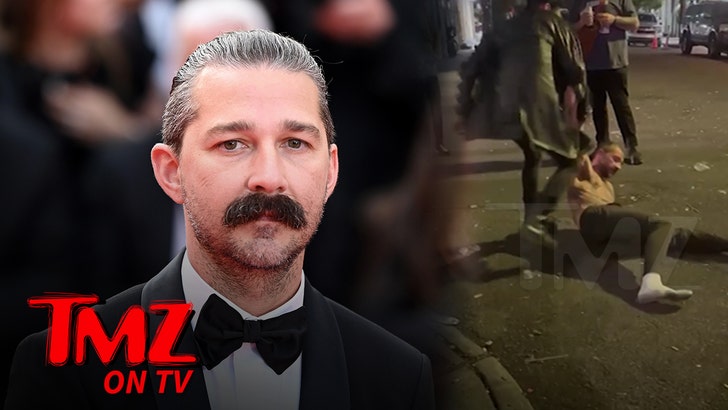
Cops were called out to Shia LaBeouf‘s New Orleans home a few times prior to his Mardi Gras arrest — including once for an alleged fight between exes that allegedly included a punch below the belt … according to police records obtained by TMZ.
Docs show a call for service at a NOLA home belonging to Shia for an alleged incident in early February between an unnamed man and the man’s ex-girlfriend.

According to the police report, obtained by TMZ, cops say the man told police he was inside his home Feb 8. around 11:30 PM showing the place to his girlfriend when he heard a knock at the door and saw his ex-girlfriend entering the home and running toward them.
Police say the man told them he told his GF to run from his ex and he got between the women … and that’s when he claims his ex punched him in the groin area, making him “slump over and grimace due to the pain.”
Cops say the man told them he dated the ex in November but broke the relationship off in December. Police also say the man told them he was not injured during the incident and refused medical services.
TMZ.com
Police say the man was asked five risk questions about domestic violence … and he told them he wasn’t sure if his ex would seriously injure or kill him … he told cops he knew “she was arrested for stabbing someone” in the past. The man also told police the ex threatens him in “every interaction” and that things were only “getting worse.”
The report says an arrest warrant was issued for the ex-girlfriend.
As we first reported … Shia was arrested last week in New Orleans after allegedly punching a bar employee, sparking a brawl before cops arrived. He was later charged with two counts of simple battery.
The arrest came months after Shia’s split from estranged wife Mia Goth. We broke the story … following the breakup, Shia relocated from Los Angeles to New Orleans in December, purchasing a 3-bedroom, 3.5-bath Uptown cottage for just over $1 million.

TMZ.com
Shia hasn’t been shy about going out in NOLA since the arrest … and we got video of him packing on the PDA with a mystery brunette Saturday night at a bar just off Bourbon Street.
We reached out to Shia’s camp … so far no word back.

Continue Reading
Entertainment
Natasha Lyonne says she took sleeping pill before being escorted off flight, claims she was 'detained' by ICE
:max_bytes(150000):strip_icc():format(jpeg)/Natasha-Lyonne-041026-8a9c422a422b48bb86f2aa73d3979bb1.jpg)
The actress added, “Never had a problem with @Delta or @TSA before.”

Monarch: Legacy of Monsters expands on the MonsterVerse world, the next entry of which, Godzilla x Kong: Supernova, is slated for release in March 2027. The series delves into the mystery behind Monarch, the organization whose one-time priority was to search, hunt, and destroy Titans, hiding them from the world, into one that actively protects them. It’s a big hit on Apple TV… and on Prime Video. Yes, you read that correctly. The two giant streamers are playing nice in the sandbox, but the “how-and-why” of their partnership is far less interesting than the “why” Monarch: Legacy of Monsters is capturing the imagination of their respective subscribers.
Typically, if a series or film on a streamer happens to catch your fancy, the only way to actually see it is to subscribe to said streamer, i.e. Stranger Things on Netflix. As such, Monarch: Legacy of Monsters‘ appearance on Prime Video is definitely one of those stranger things, but there is a reason. Prime Video is offering free access to the Apple TV monster hit – yes, intended – without the need to fully commit to an Apple TV subscription, among other notable offerings like Ted Lasso and The Morning Show. It’s promoting the availability to tie in Apple TV as an add-on subscription with one’s Prime account (you can not, however, tie in an existing Apple TV subscription).
It’s a brilliant promotional strategy that is paying off for both parties. Monarch: Legacy of Monsters is a huge hit, recently having surpassed 250 consecutive days on the Apple TV streaming charts in the U.S. Serving as one of the streamer’s best offerings, it’s the perfect series to tease what’s available on Apple TV. And when the window closes on the promotional access, those who want to find out what happens in the engaging series over the balance of its second season will need that subscription, driving up its subscriber base. For Prime, because the Apple TV subscription add-on is only accessible through Prime, they aren’t losing anyone, and, in the process, reinventing itself as an indispensable hub to access other streamers.
It’s No Surprise That ‘Monarch: Legacy of Monsters’ Succeeds on More Than One Streaming Platform
While it may be moderately surprising to see Prime Video and Apple TV working together, the reason Monarch: Legacy of Monsters succeeds on both platforms is not surprising in the least. The series’ events take place across two timelines, jumping between them in a non-linear fashion. One is set in the 1950s, prior to Kong: Skull Island, where the U.S. military forms “Monarch,” a small scientific group after the destruction of the U.S.S. Lawton, comprised of three people: Officer Lee Shaw (Wyatt Russell), scientist Keiko Miura (Mari Yamamoto), and cryptozoologist Bill Randa (Anders Holm). The trio encounters the Ion Dragon and finds evidence of Godzilla, which prompts the military to try to kill him with the “Castle Bravo” atomic explosion at Bikini Atoll. The attempt fails, forcing the government to authorize funding for Monarch, creating an entity that monitors Titans while keeping their existence secret.

Apple TV’s 2-Part Sci-Fi Blockbuster Is Officially Taking Over the World
The hit series remains a heavyweight for the streamer.
The second timeline starts in 2014, in the aftermath of the events covered in Godzilla, with the battle between Godzilla and the MUTOs earning the moniker “G-Day.” With the Titans no longer a secret, Monarch shifts its agenda to a concerted effort to understand and protect them, putting Monarch at odds with the military and with Apex Cybernetics, who have their own agenda, looking to exploit the Titans for their purposes. Uncovering the layers of the Monarch mystery are Cate (Anna Sawai) and Kentaro (Ren Watabe), drawn in through their quest to find their father Hiroshi (Takehiro Hira), who is deeply involved with Monarch, and May (Kiersey Clemons), a former employee of Apex. Connecting the two timelines is Lee, played in the present by Kurt Russell, and Keiko, who was stranded between the two eras in Hollow Earth, first introduced in Godzilla vs. Kong.
Monarch: Legacy of Monsters is engaging, with enough Titan action to sate kaiju lovers, particularly as the series progresses, with the introduction of Titan X, a massive aquatic creature with tentacles that may prove to be too much for both Godzilla and Kong, an especially great addition. But the draw is the human story that is largely missing from the MonsterVerse films themselves. There’s a personal investment that takes its toll on the people involved, and the balance between the kaiju action and the human perspective allows for a connection with the series’ protagonists without them getting lost in the hubbub. Coupled with its high-quality production value, particularly when it comes to creating the CGI beasts and critters that appear, Monarch: Legacy of Monsters isn’t just a spin-off of its cinematic MonsterVerse kin, but an integral part in creating a fully-realized mythology.
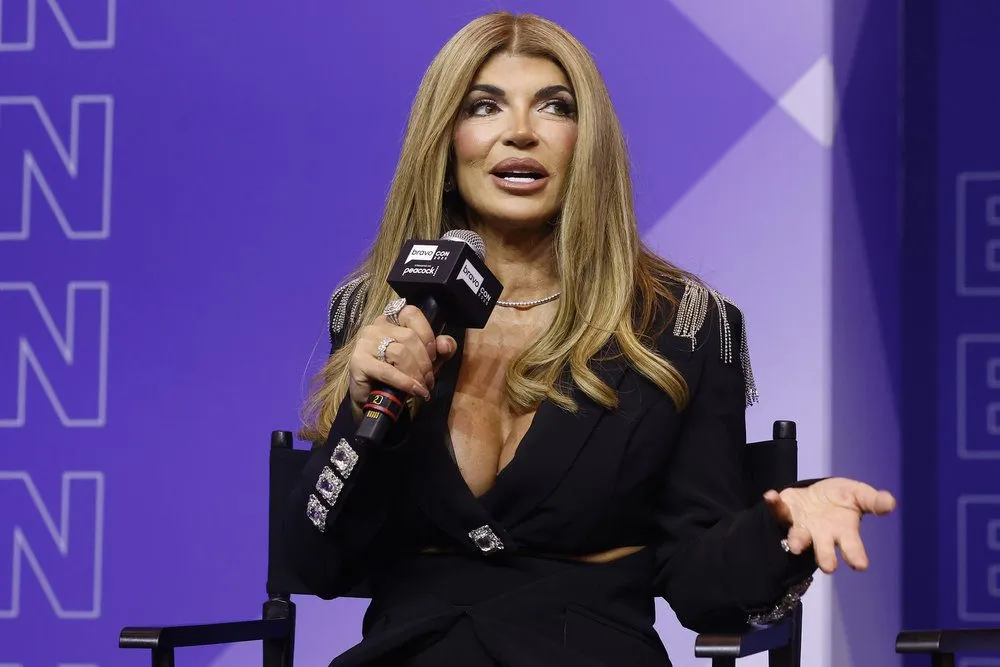
Teresa Giudice opened up about reuniting with her brother, Joe Gorga, and his wife, Melissa Gorga, on The Real Housewives of New Jersey following a lengthy filming break.
“It’s baby steps and we’re not sure if we’re going to film together or not. Bravo hasn’t said anything. But, if we do … there’s a running joke that I don’t watch my show but this time I’m going to definitely watch it,” Giudice, 53, said on the Thursday, April 9, episode of the “Couple Things” podcast.
Teresa went on, “Hopefully, we’ll both have each other’s backs. That’s all I want. I love that. I want to show America what my family was really about, how I was raised. My brother and I always had each other’s backs.”
The RHONJ star admitted that the franchise was placed on a two-year break by Bravo “because of how toxic” her relationship with the Gorgas became. The network shelved the show after the cast couldn’t even agree to film a season 14 reunion together in 2024.
However, Bravo confirmed in March that Teresa, Melissa, 47, and Dolores Catania will all return for The Real Housewives of New Jersey season 15. A full cast has yet to be announced but production is expected to start this spring. (RHONJ alumni Margaret Josephs, Jennifer Aydin and Jackie Goldschneider have all confirmed their exits ahead of season 15.)
This unexpected turnaround for RHONJ followed Teresa and the Gorgas sharing at BravoCon 2025 last November that they’d reconciled off-camera.
“I saw my husband’s relief [over the reconciliation], and for me, that’s the most important thing. It’s the siblings, and it’s the kids, and this trickles down,” Melissa told Us Weekly exclusively at BravoCon 2025. “To see the relief in Joe’s eyes and in his face, to me, I’m like, ‘I’m game. Let’s go. Let’s do this.’”
She added, “We can’t really hash it out too deep, because we’ll just keep circling back. It’s better to just say, ‘Listen, we’ve all made some mistakes here, and it’s time to move forward.’”
While some fans were skeptical, Teresa assured Us that her decision to make peace with the Gorgas was completely genuine.

Teresa Giudice in November 2025. Gabe Ginsberg/Bravo
“Ask my brother, I’m the type that holds grudges. I’m very old school,” the RHONJ OG told Us at BravoCon 2025. “For me to do this, it’s real. He said he was waiting for me because he knew how upset I was about things.”
Teresa slammed critics of the family reunion, saying anyone would have a “mean heart” and a “mean soul” to doubt her.
“Everybody should want family to be together. I want to show America what a real Italian family looks like,” she added. “My ex’s family? They are all together, united. That’s what I always wanted. I want to show America that we could be united, and I want to show our children that too. It’s really important.”


The drama between Teresa and the Gorgas has been an underlying theme of RHONJ dating back to Melissa officially joining the cast in season 3. Over the years, the Giudices and the Gorgas clashed at a family christening and Teresa denied starting rumors that Melissa was a stripper before she met Joe, 52, among various squabbles.
The two sides have reconciled in the past but have always fallen out again over time.
The Real Housewives of New Jersey airs on Bravo. Old episodes are available to stream via Peacock.

Frankie Muniz knows exactly what he wants. During his appearance on the “Lightweights Podcast with Joe Vulpis,” the “Malcolm in the Middle” actor recalled getting the chance of a lifetime when he was younger, but refused the offer because of his crush on another child star.
Frankie Muniz Had A Massive Crush On Amanda Bynes When He Was Younger
Muniz built quite a resume as a child actor, starring in “My Dog Skip” and “Agent Cody Banks.” The one show he wanted to be on, however, was “All That” with Nickelodeon stars Drake Bell, Josh Peck, and, of course, Amanda Bynes.
Muniz called being on the show a “dream” of his as a child, particularly because of his massive crush on Bynes, who later starred in her own show, “The Amanda Show.”
While Muniz wasn’t part of either show’s cast, his dream of meeting and working with Bynes came true a little while later when he was asked to host the Nickelodeon Kids’ Choice Awards.
“And Amanda Bynes was one of the other co-hosts. And I was like, ‘I’m gonna meet Amanda Bynes, right?’ It’s this huge deal. So I’m so excited, right? I’m like, this is my chance, you know?” he said.
Frankie Muniz Turned Down The Chance Of A Lifetime To Meet Bynes In The Early 2000s

Before the ceremony, however, Muniz said he received an offer to host “Saturday Night Live.”
“[My mom] goes, ‘You got asked to host Saturday Night Live,’ and I’m like, ‘What’s that?’” he recalled. “And she’s like, ‘It’s huge. You’ll be one of the youngest people ever [to host], it’s this big deal. Blah blah blah.’ I’m like, ‘When?’ She’s like, ‘April 3rd.’ And I’m like, ‘Oh, hell no! I am going to the Kids’ Choice Awards. I don’t care. I’m meeting Amanda Bynes at the Kids’ Choice Awards.’”
Muniz already had a strong work ethic, he said, which is why he told his mom he wouldn’t be able to accept the offer.
“I committed to it, I’m not going to back out of the kitchen. They’ve been airing my commercial saying I’m going to be co-hosting,’” Muniz added.
Muniz got even closer to Bynes years later, when the pair starred in the comedy film “Big Fat Liar,” which followed a 14-year-old compulsive liar whose school assignment is stolen by a Hollywood producer and turned into a feature film.
Frankie Muniz Was Intimated By Bynes While Working With Her

In an interview with PEOPLE, Muniz looked back on the film with Bynes, calling it a “full-circle moment.”
The movie, which also starred Paul Giamatti, grossed $53 million at the box office and won Bynes an award for “Favorite Movie Actress” at the Kids’ Choice Awards in 2003.
While he’d been on set before, Muniz recalled being nervous for this role because he was working with Bynes so closely.
“I actually remember being fairly intimidated by her on set, because she was just so naturally funny. I wasn’t really someone who did a lot of ad-libbing and all that kind of stuff,” he said.
However, the pair “got along great,” Muniz said.
Muniz Worked With Another Childhood Star In The Early 2000s

And Bynes isn’t the only megawatt star Muniz worked with as a young kid. He also worked with “Lizze McGuire” alum Hilary Duff, calling her one of the “first friends” he made in Los Angeles.
“She was living at the Oakwood Apartments, which is where all the, I don’t want to say just child actors, but a lot of people come for pilot seasons and stuff,” he said.
Muniz explained that he used to visit the apartment complex many times because of his connections there.
His bond with Duff grew even more once they both began starring in their own sitcoms. “I was on an episode of her show on Lizzie McGuire, and I got to do the film with her and had a blast,” he said.
Muniz Is Back In The Spotlight
And while “Malcolm in the Middle” concluded in 2006, Muniz reprised the titular character in the Hulu reboot, “Life’s Still Unfair.”
“When I was Malcolm 20 years ago, I was a kid,” Muniz told PEOPLE about portraying the character again after 20 years. “I was playing a kid, and it made sense to be in the situations he was in a little bit. And kind of the same thing now. I am 40 years old. I do have a kid at home.”
The series is now available to stream on Hulu, and Muniz boasted about how “proud” he was of the finished product.
“I haven’t said that many times when I leave a set. Normally, I’m kind of like, ‘I probably could have done that better. I could have tried this. I could have done that.’ But every day I left the set on this revival, I was really proud of what we were making,” he said.
Us Weekly has affiliate partnerships. We receive compensation when you click on a link and make a purchase. Learn more!
Let’s be honest — when Bethenny Frankel, Ramona Singer and Sonja Morgan all agree on something, we’re listening. The former Real Housewives of New York City stars have spent years in front of cameras, so they know exactly what it takes to keep skin looking smooth and lifted. However, the real shocker is that their go-to wrinkle cream isn’t some luxury splurge — it’s a $28 drugstore staple.
The trio reunited in partnership with RoC and didn’t hold back about what they actually use. Their top pick? The brand’s Deep Wrinkle Rich Cream, a formula designed to target dryness, firmness and fine lines all at once. Given that the reality stars are 55, 62 and 69 respectively — with skin that still looks incredibly youthful! — we’re definitely taking notes.
Get the RoC Deep Wrinkle Rich Cream for $28 at Amazon! Please note, prices are accurate as of the publishing date but are subject to change.

Finding a sunscreen that actually works for sensitive skin — without stinging, clogging or leaving a heavy film — isn’t always easy, which is why Cameron Diaz keeps her routine simple with one that checks all the boxes. Her go-to SPF, the Colorescience Colorescience Brush-On Sunscreen, is known for being gentle, lightweight and easy to […]
What makes RoC’s cream stand out starts with its formula. It’s powered by the brand’s patented retinol, which is designed to be more potent than typical versions, helping smooth the look of deep wrinkles over time. At the same time, it’s balanced with bio-ceramides that support the skin barrier, so it hydrates while it treats.
There’s also calcium infused into the formula, which helps revitalize and strengthen the skin, resulting in a firmer, more lifted appearance. This makes it a cream that works on multiple concerns at once, delivering up to 100 hours of hydration while improving texture day after day. Also dermatologist-tested, fragrance-free and gentle enough for sensitive skin, it’s an easy addition to almost any routine.
Plus, it’s not just a Housewife favorite — the Deep Wrinkle Rich Cream is a hit with everyday shoppers, too, with more than 3,000 sold in the past month. One reviewer praised the “visible results,” sharing that their skin feels “softer” and “firmer.” Another said they noticed a “noticeable reduction” in fine lines and wrinkles “pretty much instantly” after starting use.
Bethenny, Ramona and Sonja might not agree on everything, but this wrinkle cream is clearly the exception. It simplifies your routine while delivering smoother, firmer-looking skin over time. Add it to cart for just $28 on Amazon and see the RHONY-approved difference.
Get the RoC Deep Wrinkle Rich Cream for $28 at Amazon! Please note, prices are accurate as of the publishing date but are subject to change.
Looking for something else? Explore more from RoC here and don’t forget to check out all of Amazon’s Daily Deals for more great finds!

With Amazon’s Big Spring Sale ending soon, now’s the chance to snag what you’ve been eyeing before it returns to full price. One item that definitely made its way into our carts? Charlotte Tilbury’s revamped Magic Cream, which is surprisingly discounted by 20%, despite recently hitting the market. The original Magic Cream has been a […]

Since Stephen King has written a massive number of books, he’s also, quite naturally, had to write a huge number of endings, and some of those endings aren’t exactly well-loved. Even if you want to look at his best works, you’ll find people who have issues with how those books end up wrapping up, as can be seen with the likes of The Stand, It, and the final book in The Dark Tower series.
In the eyes of this writer, those endings are all good, actually. And then there are also books like 11/22/63 and Pet Sematary that have genuinely great endings, or at least endings where most people are like, “Hey, yeah, that wasn’t bad.” The following novels, on the other hand, do not conclude very well, and all of them have some of the worst endings Stephen King has written to date.
8
‘Cell’ (2006)

The best part of Cell is how it opens, and that’s not too controversial an opinion to have, by any means. This is one of a fair few Stephen King stories where the author expresses his displeasure with cell phones, but while such “old man yelling at cloud” moments are usually relegated to little one-off moments, here, the whole book has that kind of energy. The phones turn people into zombies, basically, or zombie-like creatures.
And when it’s all starting to go down, early on, it’s kind of thrilling, with Cell being one of many Stephen King books that the author manages to get off to a good start. But it becomes increasingly harder to stay invested, even with the novel not exactly being an epic, by any means (there are longer books by King that stay entirely interesting throughout). It’s a novel that gets slowly worse as it trudges along to an eventually merciful ending, but at least the book still manages to be a potentially decent (or not entirely irredeemable) read, unlike the movie adaptation of Cell.
7
‘The Tommyknockers’ (1987)
The Tommyknockers sees Stephen King getting very weird, even by the standards of a King book released in the 1980s, and there are probable reasons for that there isn’t time to get into here. Let’s just stick to the basics, as much as that’s possible, for such a wild and chaotic book. In The Tommyknockers, the people of a small town all become affected by an object discovered in the woods, and said object seems to be of an extra-terrestrial origin.
Stephen King isn’t the best at sci-fi, but he’s helmed some good ones a little more recently than The Tommyknockers, like 11/22/63 and Under the Dome (the ending to the latter isn’t quite as disastrous as some people make it out to be). With The Tommyknockers, though, you get the sense he really wasn’t in control, and while the wildness of it all can be sporadically fun, the whole thing eventually collapses under its own weight, especially near the end. Finding a final page and getting through it feels like a mercy kill; like The Tommyknockers finally being Old Yeller’d. Takes a while to get there, but better late than never, right?
6
‘Holly’ (2023)

If you read everything Stephen King has ever written, you’re going to run into the character of Holly Gibney a fair few times. She was introduced in Mr. Mercedes, then played a supporting role in the following two books centered around Bill Hodges, all before having another supporting role in The Outsider, and then going on to be at the center of one of the novellas featured in If It Bleeds.
Holly is a fairly weak novel, and pretty half-hearted, with an ultimately laughable pair of antagonists who are brought down in a boring and predictable fashion.
All these stories ended up better than Holly, which is, unfortunately, the character’s first protagonist role in a full-blown novel, and the novel itself is a bit of a mess. After If It Bleeds, which explicitly takes place at the end of 2020, Holly is all about COVID and the main character dealing with it, while taking on a case, which wouldn’t feel jarring if If It Bleeds had mentioned it. But it couldn’t, since King wrote it before COVID, and then he decided that Holly’s world would have COVID anyway, just not the sort that anyone worried about in 2020, anyway. Even beyond that, Holly is a fairly weak novel, and pretty half-hearted, with an ultimately laughable pair of antagonists who are brought down in a boring and predictable fashion, by the book’s (eventual and merciful) end.
5
‘Lisey’s Story’ (2006)

Of all the dozens upon dozens of novels King has written, the man himself considers Lisey’s Story as his best, and he’s welcome to feel that way, even if it’s a little strange he does. Okay, okay, Lisey’s Story is an undeniably personal novel, and for better or worse, you do really feel that while reading it, since it’s about mortality, grief, and writing, all centered around a recently widowed woman dealing with the loss of her husband, who was a writer.
She grapples with memories of him while uncovering things he’d written, and then there’s also some stuff involving a different realm or something, and everything kind of merging and getting messy and, look, it’s a really annoying read. The way the characters talk to each other, and the way it just goes on and on… it’s infuriating, and beyond self-indulgent. If someone who wasn’t King tried to get Lisey’s Story published, it would almost certainly not have been accepted without radical edits. That it ends badly isn’t massively disappointing, in all honesty, since it also starts and progresses throughout (all before the ending) badly, too.
4
‘Desperation’ (1996)

There’s a sister novel to Desperation called The Regulators, and that’s probably the worse book overall, but Desperation ends up being a little more disappointing when it comes to its ending. The Regulators (one of King’s Richard Bachman books) is a mess throughout, but Desperation does have a pretty great start that’s heavy on mystery, involving various people who are all abducted and held captive in a small town by a potentially possessed – or perhaps just deranged – police officer.
Once the truth of what’s happening starts to get revealed, things suddenly become less interesting. Without going into too much detail, Desperation is kind of just another rather fantastical/supernatural battle of good vs. evil, in the end, and one that King had done better before, and with more interesting characters, too. If you read the first half of Desperation and make peace with a lack of conclusion, you’ll probably come away more satisfied than if you stick it out and actually finish the dang thing.
3
‘Elevation’ (2018)

One of two novels about rapid weight loss that Stephen King has written, Elevation is a good deal more optimistic than Thinner, which is the other one, and also, Elevation is a bit of a fantasy (or magical realism) novel compared to the horror focus of Thinner. In Thinner, a man is cursed to lose weight, while in Elevation, a man gradually gets lighter and lighter, all to the point where it seems like he might just float off into the atmosphere, at a point.
And… uh… that’s what happens. This is barely a novel, and sometimes gets called a novella, which feels more accurate. Elevation has been spoiled here, but you’re better off knowing about how silly the ending is (and also, the ending happens so soon after the beginning of the story, so it’s all very slight, in any event). But hey, it’s got that Castle Rock setting. That’s always a somewhat fun town to go back to, right?
2
‘Gwendy’s Final Task’ (2022)

Like Elevation, Gwendy’s Final Task makes for a pretty short read, and it’s also one of several books King has co-written, with the other author here being Richard Chizmar. It would be nice to feel sincere appreciation for the Gwendy trilogy and highlight it as being underrated, but nah, it’s kind of messy. The first book is a nice (but slight) coming-of-age/fantasy/horror book, and then the second, which was written solely by Chizmar… okay, that one’s not great.
But King came back for the third book, Gwendy’s Final Task, and his return did very little. This book concludes the whole trilogy in an admirably baffling fashion, so that makes it more memorable than book #2, albeit maybe not for the reasons you want a book to be memorable. The titular character goes to space, and also, she has Alzheimer’s. In the first book, she was a child, and in the second book, she was a young politician. This is skimming over a lot of stuff, but even in context, reading the whole bleeding thing, it doesn’t really make all that much more sense. Wild ending to a wild and messy trilogy, really.
1
‘The Colorado Kid’ (2005)

If you’re willing to go with The Colorado Kid being an anti-mystery book, in effect, then maybe the ending is defensible. Just that one sentence might already be a spoiler, but also, The Colorado Kid is so very short, so there’s not a great deal to spoil. Also, it’s obscure, and you’re probably only going to feel compelled to read it if you’ve already dedicated yourself to reading everything King ever wrote. If you’re okay with sitting out a few books of his (life is finite and all), then The Colorado Kid is one of the skippable ones.
The narrative here largely concerns the discovery of a dead body, and a large number of questions that come about while trying to identify the person whose body it was, and figure out why he might have died. But then also, so much is not known, and The Colorado Kid intentionally ends with whatever the literary equivalent of a shrug is. It’s pretty lackluster, for a crime/mystery novel, even a short one (thankfully, King’s later works within the genre – including Mr. Mercedes, Joyland, and Later – are all better and more satisfying).
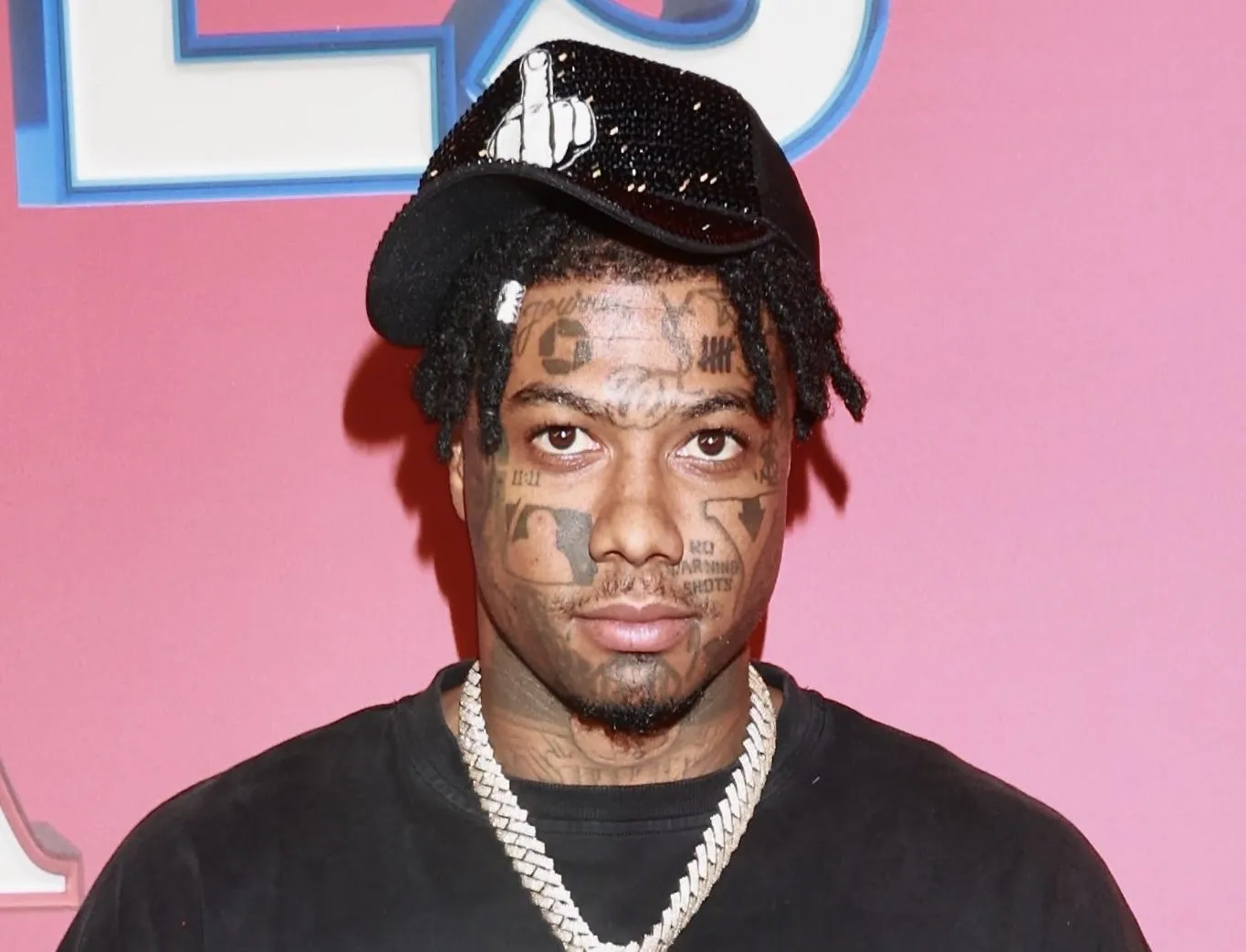
Blueface and his daughter Journey Porter, who many now love to call “Pinkface, “have been taking over the timeline with their viral daddy-daughter moments. One thing about Pinkface, she’s going to speak her mind no matter who’s watching. This time, she clocked a little bit of her dad’s tea.
RELATED:Tiny Takeover! Blueface’s Daughter Journey, A.K.A. “Pinkface,” Shines In Livestream With Deshae Frost’s Little Sister Bali (VIDEO)
Blueface & Journey Share A Cute Daddy-Daughter Moment At The Park
Last month, Blueface had the internet’s hearts melting as he spent time on daddy duties with his son Javaughn Porter and daughter Journey. During their trip to the park, Journey got upset because no other kids wanted to play with her. Blueface stepped into daddy mode and coached his baby girl, telling her, “Say hey, how you doing… you looking like a freaking little demon,” as he encouraged her to fix her face and try again. With her dad’s advice, Journey got up and walked over to another girl, asking if she wanted to be her best friend. In the cute moment, the other little girl accepted and played with Journey.
Journey Clocks Blueface’s Personal Tea
When it comes to his kids, Blueface stays active, but drama isn’t too far behind. The internet has been trying to keep up so far. The rapper currently shares Javaughn and Journey with Jaidyn Alexis. There has also been ongoing paternity debate surrounding Chrisean Jesus, the child he shares with Chrisean Rock. He is currently dating Nevaeh Akira, and the two are expecting a son together named Solar.
In Blueface’s latest stream, it looks like Journey decided to take matters into her own hands and get her own tea. She tapped into her investigative journalist era as she questioned her dad about his personal life. While in the car with Blueface and her brother, she asked, “Is that your daughter?” and “Is that your son?” After he said yes, she followed up by asking, “Is that all of your kids?” Before he could fully respond, she laughed and said, “You got too many kids, right? Too many kids, you dummy,” before quickly apologizing.
Social Media Reacts To Clips Of Blue & Journey
Folks gathered under The Shade Room Teens comment section as they reacted to these viral, cute moments of Blueface and Journey. Many even gave Blueface his flowers for being a good dad.
Instagram user @highoffcandyy wrote, “I like Blueface when he’s being a good dad”
Instagram user @scarface_123456 added, “I like how he gave her confidence to go make a friend. She really a cutie pie”
While Instagram user @s7yvin wrote, “Her voice can DEFINITELY be on a cartoon 😍😍”
Instagram user @simtookie wrote, “Journey is the family manager, she be getting everybody together. She don’t play no games😭🤣🤣”
.Instagram user @elkiriaa.j added, “she just repeating what she hear Jaidyn say…”
While Instagram user @reegigil wrote, “SHE TOLD NO LIES 😂😂😂 Pinkface will be Blue’s karma 😂💕”
Instagram user @slay.omii added, “You dummy” is definitely Karlissa 😂😂😂”
Instagram user @antoinettegabri3lle wrote, “ At least she said sorry 😂😂”
While Instagram user @beloved_ke wrote. “I’m glad he didn’t say “yea that’s all of em” 👏🏾
Instagram user @prettyanyiaaa wrote, “😂😂😂I wish y’all stop saying her mama y’all would be surprised what these little kids say n feel chile😭”
Instagram user @albaj814 added, “The funniest toddler on the internet 😭😭😭”
RELATED: Watch Yourself! Jaidyn Alexis Checks Blueface After He Asked Their Son About His Sexuality While On Livestream (VIDEO)
What Do You Think Roomies?
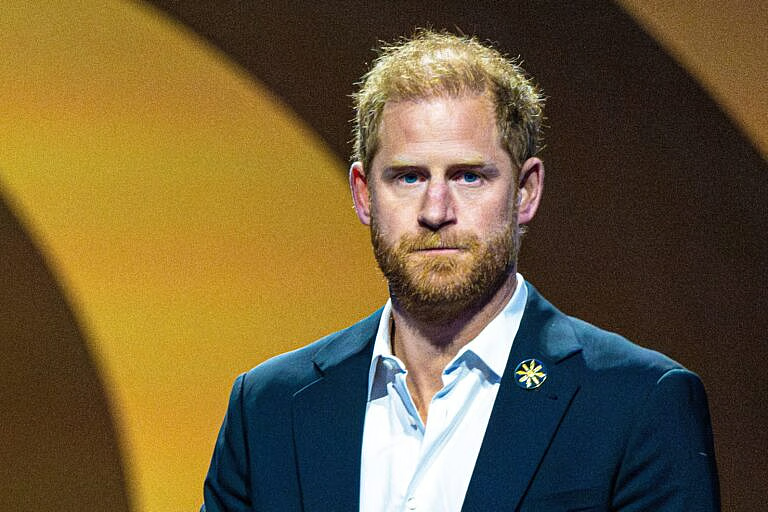
Prince Harry is facing a defamation lawsuit from Sentebale, the organization he helped establish nearly two decades ago, over claims of a coordinated media campaign that allegedly damaged its reputation.
The surprising case comes after a highly publicized internal dispute that led to resignations and regulatory scrutiny.
The fallout has deepened tensions within the charity and left Prince Harry reportedly distressed, as questions continue to swirl around its leadership and governance.

Prince Harry is facing a defamation lawsuit brought by Sentebale, the charity he helped establish nearly two decades ago. Court filings at the High Court of England and Wales list both the duke and former trustee Mark Dyer as defendants in the case.
According to a statement released by the charity’s leadership, the legal action stems from what it describes as a “coordinated adverse media campaign” that allegedly harmed its reputation and disrupted operations.
Sentebale claims the campaign, which it says began in March 2025, spread misleading narratives about the organization, strained relationships with staff and partners, and triggered waves of online abuse directed at its leadership.
The charity says the situation forced it to divert significant “time and resources into managing a reputational crisis not of the charity’s making.” While the claim was filed on March 24, detailed court documents have not yet been made public.
Prince Harry Stepped Down As A Patron In 2025 Alongside The Co-Founder, Prince Seeiso

The dispute comes after a turbulent period within the African charity organization.
Both Harry and co-founder Prince Seeiso of Lesotho stepped down as patrons in March 2025, citing a breakdown in relations between trustees and the chair of the board, Sophie Chandauka.
Their resignation followed a wider fallout that saw several trustees also leave their roles.
In a joint statement at the time, the two founders said they stepped aside “with heavy hearts,” describing the situation as irreparable and deeply damaging to the charity’s governance.
The UK Charity Commission Conducted An Investigation Into The Organization

The controversy surrounding Prince Harry’s charity drew the attention of the UK Charity Commission, which led to an investigation into the organization.
Its findings criticized all parties for allowing internal disagreements to escalate publicly, calling it a “missed opportunity” to resolve issues privately and warning that the situation risked undermining trust in the wider charity sector.
However, the regulator said it found no evidence of systemic bullying or harassment, though it acknowledged that some individuals felt they had been treated unfairly.
The Charity’s Chair Sophie Chandauka Levels Allegations Against Prince Harry

Sentebale, which operates in Botswana and Lesotho, focuses on supporting young people affected by HIV and AIDS.
Tensions were further heightened by public comments from Sophie Chandauka, who alleged in media interviews that scheduling conflicts linked to Harry’s commercial commitments, including his Netflix deal, disrupted a planned fundraiser. She also suggested that an incident involving Meghan Markle contributed to friction within the organization.
Chandauka has previously claimed she reported concerns about governance to regulators and filed legal action to challenge her removal, alleging misconduct within the charity without naming individuals. She described Harry’s resignation as unexpected and characterized it as “an example of harassment and bullying at scale.”
A source later indicated that the situation had taken a personal toll on Harry, who was said to be deeply affected after nearly 20 years of involvement with the charity, originally founded in honor of his mother, Princess Diana.
Prince Harry Was Reportedly Crushed By The Alleged Sentebale Takeover Crisis

Meanwhile, the situation is said to have taken a personal toll on Harry. He has reportedly been deeply affected by what he views as a “hostile takeover” of the charity he helped build.
According to Rebecca English, the duke has been “utterly devastated,” spending long hours on calls from California speaking with supporters and allies.
Sources cited in reports last year claimed that Harry and those close to him believe Chandauka “cajoled her way” into a position of influence and has resisted stepping down despite criticism of her leadership.
The fallout has reportedly created a deep divide, with one insider suggesting there is little chance of Harry working with the organization again under its current structure.
Despite the turmoil, a spokesperson for Harry told Page Six that while the duke does not recognize the origin of some of the claims, it is fair to say he is “deeply upset” by the situation.
The statement emphasized that he remains committed to the mission that inspired the charity nearly 19 years ago, supporting young people in Lesotho and Botswana affected by HIV/AIDS and mental health challenges.
Entertainment
Steven Spielberg says Christopher Nolan made a much better “Interstellar” than he would have
:max_bytes(150000):strip_icc():format(jpeg)/Steven-Spielberg-Interstellar-041026-f0e0764b7a1345919e831802459a37c0.jpg)
Spielberg originally developed the film with Nolan’s brother, Jonathan.

Ashley Hebert found love with J.P. Rosenbaum on season 7 of The Bachelorette — but their marriage wasn’t meant to be.
“I know I have to take a leap of faith. All the time that we spent together, it’s been the happiest time of my life,” Rosenbaum said before getting down on one knee during the 2011 finale. “All I know is that I’m madly in love with you. I love everything about you.”
The reality TV couple wed in 2012 and went on to welcome two children: son Ford and daughter Essie. In October 2020, Rosenbaum and Hebert announced they were getting divorced.
Despite their split, Rosenbaum told Us Weekly in April 2022 that he and Hebert should be considered a Bachelor Nation success story. “We were together, I mean, nine years, 10 years, whatever it was,” he shared. “And we got two amazing, amazing children out of it. I wouldn’t change anything, obviously.”
Scroll through to revisit their relationship timeline:

NewsBeat1 minute ago
Famous Welsh hotel demolished after fire reborn after ‘blood, sweat and tears’

Business2 minutes ago
Exclusive-Third Point won’t run proxy fight at CoStar, exits position, letter says

Crypto World3 minutes ago
World Liberty addresses risk concerns over 5B WLFI collateral position on Dolomite

Politics2 months ago
Why Israel is blocking foreign journalists from entering

News Videos2 months ago
Bitcoin: We’re Entering The Most Dangerous Phase

Politics1 month ago
Alan Cumming Brands Baftas Ceremony A ‘Triggering S**tshow’

News Videos13 minutes ago
XRP- Ripple Treasury Ceritified To Tap 11,000+ SWIFT Banks? Yes – Bitcoin Hits $200K What Is XRP???

News Videos34 minutes ago
ULTIMATE Cryptocurrency Trading Course (From Beginner To PRO)

News Videos41 minutes ago
Gs Finance – New Loan App for Low Cibil ( Review ) | New Loan App review 2026 | Only On KYC
-

 Business5 days ago
Three Gulf funds agree to back Paramount’s $81 billion takeover of Warner, WSJ reports
-

 Sports6 days ago
India men’s 4x400m and mixed 4x100m relay teams register big progress | Other Sports News
-

 Politics10 hours ago
US brings back mandatory military draft registration
-

 Fashion11 hours ago
Weekend Open Thread: Veronica Beard
-

 Business7 days ago
Expert Picks for Every Need
-

 Tech3 days ago
How Long Can You Drive With Expired Registration? What Florida Law Says
-

 Business6 days ago
No Jackpot Winner, Prize to Climb to $231 Million
-

 Fashion5 days ago
Massimo Dutti Offers Inspiration for Your Summer Mood Board
-
 Sports11 hours ago
Man United discover Nico Schlotterbeck transfer fee as defender reaches Dortmund agreement
-

 Fashion3 days ago
Let’s Discuss: DEI in 2026
-

 Crypto World3 days ago
Bitcoin recovers as US and Iran Agree a Ceasefire Deal
-

 Business8 hours ago
Tesla Model Y Tops China Auto Sales in March 2026 With 39,827 Registrations, Beating Cheaper EVs and Gas Cars
-

 Crypto World2 days ago
Canary Capital Files SEC Registration for PEPE ETF
-

 Business6 days ago
Akebia Therapeutics, Inc. (AKBA) Discusses Pipeline Progress and Strategic Focus on Kidney Disease Treatments at R&D Day – Slideshow
-

 Business17 hours ago
OpenAI Halts Stargate UK Data Centre Project Over Energy Costs and Copyright Row
-

 Politics7 days ago
The UK should not pay a penny in slavery reparations
-

 Tech5 days ago
Haier is betting big that your next TV purchase will be one of these
-

 Tech5 days ago
The Xiaomi 17 Ultra has some impressive add-ons that make snapping photos really fun
-

 Tech5 days ago
Samsung just gave up on its own Messages app
-

 Tech5 days ago
Gamer Restores the Original PlayStation Portal From Two Decades Ago
You must be logged in to post a comment Login