
Entertainment
Lasagna Batteries Are Real, And Could Accidentally Show Up At Your Thanksgiving

By Joshua Tyler
| Published

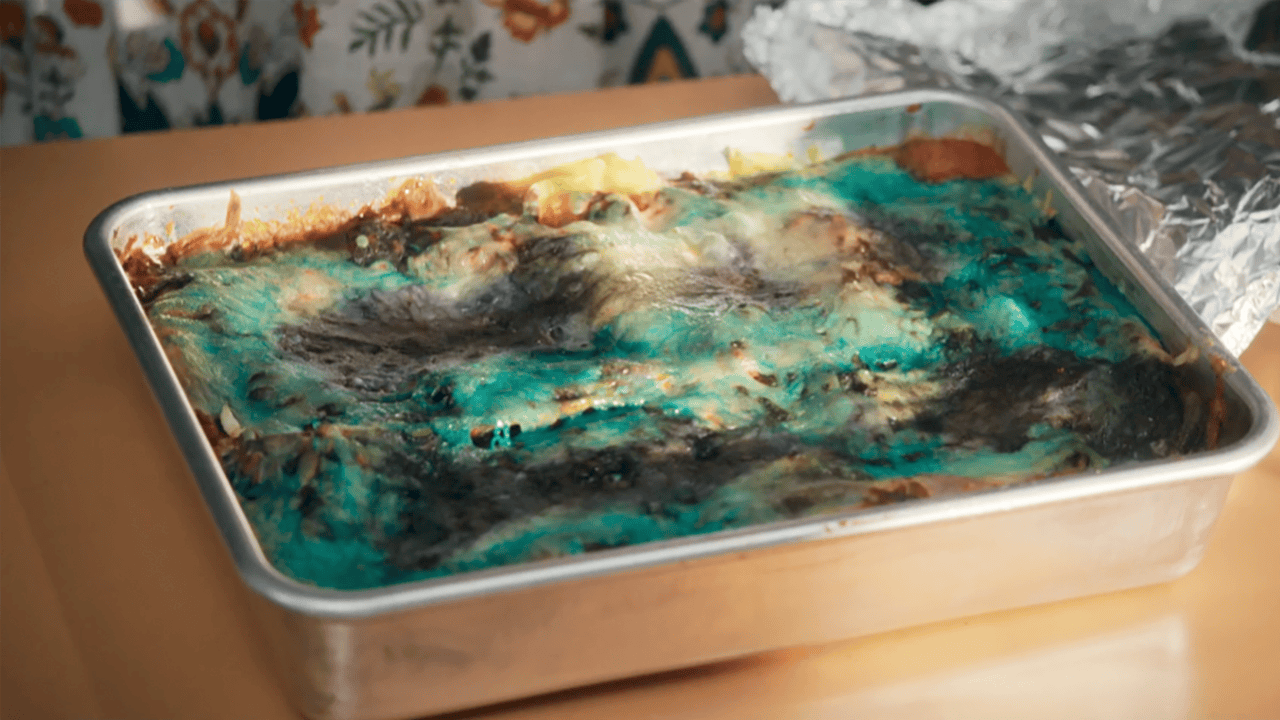
The Netflix series A Man On The Inside is back for a second season on the streaming service, and it features a special Thanksgiving episode. In that episode, one of the guests brings a lasagna, which proves ruined when the foil is removed from the top, and Ted Danson’s Charles Nieuwendyk reveals that it has turned into a Lasagna Battery.
The idea of a lasagna becoming a battery might seem like something made up for comedic effect, but Nieuwendyk assures his guests that this is a real thing that can happen sometimes. He’s right, and it could happen to your next lasagna, too.
The “Lasagna Battery” isn’t a kitchen myth or an overcooked meme; it’s a real electrochemical phenomenon where layered foods can produce a measurable electric charge. The science behind it is surprisingly straightforward.
The Science Behind Lasagna Batteries

Electricity is just electrons moving from one material to another. A battery, any battery, is built from three ingredients: two different metals and something acidic or salty in between that lets ions move.
A standard Duracell does this with manganese dioxide and zinc. A lasagna does it with tomato sauce, meat, and that aluminum pan you forgot to transfer it out of. Same principle, different vibe.
The tomato sauce is acidic, loaded with citric acid, which makes it a perfect electrolyte. The cheese and meat aren’t doing much electrically, but they make excellent separators, layers that keep metals apart while letting ions drift through.
Then you add the real power players: metallic utensils, foil, or the aluminum baking tray. Put stainless steel in contact with aluminum with something acidic between them, and you’ve accidentally built a galvanic cell.
Lasagna Batteries Actually Do Generate Power

People often discover a “Lasagna Battery” the hard way: you leave leftovers in an aluminum tray, cover them in foil, stick a metal spoon or two inside, and walk away. Hours later, the foil starts pitting, the tray corrodes, or your fork gets weird black marks on it.
That’s not kitchen wear and tear, that’s electrochemistry. The metals are slowly dissolving because electrons are flowing between them. Your dinner is generating power while you’re asleep.
The electricity generated by a Lasagna Battery is not enough voltage to run your phone. But it is enough to cause corrosion, ruin utensils, and in extreme cases, leave you with a tray that looks like someone attacked it with a blowtorch.
The more contact points you create, the more current you get. More layering? More surface area? More acid? Congratulations, Tony Stark, you’ve engineered the world’s most delicious arc reactor.
Can You Eat A Lasagna Battery?

Lasagna Batteries look terrible, but they’re not toxic. You could still eat that lasagna if you want, but I wouldn’t recommend it.
A lasagna that’s gone full battery can taste metallic and isn’t ideal to consume. Some people scrape off the affected layer and eat the rest of it, which does solve the taste problem if you’re unwilling to make a new lasagna from scratch.
Food Batteries Aren’t New

Food-as-battery isn’t new. Schoolkids have been jamming electrodes into potatoes since the dawn of the science fair. But lasagna brings something special to the party: multiple layers, moisture, and a natural electrolyte built right in.
Cover acidic foods in foil inside aluminum pans, or let different metals touch inside something salty or acidic, and you’ve built a tiny power plant, whether you meant to or not. That’s the Lasagna battery.



