
Entertainment
Studio Ghibli Redefined Female Power With These 10 Groundbreaking Protagonists

We often talk about Studio Ghibli’s animation, its painted skies, its dreamlike music, and its surreal creatures. Yet, the studio’s most lasting revolution is not in its world-building but in its women. From the enchanted forests of Princess Mononoke to the seaside magic of Ponyo, Ghibli’s heroines are brave, curious, and profoundly human. When Hayao Miyazaki and Isao Takahata co-founded Studio Ghibli in 1985, they created a space where female characters could exist as full people rather than as plot devices. The result was a body of work that consistently placed women at the heart of stories about compassion, transformation, and resilience.
Below are ten Ghibli women who changed the face of animation and redefined what female strength can be. Across four decades, Ghibli’s heroines have embodied empathy as power. They win not through dominance but through understanding, courage, and conviction. Whether they are saving a kingdom, delivering a package, or simply learning to believe in themselves, their victories feel deeply personal and universally resonant.
Sheeta – ‘Castle in the Sky’ (1986)

Before Ghibli’s heroines became icons, Sheeta set the precedent. Castle in the Sky could have easily made her a conventional princess waiting to be saved, yet she becomes the film’s moral center. Intelligent and empathetic, Sheeta guides the story’s emotional rhythm while surrounded by greed, power, and militarism. Her courage is quiet but unwavering. Even when captured or threatened, she never loses sight of compassion. The decision to invoke the Laputan spell of destruction is not a gesture of vengeance but a final act of mercy, ending a cycle of violence and pride.
What makes Sheeta revolutionary is how she reframes what leadership looks like. She doesn’t command through authority but through care, influencing others through the integrity of her choices. Her empathy ripples outward, changing everyone it touches, which is the purest form of power in the Ghibli canon.
Kiki – ‘Kiki’s Delivery Service’ (1989)

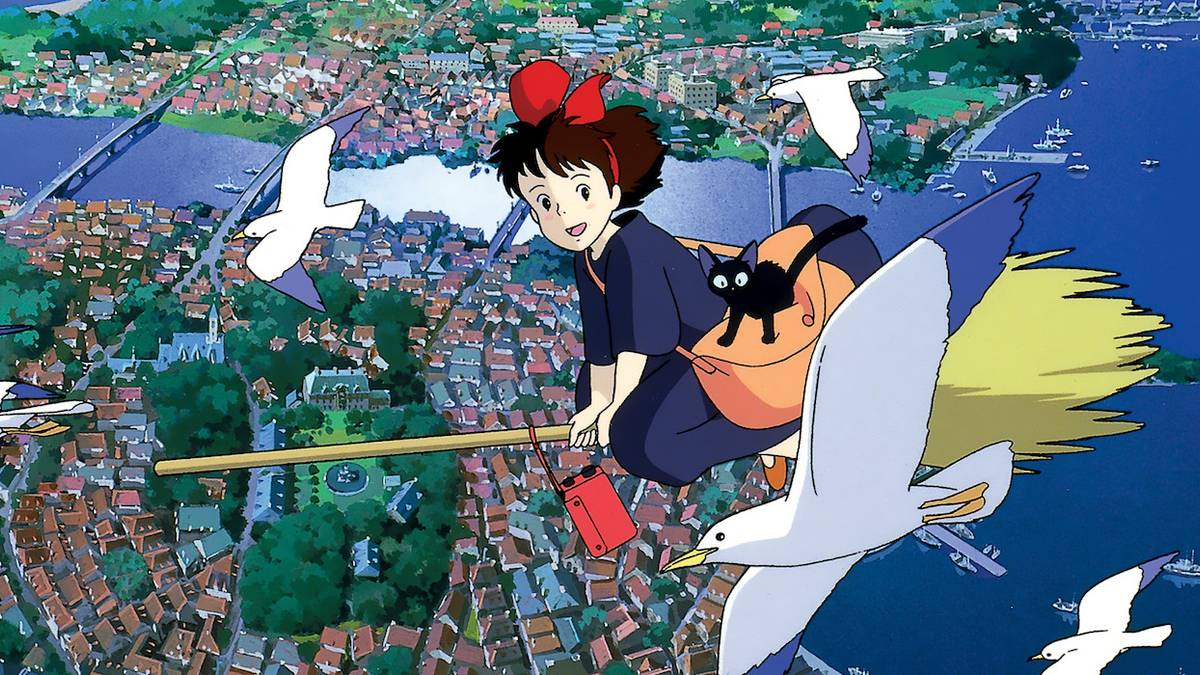
Kiki’s story captures the uncertainty of growing up more honestly than almost any coming-of-age film. At thirteen, she leaves home to begin life as a witch-in-training, and what follows is a tender exploration of identity, burnout, and self-doubt. When Kiki loses her magical abilities, the film treats it as a reflection of creative exhaustion. Her journey becomes a meditation on purpose and creativity: how do you keep moving when your spark fades? The answer lies in a simple human connection. By rediscovering joy through friendship and small acts of kindness, Kiki learns that independence is not about perfection but about persistence.
What sets Kiki apart is her emotional realism. She feels loneliness, jealousy, and fear without being diminished by them. Her struggles mirror those of artists, students, and dreamers everywhere. By showing that even gifted people lose faith sometimes, Ghibli makes her story universal. Kiki’s triumph is not in restoring her powers but in learning that rest, self-compassion, and vulnerability can be just as brave as flight.
Arrietty – ‘The Secret World of Arrietty’ (2010)

In The Secret World of Arrietty, Arrietty may be only a few inches tall, but her courage fills the screen. As one of the Borrowers who secretly live beneath human homes, she navigates a world that constantly threatens to destroy her. Yet she refuses to live in fear. Her friendship with Sho, a human boy who discovers her existence, challenges her family’s traditions and the walls built by generations of caution. In choosing to trust him, Arrietty risks her safety for the chance to understand the world beyond her small space.
Arrietty’s bravery shows that scale has nothing to do with power. The smallest acts of trust can change everything. Her perspective reframes what it means to take up space in a world not built for you. Every step she takes feels monumental because the world looms so large around her, yet she moves through it with elegance and resolve. Her story speaks to anyone who has ever felt overlooked or underestimated — a reminder that courage often begins with being seen.
Shizuku Tsukishima – ‘Whisper of the Heart’ (1995)

Shizuku’s story is one of quiet self-discovery. She is a middle-school girl who dreams of writing stories and falls in love with a boy who crafts violins. Their parallel journeys mirror each other: two young artists daring to take themselves seriously for the first time. Her decision to spend an entire summer writing a novel, even knowing it may fail, is its own act of rebellion.
Whisper of the Heart treats creativity as both vulnerability and courage. By the film’s end, Shizuku does not achieve fame or success. What she gains is belief in her voice, and that belief is its own victory. What makes Shizuku such a groundbreaking character is her realism. Ghibli portrays adolescence as a sacred process of becoming. Her ambition, insecurities, and capacity to fall in love with the world around her make her one of the most emotionally complete heroines in Ghibli’s library. Shizuku is proof that growing up can be as heroic as any quest.
Satsuki and Mei – ‘My Neighbor Totoro’ (1988)

Satsuki and Mei may be children, yet they embody Ghibli’s most profound lesson about resilience. When their mother is hospitalized, they confront fear through imagination. Totoro and the forest spirits are not distractions from reality but coping mechanisms, manifestations of the girls’ determination to keep joy alive in dark times. Satsuki’s quiet maturity and Mei’s unfiltered curiosity create a perfect balance of strength. They are not trying to defeat an enemy but to hold their family together.
Their story reminds viewers that wonder is a form of survival. When life feels uncertain, imagination becomes an act of faith. Ghibli’s decision to center a story on two little girls dealing with grief without sentimentality was revolutionary for its time. Their bond, filled with frustration, laughter, and pure love, captures the truth of sisterhood in all its chaos. Satsuki and Mei are resilient not because they ignore fear but because they meet it with hope.
San – ‘Princess Mononoke’ (1997)
Raised by wolves and at war with humanity, San represents nature’s fury made flesh, but Princess Mononoke refuses to make her a simple symbol of righteousness. San is angry, yes, but her anger comes from love — for her family, her home, and the balance that once existed. Her relationship with Ashitaka allows Princess Mononoke to explore compassion within conflict. San’s struggle is just as much internal as it is external, torn between her loyalty to the forest and her connection to humanity. Through her, Ghibli dismantles the idea that rage and gentleness are opposites.
Her ferocity challenged global audiences who had rarely seen a female character allowed to be this raw. San’s wildness is not framed as something to be tamed, but as a natural response to injustice. She rejects both submission and cynicism, carving a path that is wholly her own. In a world of corruption and conquest, San’s purity of purpose becomes the film’s heartbeat, providing a reminder that righteous anger, when guided by love, can also heal.
Sophie Hatter – ‘Howl’s Moving Castle’ (2004)

Sophie begins as an unassuming hatmaker who views herself as ordinary in Howl’s Moving Castle. When a witch’s curse turns her into an elderly woman, her transformation becomes an unlikely liberation. The change frees her from insecurity, allowing her to speak boldly and act decisively in ways her younger self never dared.
This hatmaker’s journey redefines beauty and age as irrelevant to worth, and the more she embraces her identity, the more the curse weakens. Sophie’s ability to stand beside the wizard Howl, to ground his chaos with empathy, becomes a testament to emotional intelligence as strength. In the end, Howl’s Moving Castle‘s message is clear: growing older is not a loss of magic but an awakening to it.
Chihiro Ogino – ‘Spirited Away’ (2001)

Chihiro begins her journey as a frightened ten-year-old thrust into a surreal world of spirits, monsters, and gods. By the end, she becomes one of animation’s most enduring examples of courage. Her trials are not about fighting villains but learning to act with compassion, even when surrounded by greed and cruelty.
Each task she faces becomes a lesson in empathy, her strength growing not from physical power but from kindness, an inner power she awakens to rather than something she acquires through hardship. Spirited Away positions moral clarity as the ultimate form of bravery. Chihiro wins because she refuses to forget who she is, even when everyone around her has forgotten themselves.
Ponyo – ‘Ponyo’ (2008)

Ponyo’s transformation, driven by love for a human boy named Sosuke, unravels the laws of nature, but her innocence never feels destructive. Ponyo’s determination to live, love, and experience the world mirrors the curiosity of every Ghibli heroine before her. Her story captures Miyazaki’s fascination with the beauty and chaos of freedom. Ponyo is powerful because she is unafraid of change. She does not need to learn caution; she already knows joy.
In her, Studio Ghibli celebrates the untamed energy of childhood as something sacred. The film’s oceanic imagery and mythic overtones elevate her to a force of nature — one that chooses compassion over control. Ponyo reminds us that power does not always have to be measured or earned.
Lady Eboshi – ‘Princess Mononoke’ (1997)

Eboshi complicates every assumption about what makes a woman powerful. She is not gentle, nor self-effacing, nor defined by purity. She leads Iron Town with fierce ambition, protecting lepers and former sex workers, and building a community where society’s discarded people can thrive. Yet, her progressivism comes at a cost: by industrializing the forest, she becomes San’s enemy and an avatar of human arrogance.
What makes her extraordinary is that she is not wrong, only incomplete. Eboshi represents the modern woman’s paradox: the desire to build a better world while navigating the systems that destroy it. Through Eboshi, Ghibli refuses to divide women into heroes and villains. Power, the film suggests, is neither good nor bad: it is what you choose to do with it that defines you.



