
Entertainment
The 10 Greatest Fantasy Movie Settings, Ranked

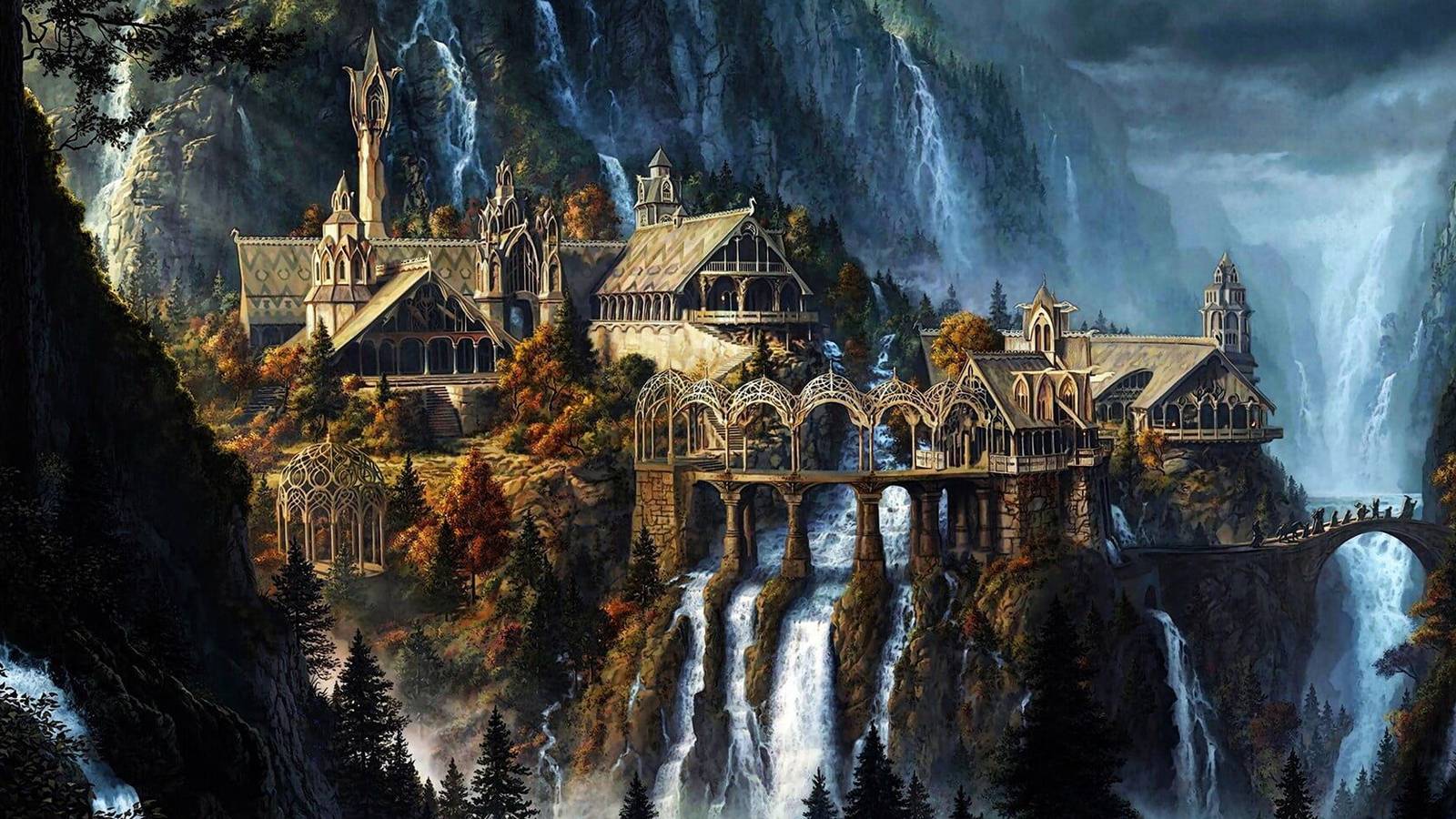
Few genres offer the audience as great an escape as fantasy, be it in film, literature, or any other medium. From enchanted kingdoms and mythical realms to faraway galaxies, those are the places we’d love to get lost in. Deep down, they aren’t just backdrops, but reflections of our own world, and the characters that inhabit them endure challenges and battles that aren’t that dissimilar from what we go through in our everyday lives — they’re only a little more epic in nature.
It’s always amazing when these fantasy worlds are translated onto the big screen, making it feel as if their magic had become real and we could actually inhabit them; experiencing them on the biggest screen possible just makes them all the more immersive. This list will rank the best fantasy settings in cinema history, those that excel at balancing imagination, depth, and cinematic spectacle.
10
Azeroth — “Warcraft” (2016)

Few fantasy settings have as much lore behind them as Azeroth, the central realm in Warcraft. Duncan Jones’s 2016 adaptation had the enormous task of condensing years of video game storytelling into a single movie, leading to one of the biggest and most expensive video game adaptations to date.
It didn’t exactly live up to expectations at the time, but Warcraft went on to gather a following of its own over the years, and a lot of its success had to do with worldbuilding. Its portrayal of Azeroth feels vast and ancient, and the film’s visual design brings to life the countless realms, tribes, and races that inhabit it in stunning detail. For fans of the games, watching the live-action Warcraft become real on the big screen was a real treat.
9
Baghdad — “The Thief of Baghdad” (1940)

It may not be instantly recognizable to some, but The Thief of Baghdad is incredibly influential. The world of Disney’s 1992 masterpiece Aladdin, for example, borrows freely from this 1940 classic, which is itself the remake of a 1924 silent film inspired by the seminal literary work, Arabian Nights.
Made at a time when cinema relied solely on the clever use of practical effects, The Thief of Baghdad was groundbreaking, being the first film to use blue-screen technology while still building huge sets and mobilizing dozens of extras. The result feels just as magical (or maybe even more) as any fantasy world found on screens nowadays, almost like a dream, and helped define the cinematic language of fantasy itself.
8
Narnia — “The Chronicles of Narnia” (2005-Present)

Perhaps the feeling that best translates what it’s like to read or watch The Chronicles of Narnia is childlike wonder. Discovering a whole world inside a wardrobe remains one of the most brilliant premises in fantasy, and, although the 2000s trilogy didn’t quite live up to C.S. Lewis‘ original masterpiece, they introduced Narnia to a whole generation of young moviegoers.
Each new story features a different era in that fantasy realm, which, along with its talking animals, mythical creatures, and icy evil witches, makes it unique compared to other major fantasy worlds. The upcoming and long-awaited Netflix movie helmed by Greta Gerwig is bound to take yet another generation into that wardrobe and hopefully give Narnia the adaptation it deserves.
7
The Ancient World — “Jason and the Argonauts” (1963)

Greek mythology is one of our first contacts with the concept of fantasy, and its wonder remains relevant to this day. So, when people saw Todd Armstrong fight an army of skeletons, the bronze giant Talos, the Hydra, and other mythical creatures on screens in 1963’s Jason and the Argonauts, it really felt as if that world had somehow come to life.
The film’s success and enduring appeal are mostly thanks to the groundbreaking stop-motion effects by Ray Harryhausen, who puts all these magical beings right there in the same frame as the heroes, making everything feel real, urgent, and dangerous. As dated as these effects might appear next to modern CGI, though, we’re yet to see a live-action film bring the ancient world to life like that.
6
The Seven Seas — “Pirates of the Caribbean” (2003-2017)

When Pirates of the Caribbean: The Curse of the Black Pearl came out back in 2003, not many imagined that a movie based on a Disneyland ride would go on to become such an influential franchise. It revived the swashbuckler genre by completely reimagining the Golden Age of Piracy as a supernatural frontier, bringing many pirates’ tales to life, including sea monsters, deadly curses, and fabled locations.
Moreover, the movies still maintain a degree of realism when it comes to the historical and nautical aspects of it. Combined, these two factors make the Pirates of the Caribbean movies feel as real as fantasy can be without losing the sense of spectacle. Although the last two movies have been a considerable letdown, the original trilogy remains one of the best of the genre.
5
Oz — “The Wizard of Oz” (1939)

There’s no place like home, but there’s also no place like Oz. The setting of The Wizard of Oz is the quintessential fantasy world, and it’s such an iconic location that it spawned countless spin-offs, including Wicked. The original Technicolor look of Oz feels almost trippy, a stark contrast with the black-and-white atmosphere of Dorothy’s (Judy Garland) home state of Kansas; it’s how the movie lets the audience know that this land is not just special, but actually magical.
The whole journey through Oz reflects Dorothy’s inner growth, turning its whimsical landscapes into metaphors for growing up and maturing as a person. Because of this, Oz is one of the most intense fantasy worlds, with values like friendship and love being what really powers the magic there.
4
The Wizarding World — “Harry Potter” (2001-Present)

Few cinematic universes have achieved the level of immersion of the Harry Potter franchise and the Wizarding World. As controversial a figure as author J.K. Rowling has become, she did create a rich world where everything feels alive and detailed. Every painting in Hogwarts tells a story, every shop at Diagon Alley has an eccentric owner, and even the bureaucracy in the Ministry of Magic makes it feel real and believable.
There’s also a logic to how this world works, hidden just beneath our own Muggle world. Going to school, learning spells, and figuring out careers — all these elements add a layer of mundane to it that makes the Wizarding World relatable and explains its continued success among younger generations.
3
Muromachi-Period Japan — “Princess Mononoke” (1997)

Truth be told, any Studio Ghibli animation could easily be featured in this list, and singling out just one feels unfair to the others. That said, Princess Mononoke and its representation of Muromachi-period Japan is arguably the best fantasy world created by Hayao Miyazaki, not only because of how rich it is, but also because of the movie’s overall theme.
The film’s world doesn’t rely on grand castles or spells, but on imbuing nature itself with a sacred spirituality, which really remains accessible to us even nowadays and makes a stark counterpoint to human industry. Many people who grew up with Princess Mononoke would love to follow San and Moro around, or go on a journey like Ashitaka’s. That’s the beauty of it: we actually can, as long as we understand and respect nature as an entity itself.
2
A Galaxy Far, Far Away — “Star Wars” (1978-Present)
Some may argue that Star Wars is sci-fi due to its space setting, but the truth is that George Lucas always drew more from fantasy when creating his galaxy far, far away. Mythical lineages, heroic and idealistic knights, princesses, scoundrels, a mystical power beyond comprehension… Star Wars has all the key fantasy traits, but dressed in sci-fi trappings.
The galaxy itself is as rich and fantastical as any other fantasy world out there. The Mos Eisley Cantina can be as pleasurable or dangerous as any medieval tavern, and even the neon haze of Coruscant has the making of a castle town, complete with an underworld of its own. The combination of high-tech machinery and ancient mysticism gives Star Wars a timeless feel that fits perfectly with its core themes of hope, redemption, and the eternal struggle between light and dark.
1
Middle-earth — “The Lord of the Rings” (2001-Present)

Among all the fantasy worlds ever translated onto screens, Middle-earth remains the undisputed best. Peter Jackson‘s The Lord of the Rings trilogy still feels like a miracle for its masterful adaptation of J.R.R. Tolkien‘s Legendarium, setting the ultimate benchmark for cinematic worldbuilding. A lot of that has to do with how Jackson takes his time framing the story, giving him room to show us and explore Middle-earth in the process.
From the Shire to Mordor, we spend enough time in each location that they feel real, and meet enough characters and strange folk to envy all of them for where they get to live. The fact that it was all filmed on location in New Zealand adds another layer of magic, as if Middle-earth were a real location in our own world. More than two decades after the trilogy came out, no other movie ever came close to achieving this degree of sheer magic on screen.



