
Fashion
Return policy red flags: How to spot strict or confusing rules before you buy

It’s not your imagination: Return policies are getting more restrictive. Return windows are shrinking, restocking and return shipping fees are increasing, and more items are getting slapped with the dreaded “final sale” designation. Worse, reading and understanding a return policy these days practically requires a law degree.
Fortunately, you can navigate the modern online shopping experience without getting burned on returns. You need only sharpen your skill at identifying return policy red flags before they cost you. Here’s how to read the fine print like the savvy shopper you are.
Watch for these 12 return policy red flags
Before you buy in a store or online, scan the store’s return policy for these warning signs. If you spot more than one, be careful. You can still buy the item you want, but be confident you want it and organized about keeping your proof of purchase.
1. Return policy summaries, with details elsewhere
When you see a return policy online with a summary visible upfront but the policy details on another page — or hidden until you click on something — you’d better click. The details often hide the most restrictive rules and exceptions.
The JCPenney return policy lists the general rules, but you must click on a link in the fine print to view exceptions. Walmart has its return terms spread across multiple pages. Gap family return policies — Banana Republic, Gap, Old Navy, etc. — require multiple clicks to see all the terms.
2. Ultra short or inconsistent return window
A return window of 14 days or less is an obvious sign the retailer is strict about returns. Short return windows are problematic for online purchases. You probably lead a busy life, and there isn’t always extra time to try the item and then get it to the post office. And if you’re buying the piece as a gift? Forget it. Two weeks isn’t enough time for you or your giftee.
For context, a return window longer than 30 days is a good sign. Men’s Wearhouse has a 90-day return window, which is unusual.
Also, some retailers specify different return windows for specific brands or for online versus in-store purchases. Pay close attention to this distinction so you don’t get tripped up. For example, Neiman Marcus has a 30-day return window generally, but Chanel-branded items must be returned within 14 days. H&M has a 30-day window, but specifies different timelines for special collections.
3. Final sale language
Final sale means no refunds or exchanges. You may see this label on clearance items, outlet merch, items with stacked discounts, or items bought with aggressive promo codes. This one can be tricky, because the final-sale language can be hidden in small print somewhere. Always spend the time to confirm return eligibility whenever you’re shopping discounted goods online.
Plus-size retailer Torrid labels these categories as final sale and non-returnable:
- Washed or worn items
- Earrings and cosmetics
- Panties and lingerie sets
- Tights
In truth, the rise of the final sale designation has made clearance shopping online a lot less fun. If you don’t like the piece you bought, it will end up gathering dust. That’s not a good use of your shopping budget, no matter how big the discount.
4. Receipts required
Don’t assume the store keeps records of your purchases, especially for transactions that happen in store. Some retailers will deny you return or offer you store credit only if you don’t have definitive proof of purchase.
Even the Nordstrom return policy, known for being customer-friendly, doesn’t guarantee returns without some record of the purchase.
5. Store credit only
Store-credit returns are tolerable only if you love that store. The risk is highest when it’s your first purchase from that retailer, and you’re unsure about the item’s fit or quality.
New York & Company only offers store credit or exchanges on returns.
Some stores offer store credit if you don’t meet all the requirements for a refund, which is better than getting nothing. The Ross return policy mandates store-credit for returns without a receipt when the amount is more than $50. Lane Bryant and DSW exchange late returns for store credit.
6. Restocking fees
Restocking fees formerly applied primarily to electronics and furniture. Sadly, they’re becoming more common in fashion. Restocking fees typically get deducted from your refund.
Amazon charges 100% restocking fees on opened software and video games and Urban Outfitters charges a $5 restocking fee on all mailed returns — but there’s no added postage required. Dillard’s return policy says the store can, at its discretion, charge restocking fees for “certain products.” There’s no explanation of why or when that could happen.
7. Unclear condition requirements
Subjective condition requirements such as “like new” or “unworn” can be tricky because they require someone’s judgment. That someone could reject your return because of a scuff on a shoe bottom or a scratch on a handbag buckle.
To minimize subjective judgments, protect your items as if your life depended on it – at least until you’re certain you will keep them. Don’t remove any tags or discard any packaging.
8. Special exceptions
Customized, special-order, and open-box items are often treated as final-sale purchases. Other items that may have limited return eligibility are beauty products, underwear, and bathing suits.
Marshalls return policy notes that the retailer can charge added, non-refundable shipping fees for oversized items like rugs.
9. Required packaging
Many retailers ask you to return purchases along with all original tags and packaging. This isn’t a deal-breaking requirement – it’s more of a reminder to stay organized. Don’t set aside labels, dust covers, or shoe boxes until you’re 100% committed to keeping that item.
The Zappos return policy, known for being customer-friendly, requires you send back original shoe boxes without shipping labels on them.
10. Non-refundable shipping fees
Even with free shipping, returns aren’t always free. Some retailers:
- Deduct return shipping from your refund when you use their prepaid label
- Ask you to pay to have the item returned
- Don’t refund original shipping
Real-life examples include:
Read the fine print carefully to ensure you don’t pay $10 in shipping for an item you didn’t keep.
11. Third-party sellers
Increasingly, larger retailers are expanding their online selection with a marketplace, where various retailers sell their goods. Amazon is a marketplace, as is Target Plus, Macy’s Third Party Seller program, and Asos marketplace. Typically, each marketplace seller has its own return policy.
This is misleading if it’s not clearly explained, right? If you’re buying something at asos.com, you naturally would think the Asos return policy applies. To avoid this confusion, check the product page for any reference to a third-party seller or a separate return policy.
J.Crew’s return policy specifies that marketplace sellers offer different terms, noting that instructions are in the package. The thing is, you need to see the return details before you receive the package — so that’s a big red flag.
12. Confusing return protocols
Some stores have different return processes for online vs. in-store purchases. You may not be able to return online purchases in-store, for example. Or maybe you can’t return in-store purchases by mail.
As an example, the Walgreens returns policy specifies that all returns are made in-store, even if you purchased the items online.
Retailers may also allow free in-store returns but charge fees for mailed returns.
Budget impact of strict return policies
Return policy confusion can lead to wasted spending in the form of surprise fees, unwanted store credits, or return denials. Short return windows can rush your decision-making, which can mean keeping items you won’t wear or sending back pieces you might ultimately love.
Stores with strict return policies
Big, national chains with deep pockets often have the most agreeable return policies. Smaller retailers and these categories tend to be more restrictive:
- Outlet stores
- Discount retailers
- Marketplace sellers
- Personalized and custom shops, including Etsy sellers
- Electronics and technology
How to protect yourself as a shopper
These habits can minimize money wasted on unwanted goods and surprise fees:
- Always read the complete return policy. Unfortunately, you will have to dive into the detail of exceptions and other fine print. Plan on doing this the first time you shop with a retailer and again at least once a year. Note that retailers can publish extended holiday return windows, usually in October. That’s a good time to check the latest rules.
- Keep receipts and order confirmations. Some retailers require definitive proof of purchase for refunds.
- Don’t remove tags until you’re sure. Do this to preserve the “unused” condition requirement.
- Keep all boxes and accessories. Pay attention to shoe boxes, attached belts, and removable collars.
- Try your online purchases as soon as they arrive. Don’t get trapped by a short return window.
- Take photos of any product defects. Often, defective products have looser return requirements. Document any problems you see before you initiate the return.
These steps can save you a fight later.
Shop smarter
Return policies are meant to protect the retailer. But when you know what to look for, you can protect yourself too.
Spend a few minutes reading the fine print so you can you shop confidently, avoid surprise fees, and keep more money in your pocket.


Discover the latest trends with the XYLondon heel sandals for women collection, where high-fashion aesthetics meet accessible luxury. This season’s arrivals focus on metallic finishes, sculptural kitten heels, and diamante embellishments, perfect for wedding guests, evening soirées, or elevating your daily office attire. Whether you prefer the stability of a mid-block heel or the sleek silhouette of a pointed-toe slingback, XY London delivers on-trend designs with a focus on versatile elegance.

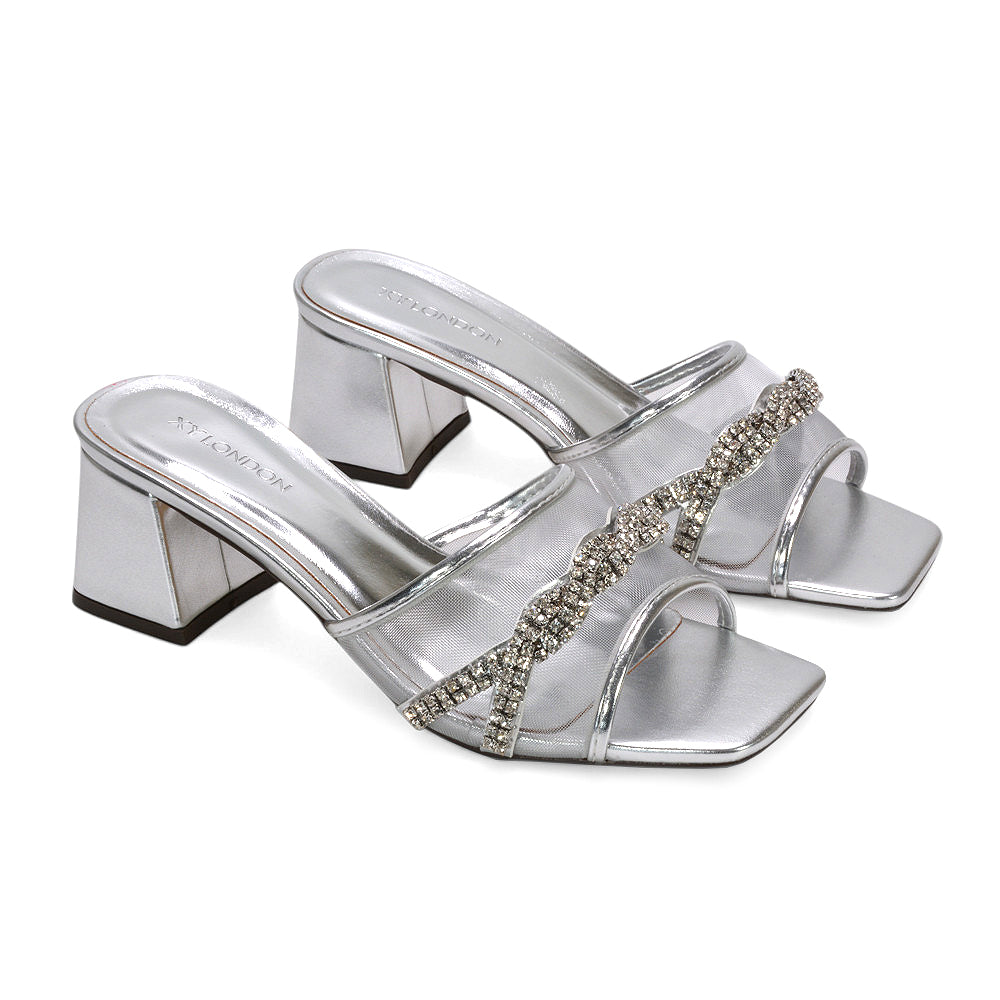
Miley Square Toe Diamante Mesh Mid Block Heel Sandals Slip on Mules in Silver – Shop Now
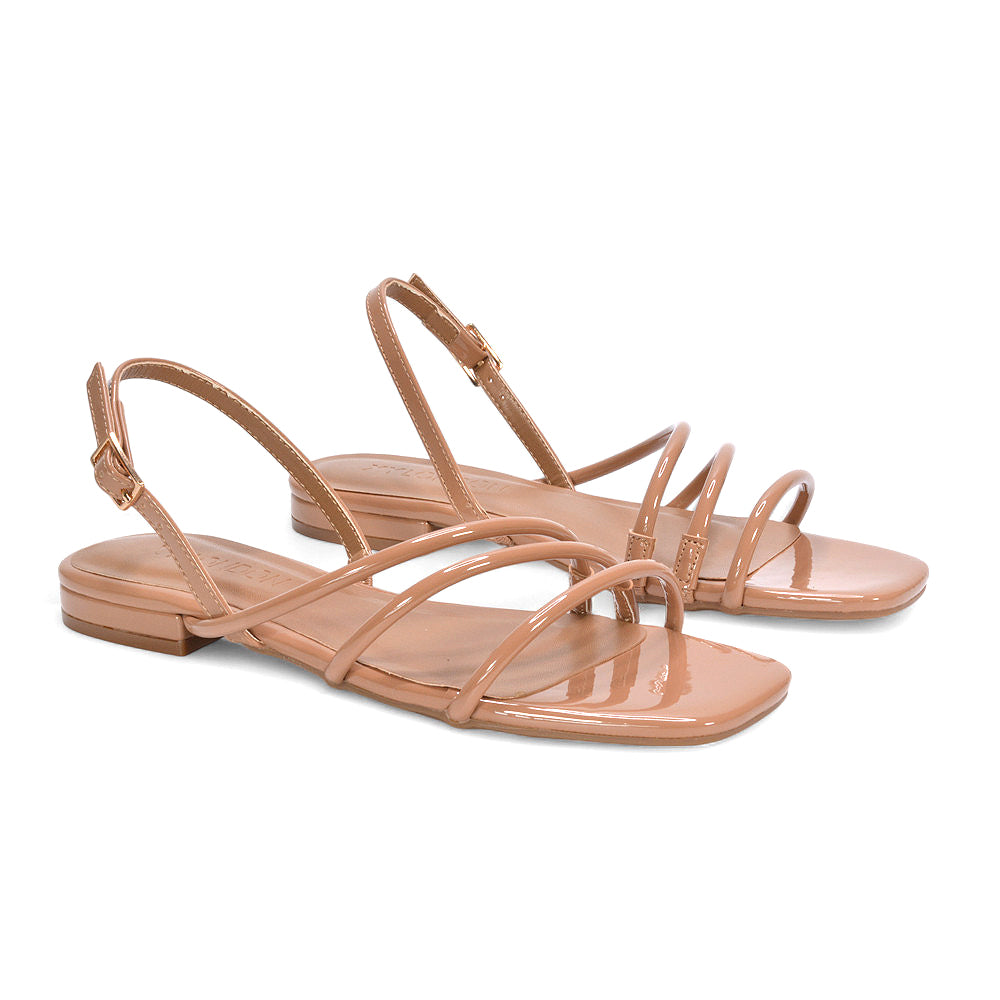
Shakira Slingback Buckle Strappy Flat Sandals in Silver Metallic – Shop Now
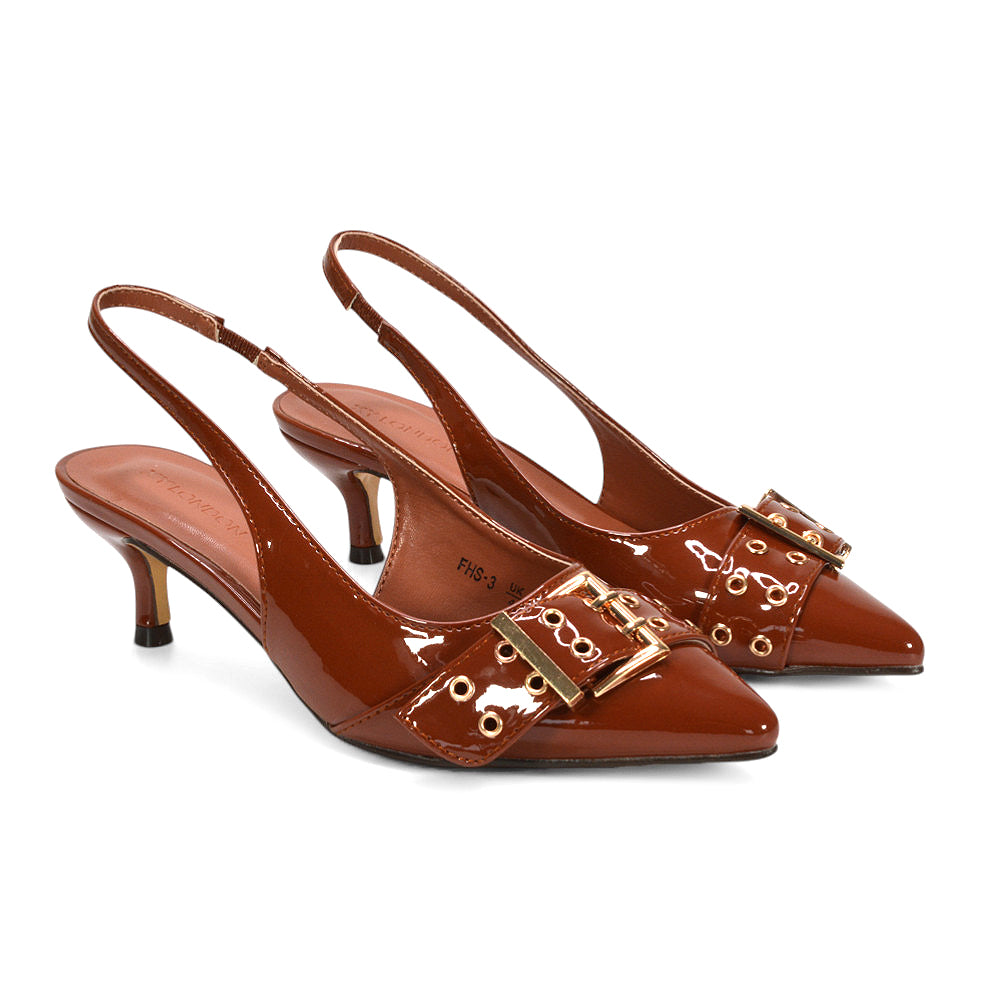
Lexi Buckle Pointed Toe Slingback Low Kitten Heels in Brown Patent – Shop Now
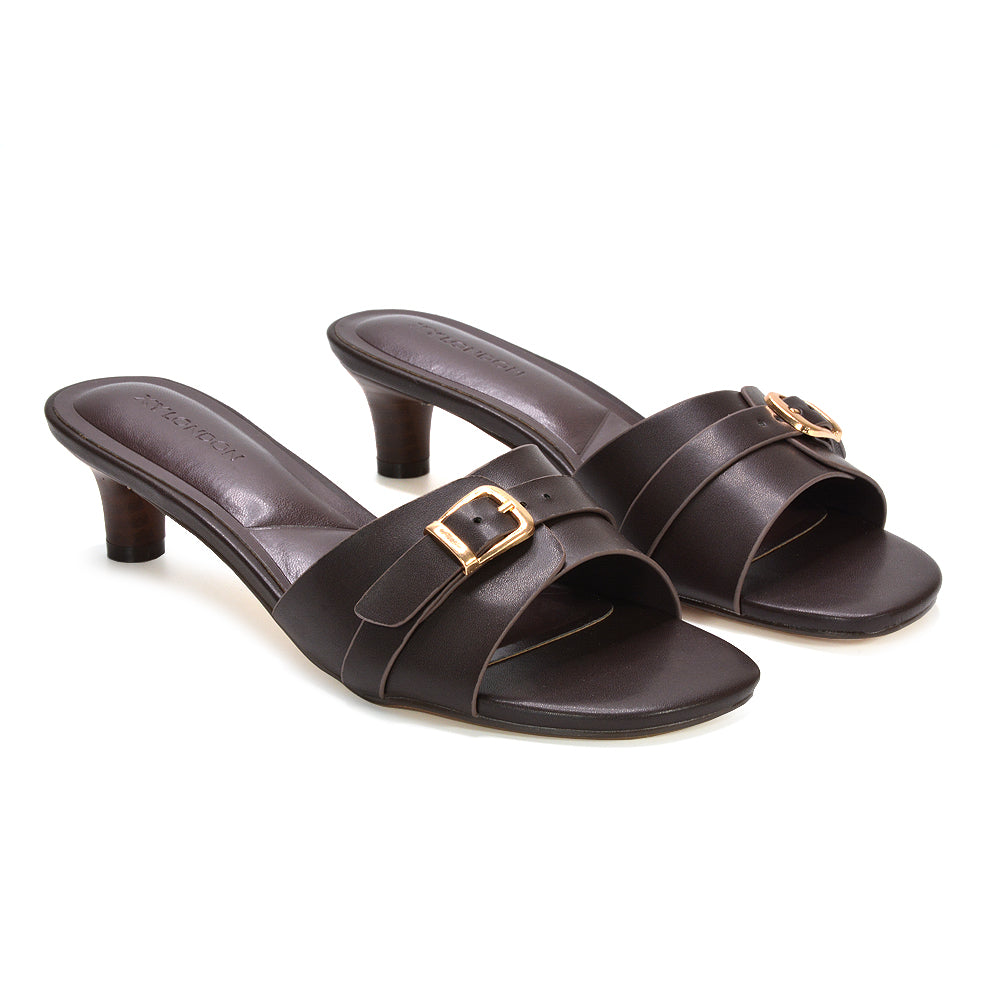
Romee Buckle Strap Slip On Low Kitten Heel Mule Sandals in Brown Synthetic Leather – Shop Now
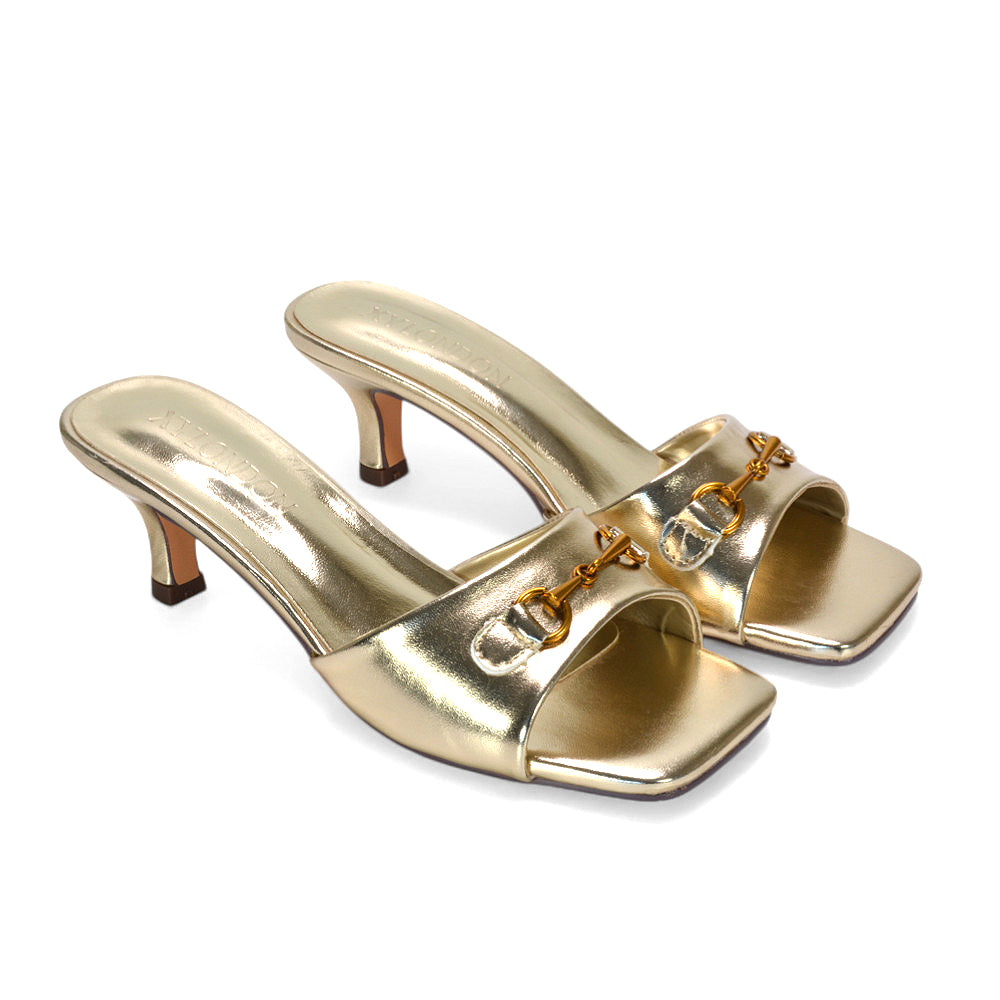
Toni Square Toe Mule Heeled Sandals With Decorative Buckle in Gold Metallic – Shop Now
For any questions/feedback regarding the above mentioned products/brands,
please do contact us anytime by clicking here


This post may contain affiliate links and Corporette® may earn commissions for purchases made through links in this post. As an Amazon Associate, I earn from qualifying purchases.
Our daily workwear reports suggest one piece of work-appropriate attire in a range of prices.
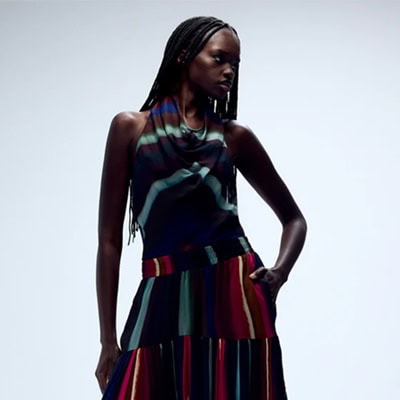
I recently started watching Shrinking on Apple TV (late to the party, but it’s fantastic), and I’ve really been loving Gaby’s (played by Jessica Williams) outfits. She wears colors and patterns that I wouldn’t necessarily have thought to put together, but are absolutely working on her.
I tracked down the costume designer, Allyson Fanger, on Instagram and found that many of the best pieces are from Christopher John Rogers. Most of the items actually used in the show are sold out or available in limited sizes only, but this gorgeous scarf-neck blouse still feels Gaby-inspired. Pair with an embellished blazer or some bright pants to really round out the Gaby look.
The blouse is $695 and comes in sizes 2-14.
Sales of note for 4/3:
- Nordstrom – End of Season Sale – Spring styles up to 50% off – lots of great deals from Natori, Boss, Vince, Veronica Beard, Reiss, Spanx, True & Co., Hanky Panky, Commando, Tory Burch, Theory, Zella, CeCe, Eliza J, Halogen, Vince Camuto, and more.
- Ann Taylor – 40% off + 15% off your purchase
- Banana Republic Factory – 50-70% off + extra 20% off
- Bloomingdale’s – Up to 30% off qualifying purchases. Beauty 15% off “almost all products”
- Boden – 15% off new styles with code
- Brooklinen – 15% off sitewide, plus up to 50% off bundles
- Brooks Brothers – Friends & Family Event, 25% off sitewide. Lots of cute florals and stripes in the sale.
- Elie Tahari – Friends and Family, up to 25% off – try code CORPORETTE15 for 15% off.
- Express – 30-70% off everything (Editor pants for $69!)
- J.Crew – 40% off your purchase
- J.Crew Factory – 50% off everything + extra 50% off clearance
- Loft – Spring bash! 50% off everything
- Macy’s – 25% off already reduced prices + 15% off beauty & fragrance
- M.M.LaFleur – New April drop! Use code CORPORETTE15 for 15% off
- Talbots – 30% off your purchase, plus free shipping until noon (PST I believe)

The debenhams Wallis dress collection for women represents a strategic fusion of heritage British tailoring and modern aesthetic versatility. Engineered for the discerning professional, this portfolio spans from high-density tailored crepe to sophisticated linen-rich blends and intricate lace. Each garment is meticulously constructed to offer a precision fit, with a dedicated focus on Petite proportions and functional detailing. Whether navigating a corporate environment or attending a formal engagement, Wallis provides the structural integrity and refined silhouette essential for a contemporary wardrobe.
Tailored Crepe Ruffle Pencil Dress – Shop Now
Lace Fit And Flare Midi Dress – Shop Now
Petite Floral Ruffle Peplum Midi Dress – Shop Now
Petite Lace Collarless Pleated Midi Dress – Shop Now
Linen Blend Belted Midi Dress – Shop Now
For any questions/feedback regarding the above mentioned products/brands,
please do contact us anytime by clicking here

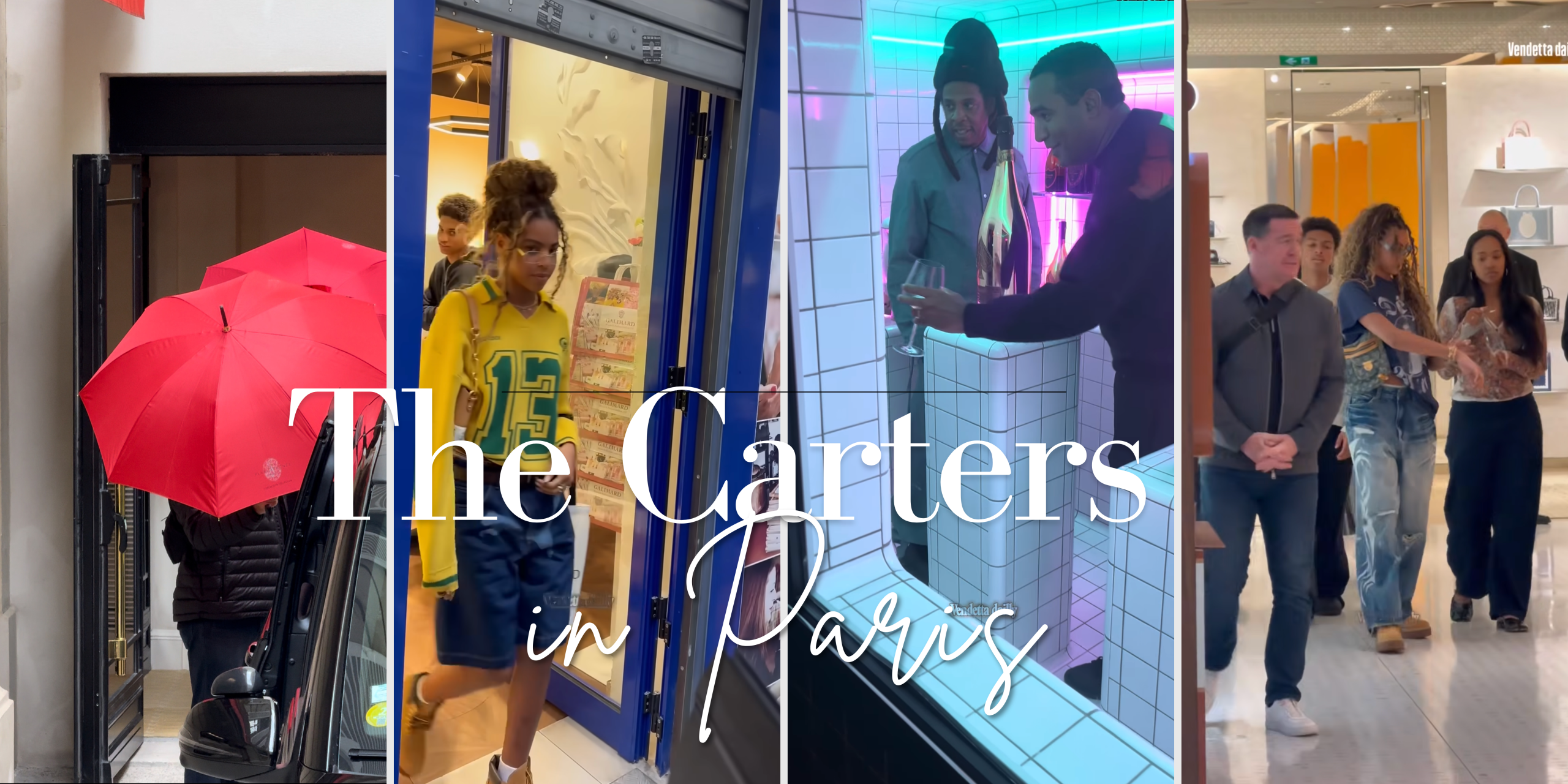
The Knowles-Carter clan have touched down in Paris for Spring Break, and have been spied all over the city by Vendetta Dailly, shopping it up and attending brand launches.
Rumi and Blue were spied perfume shopping, with Rumi in a Paris sweatshirt, and Blue in a Brazil jersey, Timberland boots, and a vintage Louis Vuitton bag.
Jay Z toasted to his Ace of Spades champagne at a cool pop up in the Parisian streets.
Blue has been shopping it up! She hit the store wearing a Deja Blue tee and another vintage Louis Vuitton bag.
Vendetta has been trying to catch Beyonce herself, but she has been elusive, hiding behind umbrellas. Perhaps she is doing fittings for her Met Gala look and everything is top secret?
We can only wonder.
Stay tuned for more from the Carters in Paris!

There are certain things in a man’s wardrobe that are very necessary and it is a good pair of boots, a watch and a leather jacket that look classy and luxurious. The last one, though, is where most men get lost. Not because there aren’t enough options but because there are too many options available. If you’ve been looking for the Western biker jacket outfit for men and you’re tired of jackets that look great in photos but feel very low quality in real life then this blog is for you. Because in this blog, I’ll tell you all about the best western jackets that are made from real leather and trust me it will get better every year you wear it.
How to Get a Leather Jacket That Will Last
Before getting into specific picks, it helps to know what to look for. A lot of men buy one leather jacket, regret it and never try again. So, if you don’t want to experience the same thing then make sure to follow these instructions.
- Leather quality matters most. Full grain is the top tier: it hasn’t been sanded down, so it’s stronger, breathable and develops a natural patina over time. Top grain is slightly more refined with a smoother and more uniform finish that some prefer. What to avoid is anything labeled simply as genuine leather; that term often refers to the lowest quality cut.
- Hardware is another giveaway. Cheap zippers can cause problems quickly. So try to look for YKK zippers or solid metal hardware with some weight.
- The fit. A biker western jacket is meant to sit close. The shoulder seam should sit right at the edge of your shoulder not drooping past it. Sleeves should cover your wrists when your arms are extended but shouldn’t bunch at the cuffs. Through the chest you need enough room to zip up comfortably without any pulling.
- Lining. Viscose lining is breathable and makes the jacket easy to slip on and off. Quilted polyester on the other hand adds extra warmth. For an all season piece, viscose is usually the better choice unless you’re buying specifically for colder weather.
The Best Biker Western Jackets for Men at The Western Outfitters
At the Western Outfitters, we have so many designs available but to make things easier for you here are the top five western jackets from our collection.
Rodio Black Biker Leather Jacket

The Rodio is the kind of jacket that doesn’t announce itself. It’s matte black, clean in its lines and confident without doing anything unnecessary. There’s no excess hardware, no decorative stitching that doesn’t belong and no attempt to be more than it is.
Black leather in this cut never reads as a trend. It read as classic in 1965, it reads as classic now and it will read the same way long after. The asymmetric front zip cuts across the chest at the right angle and the lapels have enough width to look proportional without feeling dated.
This Rodio Black Moto Jacket you just throw on without overthinking it. Dark jeans, a plain white or grey T-shirt and lace up leather boots that’s all you need.
When it gets colder, it also works well layered over a light sweatshirt without losing its shape. The kind of man who wears this doesn’t need to wonder if it fits his wardrobe. Trust me, it just does.
Vince Black Leather Jacket

The Vince has a slightly more European sensibility than the Rodio. Where the Rodio leans into a traditional biker silhouette, the Vince is cleaner and more balanced with softer lines and less fancy hardware. That makes it one of the most versatile jackets in our collection.
It’s the kind of piece a man in his late 30s or 40s might reach for when he wants a leather jacket without feeling like he’s copying a Hollywood character. The moto influence is still there but it still looks very subtle and modern.
Worn over a collared shirt with dark chinos and Chelsea boots, it easily fits into a smart-casual look. It also works with the usual jeans and a shirt combination so if you need something for the evening meetup the Vince is probably the most practical option here.
Cafe Racer Gold Leather Jacket

Gold leather isn’t a subtle choice but still the design is clean and minimal, letting the color take centre stage without unnecessary detailing getting in the way.
The cafe racer style itself has a well-documented history. It came out of post-war Britain in the 1960s, when young riders on Triumphs and Nortons would race between cafes at speeds well over 90 mph. They needed gear that was aerodynamic and minimal. No extra buckles, no wide lapels, nothing to catch the wind. The result was a jacket defined by its band collar, center-front zip and close fit. That design hasn’t changed much because it didn’t need to.
In gold leather, that minimal structure becomes something else entirely. The stand collar and centered zip keep it sharp and the warm gold tone gives the whole jacket a presence that black simply cannot match. Wear it over an all black base and let it do the talking black slim jeans, black boots, black T-shirt. The jacket becomes the focal point which is exactly how it’s meant to be worn. This isn’t a piece for blending in and anyone buying it should know that from the start.
Performance Leather Moto Jacket

The name here is accurate. This jacket is designed with riding in mind so the cut isn’t just about how it looks when you’re standing still. Performance Black Moto Jackets typically feature slightly longer sleeves and a tapered chest to stop the fabric bunching when you’re leaning forward over the handlebars. Off the bike, that same design gives it a sharp athletic look.
The functional details matter here too. A jacket built for actual performance tends to have good shoulder and elbow points, solid zippered pockets that won’t fly open at speed and a lining that manages temperature reasonably well across changing conditions. These aren’t features invented for marketing. They come from real riding requirements and they translate directly into a better everyday jacket.
If you ride, this is the pick that works both on and off the motorcycle without compromise. If you don’t ride but still value a jacket designed with purpose rather than just looks, this one fits that mindset. Pair it with riding-cut jeans, sturdy boots and keep everything else simple.
Men’s Leather Moto Jacket

Of all the jackets here, this one may be the best entry point for a man buying his first motorcycle biker leather jacket. The moto cut is reliable. It works across body types, wears in well over time and doesn’t ask too much of you when it comes to styling.
Real leather has a quality that’s worth understanding before you buy. It doesn’t arrive perfect. On the first wear it might feel a little stiff, a little formal, almost too much. But leather breaks in with your body. After a few months it softens to your shoulders, your arms and the way you move. It starts to crease at your natural flex points and picks up a patina specific to how and where you’ve lived in it. That process is the whole point. You can’t replicate it artificially and you can’t speed it up. You just have to wear it.
This jacket is three outfits in one. Jeans and a tee for the weekend. Chinos and a collared shirt for something more put-together. All-black with boots for evenings out. The versatility isn’t a marketing claim. It’s just what happens when a well made moto jacket gets worn consistently by someone who’s figured out what they like.
Conclusion
The best biker western jackets for men are not complicated purchases once you know what you’re looking at. Good leather, solid hardware, honest construction and a cut that fits your body and your life. The five jackets above suit different personalities and needs but they all share the same core fundamentals.
Whether you choose the clean versatility of the Rodio, the adaptable Vince, the bold Gold Cafe Racer, the purpose built Performance Moto or the reliable Men’s Leather Moto Jacket, you’re investing in something built to last for years. Make sure to check the full collection at The Western Outfitters and find the one that fits
FAQ
What makes a biker western jacket different from a regular leather jacket?
A biker western jacket blends the asymmetric zip and snap collar of a classic biker jacket with western style details and it creates a versatile piece that works just as well in the city as it does in more rugged, outdoor settings.
How can I tell if a leather jacket is high quality?
Start with the leather itself, full-grain or top-grain is the best. Check the hardware too; solid fittings like YKK zippers are a good sign. Look for double-stitched seams and a lining that matches your climate. Fit matters as well; good leather should feel flexible and improve with wear, developing character over time.
Which biker western jacket is best for everyday wear?
The Rodio or Men’s Leather Moto Jacket are strong everyday option. Both offer a clean, versatile design with durable leather that pairs easily with jeans, chinos or even smarter casual outfits.
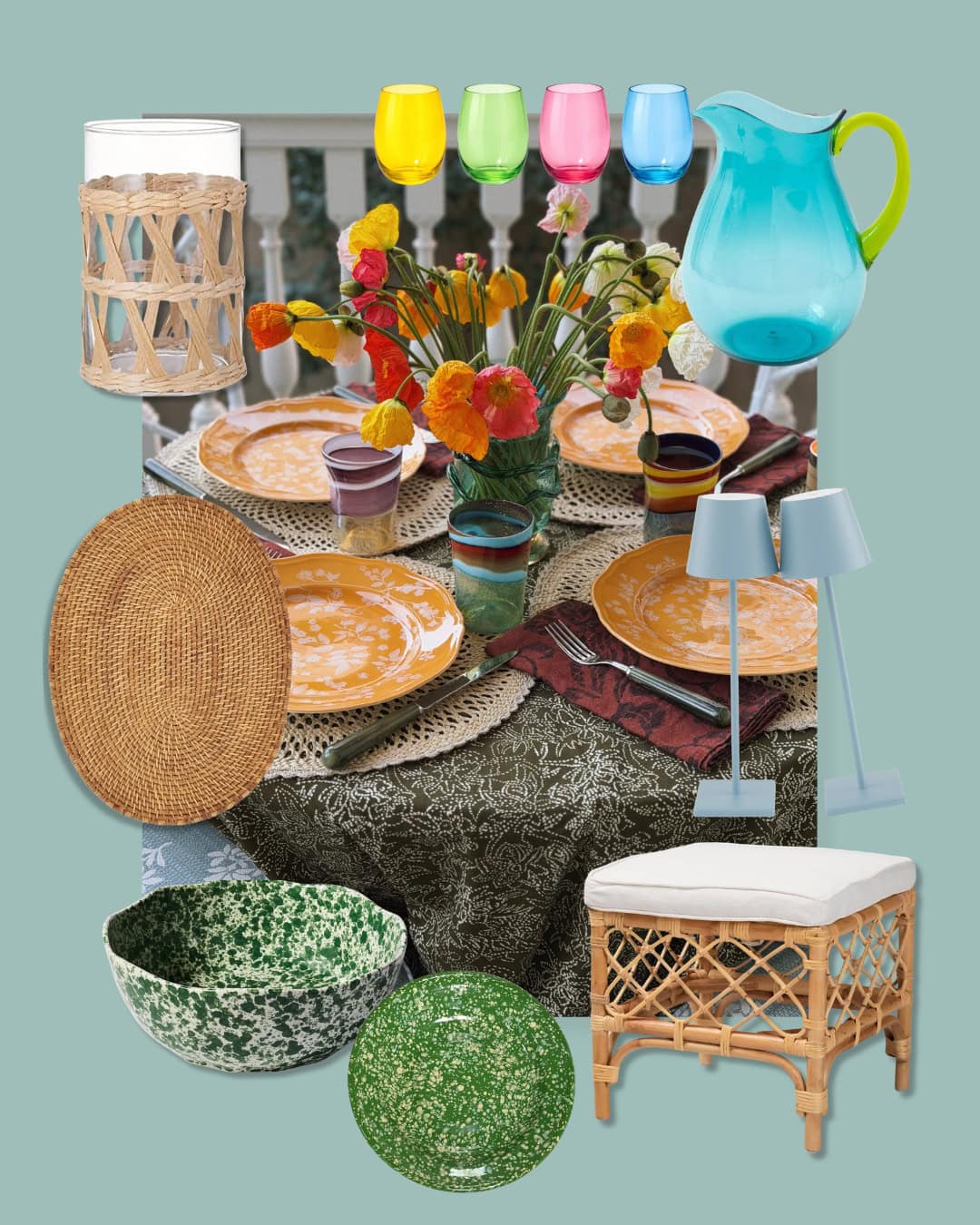
We changed the clocks a few weeks ago, and with warmer nights settling in, dinner outside has started to feel like part of the routine. It’s the kind of shift that makes you look at your space a little differently—what you reach for, what’s missing, and what would make it more inviting to use.
This edit focuses on pieces that build out that setting in a practical way. Bench seating and bistro sets to anchor the space, paired with striped cushions and woven placemats. Acrylic pitchers, tumblers, and colorful glassware bring in durability while still adding color to the table. Melamine plates and speckled serving bowls keep things easy for outdoor use, while rechargeable lamps and string lights carry the space from early evenings into night. Trays, lanterns, and a few finishing details round out the setup.
Below, a selection of outdoor pieces designed for long dinners, slow afternoons, and time spent outside.

Elevate your everyday style with the Ottoman Hands pendant necklace for women, a collection where ancient Ottoman heritage meets contemporary British design. Each piece is meticulously handcrafted from 21ct gold plated recycled brass or sterling silver and handset with vibrant, semi-precious gemstones. Whether you are drawn to the iridescent glow of Mother of Pearl or the rich tones of hand-cut emeralds and rubies, these necklaces are designed to be “layered, loved, and lived in,” offering a unique, artisanal touch to any jewelry stack.


Nautilus Seashell Mother of Pearl Pendant Necklace – Shop Now

Marigold Green Agate Beaded Necklace – Shop Now

Raina Emerald and Pink Crystal Pendant Necklace – Shop Now

Esther Ruby and Pearl Pendant Necklace – Shop Now

Noa Emerald Pendant Necklace – Shop Now
For any questions/feedback regarding the above mentioned products/brands,
please do contact us anytime by clicking here
Showcase your support for teams across the globe with the exclusive Debenhams Concept Football Half Zip Midlayer Top range. Produced by Airo Sportswear, these premium training tops are designed for loyal fans looking for a unique, unofficial supporter aesthetic. Crafted from a stretchy, lycra-type material, each midlayer provides essential extra warmth during training sessions or match days. These limited-edition pieces feature distinctive national designs, ensuring you stand out as a dedicated supporter.

Virgin Islands Concept Football Half Zip Midlayer Top – Shop Now

Concept Football Half Zip Midlayer Top (Iceland) – Shop Now

Concept Football Half Zip Midlayer Top (Slovenia) – Shop Now

Concept Football Half Zip Midlayer Top (Guinea) – Shop Now

Concept Football Half Zip Midlayer Top (Swaziland) – Shop Now

South Ossetia Concept Football Half Zip Midlayer Top – Shop Now
For any questions/feedback regarding the above mentioned products/brands,
please do contact us anytime by clicking here
Startup Battlefield 200 applications open until May 27
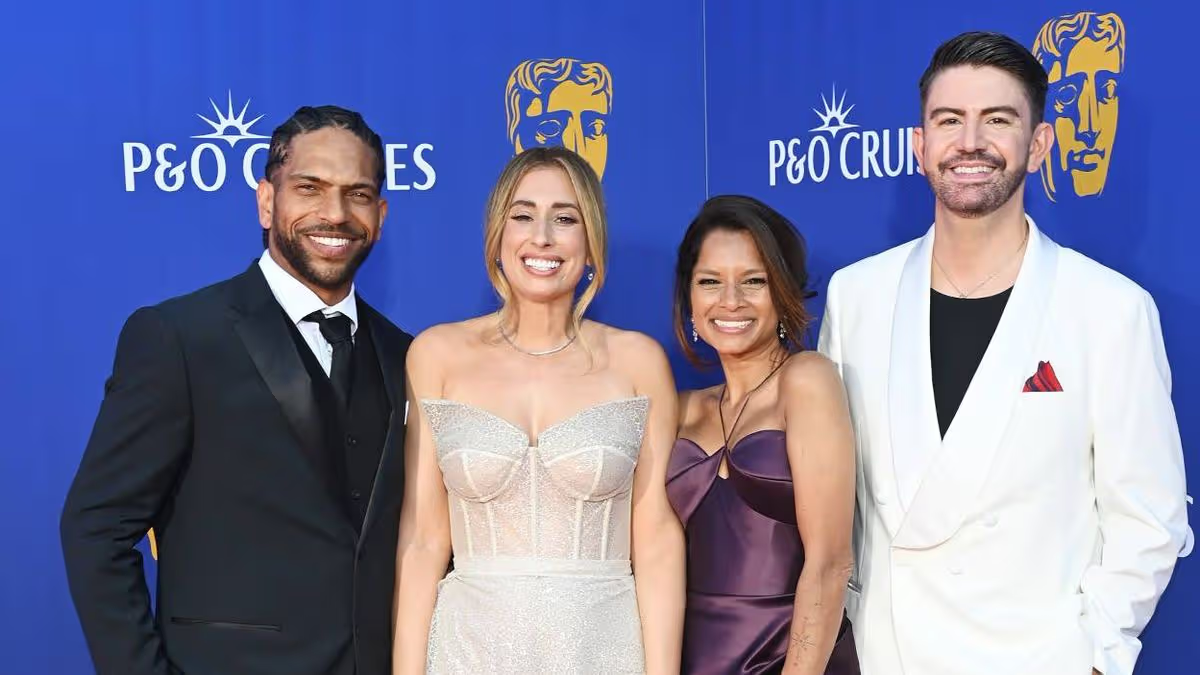
Sort Your Life Out fans ‘can’t wait’ as expert shares huge announcement

Marine Biologics launches seaweed powder ingredient

Smart energy pays enters the US market, targeting scalable financial infrastructure

Why Israel is blocking foreign journalists from entering

Bitcoin: We’re Entering The Most Dangerous Phase

HDFC BANK #equitymarket #financialfreedom #financeshorts #finance #nbstocksnew#hdfcbank #share

XRP PATH TO $XXXX IS HAPPENING – BANKS DON’T CARE ABOUT THE ESCROW – RIPPLE AT SIBOS 2026 WOW!

ICICI PRUDENTIAL AMC#equitymarket#financialfreedom#stockmarket#financeworld#iciciprudential#finance
-

 NewsBeat4 days ago
Steven Gerrard disagrees with Gary Neville over ‘shock’ Chelsea and Arsenal claim | Football
-

 Business4 days ago
No Jackpot Winner and $194 Million Prize Rolls Over
-

 Fashion3 days ago
Weekend Open Thread: Spanx – Corporette.com
-

 Crypto World5 days ago
Gold Price Prediction: Worst Month in 17 Years fo Save Haven Rock
-

 Business16 hours ago
Three Gulf funds agree to back Paramount’s $81 billion takeover of Warner, WSJ reports
-
Crypto World6 days ago
Dems press CFTC, ethics board on prediction-market insider trades
-

 Sports2 days ago
India men’s 4x400m and mixed 4x100m relay teams register big progress | Other Sports News
-

 Business5 days ago
Login and Checkout Issues Spark Merchant Frustration
-

 Tech7 days ago
Apple will hide your email address from apps and websites, but not cops
-

 Tech6 days ago
EE TV is using AI to help you find something to watch
-

 Sports6 days ago
Tallest college basketball player ever, standing at 7-foot-9, entering transfer portal
-

 Politics7 days ago
Should Trump Be Scared Strait?
-
Tech6 days ago
Daily Deal: StackSkills Premium Annual Pass
-

 Tech6 days ago
Flipsnack and the shift toward motion-first business content with living visuals
-

 Sports7 days ago
Women’s hockey camp eyes fitness boost, tactics ahead of WC 2026 campaign | Other Sports News
-

 Crypto World7 days ago
U.S. rule change may open trillions in 401(k) funds to crypto
-

 Politics7 days ago
BBC slammed for ignoring author of The Fraud
-

 Tech6 days ago
How to back up your iPhone & iPad to your Mac before something goes wrong
-

 Tech7 days ago
This is a 3D-Printed Macintosh That Apple Never Built
-

 NewsBeat7 days ago
Newscast – Scott Mills Sacked By BBC
You must be logged in to post a comment Login