

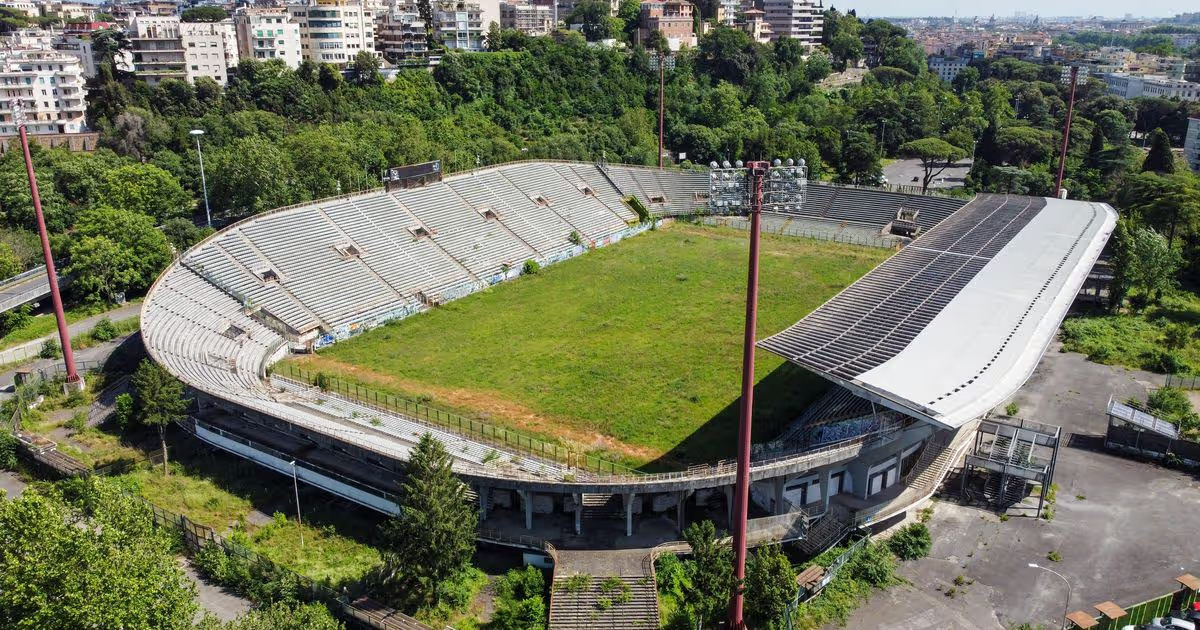
A 30,000-seater stadium Wales played several Six Nations matches at has been offered a new lease of life after being abandoned since 2012
An abandoned former Six Nations stadium is set to be revived thanks to a £380million redevelopment project.
Italy’s Stadio Flaminio, which held Six Nations fixtures for over a decade and hosted Wales on several occasions, is now in decay. The 30,000 capacity ground in Rome first opened in 1959 ahead of the 1960 Summer Olympic Games.
It served mainly as a football venue but began hosting rugby in 2000, when Italy debuted in the Six Nations. But the arena was ultimately deemed too small, prompting the national team to relocate to the much larger nearby Stadio Olimpico in 2012.
Despite being refurbished in 2008, Stadio Flaminio has deteriorated significantly since it stopped hosting rugby matches and regular music events, with the stadium now lying in ruin and being reclaimed by nature.
Now, Serie A club Lazio have drawn up plans to resurrect the iconic stadium, having submitted plans to the owners – the Municipality of Rome. The next step is for the municipal offices to examine the plans before the project phase, which will cost an estimated £380m in total, can begin.
Lazio released a statement last week, saying: “A press conference will be held on Tuesday, February 17, at 10.30am at the Formello Training Center to officially present the Stadio Flaminio project, which has already been submitted to the City of Rome.
“During the meeting, all the contents of the project proposal will be explained in a comprehensive and in-depth manner. The professionals, engineers, architects and consultants who contributed to its development will be present, in order to delve into the technical merits of each aspect.
“The project will also be presented through a dedicated video, which will accompany the technical presentation and illustrate its vision, architectural features and functional development. The entire event will be broadcast live on the club’s official platform, allowing fans and citizens to follow the presentation in its entirety.”
The conference will look at various matters in depth, including the land redevelopment project and its benefits for the city of Rome. To support the plans, Lazio are set to take out a £246m loan to be paid over the course of 30 years, with an additional £74m financed by the club while a further £21m will come from public contributions.
It is expected that the refurbishment, which could take around three years, will increase the capacity to 50,000, with work beginning within a few months if Lazio are granted permission. The historic stands will not be removed as it is a listed building, instead being covered by a steel structure which will raise the height of the stadium.
Wales made their inaugural trip to the venue in April 2001, a year after Italy’s Six Nations debut. The Dragons emerged victorious 33-23, with Gareth Cooper crossing the line once and Scott Gibbs scoring twice to secure the win.
In later years, Wales, whose recent defeat to Italy proved to be the tipping point for now-former head coach Warren Gatland, experienced mixed fortunes in Rome.
Italy claimed their first victory over Wales when they hosted the match in 2003 and achieved the same result four years later in 2007.
Wales, however, won at the ground on three further occasions, giving them a tally of four wins and two defeats at the now-derelict stadium. Throughout its history, the Stadio Flaminio has also hosted a variety of other sporting occasions.
During the 1989/1990 Serie A season, both Roma and Lazio temporarily made it their home while the Stadio Olimpico underwent refurbishment works. The venue has also welcomed major music acts, with David Bowie performing in front of 45,000 spectators in 1987, while Pink Floyd and Bruce Springsteen have also graced its stage.














































You must be logged in to post a comment Login