
News Beat
Always seem to get sick as soon as you take time off? Here’s why

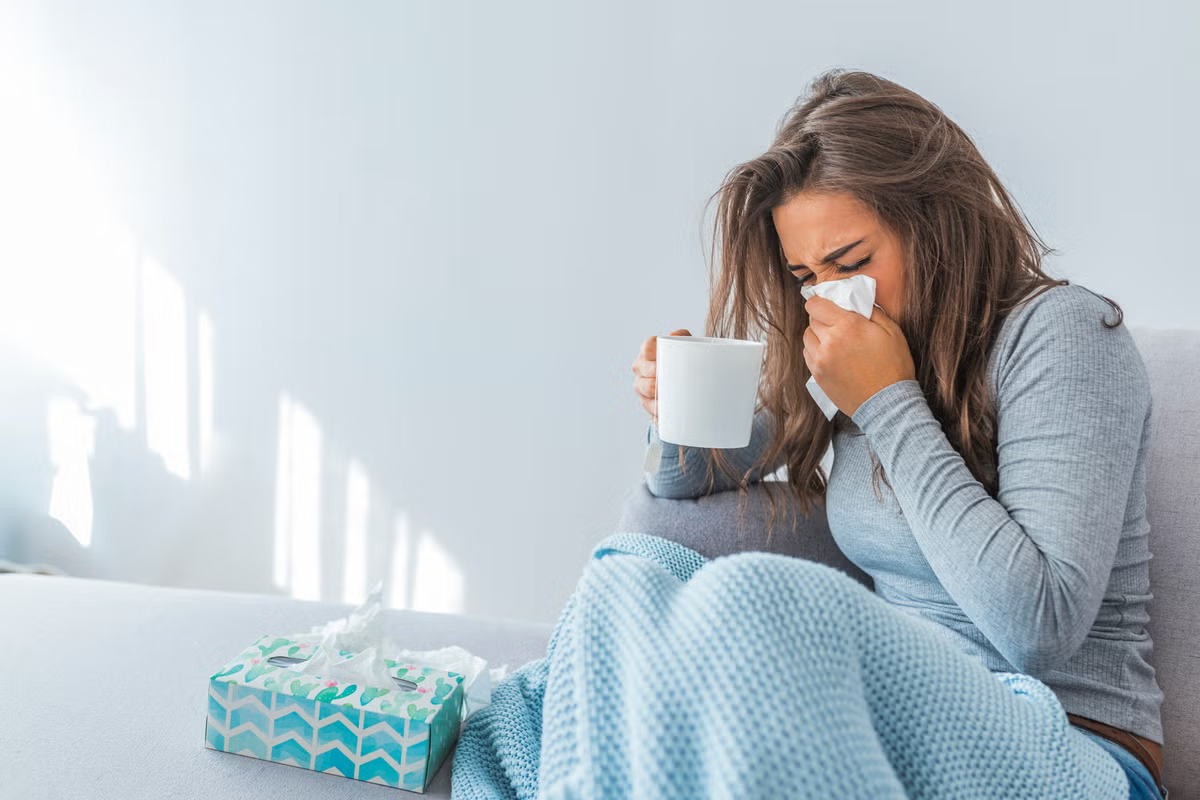
You’ve been hanging out for a break, getting through the busy last weeks of work or class. You’re finally ready to relax. And then tiredness descends, you feel the tickle in your throat, and you realise you’re getting sick.
Why does this always seem to happen just in time for a holiday or the weekend? Some call this the let-down effect or leisure sickness.
But is it real? While you may hear about leisure sickness online and anecdotally, studies on this phenomenon are very limited and often not well designed. So let’s take a look at the evidence – and what you can do to stay healthy.
What the evidence shows
Leisure sickness is a term coined by Dutch researchers in a 2002 study. It refers to people who are seldom ill during the working week but get sick relatively often on weekends or holidays.
The researchers surveyed 1,893 people and found roughly 3% reported leisure sickness. Symptoms typically included headaches, tiredness, colds and flu, muscle pain and nausea. People were more likely to develop infections on vacation rather than weekends, and symptoms were most common during the first week of their holiday.

However, this research relied on people’s recall, and memory can be unreliable. The definition of leisure sickness was also vague. For example, one person’s idea of “seldom” and “relatively often” may differ from another’s.
Another 2014 study investigated “let-down headaches” by asking 22 participants who regularly experienced migraines to keep a diary of their stress levels and migraine onset.
It might seem counter-intuitive, but reducing stress seemed to trigger the migraine. When they recorded a reduction in stress on one day, they typically developed a migraine within the next 24 hours. If work was the stressor, this could mean a pattern of migraines on their days off.
Some evidence suggests strokes are also more common on weekends than weekdays in some groups. There is no clear cause, but the study authors suggested strokes could be triggered by lifestyle changes on weekends.
So, what’s going on?
The lack of quality research on leisure sickness means we don’t fully understand its potential causes. But there are some theories.
People often travel during vacations, and sit in enclosed, crowded spaces such as planes, increasing their exposure to germs. Travel to distant locations can also expose us to strains of germs we’re not immune to.
about the author
Thea van de Mortel is Professor Emerita, Nursing, School of Nursing and Midwifery, Griffith University. This article was first published by The Conversation and is republished under a Creative Commons licence. Read the original article.
On holidays we may also drink more alcohol, which can reduce immune function. And we may be pushing our body to do things we don’t normally do, putting stress on it.
Another theory is that being busy at work makes us distracted and less likely to pay attention to symptoms. On leave, symptoms such as muscle pain or a headache may become more obvious – and we can’t blame it on work. So we may notice sickness more.
But isn’t relaxing good for your health?
There is a complicated relationship between stress and the immune system. Stress activates the sympathetic nervous system and makes our bodies release hormones such as adrenaline and cortisol.
Chronic stress can mean our cortisol levels are sustained at high levels. Over time, this reduces how well our immune cells respond to infection, so we are more likely to get sick if we come into contact with viruses or bacteria.
But in the short term, both adrenaline and cortisol can actually enhance how well some parts of the immune system work. This means acute stress can temporarily improve our resistance to infection, which is why we may feel busy and stressed but not fall sick. Cortisol’s anti-inflammatory properties can also relieve pain.
But when the acute stress stops – for example, when we finally get a chance to rest – there may be a sudden transition. We no longer benefit from the temporary immune boost or cortisol’s pain relief. So this is when we might fall sick, and feel symptoms such as headaches and muscle pain.
How can I avoid getting sick?
There’s still a lot we don’t understand about how or why leisure sickness might happen. But we know staying active, getting enough sleep and eating a healthy, balanced diet – even when you’re busy – can help boost your immune system.
One Finnish study examined more than 4,000 public employees who were physically inactive. It found those who took up regular exercise, particularly vigorous exercise, were less likely to take sick leave than those who remained inactive.
Given the link between chronic stress and multiple chronic diseases, it is also sensible to manage your workplace-related stress.
There is good evidence that meditation, mindfulness and relaxation techniques can help reduce stress.
There are also steps you can take to reduce the risk of respiratory infections on vacation, so you get to enjoy the whole holiday. Consider keeping up to date with flu and COVID boosters, and taking other precautions, such as wearing an N95 mask on planes and in airports.



