

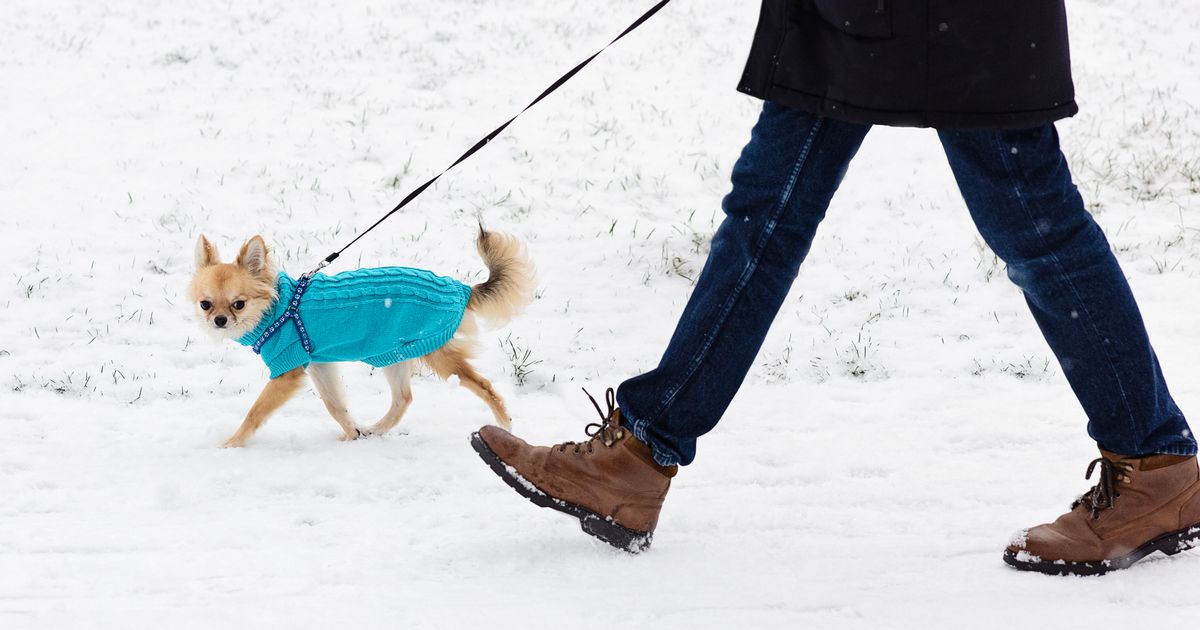
With more cold weather on the way, people are being made aware of the ‘hidden risks’
A significant warning has been given to dog owners all over the UK as extremely cold weather arrives, bringing snow and ice to many regions. The Met Office has issued multiple weather warnings, starting from Saturday, January 3, until Tuesday, January 6.
In Scotland, through the weekend and into Monday morning, a further 2-5cm, locally 10-15cm, of lying snow is possible in low lying areas. Between 15-30cm could potentially accumulate above 200m, most likely for the northwest Highlands and Grampians. Given the wind strengths on Saturday, some drifting of snow and temporary blizzard conditions are likely. Lightning will be an additional hazard near showers.
A spokesperson shared some advice: “Possible travel delays on roads, stranding some vehicles and passengers. Possible delays or cancellations to rail and air travel. Some rural communities could become cut off. Power cuts may occur, and other services, such as mobile phone coverage, may be affected. A chance of injuries from slips and falls on icy surfaces. Untreated pavements and cycle paths might be impassable.”
As the cold weather sets in, dog owners are reminded that their daily walks can have hidden dangers for their pets. From frozen paws to the risk of antifreeze poisoning, Ross Hallifax from Purely Pets, a pet insurance company, has pointed out the serious health risks dogs may face now that temperatures are dropping in the UK.
“Many owners assume that because dogs have fur, they’re naturally protected from the cold, but that’s not true,” Ross explained. “Just like us, dogs can suffer from hypothermia and even chemical burns from winter road salt and grit.”
Hypothermia risks
Staying in the cold for a long time, especially when it’s wet or windy, is one of the main reasons dogs get hypothermia. When it’s wet and windy, the risk goes up because water and wind make dogs lose heat faster, which means their fur doesn’t keep them warm as well.
If a dog is in cold water for too long, it can also lead to hypothermia because it cools their body down really quickly. To prevent this, make sure to keep dogs on a leash near any frozen water, like ponds or lakes.
“A dog’s fur can only protect them from so much cold weather, and they can get hypothermia if they become too cold and can’t warm up,” explains Ross. “Watch out for shivering, paleness, low energy, and bad coordination and seek urgent veterinary advice if you think your dog is suffering.”
Ross is also encouraging owners to avoid walking their pets at the coldest times. He said: “If you can, avoid going out at the coldest times of the day and try head out towards midday, when temperatures are likely to have risen slightly.” While some dogs have thick fur to protect them, small, short-haired and older dogs lose heat quickly and require extra care and attention in colder temperatures.
“Keeping your dog well exercised is just as necessary in the winter months as it is in summer,” Ross says. “For breeds less suited to cold weather, such as whippets, greyhounds, and Yorkshire terriers, consider a weatherproof, fleece-lined coat to keep them warm. Limit their time outdoors in the cold to prevent discomfort and health risks.”
Chemical burns
Ross is also informing pet owners about more dangers that come with walks during this season. A winter walk can really mess up your dog’s paws, so it’s important to check and dry them often after they’ve been outside. Salt, grit, and ice-melting chemicals can bother paw pads, causing painful cracks. Sometimes, salt can even burn the pads and become harmful if licked off while grooming.
For long-haired dogs, trimming the fur around their feet helps prevent ice balls from forming between the toes. “Wipe your dog’s paws with warm water after every walk, and consider getting a set of dog booties for when the cold really sets in,” suggests Ross.
Antifreeze poisoning
Antifreeze and de-icers are commonly used in cold weather to help cars work and to clear snow from driveways and pavements. But, these chemicals can be really harmful to pets, who might lick them off the ground or their paws after going for a walk.
Antifreeze has a chemical called ethylene glycol, which is very poisonous to animals. Just a little bit can make them sick, with signs like feeling nauseous, throwing up, losing their balance, having seizures, and in serious situations, even going into a coma.
“To prevent antifreeze poisoning, store antifreeze containers out of your pets’ reach,” Ross said. “Clean up any antifreeze spills promptly and protect your pet’s paws by using dog booties and wiping their paws after being outside.”



