

“I am extremely concerned about the evidence that has been presented to me on this matter in regards to the safety of fire-fighters.”
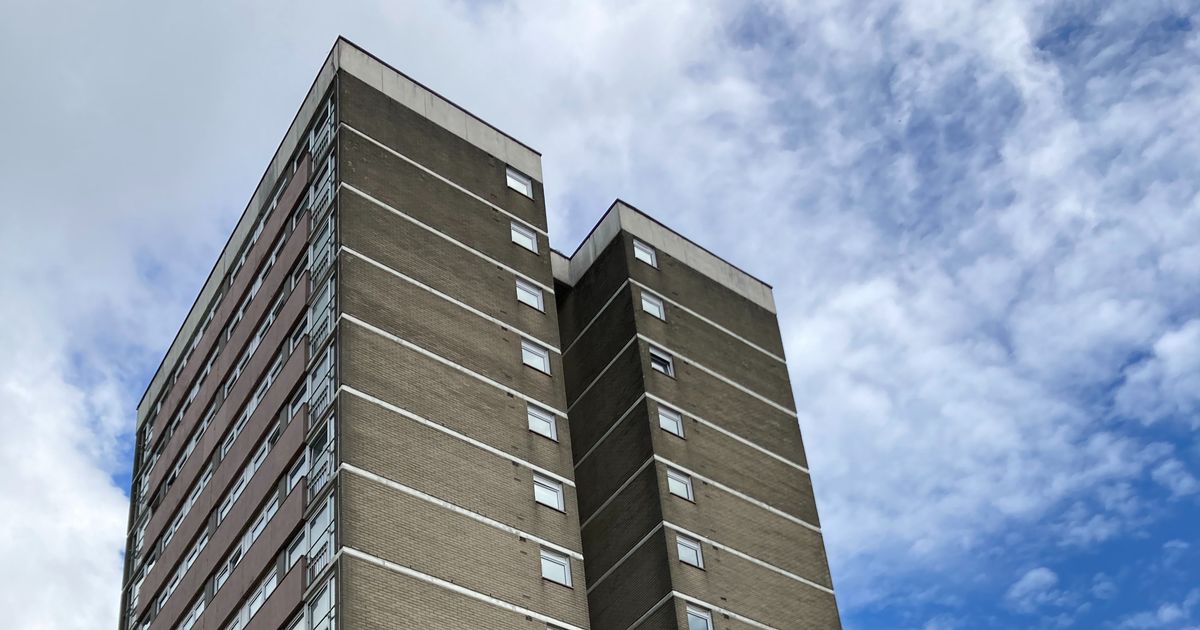
Asbestos concerns for fire-fighters training on vacant Dunmurry tower blocks have been raised over the potential “disturbing” of the cancer causing material.
Owners of the Coolmoyne and Rathmoyne towers, the Northern Ireland Housing Executive (NIHE) had given the Northern Ireland Fire and Rescue Service (NIFRS) permission to train at the unoccupied blocks until demolition, including a controlled fire.
However, the Northern Ireland Fire and Rescue Service (NIFRS) has now confirmed it will stop using the blocks amid a Local Democracy Reporting Service (LDRS) investigation.
READ MORE: NI council’s emotive U-turn to hold minute’s silence for Bondi beach shootings.
READ MORE: Council’s key finance role vacant amid HMRC potential VAT fine.
Speaking to the LDRS this week, Lisburn North DUP councillor Jonathan Craig, a board member of NI Fire and Rescue Service, said:”I am extremely concerned about the evidence that has been presented to me on this matter in regards to the safety of fire-fighters.
“I will now be bringing this matter up with the chief fire officer.”
The high rise blocks of Rathmoyne and Coolmoyne built in 1966 close to each other were due to be pulled down in July 2023, but have faced continued set backs for a number of reasons, including asbestos surveys.
All 14 floors, previously lived in at both high rises, have been detected as having asbestos levels requiring the potentially cancer causing materials to be removed ahead of a planned demolition in the new year.
The towers will form part of a £308m Northern Ireland Housing Executive Tower Block Action Plan, aimed at replacing ageing tower blocks with new homes in the wake of the Grenfell fire disaster (2017) when 72 people tragically lost their lives.
NIHE director of asset management, Paul Isherwood, said:“Asbestos only poses a risk if it is disturbed.
“Surveys were completed in the fully vacant blocks in early 2024.
“These surveys confirmed the presence of asbestos in both blocks, which is typical for buildings of this age and the assessment has deemed the presence as low risk.
“Removal will take place as part of the pending demolition works, as is normal
practice.”
A previous survey and the training actions of the fire-fighters have, however, raised concerns as to whether elements of the buildings may have been disturbed.
A NIFRS spokesperson said:“NIFRS has an ongoing agreement with Northern Ireland Housing Executive to utilise Coolmoyne and Rathmoyne tower blocks for training exercises until both buildings are demolished.
“The training exercises involve the creation of emergency scenarios utilising simulated fires in tall buildings.
“They are designed to train and assess fire-fighters in the use of breathing apparatus, fire fighting techniques, making forced entry and the use of specialist appliances, including a turntable ladder, for accessing the upper floors of a building.
“On only one occasion in June 2025, NIFRS created and controlled a fire (Coolmoyne), as part of a large-scale multi-agency exercise.”
But, when the LDRS gained the survey information and approached the NIFRS on asbestos levels at the Dunmurry towers, a spokesperson responded:”NIFRS ensures the safety of its personnel and the community remains its highest priority and therefore training exercises were not conducted on any floors that contained asbestos.
“NIFRS does not intend to do any further training at either tower block ahead of its demolishment.”
However, the LDRS can now reveal details of a (March 2024)’Healthy Built Environment’ (HBE) asbestos survey commissioned by the Northern Ireland Housing Executive (NIHE).
The report signed off (May 2024) supersedes a May 2023 report with “samples added to floor plans”.
The reports when cross referenced show that asbestos material may have been disturbed before the NIFRS was permitted to use the buildings for training, as well as other unknown levels of asbestos still to be detected.
The first survey carried out in unoccupied flats by a consultancy firm states: “The survey was fully intrusive and involved destructive inspection, as necessary, to gain access to all areas, including those that were difficult to reach.”
Though it concluded no items were located in unoccupied flats at that time requiring urgent removal.
A need for further inspection was identified by the company when the towers would be completely unoccupied ahead of demolition plans.
The HBE report, one year later, shows that the towers built in the 1960s contain asbestos on every living level of the 14 storey blocks, known as ‘Chrysotile’, or ‘white asbestos’.
The 14 floors and ground floor are identified under the subject “urgent/ action areas” requiring asbestos to be removed.
HBE further states: “It should be noted however that asbestos may be present within the fabric of the building and/or beyond the scope of this survey.
“The HBE survey team has made every reasonable effort to identify all asbestos containing materials, therefore HBE takes no responsibility for the later discovery of asbestos containing materials, if it is regarded that it was unreasonable to have identified them within the limitations of the survey.”
The only floor with no suspect asbestos detected is the top level 15th floor which contains the lift motor room and the air conditioning room according to the survey report.
A HBE report (June 2024) on the second tower, Rathmoyne, has concluded similar amounts of asbestos on all floors previously lived in with removal advised.
The Gov.UK website states: “All forms of asbestos fibres are hazardous as they can induce cancer following inhalation exposure, but amphibole forms of asbestos (including blue and brown) are more hazardous to health than chrysotile (white).”
For all the latest news, visit the Belfast Live homepage here and sign up to our daily newsletter here.



