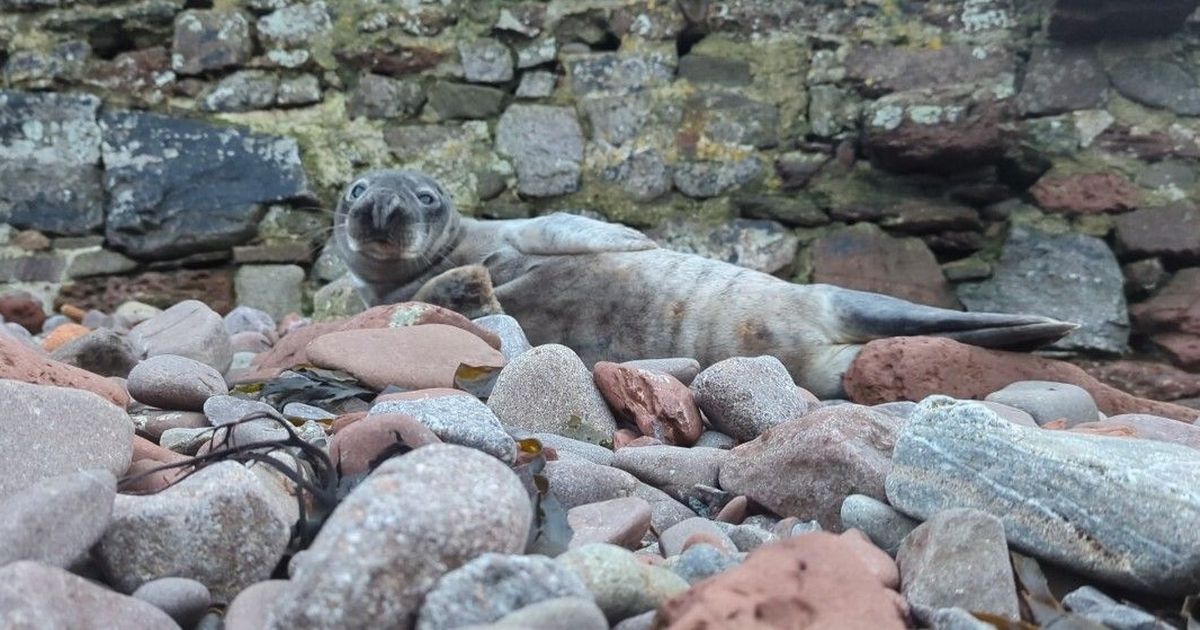
The pup, which has been named Muse, was found dehydrated and underweight
A grey seal pup is receiving RSPCA specialist care after he was found dehydrated and underweight on a Welsh coast after travelling a 75-mile journey in just four days.
The RSPCA said the seal was found at St Brides Bay in Pembrokeshire after it had travelled from Cornwall. It was spotted on the rocks at the bay on December 11 and was found fully weaned but in a thin condition.
An RSPCA officer removed the pup from the beach and the pup was given immediate care by being fed tubes of electrolyte fluids and fish before being taken to RSPCA West Hatch Wildlife Centre in Taunton, Somerset.
There the seal was named Muse – with singers and bands being the year’s theme at the centre for naming the attendees.
Muse joins Elvis, another seal at the centre who was rescued from Porthcawl as well as Dido, who was rescued from Mwnt, a beach near Cardigan. For our free daily briefing on the biggest issues facing the nation sign up to the Wales Matters newsletter here.
Ellie West, RSPCA animal rescue and wildlife officer, said: “The pup was dehydrated and in a thin body condition with obvious rolls of skin that should have been filled with fat/blubber.
“I also noticed he had marks on his back similar to the spray marks we put on seals after we have assessed them, so if we get further calls or they come into care again we know we have seen them already.”
But Ellie noted that the colour of the marks were different to the usual used in the area so she contacted the British Divers Marine Life Rescue who confirmed they had checked on the seal.
She found out that Muse had been marked four days earlier on December 7 at Port Gaverne, North Cornwall. “This is a really long swim for a young pup,” she said.
“I’m pleased to say Muse is doing really well and is feeding well and is gaining the weight he needs. I last saw him on December 27 and it was lovely to see him looking much better.
“Our dedicated, knowledgeable wildlife assistants, vet teams and volunteers within the wildlife hospitals work so hard to get animals fully fit and back to the wild for release where they’re meant to be.
“Knowledge, correct facilities and expertise is essential in wildlife rehabilitation. Hopefully it won’t be too long until Muse will be ready to be released back into the wild.”
Each seal pup rehabilitated at RSPCA West Hatch can remain in care at the centre for a number of months and during this time the centre will be spending on average £1,400 a week on fish and veterinary care during seal season – which typically runs from September to March.
The RSPCA works in partnership with a number of other organisations to come to the aid of seals. The animal welfare charity advises that if members of the public spot a seal on a beach that they observe them from a distance and do not approach them.
Seals are wild animals and have a nasty bite if they feel threatened. It is also advised people keep dogs on leads on beaches that have seal colonies too.
“It’s not unusual to see a seal pup by itself as their mothers will leave the pups alone very early on in life, feeding in the sea then returning to feed them,” said Ellie.
“If you find a seal pup that looks fit and healthy and shows no signs of distress, monitor it first from a safe distance for 24 hours.
“However, if the mother doesn’t return after 24 hours or the pup appears distressed, injured or unwell, or is on a busy public beach, our emergency line can be reached on 0300 1234 999.
“Please always stay at a safe distance and keep dogs well away – seals can have a very nasty bite if threatened. Our main message is if they look in distress or unwell please call it in.”
There is more information on the RSPCA website about what to do if you see a seal or pup on the beach alone.