

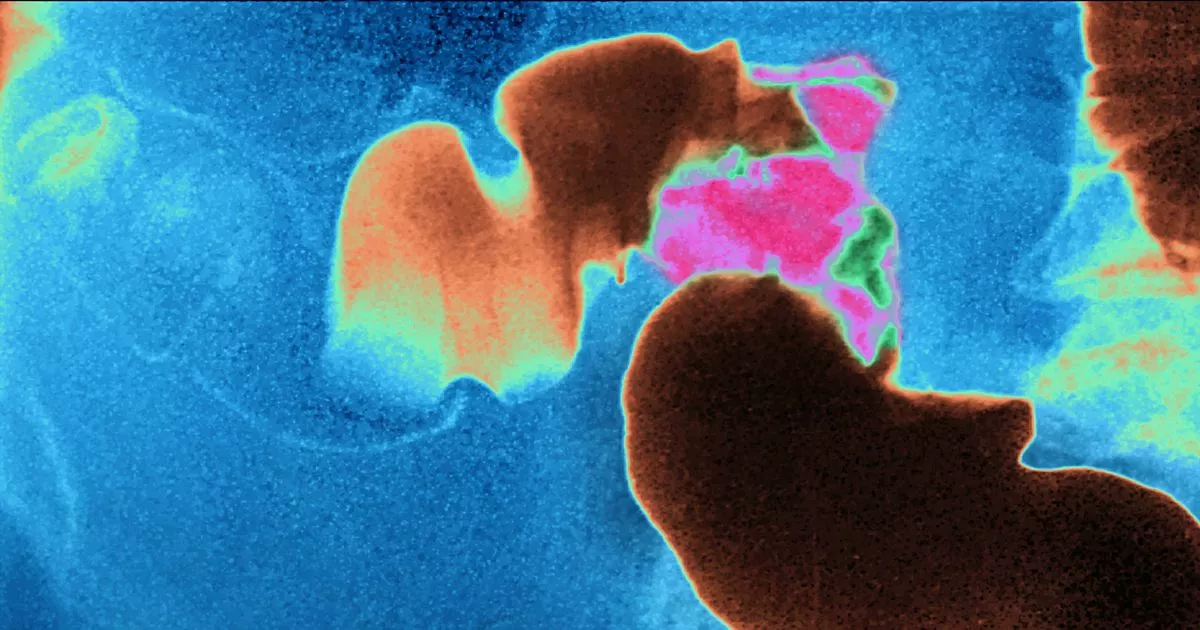
“Bowel cancer is increasingly being diagnosed in younger people, so new solutions are needed urgently.”
A new study by researchers in Belfast is exploring how bowel cancer develops resistance to treatment. It seeks to tackle this common problem which makes successful treatment of the disease difficult.
Funded by Cancer Research UK, the study at Queen’s University Belfast, the team’s focus will be on RNA – the messenger for our DNA – which tells our cells when to grow, how to behave and, crucially, when to stop growing.
Cancer occurs when cells grow too much and form into tumours but if this abnormal growth can be stopped early, then the cancer can be prevented from developing.
READ MORE: Watch as child rings the bell after months of tough cancer treatmentREAD MORE: ‘My music will live on’ – Crumlin man speaks out following terminal cancer diagnosis
Lead researcher Senior Postdoctoral Fellow Dr Susanta Chatterjee, of Queen’s University Belfast, said the research aims to investigate how bowel cancer cells develop resistance to drugs we already know work against cancer.
“We know cancer can resist treatments by hijacking healthy processes designed to remove the errors which cause cancer cells to grow. If we can better understand these mechanisms, we could ultimately improve anti-cancer therapies,” he added.
Bowel cancer, also known as colorectal cancer, is a key focus for cancer research. It’s the second most common cause of cancer deaths in the UK. Despite this, treatment options remain limited, particularly for patients who are diagnosed at later stages of the disease.
Every year, around 1,300 people are diagnosed with bowel cancer in Northern Ireland. There are around 17,400 bowel cancer deaths in the UK every year, with around 490 being in NI and the disease is increasingly being diagnosed in younger people.
A recent study by the American Cancer Society published in The Lancet Oncology showed early-onset bowel cancer rates in adults aged 25-49 are rising in 27 of 50 countries studied including the UK.
Genotoxic drugs, the focus of this new study, are commonly used to treat bowel cancer by killing cancer cells through damage of the DNA and RNA of cancer cells.
However, cancer can become resistant to these treatments and begin to grow again so the team will focus on the mechanics that cancerous RNA cells use to overcome chemotherapies.
Cancer Research UK Director of Research, Dr Catherine Elliott, said: “Cancer’s ability to eventually overcome existing treatments and start growing again is one of the biggest challenges in cancer research.
“That’s why we, at Cancer Research UK, are funding many projects, including this exciting project at Queen’s University Belfast, to tackle this problem. Bowel cancer is increasingly being diagnosed in younger people, so new solutions are needed urgently.”
For all the latest news, visit the Belfast Live homepage here and sign up to our daily newsletter here.



