

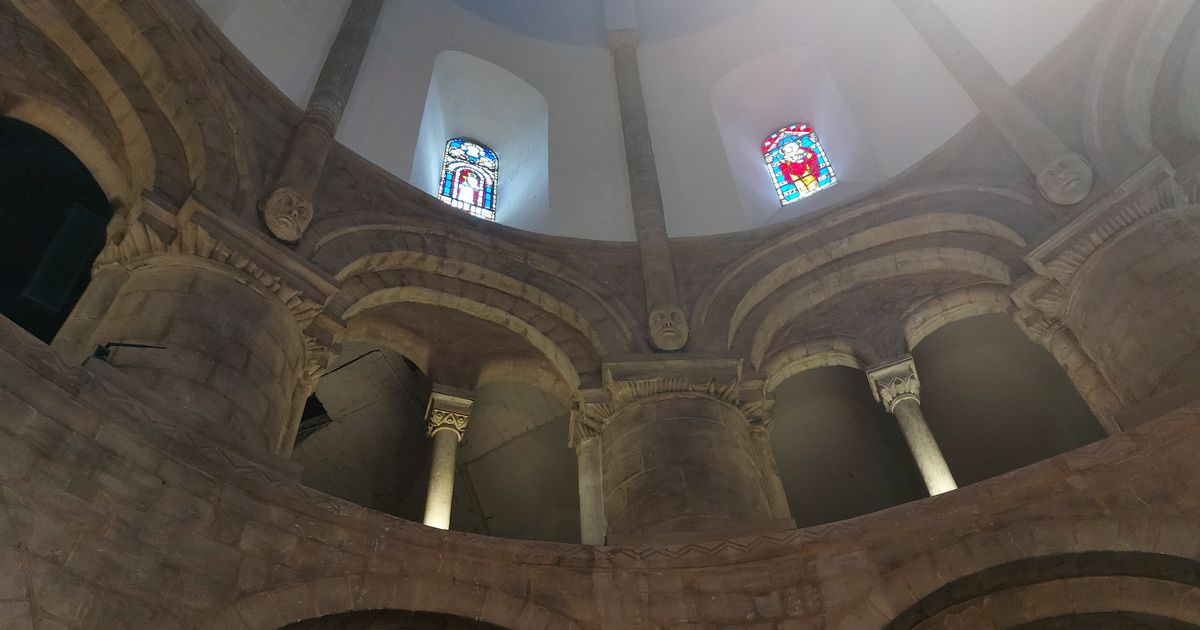
The church managed to survive the Blitz despite an explosion almost destroyed it
Founded between 1115 and 1131, the Round Church of the Holy Sepulchre is one of the oldest churches in Cambridge. It is one of five in the UK, and the history of all of them links together. The other round churches are in Northampton, Essex and London and date back to when the pilgrims returned from Jerusalem.
But during one fateful day in the Second World War, an explosion meant that it was almost lost forever. Although Cambridge was not a main target during the Blitz, it still experienced its fair share of devastation and alomst destroyed the Round Church.
Thankfully, the unique church has stood the test of time and can still be seen and visited today. You can find it at the crossroads of the aptly-named Round Church Street, Bridge Street at St John’s Street in Cambridge city centre.
A narrow survival
During the WW2, Cambridge was devastated by the Blitz. On 28 July, 1942, Cambridge faced its most brutal attack yet when a single low-flying raider attacked Bridge Street and Sidney Street with 11 H.E’s and their new explosive incendiary bombs.
The attack damaged 127 buildings, destroyed 10 buildings, killed three people and injured seven. One bomb during this raid fell on the Union Society building behind the Round Church and caused a huge fire.
The explosion caused the historic east window to be totally smashed. It was a stained glass window that was installed in the 19th century by Thomas Willement and William Wailes, who were the most prolific glass artists at the time.
Thankfully, the church had a lucky escape, minus the damage to the window. The east window now depicts Christ’s resurrection and was installed four years later in 1946.
The history of the church
All of the round churches in the UK were modelled on The Church of the Resurrection – better known as the Holy Sepulchre – in Jerusalem which was consecrated in 335 AD and stands atop the reputed burial site of Jesus.
The shape of the Round Church in Cambridge is thought to have been inspired by the rotunda (circular ground plan) in the church of the Holy Sepulchre, Jerusalem, which consisted of a round nave and an ambulatory, with a short chancel. The Church was built by the Fraternity of the Holy Sepulchre, who were probably a group of Augustinian canons.
Initially, the church was used as a wayfarers’ chapel on the Roman road known as Via Devana which has now been absorbed into Cambridge on Bridge Street. By the middle of the 13th century it had become a parish church under the patronage of Barnwell Priory.
By the 19th century, the church was in a state of disrepair. Part of the ambulatory collapsed in 1841, and the Cambridge Camden Society offered to carry out repairs. The bell storey, windows, staircase, floor tiling, stone altar, north aisle and a new south aisle were all replaced. By the end of the 19th century, the church was almost completely new.
Through from the Middle Ages to its eventual intensive repair by the Victorians, The Round Church was a staple religious building in the city of Cambridge.



