

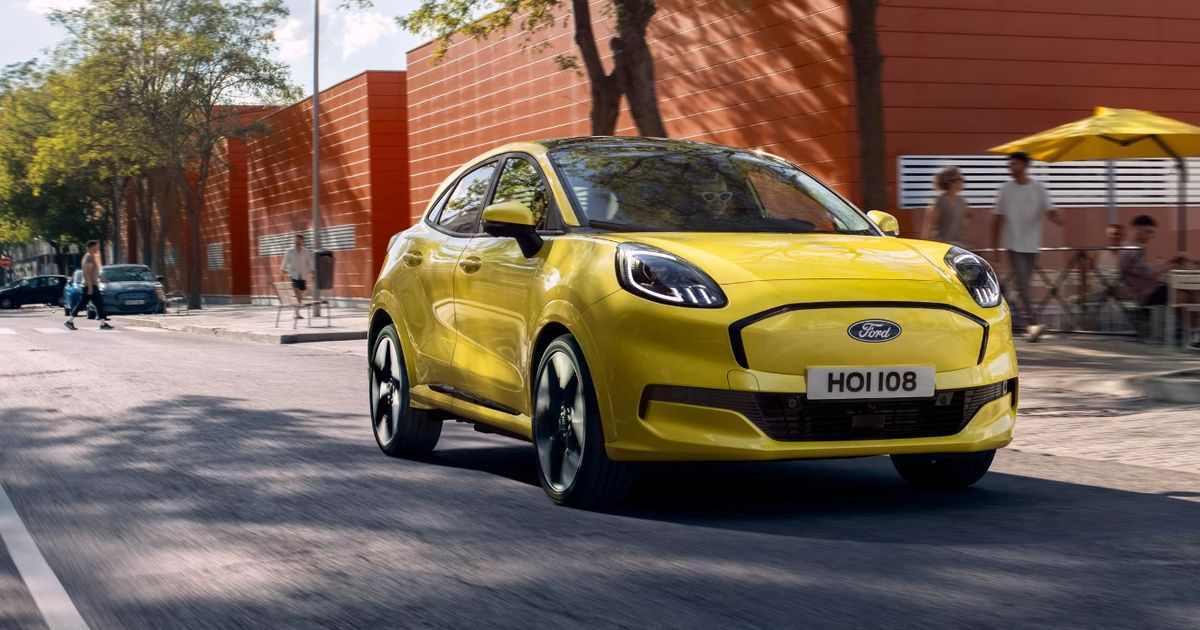
Manufacturers were forced to offer big incentives to boost sales of electric vehicles as the industry called for a Labour review of targets to be brought forward
Car makers provided £5.5billion worth of subsidies for UK buyers of electric vehicles last year, it has emerged.
Trade body the Society of Motor Manufacturers and Traders said the incentives were worth an average £11,000 per car. The discounts were seen as needed to encourage drivers to make the switch and buy an electric car, but many models still had much higher price tags than petrol and diesel equivalents.
As well as being keen to boost demand, manufacturers also needed to reach targets for electric vehicle sales to avoid being fines. Those companies that still missed the required level typically struck deals with others that did rather than being hit with hefty penalties.
READ MORE: Average fat cat FTSE 100 boss to earn more by midday today than typical worker all yearREAD MORE: Drivers urged not to make 1 mistake in snow and ice or risk huge fines
Battery electric vehicle accounted for 32.3% of all cars registered in December, the only month in 2025 where the 28% Zero Emission Vehicle (ZEV) mandate was reached. The target for 2026 is set at an even tougher 33% threshold.
Industry chiefs are clinging to the hope that Labour will relax the target in future years as part of a promised review. Asked whether buyers can look forward to more bumper discounts on a new electric car, SMMT chief executive Mike Hawes said: “The pressure is still very much on the industry.”
The SMMT said sales of new cars grew by about 3.5% last year, to 2.02 million. Registrations of pure battery EVs were up 23.9% year-on-year to 473,340, meaning almost one in four the market. Diesel and electric cars still accounted for just over half of all those bought in the UK last year. But the SMMT expects them to become the minority by this March, overtaken by electric and other related versions.
Mr Hawes said: “The new car market finally reaching two million registrations for the first time this decade is a reasonably solid result amid tough economic and geopolitical headwinds. Rising EV uptake is an undoubted positive, but the pace is still too slow and the cost to industry too high.”
Mr Hawes warned about the impact of the UK’s “mixed messaging” about EVs. He contrasted the introduction of the electric car grant, which provides discounts of up to £3,750 on the purchase of new EVs, with the announcement of a new pay-per-mile tax for EVs announced in November’s Budget. Mr Hawes urged the Government to bring forward a review of the ZEV mandate planned for early 2027 to create a “sustainable industry”.
The best-selling cars overall last year were the Ford Puma and the Kia Sportage, while the most popular pure battery EV was Tesla’s Model Y. Chinese-made cars accounted for 13.5% of the market last year, led by the likes of MG and BYD as well as some Western manufacturers that now make models there. Chinese-owned brands made up nearly one in 10 new cars sold in the UK in 2025.
Tanya Sinclair, chief executive of pressure group Electric Vehicles UK, said EVs offer “strong value for money” and “best-in-class performance”, but called for “clearer, more consistent policy signals” to boost the number of motorists making the switch. Ian Plummer, chief commercial officer of online vehicle marketplace Autotrader, said the UK “could be getting close to the tipping point on electrified vehicles” as “nearly half of all new cars sold last year were electric or hybrid”.
The UK Government has pledged to outlaw sales of new petrol and diesel cars from 2030, with only zero-emission models permitted from 2035. Last month, the European Commission watered down its total ban on the sale of new petrol and diesel cars from 2035. The new plan is for 90% of new cars sold from that date to be zero-emission.



