

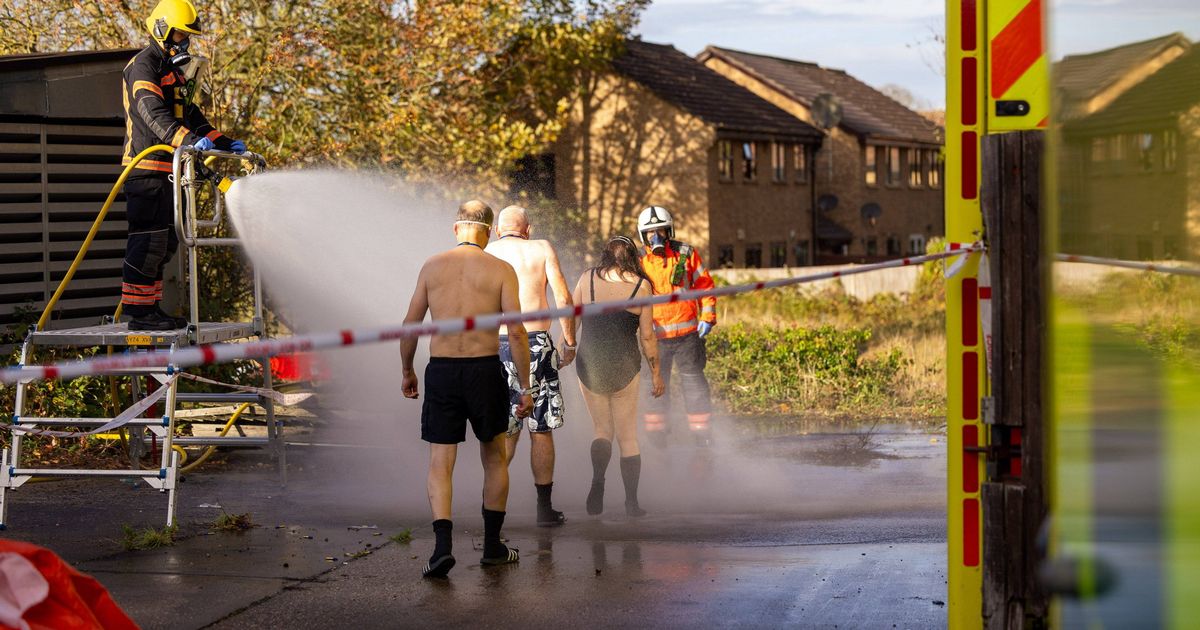
A practice exercise involving 600 people from the military and emergency services used a part of Cambridgeshire to simulate a chemical attack
Chilling scenes have seen the UK government preparing for a deadly chemical attack. A major national security exercise this month featured up to 600 members of the emergency services, armed forces and partner agencies simulating a multi-agency response to a large-scale chemical, biological, radiological, nuclear or explosive (CBRNE) incident.
The drill took place at an abandoned hospital in Papworth, Cambridgeshire and included, alongside police, paramedics, NHS staff, and firefighters, as well as specialist agencies such as DSTL, an executive agency of the Ministry of Defence (MOD) that provides science and technology expertise.
Jointly delivered by Eastern Region Counter Terrorism Policing and the Ministry of Defence, participants responded to a complex, simulated CBRNE incident which involved material release and a number of improvised explosive devices (IEDs).
Scenarios tested the response to terrorist uses of a chemical or biological weapon, an improvised explosive device, a hazardous materials release, or a large-scale poisoning.
The aim of the exercise, held between November 4-7, was to test joint working, emergency response and specialist response teams, including the Technical Response Force.
The MoD said: “The use of CBRNE materials in an attack remains significantly less likely than a conventional attack; however, its malicious release remains a major threat to national security according to the National Risk Register.
“Such incidents could include the terrorist use of a chemical or biological weapon, an improvised explosive device, a hazardous materials release, or a large-scale poisoning.”
Security Minister, Dan Jarvis, said: “Joint training is vital to ensure that our policing partners, armed forces and emergency responders can work seamlessly together to protect the British public from a range of threats, including chemical, biological and radiological incidents.”



