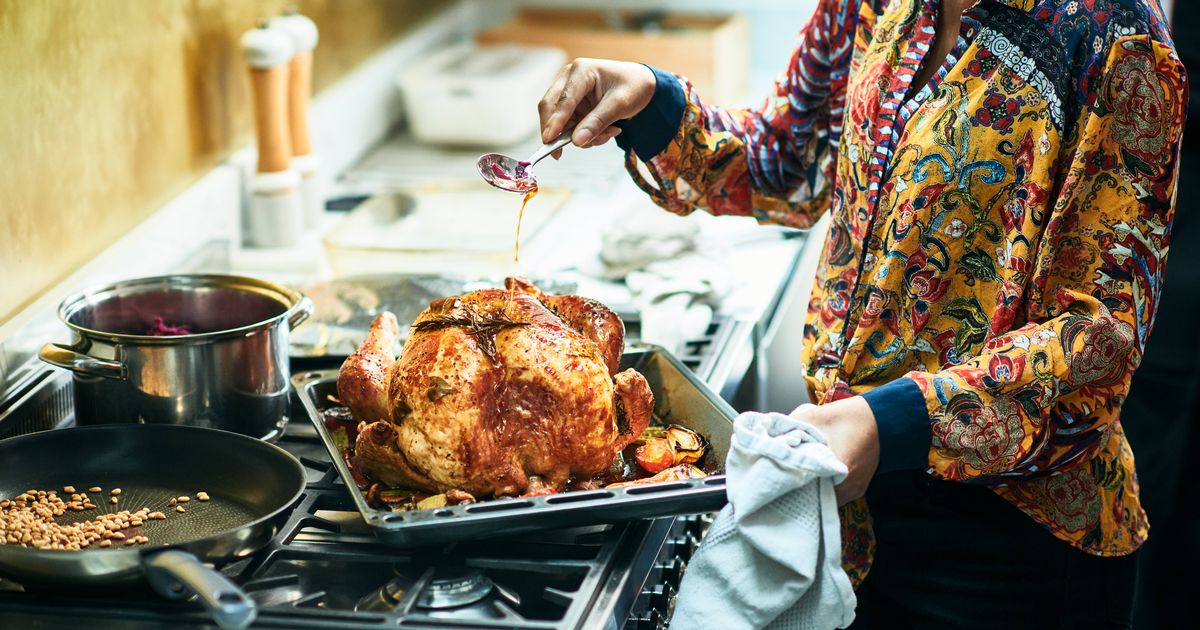
A food waste expert has explained how to properly preserve your Christmas turkey and other delicious leftovers so they stay edible for up to three months after the big day
A food waste specialist has revealed how to extend your Christmas dinner’s lifespan until March at the very earliest. While the grand festive feast is now behind us, remnants of the celebration often linger in fridges across the country.
Most people tend to polish off their leftovers within days of the main event, although others might fancy a turkey butty or spicy curry well into January.
Rather than forking out for fresh meat in the New Year, one culinary expert has shared a straightforward method to make your holiday spread go the distance.
During Channel 5’s Fresh vs Frozen at Christmas documentary, food specialist Kate Hall highlighted the advantages of freezing turkey properly. Offering her advice, she explained: “[The] really important thing to do is to slice it up or to put it into small pieces before we freeze it.
“If you do choose to use it in a cooked dish, if you want to make a turkey curry, you need to make sure that it is cooked until it is piping hot throughout. We can only thaw it and reheat it once. A lot of people might cook up a big turkey curry and then they’ll freeze the leftovers.”
The programme’s narrator also noted: “Raw turkey can be kept in the freezer for up to a year but, once it’s cooked, it must be frozen within three days and should last three months in there.”
These specialists aren’t alone in offering food preservation and waste reduction tips. In a 2023 piece for the New York Times, Anna Perling and Katie Okamoto outlined several top tips for extending your food’s shelf life through proper preservation.
Their recommendations encompassed freezing items as rapidly as possible, allowing food to reach room temperature prior to freezing, ensuring adequate space for liquid expansion, and storing different food types in separate containers.
Regarding the latter point, they emphasised its importance due to varying freezing rates amongst different ingredients. They elaborated: “Do this if you’re freezing a meal with several components that will freeze and thaw at different rates, such as chicken and broccoli. Packing components separately will reduce freezer burn and improve the quality of the reheated meal.”
Additionally, the pair advised that the most secure method for defrosting frozen items isn’t to place them directly into an oven or microwave, but rather to transfer them to the refrigerator initially. They added: “It keeps the temperature below the danger zone (the temperature range in which dangerous bacteria can rapidly multiply).”
Whilst people have been having their say on how Britons should store their turkey if they want to make it last longer, others have been turning their attention to more regularly consumed foods like milk.
According to appliance company Beko, people should stop putting their milk in the fridge door, a common location chosen by people around the UK. Head of product management at the company, a leading manufacturer of fridge freezers, Salah Sun, told the Daily Express it could be costing people money.
They said: “The door, often used for milk, is actually the warmest area due to frequent opening. We recommend keeping more stable items like condiments and drinks in the door compartments, moving milk to the middle shelf where temperatures remain more constant.
They added that as temperatures fluctuate in different parts of the fridge, it is crucial that people have designated zones. They explained: “The way we organise our fridges can make or break our efforts to reduce food waste.
“Most people don’t realise that poor fridge organisation isn’t just about aesthetics – it directly impacts food longevity and your household budget….Temperature fluctuates within your fridge, so storing items in the right zones is crucial.”