Aberdeen City Council recently scrapped its fleet of 25 hydrogen-powered vehicles and did no cost comparison with cheaper electric buses.
A council is facing questions over its decision to spend million of pounds on hydrogen buses – three times more costly than electric vehicles.
Advertisement
Aberdeen City Council recently scrapped its fleet of 25 hydrogen double-deckers after they spent more than a year parked and unused in a depot due to a lack of fuel.
Experts said the £8.3million in taxpayer cash splashed on the city scheme – paid for by the Scottish Government, the council and European funds – has been a “scandalous” waste of money since launching five years ago.
Studies have found electric buses are up to three times cheaper to run than hydrogen.
Last year, the council admitted it held no data comparing costs between the hydrogen fleet, operated by First Aberdeen, and battery-electric buses.
Advertisement
Professor Tom Baxter, professor in chemical engineering at Strathclyde University, said: “As taxpayers we should be looking for value for money.
“Government and councils have an obligation to make sure they’re doing that when they’re using the public purse.
“It doesn’t look like it’s happened at all here.”
Advertisement
In a freedom of information request to Aberdeen City Council last spring, Prof Baxter had asked for “the original work that justified hydrogen buses over electric” and “any cost comparisons from the initial hydrogen decision to date”.
In response, the council said it did not hold this information, arguing they did not deliver bus services directly despite conceding its “involvement with purchasing of hydrogen buses”.
Prof Baxter told the Sunday Mail: “The council should have been on top of it and making sure it was on track, delivering what was expected and still looking like a value proposition to continue funding it.
“The council said they didn’t have information about comparison costs from First Bus. That speaks volumes to me about due diligence.
Advertisement
“It’s an appalling situation and a scandalous use of taxpayer’s money.”
We told last week of the collapse of the Aberdeen deal – linked to Tory donor Jo Bamford, son of JCB billionaire Lord Bamford, who runs hydrogen bus manufacturer Wrightbus which built the Aberdeen double-deckers.
Aberdeen’s hydrogen strategy was a partnership between the city council and oil giant BP.
Critics say intense lobbying by fossil fuel interests have led to public money going on hydrogen schemes.
Typically, the fuel source used to create hydrogen is natural gas, with technologies to use green sources instead still in the early stages of development.
In 2022 we told how Bamford’s Wrightbus was behind the world’s first double decker powered by the gas, with the firm winning multi-million pound publicly funded contracts to supply vehicles across the UK.
Advertisement
In the years since, cities with hydrogen bus fleets like Dundee, London, Belfast, Birmingham and Liverpool have faced operational difficulties or dropped the schemes.
Aberdeen City Council said it is in discussions with BP about “the future viability of the hydrogen hub, prompted by significant advancements in electric vehicle (EV) technology”.
A spokeswoman added: “As manufacturers and operators increasingly favour EVs, demand for hydrogen in transport has diminished. In light of these developments, both parties are reassessing their strategic direction to align with the evolving market landscape.”
ALMOST 56 years ago I moved from London to Poppleton and have long since fallen in love with York and Yorkshire. However, I still have one last culinary hurdle to conquer; mushy peas!
D M Deamer’s letter (Friday, March 20) concerning his family’s habit of putting sugar on their mushy peas was most interesting. I actually love garden peas and always keep petit pois in the freezer. These small peas have a high sugar content which suits my sweet tooth.
When I next go out for fish and chips, I shall put some sugar in my bag along with the mayonnaise (for the chips) and order mushy peas with confidence.
Advertisement
Mayonnaise? At the age of 20 I spent the summer in a large electrical engineering factory in Charleroi in Belgium. The works canteen was a joy and the endive soup and the chips served with mayonnaise were stars.
By the way, both the Belgians and the French claim to have invented chips roughly 300 years ago and the Belgians even have a Chip Museum (Frietmuseum) in Bruges to prove it!
Quentin Macdonald
Manor Farm, Church Lane,
Advertisement
Nether Poppleton,
York
—
Why Israel’s war with Iran is legal
Advertisement
NIGEL Cummings, in a letter to The Press (March 23), says that,”some ‘experts’ agree that the war being waged against Iran by Israel and and t he US is illegal…”.
That may be the case with America’s war, but not, I think, in the case of Israel.
Iran has long sought the total destruction of Israel. Why, I do not know. The two countries are hundreds of miles apart, and until recently Israel presented no threat to Iran.
But Iran has funded both Hamas and Hezbollah, terrorist organisations seeking Israel’s destruction.
Advertisement
From time to time the regime in Tehran causes crowds to assemble and chant, “Death to Israel!” And it is widely assumed that if ever Iran developed a nuclear bomb, it would use it on Israel.
So Iran presents an existential threat to Israel. It has over eight times the population of Israel, and money drawn from the sale of its oil and gas.
My understanding understanding of international law is that any country presented with such a threat to its existence is entitled to defend itself. If Iran wishes for peace, it needs to give credible assurances that it will acknowledge Israel’s right to exist, and cease funding Hamas, and Hezbollah.
David Martin,
Advertisement
Rosedale Avenue,
Acomb,
York
Read more:
Advertisement
Net zero is a concept for the fairies
STARMER’S leadership qualities are severely exposed as non-existent by his failure to send Miliband into the political wilderness.
He should allow a sensible energy minister to reopen the North Sea gas and oil fields to enable our country to have sufficient cheaper supplies instead of having to import the same at higher cost.
Currently, and for the foreseeable future, net zero is a concept for the fairies including Starmer.
Advertisement
Peter Rickaby,
Moat Way,
Brayton,
North Yorkshire
Advertisement
—
What controversy?
In his most recent letter, responding to Nigel Cummings, Matthew Laverack makes reference to the ‘controversial Spark development’. I would put it to him that one man’s tireless letter writing campaign does not a controversy make…
Name and address supplied
Advertisement
What do you think?
Feel strongly about an issue? Write us a letter. Please write no more than 250 words and you must provide your full name, address and mobile number. Send your views by email to: letters@thepress.co.uk
Write a comment
Join the debate and leave a comment in our comments section below this article – we may use your comments for a follow up article.
Ben Thompson was fronting the flagship news programme on Sunday morning
Samantha King Content Editor
08:07, 29 Mar 2026
BBC Breakfast host Ben Thompson offered viewers a rare glimpse into his personal life during his presenting stint on Sunday morning (March 29).
The TV star opened up hot on the heels of a segment about youth unemployment, which is now at its highest level in over a decade. The BBC met a number of 16 and 17-year-olds who were struggling to secure a weekend job.
Advertisement
“They don’t accept you if you don’t have work experience, but how are you going to get that work experience if nobody lets you get it,” said one young interviewee, adding: “It makes me feel like I’m not wanted.”
They also heard from coffee shop owner, Neil Wyatt, who explained why businesses maybe averse to younger hires. He explained: “We love having young people around because they bring energy, they bring life but you’re taking on perhaps a little bit more of a risk than someone who is already established in the jobs market.”
He continued: “Every young person you take on, particularly when they’re at the lower end of the kind of 16 to 18-year-old spectrum, they’re going to need a bit more time and attention than someone whose already been there, seen it and done the job.”
Advertisement
Following the news article, Ben appealed to viewers at home to share memories of their own weekend jobs and opened up about his own early work experience in a rare personal admission.
“Do let us know your memories of your first weekend jobs,” he started, before admitting: “Mine was watering hanging baskets in a garden centre, so let us know whether you did anything more exciting, and maybe any thoughts about how young people maybe get their foot in their door when it comes to getting a first job.”
There was a shake-up to the usual BBC Breakfast this morning with Ben hosting the show alone. Usually there are two presenters on the red sofa, and while Naga Munchetty was present for Saturday’s broadcast, she was notably absent from the Sunday show.
Advertisement
The duo struggled to contain their laughter yesterday during a segment on a novel new seagull deterrent: googly eyes. BBC News reporter Jake Zuckerman tested out the theory that stick-on eyes could stop the birds snatching food by attaching them to takeaway boxes, doughnuts and ice cream.
As the camera panned back to the studio, Ben was forced to cover his mouth as he tried to stifle his laughter, while Naga also had a hard time keeping a straight face.
BBC Breakfast airs daily from 6am on BBC One and iPlayer.
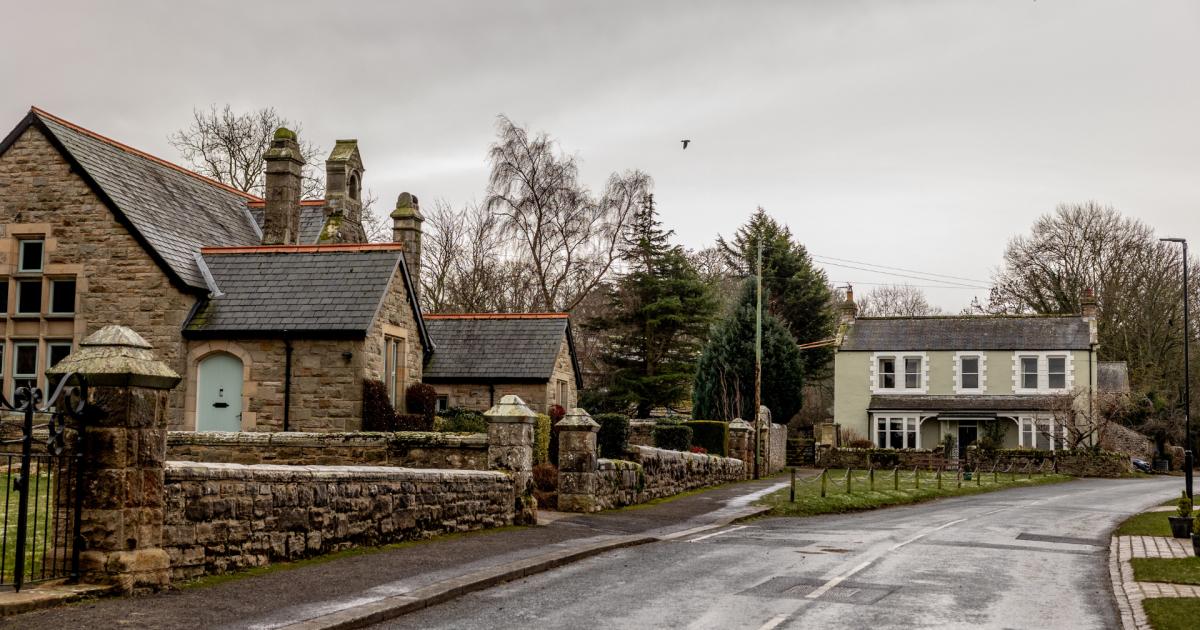
Cotherstone, in Teesdale, continues to attract attention online, with many praising its traditional setting, riverside location and long-standing links to local food.
Located between Barnard Castle and Middleton-in-Teesdale, the village sits just south of the River Tees and is known for its quiet atmosphere and historic feel.
The village of Cotherstone in County Durham (Image: SARAH CALDECOTT)
Visitors regularly describe it as “unchanged by time”, with one saying it offers a “classic English village atmosphere” thanks to its stone-built cottages, open countryside and central green.
Another described it as a “hidden gem”, while others said it is “ideal for switching off” and enjoying a slower pace of life.
Advertisement
Much of Cotherstone’s appeal comes from its setting near the meeting point of the River Balder and the River Tees, with riverside walks and surrounding fields providing a popular base for walkers and day-trippers.
The village is also located on the Teesdale Way, making it a convenient stop for those exploring the wider area.
Its food heritage is another major draw.
Advertisement
Cotherstone cheese, a creamy, slightly crumbly variety, has been associated with the village since at least 1858 and remains one of its best-known features.
Visitors often highlight the cheese as part of what gives the village its identity, with some describing it as a “must-try” local product.
Cotherstone (Image: SARAH CALDECOTT)
At the centre of the village is The Fox & Hounds pub, which features prominently in reviews.
Diners have described it as a “lovely little country pub”, while others say it is “worth travelling for”, particularly for its food.
Advertisement
Its popularity means booking ahead is often recommended.
History also plays a key role in Cotherstone’s appeal.
The village was once served by its own railway station on the Middleton-in-Teesdale branch line, and parts of the old route can still be explored today, including the nearby Balder Viaduct.
Remains of a medieval motte and bailey castle can also be found in the village, adding to its historic character.
Cotherstone has also been home to several notable figures over the years.
Advertisement
Hannah Hauxwell, who became well known through a 1970s television documentary, lived in the area, while mountaineer Bentley Beetham and architects Maxwell Fry and Jane Drew also spent time in the village at the end of their lives.
Despite its small size, visitors often say the village has a “surprising history”.
Across online reviews, Cotherstone is consistently described as “friendly”, “quiet” and “beautifully unspoilt”, with many saying it is the kind of place you “stumble across and remember”.
Entrance to the property is via the living room, which features traditional flagged stone floors that continue throughout the ground floor accommodation.
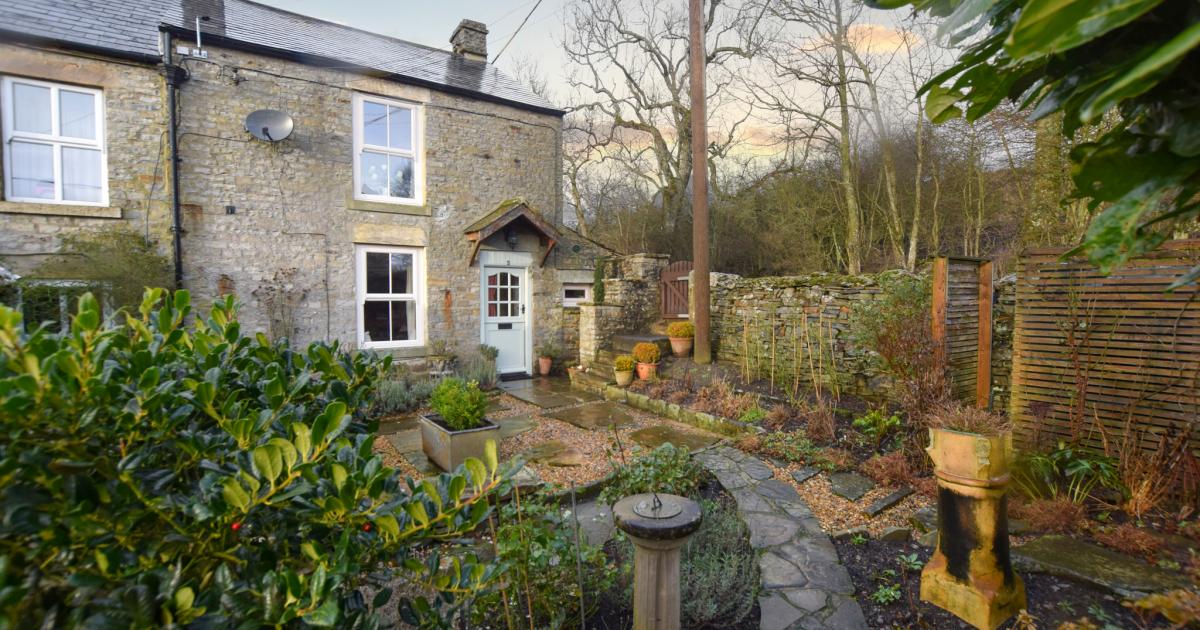
No 5 Dent Bank is a beautifully presented cottage sure to steal your heart (Image: GFW)
The focal point of this room is an impressive fireplace housing a stove and set within an exposed stone wall that contributes to the character of the home.
Off the living room is a utility room/store room.
To the rear of the cottage is the spacious kitchen, fitted with a range of modern base and wall-mounted units topped with marble-effect worktops, a range of integral appliances including an undercounter freezer and dishwasher, and useful under stairs storage.
Advertisement
No 5 Dent Bank is a beautifully presented cottage sure to steal your heart (Image: GFW)
There is also space in the kitchen for a dining table.
Completing the ground floor accommodation is the family bathroom.
Upstairs are two double bedrooms—the well-proportioned principal bedroom with wooden flooring that overlooks the front of the property, and the second bedroom—also a double—to the rear with a useful airing cupboard.
No 5 Dent Bank is a beautifully presented cottage sure to steal your heart (Image: GFW)
The substantial gardens are most certainly a highlight of this property.
Advertisement
To the front of the house is a delightful landscaped garden featuring planted borders and a pleasant seating area, plus a timber shed providing storage.
No 5 Dent Bank is a beautifully presented cottage sure to steal your heart (Image: GFW)
To the rear is an enclosed courtyard with views over the River Tees and a large raised bed.
The cottage also has off-road parking for one vehicle.
A divisive figure, Collier-Keywood sought to drive through radical reform but attracted significant criticism over his approach. The WRU board must now focus on identifying his successor.
Unlike in the past, the WRU board appoints the chair rather than the member clubs.
The board’s first decision is whether to pursue an internal or external appointment.
Advertisement
Should it opt for a new candidate from outside the current set-up, that individual would initially need to be appointed as a non-executive director, with subsequent elevation to chair being a formality.
Here are eight potential candidates.
David Buttress
The appointment of David Buttress would prove an immensely popular choice among some supporters.
Buttress has been a prominent figure in Welsh rugby for the past nine years and, as chair of the Dragons, played a central role in securing the club’s survival by assembling a consortium to purchase it from the WRU.
Advertisement
A co-founder of Just Eat, he ranks among Wales’s most accomplished entrepreneurs and merits serious consideration for the role.
Buttress has previously expressed frustration with Welsh rugby’s governance and would represent a breath of fresh air within the governing body, bringing a markedly different perspective.
He is a committed advocate for retaining four professional sides and has argued that the WRU ought to be capable of generating greater funding for the pro game for an organisation with a turnover of £107 million.
Responding on the social media platform X this morning to a question on Welsh rugby’s strategic direction, Buttress said: “The strategy is clear: four professional teams, stable and secure funding for three years, and a focus on directing key investment into player development and facilities.
Advertisement
“An urgent agreement must be reached with private owners, with the aim of establishing a genuine partnership to attract investment and sponsors.”
The only barrier would be he’d have to step away from the Dragons if he was to become WRU chair.
Mar
Phillips has experience in Welsh rugby, having previously been CEO of the WRU for five years.
Advertisement
The man from Pembrokeshire, a former boss of retail giant B&Q, saw his tenure coincide with Wales reaching a World Cup semi-final and winning another Six Nations Grand Slam on the field.
Off the field, there were record turnovers for the union, while there was a rare period of success at regional level with the Scarlets winning the old PRO 12 and Cardiff lifting the Challenge Cup.
As CEO he put a huge amount of emphasis on building relationships with the four professional clubs and healing old wounds following the tumultuous reign of Roger Lewis.
Phillips is currently the chair of PRL and would be a decent person to come back to guide the CEO.
Advertisement
Carwyn Jones
The former First Minister for Wales is a huge rugby fan and has previously been interviewed for the role of chair but missed out to Collier-Keywood back in 2023.
Jones is thought to be hugely popular with many community clubs and many within the game favour the former First Minister becoming WRU chair.
The 59-year-old has no experience in elite rugby but could help improve the WRU’s reputation with the Welsh Government.
Advertisement
Moving forward, many would argue it is essential that the WRU works with the Welsh Government to improve the game at all levels.
Clearly Jones could help the WRU in this regard, but whatever happens next some tough decisions need to be made to fix the men’s professional game.
Andrew Williams
The former Cardiff board member is a serious operator and is heavily respected throughout the game.
Advertisement
Williams is currently an independent non-executive director on the WRU board who understands the professional game and what needs to be done to put it on a firm footing.
The wider Welsh public does not understand how much of a coup it is to have an A-lister like Williams on the board.
He was the longest serving FTSE 100 CEO in the UK at Halma PLC, where he stayed for 18 years.
Williams helped Halma grow from a business worth £500m into a company worth £10bn.
Advertisement
He would have the respect and trust of all key stakeholders, and he is also the right man to drive change.
Gareth Davies
The appointment of the former Wales outside-half would bring one of the most respected administrators in the game back to the fore. He previously served six years as chair of the WRU.
During his tenure, Davies worked diligently to modernise the WRU’s governance, reducing the board from 24 members to 12 and appointing high-profile non-executive directors, including Amanda Blanc.
Davies combines deep rugby knowledge with a strong grasp of business, making him a compelling candidate.
He is also a figure capable of rebuilding trust.
Jennifer Mathias
The appointment of Jennifer Mathias would represent a credible and financially astute option.
Mathias, who hails from Pembrokeshire, has served on the board of the Welsh Rugby Union as an independent non-executive director since October 2023.
Advertisement
She previously held the role of group chief financial officer at Rathbones Group, a £1.2 billion wealth management business listed on the London Stock Exchange.
Mathias has also worked at Lloyds TSB Group, where she occupied a number of senior management positions.
In 2013, she was named in the PAM Top 40 Under 40.
Advertisement
She is well placed to succeed Richard Collier-Keywood and would represent a strong choice were the priority to improve the WRU’s financial position.
Critics of the WRU’s proposals to reduce the number of professional clubs to three have frequently argued that the governing body has lacked sufficient transparency in its financial dealings.
Whatever structure Welsh rugby ultimately adopts, it will be dictated by financial realities, and Mathias would constitute a compelling option.
Hayley Parsons
Parsons is arguably Wales’ most successful female entrepreneur and was previously on the Cardiff Rugby Board.
Advertisement
She founded Go.Compare and has helped build many successful Welsh businesses.
Parsons is a vocal critic of current chair, Collier-Keywood, so you can expect her approach to be the polar opposite if she were his successor.
“The Chair is extremely skilled in the world of government, consultancy and law, but that’s not what the WRU needs at the moment,” wrote Parsons in a letter sent to community clubs.
Advertisement
“We need people who understand how to engage with people – with WRU staff, community and regional rugby fans and stakeholders to bring them along on this journey.
“Spending millions of pounds on unnecessary consultants and legal fees will not repair the reputational damage this is causing Welsh rugby.
“This money should be ploughed back into the game. I believe we have some extremely credible and talented people on the WRU board who are more than capable of safeguarding the future of Welsh rugby.
“When you run a business, you have to make tough decisions and, what is crucial to the success of any strategic change is how you follow the process and treat the people affected.”
Advertisement
That’s a flavour of what to expect if Parsons was chair.
Rob Regan
The former chief operating officer at Principality is hugely passionate about Welsh rugby and has been meeting a number of key stakeholders within the game.
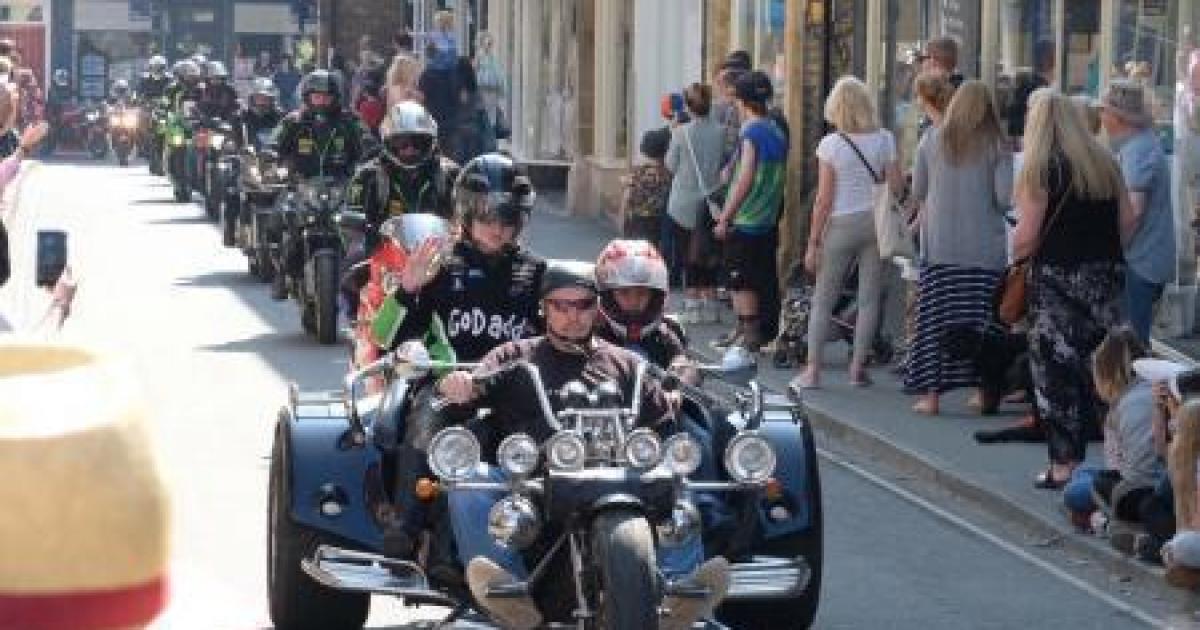
The Squires Egg Run 2026 sets off from Squires Motorbike Café near Selby and heads across the county to Pickering.
The annual rideout, involving motorbikes, trikes and scooters, benefits Yorkshire charities with participants asked to make cash donations and optional Easter eggs on arrival.
It will be directed and managed by marshals in hi-vis vests along a designated and fully marked route.
Advertisement
For the first time, North Yorkshire Police will be attending the event with police motorbikes, cars, a trailer, and a new high‑visibility digital display truck that will show safety messages to motorcyclists and other road users throughout the day.
Driving the route, the truck will display clear, timely reminders about safe riding, pre‑ride checks and the shared responsibility all road users have in keeping each other safe.
It aims to provide a visible reminder of the importance of road safety at the very start of the motorbike season in North Yorkshire when significantly more riders will head out onto the county’s 6,000 miles of road.
Marshals in orange hi‑vis will manage the fully marked route, with video recording in operation. Riders are asked to respect other road users and keep noise low through villages. The run concludes at Galtres Retreat with marshal guidance.
Advertisement
The police presence aims to ensure everyone gets home safely – motorcyclists are disproportionately represented in the number of road casualties and fatalities.
Inspector Clive Turner, of North Yorkshire Police’s Roads Policing Group, said: “The start of the biking season is always an exciting time, but sadly it’s also when we tend to see an increase in serious collisions.
“The digital display truck gives us a new, highly visible way to reach riders with simple but vital safety messages.
“Our aim isn’t to spoil anyone’s fun – it’s to help make sure everyone gets home safely.
Advertisement
“This Sunday’s activity marks the launch of our wider engagement plan with the motorcycle community for the busy summer months ahead”.
Asked if he was surprised by the reaction of the fans, Clarke said: “Yes and it disappointed me to be honest.
“It’s just the modern way, it seems to be now if you lose a game you get booed. You have just got to deal with it. It disappoints me.”
Scotland will face Ivory Coast at Everton’s Hill Dickinson on Tuesday night as further preparation for the World Cup group games against Haiti, Morocco and Brazil in the summer.
Advertisement
Clarke, who expects to make six or seven changes to the side on Merseyside, believes that playing top nations in warm-up games is crucial in order to show his players the level required in North America.
He said: “It not a game that you want to lose. But I think there’s enough in that game against the opposition we played against to still feel positive about what we’re trying to do.
“We have another really tough game on Tuesday night in Liverpool against Ivory Coast.
“Sometimes, I think my players look at me and say ‘come on gaffer what are you doing?’ I always try to pick difficult friendlies.
Advertisement
“So another difficult one on Tuesday night and we’ll try and get a positive result to carry it forward, but if the performance is as good and you can take things from the performance, you can also carry that forward as well.
“That’s why we take the games. This is where you have to be at. This is this is the level you have to reach and if you want to get the points that are going to get you out of the group stage, you have to play to that standard.”
Middlesborough striker Tommy Conway was handed his first start on Saturday while Andy Robertson earned his 91st cap to go second-equal with former Aberdeen and Manchester United goalkeeper Jim Leighton.
Japan, on their way to their eighth successive World Cup finals, survived an early fright as Scott McTominay’s shot from 10 yards was pushed on to the post by keeper Zion Suzuki.
Cambridgeshire is full of pretty places to walk, but everyone will have their own favourite
The weather is getting warmer, so it’s time to step outside for some lovely walks. Cambridgeshire is full of fields, parks, and other pretty places to go for a stroll.
Advertisement
As well as keeping people fit, walking outside and enjoying nature has proven to benefit people’s mental health. There are also places that have pretty sights, so they are the perfect place for photography-lovers.
However, with so many places to choose from, we want to know where is the best and most scenic place to walk. We want to hear from CambridgeshireLive readers where the best and most scenic place is to walk in the county.
You can share your views on where the place is in the poll below. You can also share your thoughts on why you have chosen that option as the best place to walk. If you cannot access the poll, you can also access it here.
Rats are more common in spring as it’s peak breeding season, and experts warn that storing certain items outdoors can attract the rodents to your garden. Here’s what you need to know
The prospect of rats infiltrating your garden is universally unwelcome, which is why identifying straightforward deterrent methods is crucial. What many don’t realise is that spring is actually one of the peak seasons for rats attempting to access people’s properties, as it coincides with their breeding period, meaning homeowners must remain alert.
Advertisement
This results in heightened activity around homes, which means you’re more likely to encounter them in your garden throughout April. However, keeping certain items outdoors can actually lure them in, meaning you must be mindful about what you store in your garden and how these things are put away.
Indeed, there are several things demanding your attention this spring. Rats could infiltrate your property quite easily if you leave particular items outside.
As spring sunshine begins to emerge, most of us will be making trips to the garden centre to purchase soil and compost, and frequently, those extra bags end up stashed beneath the decking to maintain a tidy patio.
It appears a perfectly logical solution but, according to Allan Jeffrey, gardening expert at Ultra Decking, it’s amongst the most frequent ways homeowners inadvertently welcome pests into their garden.
Advertisement
Whilst compost might be excellent for your flowerbeds, it’s also a magnet for rodents and insects, especially when it’s positioned in the dark, damp environment that exists beneath most decking. There are several reasons it’s so appealing to the wrong sort of visitors.
Compost bags are brimming with organic matter and retain moisture, creating precisely the sort of warm, damp conditions that rats and mice seek out when nesting season begins in spring. And it’s not only rodents you need to worry about.
Ants and soil-dwelling insects are attracted to identical conditions and, once they’ve established themselves near your decking or fencing, they can prove remarkably difficult to remove.
Once rats and mice take up residence, the issues tend to escalate. Allan explained: “Nesting rats are a big problem. Their numbers grow quickly, and they’ll soon start gnawing through garden structures like your decking, your fencing and that kind of damage doesn’t come cheap.”
Advertisement
Firewood is another potential hazard. “Those storing leftover winter logs under their decking are also at risk,” he continued. “Timber that’s picked up moisture over winter is the perfect hiding place for wood-boring insects, and that’s when the real damage starts.”
How to store your garden supplies
Allan suggests a simple strategy to keep pests away:
Elevate and ventilate. Store compost bags and firewood on a raised platform at least one to two metres away from the house and any timber structures. Good airflow prevents moisture from building up and makes the spot far less appealing to pests.
Switch to sealed bins. If you have little space, decant compost into heavy-duty plastic bins with clip-on lids. These are much harder for rodents and insects to get into.
Do a 60-second check. Get a torch and take a quick look under your decking for early warning signs – shredded plastic, small entry holes or dark droppings. Catching things early is nearly always the difference between a quick tidy-up and a costly pest control call-out.
A touch of organisation now can prevent considerable trouble down the line, and ensures you can properly enjoy your garden this summer. If you suspect rats are nearby, get in touch with a pest control specialist for guidance.




















































You must be logged in to post a comment Login