

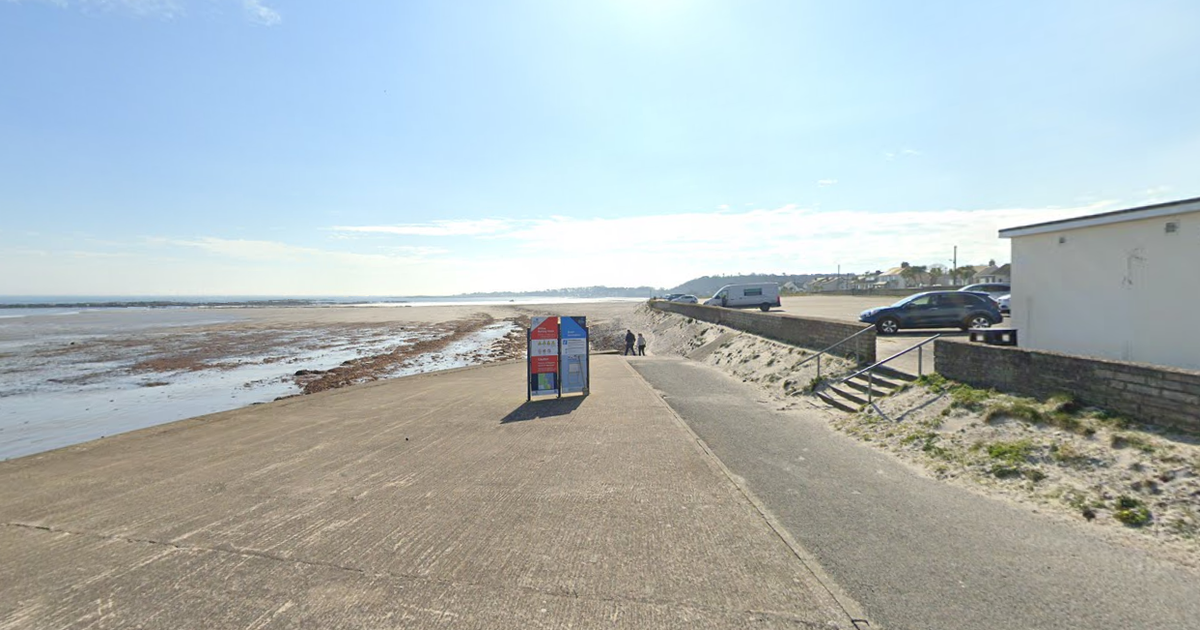
Critics say mechanical beach cleaning not justified and “an expensive white elephant”
A local council in Northern Ireland has been split over an environmental row concerning mechanical beach cleaning.
Ards and North Down Borough Council, which has the longest stretch of coast of all 11 Northern Ireland councils, has decided with a split chamber to reintroduce mechanical beach cleaning, despite critics saying the process damages the environment and is “an expensive white elephant.”
In a recent full-council vote on an Alliance proposal to block the reintroduction of the older form of cleaning, 22 elected representatives from the DUP, UUP and independent Unionists voted against, while 14 from Alliance and the Green Party, and one Independent voted in favour.
READ MORE: Olympic Champion Rhys McClenaghan to become “Freeman” of Ards and North Down
READ MORE: Local Mayor calls for more community safety after 79 percent rise in hate crime
A DUP proposal by Alderman Robert Adair was then carried. The motion states: “The council agrees in principle to the purchase of a mobile bio beach cleaning station and relevant machinery to ensure that our beaches are properly maintained in a clean, safe and attractive way in accordance with environmental laws. The purchase of this machinery will be subject to the estimates process.”
The alderman had said that residents and tourists alike had raised issues relating to cleanliness, maintenance and environmental protection of beaches in the borough. He said despite numerous reports coming from officials “very little progress had been made” in cleaning beaches.
A report by council officers on beach cleaning, submitted to the council’s Environment Committee, states: “The definition of litter does not apply to seaweed, and the presence of seaweed was beneficial to beach ecology. Mechanical cleaning of beaches carried out near sand dunes or other sensitive beach areas could have significant impacts on the habitats and species supported there.”
It adds: “Educational approach essential to overcome the misconception that beaches that contained seaweed or coastal grasses were not clean or safe. Coastal grasses and seaweed formed an integral part of a beach ecosystem, providing food and stability to the sand structure. Grasses and seaweed were natural components of the ecosystem.
“The coastal zone must also be considered as a living and natural environment and not only as a recreational asset to be kept tidy. Thus, the management of grasses and seaweed on the beach should be sensitive to both visitor needs and biodiversity.”
Officers said the approximate cost of the cleaning machinery was £70,000, and added there would also be “additional cost consideration for additional staffing and vehicle maintenance.”
Alderman Adair said at the recent full council meeting Alliance were trying to “stall the process to kick this further down the road” and “did not listen to residents” concerning the cleanliness of beaches.
He said: “What I am suggesting is that, subject to the rates process, to go back to the old ways prior to 2018 when our council mechanically cleaned the beaches. And there wasn’t a problem with our beaches.
“Isn’t it wonderful that the minute we stop maintaining the beaches, then we start having all these problems, (like) sand dune erosion. Other councils were planting marram grass to preserve their beaches while our council buried their heads in the sand and did nothing.
“When we get a storm and seaweed washes up on the coastline, the council moves the seaweed and leaves it on the beach. When they were mechanically cleaned the council moved it to the seabed, and then nature dealt with it itself. We are not asking to remove seaweed, but simply to move it.”
He added: “Millisle is a beautiful village, and used to attract a lot of tourism, but this summer it was known for all the wrong reasons, because the council was not maintaining the beaches. We had rats on the beach.
“Let’s face it, the weeds on the beach at Millisle are not of any environmental value, knotweed and bindweed. If that was on a farmer’s field they would be asked to remove them. They are of no environmental benefit at all. My proposal strikes the balance between maintaining our beaches as well managed coastal environments, while protecting our national environment.”
Green Councillor Barry McKee said at the meeting: “All the available evidence presented by the officers, and the practice of the other councils that were investigated in the fact-finding trip, did not demonstrate to me the value of such a purchase, or the investment.
“On top of that, the council’s statutory duty to enhance biodiversity would likely be hindered by mechanical cleaning. We have to ask, why would we seek to add to the biodiversity crisis that we are facing, and make it more difficult for nature in these difficult times.”
Alliance Councillor Martin McRandal said after the full council meeting: “The DUP and UUP backed the proposal despite the lack of evidence of need, an assessment of likely environmental impact, and a full understanding of the six figure financial cost.”
He added: “In a bid to take a more sensible approach, Councillor Patricia Morgan had instead proposed officials come back with a report detailing all reported incidents of public health and public nuisance concern recorded in relation to our amenity beaches and coastline within the past three years, along with recommendations of how we best deal with such matters, taking account of the relevant legislation and our environmental responsibilities.”
He added: “After listening to the debate, I am none the wiser as to what the DUP is trying to tackle: litter, seaweed or vegetation. No one is going to argue that we need to see litter removed but these machines require tractors that cost £90,000 to pull them, on top of the specialist equipment costing £125,000 and permission from NIEA to even use them on many of our beaches.
“Most of our coastline is protected for a reason and it should be cherished. Before we go spending a six-figure sum of ratepayers money on a potential white elephant, let’s look at what the underlying issues are and make a fully informed decision on how best to deal with those.”
Alliance Councillor Patricia Morgan said after the meeting: “At no point has any evidence been produced to indicate that mechanical beach cleaning is a useful or sensible approach, and in fact, the evidence we have suggests it could be extremely harmful to the environment.
“Most of our coastline is in the Area of Special Scientific Interest. We should be proud of this, but we must recognise that this means any work, or interventions in these areas must be particularly sensitive to the environment.
“Ards and North Down’s current beach cleaning policy is largely in line with other councils and best practice. Instead of accessing the scale of public concern and possible solutions, the DUP and UUP have charged ahead with an expensive, environmentally damaging idea.”
For all the latest news, visit the Belfast Live homepage here and sign up to our daily newsletter



