



Connect with us
DAPA Banner

NewsBeat

Court asked to lift halt on closing Everglades immigration detention center

Published

on

Court asked to lift halt on closing Everglades immigration detention center

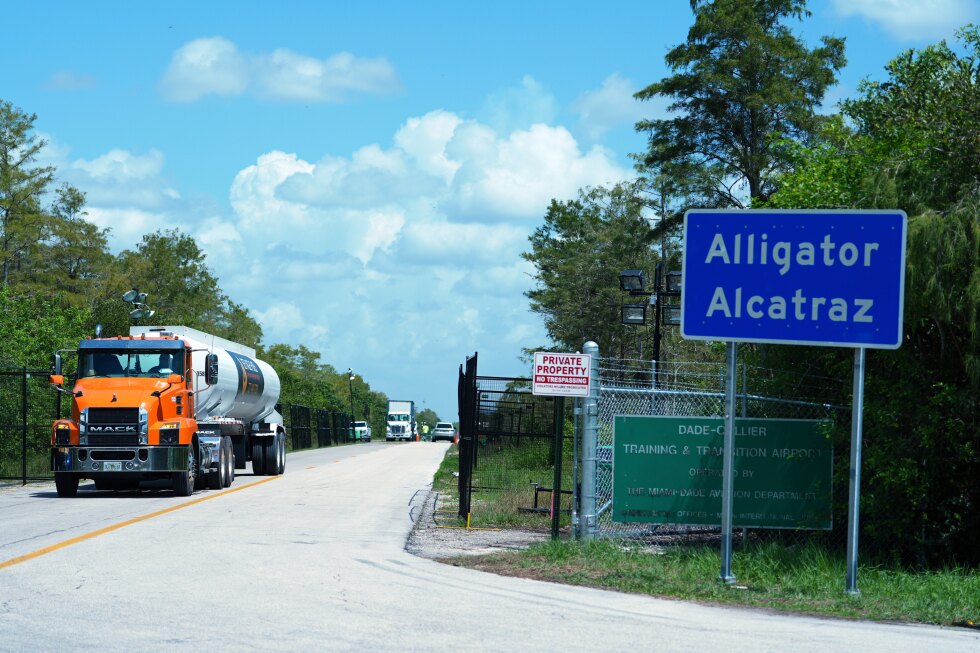
ORLANDO, Fla. (AP) — Environmental groups on Tuesday asked a federal appellate court panel to drop its temporary halt of a lower court’s order instructing state officials to close an immigration detention center in the heart of the Florida Everglades known as “Alligator Alcatraz.”

The Everglades facility remains open, still holding detainees, because the appellate court in early September relied on arguments by Florida and the Trump administration that the state had not yet applied for federal reimbursement, and therefore wasn’t required to follow federal environmental law. State officials opened the detention center last summer to support President Donald Trump’s immigration crackdown.

Questions by the three appellate judges during oral arguments in a Miami courtroom focused on how much control the federal government had over the state-built facility and under what circumstances an environmental review was required to be in compliance with federal law. The judges did not indicate when they would rule.

Jesse Panuccio, an attorney for the Florida Department of Emergency Management, told the judges federal funding and federal control of the facility were the two criteria for determining if the federal environmental law would apply and the federal agencies had no control over the state-run detention center.

Advertisement

Florida was notified in late September that FEMA had approved $608 million in federal funding to support the center’s construction and operation.

“You need both,” Panuccio said. “Even with funding, I don’t think that would follow because they don’t have federal control.”

An attorney for the environmental groups said the law requiring a review applied to the facility because the U.S. Department of Homeland Security had authorized the funding and immigration was a responsibility of the federal government, not the state. There only needed to be “substantial federal control” and not complete control, said Paul Schwiep, an attorney representing the Friends of the Everglades and the Center for Biological Diversity.

Chief Judge William Pryor, who was appointed to the appellate court by President George W. Bush, responded, “It’s not federally controlled when the state retains authority to make decisions.”

Advertisement

Judge Nancy Abudu, who was named to the appellate court by President Joe Biden, asked an attorney for the federal government if states can be in charge of immigration matters. Adam Gustafson responded that the federal government can delegate certain responsibilities to states.

“Is it also, once the federal government gives the states its authority, it’s the ‘Wild, Wild West?’ Abudu asked.

The federal district judge in Miami in mid-August ordered the facility to wind down operations over two months because officials had failed to do a review of the detention center’s environmental impact according to federal law. That judge concluded that a reimbursement decision already had been made. The appellate court halted the order on an appeal.

The environmental lawsuit was one of three federal court challenges to the Everglades facility since it opened. In the others, a detainee said Florida agencies and private contractors hired by the state had no authority to operate the center under federal law. The challenge ended after the immigrant detainee who filed the lawsuit agreed to be removed from the United States.

In the third lawsuit, a federal judge in Fort Myers, Florida, ruled the Everglades facility must provide detainees there with better access to their attorneys, as well as confidential, unmonitored and unrecorded outgoing legal calls.

___

Advertisement

Follow Mike Schneider on the social platform Bluesky: @mikeysid.bsky.social.

Source link

Advertisement
Continue Reading
Click to comment

You must be logged in to post a comment Login

Leave a Reply

NewsBeat

Person assaulted on Monday in Church Lane, York city centre

Published

on

Person assaulted on Monday in Church Lane, York city centre

North Yorkshire Police is appealing for information after a person was assaulted in a York city centre street in the early hours of yesterday morning (Monday, April 6).

It happened in Church Lane, near Low Ousegate, at approximately 12.46am, with one victim receiving head injuries in the attack.


RECOMMENDED READING:

Advertisement

They received medical treatment for their injuries and were discharged from hospital later that day.

A suspect was arrested at the time of the incident, but has since been released pending further enquiries.

A spokesperson for the force said: “We are particularly interested in speaking to two witnesses who were in the area at the time.

“During the time of the incident, they were stood on Low Ousegate. One witness was said to be wearing a silver glitter dress and the other witness was wearing a long blue coat.”

Advertisement

If you can help the investigation, please email Peter.Maw@northyorkshire.police.uk, call North Yorkshire Police on 101 and ask for Peter Maw, or contact Crimestoppers anonymously on 0800 555 111 or via their website.

Please quote reference 12260060786 when passing on information.

Source link

Advertisement
Continue Reading

NewsBeat

Made Smarter scheme extended in York and North Yorkshire

Published

on

Made Smarter scheme extended in York and North Yorkshire

The continuation of the programme unlocks a fresh phase of support for SME manufacturers, combining expert advice, leadership training and digital skills with match-funded grants of up to £20,000.

Together, these interventions are designed to boost productivity, drive innovation, create high-value jobs and support progress towards net zero.

Made Smarter Yorkshire is a government-backed, industry-led programme delivered by South Yorkshire Mayoral Combined Authority in partnership with York and North Yorkshire, Hull and East Yorkshire, and West Yorkshire combined authorities.

RECOMMENDED READING:

Advertisement

Since launching in 2021, the programme has engaged with more than 1,250 manufacturers, helping them take practical steps towards digital adoption.

To turn those plans into action, more than 200 businesses have received intensive technical support alongside over 100 capital grants, worth £1.4 million, to invest in technologies such as automation, robotics, AI, additive manufacturing and data-driven systems.

Alongside technology adoption, leadership and workforce development have played a central role. Digital Leaders and Digital Champions programmes have built capability at both strategic and operational levels across almost 115 businesses. Meanwhile, 37 university students have supported real-world transformation projects through digital internships, helping companies embed new skills and accelerate change.

Jessica Armitage, Made Smarter Programme Manager (Image: SYMCA)

Jessica Armitage, Programme Manager for Made Smarter Yorkshire, said: “This new wave of funding is a significant boost for Yorkshire’s manufacturing community. Over the past four years, we have demonstrated what is possible when SMEs are given the right combination of advice, skills and technology support.

Advertisement

“The continuation of the programme gives businesses the confidence to plan ahead, invest in their future and scale with purpose. We are excited to support the next wave of manufacturers to unlock productivity, build resilience and drive long-term growth across the region.”

Mike Pennington, Business Relationship Manager for York & North Yorkshire at Made Smarter, said: “Across York and North Yorkshire, from our coastal towns to our rural communities and city centres, manufacturing plays a vital role in supporting jobs and local prosperity. This new phase of Made Smarter funding means more businesses can get the digital support they need to grow, innovate and strengthen their future.”

Made Smarter gives manufacturers a clear, supported route into digital transformation, starting with an expert assessment and a tailored roadmap to guide investment and implementation.

Sheffield, UK (Image: Monty Rakusen)

From there, businesses can access specialist technical support from RTC North, alongside leadership development, workforce training and digital internships delivered by Sheffield Hallam University. Eligible companies can also unlock match funding of up to 50 percent, with grants of up to £20,000 available to accelerate technology adoption.

Advertisement

To learn more visit Made Smarter Yorkshire or contact your local Business Relationship Manager directly.

Source link

Advertisement
Continue Reading

NewsBeat

Oil prices plummet and stocks surge after Trump suspends attacks on Iran

Published

on

Oil prices plummet and stocks surge after Trump suspends attacks on Iran

Oil prices plummeted and U.S. stock futures surged after President Donald Trump announced he would hold off on his threat of devastating attacks on Iran.

U.S. crude oil futures fell more than 15 percent, while futures for the S&P 500 jumped 2.2 percent by 8:05 p.m. ET, and Dow futures rose 930 points or 2 percent.

President Trump’s decision, made late Tuesday, was contingent on Tehran agreeing to a two-week ceasefire and the reopening of the Strait of Hormuz.

He had previously threatened strikes on Iranian bridges, power plants, and other civilian targets. Iran’s Supreme National Security Council accepted the two-week ceasefire, with its foreign minister confirming passage through the strait would be allowed for the next two weeks under Iranian military management.

Advertisement
U.S. crude oil futures fell more than 15 percent, while futures for the S&P 500 jumped 2.2 percent
U.S. crude oil futures fell more than 15 percent, while futures for the S&P 500 jumped 2.2 percent (AP Photo/Seth Wenig)

Futures for U.S. crude oil sank 14.7 percent to $96.27 a barrel, while Brent crude oil, the international standard, dropped 14.4 percent to $93.48. The price remains well above where it was at the start of the war.

Meanwhile, as trading in Asia got underway, Japan’s Nikkei rose more than 4 percent and South Korea’s Kospi gained 6 percent.

Earlier, U.S. stocks swung sharply during regular trading as uncertainty about the war with Iran increased after Trump had threatened that a “whole civilization will die tonight, never to be brought back again” if Iran does not meet his deadline at 8 p.m. Eastern time to open the Strait of Hormuz.

The S&P 500 fell as much as 1.2 percent but stocks rallied at the end of trading after Pakistan’s prime minister urged Trump to extend his deadline for another two weeks and asked Iran to open up the strait for the same amount of time.

The S&P 500 erased all its losses and ended with a modest gain of 0.1 percent. The Dow Jones Industrial Average dipped 85 points, or 0.2 percent, and the Nasdaq composite added 0.1 percent.

Advertisement

They’re the latest swings to hit financial markets since late February because of deep uncertainty about when the fighting may end.

Oil prices were likewise shaky. The price for a barrel of benchmark U.S. crude to be delivered in May briefly climbed above $117 before settling at $112.95.

Oil prices have spiked because the war has snarled the production and transportation of crude in the Persian Gulf. Much of that oil exits the gulf through the Strait of Hormuz to reach customers around the world, but Iran has blocked it to enemies.

The worry in markets has been that a long-term disruption will keep oil prices high for a long time and send a painful wave of inflation crashing through the global economy. Trump kept traders on edge by making a series of threats to blow up Iranian power plants only to delay several times.

Advertisement

The average price for a gallon of regular gasoline across the United States has leaped to $4.14, according to AAA. It was below $3 a couple days before the United States and Israel launched attacks to begin the war in late February.

In the bond market, Treasury yields eased on word of a potential cease-fire. The yield on the 10-year Treasury fell to 4.24 percent from 4.30 percent earlier Tuesday.

That’s still well above its 3.97 percent level from before the war, and the rise has pushed up rates for mortgages and other loans going to U.S. households and businesses, which slows the economy.

Source link

Advertisement
Continue Reading

NewsBeat

The best pregnancy pillows, tried and tested

Published

on

The best pregnancy pillows, tried and tested

Sleeping can be an uncomfortable experience as your bump grows bigger in the second and third trimesters, but the best pregnancy pillows can help you get a little more shut eye in the months leading up your baby’s arrival.

Longer in length than a normal pillow, pregnancy pillows are designed to support the changing shape of a pregnant woman’s body. There are hundreds available online, but together with the help of Rachel Fitz-Desorgher, a baby and parenting expert, we’ve selected our top 11.

They range in price from £27 to £159 and we’ve covered brands from Cushy Puff and Bbhug me to Silentnight and Simba. Our full reviews of each are below, followed by an FAQ section on how to use them, but if you’re in a hurry, here’s a quick look at our five of our favourites:

Advertisement

The best pregnancy pillows: At a glance


How to choose the best pregnancy pillow

When you start searching for the best pregnancy pillow you might feel overwhelmed at the amount of choice available. Fitz-Desorgher says the key types are U-shaped and C-shaped. It’s also worth looking for a pillow with cooling properties, to help with night sweats.

“A U-shaped pillow can be great for pelvic girdle pain,” Fitz-Desorgher says. “It gives that essential full-leg support as well as comfortably hugging the back. And, of course, there is no need to shift it when you turn over.”

C-shaped pillows can be more flexible. “Bend and shape it around you to support whichever bits of your body are crying out for a little help,” Fitz-Desorgher says. “Some pillows concentrate more on the bump and back whilst others cater more for hips and legs. Few do it all, so be prepared to supplement a little with a regular bed pillow where needed.”

Any pregnancy pillow is supposed to bring your limbs back into alignment and take the strain off the ligaments supporting the heavy tummy and breasts. Fitz-Desorgher explains: “How you place and wrap the pillow depends on where the aches are. An aching back needs a bit of oomph right in the lumbar region of the spine, while a woman struggling with pelvic girdle pain needs support between the full length of her legs, from thigh to ankle to keep them parallel and hip width apart all the way down.”

Advertisement

How we test pregnancy pillows

Source link

Continue Reading

NewsBeat

Why the war in Iran will make your UK mortgage more expensive

Published

on

Why the war in Iran will make your UK mortgage more expensive

The war in Iran is affecting the cost of living around the world. In the UK, it is leading to higher energy prices, weaker economic growth and a more expensive future.

It may seem odd that fighting in the Middle East could have such a profound affect on household finances in the East Midlands (and everywhere else in the UK). But since the conflict began on February 28 2026, banks and building societies have withdrawn over 1,500 mortgage products from the UK market.

For many borrowers, especially first-time buyers and those coming off fixed-rate deals, the prospect of cheaper borrowing has quickly faded.

Mortgage rates have started to rise again, with two-year fixed rates increasing from around 4.8% to about 5.5%. For a borrower with a £200,000 mortgage over 25 years, this would mean an increase of £90 in monthly payments, adding close to £1,000 a year to household costs.

Advertisement

So how exactly does a war in the Middle East feed through to the cost of borrowing in the UK?

The biggest effect comes from energy. The conflict is directly affecting oil production in a region that accounts for roughly one-third of the world’s supply (and 20% of its liquid natural gas).

Energy costs affect almost everything, from transport and food to manufacturing and building materials – not to mention household heating and electricity bills.

But the impact is not limited to energy prices. The Iran war has also disrupted global fertiliser supplies, with prices rising sharply due to supply bottlenecks in the Middle East – a major global hub of fertiliser production and exports. Higher fertiliser prices increase the cost of producing food.

Advertisement

As a result of these kinds of rising costs, UK inflation is now expected to reach around 4% this year, up from a previous estimate of 2.5%.

This is a big problem for the Bank of England, which wants to keep the rate of inflation under control at around 2%. When energy prices rise and push inflation higher, the Bank is less able to cut interest rates. It may even have to increase them.

Another problem for borrowers in the UK is the effect on government bond markets.

UK government bonds (commonly known as “gilts”) are a form of government debt. Investors effectively lend money to the government, which pays it back with interest (the yield). Because these yields act as a benchmark for borrowing costs across the financial system, an increase in gilt yields raises commercial banks’ funding costs, which are then passed on through higher mortgage rates.

Advertisement

In recent weeks, UK gilt yields have climbed sharply as investors have revised up their expectations for inflation and interest rates.

For the Bank of England, rising gilt yields signal that financial conditions are tightening and inflation risks may be building, making it less likely that interest rates will be cut any time soon.

Before the conflict, financial markets were expecting a gradual decline in interest rates during 2026. Now, they are pricing in an increase in the Bank’s base rate by the end of 2026.

For mortgage borrowers, this shift is critical. When banks and other lenders set their mortgage rates, they take into account where they expect interest rates to be in the future.

Advertisement

UK vulnerability

While these global economic forces are affecting many countries, the UK is particularly exposed – in part because its economy was already growing very slowly.

The UK is also heavily exposed to global energy markets. It imports around 44% of its energy, particularly natural gas, making it more vulnerable to global price shocks. So, when international energy prices rise, the impact feeds through more quickly into domestic inflation.

This effect is less pronounced in more energy self-sufficient economies such as the US and Norway, which are major energy producers. In contrast, expectations of UK economic growth have been downgraded sharply, reflecting both its reliance on energy imports and underlying economic fragility.

For many households, the combined effect is significant. If financial markets expect the Bank of England to raise interest rates further, mortgage rates are also likely to increase, as lenders price in these expectations when setting new deals.

Advertisement

On top of that, a weaker economy will also affect incomes. Even before the Iran war, slower economic growth was feeding through into slower wage rises, with signs of declining employment and reduced business activity. The Iran war is likely to intensify these pressures further.

Looking ahead, UK households are likely to face an unsettling combination of higher mortgage costs, weaker income growth and reduced job opportunities. At the same time, they continue to face persistent cost-of-living pressures from increasing energy and food prices.

Together, these pressures are likely to result in a sustained squeeze on disposable income. There is growing expectation that the energy crisis will last for some time. But even if the conflict ends tomorrow, its economic impact will persist.
Advertisement

Source link

Continue Reading

NewsBeat

US journalist Shelly Kittleson released after she was kidnapped in Iraq

Published

on

US journalist Shelly Kittleson released after she was kidnapped in Iraq

American journalist Shelly Kittleson has been released after she was kidnapped from a Baghdad street corner last week, according to the Trump administration and an Iraqi official.

“I am pleased to announce the release of American journalist Shelly Kittleson, who was recently kidnapped by members of the foreign terrorist organization Kata’ib Hizballah near Baghdad, Iraq,” U.S. Secretary of State Marco Rubio said Tuesday night on X.

“We are relieved that this American is now free and are working to support her safe departure from Iraq,” he added.

Kittleson was freed in the afternoon but the Iraqi official did not share her current whereabouts.

Advertisement

Kataib Hezbollah, a powerful Iran-backed Iraqi militia, said Tuesday that it would release Kittleson “in appreciation of the patriotic stances of the outgoing prime minister,” Mohammed Shia al-Sudani, without giving more details. It added that “this initiative will not be repeated in the future.”

Kataib Hezbollah had not acknowledged that it was responsible for Kittleson’s abduction before Tuesday, though both U.S. and Iraqi officials pointed fingers at the group.

Kittleson, 49, a freelance journalist, lived abroad for years before the kidnapping and used Rome as her base for a time. She built a respected journalism career across the Middle East, particularly in Iraq and Syria.

Surveillance footage appeared to show the moment Kittleson was kidnapped in Baghdad
Surveillance footage appeared to show the moment Kittleson was kidnapped in Baghdad (AP)

Like many freelancers, she often worked on a shoestring budget and without the protections afforded by large news organizations to staff.

She had entered Iraq again shortly before her abduction. U.S. officials have said that they warned her multiple times of threats against her, but that she did not want to leave.

Advertisement

Iraqi officials have said that two cars were involved in the kidnapping, one of which crashed while being pursued near the town of al-Haswa in Babil province, southwest of Baghdad. The journalist was then transferred to a second car that fled the scene.

Three Iraqi officials said earlier Tuesday that attempts to negotiate her release had run into obstacles.

The two Iraqi security officials and one official from the pro-Iran Coordination Framework political bloc spoke to The Associated Press on condition of anonymity because they were not authorized to speak about the sensitive case publicly.

One of the security officials said that an official with the Popular Mobilization Forces, a coalition of Iran-backed militias that is nominally under the control of the Iraqi military, had been tasked with communicating with the abductors to secure Kittleson’s release but had run into difficulties in communicating with the Kataib Hezbollah leadership.

Advertisement

“The primary challenge is that the leaders of the Kataib militia — specifically, the commanders of the battalions — are nowhere to be found. No one knows their whereabouts, and the process of establishing contact with them is extremely complex,” they said. “These leaders have gone underground, maintaining no active lines of communication, out of fear of being targeted.”

Like many freelancers, Kittleson often worked on a shoestring budget without protections afforded by large news organizations to staff
Like many freelancers, Kittleson often worked on a shoestring budget without protections afforded by large news organizations to staff (AP)

The political official said a message had been sent to the Kataib leadership to determine their demands in exchange for releasing the kidnapped journalist. Iraqi authorities are willing to release six Kataib Hezbollah members who are currently detained, most of them in connection with attacks on a U.S. base in Syria, they said, but the militia has not yet communicated its demands clearly.

The second security official said that to further complicate matters, the Iraqi official in charge of the case has not yet received the go-ahead from U.S. officials to proceed with negotiations.

U.S. officials did not immediately respond to requests for comment. The State Department previously said that it is working with the FBI to secure Kittleson’s release.

Journalist advocacy groups have urged the U.S. government to formally designate Kittleson a hostage, or “wrongful detainee,” a designation that triggers an elevated level of response.

Advertisement

Source link

Continue Reading

NewsBeat

Thomas Tuchel assesses Trent Alexander-Arnold and Harry Kane

Published

on

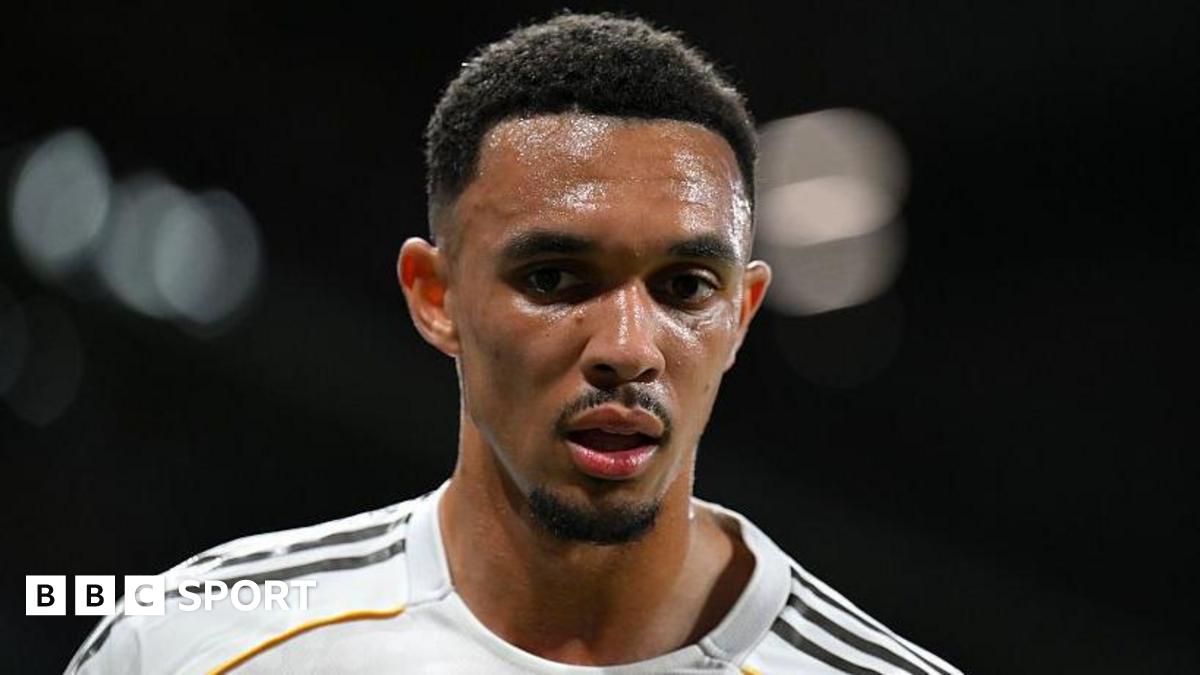
England outcast Trent Alexander-Arnold had a mixed night for Real Madrid against Bayern Munich in front of watching head coach Thomas Tuchel.

England head coach Thomas Tuchel made the journey to Madrid on his latest World Cup reconnaissance mission and was richly rewarded by a thrilling Champions League tie between Real Madrid and Bayern Munich.

Tuchel’s eyes were trained on Real Madrid pair Trent Alexander-Arnold and Jude Bellingham, as well as captain Harry Kane in his role as Bayern’s prime goalscorer.

He will have left with suspicions confirmed about Alexander-Arnold, as well as concrete evidence from Bellingham and Kane that they are surely indispensable when England’s World Cup campaign kicks off against Croatia in Arlington on 17 June.

Champions League nights at the Bernabeu are always special occasions, with supporters swarming around the magnificent arena hours before kick-off and thousands of fans clad in white gathering on Plaze de los Sagrados Corazones to welcome Real Madrid’s team bus.

Advertisement

To add to the drama, a warm Madrid afternoon suddenly turned to blackened skies and a deluge to set a spectacular stage for this meeting of European heavyweights.

As a classic unfolded, the game held contrasting fortunes for those Tuchel had under his microscope.

Alexander-Arnold is perhaps the most intriguing case study of the trio Tuchel was scrutinising, lavishly gifted and playing at the club most regard as the world’s biggest, and yet seemingly with no part to play in England’s summer strategy.

The 27-year-old, who moved from Liverpool last summer, has had a rocky introduction to life at Real and also suffered the ignominy of being left out of Tuchel’s 35-man England squad for friendlies against Uruguay and Japan.

Advertisement

And then, if that was not painful enough, when Tuchel called on replacements, he ignored Alexander-Arnold in favour of Ben White, not a regular at Arsenal this season and someone who had gone into self-imposed exile after the 2022 World Cup in Qatar.

For Alexander-Arnold to change Tuchel’s mind at this late stage will not be easy, and his mixed display here may have confirmed misgivings about him rather than enhanced his prospects.

In a poor first half display, Alexander-Arnold not only wasted possession far too often, but also almost gifted Bayern a goal with pass straight to Michael Olise. He was then caught napping by former Liverpool team-mate Luis Diaz as the forward put Bayern in front.

Tuchel has voiced his concerns about Alexander-Arnold’s defending and this was it in full view. And yet he then showed why he has admirers who find his exclusion from Tuchel’s plans puzzling.

Advertisement

As Real finally woke up with Bayern leading 2-0, it was Alexander-Arnold who delivered a series of dangerous set-pieces before firing in an inviting low cross for Kylian Mbappe to pull a goal back.

This was Alexander-Arnold in microcosm, and was not the sort of performance to have Tuchel shuffling the names already formed in his mind for World Cup selection.

The inconsistent nature of his performance is confirmed by his pass completion rate of 69.2%, the lowest of anyone in the match.

Source link

Advertisement
Continue Reading

NewsBeat

Nine-man Crystal Palace hold off Brighton in chaotic victory

Published

on

Nine-man Crystal Palace hold off Brighton in chaotic victory

Here are the line-ups for today’s 3pm kick-offs.

With Chrs Richards out Palace have moved Jefferson Lerma to centre-back, while Daichi Kamada comes into midfield.

Crystal Palace: Henderson; Munoz, Lerma, Lacroix, Guehi, Mitchell, Kamada, Wharton, Sarr, Eze, Mateta.

Advertisement

Subs: Turner, Ward, Nketiah, Franca, Clyne, Hughes, Esse, Chilwell, Devenny

Danny Welbeck leads the line as Fabian Hurzeler rings four changes to the side beaten 3-0 by Aston Villa last time out.

Brighton: Vertbruggen, Hinshelwood, Dunk, Van Hecke, Estupinan, Baleba, Gomez, O’Reily, Mitoma, Minteh, Welbeck

Subs: Rushworth, Gruda, March, Pedro, Adingra, Cashin, Ayari, Wieffer, Tasker

Advertisement

Source link

Continue Reading

NewsBeat

Trump announces Iran ceasefire deal conditional on Strait of Hormuz reopening

Published

on

Daily Record

President Trump has announced a two-week ceasefire with Iran if the Strait of Hormuz is reopened, just hours before his deadline threatening to send the country “back to the stone age”

President Donald Trump has announced there will be a ceasefire between the US and Iran as the Strait of Hormuz is reopened.

Advertisement

Trump made the declaration ahead of his stark deadline in which he warned he would send Iran “back to the stone age”.

In a post on his social media platform on Tuesday evening, Trump stated that should Iran agree “to the COMPLETE, IMMEDIATE, and SAFE OPENING of the Strait of Hormuz” then he would “suspend the bombing and attack of Iran for a period of two weeks.”

Since the conflict began in February, Trump has issued a string of deadlines threatening to intensify hostilities, only to pull back just before they lapse.

In his most recent warning on Tuesday he declared that a “whole civilization will die tonight” if Iran fails to meet his latest ultimatum, reports the Express.

Advertisement

The president revealed that the decision has been taken following talks with the leadership of Pakistan.

He said: “This will be a double sided CEASEFIRE!”

He added: “We received a 10 point proposal from Iran, and believe it is a workable basis on which to negotiate.

“Almost all of the various points of past contention have been agreed to between the United States and Iran, but a two week period will allow the Agreement to be finalized and consummated.

Advertisement

“On behalf of the United States of America, as President, and also representing the Countries of the Middle East, it is an Honor to have this Longterm problem close to resolution.

“Thank you for your attention to this matter!”

Source link

Advertisement
Continue Reading

NewsBeat

Arsenal’s super subs to the rescue again in victory over Sporting

Published

on

Arsenal’s super subs to the rescue again in victory over Sporting

Sporting  Rui Silva; Fresneda, Diomande, Inacio, Araujo; Morita, Simoes; Catamo, Trincao, Pedro Goncalves; Suárez. 
Substitutes Virginia, Callai, Debast, Vagiannidis, Kochorashvili, Faye, Braganca, Flavio Goncalves, Quaresma, Nel, Ricardo Mangas. 

Arsenal  Raya; White, Saliba, Gabriel, Calafiori; Odegaard, Zubimendi, Rice; Madueke, Gyokeres, Trossard. 
Substitutes  Arrizabalaga, Ranson, Mosquera, Gabriel Jesus, Martinelli, Norgaard, Havertz, Lewis-Skelly, Dowman, Harriman-Annous, Salmon. 

Referee  Daniel Siebert (Germany)

Advertisement

Source link

Continue Reading

Trending

Copyright © 2025