

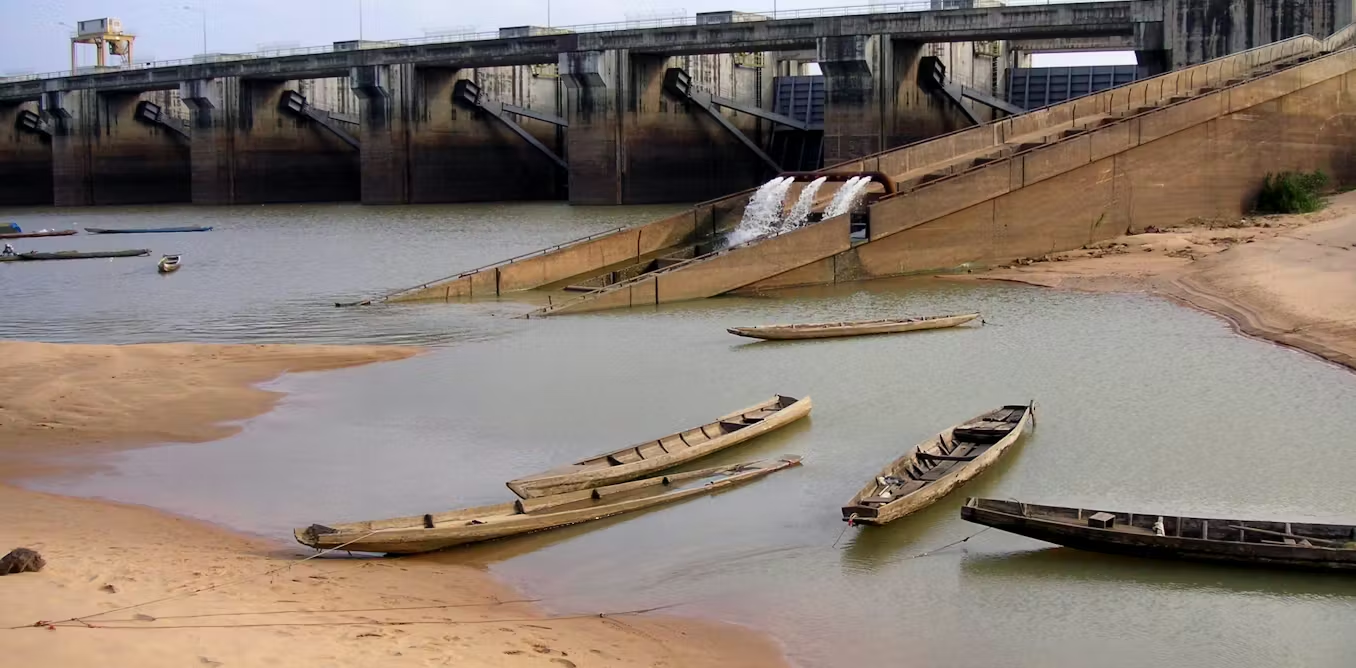
Thirty years after the Pak Mun dam was built in Thailand, the traditional way of fishing in the Khong Chiam district has completely stopped as the dam blocks the seasonal migrations of a wide range of fish.
Many men have had to leave their homes to find work elsewhere because they couldn’t fish or farm locally anymore, while their wives are often left alone to look after their children. People with disabilities and the elderly have not been included in compensation and livelihood rehabilitation programmes, even though they are among the groups most affected by changes in mobility, access to water and food systems.
My team and I have been documenting the knock-on effects of this dam development by carrying out interviews with people living in these communities. My research highlights that if the environmental consequences of dam building had been better predicted and monitored, a lot of the ongoing disruption could have been avoided.
In 1982, a environmental impact assessment for the Pak Mun dam was prepared by a team of Thai engineering consultants. Environmental impact assessments are used to identify, predict and evaluate the possible consequences of a proposed project before it begins. They have been in use for many years, but some governments bypass their recommendations.
If completed more rigorously, this assessment for the Pak Mun dam could have anticipated these negative social and environmental consequences and might have influenced decisions about the building and maintenance of this dam. But according to research, this impact assessment was weak.
One study noted that the environmental impacts of the dam – mainly on fish – were either unquantified or understated. Another study noted that the site location had moved and that required a new assessment rather than replying one the first one. The limits of this assessment has led to ongoing contestation between the central and provincial government and the affected communities and activists.
This is far from the only example of a lack of consideration for the long-term knock-on effects of dams on communities and nature. In 2025, the Indian government allegedly fast-tracked the construction of the enormous Sawalkot hydropower project on the Chenab river without conducting any environmental and social impact assessment.
Large-scale projects like this affect millions of people and the environment around them. Without ample impact assessments, they proceed without establishing just what effect they will have on the surrounding landscape, nature and communities. As a result, any negative consequences are not easily avoided.
While this new political dynamic of circumventing impact assessments is worrying, social and environmental impact assessments are valuable if used appropriately. As part of my research, I have spoken to dozens of impact assessment consultants and academics to assess the status quo.

Jeremy Allouche, Author provided (no reuse)
By 2033, the global market for environmental impact assessments could be worth an estimated US$5.8 billion (£4.3 billion). While the impact assessment process is seen as valuable by consultants and academics, some of our interviewees worried that costly recommendations often get lost in the process of project implementation once the document has been produced.
Ideally, impact assessments should be based on scientific knowledge and involve substantial public participation and situated community knowledge, especially by those who are at risk of adverse consequences, as well as clear accountability mechanisms.
In practice, there are problems. Impact assessment is a political process; it is not based purely on evidence and scientific facts. It is influenced by the economics of dam building. Dams are often also important symbols of nationalism, so they hold high political status.
Without ensuring systematic follow-up to an impact assessment, it can simply become a paper chase to secure a development permit. With more consideration, the “afterlife” of impact assessments can be much more effective.
Who is responsible?
Who, in terms of responsibility, should be held accountable for shortcomings in the implementation of impact assessment plans? Should it be the government that should be responsible for making sure the different regulations and norms are followed?
Should it be the commercial banks, development banks and bilateral donors (such as foreign aid provided by the UK government’s Foreign Commonwealth and Development Office) that fund projects who should monitor the requirements they had elaborated? Or should it be the private sector?
My research shows that the responsibilities lie with all of these parties.
In most countries, most of the information and data is controlled by the proponents of building the dam. Project managers and engineers may be suspicious of external impact assessor consultants, so they do not always share the relevant information.
Civil society, ranging from local campaign groups and activist to non-governmental organisations, have pushed for standards and laws that ensure rules are followed during and after any impact assessment. For this to work, impact assessments need to be dynamic so responses to possible changing consequences can change.
When environmental policy and tools like impact assessments are being questioned, it is even more important to create a policy process that ensures long-term accountability for impact assessments and prevent further losses and damages to the communities and the environment.

Don’t have time to read about climate change as much as you’d like?
Get a weekly roundup in your inbox instead. Every Wednesday, The Conversation’s environment editor writes Imagine, a short email that goes a little deeper into just one climate issue. Join the 47,000+ readers who’ve subscribed so far.



