News Beat
David Lammy’s bid to scrap jury trials is dangerous and could see one section of society thrown in jail more than others

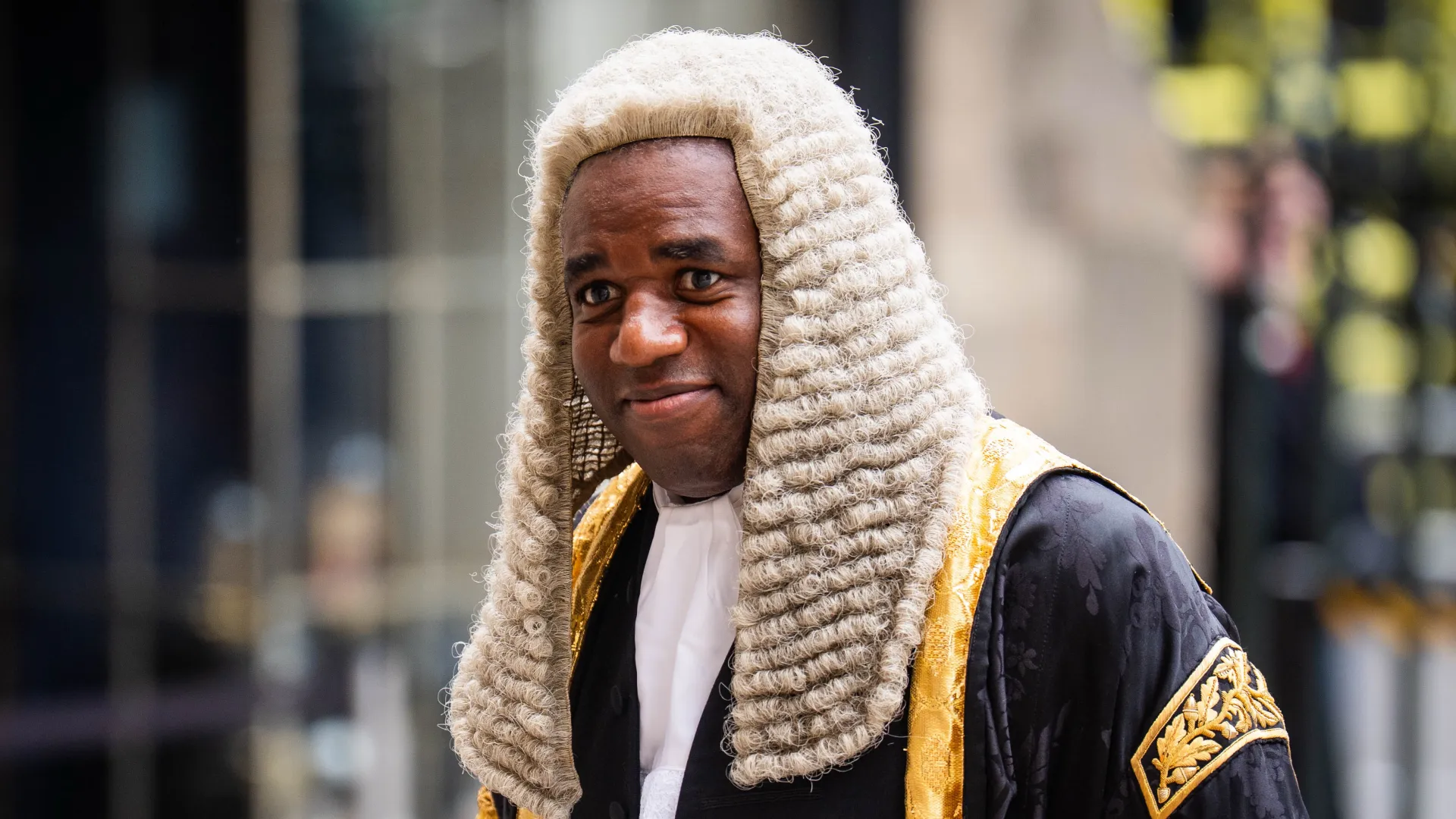

LAWYERS, judges and academics are all of the same verdict: trial by jury MUST be saved.
This week it was revealed that the Government is considering getting rid of juries in all but rape, murder and manslaughter cases and the move could be announced as early as Monday.
In 1215 the Magna Carta established the principle that no free person could be imprisoned “but by the lawful judgment of his peers”.
Now Justice Secretary David Lammy is preparing to tear up 800 years of history in a bid to reduce the backlog of 78,000 trials waiting to be heard in our crown courts.
The current crisis has led to defendants accused of serious crimes, including attempted murder, being let out on bail due to the delays.
And many cases are being scheduled for late 2029 and beyond, leaving victims of crimes such as rape waiting years for justice.


But there is little or no evidence that judge-only trials would speed up the process — and plenty of risks with putting the country’s least diverse profession in charge of our legal fates.
France does not have juries, yet Kim Kardashian had to wait eight years for the thieves who stole her jewellery in Paris to come to trial this spring due to backlogs there.
And academic research suggests that while juries do not discriminate against ethnic minorities, judges sometimes do.
Cheryl Thomas, professor of judicial studies at University College London, has surveyed thousands of jury members and was commissioned by Lammy in 2017 to examine their fairness.
She tells The Sun: “Twenty-plus years of detailed study of real juries at court in England and Wales has shown that juries are fair, effective and efficient.
“Juries are not the cause of the backlog, and proposals to remove juries for most offences will not solve the backlog.”
Research has shown that juries are not more likely to convict defendants from ethnic minorities.
But there is evidence that judges hand out longer prison sentences on average to non-white offenders.
We’re putting at risk the fairness of our judicial system. No one has said, ‘We’ve looked at the problem and we can tell you that by removing trial by jury the backlogs will have disappeared by 2030’.
Richard Atkinson, former president of the Law Society
Professor Thomas added: “The only stage in which they are not disproportionately treated is when a jury deliberates and brings back a verdict.”
A survey of criminal barristers this summer showed almost 90 per cent oppose reducing the right to jury trial.
Richard Atkinson, former president of the Law Society, tells The Sun: “We’re putting at risk the fairness of our judicial system.
“No one has said, ‘We’ve looked at the problem and we can tell you that by removing trial by jury the backlogs will have disappeared by 2030’.”
There are currently more than 78,000 cases waiting to be heard in the crown courts, even though judges are scheduled to sit for a record 111,250 days in the next year.
The Sun spent a day watching cases at one of Britain’s busiest crown courts, Wood Green in North London — where the delay has meant trial dates are being set for as far ahead as 2029.
In courtroom six, His Honour Judge David Aaronberg KC heard a pre-trial review for an affray case, where the attack was captured on CCTV.
Despite that, a diary date for the trial could not be set any sooner than July 2027, with the judge telling the barristers that the case is “at the bottom of the pile”.
He said: “We have got something like 1,500 cases waiting and we are waiting to get domestic violence cases on. I am afraid there is absolutely no hope for this case.”
Next up was a domestic violence case which is due to go to trial on Monday, but probably will not happen because no courtroom will be available. Judge Aaronberg listed it and said he would “pray that it would be called on”.
This system has been in place for hundreds of years and it works
Barrister Mark Stevens
Defence barrister Liam Chin, who is acting in the case, told The Sun that delays in the courts have “nothing to do with juries”.
He said: “This is something which has been growing for years — we are being prevented from letting justice take place.
“We have juries, defence barristers, prosecutors, all ready to go.
“Something needs to happen, but doing away with jury trials is not the answer.”
Speaking after the morning’s proceedings, barrister Mark Stevens called Mr Lammy’s proposals to scrap jury trials “laughable”.
He added: “It is never going to work. This system has been in place for hundreds of years and it works.
“As a member of the public, if you were to get accused of something you did not do, you would want to be tried by a jury of your peers.”
Next was a section 18 grievous bodily harm case, also due for Monday, but which is unlikely to go ahead.
Despite the seriousness of the allegations, it will get delayed because Wood Green will not have enough courtrooms open next week.
Three days before the trial was due to start, Judge Aaronberg told the court: “I can only apologise that I am telling you this news now.”
Around 13 per cent of the country’s crown courts were not sitting yesterday, according to analysis by the investigative court reporting blog Mouse In The Court.
In Isleworth Crown Court in West London, cases have been cancelled this year because the heating has been broken and the cells are too cold for defendants to be held in.
At Maidstone Crown Court in Kent, sentencing at the end of cases has had to be adjourned because of broken cell doors — meaning no defendants can be locked up.
Harrow Crown Court in North West London was closed in 2023 due to the discovery of crumbling concrete in the building.
At the time, the Government said it would only be closed for six months, but it is yet to reopen.
The Ministry of Justice said of the jury changes: “No final decision has been taken by Government.
“We have been clear there is a crisis in the courts, causing pain and anguish to victims — with 78,000 cases in the backlog and rising — which will require bold action to put right.”
Juries have a unique legitimacy that stops
perversion of the law
By Geoffrey Cox MP, barrister, former Attorney General
WHAT is the first thing you would do if you wanted to clear the way for a dictatorship? It would not be to abolish elections. That would come later.
Many of those who have become notorious dictators were elected because of popular revulsion against the weakness and venality of traditional parties and politicians, and their apparent inadequacy to deal with the problems of the time.
Democracy, as Winston Churchill said, is the worst form of government, except for all the others.
No. You would get rid of jury trial.
In 1670, William Penn (who went on to found Pennsylvania) and William Mead were arrested for preaching the gospel to an unlawful assembly in Gracechurch Street in the City of London.
They were Quakers whose meeting house had been closed by the authorities under the Conventicle Act 1644, which forbade religious assemblies of more than five people outside the Church of England.
For two days and nights, the judge tried to force the jury to convict them, locking them up “without food, drink, tobacco, fire or even a chamber pot”.
Guarantee secrecy
The jury refused to budge. They were willing to find that the men had spoken in Gracechurch Street but not to an unlawful assembly.
It seemed to offend their conscience that peacefully preaching salvation and the brotherhood of man amounted to an unlawful assembly.
You can see how those who wanted to use the law as a tool of coercion to control opinion would need to remove the right to trial by jury.
Geoffrey Cox KC
Finally, they had to get one of their number to escape out of a window to appeal to the Lord Chief Justice for an order to release them.
That case established the jury’s right to decide as they will and not to be punished for doing so.
You can see how those who wanted to use the law as a tool of coercion to control opinion would need to remove the right to trial by jury.
Juries are protected by strict rules to guarantee the secrecy of their deliberations. They must be randomly selected.
The judge is under a solemn legal duty to remind them that they, not he or she, are the sole judges of the facts of the case.
Lawyers and judges, steeped in the atmosphere of the courts, acquire professional experience that all too easily hardens into unconscious preconceptions about human nature.
They can be prisoners of their usually rarefied upbringing and education, and, by disposition and training, they are devoted to the idea that logical analysis provides the answer to most of the problems they encounter. Juries, by contrast, are a random cross-section of society.
If they bring prejudices into the court, they will soon find them challenged by those who do not share them.
The evaluation of the veracity and reliability of evidence is not only a matter of logical analysis but of intuition and human perception.
In the democracy of the jury room, instincts and common sense, focused by a solemn sense of the gravity of the decision and the legal directions of the judge, count for as much as logic.
They will come together just once to deliberate on the guilt or innocence of another human being. Then they will return to the anonymity from which they were plucked.
A judge cannot reach a decision anonymously — in a notorious case, he or she will always be associated with the verdict.
For all these reasons and more, trial by jury is an inheritance of English common law that has stood the test of hundreds of years and has spread around the world.
It attracts a unique legitimacy in the minds of the peoples of those largely English-speaking countries that have adopted it and is, as Churchill said, “a safeguard from arbitrary perversion of the law”.
But the bureaucratic mind does not like the disorderliness and “inefficiency” of juries. For years, there have been efforts to diminish their importance and to undermine confidence in the decisions juries take.
Now, it seems, this time in the name of expediency, we are on the brink of another attempt to erode this precious common-law institution.
No principled case is made for revoking or abrogating the right to choose trial by jury. It is said, merely, that we must address the backlog, which has become unmanageable without such changes after Covid shutdowns.
As so often, the devil will be in the detail. Of course, it is said, minor offences are not now and need not be tried by juries.
They can be tried summarily by magistrates. But what is a minor offence?
Ten years ago, 27 journalists from this newspaper were arrested and charged with an ancient offence that is so vague many lawyers do not understand it, “misconduct in a public office”.
Fateful decision
In this case, the journalists were accused of aiding and abetting public officers to commit the offence by following an established policy of paying rewards for stories, as they did to anyone for stories it was in the public interest to be published.
They included the scandal of our frontline soldiers being sent to fight in Iraq with inadequate and defective equipment.
The journalists gained from it not a penny. They were charged and placed on trial, many of them at the Old Bailey. With the exception of one of them, later acquitted on appeal, the juries declined to convict a single one.
I doubt very much indeed that would have been the case had they been tried by judges alone.
Who was the Director of Public Prosecutions who took the fateful decision to use the full resources of the state to put those 27 men and women and their families through the ordeal of years of criminal prosecution for the first time in their lives?
None other than Sir Keir Starmer KC MP.
Under Labour’s leaked plans to remove trial by jury for all but a narrow range of offences, those journalists would have lost their right to choose a trial by their peers. If sentenced to the maximum penalty, many of them might only recently have emerged from long years languishing in jail.
It was jury trial, not judges, not the European Convention on Human Rights, not the arguments of human rights lawyers, that protected those men and women, as it had once protected Penn.
It is time, once again, to fight for it.
PASTOR SHAUN’S ORDEAL
THE reason the Government wants to restrict the right to jury trial is because there is a massive backlog of cases.
Yet the problem is not being eased when a preacher spends six days in a Crown Court for saying “God bless you” to some strangers in the street.
This month Pastor Shaun O’Sullivan, a father of four from Swindon, Wilts, was cleared of religiously aggravated harassment and one count of racially aggravated harassment.
The prosecution case was that he had said “God bless you” to three passers-by in Swindon town centre in September 2024, assuming they were Muslim.
Shaun, 36, denied all the charges and it took the jury just 90 minutes to agree he was innocent.
Judges mainly come from one section of society, whereas juries are diverse. They will understand because it’s your common man who has lived these things
Pastor Shaun O’Sullivan
The Christian, whose wife is African, is deeply offended by the suggestion that he is a racist.
He believes it is vital that Britain maintains its long tradition of jury trials and told The Sun: “A jury is crucial, it keeps away corruption.
“It’s good that everyone can see the evidence instead of just one person judging it. I’m really shocked to think that they want to get rid of it.
“I was glad my case went to jury so everyone could pick apart the evidence. I wanted people to see the truth.
“Judges mainly come from one section of society, whereas juries are diverse. They will understand because it’s your common man who has lived these things.
“People will look at cases like mine and think this could happen to anyone.”
Shaun’s defence was funded by the faith organisation Christian Concern and its Christian Legal Centre.
The centre’s chief executive Andrea Williams thinks too many defendants in “hate speech” and public order cases are already being denied a jury trial, and she added: “Defendants are much more likely to be acquitted before a jury.”