
News Beat
Detainees describe the horror of Maduro’s ‘torture prisons’


During interrogations, Mr Merino says, guards tried to force him to confess to a “script” they had prepared in advance. “The guards at Tocorón, and the regime they worked for, were malevolent,” he says. “They enjoyed every act of torture they inflicted. They enjoyed the suffering of their Venezuelan brothers and sisters.”
Sexual violence, he says, was systematic. “The guards demanded favours in exchange for an extra plate or a glass of water. These weren’t favours of good behaviour; they were sexual favours,” he says. “One of the guards became infatuated with one of the boys, and on the nights he made his rounds, he would grab him and force him to perform oral sex.”
Human Rights Watch has documented what it calls “the extensive use of torture” in Venezuelan prisons. “Constant beatings, electric shocks during interrogations, prolonged isolation in dark spaces without access to light,” said Juanita Goebertus Estrada, the group’s Americas director.
In March 2025, a United Nations fact-finding mission concluded that the Venezuelan government had committed acts “constituting the crime against humanity of persecution on political grounds.”
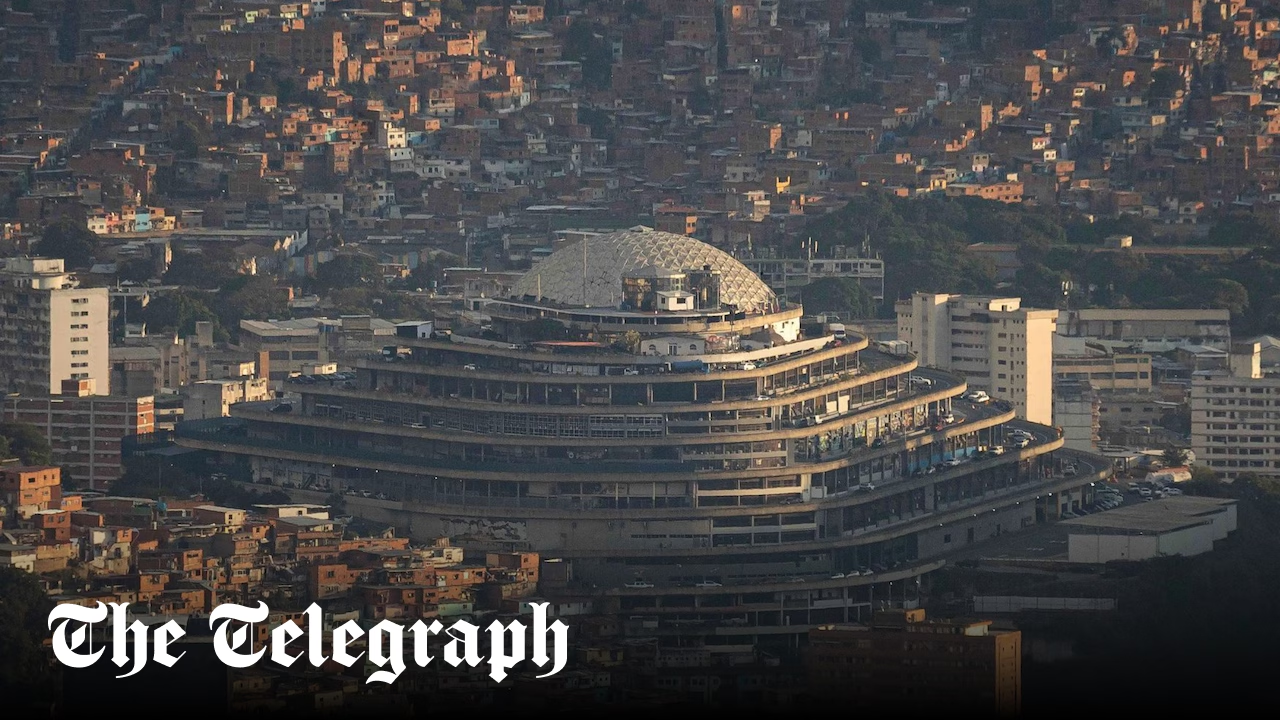
Venezuela’s so-called “torture prisons,” including Tocorón and El Helicoide, have existed for decades but became especially notorious during Mr Maduro’s crackdown on protests after his widely disputed election victory. More than 2,000 people were detained in the weeks that followed, many held in those facilities.
With the recent removal of Mr Maduro, the government – led on an interim basis by Delcy Rodríguez, a former vice president and long-time Maduro ally – has framed the releases as a “new political movement.” Mr Trump has welcomed the move, saying he cancelled a second wave of airstrikes on Venezuela once he learned Caracas was cooperating with the release of prisoners.
Rights groups say the numbers tell a different story. Foro Penal, a leading Venezuelan human rights organisation, says only 154 of an estimated around 900 political prisoners have been released since January 8.
“There are still a lot of people in jail, it is not enough yet,” says Gonzalo Himiob Santomé, the group‘s vice president. He adds that while Foro Penal has verified 780 people currently imprisoned, the organisation has received a surge of calls from families previously afraid to register cases since the announcement of the releases.



