Carrington Walker Live News Journalist and Ruth Suter
16:09, 25 Mar 2026Updated 17:00, 25 Mar 2026
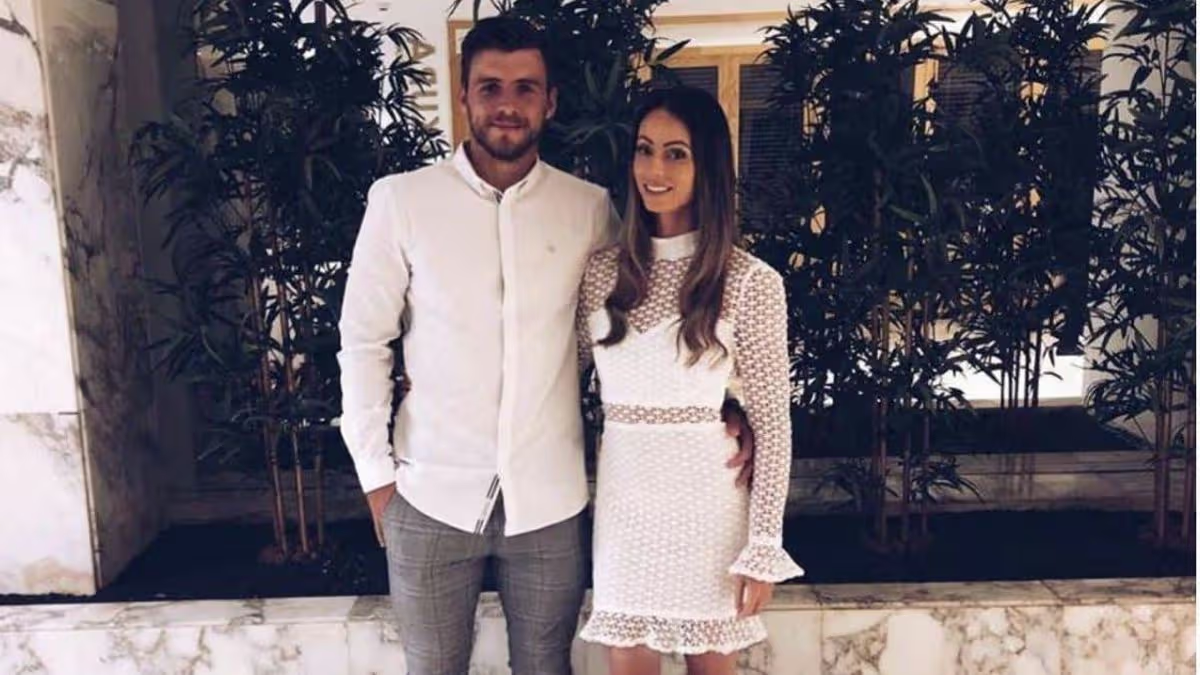
The partner of Scottish footballer Graham Carey has died at the age of 37 following a prolonged battle with cancer.
Rachel Borthwick, a mother of two, passed away on Sunday (March 22), in Delhi, India, where she had travelled in search of further treatment options. She was diagnosed with triple‑negative breast cancer after discovering a lump in September 2021.
Advertisement
Carey, who plays for Dunfermline Athletic, confirmed her death on Wednesday, paying tribute to her courage throughout her illness. “Our babies will always remember how unbelievably strong and brave you have been until the very end,” Graham posted on social media, adding, “I know you will always be looking down on them, protecting them, and guiding them.
“They can take some comfort that their mummy is no longer in any pain and can now rest in peace. We will always love you more than you could ever know.”
In March 2023, then aged 35, Rachel found a tumour around a year after finishing her treatment for triple-negative breast cancer. At the time, she was told her cancer had become undetectable, but further tumours were discovered.
Advertisement
Her sister Sarah recalled how Rachel put up a “brave and relentless battle” for more than four years, in a tribute posted online. “It is with the heaviest of hearts that we share an update about our beloved Rachel,” the sister said.
“On Sunday, March 22 at 11.06pm local time, Rachel passed away peacefully at CK Birla Hospital in Delhi, India, with her parents by her side. Rachel fought an incredibly brave and relentless four-and-a-half-year battle with triple-negative breast cancer.
“She faced every challenge with strength, courage, and without complaint, giving everything she had for as long as she could. Sadly, the cancer was very aggressive and had progressed significantly, and in the end it became too much for her body to endure.
Advertisement
“Rachel made the decision to travel to India for treatment because she believed there were no further options available to her in the UK. She was determined to keep fighting for as long as possible—for herself, and most importantly, for her children. That determination, hope, and love defined her until the very end.”
Sarah continued: “We are heartbroken beyond words. Rachel was a deeply loved daughter, granddaughter, sister, mother, auntie, niece, cousin and friend, and the space she leaves behind can never be filled. We want to thank everyone who has supported Rachel throughout her journey—through donations, messages, prayers, and kindness. It meant more to her, and to all of us, than we can ever truly express.
“Please continue to keep Rachel and her loved ones in your thoughts and prayers and respect their privacy at this incredibly difficult time.”
Since the announcement of Rachel’s death, there has been an outpouring of support from the footballing world to rally around her family.
A statement from Dunfermline Athletic reads: “Everyone at Dunfermline Athletic was hugely saddened to learn of the passing of Rachel Borthwick, partner of Pars player Graham Carey. Our thoughts are with Rachel’s family and friends at this devastating time. Rest in Peace, Rachel.”
Another statement from St Johnstone FC reads: “We are devastated to learn of the passing of Graham Carey’s partner, Rachel. The thoughts and love of everyone at St Johnstone Football Club are with Graham and his family at this very sad time. Rest in peace, Rachel.”
Plymouth Argyle also sent their regards to their former midfield star Graham and his family, saying “We all send our deepest condolences to Graham’s family at this heartbreaking time. Rest in peace, Rachel.”
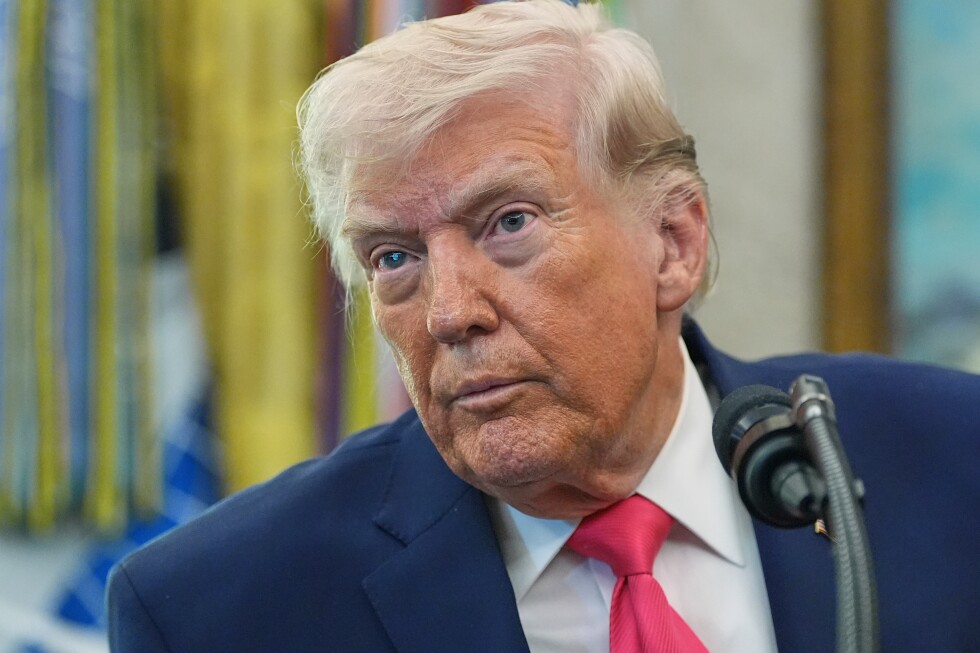
WASHINGTON (AP) — President Donald Trump will travel to Beijing for a rescheduled summit with Chinese President Xi Jinping on May 14 and 15, the White House announced on Wednesday.
Trump had been scheduled to travel to China later this month but previously announced he was delaying the trip so he could be in Washington to help steward the U.S. and Israeli war against Iran. The Republican president had announced a rescheduled trip even though the war in Iran continues and the U.S. is pressing Tehran to accept a ceasefire proposal.
The president and first lady Melania Trump also plan to host Xi and his wife, Peng Liyuan, for a White House visit later this year, press secretary Karoline Leavitt said.
Leavitt, when asked if the new dates for Trump’s trip could suggest he believes the Iran war could end soon, offered an optimistic tone that the conflict could reach an endgame before he travels.
Advertisement
AP AUDIO: Trump will travel to Beijing for rescheduled China trip May 14-15, after delay due to Iran war
Advertisement
At a briefing, White House press secretary Karoline Leavitt says the president will visit China in May.
“We’ve always estimated four to six weeks,” Leavitt responded. “So you could do the math on that.”
Trump said last week while meeting with Irish Prime Minister Micheál Martin in the Oval Office that he would be going to China in five or six weeks’ time instead of at the end of the month. He said he would be “resetting” his visit with Xi.
“We’re working with China — they were fine with it,” Trump said then. “I look forward to seeing President Xi. He looks forward to seeing me, I think.”
Trump’s visit to China is seen as an opportunity to build on a fragile trade truce between the two superpowers, but it has become tangled in his effort to find an endgame to the war in Iran. Soon after pressing China and other nations to send warships to secure access to Middle Eastern oil, Trump indicated last week that his travel plans depended on Beijing’s response, though he added then that the U.S. didn’t need help from the allies that rebuffed his request.
Anyone with information on the collision near Rhayader is being urged to contact the police
23:09, 25 Mar 2026Updated 23:20, 25 Mar 2026
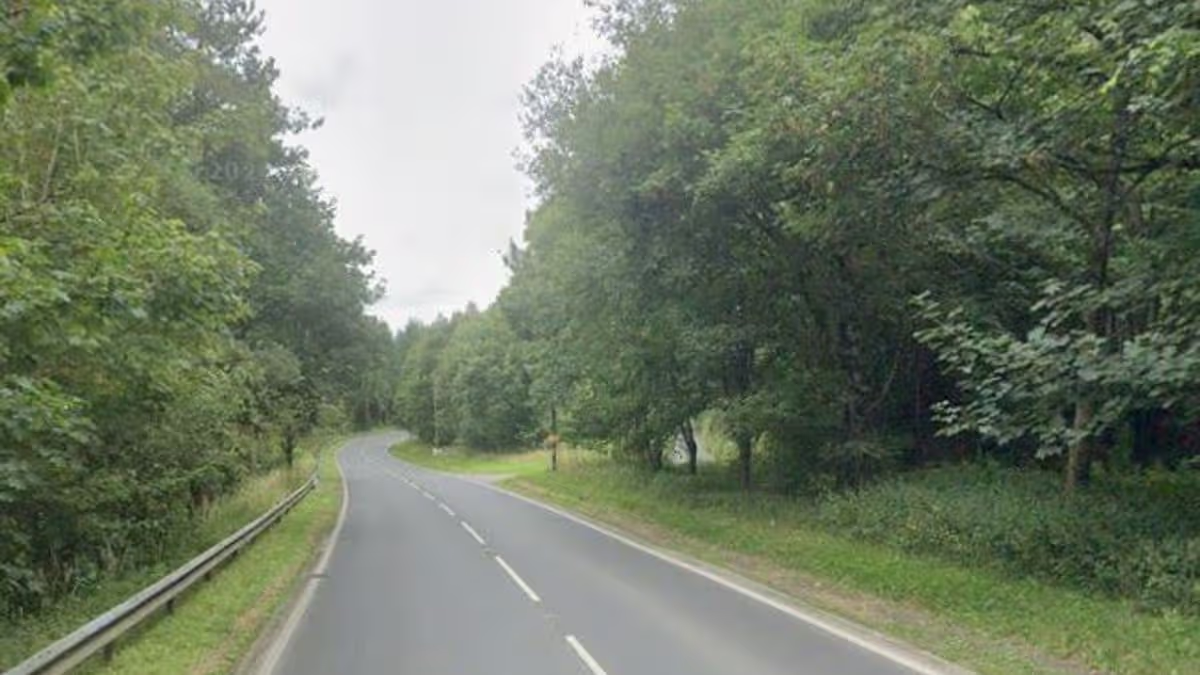
A person has died following a crash between a HGV and a car. The incident happened at around 2.30pm on Tuesday, March 24 on the A470 in Doldowlod, near Rhayader.
The crash involved two vehicles: a green Chevrolet Spark and a red Scania HGV. The road was closed for around 13 hours while accident investigation work took place.
Dyfed-Powys Police confirmed that sadly the Chevrolet driver died at the scene. Their next of kin have been informed and are being supported by specialist officers.
Advertisement
Anyone with information is being urged to contact the force. A statement reads: “Dyfed-Powys Police is appealing for witnesses following a fatal collision on the A470, Doldowlod, near Rhayader.
“The collision took place around 2.30pm on Tuesday, March 24, and involved two vehicles; a green Chevrolet Spark and a red Scania HGV.
“Sadly, the driver of the Chevrolet died at the scene. Their next of kin have been informed and supported by specialist officers.
“The road was closed for collision investigation to take place and was reopened around 3.30am this morning (Wednesday, March 25) .
Advertisement
“Anyone with information or dashcam footage that could help officers with their investigation is asked to report it to Dyfed-Powys Police.”
Remains found under a church floor in the Netherlands could belong to the famous musketeer d’Artagnan.
Archaeologists believe these may be the ‘lost’ bones of the soldier who inspired the hero of the famous novel, The Three Musketeers.
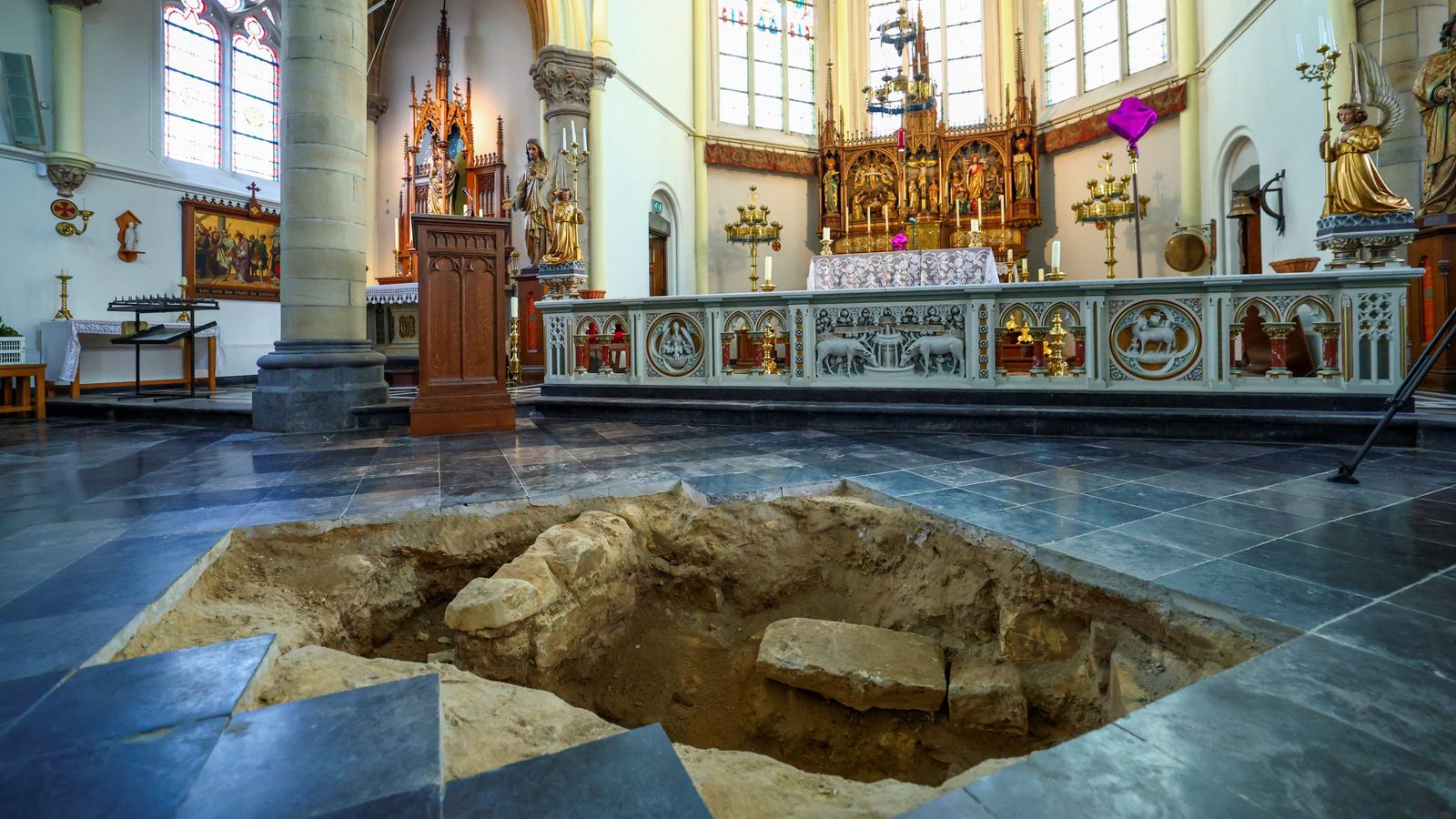
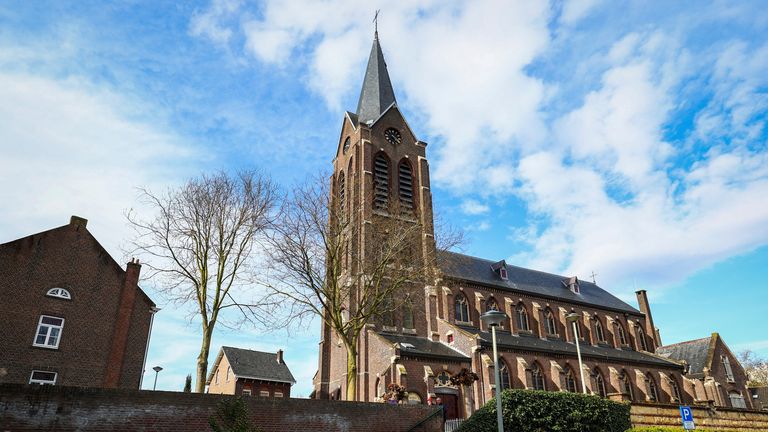
Workers discovered the grave, containing human remains, in front of the altar after part of the floor of St Peter and Paul Church in Maastricht subsided.
Experts are now racing to confirm through DNA testing if the skeleton is that of the famed French musketeer, Charles de Batz de Castelmore d’Artagnan, with multiple items found in the grave also pointing to the owners identity.
Advertisement
Image: Pic: Reuters
D’Artagnan rose to fame more than 150 years after his death when a fictionalised version of his exploits cast him as the protagonist of Alexandre Dumas’ 1844 novel.
The real-life musketeer served the French King Louis XIV, eventually becoming captain-lieutenant of the Musketeers of the Guard.
The nobleman was killed on 25 June 1673, during the French siege of Maastricht in the Franco-Dutch War, after being struck in the throat by a musket ball.
Transporting his body back to Paris in the summer heat would have been difficult.
The church where the body was found stands near where the French army’s campsite was located.
The body was also discovered with part of a bullet next to it and a coin that dates to the relevant period, experts said.
Advertisement
A letter dating from around the time of his death said he had been buried in consecrated ground.
Jos Valke, deacon at St Peter and Paul Church, helped unearth the skeleton and is 99% certain the remains belong to Charles de Batz de Castelmore – known as Count d’Artagnan.
Image: The skeleton was found under St Peter and Paul Church in Maastricht. Pic: Reuters
Mr Valke joked: “Under an altar – it couldn’t be much holier than that. When you add it all up, then, it seems plausible to us. But of course, nothing is certain yet.”
The church had previously been identified as a possible resting place of the 17th-century soldier.
Advertisement
The DNA retrieved from a jawbone is now being tested against that of D’Artagnan’s descendants to see if there’s a match.
Archaeologist Wim Dijkman told Reuters: “This has truly become a top-level investigation, in which we want to be absolutely certain, or as certain as possible, whether it is the famous musketeer, who was killed here near Maastricht.”
WASHINGTON (AP) — The Justice Department has settled for roughly $1.2 million a lawsuit from Michael Flynn, the former national security adviser to President Donald Trump who pleaded guilty during the Republican’s first term to lying to the FBI about his conversations with a top Russian diplomat and was later pardoned.
Court papers filed Wednesday do not reveal the settlement amount, but a person familiar with the matter, who spoke to The Associated Press on condition of anonymity to disclose nonpublic information, confirmed the total as about $1.2 million.
The settlement resolves a 2023 lawsuit in which Flynn sought at least $50 million and asserted that the criminal case against him amounted to a malicious prosecution. It also represents a stark turnabout in position for a Justice Department that during the Biden administration had pressed a judge to dismiss Flynn’s complaint. Attorney General Pam Bondi, a former personal lawyer for the president, has openly criticized the Russia investigation in which Flynn was charged and the Justice Department in the last year has opened investigations into former officials who participated in that inquiry.
The Justice Department cast the settlement as an “important step in redressing” what it says was a “historic injustice” of the Russia investigation that shadowed Trump for much of his first term.
Advertisement
“This Department of Justice will continue to pursue accountability at all levels for this wrongdoing. Such weaponization of the federal government must never be allowed to happen again,” a spokesperson said.
In a separate statement, Flynn said: “Nothing can fully compensate for the hell that my family and I have endured over these many years — the relentless attacks, the destruction of reputations, the financial ruin, and the profound personal toll inflicted upon us all. No amount of money or formal resolution can erase the pain caused by a prosecution that should never have been brought.”
The settlement is the latest turn in the long-running legal saga involving Flynn, one of six Trump associates charged as part of special counsel Robert Mueller’s investigation into potential ties between Russia and Trump’s 2016 presidential campaign. That investigation found Russia interfered in the election on Trump’s behalf and that the Trump campaign eagerly welcomed the help, but it ultimately found insufficient evidence of a criminal conspiracy.
Flynn, a retired Army lieutenant general who vigorously campaigned at Trump’s side, served for weeks as his first national security adviser before being pushed out of his position. He remained a Trump ally even after agreeing to cooperate with Mueller’s team. He was pardoned in the final weeks of the president’s first term.
Advertisement
Flynn pleaded guilty in December 2017 to lying to the FBI when he said he had not discussed with the Russian envoy, Sergey Kislyak, sanctions that the outgoing Obama administration had just imposed on Russia for election interference. During that conversation, Flynn advised that Russia be “even-keeled” in response to the punitive measures, and assured him “we can have a better conversation” about relations between the countries after Trump became president.
The conversation alarmed the FBI, which at the time was investigating whether the Trump campaign and Russia had coordinated to sway the election. In addition, White House officials were stating publicly that Flynn and Kislyak had not discussed sanctions, which the FBI knew was untrue.
Flynn was ousted from his position in February 2017 after news broke that Obama administration officials had warned the White House that Flynn had indeed discussed sanctions with Kislyak and was vulnerable to blackmail. He pleaded guilty months later to a false statement charge.
But Flynn later sought to withdraw his guilty plea, saying federal prosecutors had acted in “bad faith” and broken their end of the bargain when they sought prison time for him.
Advertisement
The Justice Department in 2020 moved to dismiss the case, asserting that the FBI had no basis to interview Flynn about Kislyak and that any statements he made during the interview were not material to the FBI’s broader counterintelligence probe.
Flynn was pardoned by Trump in November 2020, ending the court case and the legal wrangling.
In his lawsuit, Flynn maintained his innocence and said he was targeted by the “virulently anti-Trump leadership” of the FBI’s Russia investigation. He contended that investigators pursued him despite knowing there was no evidence of a crime and coerced his guilty plea.
“He was falsely branded as a traitor to his country, lost at least tens of millions of dollars of business opportunities and future lifetime earning potential, was maliciously prosecuted and spent substantial monies in his own defense,” says the lawsuit, adding that Flynn will continue to suffer “mental and emotional pain.”
On display will be the uniform belonging to chief engineer Montgomery Scott, known as Scotty, as played by Pegg in 2009’s Star Trek film, as well as Admiral Jean-Luc Picard’s uniform, worn by Sir Patrick in the Paramount+ Star Trek: Picard TV series, which ran from 2020 to 2023.
A brother and sister from Perth have honoured their late grandad with matching IRN-BRU tattoos, celebrating his love of the iconic Scottish drink
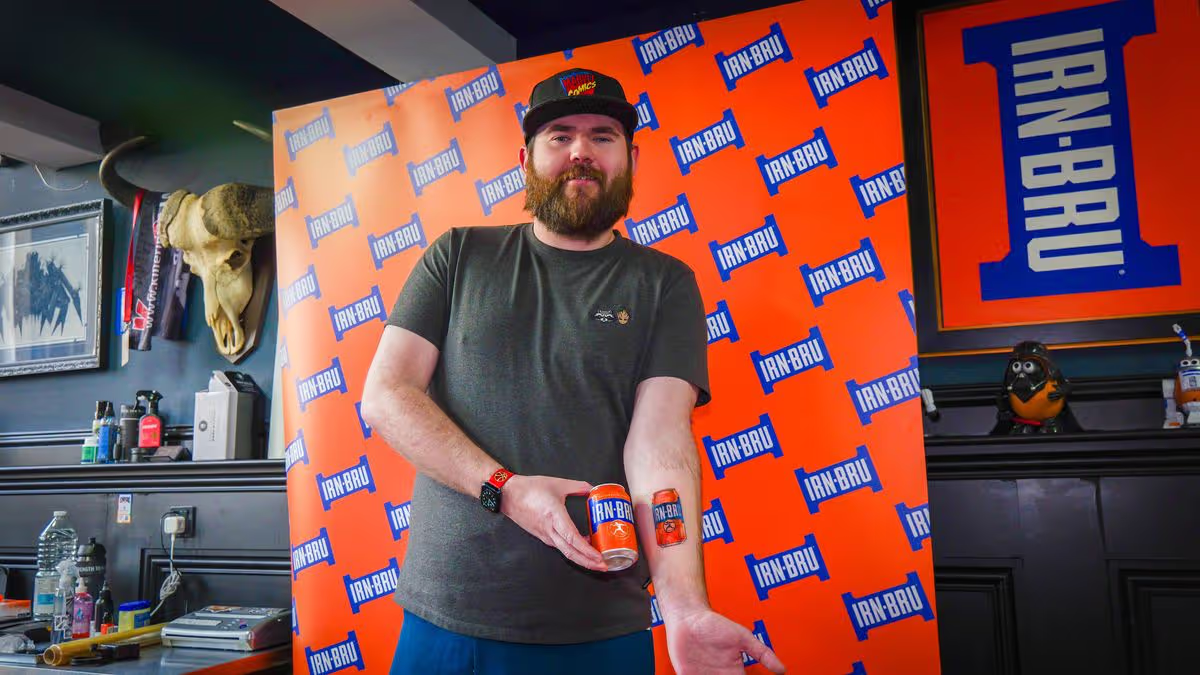
Devoted IRN-BRU fans descended on Glasgow’s Empire Ink on Saturday, March 21, for the first-ever TAT-BRU parlour, where exclusive free tattoos celebrated the soft drink’s refreshed look and 125th anniversary.
Advertisement
Fans travelled from across Scotland, with some making hundreds of miles just to get inked in tribute to the brand that has been part of their lives for decades. Among them were brother and sister Gemma, 32, and Thomas, 30, Swan from Perth, who made the trip to commemorate their late grandad, Jimmy, a lifelong fan of IRN-BRU.
Jimmy passed away six months ago, just a few weeks shy of his 87th birthday, after a battle with lung cancer. Even in his final days in a hospice, he was never without a can of his favourite soft drink.
The siblings decided to get matching tattoos to honour their grandad’s memory and the role IRN-BRU played in their whole family.
Speaking about the tattoo, Thomas said: “It’s fitting, he definitely would have liked it, he always liked seeing my other tattoos, so I’m sure this would have got his approval. He was a regular can of IRN-BRU man and used to drink it every day.
“He was always the one who would sneak me a can when I was told no, I’d never go to his house without being offered some,” he continued.
“I saw the event on Facebook and sent it to my sister who had spotted it at the same time and immediately replied that she’d already booked 11 am. We were both really close to him, so it’s nice to have this wee memory.”
The TAT-BRU event drew a diverse crowd, with many fans of the popular drink getting their skin permanently tattoo’d for a variety of personal and emotional reasons.
Advertisement
Another punted Steven Prentice, 38, made the 350-mile round trip from Inverness to get a tattoo. As he said: “I love it, it was absolutely worth the long drive down. I’ve got many tattoos and I try to get a tattoo in each place I visit, this is like a wee souvenir from Glasgow.”
Maria Maclennan, 38, a silversmithing lecturer at Edinburgh’s College of Art, added a can design to her impressive collection of tattoos, saying: “I’m a metalsmith and my partner’s an engineer, so we both love a good girder – though these days, it’s my bed that provides me with strong horizontal support.
“Bru was born long before any of our time and it’ll live on after we all leave this mortal coil.”
Advertisement
Over 50 tattoos were given out during the event, featuring a range of designs inspired by the legendary packaging, including the return of the famous “Made in Scotland from Girders” strapline and the iconic girder emblem.
The legendary ‘molten man’’insignia from 1988 was also back, celebrating the brand’s industrial heritage while giving it a modern touch.
Kenny Nicholson, Director of Brand at IRN-BRU said: “For 125 years, IRN-BRU has proudly been Made in Scotland from Girders.
“To celebrate our milestone we’ve brought this iconic slogan back, in an evolved look that typifies our industrial roots and the maverick bravery at the heart of BRU.
Advertisement
“The TAT-BRU parlour showed just how much BRU means to people, through the generations, and now those lucky fans can wear their permanent girders with pride.”
Editor’s note: The UK’s Food Standards Authority and Health Security Agency both advise against eating clay, soil or earth. Links to their guidance are included in this article.
When I ask people if they have ever eaten soil before, they tend to give me a strange look. But geophagy – the deliberate ingestion of any kind of soil – is a practice that archaeological evidence from Kalambo Falls in Zambia suggests has been part of human history for at least 2 million years.
British archaeologist John Desmond Clark reported that Homo habilis, a species of human who lived between 2.2 and 1.6 million years ago, was digging into the earth to mine clays from below the topsoil. This led to the inference that the oldest evidence of geophagy by humans was at that prehistoric site on the border of Zambia and Tanzania.
More recently, anecdotal evidence suggests a prisoner condemned to death in 16th-century Hohenlohe (now part of Germany) was allowed a last request of consuming a small clay tablet after receiving his supposedly lethal dose of mercury. The tablet was reputedly a piece of terra sigillata – clay traditionally mined from the Greek island of Lemnos. To the amazement of the court, the convict survived the mercury poisoning and was merely banished instead.
Advertisement
Geophagy is still practised widely around the globe, including by some women experiencing food cravings during pregnancy. But it should not be confused with the eating disorder pica.
In my research on geophagy practices in the UK, clays appear to be the most popular types of soil consumed. But these are only a sliver of the many types of soil people are known to eat.
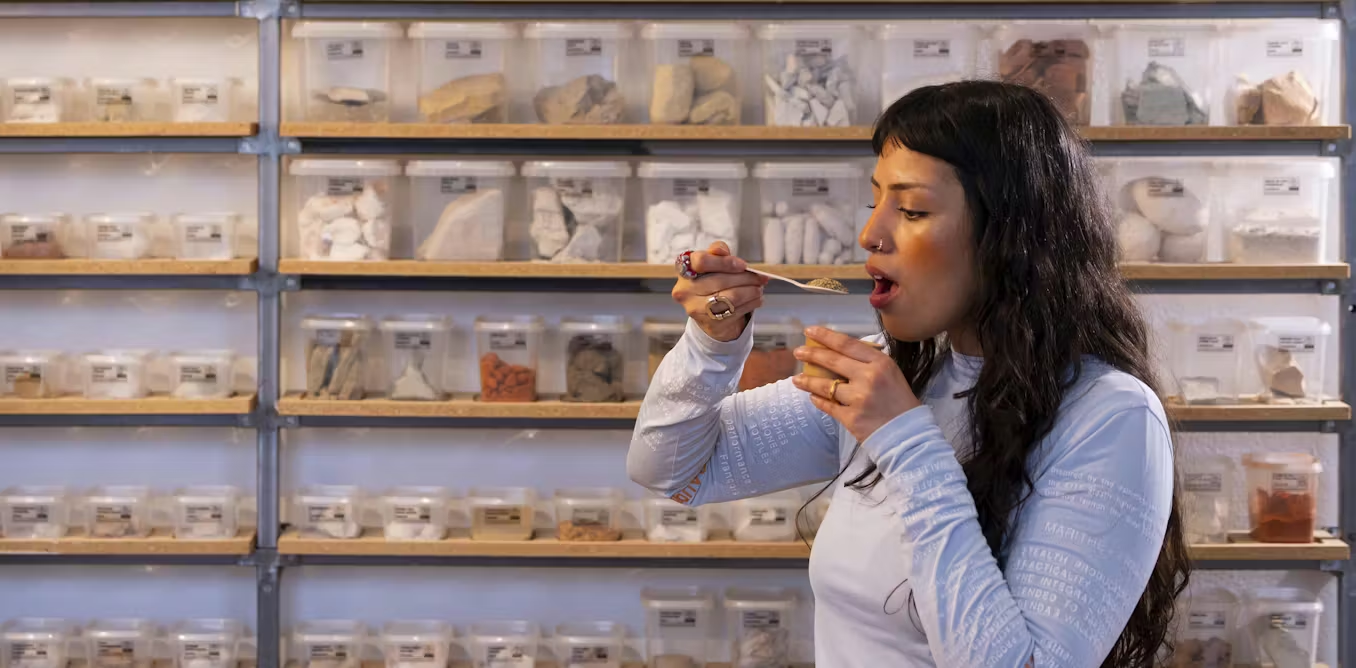
In Amsterdam’s Museum of Edible Earth, researcher and artist masharu has brought together more than 600 soils used in geophagy. These include melt-in-the-mouth pemba from Surinam and montmorillonite green clay from France, which is claimed to be an anti-ageing treatment.
The museum is now in the UK for the first time. Adult visitors to Somerset House in London are being invited to sample a “tasting menu” of its soils, and even contribute their own tasting notes.
For many people, eating soil carries deep symbolic meaning. Soil is a common theme in genesis stories that describe how a people originated, including Adam in the Bible’s Old Testament.
Among the Luo people in Kenya, women who practice geophagy during pregnancy prefer eating red clays due to the links between soil, fertility and blood. These clays are understood to replenish the blood lost during pregnancy to the unborn foetus, which is referred to as remo ma ichweyogo nyathi (the blood you form the child of).
In the 20th century, eating soil was sometimes used to determine guilt in Java. If a crime was committed with no witnesses and the cross-examination failed, suspects would ingest a small amount of soil from their ancestors’ graves and call upon them as witnesses to their innocence. If one of the suspects grew ill or died over the next few months, they would be found guilty.
Advertisement
Today, thinly sliced clay from Java is still eaten as a snack known as ampo.
Soil’s growing appeal
The benefits and risks of eating soil have been highlighted amid recent social media interest in geophagy, such as the trend for filming soil taste tests on TikTok.
A collaboration between researchers at the universities of Glasgow, Strathclyde and Crete suggests clays from Lemnos may have wider health benefits, such as preventing the progression of inflammatory diseases (although, so far, only shown in mice).
Bentonite, which is also used in cosmetic face masks, was mentioned as a favourite edible clay by some customers of a London health-food shop I spoke to.
Advertisement
One reason clays such as bentonite appear to be a popular choice is that they can host Streptomyces, a genus of bacteria that, alongside being a useful source of antibiotics, produce geosmin. This chemical emits the pleasant smell associated with dry earth after rainfall – and also contributes to a pleasantly “earthy” taste.
Video: NewsNation.
But any kind of soil should always be consumed with caution. In 2013, Public Health England identified calabash chalk as a particular risk for pregnant women. Its warning was triggered by widespread consumption of this chalk within some Asian and African communities in London, as a nutritional supplement or morning sickness antidote, and the potential threat posed by lead present in some of these soils.
The UK Food Standards Authority has also warned about the presence of lead and other toxic chemicals in commercially available clays.
Advertisement
Some soils may contain hidden dangers such as heavy metals pollutants, parasitic worms and cancer-causing moulds. Additionally, faecal contamination of soils may introduce bacteria such as E coli, which can cause food poisoning.
While these health risks do not apply to all soils, and some of these concerns can be addressed through the way clays are processed, it is advised that anyone interested in practising geophagy should seek careful guidance first.
The exhibition of edible soils by masharu, on show in London until April 26, seeks to challenge the stigma and negative perceptions around eating clay by focusing on the often-overlooked sensations of soil. From environmental science to health research, soil is no longer being treated like dirt.
Anyone with information on the collision near Lampeter is being urged to contact Dyfed Powys Police
Alex Hickey Head of North Wales Live
23:38, 25 Mar 2026
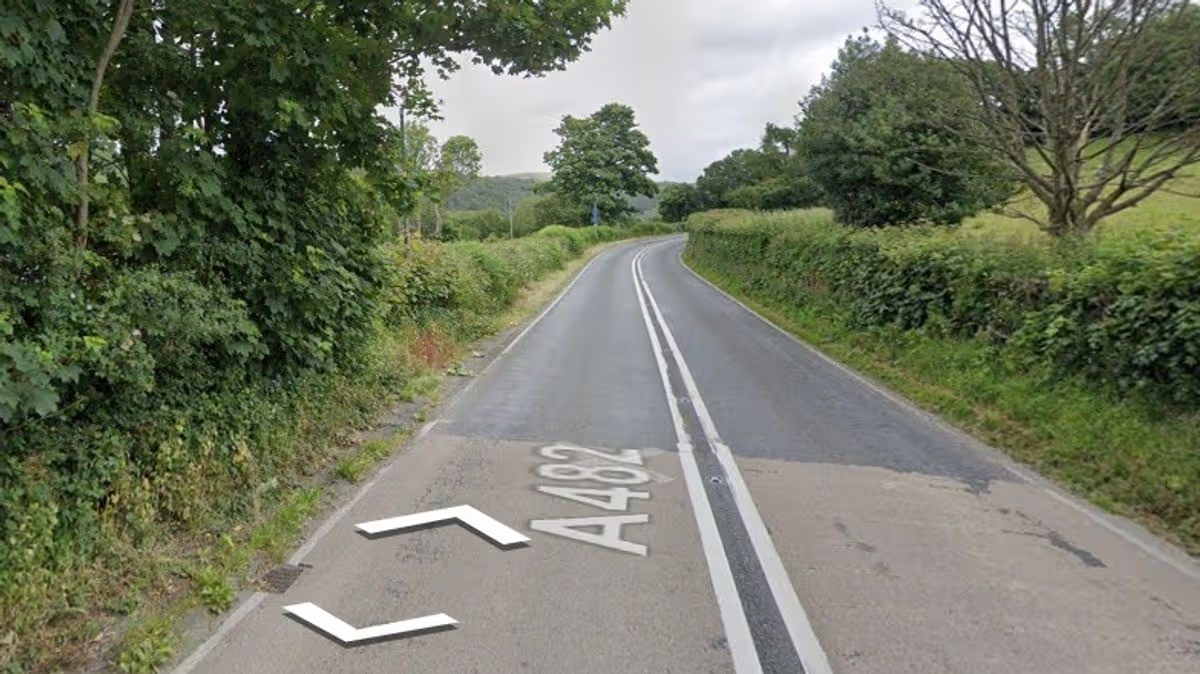
A motorist has died following a two-car crash on the A482 on Tuesday night. Dyfed-Powys Police is appealing for witnesses to, or anyone with information about, a fatal collision on the A482, between Lampeter and Ciliau Aeron.
It took place around 9.30pm on March 24, and involved two cars; a black Renault Clio and black Peugeot 208
Advertisement
Sadly, the driver of the Clio died at the scene. Their next of kin have been informed and are being supported by specialist officers.
The road was closed for collision investigation to take place and was reopened around 5.30am (Wednesday, March 25)
“Anyone with information or dashcam footage that could help officers with their investigation is asked to report it to Dyfed-Powys Police.”
A mothballed carbon dioxide plant is to be reopened with a Government grant of up to £100 million amid fears of shortages caused by the Iran war.
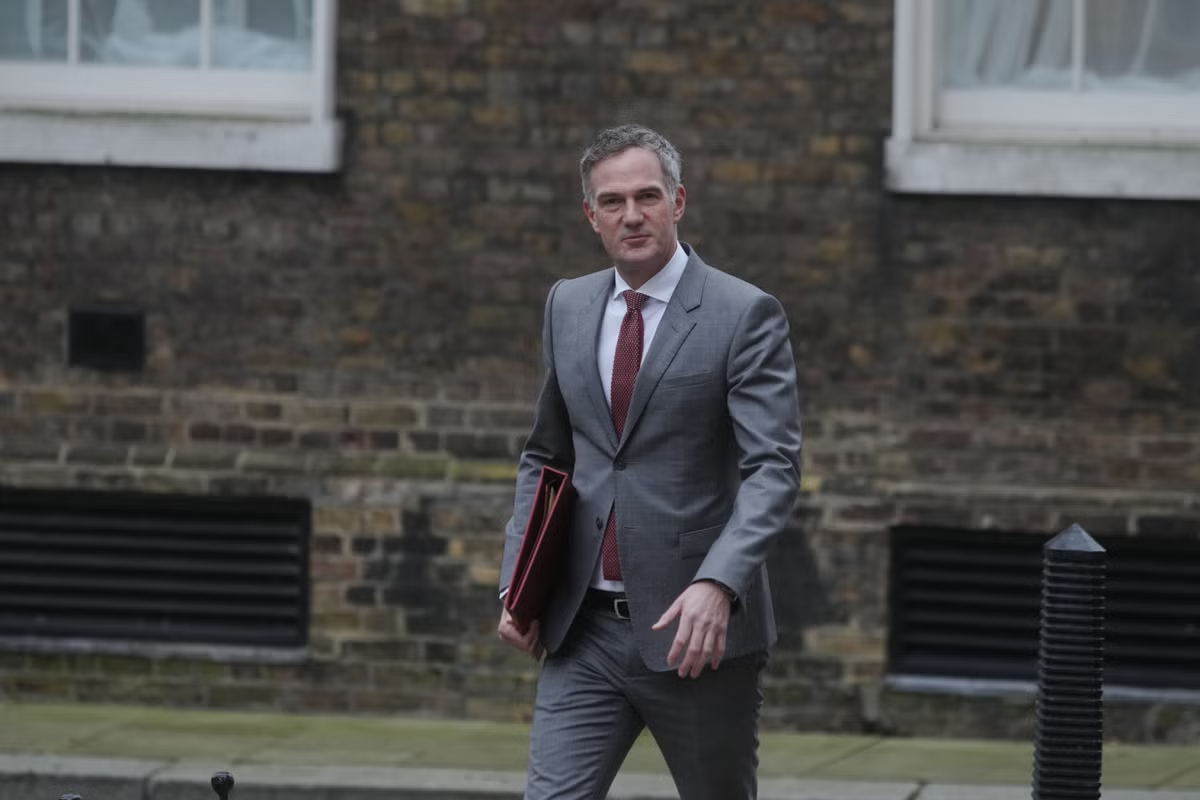
Business Secretary Peter Kyle signed off the grant to reopen the Ensus plant on Teesside, according to the Financial Times.
It is understood the grant will pay to get the plant up and running again for an initial three-month period.
The plant was mothballed last year after a trade deal with the US cut tariffs on bioethanol, its main product.
Advertisement
It will be reopened due to its ability to produce CO2 as a by-product. The gas is vital for several sectors, including drinks and the nuclear industry, but supply has been disrupted thanks to soaring energy costs on other sources such as fertiliser factories.
The grant for the Ensus plant is the first major intervention by the UK Government aimed at tackling possible shortages caused by the Iran conflict.
But fears range much wider than CO2, with former BP executive Nick Butler telling Times Radio the UK could face oil and gas shortages in two to three weeks.
He said: “There will be shortages and I think the Government now should be seriously planning how they’re going to handle that and part of that is maximising supply.”
Advertisement
On Tuesday, Shell chief executive Wael Sawan issued a similar warning at an industry conference.
Ministers continue to insist the supply of petrol remains reliable.
Energy minister Michael Shanks told MPs on Wednesday the Government was “absolutely not” planning for blackouts or petrol rationing, insisting the UK had a “strong and diverse range of supplies”.
The key question remains how long Iran’s effective blockade of the vital Strait of Hormuz will last.
Advertisement
On Thursday, Foreign Secretary Yvette Cooper will urge Iran to reopen the Strait of Hormuz as she travels to the G7 Foreign Ministers’ meeting in France.
She will make clear that the UK will help ensure safe passage for ships through the strait and provide an additional £2m in humanitarian aid to Lebanon.
Ms Cooper is expected to hold talks with counterparts, including US secretary of state Marco Rubio, France’s Jean-Noel Barrot, and Germany’s Johann Wadephul.
The strait remained closed on Wednesday evening, despite Iran’s foreign minister Abbas Araghchi claiming it was open to “non-hostile” shipping.
Advertisement
The conflict continued with Washington saying it would hit Iran “harder” if Tehran refused to accept it had been “defeated militarily”.
White House spokeswoman Karoline Leavitt insisted “productive” talks were continuing between Washington and Tehran.
But Mr Araghchi said in a message on his Telegram channel, translated from Farsi, that there had been “no negotiations or discussions with the American side” and suggested the US had effectively admitted defeat.
He said: “Didn’t they talk about ‘unconditional surrender’ before? What happened now that they are talking about negotiations and calling for them?
Advertisement
“I will explain that there are no negotiations, but the fact that they are mobilising their highest officials to negotiate with the Islamic Republic indicates their acceptance of defeat.”
Crucially, this ruling effectively bypasses the traditional legal shield which Big Tech has used for decades to deflect such claims, commonly known as Section 230.
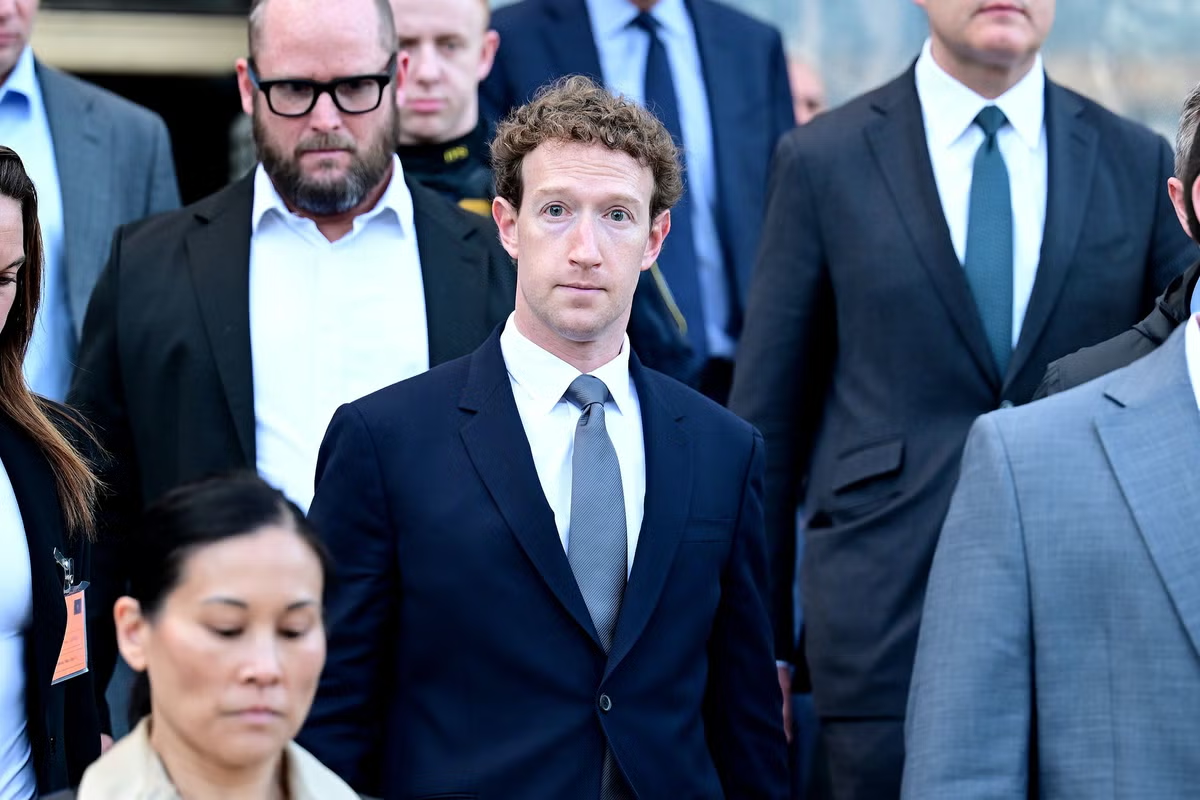
Meta CEO Mark Zuckerberg leaves the Los Angeles Superior Court after testifying on February 18, 2026 in Los Angeles, California as part of the K.G.M. trial (Wally Skalij/Getty Image)
“For years, social media companies have profited from targeting children while concealing their addictive and dangerous design features,” said one of K.G.M.’s lawyers, Joseph VanZandt.
“Today’s verdict is a referendum — from a jury, to an entire industry — that accountability has arrived.”
To be clear, the actual penalties here, while huge for K.G.M., are completely insignificant for such massive companies.
Advertisement
Meta must pay $4.2 million in combined punitive and compensatory damages (roughly 0.02 percent of its annual profit of $22.7 billion), while YouTube must pay $1.8 million (just over 0.005 percent of its $34.5 billion profit last year). By itself, that’s hardly cause to make their accountants quake in their loafers.
But K.G.M.’s is not the only such case. Thousands of similar lawsuits have been filed across the nation by teenagers, parents, school districts, and state governments.
The outcome will be influential at least in California, where courts are treating this lawsuit as a test case. When you multiply those damages accordingly, you’ll soon reach the kind of numbers that make even a multi-trillion-dollar company sit up and take notice.
Together, these cases signal a coming snowdrift of lawsuits against Big Tech, according to Cornell law professor Alexandra Lahav.
Advertisement
“The social media tort litigation is going to be beyond massive,” said Lahav on Bluesky after Wednesday’s verdict. “It will be asbestos level or bigger.”
For decades, tech giants have argued that they enjoy blanket protection from lawsuits like this under Section 230 of the Communications Act.
Advertisement
Section 230 is highly controversial, but it’s also the bedrock of the modern internet. It allows companies and individuals to host — and, crucially, to police — user-generated material online, without being held legally liable for its contents.
That’s what allows social media companies to set their own rules and remove violating posts without being treated as the publishers of those posts. If I falsely smear someone in this article, The Independent could be sued for libel, but if you falsely smear someone in the comments, Section 230 would protect us.
But does this also protect the systems by which these companies distribute that content? Does it protect all the psychological hooks and tricks they use to keep their users scrolling and coming back each day?
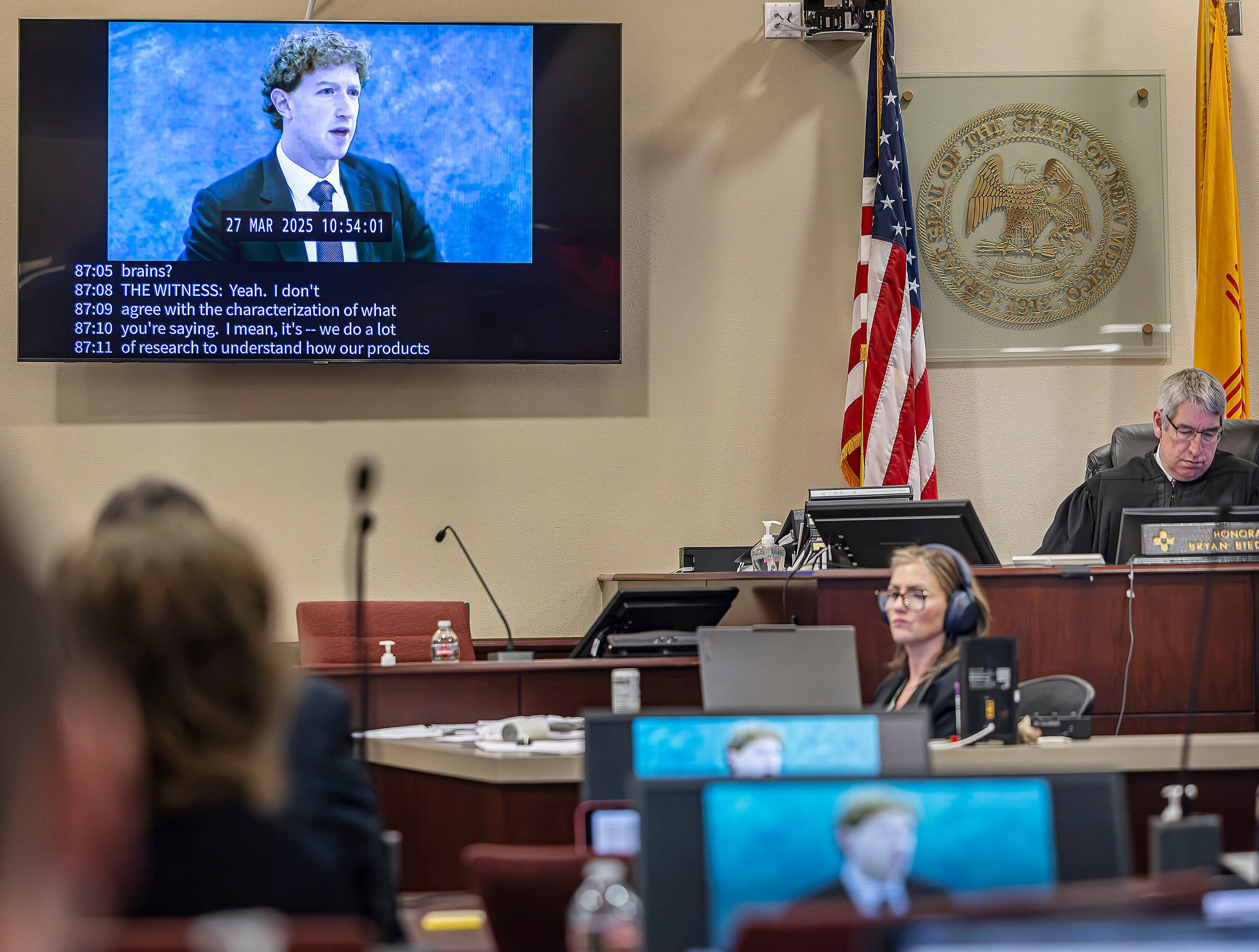
Lawyers played clips from Meta Founder and CEO Mark Zuckerberg’s deposition (Jim Weber/Santa Fe New Mexican via AP, Pool)
K.G.M.’s lawyers argued no. They presented internal documents that showed both companies’ executives were briefed on their products’ damaging effects and warned that their policies were harming children.
“If we wanna win big with teens, we must bring them in as tweens,” said one Meta memo. Another showed that Meta was aware that 11-year-olds were regularly using Instagram, despite its rules requiring a minimum age of 13.
Advertisement
One of them was K.G.M., who testified that said she started using YouTube at 6 years old and Instagram at 11. She said her compulsive app use had damaged her self-worth, isolated her from friends and family, and contributed to her depression and body dysmorphia.
“How do you make a child never put down the phone? That’s called the engineering of addiction,” said K.G.M.’s lawyer Mark Lanier.
The companies countered that K.G.M. had many other problems in her life, noting that her therapist never documented social media as a cause of her mental health problems. They said it was wrong and simplistic to blame social media for wider societal problems.
But, bluntly, it’s easy to see why the jury wasn’t persuaded. While Meta and YouTube are hardly the source of all society’s ills, there is evidence stretching back years of how senior executives repeatedly prioritized growth and profit over safety and harm reduction.
Most of us have used Instagram and YouTube ourselves, so we have personal experience of how compellingly they can play on our brain chemistry. Many Americans, too, have struggled to pull their children away from digital systems that seem precision-engineered to perpetually ensnare their brains.
Advertisement
A Meta spokesperson said it “respectfully disagrees with the verdict” and is evaluating its options. Google said the case had “misunderstood” YouTube, which is “a responsibly built streaming platform, not a social media site.”
The ruling has implications far beyond just these two companies. TikTok and Snapchat were also named in the case, only to settle out of court.
‘All of this could be reversed on appeal’
Meta and Google have shrugged off billion-dollar fines before. But there is now a plausible future timeline where the legal exposure grows expensive enough that they are forced to seriously re-engineer their products.
Advertisement
“There is a long road ahead, but this decision is quite significant,” Clay Calvert, a media law expert at the center-right American Enterprise Institute, told The New York Times.
“If there are a series of verdicts for plaintiffs, it will force the defendants to reconsider how they design social media platforms and how they deliver content to minors.”
That outcome is far from guaranteed. Many have predicted such a reckoning before, only for the “moment” to fizzle. That includes myself, in both 2017 (a “Philip Morris moment”) and in 2021 (a “Lehman moment”).
According to The Guardian, there are 20 more “bellwether” trials scheduled on this subject, whose outcomes might be completely different.
Advertisement
“It is really early to tell the significance of this, because it could all be reversed on appeal,” said Kate Klonick, a law professor and digital policy expert at St. John’s University, on Bluesky.
“This will likely be years before it is final — or not.”
That would actually be similar to what happened to Big Tobacco. Rather than a singular “moment”, it ultimately took roughly four decades for the industry to be brought to heel, from the Sixties to the 2000s.
Even Howard Engle’s victory was partially reversed by an appeals court, limiting its scope and narrowing the path for similar plaintiffs.
Advertisement
Still, rightly or wrongly, this week’s judgments are a potent sign that Americans have lost patience with Silicon Valley’s talking points. If I were them, I’d be brainstorming new ones.








































You must be logged in to post a comment Login