Connect with us

NewsBeat

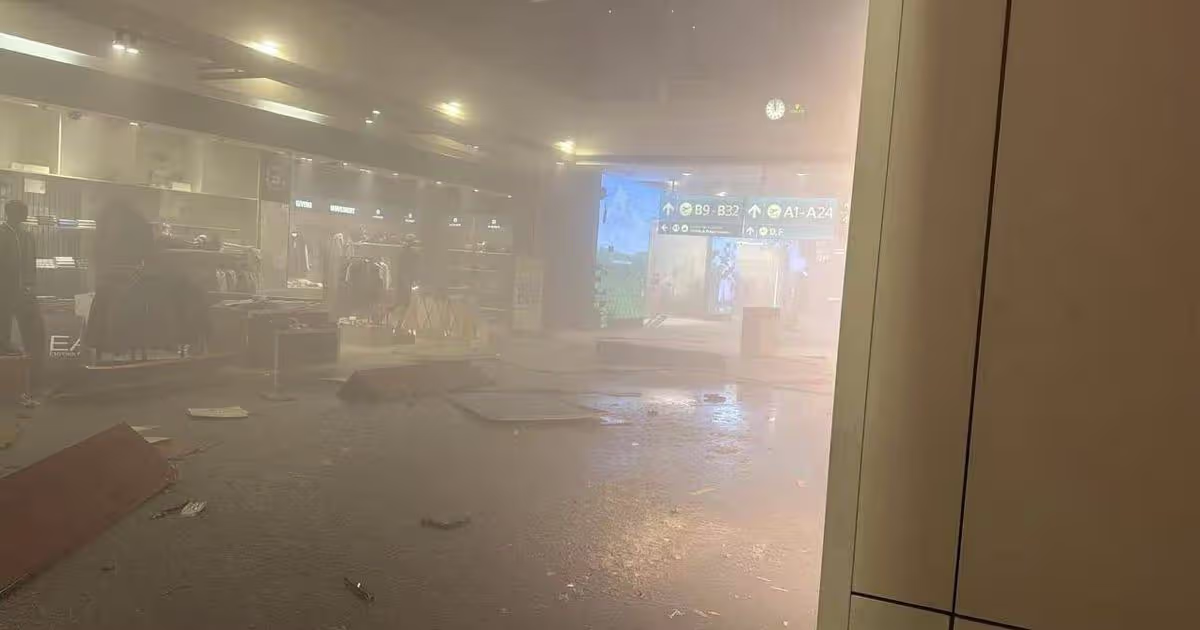
Dubai International Airport incident leaves four injured amid Iran attack reports

Published

on

Daily Record

Dubai Airports confirmed an incident at Dubai International Airport on Saturday night with four people injured and emergency response teams activated

Accounts have emerged of an ‘attack’ at a Dubai airport amidst a wave of retaliatory strikes targeting multiple locations across the Middle East.

Dubai International Airport was the scene of an incident on Saturday evening, Dubai Airports has confirmed this evening (Saturday). Footage and photographs spreading across social media platforms depict individuals, including some with injuries, fleeing the smoke-laden terminal.

Advertisement

Several people sustained injuries during the incident and were given immediate medical attention on site. Dubai Airports stated that further information would be released once more details emerged, reports the Daily Star.

Ensure our latest stories always appear at the top of your Google Search by making us a Preferred Source. Click here to activate or add us as your Preferred Source in your Google search settings.

The development follows Iran’s launch of strikes against various targets throughout the Middle East in the wake of the US and Israel’s Operation Epic Fury.

Authorities in Dubai acknowledged they were dealing with an active situation at the airport. In a statement, Dubai media office said: “Dubai Airports has confirmed an incident at Dubai International Airport (DXB) just moments ago.

Advertisement

“Emergency response teams have been activated immediately, and the incident is being handled in coordination with the relevant authorities.

“This has resulted in four injuries, and the necessary urgent medical assistance has been provided to them.”


Source link

Advertisement
Continue Reading
Click to comment

Leave a Reply

Your email address will not be published. Required fields are marked *

NewsBeat

What weight loss jabs teach us about how appetite works

Published

on

What weight loss jabs teach us about how appetite works

Hunger is often discussed as a matter of willpower. In appetite research, it looks very different. Physiologists who study eating behaviour and metabolism see hunger as a fluctuating biological signal shaped by hormones, digestion, activity and environment. The recent surge of interest in GLP-1 drugs has brought one part of this system into public view.

GLP-1, or glucagon-like peptide-1, is a hormone produced naturally in the gut and plays a key role in controlling blood sugar, appetite and digestion. After eating, it helps signal fullness and slows the rate at which food leaves the stomach, shaping how quickly nutrients enter the bloodstream and how much energy the body takes in.

Appetite regulation begins in the gut rather than the brain alone. Signals from digestion, microbes and nutrient absorption activate hormonal pathways that travel to the brain through the bloodstream and nervous system.

Hunger is shaped by several of these signals. Ghrelin, released from the stomach, stimulates appetite. After food is eaten, levels of GLP-1 typically rise, helping signal satiety. Research shows appetite is closely linked to this increase in GLP-1 and how it communicates with brain regions involved in regulating eating.

Advertisement

Drugs such as Ozempic, Wegovy and Mounjaro are known as GLP-1 receptor agonists. They were originally developed for diabetes treatment and have been used to treat Type 2 diabetes since 2005. More recently, they have been prescribed for obesity management.

These medications activate the same biological pathways as natural GLP-1, but for much longer. Under normal conditions, GLP-1 rises for a relatively short period after eating, typically around two hours. This post-meal phase is when appetite is naturally suppressed and digestion slows. GLP-1 medications extend that state. Rather than simply blocking hunger, they maintain a physiological signal associated with having recently eaten.

This helps explain their impact. By reducing appetite and slowing gastric emptying, they can support sustained weight loss. But they also highlight how dynamic appetite is.

Advertisement

Research in exercise and nutrition shows that hunger does not increase in a simple, linear way with energy expenditure. Intense physical activity can temporarily suppress appetite through shifts in gut hormones, including GLP-1, even as energy needs rise.

Appetite often returns later as the body re-balances. In some cases, particularly after sessions such as high intensity intermittent training (HIIT), cravings for food can increase substantially.

Typically, weight loss of up to 5 to 8% can be achieved with a GLP-1 receptor agonist, although outcomes vary and tend to occur gradually over months. Medical advice should always be sought before starting treatment, and nutritional strategies should be discussed with a dietician or qualified nutritionist.

The rise of these medications has also reshaped how obesity is understood. For decades, weight was often framed primarily in terms of personal responsibility. GLP-1 therapies instead highlight the biological regulation of appetite and metabolism. They shift attention toward physiology and the gut-brain axis, rather than willpower alone, and have influenced public conversations about stigma, treatment access and the medicalisation of weight management.

Advertisement

Yet appetite reduction does not remove the body’s need for nutrients and fluids. When food intake falls, the challenge becomes maintaining nutritional balance. Hydration remains essential, as the body can lose around 2 to 3 litres of fluid each day through urine, sweat, breathing and bowel movements. Replacing this fluid supports circulation, temperature regulation and organ function. Hydration therefore remains fundamental even when appetite is reduced.


À lire aussi :
Weight loss drugs make it harder to get the nutrients you need – here’s what to do about it


Electrolytes also play a central role in nerve activity, muscle contraction and fluid balance. These charged minerals, including sodium, potassium, chloride, magnesium and calcium, are present in everyday foods and drinks, but reduced intake can lower overall levels.

Maintaining muscle mass is another consideration. When calorie intake drops substantially, the body may begin to break down muscle tissue for energy. Preserving muscle supports metabolic health and physical function. Protein intake of around 1.2 g per kg of body weight per day is often recommended, with sources including eggs, dairy, legumes, tofu and lean meats.

Advertisement

Changes in eating patterns can also affect digestion. Reduced food intake increases the likelihood of constipation, particularly if fibre consumption falls. Foods that are high in fibre help maintain bowel health by supporting regular movement and gut function.

Like most medications, GLP-1 drugs can have side effects. These may include nausea, abdominal discomfort, fatigue, bloating, constipation or diarrhoea. In some cases, there may be muscle loss and gallbladder problems. Ongoing monitoring is therefore important.

Another key question is what happens when treatment stops. Research suggests weight regain is common once medication is discontinued. When the prolonged satiety signal is removed, appetite-regulating hormones return to previous patterns. The biological drive to regain lost weight can re-emerge, highlighting that these drugs modify appetite while they are taken but do not permanently reset the systems that regulate it.

Advertisement

The wider implications extend beyond individual treatment. Appetite is influenced by multiple factors, including gut hormones, microbiome activity, physical activity, circadian rhythms and metabolic health. GLP-1 therapies interact with this wider system rather than replacing it. They also raise questions about long-term use, access and how food environments might respond to widespread appetite suppression.

From a physiological perspective, the significance of GLP-1 medications lies not only in their clinical effects but in what they reveal. Hunger is not a fixed trait. It is a fluctuating signal shaped by gut-derived hormones, digestion, activity and environment. These drugs amplify one part of that system by extending the post-meal state, but they do not replace the broader mechanisms that govern appetite, nutrition and metabolism.

Weight management therefore remains embedded in a wider biological and social context. Hormones matter, but so do daily routines, physical activity, food availability and long-term health patterns. GLP-1 therapies highlight how strongly biology shapes hunger, while also underscoring how complex and interconnected appetite regulation really is.

Advertisement

Source link

Continue Reading

NewsBeat

Belfast anti-war activists holding ‘Stop Bombing Iran’ rally

Published

on

Belfast Live

Missile strikes in the region were sparked by a joint US-Israeli attack on Iran

Anti-war activists in Belfast are planning an emergency rally calling for an end to the bombing of Iran.

Advertisement

The ‘Stop Bombing Iran’ rally will take place on Monday, March 2, at 6pm at Belfast City Hall. Speakers will include human rights activists, trade unionists, and academics.

It comes as missile strikes continue to rock the region, sparked by a joint US-Israeli attack on Iran. Iran has retaliated with missile attacks on US bases in the Middle East.

READ MORE: Dubai’s Fairmont Hotel bursts into flames after ‘missile attack’ on The PalmREAD MORE: Foreign Office warns UK citizens to shelter as flights cancelled after Iran strikes

Speaking in support of the rally, Gerry Carroll MLA said: “This bloodthirsty, unprovoked attack on Iran is an alarming escalation of US imperial aggression, and a further step towards fulfilling Israel’s decades-long dream of imperial domination in the region.

Advertisement

“The death and destruction set to follow will be catastrophic. People across the world are sick of endless imperial wars and violence, and the false pretences used to justify bloodshed.

“I encourage everyone who is rightly appalled by the behaviour of these two rogue states to attend this emergency rally, and send a clear message to the US and Israel – stop bombing Iran!”

After the strikes, the Foreign Office warned against all travel to Israel while embassies in Bahrain, Qatar, Kuwait and the UAE have advised British nationals to shelter in place.

Northern Ireland’s Deputy First Minister Emma Little-Pengelly expressed concern for the safety of locals living in the region.

Advertisement

She posted on X: “I will be receiving a security briefing on the situation in Iran and impacts in the Middle East as dep First Minister this afternoon from the UK Government and their team.

“I will also be raising the safety and the advice for those from Northern Ireland living, working or visiting the region – and also for those who may be due to travel to the region in the next few weeks.”

SDLP Leader Claire Hanna MP also expressed concern about developments and called for calm.

She said: “I am deeply alarmed by the escalating military confrontation between Israel and Iran, including devastating reports that an airstrike has hit a school in southern Iran, killing dozens of children.

Advertisement

“I am also concerned by reports that UK military aircraft are in the skies over or near Iran.

“The UK must urgently push for de-escalation, press for an immediate ceasefire, and work with international partners to prevent a wider war. Diplomacy, not further military action, must be the focus.”

Want to see more of the stories you love from Belfast Live? Making us your preferred source on Google means you’ll get more of our exclusives, top stories and must-read content straight away. To add Belfast Live as a preferred source, simply click here.

Source link

Advertisement
Continue Reading

NewsBeat

Manchester United: Michael Carrick not interested in personal duel with Crystal Palace boss Oliver Glasner

Published

on

Manchester United head coach Michael Carrick

Michael Carrick says the chance to inflict damage on one of the men thought to be a contender to be Manchester United‘s next head coach will not be a motivating factor in Sunday’s game against Crystal Palace.

Palace manager Oliver Glasner is second favourite for the permanent role with most bookmakers, despite a troubled campaign in which he has openly criticised his club’s board, lost in the FA Cup to Macclesfield and fallen out with supporters amid a struggling Premier League campaign.

Interim Manchester United boss Carrick is now the favourite, thanks to five wins and a draw from his six games in charge.

It is a record which, after Aston Villa’s shock defeat at Wolves on Friday, means United will go third in the table for the first time since the end of the 2022-23 campaign if they beat Palace at Old Trafford.

Advertisement

That is enough of a motivation for Carrick, who says there is no personal element to his preparations at all.

“It is not something that would cross my mind until you mentioned it,” he said.

“It doesn’t make any difference whatsoever.

“I have total respect for Crystal Palace and Oliver, in terms of the team that they are and the role they are doing. But it’s the next game for us.”

Advertisement

Palace were ahead of United in the table when the two sides met on 30 November.

One influential figure in United’s 2-1 success that day, Matthijs de Ligt, has not played since because of a back injury. Fellow centre-half Lisandro Martinez missed Monday’s win at Everton with a calf problem which Carrick regards as “a small issue” that will not keep the Argentine out “for very long”.

With fifth-placed Chelsea due to play Arsenal and Aston Villa in their next two games, this is looking like a chance for United to cement their position in the Champions League places.

It is an aim few thought likely when Ruben Amorim was sacked in January.

Advertisement

“We are in a decent spot,” Carrick said. “We feel like we are moving forwards, but it’s just about what’s in front of us, and trying to get to where we want to be, which is a little bit higher in the league.

“That’s literally all I’m worried about in the moment.”

Source link

Advertisement
Continue Reading

NewsBeat

BRIT Awards 2026: Viewers slam ‘rushed’ in memoriam tribute as ‘worst ever’

Published

on

Daily Mirror

The Brit Awards 2026 was hosted at Manchester’s Co-op Live, marking the first time the ceremony has taken place outside London since 1977, with Tim Burgess leading tribute to Stone Roses’ Mani

The Brit Awards 2026 has sparked criticism over what some have described as a ‘rushed’ tribute segment. Manchester’s Co-op Live played host to tonight’s BRITs, marking the first occasion the prestigious ceremony has ventured beyond the capital since its inception in 1977.

Advertisement

The evening delivered standout moments, including Olivia Dean dominating the accolades and a handful of censored incidents. Among the night’s highlights was the In Memoriam tribute, which featured The Charlatans icon Tim Burgess paying homage to The Stone Roses’ legendary bassist Mani.

Mancunian music great Gary ‘Mani’ Mounfield received a heartfelt remembrance from his mate Tim after his passing last November, when he died peacefully during his sleep at 63, following complications from ‘respiratory issues’ related to a chronic lung condition.

Ensure our latest headlines always appear at the top of your Google Search by making us a Preferred Source. Click here to activate or add us as your Preferred Source in your Google search settings.

Advertisement

Tim, 58, took to the stage saying: “I’m here tonight to pay tribute to a good friend of mine. I know he was loved by so many of you here tonight and many more watching on TV. Mani was a kid from a few miles up the road. He changed music and inspired generations ahead of him. These songs he recorded will be his legacy, along with his unforgettable smile and uncontainable enthusiasm.”, reports the Manchester Evening News.

“He was truly one of the phenomenal ones, and they are far and few between. So, I just want you to think about Mani for a moment,” he concluded as the audience erupted in applause. “We can cherish the thought that we got to experience our time and his time together. Let’s take a few moments to remember Mani and some of the people who we lost in the music industry, who we’ve lost in the last year.”

A tribute montage followed, honouring music legends who have recently died, with numerous names flashing across the screen. However, the segment sparked backlash from viewers, who flocked to X to brand it ‘rushed’.

@SufcLee posted: “That in memoriam was bit awful. seemed a bit rushed and I assumed it was building to something that never happened #BRITs #Brits2026.@karendiamond1 concurred: “That was the most rushed and insincere award show “in memorium” segment I’ve seen,” whilst Gloria Gardner added: “Worst memorial ever to musical artists deceased #Brits2026 may have not bothered. Seemed like a fleeting tribute.

Not even a photo of Ozzy, the names flashed by so fast I could not even spot them all. #disrepectful”@bookmadmum shared similar sentiments: “That was the worst memorial part of the Brits I’ve ever seen – if you are going to honour those we have lost do it properly and with dignity and don’t get anyone to introduce it if they can’t string a sentence together #Brits2026.

“@FIOatHeart also commented: “What on gods green earth was that memorial … a couple of clips with a tonn of names popping in and out quick is not a memorial. All them names on there, deserved a million times more of a memorial montage, like they usually have.

Do better. ” @ZODl4C commented: “that was terrible, who thought it was a good idea to do the memorial section like that #Brits2026 #brits #BRITsAwards,” whilst @xmaaisieex remarked: “Pretty weak memorial moment from the #BRITs #BRITsAwards.”

Advertisement

Follow our live blog for the latest BRIT Awards updates by clicking here.

Source link

Continue Reading

NewsBeat

‘I’m a GP and I’ve removed one item from my kitchen to slash cancer risk’

Published

on

Daily Mirror

Dr Asiya Maula says people can make their home environment lower-risk

A GP has revealed how Brits can slash their cancer risk at home by making various changes. Dr Asiya Maula explained that, while no household can ever be entirely risk-free, minimising daily exposure to harmful toxins may help reduce cumulative danger over time.

Advertisement

She emphasised it wasn’t about creating fear or alarm, but rather raising awareness – particularly as Brits now spend more time indoors than ever before. Dr Asiya Maula, a GP at The Health Suite in Leicester, said much of the risk stems from items people typically consider harmless.

“Cancer risk isn’t about one single thing,” she said. “It’s about what the body is dealing with every day, for years or even decades.”

How Brits can cut their long-term cancer risk at home

Reconsider plastic in the kitchen

Plastic food containers, bottles and cling film can leak chemicals, particularly when heated or deteriorated.

“Some plastics contain chemicals that can interfere with hormone signalling,” Dr Maula said, explaining that hormones play a crucial role in how cells grow and divide, so repeated disruption over time may heighten cancer risk. She recommends swapping to glass or stainless steel and never microwaving food in plastic.

Advertisement

Boost indoor air quality

Indoor air can frequently be more contaminated than outdoor air due to cooking fumes, candles, sprays and inadequate ventilation. “Long-term exposure to indoor air pollutants may contribute to inflammation in the body,” Dr Maula said, emphasising that simply opening windows each day and running extractor fans can genuinely help.

Watch what you clean with

Numerous household cleaning products are packed with aggressive chemicals formulated to eliminate bacteria and cut through grease.

“These products exist to destroy biological material,” she said. “Repeated exposure in enclosed spaces may irritate the body over time,” suggesting gentler, unscented alternatives wherever feasible.

Advertisement

Think twice about pesticides indoors

Pesticides aren’t confined to agricultural settings – they’re commonplace in domestic environments too, typically in sprays and various treatments.

“They’re designed to kill living organisms,” Dr Maula said. “The concern is what low-level exposure might be doing to human cells, particularly for children,” recommending thorough washing of fruit and veg whilst minimising chemical pest control inside the home.

Dial down the ultra-processed foods

What families keep in their cupboards and prepare in their kitchens matters significantly, with ultra-processed foods associated with obesity, insulin resistance and persistent inflammation – all recognised cancer risk factors. Dr Maula emphasised the goal isn’t absolute perfection.

Advertisement

“It’s about reducing the overall toxic load,” she said. “Small changes, done consistently, can add up over time – and making your home a lower-exposure environment is one practical way to protect long-term health.”

Ensure our latest headlines always appear at the top of your Google Search by making us a Preferred Source. Click here to activate or add us as your Preferred Source in your Google search settings.

Source link

Advertisement
Continue Reading

NewsBeat

I tried every supermarket Welsh cake to find the best and the results were shocking

Published

on

Wales Online

Have you got a favourite?

They’re a national treasure and a tea-time staple this time of year. So when it comes to supermarket Welsh cakes, which ones are actually worth your pound?

Advertisement

I tasted my way through seven of the most widely available packs on shelves across Wales – from supermarket own brands to established Welsh bakeries – judging them on flavour, texture, value and authenticity.

Some were buttery perfection. Others… should perhaps stay on the shelf.

Before we start, you may be wondering what qualifies me to review a Welsh cake. To that I say, I’m Welsh, what other qualifications might one need for such a job? For the latest restaurant news and reviews, sign up to our food and drink newsletter here

Now, here’s how they ranked.

Advertisement

7. Braces

Price: £1.30

Verdict: 3/10 Dry and lacking flavour

By some distance, Braces were the weakest of the lot. Which for me, is perhaps the biggest surprise of the test.

Advertisement

These were quite noticeably drier than the others. On breaking one open, the crumb looked pale and slightly dusty. The mouthfeel confirmed it – crumbly in the wrong way, absorbing moisture rather than offering softness.

Dry, crumbly and short on sultanas, these were difficult to finish. The texture was the main issue – lacking the soft, buttery bite that defines a proper Welsh cake. A disappointing and rare misfire from a well-known Welsh bakery name.

6. Lidl – Rowan Hill Bakery

Price: £1.09

Advertisement

Verdict: 4/10 Synthetic taste

These look pale and slightly uniform in a way that hints at mass production.

The aroma is faint, and on tasting there’s an artificial note – a sweetness that feels processed rather than buttery. The fruit lacks plumpness, and the overall flavour profile feels one-dimensional.

Texture is slightly rubbery, with less of that crumbly tenderness expected of a good Welsh cake.

Advertisement

They’re affordable, yes, but the compromise in flavour is noticeable, and you can get better for the same price elsewhere.

5. Tesco

Verdict: 5.5/10 Overly sweet

At first glance, these look promising. Evenly shaped, neatly browned, dusted lightly with sugar. But for me, the flavour balance is off.

Advertisement

The sweetness dominates from start to finish, overpowering the buttery base. Instead of richness, you get sugar. Instead of depth, you get surface-level sweetness.

The texture is acceptable – not dry, but not especially tender either. There’s a slight density to the crumb that makes them feel heavier than they need to be.

If you have a particularly sweet tooth, they may satisfy. For a more traditional Welsh cake, however, they miss the mark.

4. Morrisons

Price: £1.75

Verdict: 7/10 Pleasant but perhaps too sweet for some

These lean sweet – noticeably so – but not to the point of being overpowering. The texture was reasonably soft and they avoided the dreaded dryness.

If you prefer a sweeter cake with your cuppa, these might suit you.

Advertisement

3. Marks & Spencer

Price: £2.10

Verdict: 6.5/10

You’d expect excellence from M&S – and these were decent. Neatly made and visually appealing, with a nice hint of nutmeg. Not offensive, not dry – but not memorable.

Advertisement

2. Tan y Castell Bakery

Price: £1

Verdict: 7.5/10 Consistently good

A very strong second place.

Advertisement

These had good moisture, a decent sultana ratio and none of the dryness that plagues some supermarket versions. Not overly sweet, not bland – just a solid, dependable Welsh cake.

They may not have quite the buttery depth of Popty, but they’re not far off and a safe bet if you spot them in store, especially when they are priced at just £1 for 6.

1. Popty Bakery

Price: £1.35

Advertisement

Verdict: 8/10 Outstanding

These were head and shoulders above the rest. Truly lush. At £1.35 a pack, they were also among the cheapest – but you wouldn’t know it from the taste.

Rich, buttery and generously packed with sultanas, they had that proper homemade flavour that instantly transports you to a kitchen in full baking mode.

The texture was spot on: soft without being doughy, moist without being greasy. Every bite felt balanced.

Advertisement

If you want the best supermarket Welsh cakes in Wales, I’d reach for Popty Bakery. They’re proof that quality doesn’t have to cost more, and the closest you’ll get to a bakery-fresh Welsh cake off the shelf.

After ranking Popty Bakery as number one, I did a bit of research on the brand. They are a family-run business founded in the small village of Llanllechid, first opened at the beginning of the 1900s. No wonder they have it all figured out.

Remember, as with all great food debates, taste is personal – and we expect strong opinions.

So tell us, have we missed your favourite? Or is there something else you would like me to review? You can let me know by emailing holly.morgan@walesonline.co.uk.

Advertisement

Source link

Continue Reading

NewsBeat

Paranoia and absolute power: Ali Khamenei led Iran with supreme self-confidence | World News

Published

on

Ayatollah Ali Khamenei speaking in Tehran in January 2026. Pic: Reuters

Ayatollah Ali Khamenei ruled Iran for decades, fuelled by paranoia, absolute power and a belief in his own divine destiny.

He was the country’s supreme leader, and he led with supreme self-confidence.

An arch foe of Donald Trump, he was described by the US president as “one of the most evil people in history”.

Mr Trump called the lethal strike on Khamenei the “single greatest chance for the Iranian people to take back their Country” – inciting Iranians to bring about regime change.

Advertisement

Iranian state media confirmed the 86-year-old’s death but did not specify the cause.

Khamenei was just 50 years old when he was appointed as successor to Iran’s first supreme leader, Ruhollah Khomeini.

The role he inherited was already endowed with enormous control, yet Khamenei added to it. The Iran he moulded revolved entirely around him.

Image:
Khamenei became supreme leader in 1989. Pic: WANA /Reuters

His regime faced many protests and was deeply unpopular with many Iranians. But the network of secret informants and guards that he created, overseen by the loyal Revolutionary Guard, held sway.

Advertisement

Most were too scared to protest, not least because they saw what happened to those who did openly express dissent.

In 2022, for instance, protests sprang up after the death, in police custody, of Mahsa Amini, the young woman accused of violating strict dress codes.

Khamenei and his faithful security forces were violent in their response.

More than 7,000 people were killed during the unrest, according to one human rights group. Nearly 53,000 protesters were believed to have been arrested.

Advertisement
A demonstrator burns a picture of Khamenei outside the Iranian embassy in London. Pic: Reuters
Image:
A demonstrator burns a picture of Khamenei outside the Iranian embassy in London. Pic: Reuters

Yet Khamenei was as defiant as he was indifferent, saying at the time “enemies” who thought they could “uproot the tree of the Islamic Republic” were “completely wrong”.

He was driven by a dogmatic certainty that there was a path that needed to be followed, regardless of the consequences.

Evolution of an interest in religion and politics

Khamenei was born and raised in Mashhad, home to Iran’s holiest shrine. His childhood saw him receive a religious education that he combined with an interest in politics.

Khamenei at a meeting in Tehran in October 2025. Pic: Reuters
Image:
Khamenei at a meeting in Tehran in October 2025. Pic: Reuters

Khamenei joined a religious opposition movement aimed at overthrowing Iran’s monarchy, many years before the 1979 revolution that would eventually usher in the Islamic Republic.

He played a key part in that revolution and was a trusted, close confidant of Ayatollah Khomeini, earning a succession of significant roles. In 1981, Khamenei survived an assassination attempt that cost him the use of his right arm. Later that year, he was elected president with 97% of the vote – the previous president had been assassinated.

Advertisement
Khamenei and his predecessor Ruhollah Khomeini on a mural in Tehran in 2025. Pic: Reuters
Image:
Khamenei and his predecessor Ruhollah Khomeini on a mural in Tehran in 2025. Pic: Reuters

Khamenei served two terms as president before assuming the role of supreme leader when Khomeini died.

He was not a clear-cut choice, lacking the religious credentials that the constitution demanded, but in the end, the constitution was changed and, despite his own protestations of unworthiness, Khamenei took on the position.

A proposal to share power among a council, in order to maintain social unity, was shelved.

A cult of personality

His decades in power were characterised by a cult of personality, which Khamenei absolutely encouraged, and by his ability to quickly load all of Iran’s institutions with leaders who were absolutely loyal to him.

Advertisement

His decrees were absolute; loyalty was expected. Iran’s economy meandered and declined, particularly as he diverted billions and billions of dollars towards developing a nuclear programme that placed him at odds with so many Western powers, and which led to punitive sanctions that hobbled his nation.

Kashmiri Shi'ite Muslims brandishing pictures of Khamenei at a pro-Iran rally. Pic: Reuters
Image:
Kashmiri Shi’ite Muslims brandishing pictures of Khamenei at a pro-Iran rally. Pic: Reuters

A Khamenei supporter during a pro-government rally in Tehran. Pic: Reuters
Image:
A Khamenei supporter during a pro-government rally in Tehran. Pic: Reuters

A nuclear deal was signed in 2015 to limit Iran’s activities in return for the lifting of trade restrictions, but Iranians saw no improvement, again taking to the streets in frustration at life under sanctions, with now familiar personal grievances against their leader.

Read more:
Khamenei admits thousands died in Iran protests
Analysis: How the Iran uprising unfolded

The deal eventually unravelled under President Trump, leaving Iran’s economy isolated and the supreme leader furious.

“Trump will die and his body will turn into ashes and food for worms and ants, but the Islamic Republic will continue to stand”, Khamenei said of Trump with a typical rhetorical flourish. America was the “Great Satan” in Khamenei’s mind.

Advertisement
Ayatollah Ali Khamenei speaking in Tehran in January 2026. Pic: Reuters
Image:
Ayatollah Ali Khamenei speaking in Tehran in January 2026. Pic: Reuters

Israel was the “Little Satan”, the country he vowed to destroy.

The supreme leader’s later years of life saw Iran form an Axis of Resistance, united against Israeli and American influence in the Middle East.

Under his watch, Iran armed Russia with Iranian-made drones to fire at Ukraine, and Tehran bankrolled its two main proxies in the region, Hezbollah and Hamas, to target its sworn enemy, Israel.

Khamenei supported Hamas’s 7 October attacks and encouraged and bankrolled Hezbollah’s subsequent assaults from Lebanon.

Advertisement

He backed the Houthis in Yemen, as well as other insurgent groups across the region and then launched his own missile strikes on Israel. But when Israel responded, with a precision and determination that came from years of planning, Khamenei suddenly seemed to have no answers.

The furious rhetoric was still there, but the air of invulnerability seemed to have slipped away. The supreme leader’s supreme self-confidence no longer seemed so assured.

The world has changed profoundly since Ali Khamenei took power. How, when and by whom he is replaced is a question of huge significance: for Iran, the Middle East and across the globe.

Advertisement

Source link

Continue Reading

NewsBeat

Government consultation on children’s online safety to look at AI chatbots

Published

on

Government consultation on children’s online safety to look at AI chatbots

The initiative, which is to launch next week, will seek advice from experts, parents, young people, teachers, and industry representatives on which measures should be implemented to improve online safety for children, a spokesperson for the Department for Science, Innovation and Technology (DSIT) said on Saturday.

Source link

Continue Reading

NewsBeat

Mum who ‘killed her three kids’ after sending husband for takeaway is paralysed

Published

on

Daily Record

A woman accused of killing her three children before throwing herself out of a window has appeared in-person in court for the first time.

A mum has appeared in-person in court for the first time accused of killing her three children before throwing herself out of a window. Lindsay Clancy, 35, asked husband Patrick if he could go to a nearby chemist and pick up some medication for one of their children on his way for a takeaway – but in the time he was out of the house, his three children – Cora, 5, Dawson, 3, and Callan, 8-months-old – all died.

Advertisement

Lindsay has been accused of strangling her three children with fitness bands in the basement of their home, and she has pleaded not guilty by reason of insanity. After the alleged crime, she jumped out of her bedroom window, and became paralysed below the neck. She has previously appeared at court hearings via-video link from hospital, where her parents have been visiting her, but last week she made her first in-person appearance in a wheelchair.

Her legal representative has asked for the trial to be split into two parts, the first which will examine her alleged role in the deaths of her children, and the second which would take place if she is found guilty of their murder. This next trial would interrogate and decide if she was suffering from post-natal psychosis at the time, reports the Mirror.

Her mother, Paula, who has been visiting Lindsay at the Tewksbury State Hospital where she has been receiving treatment, told news outlets about her daughter: “She’s a lovely mother, she always has been”.

Advertisement

Lindsay’s father has also been going to see his daughter on a daily basis at the hospital in Massachusetts. Her husband Patrick has launched a civil wrongful death suit against Lindsay’s former nurse practitioner and psychiatrist, accusing them of overprescribing her medications “to the point where she heard voices,” The Sun reports.

Lindsay had reportedly been given antidepressants and mood stabilisers, and was on 12 different medications at the time of her children’s deaths. Just weeks before she had left a residential facility where she had spent five days being treated for mental health issues and had been given two new prescriptions.

It’s claimed that Patrick was not informed that Lindsay was so unwell she should not be left alone. Her legal team also alleges that some of the medications cause severe side effects, including “homicidal and suicidal ideation.”

Advertisement

In December 2022, she was evaluated by medical professionals for post-natal depression and was told she did not have the symptoms that indicated she had developed it, but later that month she admitted she was having suicidal thoughts and thinking about hurting her children, which her husband Patrick reported to the police.

On January 1 2023, she admitted herself to McLean Psychiatric Hospital in Belmont, where she spent five days. Upon leaving there was no record of an indication that she was a danger to other people or herself.

Just three weeks later, Patrick told a friend who had come round for dinner that Lindsay was struggling intensely. The following day, January 23, she wrote a note to herself admitting she has “a touch of postpartum anxiety.”

The next day would be the last of her three children’s lives. It began filled with the usual appointments and outings that a young mother might regularly undertake: Lindsay took her eldest child to the doctor, and then played in the snow with her kids in the afternoon. She called a pharmacy enquiring about a laxative for one of the children, and asked her husband to pick it up while he went to grab them a takeaway from a local restaurant.

Just after 5.30pm he spoke with Lindsay on the phone and she confirmed which would the right medication to get for their child. Half an hour later he came back to the property they lived at in Duxbury, Massachusetts, to find “silence”.

Advertisement

The door to the couple’s bedroom was locked and he claimed that when he got inside the room the window was open and there was blood on the floor. Lindsay lay severely injured on the ground outside.

He called the emergency services and asked his wife where the children were: he found their bodies in the basement. He tried to revive his children but was unsuccessful, telling police who arrived “she killed the kids”.

Lindsay has alleged that she heard voices in her head that day and claimed that a man told her to kill her children. She has been on suicide watch in hospital after her arrest and her full trial is due to take place in July at Plymouth Superior Court, US, where it will be decided if she had mental capacity and legal responsibility.

Advertisement

For emotional support you can call the Samaritans 24-hour helpline on 116 123, email **jo@samaritans.org, visit a Samaritans branch in person or go to the Samaritans website.

Get more Daily Record exclusives by signing up for free to Google’s preferred sources. Click HERE.

Source link

Advertisement
Continue Reading

NewsBeat

How US-Israel strikes on Iran unfolded in 90 seconds

Published

on

How US-Israel strikes on Iran unfolded in 90 seconds

The US and Israel launched attacks across Iran on Saturday, with US President Donald Trump later saying Iranian Supreme Leader Ayatollah Ali Khamenei is dead.

Israeli Prime Minister Benjamin Netanyahu said Khamenei’s compound in Tehran had been destroyed in a “powerful, surprise strike”.

Iranian authorities have not confirmed Khamenei’s death, and Iranian news agencies have reported he is “steadfast and firm in commanding the field”.

Iran responded to the US-Israel attack by launching missiles and drones towards Israel and four Gulf Arab countries which host US military bases: Bahrain, Kuwait, Qatar and the UAE.

Advertisement

Video produced by Amy Walker.

More on this story.

Source link

Advertisement
Continue Reading

Trending

Copyright © 2025