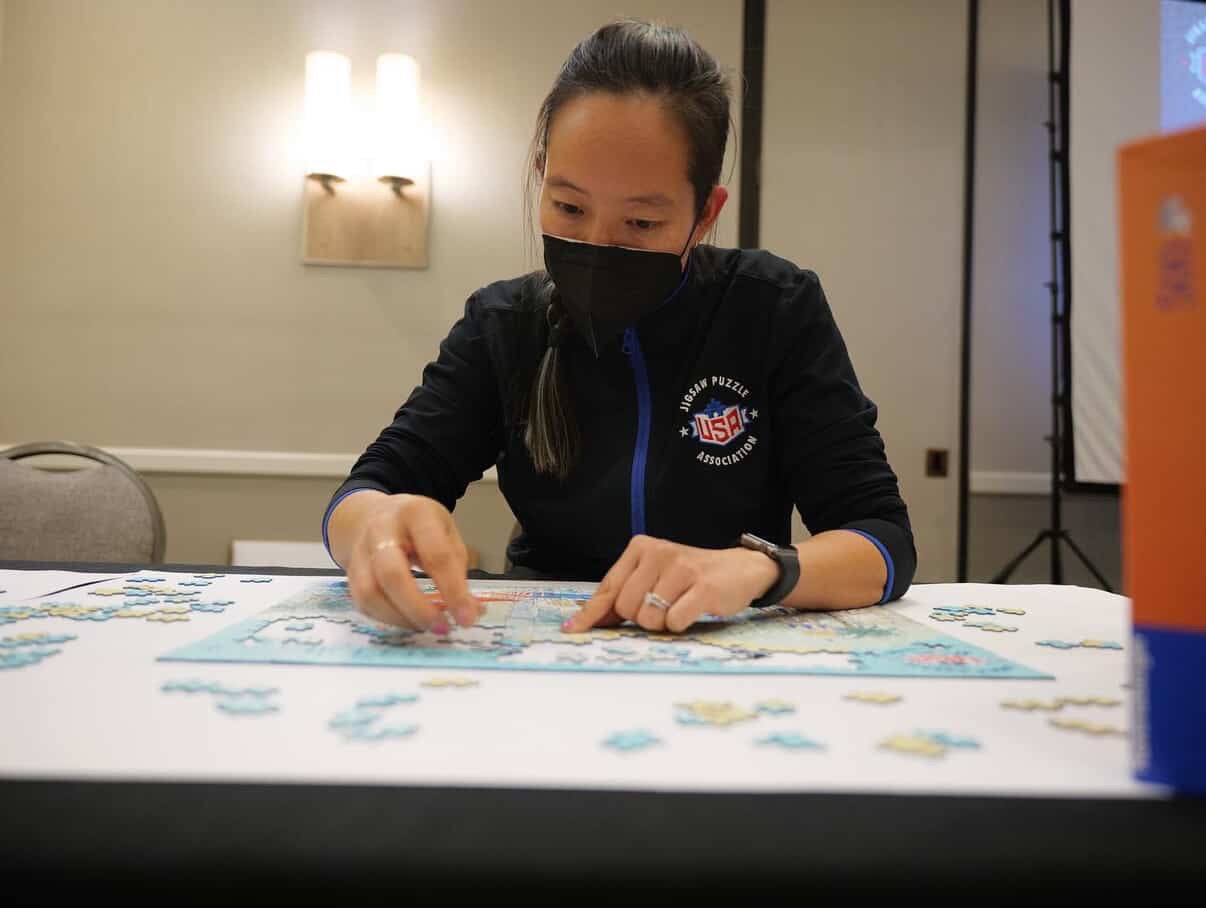
Hunched over a table in a hotel conference room, 42-year-old Yvonne Feucht snaps the final blue jigsaw piece into place, revealing a vibrant, beachy collage of San Diego landmarks. It took her just 54 minutes and 41 seconds to complete. Instead of the quiet satisfaction that usually ensues after finishing a jigsaw, the room erupts in cheers as Feucht raised her hands over her head, letting out a sigh of relief. The Los Angeles-based TV and film camera operator had just become the inaugural champion of the 2022 USA Jigsaw Puzzle Nationals — America’s first-ever major competitive puzzling tournament.
This weekend, Feucht returns to try to reclaim her championship title at the 2026 edition of the Nationals. Hosted by the USA Jigsaw Puzzle Association, the three-day event, taking place in Atlanta from March 27 to 29, will welcome hundreds of puzzlers from around the world and just as many zealous spectators. Consisting of three events: individuals, pairs and teams of four, the competition sees contestants race to complete unreleased 500-piece and 1,000-piece puzzles.
Jigsaw puzzles have been around for centuries, believed to have been invented in 1770 by British cartographer John Spilsbury as an educational tool to teach geography to children. During the Great Depression of the 1930s, they saw a massive surge in popularity as an affordable escape thanks to the introduction of cheaper, die-cut cardboard puzzles. Since the new millennium, their popularity dipped slightly with the rise of television and video games.
However, the once-solitary pastime is now undergoing a quiet but transformative reimagining — as a highly competitive sport, with national and global competitions and a rapidly expanding fan base.
Advertisement
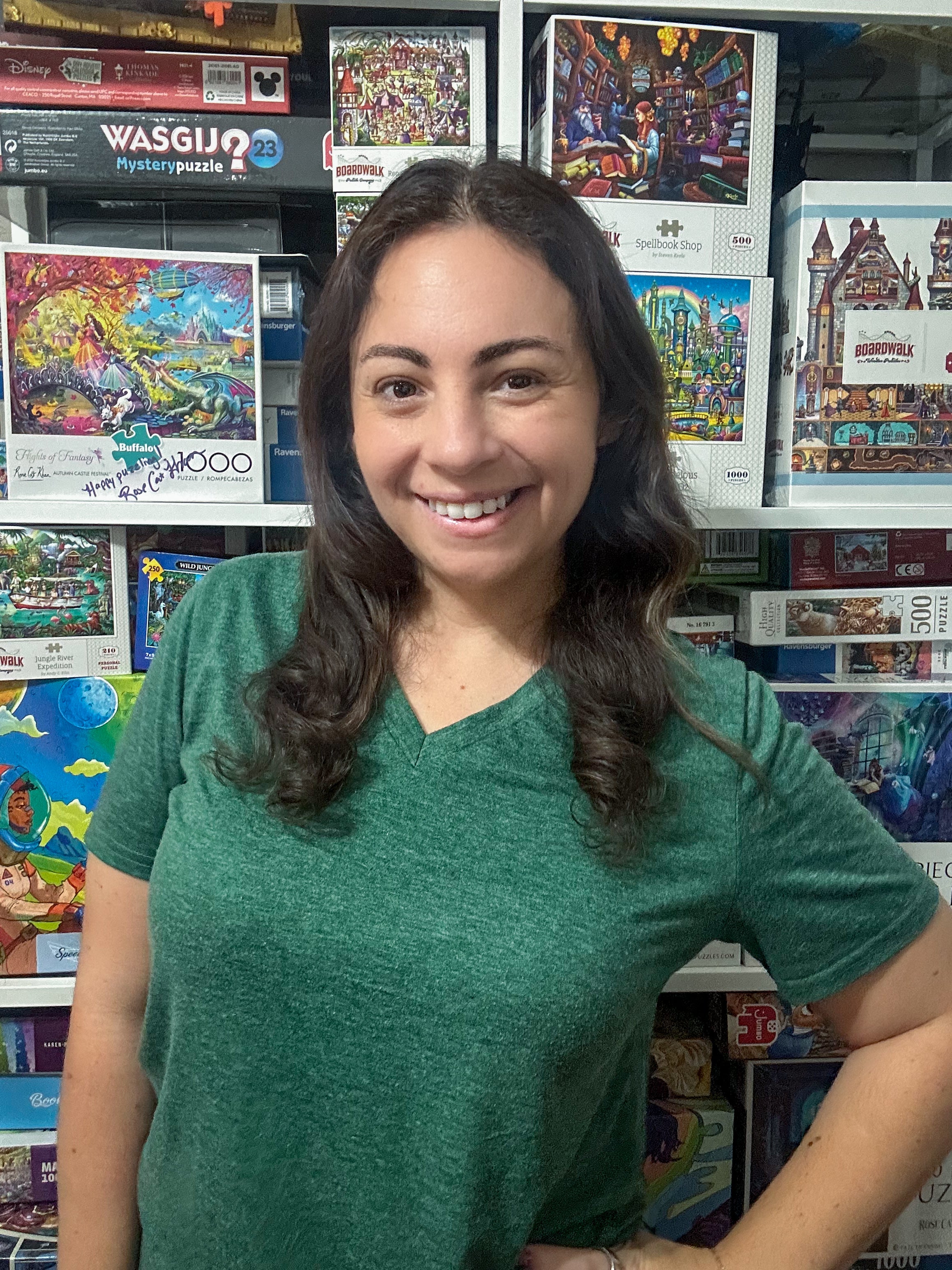
Yvonne Feucht became the inaugural USA Jigsaw Nationals champion in 2022 (Courtesy of Yvonne Feucht)
I first discovered speed puzzling on Instagram — time-lapse videos of people assembling puzzles at lightning speed, pure kryptonite for my ADHD. The biggest star on the platform is Karen Puzzles, a 35-year-old from New Jersey with more than 550,000 followers across YouTube and Instagram.
“I think a lot of people never considered [speed puzzling] as an option,” Karen Kavett, the creator behind Karen Puzzles, tells me over Zoom. “Even if they enjoy puzzling, they didn’t know events like this existed.”
Kavett began posting puzzle content in 2018, when speed puzzling and puzzling in general had little online presence. However, fueled by the 2020 pandemic — and thanks in part to Kavett’s videos — interest in the hobby-turned-sport has grown exponentially.
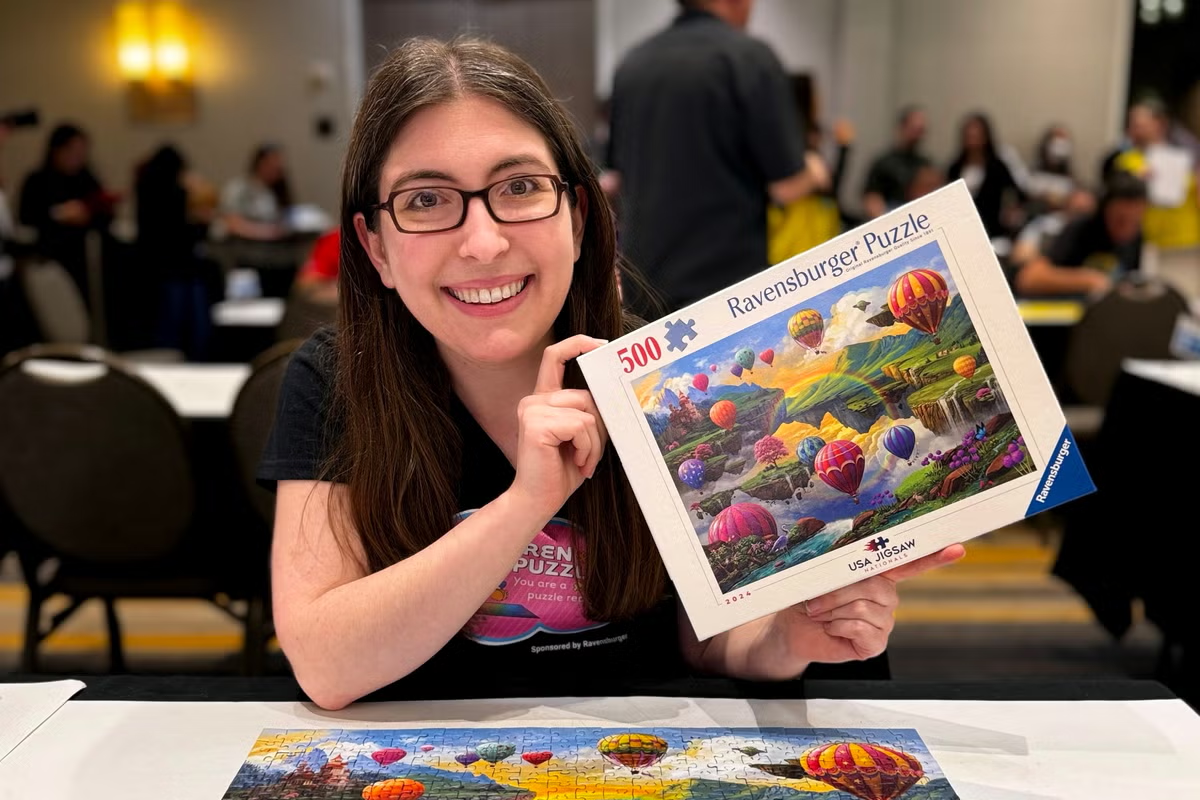
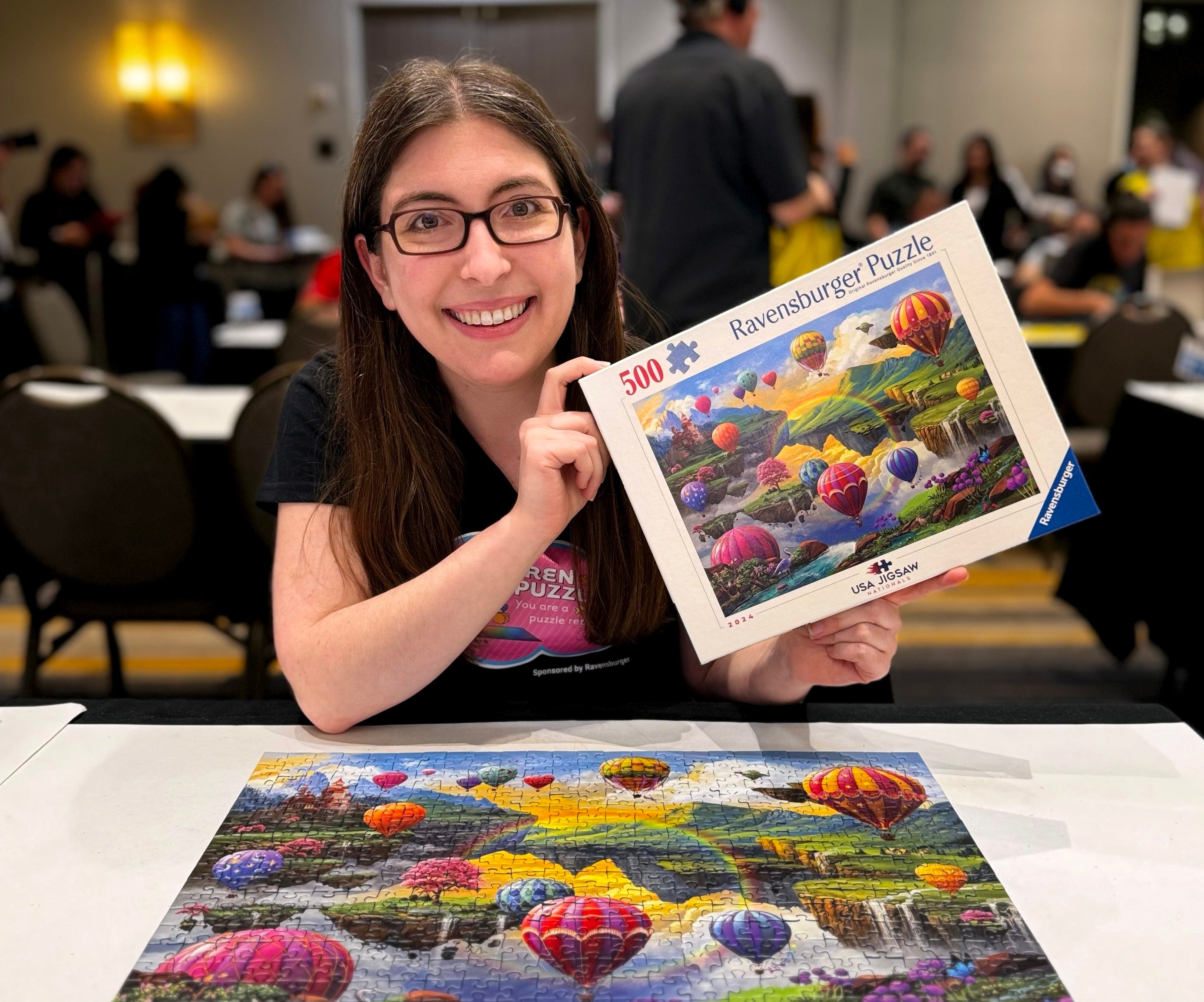
Karen Kavett, 35, is one of the sport’s most well-known figures (Courtesy of Karen Kavett)
“I found out about speed puzzling because of Karen Puzzles,” says Jen Ferris, a third-grade teacher in South Florida. Ferris, 36, had always loved jigsaw puzzles as a child, but drifted away from the hobby in adulthood — particularly during a difficult and unhealthy marriage. She eventually stumbled across a TikTok of Kavett’s appearance at the 2024 World Jigsaw Puzzle Championship.
Ferris remembers thinking, “What is this? This is speed puzzling? This is a thing?” It wasn’t until she finally left her marriage that she picked up some jigsaws and tried her hand at speed puzzling. “I do feel like I was able to lean on this hobby and go back to [something] I used to love. That, honestly, I forgot that I loved,” she reflects. “It was kind of like finding myself [and] learning to love myself again. It helped me heal, but it also helped me find my purpose again in life and find my people.”
Jen Ferris will compete in her first USA Jigsaw Nationals this weekend (Courtesy of Jen Ferris)
Speed puzzling has only recently been recognized as a sport. The World Jigsaw Puzzle Federation was founded in 2019 and hosted the world’s first jigsaw puzzle championship later that year in Valladolid, Spain. The following year, the USAJPA was created and held the country’s first premier national championship in San Diego.
Feucht and Kavett have competed in both competitions several times, with Kavett coming in second just behind Feucht at the 2022 Nationals. Looking back on her victory four years later, Feucht remains just as stunned as she was at the time. “I couldn’t believe it,” she recounts. “I had to double-check that I’d actually won.”
Advertisement
Nationals is a high-energy, knockout-style event, where individuals, pairs, and teams are steadily whittled down through multiple elimination rounds before a final showdown crowns the fastest puzzlers. At the starting signal, competitors rip open their bags and frantically flip pieces face-up, scanning for patterns amid the chaos. Some stick to the classic method — building the border first, then working inward — while others plunge straight into assembling whatever fragments they can find.
Strategy, however, only goes so far. As Feucht puts it, the real advantage lies in memory and an instinctive feel for color — skills that allow the best competitors to recognize, sort, and place pieces at remarkable speed.
It’s no fortune, but first-place winners receive a cash prize of $1,500 in the individual division, $1,000 each for pairs, and $750 each for teams, for a total of $6,500 in cash prizes. The winnings are intended to help fund participants’ travel to other speed-puzzling events in the U.S. and abroad.
As a result of her standout performance at Nationals, Feucht became a notable figure in the puzzling community. Like many, she has fond memories of completing puzzles with her mother as a child. She later returned to the activity as an adult after coming across the popular speed-puzzling website speedpuzzling.com.
Advertisement
Kavett has posted puzzling content online since 2018 (George Feucht)
For Feucht, speed puzzling has opened the door to new friendships. More broadly, the practice has helped ease her social anxiety and deepen her connections with family. “I like to dump out a puzzle during holidays, and I feel like a lot of people come and join me,” she says. “It’s lovely, because normally people don’t sit down and talk for that long — but when there’s a puzzle and a shared goal, people come, they sit, and they talk.”
Compared to the first Nationals, which featured 33 teams of four, 93 pairs, and 99 individual puzzlers, this year’s competition saw registration skyrocket, more than quadrupling to 200 teams of four, 400 pairs, and 800 individuals.
“It’s very exciting to see speed puzzling grow so that more people can discover it,” USAJPA founding member Valerie Coit tells me in an email. “We’ve heard many stories from USAJPA members that they’ve ‘found their people’ and that getting involved in the community has changed their lives for the better.”
That was certainly the case for 36-year-old Emma Landgraf, who discovered puzzling just over a year ago during a period of intense stress from a demanding job. “I was so stressed and burned out that I needed something to grab on to that was joyful,” the Chicago-based data strategist said.
Landgraf put herself to the test last April, competing in her first Nationals in Washington, D.C. This year, she’s eager not only to compete but also to volunteer.
Advertisement
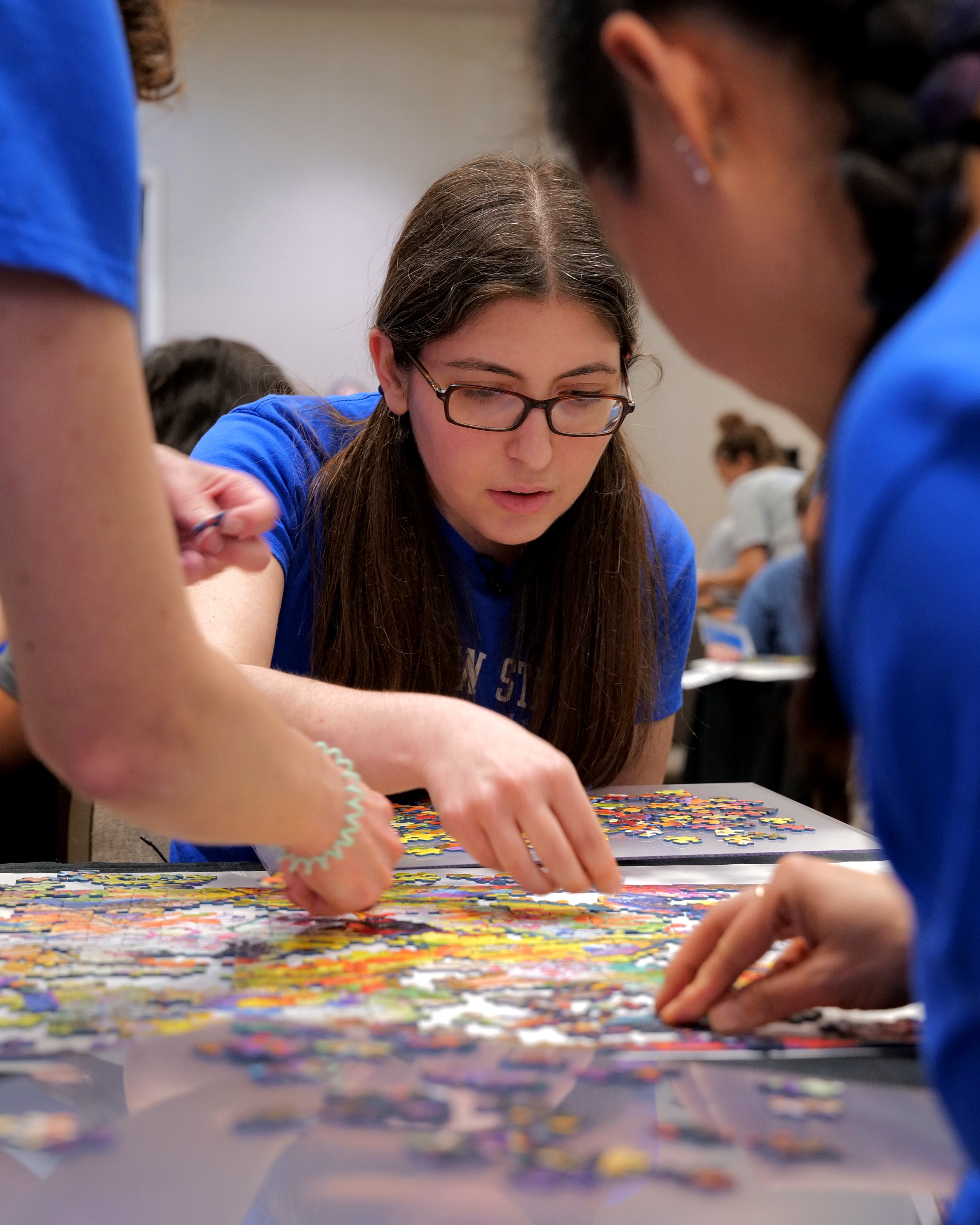
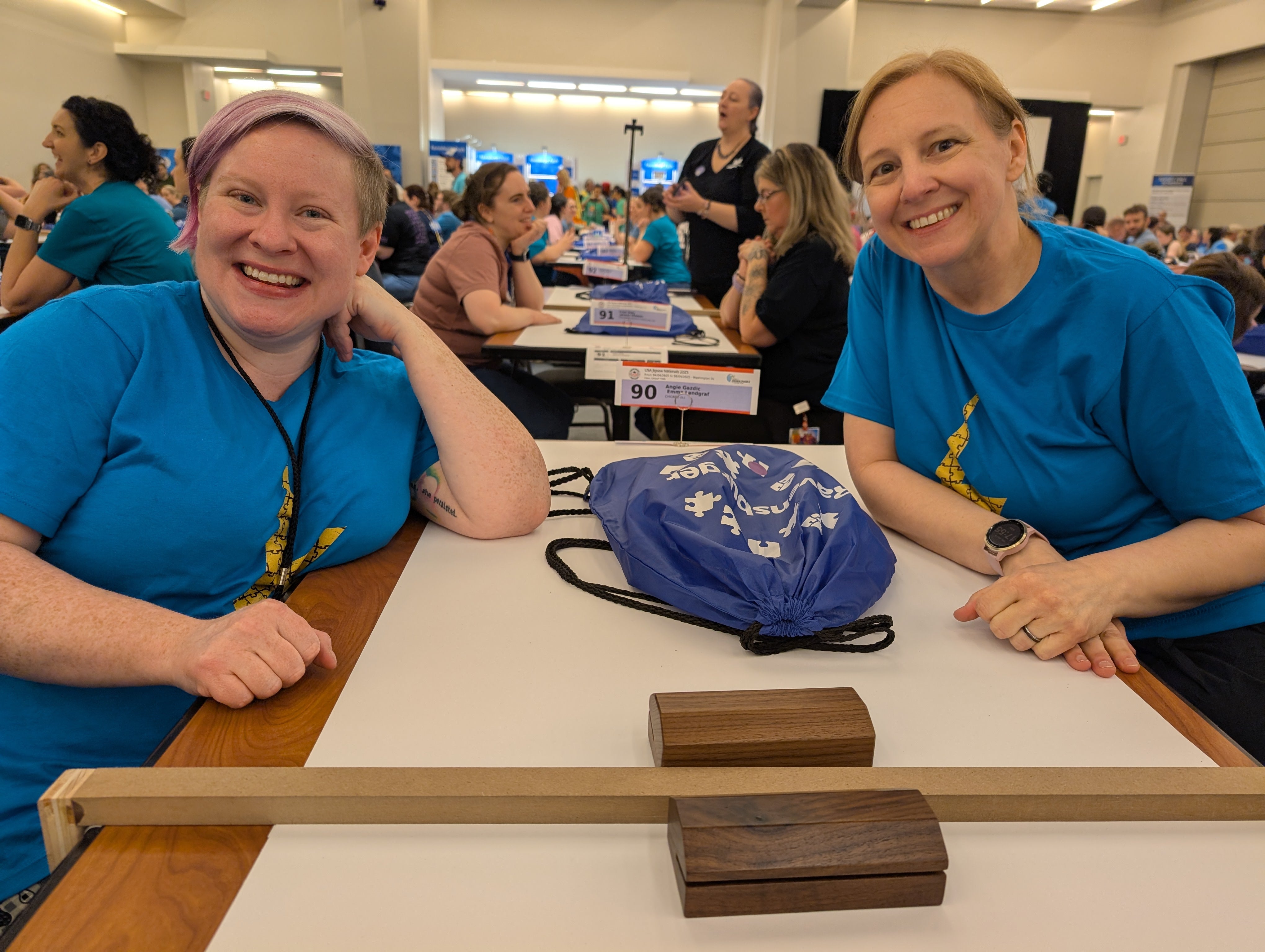
Emma Landgraf (left) returns this weekend for her second USA Jigsaw Nationals (Courtesy of Emma Landgraf)
“This is a very passionate group that wants to make sure they take part in making it happen,” she says. “And you really want to be a part of that.”
Landgraf recalls the overwhelming passion on display at last year’s Nationals, where nearly every team arrived in matching team shirts, head-to-toe puzzle ensembles, and even handmade crochet puzzle tops — a true celebration of the community’s creativity. “There’s just a lot of excitement over something that, in theory, is kind of silly and niche and boring,” she says. “It’s puzzles, it is what it is, but it’s a really warm, loving group of people.”
What was once a solitary pastime has quietly transformed into a global phenomenon. Yet despite its surging popularity, puzzling remains rooted in something more enduring: a shared challenge, a source of joy, and a growing community coming together, one piece at a time.
As noted above, it’s existing Virgin Media customers who get the best value from O2, with bundle deals that are much cheaper than the SIM-only deals you’ll see in our table below. If you’re already a Virgin Media customer, log in to the Virgin Media website, select upgrades in your contract menu and check the ‘Volt benefits’ on offer.
If you’re buying SIM-only and you’re not typically a heavy data user, O2 isn’t great value. Its cheapest tariff is £15 per month on a two-year deal, whereas our best-value network, Lebara, will offer you a decent dollop of data for £4.50 per month. However, at the top end, O2’s £21 per month fee for unlimited data is up there with the best, although be aware that annual price increases are baked into the contract.
Take care if you’re planning to buy a phone and SIM together. When I priced up a deal for an iPhone 17 Pro and a 50GB monthly contract, the cheapest I could get the airtime plan was £30 per month (O2 prices the phone and airtime separately). If you buy a SIM-only 50GB plan from O2, you can get it for half that price.
It seems this is because O2 offers different tiers of 50GB plan, with the “Plus” tariff offered with the iPhone, including benefits such as data rollover, extended roaming and more. However, these benefits don’t seem worth double the cost, in my view, so you may be better off buying a phone and airtime separately.
Advertisement
Speed
Score: 3.5/5
The O2 customers we surveyed seemed largely content with the performance of the network, with 73 per cent satisfied with the data speeds on offer. As noted previously, award winners Tesco Mobile and Giffgaff also piggyback on O2, and their customers were also happy with the speeds (both registered 89 per cent satisfaction), which is a good sign.
Reliability
Score: 4/5
Reliability appears to be solid with O2, with 84 per cent of the customers we surveyed satisfied with the reliability of the network. Again, high scores from the customers of Tesco Mobile and Giffgaff (93 per cent and 95 per cent) boost confidence levels. Text and voice reliability is particularly strong, with 95 per cent of O2 customers happy. The best scores of any network on test.
Advertisement
Customer service
Score: 3/5
Customer service scores are a drag on O2’s overall performance. A middling 63 per cent of customers said they were happy with how easy it is to reach O2’s customer service team, while 62 per cent were satisfied with the quality of support. Tesco Mobile was the standout leader for customer service, with scores of over 90 per cent on both of those metrics.
Roaming
Score: 3.5/5
You need to check carefully with O2’s roaming offering, as it varies depending on which tariff you’ve chosen. The standard ‘Classic’ plans that are offered on a SIM-only basis include EU roaming, but up to a limit of 25GB per month. The more expensive ‘Plus’ tariffs include roaming in 75 countries, including the USA, while the top-tier ‘Ultimate’ tariffs boost the number of roaming countries to 123. Check the lists of supported countries carefully before you travel.
Advertisement
In our survey, 73 per cent of O2 customers were satisfied with the value of the roaming deals. Again, this is middle of the pack.
Katie Price has set the record straight on her relationship with daughter Princess Andre, after making an unexpected appearance on her ITV2 show, The Princess Diaries
13:42, 28 Mar 2026Updated 13:46, 28 Mar 2026
Katie Price finally made her debut on 18-year-old daughter Princess Andre‘s show via a FaceTime call, after previously claiming she’d been “banned” from appearing on the ITV2 series. The 47-year-old former glamour model has now revealed how she truly feels about the situation in a candid chat with her sister Sophie on their podcast, The Katie Price Show.
Sophie began the discussion by saying: “You actually made an appearance on FaceTime! How did it feel?” Sensing a sarcastic tone in her sister’s voice, Katie, who recently got married for the fourth time to Dubai-based businessman Lee Andrews, replied: “I love your sarcasm, Soph! Yes I made an appearance on the show, wahey!
“Look, it’s Princess’ show and I think, because of the first show, there was a lot of stick because it was pretty obvious I wasn’t in it,” to which Sophie replied: “I think the first show went down like a tonne of lead!”
Advertisement
Katie agreed: “Literally, yes. Because whether people love it or not, like it or hate it, I am Princess’ mum and you can’t keep me away or keep the fact that I am associated to Princess, because I am her mother. And they use my name, I’m not saying ‘they’, but my name is always used against her show to create headlines.”
The mum-of-five, who shares Princess and her older brother Junior, 20, with ex-husband Peter Andre, 53, insisted that although she has mixed feelings about the show, “there’s no scandal” behind her not being very present on the programme.
She told listeners: “Now, I don’t understand, there’s no scandal, I speak to Princess every day, she lives at mine and Pete’s.”
Advertisement
However, the reality star did admit that she “wished she was there” when Junior and Princess were filmed taking their half-brother Harvey Price, who suffers from a rare genetic condition known as Prader-Willi syndrome (PWS), out for the day.
Katie shared: “I wish I was there with Harvey on that, because I always do everything with Harvey, and it was nice for Junior and Princess to take Harvey out on his own.
“It was the first time they took him out, so when I was watching that bit, I was interested to see how Harvey would behave, and it’s weird because where Harvey is so used to me, he’s more bantery. So he must have been on the fritz a little bit,” the star said, before further explaining that her son seemed a bit more reserved on camera.
Katie didn’t rule out another cameo on the series, even suggesting that she and Princess’ dad Pete could be appearing more frequently on the reality show in the future.
Advertisement
She remarked: “Look, good for Princess doing her show. I don’t care what anyone says, and it’s my daughter at the end of the day and I support her, always will.
“Now, if she does her third show, I reckon me and Pete might make an appearance, I’m not saying together, but separate. It is her show anyway, but it would be nice for people to see mother and daughter stuff because me and Princess do stuff all the time. Sometimes I just feel like I’m kept out…”
Advertisement
“Well, we know you are,” Sophie chimed in, prompting Katie to clarify that “in real life, it’s not like that”, as she spends a lot of time with Princess normally, but the ITV2 show is filmed at her dad’s house.
Despite her sadness over aspects of the series, Katie was keen for fans to know that she’s “at peace with everything” and wants her eldest children to focus on their careers, rather than negative rumours about her and Pete.
Katie’s remarks come after she and ex Pete jointly announced in February that after a war of words spanning several years following their 2009 split, the two have “both legally and personally” confirmed they “will not speak negatively about the other going forward”.
The Friends of New Earswick Swimming Pool, a volunteer-led charity, is seeking £500,000 to replace the much-loved facility’s roofs, which need to be due to persistent leaks and structural deterioration.
The campaign, termed “Buy a Tile,” invites supporters to purchase virtual tiles in bronze, silver, or gold tiers, for £20, £50, and £100, respectively.
RECOMMENDED READING:
The money will be used specifically for replacing the pool and changing room roofs and a series of sustainability upgrades, including new insulation, solar panels, and battery storage, to lower energy costs significantly.
Advertisement
Planning permissions and redevelopment plans are already in place with contributors and fundraising activities having raised £205,000 towards the target.
A spokesperson said that the fundraising initiative reflects the community’s part in securing the pool’s future for decades to come.
New Earswick Pool today (Image: Provided)
They added: Many people in York learned to swim there, and countless people rely on it for exercise, rehabilitation, and social connection.
“The pool is also a vital resource for disabled swimmers, offering warm water, accessible sessions, and a welcoming environment.”
Advertisement
To buy a tile, go towww.friendsofnewearswickpool.co.uk/buy-a-tile or you can send a cheque to FoNESP c/o 3 Meadowfields Drive, York YO31 9HW (include your email address or phone number).
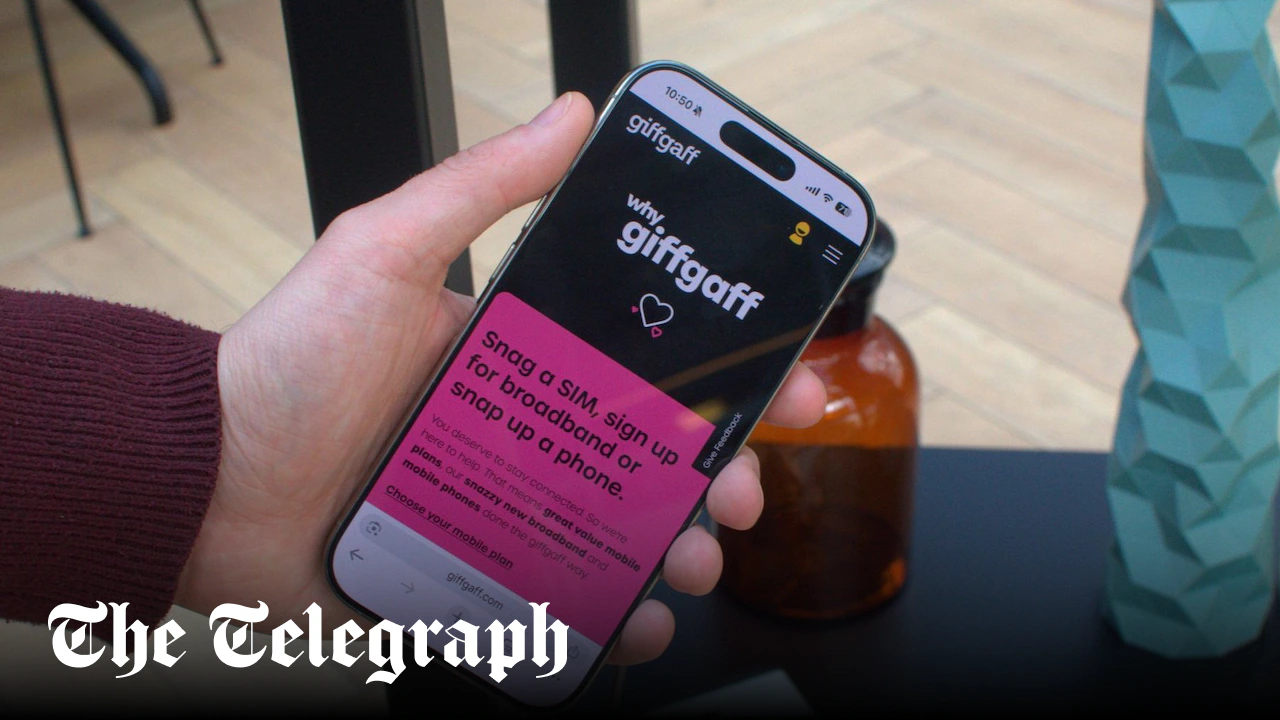
Value is definitely one of Giffgaff’s strong suits, and although it doesn’t score as highly with customers as Tesco Mobile or Lebara, there’s little to complain about here. Giffgaff’s cheapest tariff starts from £6 a month, and that includes 2GB of data with unlimited minutes and texts. However, it’s worth pointing out that Lebara’s cheapest deal is £1.50 per month cheaper and offers more data.
If you’re more data hungry or you’ve got Spotify/TikTok/YouTube-gobbling teenagers to feed, the 25GB and Unlimited tariffs are also reasonably priced, if once again undercut by Lebara.
Giffgaff does offer deals that include phones as well as SIM-only tariffs, and it’s worth noting that the company also sells refurbished phones, which are much cheaper than buying new. If your kids insist on having iPhones, it’s one of the cheapest ways to pick them up, provided they aren’t screaming for the latest model.
Speed
Score: 4.5/5
Advertisement
Given that it’s owned by Virgin Media O2, it will come as no surprise that Giffgaff runs on the O2 network. That’s by no means a bad thing, with overall winner Tesco Mobile doing the same, and customers seem to have few complaints about the network’s performance.
A healthy 89 per cent of the Giffgaff customers we surveyed said they were happy with the speeds on offer from the network, which is why it shares our speed award with Tesco Mobile.
O2’s 5G outdoor coverage is pegged at between 70-76 per cent by regulator Ofcom, which isn’t as comprehensive as that of EE (86-89 per cent).
Reliability
Score: 5/5
Advertisement
Giffgaff customers are highly satisfied with the robustness of the network. Overall, 95 per cent of those surveyed said they were happy with reliability, while 88 per cent said they were satisfied with the consistency of data speeds and the latency (or responsiveness) of the network.
That means Giffgaff is the joint winner of our most reliable mobile network award, alongside Tesco Mobile and Lebara.
Customer service
Score: 3.5/5
If there’s a slight downside to Giffgaff’s offering, it’s customer service. As we mentioned previously, Giffgaff puts a lot of emphasis on community support, with customers helping other customers through the firm’s online forums. But there are some issues (such as billing) that only a company representative can sort and that may be where Giffgaff falls short.
Advertisement
For example, only 66 per cent of Giffgaff customers were happy with the ease with which they can reach the customer support team, a distinctly mid-table score. When it comes to the quality of support, only 72 per cent of Giffgaff customers said they were happy.
Roaming
Score: 4/5
Like many other networks, Giffgaff does include EU roaming in its plans, but there are limits. For example, even if you’re on an unlimited plan or, say, 25GB per month, the EU roaming data allowance is capped at 5GB. That should still be enough for a holiday, but others, such as Lebara, let you use your full data allowance while you’re in the EU.
Giffgaff customers seem reasonably happy with the situation, though, with 77 per cent saying they were happy with the roaming value.
Pope Leo XIV has called on the world’s mega-rich to use their wealth to help those in need during a visit to Monaco.
Advertisement
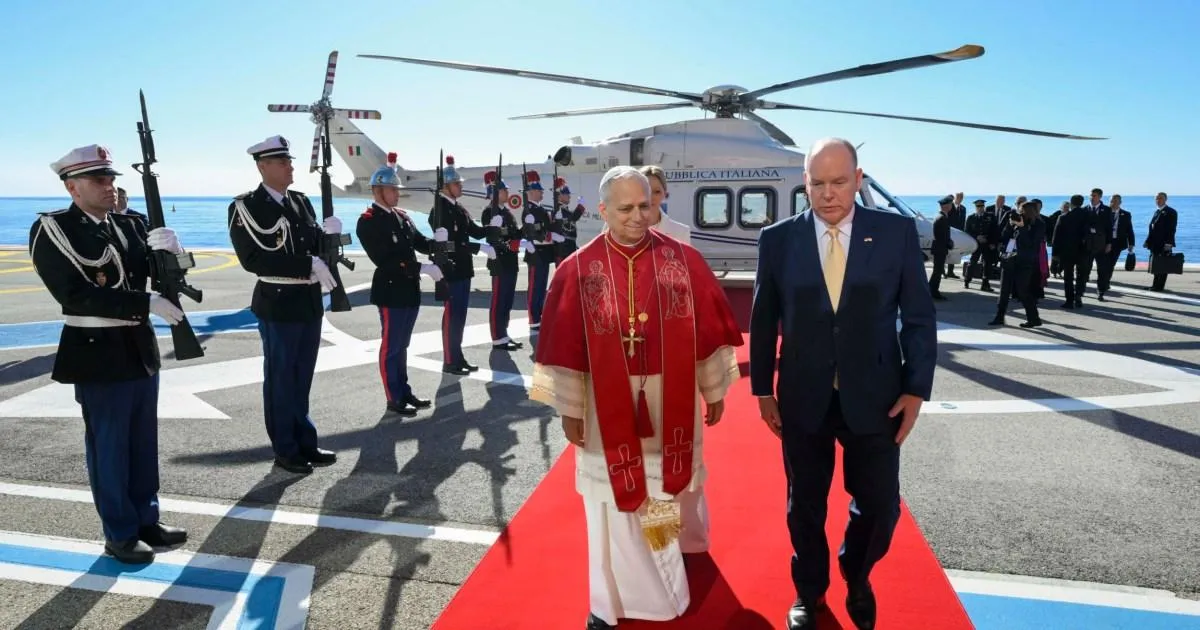
Leo flew in on a helicopter for the one-day trip to the world’s second-smallest state, the first papal visit there in nearly 500 years.
The Vatican said he wanted to show that small countries can make an outsized impact on the world stage.
The glitzy enclave on the French Riviera is known as a haven for billionaires and their luxury yachts
Pope Leo XIV aboard his helicopter flying past the coastline of Monaco before his arrival in in Monte Carlo (Picture: Vatican Media/AFP via Getty)
Prince Albert II of Monaco welcomes Pope Leo XIV as he arrives for an one-day trip (Picture: EPA)
Pope Leo XIV with Albert II of Monaco and Charlene of Monaco looking out from the balcony of the Prince’s Palace (Picture: Vatican Media/AFP via Getty Images)
Speaking in French shortly after his arrival, Leo condemned what he termed the widening ‘chasms between the poor and the rich’.
Leo, the first American-born pope, was greeted at the Monaco heliport by Prince Albert and Princess Charlene.
Advertisement
At the palace, members of the royal family stood in the courtyard waiting for Leo, the women dressed in black and with lace head coverings.
Charlene wore white — a protocol privilege granted by the Vatican to Catholic royal sovereigns when meeting popes, known in diplomatic terms as ‘le privilège du blanc’.
In his opening greeting from the palace balcony, Leo urged Monaco – which has the highest concentration of billionaires per capita in the world – to use its wealth, influence and ‘gift of smallness’ for good.
Advertisement
Pope Leo XIV attends a meeting with young people and catechumens outside the Church of Saint Devota (Picture: Reuters)
Pope Leo XIV’s visit to Monaco is the first in nearly 500 years since Pope Paul III in 1538 (Picture: Corbis via Getty Images)
Pope Leo XIV blesses a child as he leaves the Cathedral of Monaco (Picture: EPA)
It was important, he said, ‘especially at a historical moment when the display of power and the logic of oppression are harming the world and jeopardising peace’.
Later in the cathedral, Leo urged Monaco’s Catholics to spread their faith ‘so that the life of every man and woman may be defended and promoted from conception until natural death’.
Such terms are used by the Vatican to refer to Catholic teaching opposing abortion and euthanasia.
Monaco is one of the few European countries where Catholicism is the official state religion.
A coastal playground for the rich and famous, Monaco is also renowned as much for its tax-friendly incentives and Formula 1 Grand Prix as its glamorous royal family.
Advertisement
The principality’s casinos – four – are only narrowly outnumbered by its five churches.
Leo’s events in Monaco were marked by all the usual protocol and pomp of a papal tour abroad.
Pope Leo XIV waves from the popemobile as he leaves the Prince’s Palace (Picture: EPA)
Pope Leo XIV arrives to meet with youths and catechumens at the Church of Sainte-Devote in Monte Carlo (Picture: AFP via Getty Images)
Pope Leo XIV heads to the Mediterranean principality of Monaco on the French Riviera that is the pontiff’s surprise pick for the first western European trip (Picture: AFP via Getty)
Crowds, however, were relatively thin.
Few lined the streets as he toured the 0.8 square mile country in an open-air popemobile.
Leo was elected in May to succeed the late Pope Francis as head of the 1.4-billion-member Church.
Advertisement
His visit to Monaco is only his second outside Italy, but opens what is expected to be a busy year of travel.
Leo, 70, is relatively young and in good health for a pope.
He will undertake an ambitious, four-country tour of Africa in April, and is also due to make a week-long visit to Spain in June.
It was nice to see how much respect was paid to those who fought in World War Two
Breakfast at The Watch Office in Alconbury Weald
Cambridgeshire has a strong RAF history, with many former bases now seeing new lives as museums or housing developments. At a former RAF base, a restaurant pays homage to those who once served at the base.
Recently, I visited Alconbury Weald, a 10-year-old housing development where new homes are still being built. Although it only had one shop, there was an interesting restaurant I wanted to check out. This was The Watch Office.
What made it stand out is it served as an operational hub for RAF Alconbury during the Second World War. The restaurant resembled a bunker, and its current camouflage decoration harks back to the days when the building was used by the military.
As I stepped inside, I was faced with more decoration inspired by the war and the RAF, with different planes painted on the walls, alongside their names. It was endearing to see the respects paid to the former RAF base, with the history of the area part of the fabric of its incarnation today.
It was when I stepped into the main restaurant I realised how much the RAF was respected. On the back wall of the building was a mural painted with two soldiers looking to the skies as planes fly above them. I sat down and scoured the menu.
For a small place, I was impressed with the large selection they had on offer. Seeking a warm drink, I firstly ordered a hot chocolate topped with marshmallows and cream.
When my drink arrived, it was a welcome sight. It was smothered in cream and covered in marshmallows, with a nice surprise of cinnamon sprinkled on top.
As I sipped, the cream melted in my mouth, while the marshmallows were soft and squishy. Once I got through the heap of cream, the hot chocolate itself had a creamy and silky taste.
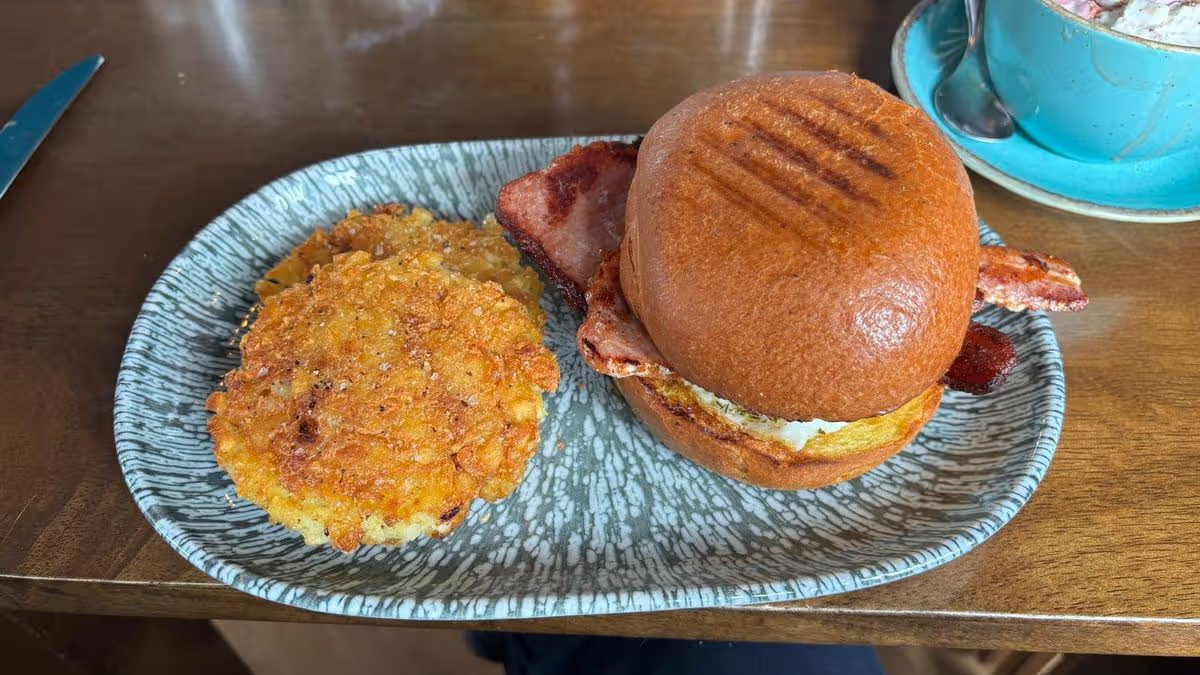
For food, I opted for the breakfast sandwich. This contained a sausage patty, crispy bacon, and chimichurri fried egg, all in a garlic buttered bun. It was served with two hash browns.
I was very impressed with the hash browns, due to their crispiness and large size. However, they were very salty.
I took one big bite of my burger to get all of the toppings in, as there was a lot packed into this bun. As I bit in, the crispy bacon stood out. The rashers gave an indulgent savoury taste. The sausage patty was flat and grilled to a nice standard.
Despite being so much packed into the bun, the sandwich was easy to eat and not as messy as I thought. The only thing was there was a lot of salt on all of the toppings – I would have liked to be able to season it to my taste.
Advertisement
Overall, I admired the RAF-inspired decor at The Watch Office, and found it sweet that so much respect was paid to the history of the place.
All of our food reviews are paid for by the writer. The establishments do not know we will be reviewing their food, allowing us to make fair judgements on each place.
It marks the first time the country has involved itself in the war, which began one month ago today after the US and Israel launched Operation Epic Fury.
Strikes have covered the region ever since, with Trump targeting Tehran while Iran launches strikes at US military bases.
Now, a military spokesman for the Houthis said they are prepared to join the war on behalf of Iran after the US and Israel targeted power and nuclear sites.
This is not the first time they have involved themselves in conflict in the region.
Advertisement
Two years ago the breakaway faction repeatedly launched drones and missiles against commercial vessels, claiming to be attacking Israeli ships in support of Palestine.
It accused the West of ‘blatant aggression’ and after airstrikes on Friday hit dozens of targets, vowing to respond with ‘punishment or retaliation’.
Britain has walked a tightrope over Yemen’s civil war for the last decade – keep reading to find out who’s involved and why some fear the situation could escalate into a full-blown war in the region.
Who are the Houthi rebels?
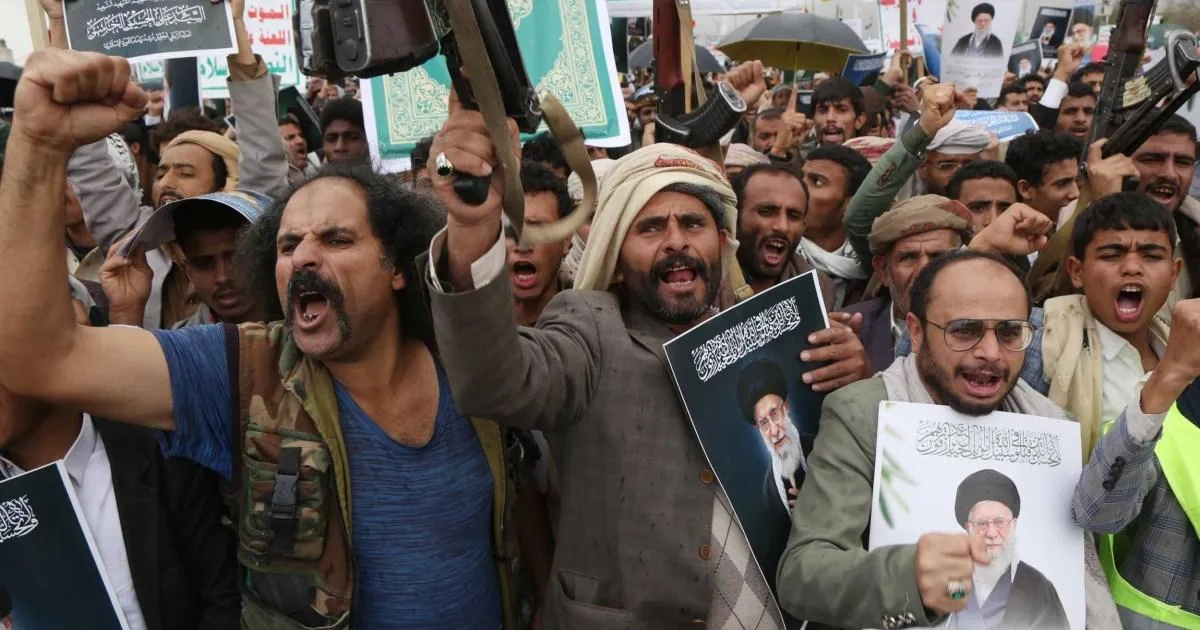
Thousands of people gather at Sabeen Square, under the control of the Iran-backed Houthis in Yemen, to protest the killing of Iran’s leader Ali Khamenei (Picture:Mohammed Hamoud/Anadolu via Getty Images)
The Houthi movement is a political and military group that follows a minority strand of Islam called Zaydism, and draws its name from an ancient Arab tribe from northern Yemen called the Houthis.
Advertisement
Following rising instability in the wake of the Arab Spring, they seized control of the Yemeni capital of Sana’a in 2014, sparking one of the deadliest civil wars in recent history – which is still ongoing today.
Yemen’s official government, recognised by most countries including the UK, is backed by a Saudi-led coalition which Britain has supplied with weapons.
Both sides are widely believed to have carried out war crimes and atrocities against civilians, overseeing some of the worst humanitarian conditions in the world.
The Houthis are currently in control over almost all of northern Yemen, although much of the country has been devastated, with a death toll of over 150,000.
Advertisement
The Houthis are locked in one of the deadliest conflicts in recent history (Picture: Reuters)
Have the Houthis been involved in conflict before?
Houthi forces launched dozens of drone and missile strikes on commercial vessels two years ago following the Israel-Hamas war on October 7.
The faction’s goal was ‘prevent Israeli ships from navigating the Arab and Red Seas in support of the oppressed Palestinian people’.
Follow Metro on WhatsApp to be the first to get all the latest news
Follow us to receive the latest news updates from Metro (Picture: Getty Images)
Metro’s on Whatsapp! Join our community for breaking news and juicy stories.
Advertisement
In reality, though, almost all the targets were international trading ships – some making port in Israel, many simply passing through to other parts of the world.
HMS Diamond and US jets shot down the biggest wave of drone and missile attacks in the Red Sea on container ships (Picture: MOD)
One of the first incidents – when the Houthis hijacked what they claimed was an Israeli cargo ship in November – actually involved a British-owned ship run by a Japanese firm and staffed by crew from all around the world.
More recently, a Houthi spokesperson said any ship destined for Israel is a ‘legitimate target’. The UN’s shipping watchdog has since confirmed that the Houthis are continuing to attack ships with no links to Israel whatsoever.
Who supports the Houthis?
Yemeni men brandish weapons and portraits of leader Abdul Malik al-Houthi (Picture: AFP)
Yemen’s Houthis are backed by Iran, which began increasing its aid to the group in 2014 as the civil war broke out.
Iran’s theocratic government follows the Shia branch of Islam, of which the Houthi’s Zaydist belief system is a strand.
Iran has given the militants training and an array of sophisticated weapons and military technology, with the alleged help of Lebanon’s Hezbollah terrorist group.
Advertisement
The West has accused Iran of involvement in the Red Sea attacks two years ago and ordering the Houthis and other Middle Eastern militias to carry out their attacks on Israel, which Iran denies.
The UN Panel of Experts on Yemen previously found that Iran has ‘failed to take the necessary measures to prevent the direct or indirect supply, sale or transfer’ of various ballistic missiles that the Houthis have deployed against all the vessels.
Two other people involved in the crash were also taken to the hospital as a precaution after the incident on Friday.
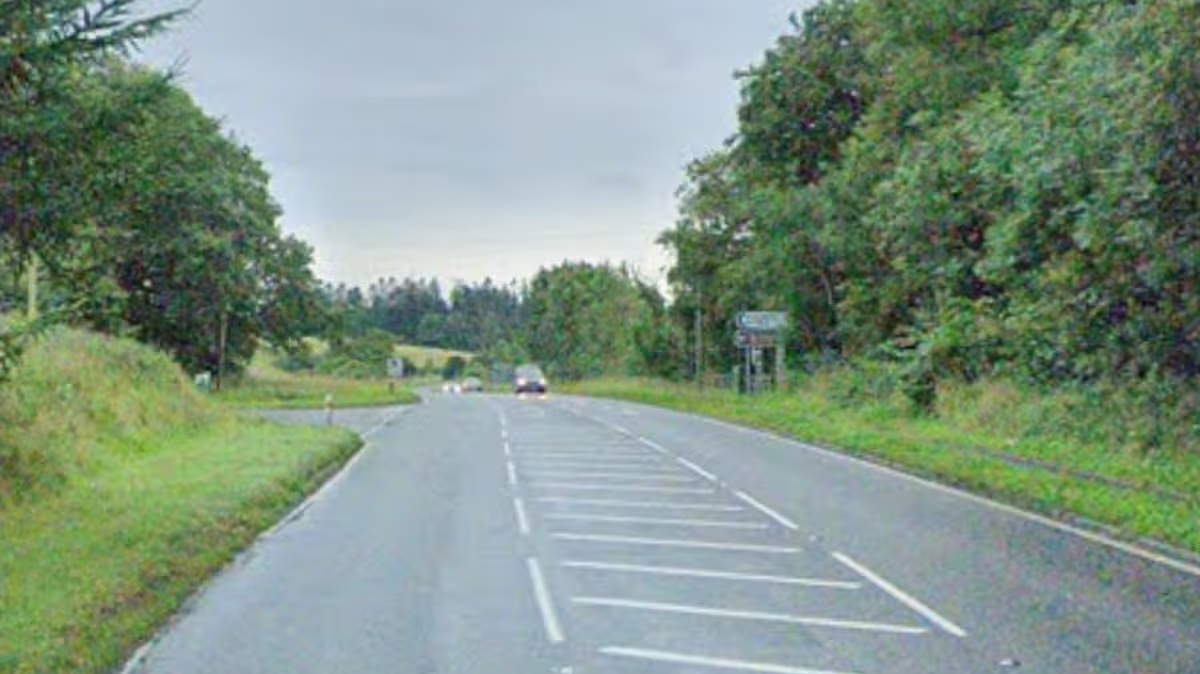
A bus driver and three passengers were rushed to hospital after horror crash in Ayrshire. Emergency crews raced to the scene at the junction between the A77 and B7034 near Minishant at around 5.15pm on Friday March 27.
Advertisement
The three-vehicle crash also involved a campervan and a car. The driver of the bus and three passengers were taken to hospital but no information is available on their condition at this stage.
Two other people involved in the incident also attended hospital as a precaution. The A77 was closed in both directions after the crash and motorists were urged to avoid the area.
Police Scotland confirmed on Saturday morning the road has reopened. A spokesperson for the force said: “The A77 at the junction with the B7034 near Minishant, Ayr, has re-opened following a three-vehicle crash.
“The crash happened around 5.15pm on Friday, 27 March, and involved a bus, a car, and a campervan. The driver of the bus and three passengers were taken to hospital for treatment.
Advertisement
“Two further people have also attended hospital as a precaution. Enquiries are ongoing.”
Get more Daily Record exclusives by signing up for free to Google’s preferred sources. Click HERE
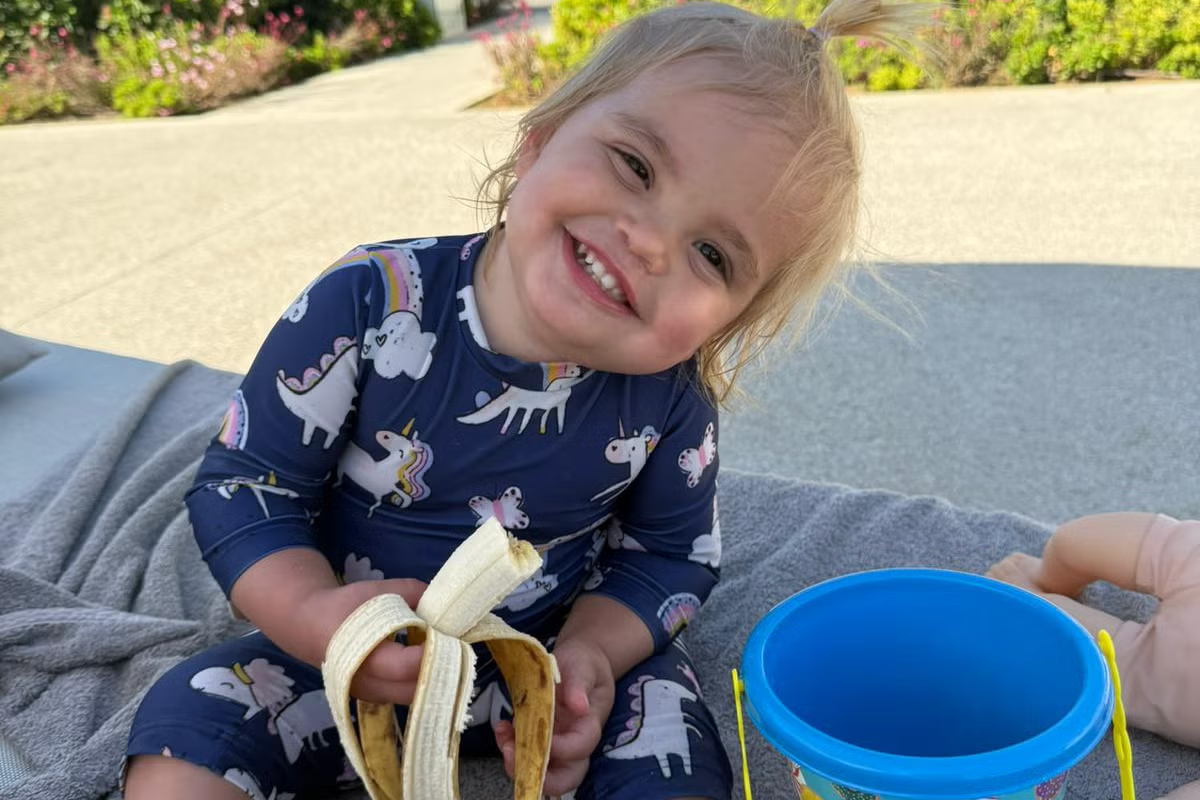
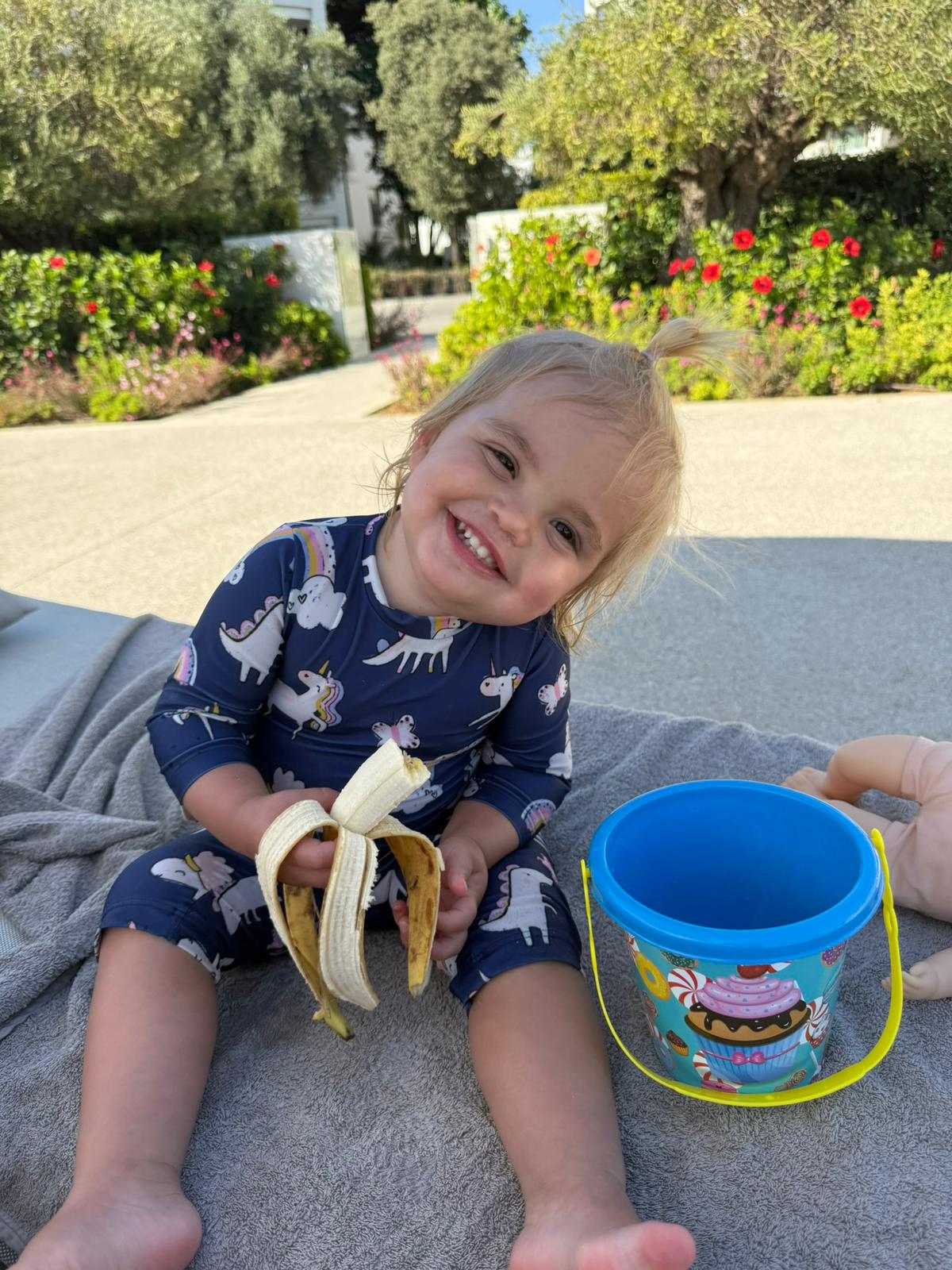
Six months ago, Emily Forrester had no idea that behind her daughter Leni’s bright, infectious smile lay a life-changing battle.
The toddler showed no signs of illness – nothing to suggest anything was wrong. Yet hidden beneath that cheerful exterior was a devastating condition.
The first warning came when a close relative had a routine genetic test and discovered they carried the gene for Sanfilippo, a rare disorder that leads to childhood dementia.
Doctors reassured the family that it was highly unlikely Leni would be affected. Still, the test results were enough to prompt her parents to seek further genetic investigation for their daughter.
Advertisement
What followed was a heartbreaking shock. Just one week before her second birthday, Leni was diagnosed with Sanfilippo.
The genetic condition is caused by an enzyme deficiency that prevents the body from breaking down certain molecules, which leads to catastrophic brain damage. Children with the disease suffer loss of memory, speech, mobility, and premature death.
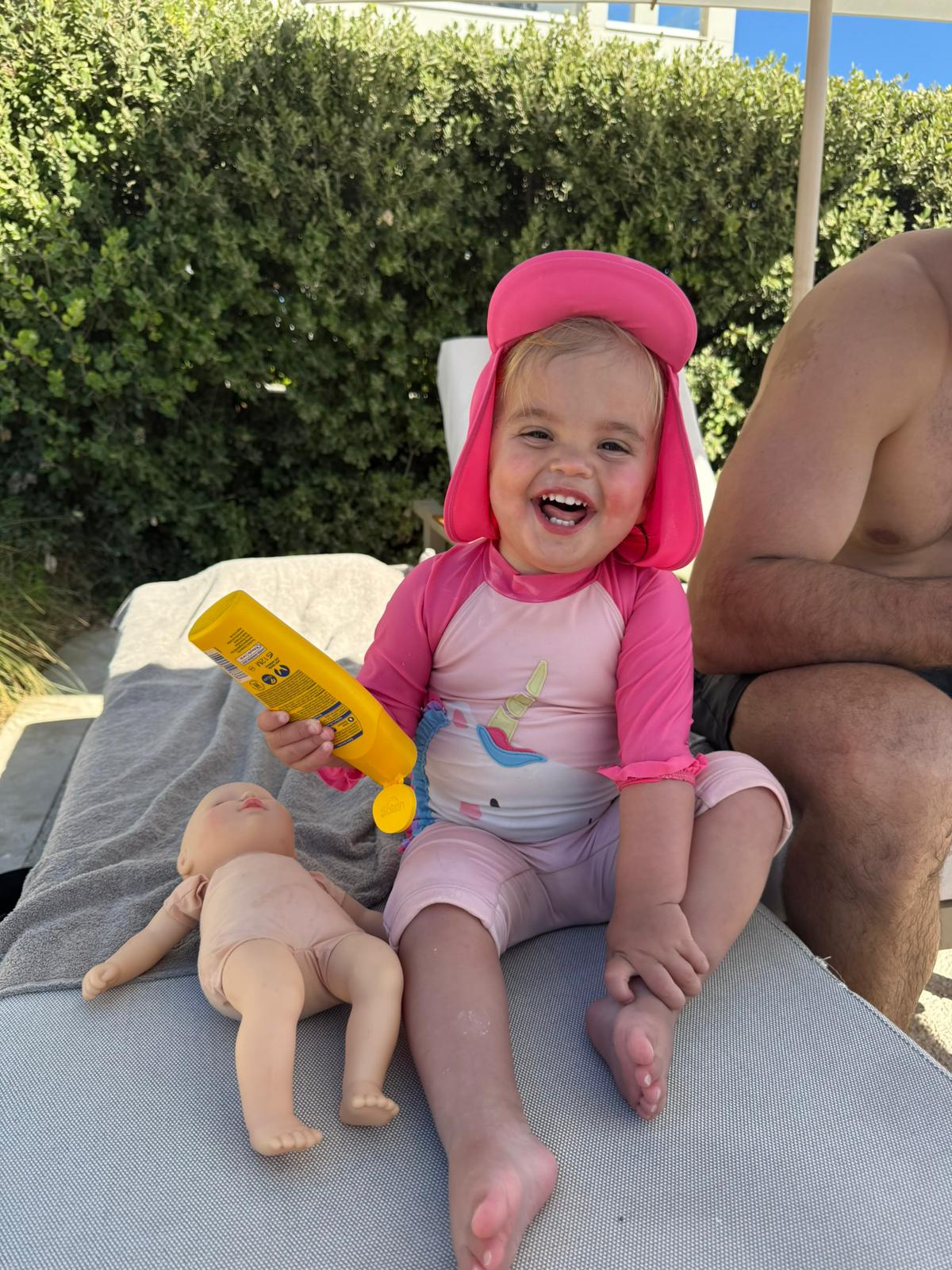
Leni Forrester, two, was diagnosed with Sanfilippo (Family handout)
There is currently no cure and no approved treatment available in the UK.
Leni could be saved from this bleak and painful future if she receives critical treatment within the next six months, before she turns three.
“If she has to wait six months, that could mean she can no longer talk. If she waits 12 months, that could mean she loses the ability to walk,” Ms Forrester, said. “It is a race against time.”
Advertisement
Life-saving treatment for Leni and other children with the genetic disorder is out there; however, it is blocked by a lack of funding.
“Getting the treatment could completely change the trajectory of her life, and she could go on to live normally with no symptoms,” the devoted mother said.
“This condition is particularly cruel because children develop normally until around two or three years old. So you get a glimpse of what kind of person they would be life if all was normal. Then it gets ripped away from you in a 10-minute phone call where you get the most catastrophic diagnosis you can imagine.”
But a delay in treatment, or no treatment at all, will have a fatal outcome.
Advertisement
A clinical trial for a treatment is expected to begin in the United States later this year. Leni’s parents are calling for the government to help fund the research so UK patients can be included.
Leni’s devoted parents are campaigning for a US clinical trial to receive funding so Leni can receive the life-saving treatment (Family handout)
The treatment replaces the enzyme that children with Sanfilippo are missing by fitting a permanent port in their brains. The body is then flushed with the enzyme via this treatment weekly for the rest of her life, as the body cannot make the enzyme by itself.
The clinical trial for the treatment was previously run by Great Ormond Street Hospital in London for six years. It reached the final phases of trial with effective results, but it was then cut because of a lack of funding. Children on the trial who developed normally with the treatment went on to decline once the funding stopped.
Another option is a gene therapy treatment developed by UK-based Professor Brian Bigger. However, his research cannot reach clinical trials without significant funding.
Children with Sanfilippo tend to develop normally until they are two or three-years-old, making an early diagnosis very difficult (Family handout)
The cost of funding the US clinical trial stands at £5.5 million. “For an individual, £5.5 million is a huge amount. But for a nation, it is not,” Ms Forrester said, as she called on the government to expand newborn screening to help detect rare genetic conditions earlier, and grant more funding to accelerate game-changing treatments.
Ms Forrester praised singerJesy Nelson for using her platform to raise significant awareness for Spinal Muscular Atrophy (SMA), which affects her twin daughters, Ocean Jade and Story Monroe, and meeting the health secretary, but said families without celebrity status struggle to get any response from senior politicians.
Advertisement
“Politicians should prioritise meeting families suffering with the genetic disorders, not only celebrities to get their screen time.”
“These children have been pushed to the side,” she added. “There is no support for the families, even though the impact of childhood dementia is the same as childhood cancer, there is a huge difference in research and funding.”
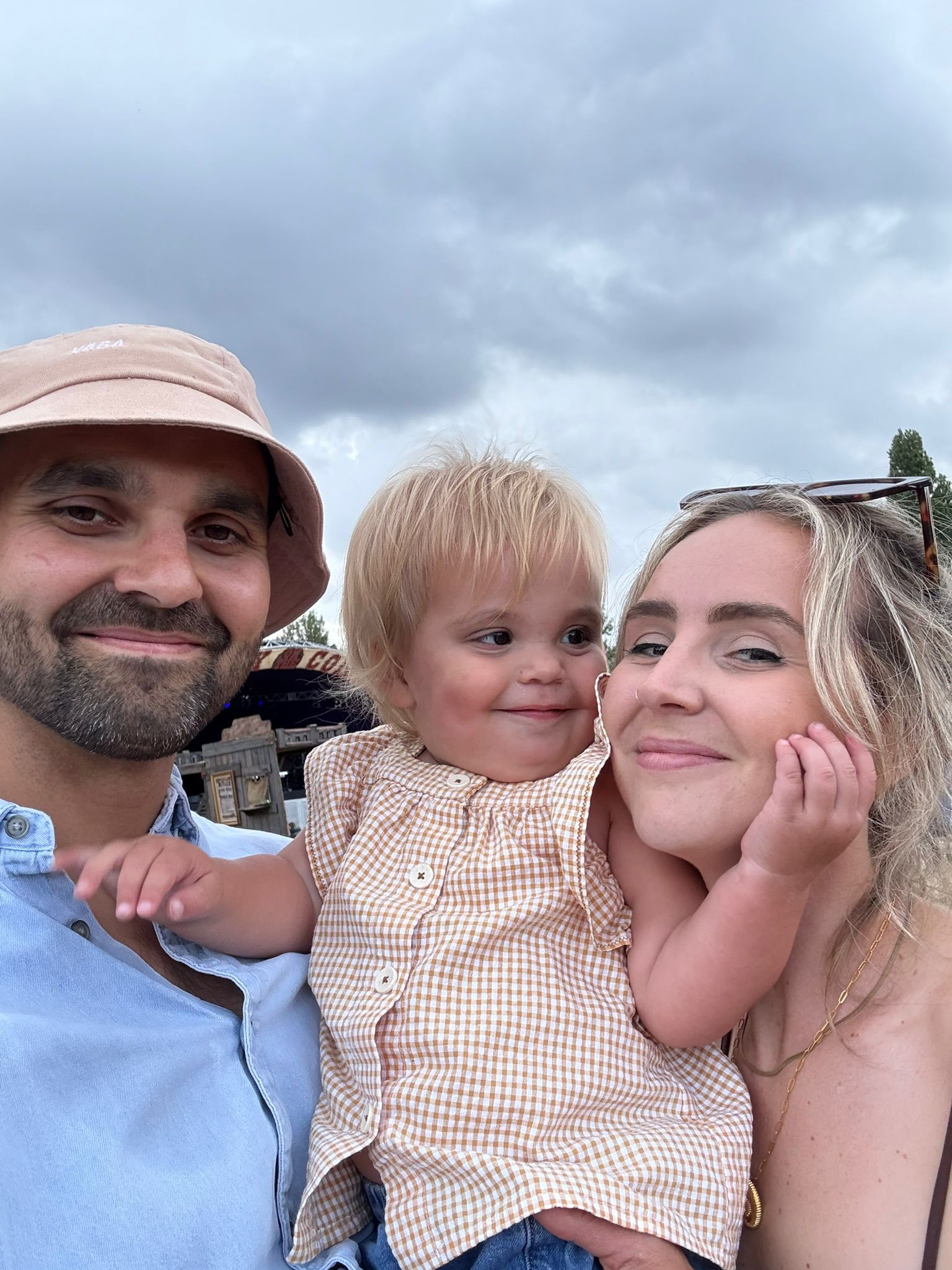
Leni with her loving parents, Emily and Gus Forrester (Family handout)
Bob Stevens, CEO of the MPS Society, a charity supporting people with Mucopolysaccharide Diseases, of which Sanfilippo is one, said he was promised a meeting with health secretary Wes Streeting last summer, but it was not upheld. Ms Forrester’s local MP, Laura Trott, has also requested a meeting with Mr Streeting, which has gone unanswered.
Mr Stevens said: “The UK currently screens for far fewer conditions than many comparable countries, meaning families are often diagnosed only after crucial time has been lost.
“There is no scientific reason that we cannot screen for many of these diseases, but we know it comes down to money.
Advertisement
“For conditions like MPS III, early diagnosis is essential as new therapies move closer to reality. If we treat early, then a far better outcome will be achieved for families.”
A Department of Health and Social Care spokesperson said: “We are making sure patients with rare diseases, like Sanfilippo syndrome, get a definite diagnosis faster, while improving access to specialist care, treatment and drugs.
“At the same time, we are working hard to find new ways to slow down the progress of the dementia, speed up diagnosis and improve our understanding of the disease.”
Leni’s parents have set up a GoFundMe page to raise funds for Leni to access treatment and to raise awareness for Sanfilippo disease.
















































You must be logged in to post a comment Login