
News Beat
Emma Fogarty discuss friendship with Colin Farrell and her rare genetic disorder

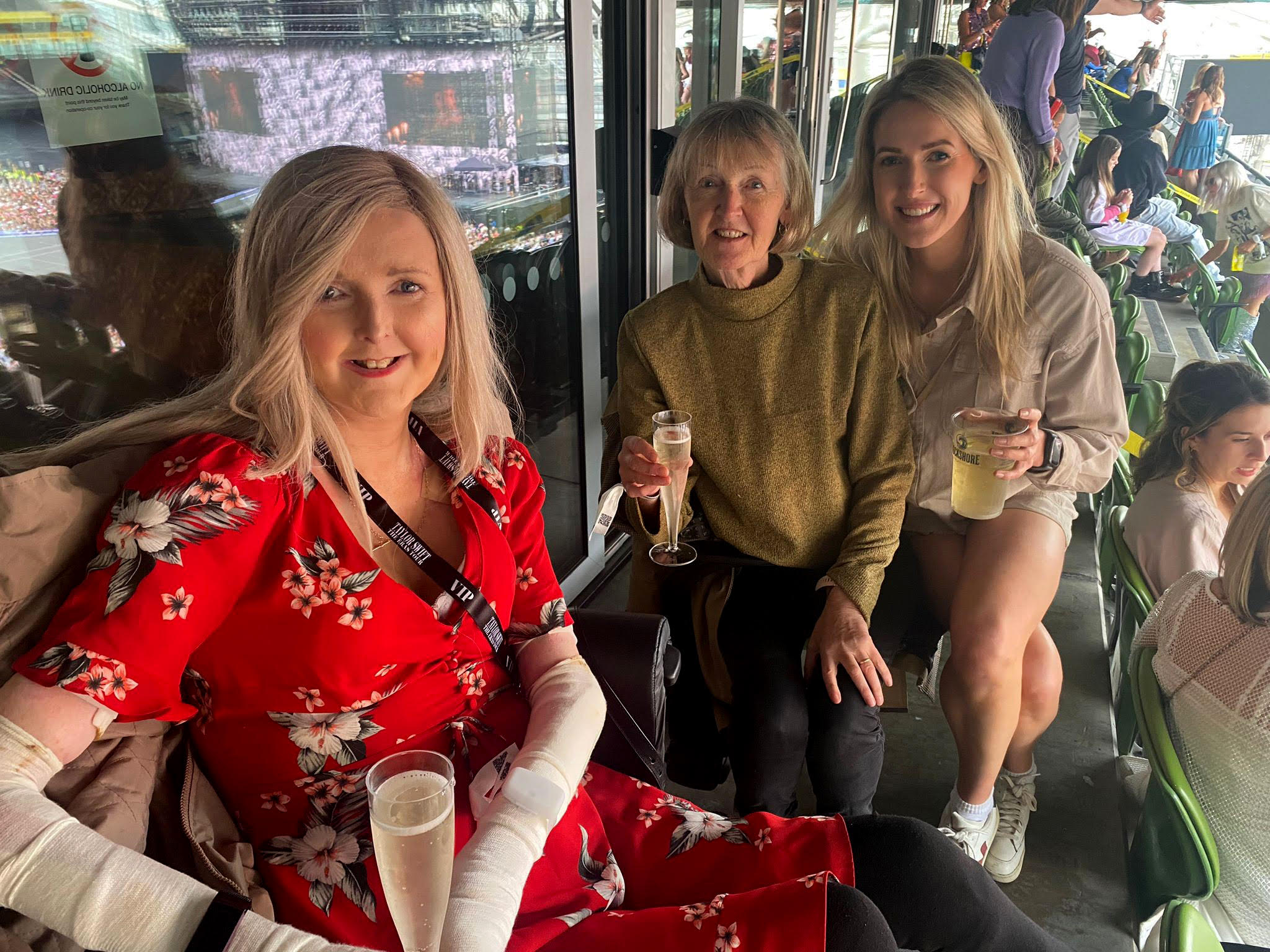
Emma Fogarty’s body is at least 80 percent covered in wounds at all times – but the 41-year-old gives no indication of the relentless pain, likened to the searing agony of third-degree burns, as she laughs in the car with her mother and friend on their way home from a Christmastime lunch.
She was looking forward to Christmas Day, when she stays home every year with her parents and sister to watch Home Alone and enjoy a Bailey’s latte; it’s the one day of the year she takes off from agonizing bandage changes and the near head-to-toe wrapping regularly protecting her. That’s Emma’s reality of living with the most severe form of Epidermolysis Bullosa, a rare condition in which skin tears away like paper – or a butterfly’s wing.
EB is so uncommon that only one out of every 50,000 people will be affected worldwide. Young sufferers are called “butterfly children” – and Emma joined their ranks when she was born in 1984, when doctors told her parents that she wouldn’t survive a week.
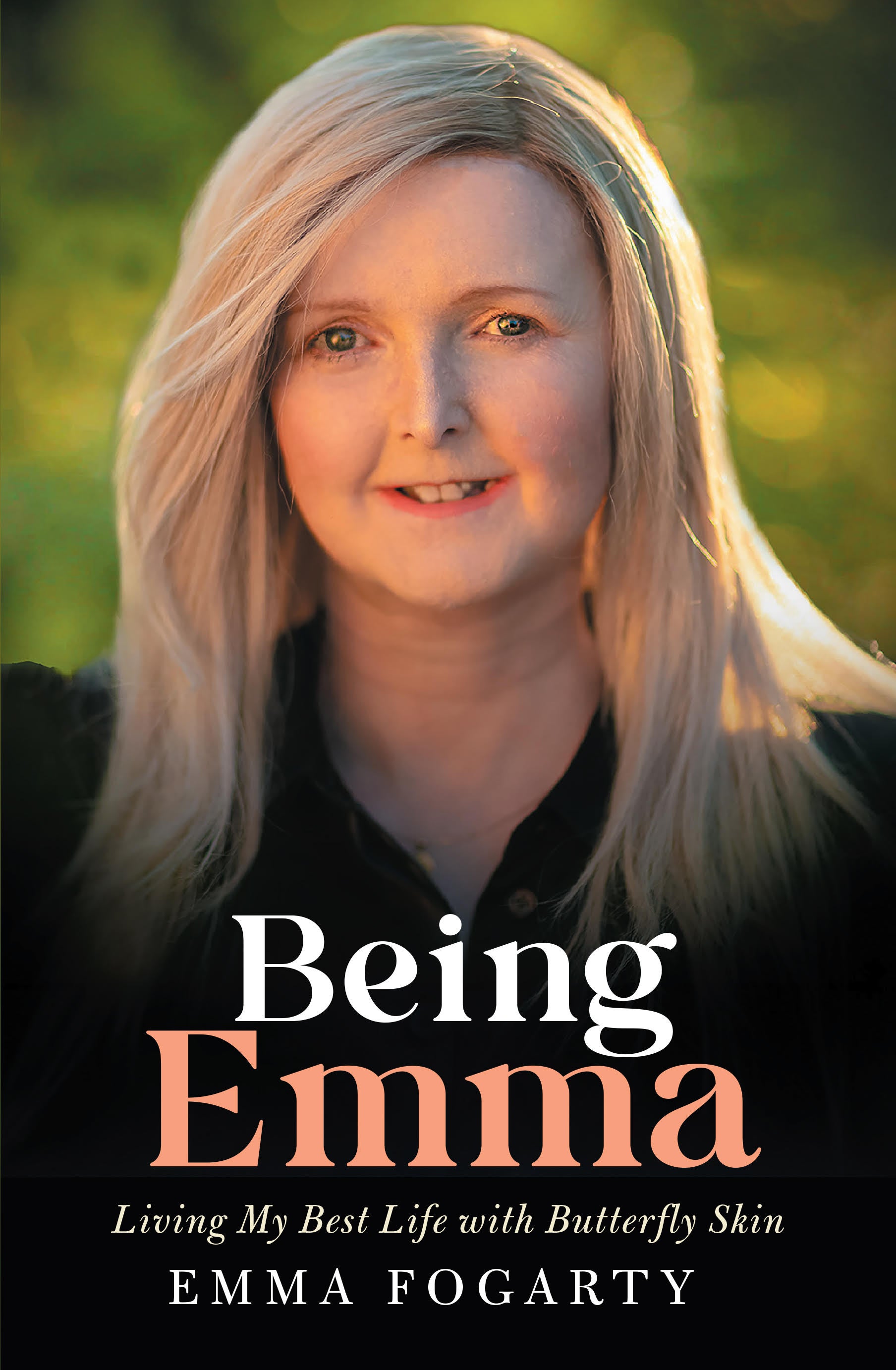
Now, more than four decades later, Emma is one of the oldest living people in the world with EB. She’s confined to a wheelchair, almost entirely covered in bandages, her fingers fused together and her left leg amputated. She has fought bravely for her own quality of life despite “trapped in a body that has been punishing to inhabit,” according to the author of the foreword of her new memoir, Being Emma.
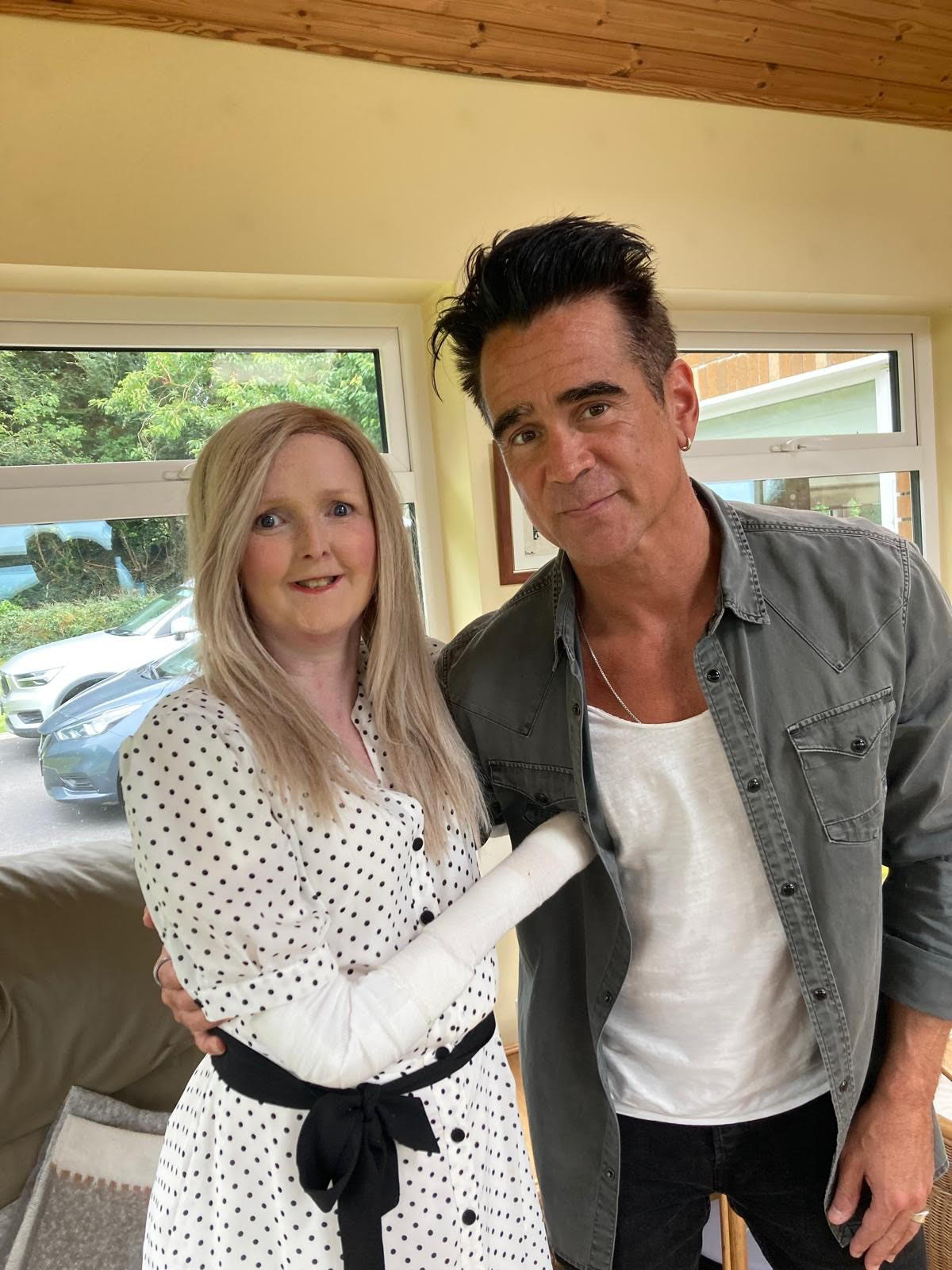
The foreword author, a man she nonchalantly texts and banters with on a regular basis, is none other than actor Colin Farrell. He sat down next to Emma at a charity event in 2010, greeted her with his trademark Dublin “Howyah” and followed that with: “I’m starving, are you?’
Then he stared down a waiter to help Emma secure plain mashed potatoes for her meal; she’d been served a portion with raw onions, and EB scarring constricts her throat so much that she can barely force down anything–let alone raw vegetables. For years, she underwent regular throat surgeries to stretch the scar tissue and help her swallow.
Colin’s glance at the server that night “hit home,” Emma writes in her memoir, published in the U.S. this month. “I think the waiter would have picked the onions out by hand after he saw it.”
The evening planted the seed of a friendship that would grow incredibly close between two people just eight years apart.
“We sat down beside each other, and we just felt like we’d known each other 100 years,” Emma, who lives in Co. Laois, Ireland, tells The Independent. “And then it just progressed on and on.”
As Emma overcame battle after battle – from cancer diagnoses to sepsis and pneumonia – Colin supported her from 3,000 miles away … and joined her for tea at home with her family on his visits back to Ireland.
“From the start, I always just wrote to him like I would any friend, filling him in on my life and asking questions about his,” Emma writes in the new memoir. “He began to respond to me in the same way. We still write to one another a lot, and talk, like friends do, about deep and personal things …He can trust me – that’s the truth – and I can trust him. That is sacred to me.”

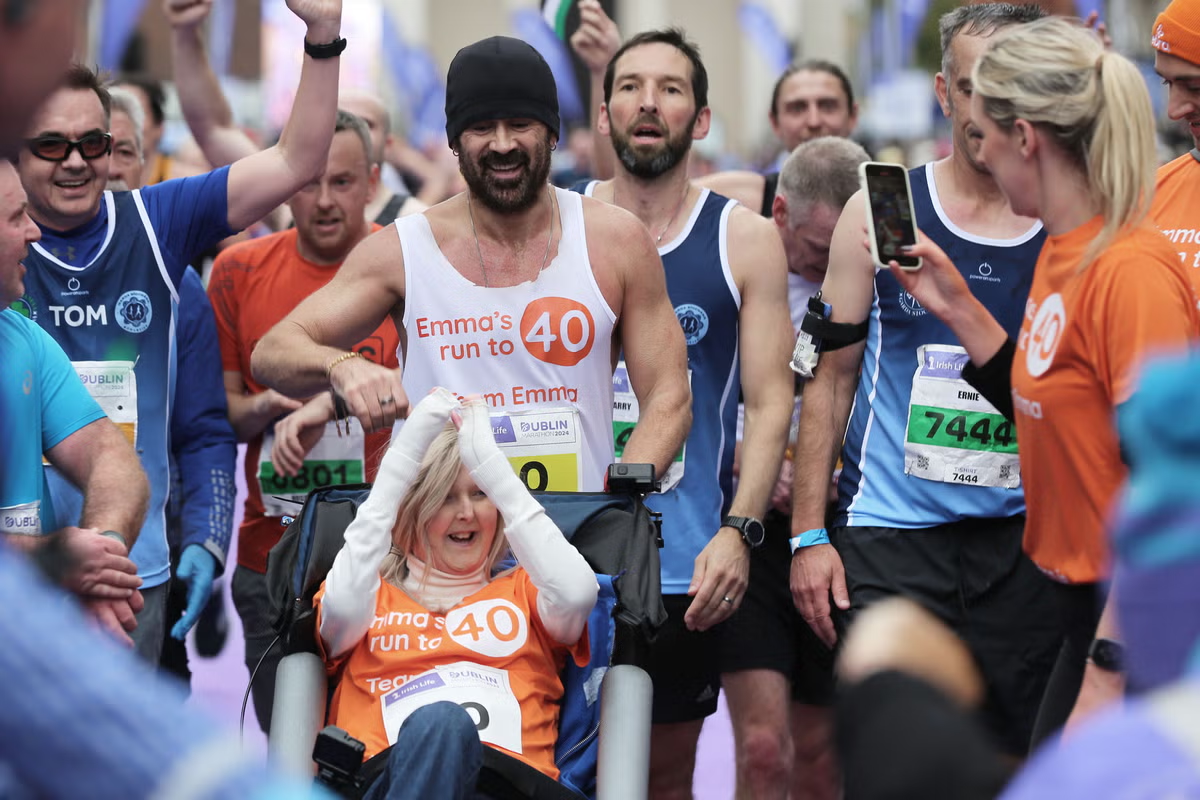
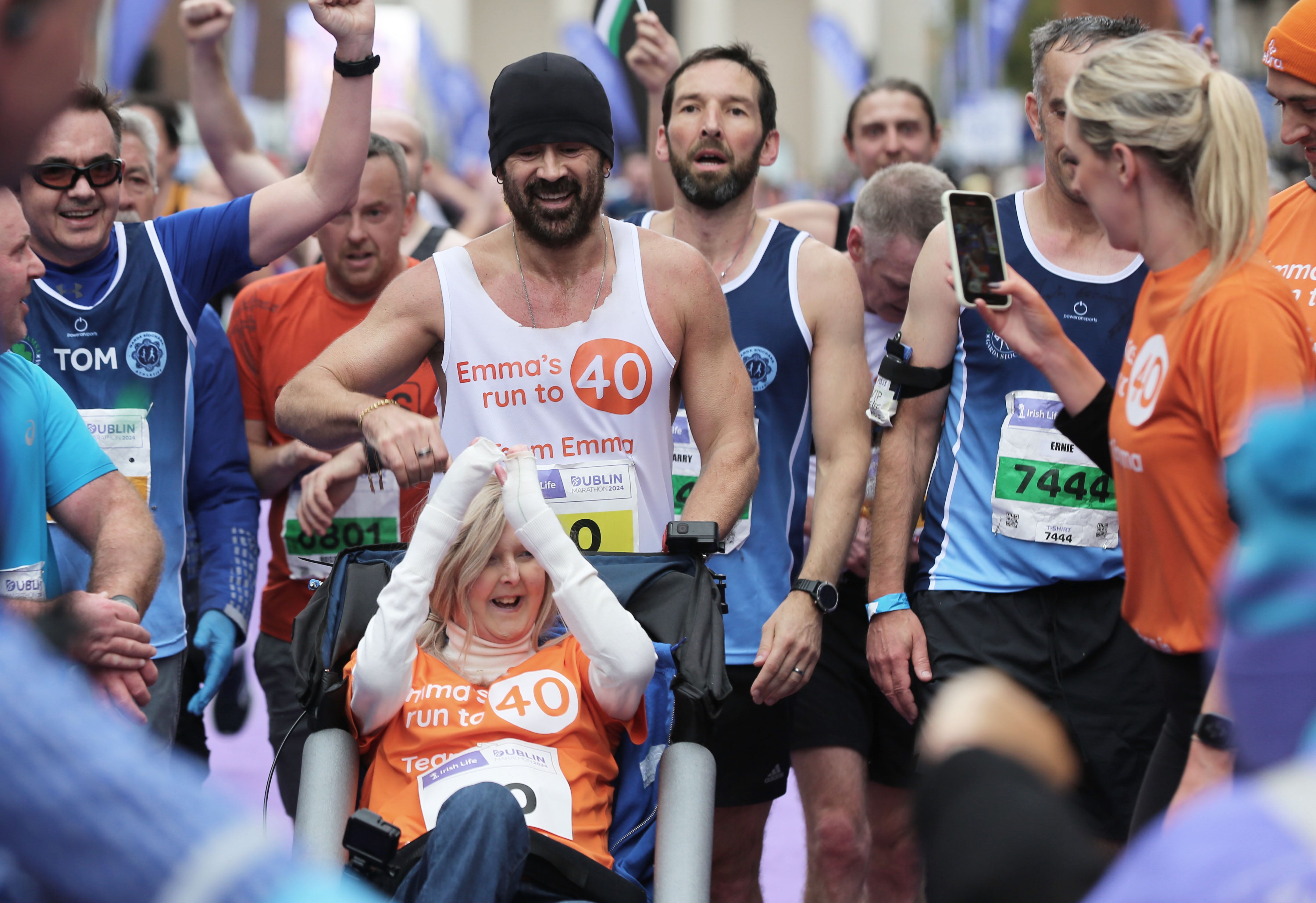
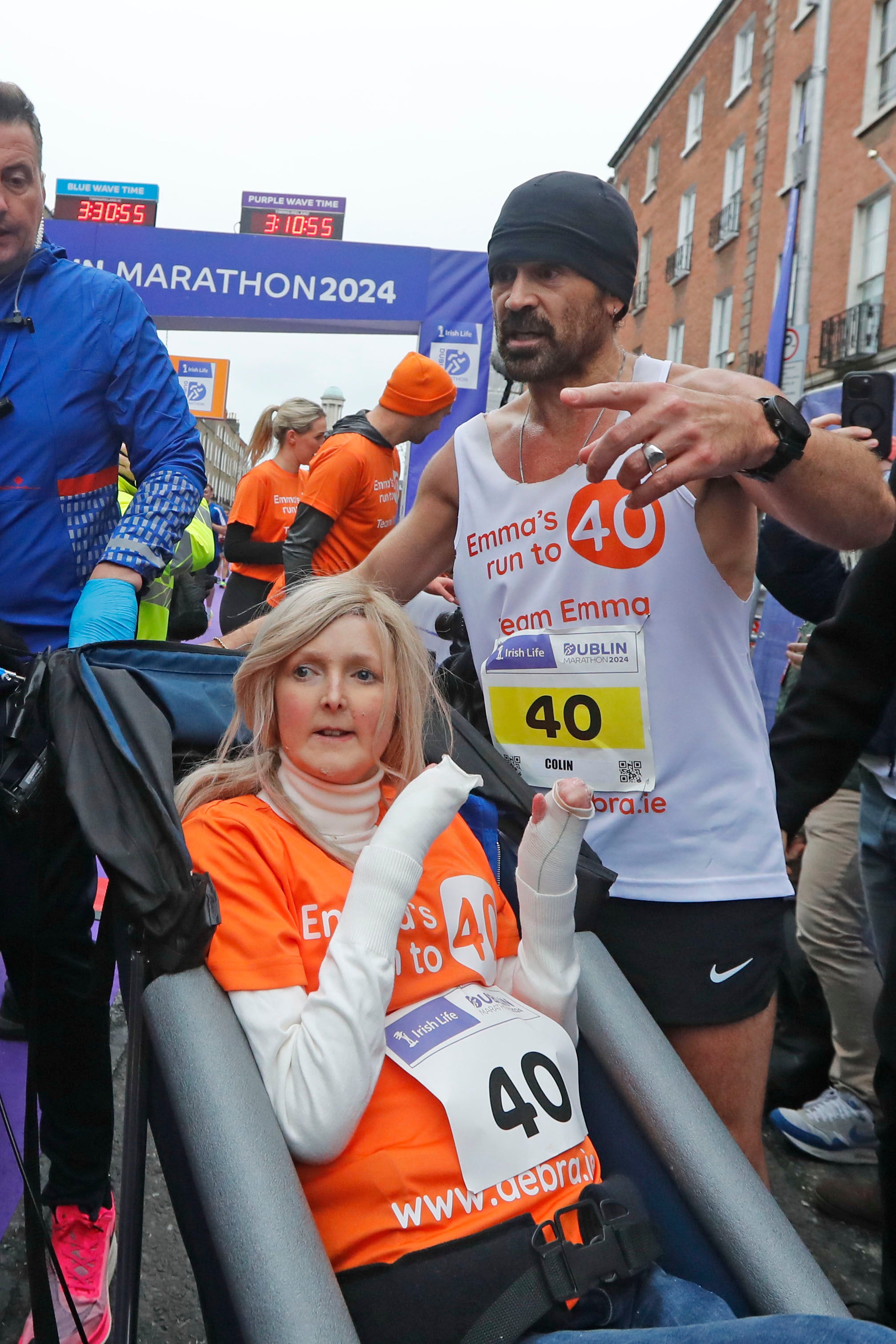
The bond led to Colin’s suggestion that he run the Dublin Marathon to raise awareness and funds for Debra Ireland, the EB charity where he’s a patron and Emma’s a spokeswoman. That, in turn, evolved into the movie star pushing Emma down the bumpy last 4km-stretch of the 2024 race, one kilometer to celebrate each of the four decades she’s survived with EB.
Pictures of the touching sight — Emma bandaged in a wheelchair, Farrell’s face set with determination as he pushed her against a backdrop of marathon runners – went global. A book deal quickly followed.
Emma, encouraged by her loved ones and Farrell, jumped at the chance to tell her story and educate the world about a rare condition that is devastating. EB leaves sufferers open to infection and sepsis, also affecting a huge swathe with osteoporosis. A fault in the genes means that proteins needed to hold the skin together – and tiny everyday activity like rubbing against sheets or simply wearing shoes can cause torturous wounds.
Emma’s EB has been worsening progressively since birth. She defied odds, finishing college, living independently and working at a bank in Dublin – until normal activity broke a bone in her foot, leading to a decline that left her wheelchair bound. A cancer diagnosis would ultimately require the amputation of the leg in 2019; EB sufferers are particularly susceptible to cancer; as Emma explains in the book, “our skin is wounded so often and heals so poorly, it becomes fertile ground for mutations.”
It was Farrell who pulled her out of the dark depression the amputation left her in, Emma tells The Independent.
“He just wasn’t afraid to ask the hard questions,” Emma says. “He wasn’t afraid to say, ‘How’s your head, how’s your mental health, how are you feeling?’ … I think that’s when I knew, yeah, I have a friend for life here.”
She talks about the actor as “just a normal, down-to-earth guy that you could live next door to and go, ‘Well, what’s the story?’ And he’d go, ‘Grand, do you want a cup of tea?’”
Emma also alludes to the fact that the actor’s son, born in 2003, suffers from a rare genetic disorder, too: Angelman’s syndrome, causing developmental delays and seizures.
“I think him having a son with a disability, he kind of gravitated to my family, as well, and we all just really get on now. We’re all really close, and he comes down [to our home] and he has the sandwiches with Mam.”
Emma built upon the publicity from the marathon – where the jostling left her back, thighs and backside raw; the denim jeans she was wearing scuffed against her knees as well as her thighs.
“I did, sadly, get injured, not on Colin’s part in any way, but … due to EB,” she tells The Independent.
But she bore the pain, still savoring the experience – as she and Farrell raised nearly €1million euro through the marathon participation.
And then she agreed to write the book – tracing a lifetime of pain and triumph as part of what she hopes will be her legacy.
“It’s just something I want to leave behind that’s a bit hopeful,” she says.
She writes not just of the everyday pain and challenges but of how close-knit sufferers can be – and how their deaths hit the others devastatingly hard. She writes about surviving cruel school bullies who targeted her for the condition already causing daily agony. She writes about how tights could become stuck to her skin as a child, “sealed on and stuck into the raw wounds.”
“My biggest problem is pain,” she states. “I suffer with it 90 if not 99 percent of the day, and the only time I don’t suffer with it is probably when I’m asleep.”
She’s pushing for better funding, better research, better awareness and better support from health systems for EB patients. She already lost her best friend to the condition, a man three years her senior she’d known all her life who succumbed to EB-related cancer at 28. Another child sufferer she knew well, Liam, was also taken far too young from this world.
In her lifetime, she tells The Independent, she’s seen improvements in awareness about EB and some evolution of treatments – but there is no cure and supports are still sorely lacking.
“We still need to keep going,” she tells The Independent. “We still need to keep fighting.”
To that end, she has Farrell plugging her book; he released a new video urging fans to buy copies for their loved ones as Christmas gifts. The pair of them “have something big happening in February,” too, she tells The Independent – though she coyly won’t share details.
She believes her mission to educate the world about EB, along with her family and Farrell’s friendship, has helped her reach milestone ages that so many other patients have not. And she wants fellow sufferers, along with readers dealing with any type of obstacles in their lives, to learn her story and have hope.
“My parents were told that I wouldn’t last a week and I’d be better off if I didn’t … I’m 41 now,” she says. “I shouldn’t be alive at all, in any way.
“For EB families or others, I want [them] to take away that if they’re determined enough, if you’ve enough strength in your bones and your body, if you have enough fire in your belly … you can do anything in the world,” she says. “I mean it. It doesn’t have to be the biggest thing in the world, but just do something that you want to do.”
Emma’s greatest defiance, writes Farrell for the book, “is her insistence on living a full and meaningful life. A life of adventure and joy. A life that is, of course, limited in many ways by Epidermolysis Bullosa, but a life that has shared so much laughter, so much friendship, had so many challenges chosen and imposed, and has triumphed over them all.”
He concludes: “She’s one of the greatest teachers we have, and if the reader can feel even an ounce of the wonder, the sorrow, the strength and hope that I have felt in knowing her, then they will walk away with a life enriched for the time spent in the company of this amazing woman.”



