She believed she had a debt to clear, and therefore was forced to accept jobs from Celia and Ray which included dealing, but also sex work.
April eventually confessed everything to Marlon and Rhona Goskirk (Zoe Henry). They tried their best to protect their children from the evil duo, but they went into the situation completely unaware of the lengths Celia and Ray would go to in order to ensure their operation didn’t fall apart.
Amid this, and the fact that he was totally unaware of what his best mate was going through, Paddy had no idea Dylan Penders (Fred Kettle) was working for Ray and Celia as well.
The fact Bear had fallen victim to Ray and Celia’s horror wasn’t revealed to Paddy until the start of 2026. Dylan explained everything to him, ultimately leading to the moment Bear returned from the farm and killed Ray.
Both Paddy and Marlon have worked incredibly hard to keep their loved ones safe and now, with Celia and Ray both dead, the spotlight is on them as the two pals attempt to process what they’ve been through.
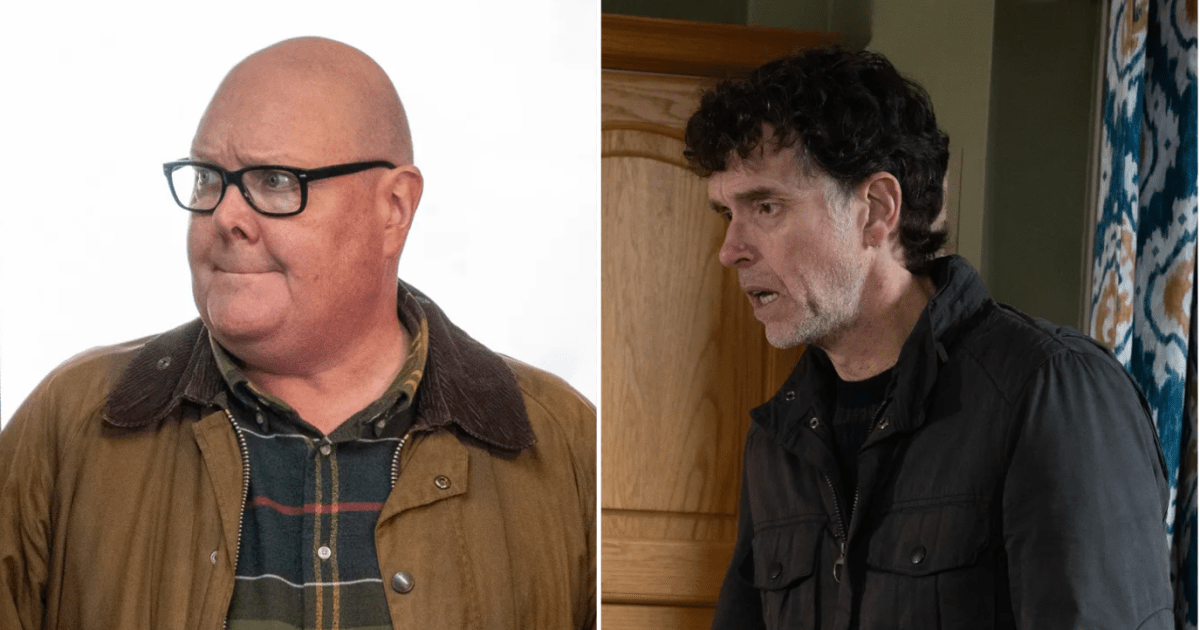
Marlon and Paddy have been so focused on protecting their family members, they haven’t really checked in with themselves (Picture: ITV)
At the start of the week, focus is on Paddy, who is dealing with the fact there’s a very real chance he’s going to go to prison for perverting the course of justice.
After a difficult situation at the vets, Paddy returns to his place of work and finds the bolt gun. He cannot help but recall the last time he was previously in an incredibly low place, which saw him take the bolt gun with the intention of ending his life.
Advertisement
Fortunately, Paddy suffers panic and runs out. He heads to Smithy Cottage and frantically bangs on the front door. When Marlon answers, he quickly pulls Paddy in for a hug.
Don’t miss a Soaps scoop! Add us as a Preferred Source
As a loyal Metro Soaps reader, we want to make sure you never miss our articles when searching for stories. We have all the latest soaps news, spoilers, videos, and interviews, with a vibrant community of highly engaged readers.
Click the button below and tick Metro.co.uk to ensure you see stories from us first in Google Search.
Now you can ensure you never miss a story from the Soaps team
‘He looks like a ghost of the person Marlon’s seen earlier, so he knows immediately that something is deeply amiss.’
Paddy fears he’s going to prison after perverting the course of justice (Picture: ITV)
As Paddy spirals about the upcoming court case, Marlon tries to help his friend and suddenly, he has an idea.
The duo head up the road and arrive outside Celia’s farmhouse with sledgehammers. Marlon and Paddy’s aim is to smash the place to bits, while unleashing their inner demons.
Advertisement
Although this is done primarily so Paddy can feel better, Mark has revealed that his character begins to bring all of his trauma to the surface as well.
‘There’s a moment in it when Marlon goes to another place’, he said.
‘Everything that he’s been through with April, all the trauma, everything that he’s he felt unable to do during April’s suffering and his family’s suffering, everything that he felt that he should have done at the time and didn’t, comes out in in this smashing up their kitchen table, which he sees as the sort of hub of their lives, where they would have had conversations about whose lives they were going to ruin next.
‘And he just loses control completely, and Paddy has to talk him down.’
On display will be the uniform belonging to chief engineer Montgomery Scott, known as Scotty, as played by Pegg in 2009’s Star Trek film, as well as Admiral Jean-Luc Picard’s uniform, worn by Sir Patrick in the Paramount+ Star Trek: Picard TV series, which ran from 2020 to 2023.
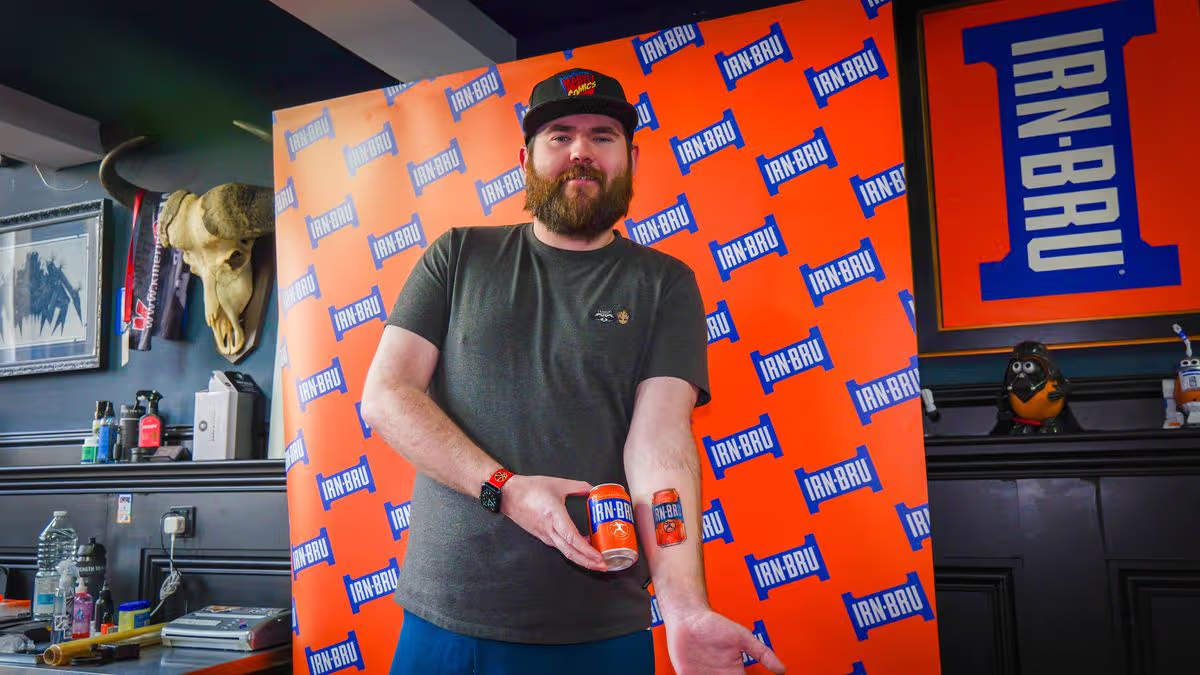
A brother and sister from Perth have honoured their late grandad with matching IRN-BRU tattoos, celebrating his love of the iconic Scottish drink
Devoted IRN-BRU fans descended on Glasgow’s Empire Ink on Saturday, March 21, for the first-ever TAT-BRU parlour, where exclusive free tattoos celebrated the soft drink’s refreshed look and 125th anniversary.
Advertisement
Fans travelled from across Scotland, with some making hundreds of miles just to get inked in tribute to the brand that has been part of their lives for decades. Among them were brother and sister Gemma, 32, and Thomas, 30, Swan from Perth, who made the trip to commemorate their late grandad, Jimmy, a lifelong fan of IRN-BRU.
Jimmy passed away six months ago, just a few weeks shy of his 87th birthday, after a battle with lung cancer. Even in his final days in a hospice, he was never without a can of his favourite soft drink.
The siblings decided to get matching tattoos to honour their grandad’s memory and the role IRN-BRU played in their whole family.
Speaking about the tattoo, Thomas said: “It’s fitting, he definitely would have liked it, he always liked seeing my other tattoos, so I’m sure this would have got his approval. He was a regular can of IRN-BRU man and used to drink it every day.
“He was always the one who would sneak me a can when I was told no, I’d never go to his house without being offered some,” he continued.
“I saw the event on Facebook and sent it to my sister who had spotted it at the same time and immediately replied that she’d already booked 11 am. We were both really close to him, so it’s nice to have this wee memory.”
The TAT-BRU event drew a diverse crowd, with many fans of the popular drink getting their skin permanently tattoo’d for a variety of personal and emotional reasons.
Advertisement
Another punted Steven Prentice, 38, made the 350-mile round trip from Inverness to get a tattoo. As he said: “I love it, it was absolutely worth the long drive down. I’ve got many tattoos and I try to get a tattoo in each place I visit, this is like a wee souvenir from Glasgow.”
Maria Maclennan, 38, a silversmithing lecturer at Edinburgh’s College of Art, added a can design to her impressive collection of tattoos, saying: “I’m a metalsmith and my partner’s an engineer, so we both love a good girder – though these days, it’s my bed that provides me with strong horizontal support.
“Bru was born long before any of our time and it’ll live on after we all leave this mortal coil.”
Advertisement
Over 50 tattoos were given out during the event, featuring a range of designs inspired by the legendary packaging, including the return of the famous “Made in Scotland from Girders” strapline and the iconic girder emblem.
The legendary ‘molten man’’insignia from 1988 was also back, celebrating the brand’s industrial heritage while giving it a modern touch.
Kenny Nicholson, Director of Brand at IRN-BRU said: “For 125 years, IRN-BRU has proudly been Made in Scotland from Girders.
“To celebrate our milestone we’ve brought this iconic slogan back, in an evolved look that typifies our industrial roots and the maverick bravery at the heart of BRU.
Advertisement
“The TAT-BRU parlour showed just how much BRU means to people, through the generations, and now those lucky fans can wear their permanent girders with pride.”
Editor’s note: The UK’s Food Standards Authority and Health Security Agency both advise against eating clay, soil or earth. Links to their guidance are included in this article.
When I ask people if they have ever eaten soil before, they tend to give me a strange look. But geophagy – the deliberate ingestion of any kind of soil – is a practice that archaeological evidence from Kalambo Falls in Zambia suggests has been part of human history for at least 2 million years.
British archaeologist John Desmond Clark reported that Homo habilis, a species of human who lived between 2.2 and 1.6 million years ago, was digging into the earth to mine clays from below the topsoil. This led to the inference that the oldest evidence of geophagy by humans was at that prehistoric site on the border of Zambia and Tanzania.
More recently, anecdotal evidence suggests a prisoner condemned to death in 16th-century Hohenlohe (now part of Germany) was allowed a last request of consuming a small clay tablet after receiving his supposedly lethal dose of mercury. The tablet was reputedly a piece of terra sigillata – clay traditionally mined from the Greek island of Lemnos. To the amazement of the court, the convict survived the mercury poisoning and was merely banished instead.
Advertisement
Geophagy is still practised widely around the globe, including by some women experiencing food cravings during pregnancy. But it should not be confused with the eating disorder pica.
In my research on geophagy practices in the UK, clays appear to be the most popular types of soil consumed. But these are only a sliver of the many types of soil people are known to eat.
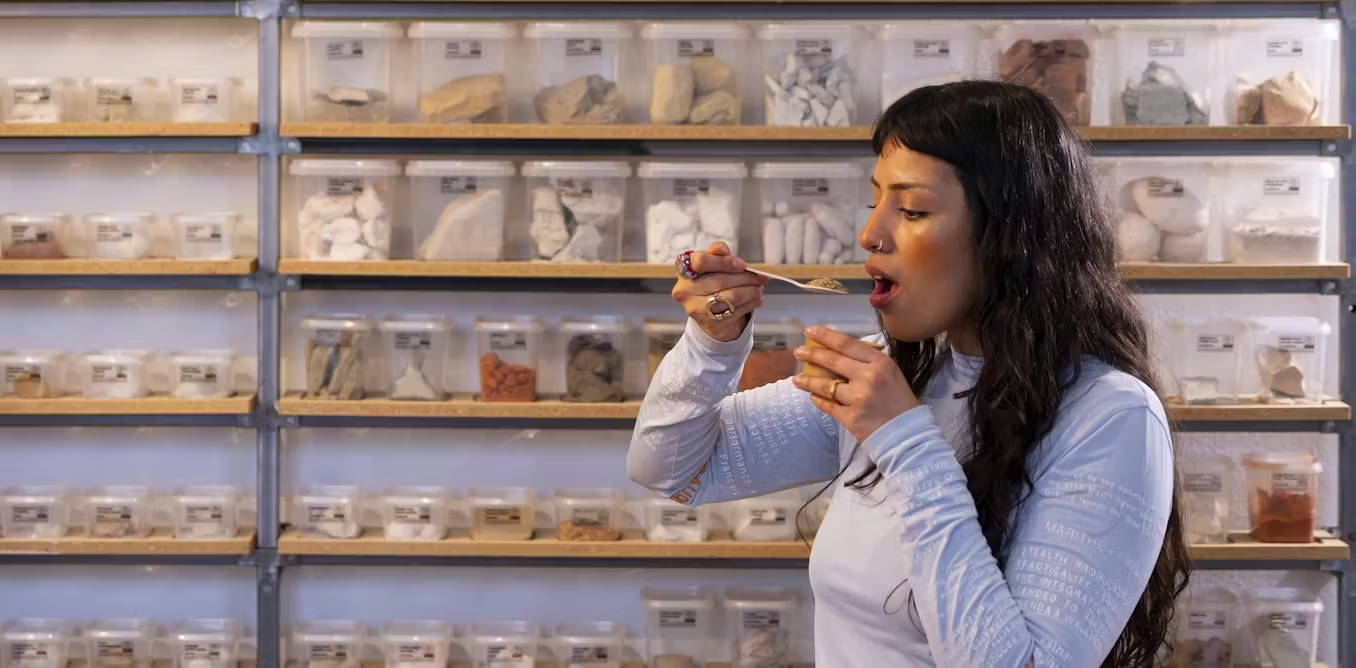
In Amsterdam’s Museum of Edible Earth, researcher and artist masharu has brought together more than 600 soils used in geophagy. These include melt-in-the-mouth pemba from Surinam and montmorillonite green clay from France, which is claimed to be an anti-ageing treatment.
The museum is now in the UK for the first time. Adult visitors to Somerset House in London are being invited to sample a “tasting menu” of its soils, and even contribute their own tasting notes.
For many people, eating soil carries deep symbolic meaning. Soil is a common theme in genesis stories that describe how a people originated, including Adam in the Bible’s Old Testament.
Among the Luo people in Kenya, women who practice geophagy during pregnancy prefer eating red clays due to the links between soil, fertility and blood. These clays are understood to replenish the blood lost during pregnancy to the unborn foetus, which is referred to as remo ma ichweyogo nyathi (the blood you form the child of).
In the 20th century, eating soil was sometimes used to determine guilt in Java. If a crime was committed with no witnesses and the cross-examination failed, suspects would ingest a small amount of soil from their ancestors’ graves and call upon them as witnesses to their innocence. If one of the suspects grew ill or died over the next few months, they would be found guilty.
Advertisement
Today, thinly sliced clay from Java is still eaten as a snack known as ampo.
Soil’s growing appeal
The benefits and risks of eating soil have been highlighted amid recent social media interest in geophagy, such as the trend for filming soil taste tests on TikTok.
A collaboration between researchers at the universities of Glasgow, Strathclyde and Crete suggests clays from Lemnos may have wider health benefits, such as preventing the progression of inflammatory diseases (although, so far, only shown in mice).
Bentonite, which is also used in cosmetic face masks, was mentioned as a favourite edible clay by some customers of a London health-food shop I spoke to.
Advertisement
One reason clays such as bentonite appear to be a popular choice is that they can host Streptomyces, a genus of bacteria that, alongside being a useful source of antibiotics, produce geosmin. This chemical emits the pleasant smell associated with dry earth after rainfall – and also contributes to a pleasantly “earthy” taste.
Video: NewsNation.
But any kind of soil should always be consumed with caution. In 2013, Public Health England identified calabash chalk as a particular risk for pregnant women. Its warning was triggered by widespread consumption of this chalk within some Asian and African communities in London, as a nutritional supplement or morning sickness antidote, and the potential threat posed by lead present in some of these soils.
The UK Food Standards Authority has also warned about the presence of lead and other toxic chemicals in commercially available clays.
Advertisement
Some soils may contain hidden dangers such as heavy metals pollutants, parasitic worms and cancer-causing moulds. Additionally, faecal contamination of soils may introduce bacteria such as E coli, which can cause food poisoning.
While these health risks do not apply to all soils, and some of these concerns can be addressed through the way clays are processed, it is advised that anyone interested in practising geophagy should seek careful guidance first.
The exhibition of edible soils by masharu, on show in London until April 26, seeks to challenge the stigma and negative perceptions around eating clay by focusing on the often-overlooked sensations of soil. From environmental science to health research, soil is no longer being treated like dirt.
Anyone with information on the collision near Lampeter is being urged to contact Dyfed Powys Police
Alex Hickey Head of North Wales Live
23:38, 25 Mar 2026
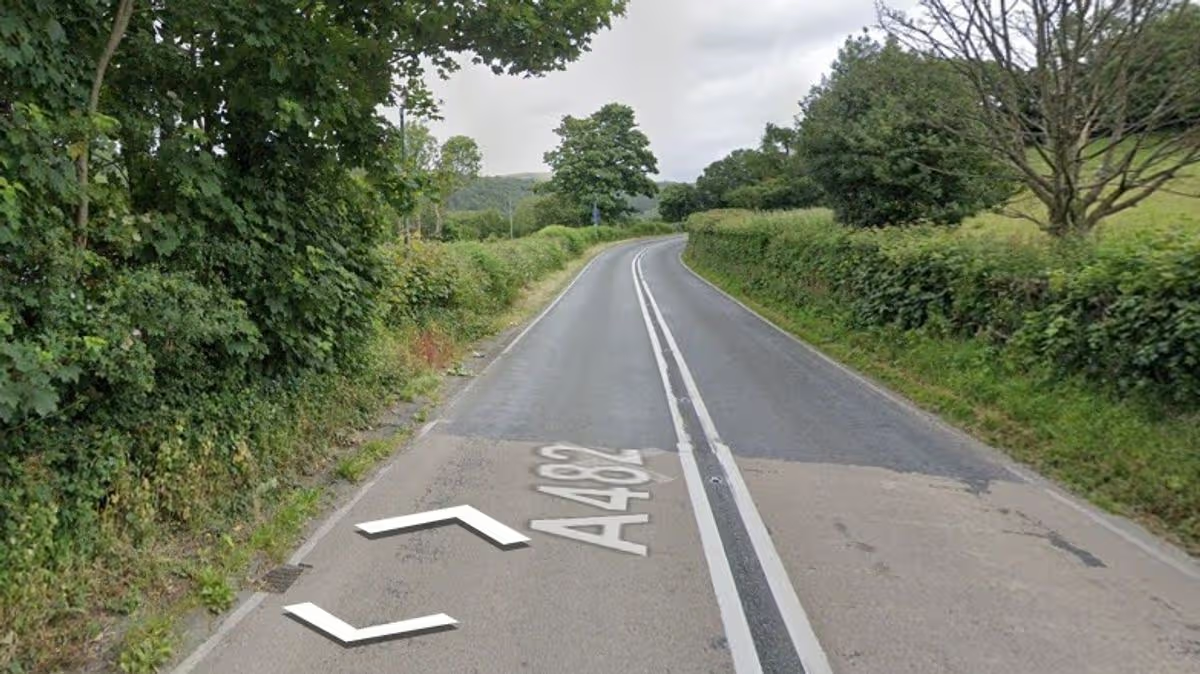
A motorist has died following a two-car crash on the A482 on Tuesday night. Dyfed-Powys Police is appealing for witnesses to, or anyone with information about, a fatal collision on the A482, between Lampeter and Ciliau Aeron.
It took place around 9.30pm on March 24, and involved two cars; a black Renault Clio and black Peugeot 208
Advertisement
Sadly, the driver of the Clio died at the scene. Their next of kin have been informed and are being supported by specialist officers.
The road was closed for collision investigation to take place and was reopened around 5.30am (Wednesday, March 25)
“Anyone with information or dashcam footage that could help officers with their investigation is asked to report it to Dyfed-Powys Police.”
A mothballed carbon dioxide plant is to be reopened with a Government grant of up to £100 million amid fears of shortages caused by the Iran war.
Business Secretary Peter Kyle signed off the grant to reopen the Ensus plant on Teesside, according to the Financial Times.
It is understood the grant will pay to get the plant up and running again for an initial three-month period.
The plant was mothballed last year after a trade deal with the US cut tariffs on bioethanol, its main product.
Advertisement
It will be reopened due to its ability to produce CO2 as a by-product. The gas is vital for several sectors, including drinks and the nuclear industry, but supply has been disrupted thanks to soaring energy costs on other sources such as fertiliser factories.
The grant for the Ensus plant is the first major intervention by the UK Government aimed at tackling possible shortages caused by the Iran conflict.
But fears range much wider than CO2, with former BP executive Nick Butler telling Times Radio the UK could face oil and gas shortages in two to three weeks.
He said: “There will be shortages and I think the Government now should be seriously planning how they’re going to handle that and part of that is maximising supply.”
Advertisement
On Tuesday, Shell chief executive Wael Sawan issued a similar warning at an industry conference.
Ministers continue to insist the supply of petrol remains reliable.
Energy minister Michael Shanks told MPs on Wednesday the Government was “absolutely not” planning for blackouts or petrol rationing, insisting the UK had a “strong and diverse range of supplies”.
The key question remains how long Iran’s effective blockade of the vital Strait of Hormuz will last.
Advertisement
On Thursday, Foreign Secretary Yvette Cooper will urge Iran to reopen the Strait of Hormuz as she travels to the G7 Foreign Ministers’ meeting in France.
She will make clear that the UK will help ensure safe passage for ships through the strait and provide an additional £2m in humanitarian aid to Lebanon.
Ms Cooper is expected to hold talks with counterparts, including US secretary of state Marco Rubio, France’s Jean-Noel Barrot, and Germany’s Johann Wadephul.
The strait remained closed on Wednesday evening, despite Iran’s foreign minister Abbas Araghchi claiming it was open to “non-hostile” shipping.
Advertisement
The conflict continued with Washington saying it would hit Iran “harder” if Tehran refused to accept it had been “defeated militarily”.
White House spokeswoman Karoline Leavitt insisted “productive” talks were continuing between Washington and Tehran.
But Mr Araghchi said in a message on his Telegram channel, translated from Farsi, that there had been “no negotiations or discussions with the American side” and suggested the US had effectively admitted defeat.
He said: “Didn’t they talk about ‘unconditional surrender’ before? What happened now that they are talking about negotiations and calling for them?
Advertisement
“I will explain that there are no negotiations, but the fact that they are mobilising their highest officials to negotiate with the Islamic Republic indicates their acceptance of defeat.”
Crucially, this ruling effectively bypasses the traditional legal shield which Big Tech has used for decades to deflect such claims, commonly known as Section 230.
Meta CEO Mark Zuckerberg leaves the Los Angeles Superior Court after testifying on February 18, 2026 in Los Angeles, California as part of the K.G.M. trial (Wally Skalij/Getty Image)
“For years, social media companies have profited from targeting children while concealing their addictive and dangerous design features,” said one of K.G.M.’s lawyers, Joseph VanZandt.
“Today’s verdict is a referendum — from a jury, to an entire industry — that accountability has arrived.”
To be clear, the actual penalties here, while huge for K.G.M., are completely insignificant for such massive companies.
Advertisement
Meta must pay $4.2 million in combined punitive and compensatory damages (roughly 0.02 percent of its annual profit of $22.7 billion), while YouTube must pay $1.8 million (just over 0.005 percent of its $34.5 billion profit last year). By itself, that’s hardly cause to make their accountants quake in their loafers.
But K.G.M.’s is not the only such case. Thousands of similar lawsuits have been filed across the nation by teenagers, parents, school districts, and state governments.
The outcome will be influential at least in California, where courts are treating this lawsuit as a test case. When you multiply those damages accordingly, you’ll soon reach the kind of numbers that make even a multi-trillion-dollar company sit up and take notice.
Together, these cases signal a coming snowdrift of lawsuits against Big Tech, according to Cornell law professor Alexandra Lahav.
Advertisement
“The social media tort litigation is going to be beyond massive,” said Lahav on Bluesky after Wednesday’s verdict. “It will be asbestos level or bigger.”
For decades, tech giants have argued that they enjoy blanket protection from lawsuits like this under Section 230 of the Communications Act.
Advertisement
Section 230 is highly controversial, but it’s also the bedrock of the modern internet. It allows companies and individuals to host — and, crucially, to police — user-generated material online, without being held legally liable for its contents.
That’s what allows social media companies to set their own rules and remove violating posts without being treated as the publishers of those posts. If I falsely smear someone in this article, The Independent could be sued for libel, but if you falsely smear someone in the comments, Section 230 would protect us.
But does this also protect the systems by which these companies distribute that content? Does it protect all the psychological hooks and tricks they use to keep their users scrolling and coming back each day?
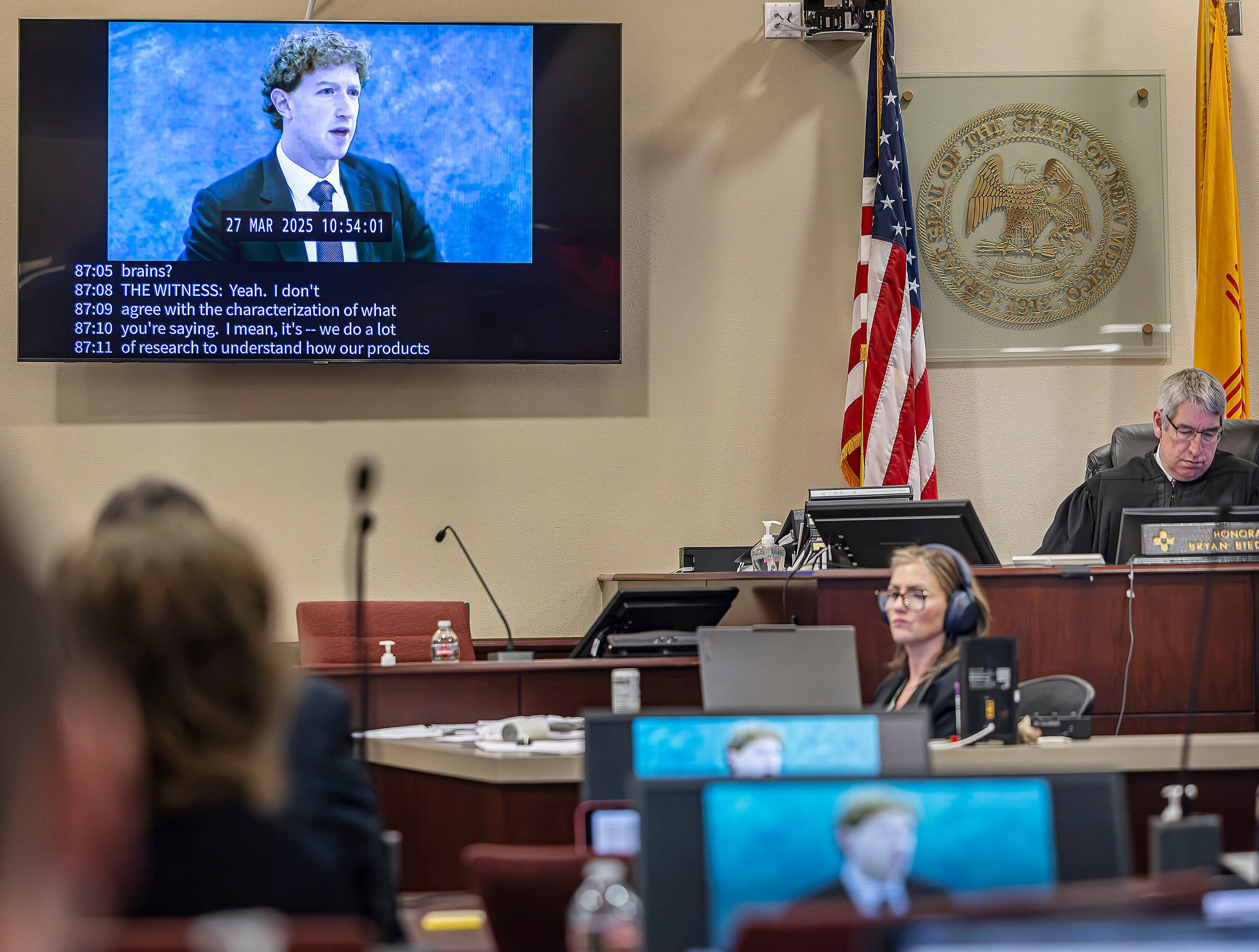
Lawyers played clips from Meta Founder and CEO Mark Zuckerberg’s deposition (Jim Weber/Santa Fe New Mexican via AP, Pool)
K.G.M.’s lawyers argued no. They presented internal documents that showed both companies’ executives were briefed on their products’ damaging effects and warned that their policies were harming children.
“If we wanna win big with teens, we must bring them in as tweens,” said one Meta memo. Another showed that Meta was aware that 11-year-olds were regularly using Instagram, despite its rules requiring a minimum age of 13.
Advertisement
One of them was K.G.M., who testified that said she started using YouTube at 6 years old and Instagram at 11. She said her compulsive app use had damaged her self-worth, isolated her from friends and family, and contributed to her depression and body dysmorphia.
“How do you make a child never put down the phone? That’s called the engineering of addiction,” said K.G.M.’s lawyer Mark Lanier.
The companies countered that K.G.M. had many other problems in her life, noting that her therapist never documented social media as a cause of her mental health problems. They said it was wrong and simplistic to blame social media for wider societal problems.
But, bluntly, it’s easy to see why the jury wasn’t persuaded. While Meta and YouTube are hardly the source of all society’s ills, there is evidence stretching back years of how senior executives repeatedly prioritized growth and profit over safety and harm reduction.
Most of us have used Instagram and YouTube ourselves, so we have personal experience of how compellingly they can play on our brain chemistry. Many Americans, too, have struggled to pull their children away from digital systems that seem precision-engineered to perpetually ensnare their brains.
Advertisement
A Meta spokesperson said it “respectfully disagrees with the verdict” and is evaluating its options. Google said the case had “misunderstood” YouTube, which is “a responsibly built streaming platform, not a social media site.”
The ruling has implications far beyond just these two companies. TikTok and Snapchat were also named in the case, only to settle out of court.
‘All of this could be reversed on appeal’
Meta and Google have shrugged off billion-dollar fines before. But there is now a plausible future timeline where the legal exposure grows expensive enough that they are forced to seriously re-engineer their products.
Advertisement
“There is a long road ahead, but this decision is quite significant,” Clay Calvert, a media law expert at the center-right American Enterprise Institute, told The New York Times.
“If there are a series of verdicts for plaintiffs, it will force the defendants to reconsider how they design social media platforms and how they deliver content to minors.”
That outcome is far from guaranteed. Many have predicted such a reckoning before, only for the “moment” to fizzle. That includes myself, in both 2017 (a “Philip Morris moment”) and in 2021 (a “Lehman moment”).
According to The Guardian, there are 20 more “bellwether” trials scheduled on this subject, whose outcomes might be completely different.
Advertisement
“It is really early to tell the significance of this, because it could all be reversed on appeal,” said Kate Klonick, a law professor and digital policy expert at St. John’s University, on Bluesky.
“This will likely be years before it is final — or not.”
That would actually be similar to what happened to Big Tobacco. Rather than a singular “moment”, it ultimately took roughly four decades for the industry to be brought to heel, from the Sixties to the 2000s.
Even Howard Engle’s victory was partially reversed by an appeals court, limiting its scope and narrowing the path for similar plaintiffs.
Advertisement
Still, rightly or wrongly, this week’s judgments are a potent sign that Americans have lost patience with Silicon Valley’s talking points. If I were them, I’d be brainstorming new ones.
Outsourced HR, based at Lingfield Point, made the move after a sharp rise in demand for tailored training programmes, with interest doubling in the past year.
Sasha Warr, founder of Outsourced HR, said: “We’ve always offered training to clients, but as HR and the workplace have become more complex, demand has grown rapidly.
The Outsourced HR team (Image: Supplied)
“In the last year alone, demand has doubled and increasingly, managers want to feel they are on steady ground when it comes to issues such as employment law, diversity, and staff wellbeing.
“Mental health is a good example.
Advertisement
“Some managers can understandably feel cautious about addressing it, so they’re looking for practical guidance to ensure they handle conversations appropriately and make informed decisions for their business.”
The consultancy, which primarily serves SMEs across the North East, was founded in 0 by Ms Warr during her maternity leave.
She launched the business following a corporate career with global brands such as Renault Retail Group and Toshiba.
The company has seen consistent year-on-year growth, driven by its focus on supporting smaller organisations that often don’t have the capacity for in-house HR.
Advertisement
It is supported by a five-strong team with more than 80 years of combined HR experience.
Ms Warr said: “What sets us apart is that we understand both the law and the realities of running an SME.
“Our clients aren’t large corporates with extensive HR departments.
“They often operate with lean teams, so when issues arise – like managing absence or supporting employee wellbeing – leaders need the confidence and skills to respond effectively.
Advertisement
“That’s exactly what this training aims to provide.”
The new training services are designed for SME managers and cover employment law, effective leadership, mental health in the workplace, and managing sickness absence.
The launch comes as businesses brace themselves for major changes to employment law in the coming two years, starting this April, when major changes to legislation like day one rights to Statutory Sick Pay and Parental Leave come into effect.
More employment law changes are expected in the coming two years, and Outsourced HR is working closely with clients to ensure they have the documents, knowledge, and confidence to deal with these changes.
Carrington Walker Live News Journalist and Ruth Suter
16:09, 25 Mar 2026Updated 17:00, 25 Mar 2026
The partner of Scottish footballer Graham Carey has died at the age of 37 following a prolonged battle with cancer.
Rachel Borthwick, a mother of two, passed away on Sunday (March 22), in Delhi, India, where she had travelled in search of further treatment options. She was diagnosed with triple‑negative breast cancer after discovering a lump in September 2021.
Advertisement
Carey, who plays for Dunfermline Athletic, confirmed her death on Wednesday, paying tribute to her courage throughout her illness. “Our babies will always remember how unbelievably strong and brave you have been until the very end,” Graham posted on social media, adding, “I know you will always be looking down on them, protecting them, and guiding them.
“They can take some comfort that their mummy is no longer in any pain and can now rest in peace. We will always love you more than you could ever know.”
In March 2023, then aged 35, Rachel found a tumour around a year after finishing her treatment for triple-negative breast cancer. At the time, she was told her cancer had become undetectable, but further tumours were discovered.
Advertisement
Her sister Sarah recalled how Rachel put up a “brave and relentless battle” for more than four years, in a tribute posted online. “It is with the heaviest of hearts that we share an update about our beloved Rachel,” the sister said.
“On Sunday, March 22 at 11.06pm local time, Rachel passed away peacefully at CK Birla Hospital in Delhi, India, with her parents by her side. Rachel fought an incredibly brave and relentless four-and-a-half-year battle with triple-negative breast cancer.
“She faced every challenge with strength, courage, and without complaint, giving everything she had for as long as she could. Sadly, the cancer was very aggressive and had progressed significantly, and in the end it became too much for her body to endure.
Advertisement
“Rachel made the decision to travel to India for treatment because she believed there were no further options available to her in the UK. She was determined to keep fighting for as long as possible—for herself, and most importantly, for her children. That determination, hope, and love defined her until the very end.”
Sarah continued: “We are heartbroken beyond words. Rachel was a deeply loved daughter, granddaughter, sister, mother, auntie, niece, cousin and friend, and the space she leaves behind can never be filled. We want to thank everyone who has supported Rachel throughout her journey—through donations, messages, prayers, and kindness. It meant more to her, and to all of us, than we can ever truly express.
“Please continue to keep Rachel and her loved ones in your thoughts and prayers and respect their privacy at this incredibly difficult time.”
Since the announcement of Rachel’s death, there has been an outpouring of support from the footballing world to rally around her family.
A statement from Dunfermline Athletic reads: “Everyone at Dunfermline Athletic was hugely saddened to learn of the passing of Rachel Borthwick, partner of Pars player Graham Carey. Our thoughts are with Rachel’s family and friends at this devastating time. Rest in Peace, Rachel.”
Another statement from St Johnstone FC reads: “We are devastated to learn of the passing of Graham Carey’s partner, Rachel. The thoughts and love of everyone at St Johnstone Football Club are with Graham and his family at this very sad time. Rest in peace, Rachel.”
Plymouth Argyle also sent their regards to their former midfield star Graham and his family, saying “We all send our deepest condolences to Graham’s family at this heartbreaking time. Rest in peace, Rachel.”
Once the prosecution had begun, Garnacho’s lawyers wrote in to say: “We respectfully invite the current charge of failing to provide driver information to be withdrawn and Mr Garnacho confirms he is to enter a guilty plea to the original offence of exceeding the speed limit, at 50 miles per hour in a 40 miles per hour location.
NEW YORK (AP) — All but four of the passengers injured in Sunday’s deadly collision between an Air Canada plane and a fire truck have been released from the hospital, the airline said Wednesday, as crews began moving the mangled aircraft off the runaway at New York’s LaGuardia Airport.
The crash, which remains under investigation, killed two pilots. Roughly 40 people were treated at area hospitals for a range of injuries, some serious. Further details on the four people who remained hospitalized were not immediately available.
The plane, which originated in Montreal, was carrying 76 people, including the crew, when it slammed into the fire truck that had driven out onto the runway. Seconds before the collision, an air traffic controller had cleared the truck to cross the runway.
Since Monday, much of the wreckage had remained on the tarmac, blocking access to one of two runways at one of the country’s busiest airports.
Advertisement
Just before 5 p.m. on Wednesday, airport workers began towing the remnants away. Two big tow trucks working in tandem also righted the badly damaged fire truck, which had been laying on its side since the crash.
The jet’s tail end was lifted onto a large dolly, which was then towed via long tethers by two vehicles driving side by side. Earlier in the day, much of the wreckage of the nose, which was obliterated in the collision, was cut away by work crews. As it was towed, the middle of the plane was supported by its own landing gear, which appeared to be intact.
In a statement, Air Canada said the plane would be taken to a hangar. The airline said it would soon begin the process of reuniting people with baggage and personal belongings.
After the collision, many onboard managed to escape the damaged aircraft, including a flight attendant who survived after being thrown onto the tarmac while still strapped in her seat.
Advertisement
The two pilots have been identified as Mackenzie Gunther and Antoine Forest. At least one passenger, Clément Lelièvre, credited their “incredible reflexes” in saving his life and those of others, noting they braked extremely hard just as the plane touched down.
The two Port Authority Police Department firefighters in the truck survived.
___
This story has been corrected to reflect that there were 76 people aboard the plane, not 70.
















































You must be logged in to post a comment Login