

Wales prides itself in being a pioneer in environmental policy. It was the first country in the world to adopt a statutory duty for public bodies to make development sustainable, in 2015. Yet, environmental issues have rarely featured prominently in elections to the Senedd (the Welsh parliament).
This year is different. Wales votes for a new Senedd in May and parties are using contentious statements around environmental issues to differentiate themselves. Issues including windfarms, expansion of pylons and support for farmers are already starting to be fiercely debated.
For the first time, Reform UK is a major player in Welsh politics, and is using the urban-rural divide as part of its messaging. Recent polling has been suggesting that Senedd control could be a close fought battle between Reform and Plaid Cymru, a centre-left Welsh nationalist party.
But one new poll by YouGov for ITV Cymru Wales and Cardiff University has just suggested Plaid is now pulling ahead, up seven percentage points since September. Analysis suggests this could be most significant election in Wales for 100 years, with a major shift away from Labour.
The Senedd has been led by a Labour government since its creation in 1999, when it was known as the National Assembly. Labour has traditionally held the vote in the urban areas of Wales, while the less populated rural areas historically voted Conservative, Liberal or Plaid.
Farming and the environment
One big issue that shows how the campaign battle is unfolding is around the Welsh government’s new sustainable farming scheme (SFS). Designed as a post-Brexit replacement for the common agricultural policy (which provided support for UK farmers when the UK was an EU member), the SFS ties financial assistance for farmers more strongly to environmental objectives than the EU assistance did.
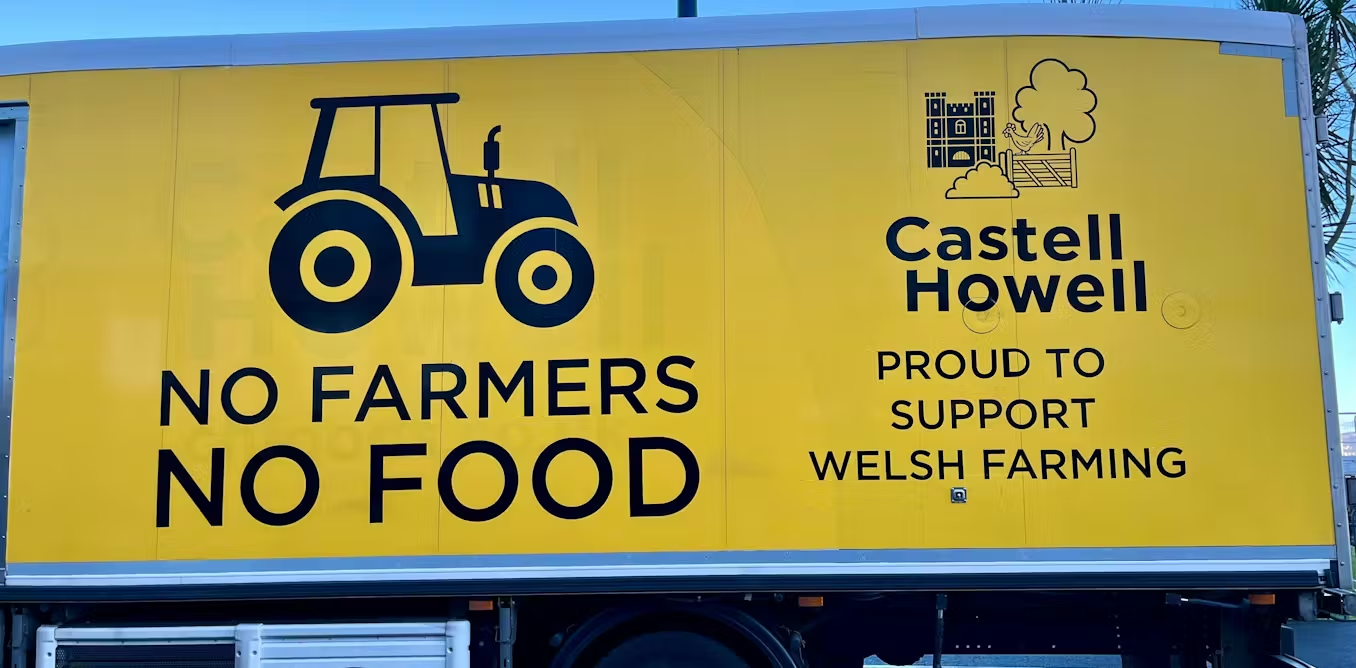
The original plans proposed that farmers would be required to plant 10% of their land with trees to qualify for support. The proposal provoked vociferous opposition from farmers, who feared that the viability of small farms would be threatened, with several protests across Wales. Over half of farms in Wales are small, under 20 hectares, and typically operate on tight margins.
On average, farms in Wales are the least profitable of farms in the four UK nations. The average farm income for all farm types in Wales was £34,300 in 2021. This compared to £34,402 in Northern Ireland, £39,347 in Scotland and £51,900 in England.
À lire aussi :
Farmers and supermarkets worry that extreme weather will stop food getting to consumers – here’s what needs to change
While the Welsh government backed down and moderated the SFS requirements, the episode has reinforced a perception that Labour doesn’t understand the countryside. The perception has been both stoked and exploited by opposition parties, notably Reform UK, which is targeting Welsh farmers for support.
Reform leader Nigel Farage attracted large crowds when he appeared at the Royal Welsh Show in July 2025 and used a rally in Llandudno in November to attack Labour’s agricultural and environmental policies. Reform’s strategy in Wales is primarily aimed at converting voters from the Conservatives, who have also been vocal critics of the SFS, but rural discontent with Labour could threaten First Minister Eluned Morgan’s chances of re-election in the rural Ceredigion Penfro constituency.
Reform’s messaging to Welsh farmers includes statements opposing mass tree planting and rewilding and backing livestock farming. These positions refer to wider debates in Wales around the contribution of livestock farming to climate change as well as different approaches to land management and food production.
Protesting pylons
Among the most contentious issues is the conversion of land in Wales for renewable energy generation. According to the Campaign to Protect Rural Wales there were over 50 planned onshore windfarm projects in early 2025, many accompanied by local opposition.
Campaign groups are also protesting against plans for new lines of pylons to connect windfarms in upland Wales with urban centres, especially in Powys and Carmarthenshire. Both the Conservatives and Reform UK have backed pylon campaigners but opposition is not limited to those parties.
Plaid has also outlined some opposition to pylon projects, favouring more expensive underground cabling. This position, along with alignment with farmers on the SFS, reflects the importance of rural areas as heartlands for the party.
Yet, some commentators argue that there is a contradiction between these stances and Plaid Cymru’s strong green rhetoric on climate change, that could be targeted by a Labour party willing to defend its policies as necessary pro-climate actions.
Rivers and roads
Several other locally significant issues have potential to be amplified nationally in the campaign. Pollution of the River Wye, which runs along the Welsh-English border, from intensive poultry units helped the Greens to win North Herefordshire across the border in the 2024 UK general election.
It is also a concern in the Senedd constituencies through which it runs, Brycheiniog Tawe Nedd and Sir Fynwy Torfaen. The former is the top target for the Liberal Democrats, who campaigned on water quality in Brecon, Radnor and Cwmtawe during the UK election in 2024.
The long-running issue of the Newport relief road could also be resurrected by parties seeking to advocate a pro-motorist platform. Plans to relieve congestion on the M4 by building a new motorway through the Gwent Levels split the Labour party and were cancelled in 2019 as incompatible with Wales’s sustainable development commitments.
The rise of the Greens
One factor that could help to further propel environment issues to prominence is increased support for the Green party in Wales. The January YouGov poll put the Greens ahead of Labour, in third place on 13%. If that polling trend holds, the Greens could have a decisive role in the formation of the next administration.
The Greens are in competition with Plaid for disaffected Labour voters, but with their key targets in urban south Wales they are less beholden to appeasing rural voters. As such, emphasising more radical positions on agriculture, renewable energy, and river pollution could help to differentiate the Greens from Plaid and set up potential wins in post-election negotiations between the parties.
In May environment issues are likely to play a bigger part in shaping the outcome of the election in Wales than they ever have done before.

Don’t have time to read about climate change as much as you’d like?
Get a weekly roundup in your inbox instead. Every Wednesday, The Conversation’s environment editor writes Imagine, a short email that goes a little deeper into just one climate issue. Join the 47,000+ readers who’ve subscribed so far.



