
News Beat
Equality boss expects people to ‘follow rules’ over single-sex spaces

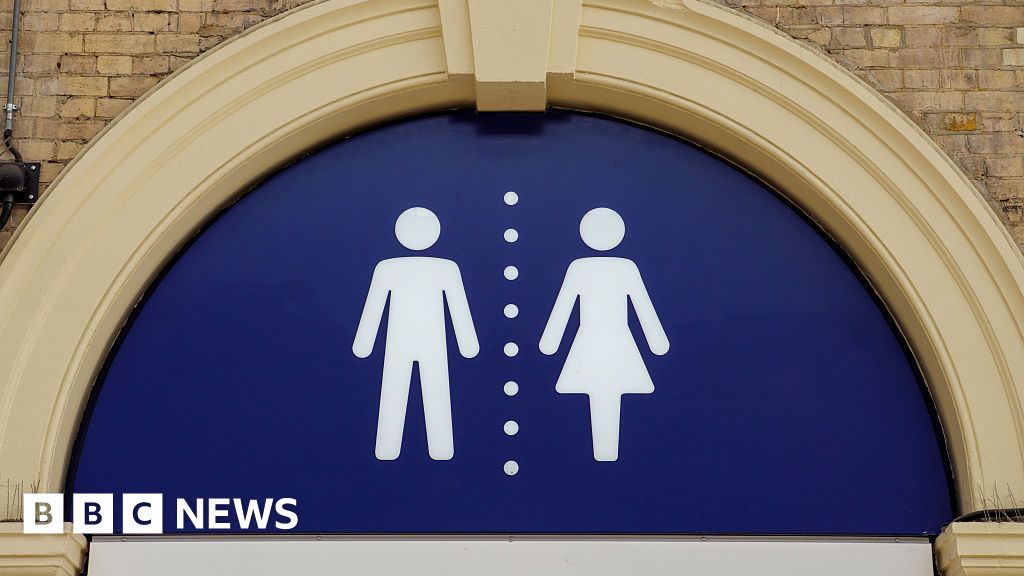
Everyone should “follow the rules” when guidance on single-sex spaces is released, the new head of the equality watchdog has told the BBC.
Dr Mary-Ann Stephenson, chair of the Equality and Human Rights Commission (EHRC), said “things could be sorted out if there is goodwill and recognition that everybody has rights”, and that “nobody is expecting there to be a toilet police”.
The guidance, for businesses and services, was drawn up after a unanimous Supreme Court ruling in April that legally a woman should be defined by biological sex for the purposes of the Equality Act 2010.
The BBC interview, to be broadcast on Sunday with Laura Kuenssberg, is Dr Stephenson’s first in her new role.
The EHRC’s guidance was passed to the government three months ago, but it has yet to publish it formally, which would give the code of practice legal force.
It aims to provide advice to businesses and services – such as women’s refuges, gyms, hospitals or shopping centres – about how the Supreme Court ruling should work.
Seen by the BBC after it was leaked, the 300-page document says single-sex spaces should only be open to people of the same biological sex, otherwise they cease to be single-sex areas.
That would mean, for instance, that a trans woman – a biological male who identifies as a woman – would not be able to use women’s toilets and changing rooms.
The guidance says it may be legitimate for businesses or services to ask people to provide confirmation they are of the eligible sex “by proportionate means”.
This has all caused controversy and anger among some transgender campaigners.
Dr Stephenson told the BBC: “Nobody is expecting there to be a toilet police.
“But equally if there are situations where there are complaints about regular problems, then people might need to… improve signage, improve explanations, or make sure they have got alternative provision.”
She said she expected both service providers and people using these services to “follow the rules”.
Dr Stephenson was challenged on what facilities trans people should use if there were no alternatives, or what businesses should do if they did not have the space or resources to make extra provision.
She said: “There’s often unisex provision and where there isn’t, as I say, we need to think more broadly about how we make sure those that those facilities are available…
“If you’ve got, you know, two self-contained cubicles, one of which is labelled men and one of which is labelled women, then the most sensible thing in those circumstances for a service provider to do is to make both of those unisex.”
Dr Stephenson was appointed to the role in July and she started earlier this month.
It was greeted with hostility by some trans campaigners, in part because she had donated money to the case of lawyer Allison Bailey, who won part of a tribunal claim that she was discriminated against because of her gender-critical views.
In our interview, Dr Stephenson was adamant she could still be objective when considering trans issues.
She said she donated to the case because she was frustrated by situations where “women were being harassed and losing their jobs on the basis of lawfully held beliefs”.
She said she had been concerned by the experiences of some women “when trying to have meetings to discuss proposed changes in the law”.
“I thought it was important that actually in a democracy, if there is a proposed change to the law, people should be able to meet and discuss those changes without violence or intimidation,” she said.
“If that’s taking a side, it’s taking a side on the side of kind of democratic norms and open discussion and dialogue.”
The full interview will be on Sunday with Laura Kuenssberg.



