






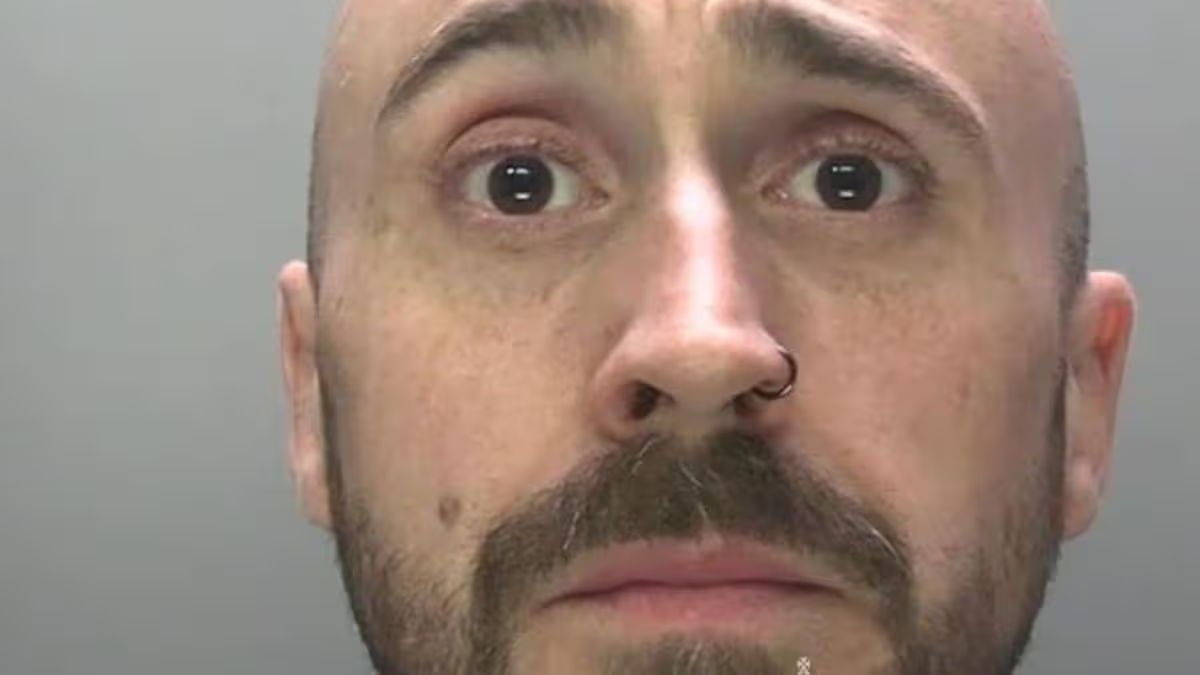
Rebecca Davies bravely stood up to describe the cruelty inflicted on her by drum teacher Ben Coffey who frequently told her to die and kill herself.
A brave woman has stood up in court to recount the horrific abuse she endured at the hands of her former partner in a harrowing victim impact statement.
Rebecca Davies took to the stand at Swansea Crown Court to detail how “cruel” drum teacher Ben Coffey treated her during his sentencing on Monday, March 2.
She said: “He told me to die. He told me to crash my car. He told me I deserved to get cancer and suffer slowly…Even now I struggle to look at myself in the mirror without hearing the words that were used against me, some of which included being called fat, spotty, gormless and disgusting.”
Rebecca was made to feel worthless by controlling Coffey during their four-year relationship which spanned between 2021 and 2025. Coffey – who taught at Roo’s Rhythm Drum School based in Neath, South Wales – repeatedly told her to kill herself, isolated her from her family and friends, and even locked her out of her home.
One incident saw Rebecca left with a black eye after Coffey had hit her after he had returned home from a night out, reports WalesOnline.
In another, Coffey was said to have become angry just because there was not enough laundry detergent. The resulting outburst saw Coffey throw the bottle at Rebecca before punching her and telling her that he didn’t care if he went to jail.
Coffey, of no fixed abode, pleaded guilty to three counts of assault by beating and one count of coercive control in January. Roo’s Rhythm Drum School shut down on February 1 according to its Facebook page.
He was jailed for 18 months and handed a 10-year restraining order preventing him from contacting Rebecca during sentencing.
Reading her statement during the hearing, Rebecca said: “It is incredibly difficult to put these experiences into words, because for so long I lived behind a mask, pretending everything was fine while silently falling apart. To everyone on the outside, our relationship looked perfect.
“People saw smiles, photos, and moments that looked loving and stable. But behind closed doors, I was breaking piece by piece, losing myself without even realising at the time.
“I was made to feel worthless and constantly walking on eggshells all while others admired the image he presented. I never knew when the next outburst or threat would come.
“While others saw a loving partner I was blamed, insulted and broken down.
“He convinced people, including myself that I was the problem, which made the abuse even harder to speak about. I felt invisible, isolated and terrified – like no-one would ever believe me.
“Although the relationship included occasional positive moments, these typically occurred after moments of conflict. This pattern contributed to emotional confusion and instability rather than a genuine sense of stability or joy. With every insult, punch and slap I received, I lost part of me.”
Rebecca also described an occasion where a black eye he had given her prevented her from going to work. It was just one example of how his vile actions impacted her career and personal life outside of the relationship.
She said: “What I experienced had caused me to become isolated from friends and family and restricted my independence.
“I altered my behaviour in order to manage the abuse and avoid further harm, which at the time led to withdrawal from social contact…The behaviour had a serious and ongoing impact on my employment and financial stability. Due to Ben’s controlling behaviour and unreliability, I was frequently left without childcare at short notice as he would leave the house despite agreeing to have our daughter in advance.
“This resulted in me having to cancel work shifts unexpectedly. In addition, the anxiety caused by the abuse affected my ability to attend work consistently.
“I lost income as a result and faced pressure and scrutiny at work consistently. I lost income as a result and faced pressure and scrutiny at work, placing my employment at potential risk.
“On one occasion I had no choice but to cancel shifts, to hide the black eye I had received, again to hide what had happened and defend his actions. The financial instability caused by his behaviour further increased my stress.”
Rebecca also told the court that Coffey would degrade her and that it reached a point where she was left with low confidence and a fragile sense of identity.
She continued: “The abuse I experienced was sustained coercive and controlling behaviour, the seriousness of which I did not fully recognise at the time. I was subjected to ongoing psychological abuse, intimidation, manipulation and degradation that gradually broke down my confidence, independence and sense of identity.
“I was repeatedly told to die and kill myself. I was always consistently made to believe that I was the problem in the relationship and that my reactions were due to my own mental health rather than the abuse I was experiencing.
“I was led to believe that I needed antidepressants to numb me and that there was something wrong with me, rather than recognising that I was reacting to prolonged emotional harm.
“I was subjected to repeated verbal abuse about my appearance and worth. Even now I struggle to look at myself in the mirror without hearing the words that were used against me, some of which included being called fat, spotty, gormless and disgusting.
“These words have stayed with me and caused lasting damage to my self-esteem and self-worth.”
Even once the relationship ended, Coffey’s abuse continued.
She said: “It changed in form and in many ways it got worse. He continued sending me abusive messages and voice notes – sometimes daily. He told me to die; to kill myself. Over and over and over. The cruelty became relentless.”
Rebecca also detailed how she continued to endure psychological pain in the form of anxiety, sleep trouble and intrusive thoughts after she left Coffey.
She continued: “He told me to die. He told me to crash my car. He told me I deserved to get cancer and suffer slowly – knowing I had been through it personally with my mum going through a cancer diagnosis shortly before I met him.
“Hearing those words from someone who was supposed to love and care about me didn’t just hurt; it broke something inside me each time it was said. Those words carved wounds that no-one else can see, but which I feel every single day.”
On top of navigating her own emotional scars, Rebecca said she also worried about what impact the abuse towards her would have on her two daughters.
“As a mother the pain runs even deeper,” she read. “One of the most distressing aspects of this abuse is the guilt I carry knowing that my daughters witnessed the effects of it…This guilt continues to affect me deeply.
“Everything I do is now driven by my determination to keep my two daughters safe and far away from the kind of behaviour I endured.
“I worry about what they saw, what they felt and what they might remember. I’m trying to heal wounds that no-one should ever be given while also trying to be the strong stable mother they deserve.”
Reflecting on her ordeal and looking towards the future, she stated: “This was not a single incident but a sustained pattern of behaviour that affected every single aspect of my life.
“At the time I did not fully understand the seriousness of the abuse, which reflects the extent of the psychological manipulation and control involved.
“The long term impact has been devastating. My mental health, my trust, my confidence – everything was damaged.
“The lasting impact includes damage to my mental wellbeing, my confidence as a parent, my financial security and my sense of self.
“Despite everything I am trying to rebuild my life. Slowly, painfully, but with determination. I am trying to reclaim my voice, my strength and the parts of myself that he tried to destroy.”
Get more Daily Record exclusives by signing up for free to Google’s preferred sources. Click HERE.













































You must be logged in to post a comment Login