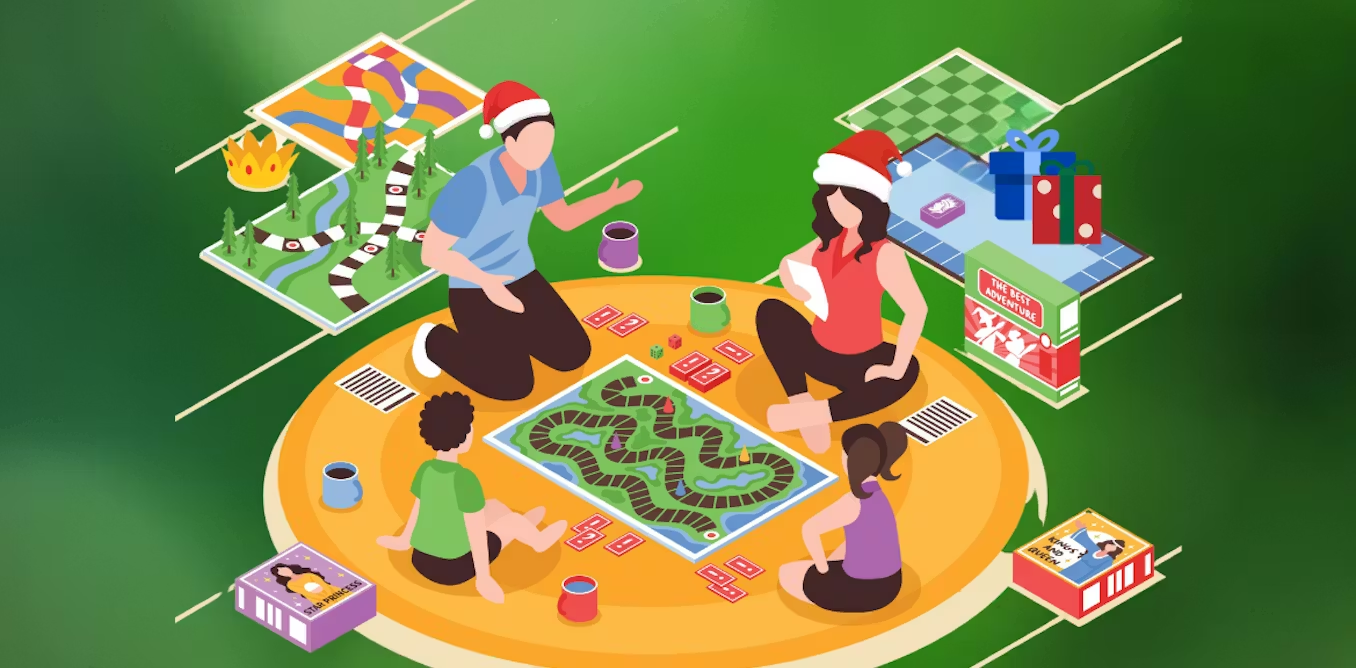
For many families at Christmas, the one time of year when everyone finally ends up in the same room, suggesting a game is often the best strategic move for a fun evening. At its best, this sparks an hour of genuine connection. At its worst, it revives old rivalries faster than you can say “draw four” or break into your favourite victory dance.
Games endure at Christmas because they offer structure. They give people a shared activity that’s not work or chores. Psychologists have long noted that shared play strengthens social bonds through joint attention, where people’s focus aligns around a single task. Research also shows that play can reduce stress and support wellbeing by increasing positive emotion and laughter, which are key ingredients in social bonding.
Play allows families to step outside their usual roles for a while. A normally serious parent might relax into silliness. A teenager might surprise everyone with a clever strategic move. These small shifts make interaction feel new again during a season when emotional expectations are high.
But the choice of game matters. Some games draw people closer. Others reveal how differently we communicate. And a few are almost scientifically engineered to start arguments. With that in mind, here are five psychologically informed recommendations to help you choose the right kind of festive fun.

Asmodee UK
1. Best for communication skills: Codenames
Codenames looks simple. In the game two teams, red and blue, compete to describe their team’s words on a 5×5 grid of tiles with one on each space such as “disease”, “Germany” or “carrot”. Each team has one spymaster who gives a clue to help their teammates guess the right words. The aim of the game is to be the first team to guess all of your words and to avoid incorrectly guessing the one that represents the assassin, which automatically ends the game.
The challenge for the spymaster is balancing breadth and precision in the clues. They can only use one word as a descriptor, and the number of tiles it refers to. For example, if it were “carrot” they could say “orange” and would add “three” if there were three words on the grid it could refer to. This makes it a great example of how humans actually communicate.
Psychologists call this pragmatics, the study of how we extract meaning beyond literal wording. It connects to what are known as “Gricean maxims*, which describe how people use shared assumptions to interpret one another.
When Codenames goes smoothly, you can feel a group forming a shared mental model. When it does not, it shows how differently people process the same information.
2. Best for strengthening family bonds: Telestrations
Asmodee
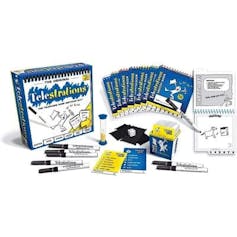
Telestrations is a drawing-based game for four to eight players. It’s a bit like pictionary meets telephone where each player is given a secret word which they have to draw. That drawing is then passed on to the player on their left who has to guess the word. That word is then passed on again to the next player who draws what they think it is and so on. By the time this has gone around the group the starting word has usually transformed into something joyfully off track.
This harmless confusion is exactly why it brings people together. Research shows that shared laughter acts as social glue. The benign violation theory of humour explains why playful misunderstandings are funny rather than stressful, because they break expectations without causing harm.
Telestrations turns mistakes into a collective in joke, reducing self-consciousness and encouraging relaxed, positive connection.
3. Best for emotional regulation: Uno
Sokor Space/Shutterstock
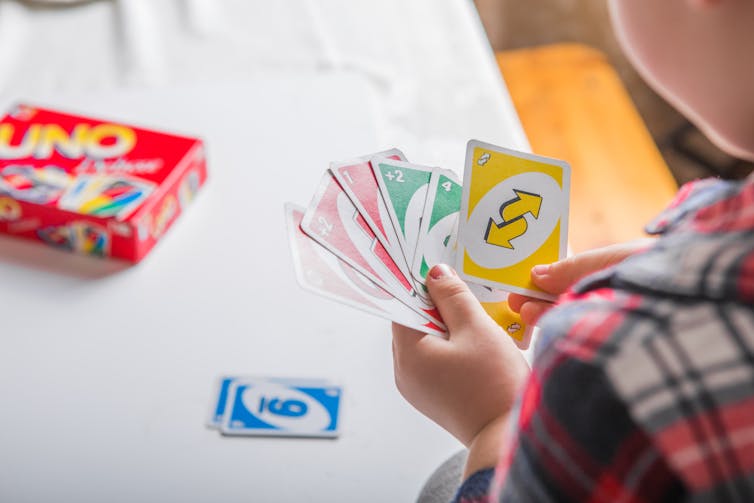
A classic game in which players compete to rid themselves of all their cards but face setbacks depending on what pther players do. Uno’s rapid reversals, colour changes and Draw Four cards create sudden shifts in advantage. Even though it is all chance, it can feel personal.
This taps into well studied psychological processes. People are highly sensitive to fairness, and research on loss aversion shows we react more strongly to setbacks than gains. Studies on emotional regulation also suggest that unpredictable rewards and punishments increase frustration.
Uno creates exactly this environment. It is why the game is exciting and why it also reveals how differently people handle stress and mild competition.
4. Best for teamwork and cooperation: Pandemic
Asmodee
Pandemic asks players to work together to stop fictitious global diseases from spreading. Each player has a unique role and success depends on coordinated planning.
This aligns with research on collective efficacy, the belief that a group can achieve more together than alone. It also demonstrates shared mental models, where teams perform better when they hold a common understanding of the task and each other’s strengths.
Pandemic offers a compact example of distributed cognition, the idea that problem solving improves when thinking is shared across people and tools.
5. Best for non-verbal attunement: The Mind

Coiled Spring
The Mind removes spoken communication entirely. A cooperative game where two to four players try to lay numbered cards in ascending order (one to 100) without talking, gesturing or planning. The only cue is timing.
This creates a striking demonstration of social entrainment, the process by which people unconsciously synchronise with one another. Research on non-verbal communication shows that humans continually attune to each other, even in silence.
The Mind turns that process into a game. When a group finds the rhythm, it almost feels like mind reading. When they do not, it becomes an entertaining reminder of how easily our internal timing falls out of sync.
Game, set and reconnect
In the end, the game itself matters less than what it makes possible. Christmas can be emotionally complicated, yet play offers a simple way to reconnect, laugh together and see one another differently for an hour.
Whether you want teamwork, clear communication or harmless chaos, the right game creates a small pocket of shared space. And that might be the most valuable gift on the table.

Looking for something good? Cut through the noise with a carefully curated selection of the latest releases, live events and exhibitions, straight to your inbox every fortnight, on Fridays. Sign up here.