Gather your friends and family and put your general knowledge skills to the test with this set of 20 questions. Tonight we have everything from questions on geography and music to food and drink.
Those who took part in last week’s quiz can see where they ranked in our leaderboard. So grab a drink and put your thinking cap on.
Day in day out, our reporters in the Manchester Evening News newsroom bring you remarkable stories from all aspects of Mancunian life. However, with the pace of life these days, the frenetic news agenda and social media algorithms, you might not be getting a chance to read it.
That’s why every week our Features and Perspectives editor Rob Williams brings you Unmissable, highlighting the best of what we do – bringing it to you directly from us. Make sure you don’t miss out, and see what else we have to offer, by clicking here and signing up for MEN Daily News.
Advertisement
And be sure to join our politics writer Jo Timan every Sunday for his essential commentary on what matters most to you in Greater Manchester each week in our newsletter Due North. You can alsosign up for that here.
You can also get all your favourite content from the Manchester Evening News on WhatsApp. Click here to see everything we offer, including everything from breaking news to Coronation Street.
If you prefer reading our stories on your phone, consider downloading the Manchester Evening News app here, and our news desk will make sure every time an essential story breaks, you’ll be the first to hear about it.
And finally, if there is a story you think our journalists should be looking into, we want to hear from you. Email us on newsdesk@men-news.co.uk or give us a ring on 0161 211 2920.
Satellite images analysed by Sky News’ Data and Forensics team show Iran has fortified its nuclear and defence facilities, alongside conducting live drills with Russian forces amid rising tensions with the US military.
What we know about activity at Iran’s nuclear facilities
Iran appears to be fortifying defences at its nuclear plants and military facilities since strikes by Israel and the US in June 2025 damaged infrastructure at three key sites. Core enrichment activity remains constrained and under close international scrutiny.
The main sites affected by last year’s strikes were Fordow Fuel Enrichment Plant, Natanz enrichment facility and Isfahan Nuclear Fuel Complex. They are key to Iran’s core nuclear infrastructure.
Advertisement
Image: Iran’s nuclear and military bases
The Isfahan Complex is in central Iran, 135 miles south of Tehran, near the city of Natanz. It is central to the nuclear fuel cycle, converting uranium into forms suitable for enrichment.
Isfahan includes an underground area where diplomats say much of Iran’s enriched uranium has been stored. Iran’s authorities have always said they are not trying to develop nuclear weapons.
Satellite images from 6 December 2025 to 24 January 2026 show structural repair and new efforts to bury tunnel entrances to the site.
Satellite images show “efforts to prepare for an attack” from the US, said David Albright, founder and president of the Institute for Science and International Security (ISIS) nonprofit.
He told Sky News: “At nuclear weaponisation sites, we see cleaning up and then, in some cases, rebuilding the facilities.”
Advertisement
He added: “You have this clear preparation in anticipation for attack, trying to minimise potential weak points.”
The ISIS institute reported on February 9 that “backfilling the tunnel entrances would help dampen any potential airstrike and also make ground access in a special force raid to seize or destroy any highly enriched uranium that may be housed inside difficult”.
At the Natanz nuclear facility, a site built for uranium enrichment, satellite images appear to indicate signs of construction at the Pilot Fuel Enrichment Plant, which was damaged by both US and Israeli air strikes in June.
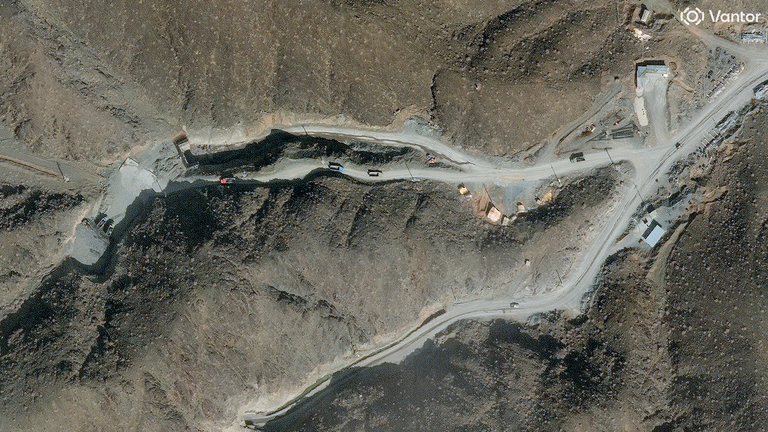
Just over a mile from Natanz, there is a new site, Pickaxe Mountain, also known as Kolang Gaz La. Images show the construction and hardening of tunnel shafts.
Advertisement
Image: Closeup of construction and hardening of eastern tunnel entrance at Pickaxe Mountain, 10 February 2026. Credit: Vantor
Albright told Sky News: “At Pickaxe now, we can clearly see that they’ve taken steps to strengthen the tunnel entrances, which are a major vulnerability of these underground facilities.”
Deep inside a mountain near the city of Qom, around 90 miles south of Tehran, the Fordow fuel enrichment plant was also largely destroyed by the US, said Albright, with the entrance sealed up shortly after the 2025 strikes.
There has been “very little activity” there since, he said.
“From our point of view, some of these protection measures, particularly at Isfahan, indicates there’s something valuable still inside,” said Albright. “Whether it’s recoverable or not we don’t know.”
Other key military sites
Advertisement
Satellite imagery also shows Tehran repairing and fortifying other complexes essential to Iran’s operations.
Parchin military complex is one of Iran’s most sensitive military sites. It has been covered in concrete, as shown by satellite images from 24 January.
Reports suggest that 20 years ago, Tehran conducted tests linked to nuclear bomb detonation methods at the site. Tehran has consistently rejected this. Israel reportedly struck Parchin in October 2024.
On 22 January, an analysis by the Institute for Science and International Security (ISIS) pointed to progress in the construction of a “concrete sarcophagus” around a newly built facility at Parchin.
Advertisement
ISIS reported in November that imagery showed “ongoing construction and the presence of what appears to resemble a long, cylindrical chamber, maybe a high-explosives containment vessel, likely measuring approximately 36 meters long and 12 meters in diameter, placed inside a building”. It added that high-explosive containment vessels are critical for nuclear weapons.
It is not the only roof. Iran also built a roof over a destroyed facility at the Pilot plant to cover it and “hide activities”, said Albright.
Another site being repaired is Tabriz Missile Base in northwest Iran. The site is one of Iran’s principal missile launch and storage bases. Satellite images show buildings at the base have been fully repaired since the Israeli strikes in June 2025.
Iran’s military activity
On 19 January, Russian and Iranian forces conducted joint live drills in the Gulf of Oman and the Indian Ocean. Iran’s state-run IRNA news agency said the goal was “upgrading operational coordination as well as exchange of military experiences”.
Advertisement
Sky News has confirmed these drills were launched from Larak Island and Shahid Bahonar Port, both key strategic locations that control the Strait of Hormuz and Iran’s main naval hub. This highlights both Iran’s military readiness and influence over vital shipping routes.
Rear Admiral Hassan Maghsoodloo of the Iranian Navy told Iran International the drills were aimed at promoting security and sustainable maritime cooperation.
Mark Cancian, Senior Adviser from the Center for Strategic and International Studies (CSIS), suggested “Russia is trying to help its partner, but its capabilities are extremely limited because it is totally consumed with the war in Ukraine”.
The drills mirrored recent Iranian exercises on 16 and 17 February; theIslamic Revolutionary Guard Corps carried out naval and live-fire operations, including missile launches, across key shipping lanes such as the Strait of Hormuz.
They occurred amid renewed negotiations between the United States and the Islamic Republic of Iran over Iran’s disputed nuclear program.
As talks opened, Iranian state media reported live missile fire toward the Strait, prompting its closure for several hours.
Iran often carries out military drills in the Strait of Hormuz, but the announced closure went a step further. Cancian said: “Closing the straits is hard, even impossible, without a lot more military capability. Iran could harass shipping with missiles and mines, though that would bring a response from many nations.”
Among all of this, Iran’s Supreme Leader Ayatollah Ali Khamenei posted a statement on X.
Advertisement
X
This content is provided by X, which may be using cookies and other technologies.
To show you this content, we need your permission to use cookies.
You can use the buttons below to amend your preferences to enable X cookies or to allow those cookies just once.
You can change your settings at any time via the Privacy Options.
Unfortunately we have been unable to verify if you have consented to X cookies.
To view this content you can use the button below to allow X cookies for this session only.
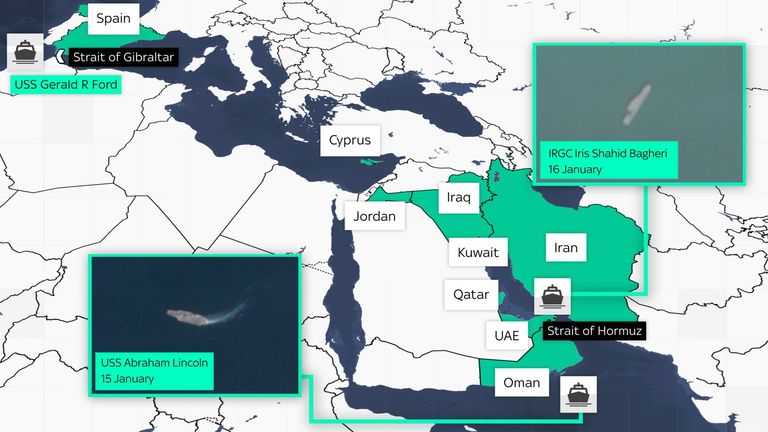
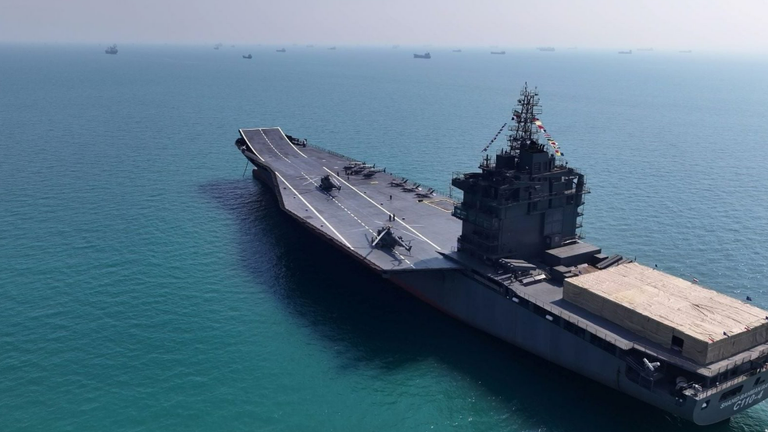
Sky News, using data from TankerTrackers, tracked several Iranian Navy vessels off the coast of Bandar Abbas on 16 January, including the drone carrier IRIS Shahid Bagheri, confirmed by satellite imagery about 10 km from shore. Frequently seen in this part of the Strait of Hormuz, the ship can deploy around 60 drones in addition to helicopters.
Advertisement
Image: Ship tracking of the USS Abraham Lincoln and the IRIS Shahid Bagheri. Credit – EU Sentinel, Copernicus
Mark Cancian, senior advisor at CSIS, stated that Shahid Bagheri was a “clever innovation” and the drone carrier is “part of that threat against the strait”.
Adding that Iran has been threatening the US by aiming the drone carrier directly at the USS Abraham Lincoln, a Nimitz-class aircraft carrier in the US Navy, capable of carrying dozens of aircraft, launching precision strikes, defending itself with advanced weapons, and coordinating naval and joint operations worldwide.
Image: Iran’s drone aircraft carrier Shahid Bagheri at sea in the Persian Gulf. Credit: Sepah News
When asked if Iran’s naval assets were positioned to warn off the US, Cancian said: “Yes, the Iranian government is being aggressive rhetorically, and the naval movements, along with the joint exercise with the Russians, are meant to reinforce that.”
The Data x Forensics team is a multi-skilled unit dedicated to providing transparent journalism from Sky News. We gather, analyse and visualise data to tell data-driven stories. We combine traditional reporting skills with advanced analysis of satellite images, social media and other open source information. Through multimedia storytelling we aim to better explain the world while also showing how our journalism is done.
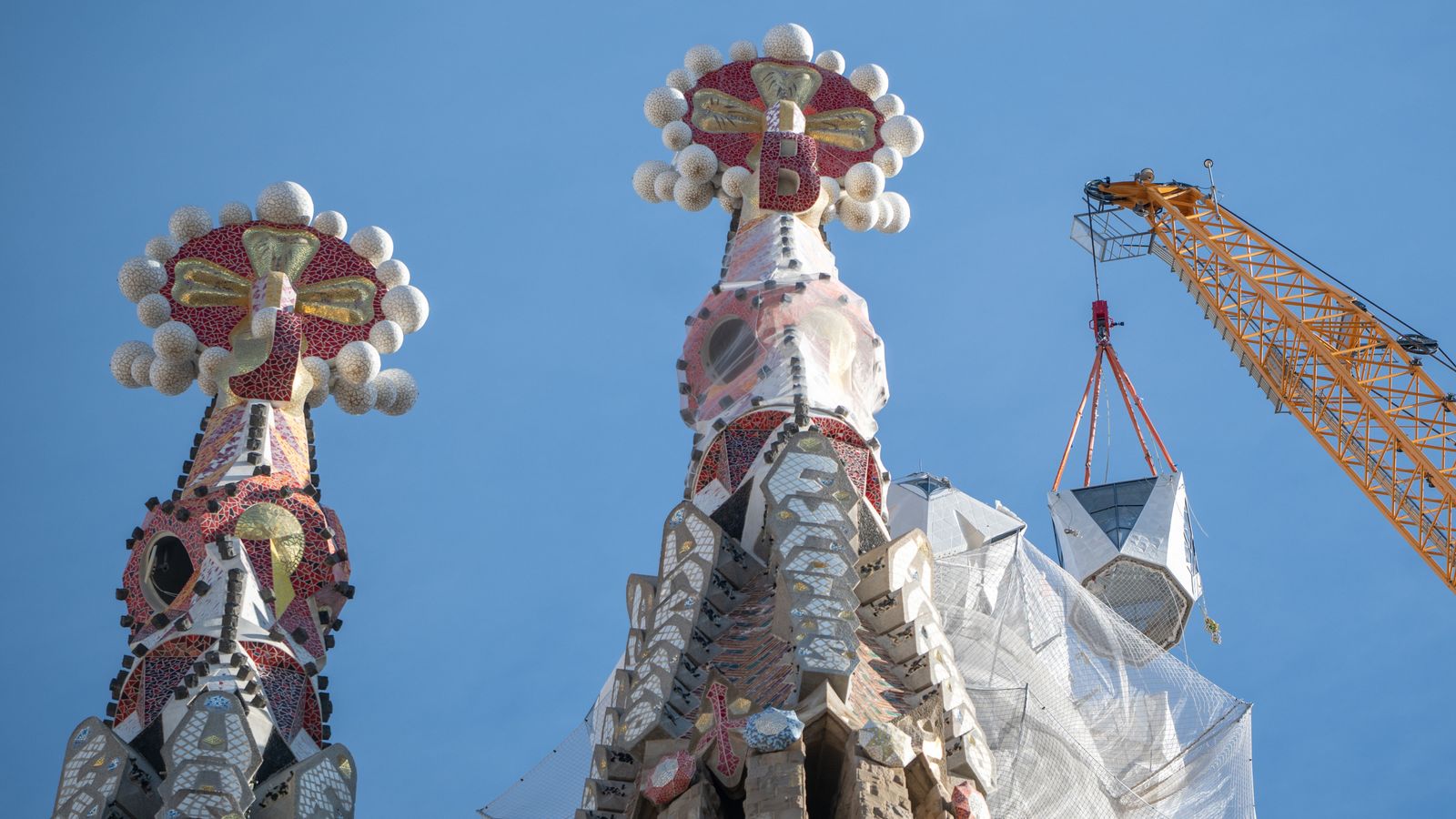
Barcelona’s soaring Sagrada Familia basilica reached its maximum height on Friday, as a crane placed the upper arm of a cross atop the Tower of Jesus Christ.
The unfinished monument is already the world’s tallest church, though Catalan architect Antoni Gaudi’s magnum opus remains years away from completion.
The church’s central piece now towers 566ft above the city, the church said.
Topping the central tower has been a priority ahead of celebrations this June, marking the centenary of Gaudi’s death.
Advertisement
The scaffolding surrounding the central tower is expected to be removed by June, in time for the inauguration of the Tower of Jesus Christ, the church said.
Image: The church’s central piece now towers 566ft above the city, the church said. Pic: AP
The first stone of the Sagrada Familia was placed in 1882, but Gaudi never expected it to be finished in his lifetime.
Only one of its multiple towers was completed when he died in 1926 at the age of 73, after being struck by a tram.
In recent decades, more work was carried out on the basilica as it became a major international tourist attraction.
Advertisement
The inside of the Tower of Jesus Christ is still being worked on, and its exterior is flanked by scaffolding and construction cranes.
In line with Gaudi’s plans, the cross has four arms so its shape can be recognised from any direction, said Sagrada Familia’s rector, the Rev Josep Turull.
If Barcelona’s city government allow it, the original plan also includes a light beam shining from each of the cross’s arms, signifying the church’s role as a spiritual lighthouse, he added.
Advertisement
Millions of tourists visit the Sagrada Familia every year, enthralled by Gaudi’s radical aesthetic, combining Catholic symbolism and organic forms, with entrance fees largely funding the ongoing construction.
This year, the Sagrada Familia will hold several events to celebrate the Catalan Modernist’s legacy, which includes other beautiful buildings in Barcelona and elsewhere in Spain.
The Sagrada Familia became the world’s tallest church last October, when it rose above the spire of Germany’s Ulmer Munster, a Gothic Lutheran church built over 500 years starting in 1377, which stands at 530ft.
A prayer verse from the Gloria that Catholics recite at mass is at the base of the cross installed on Friday at Sagrada Familia, the church’s rector said.
Advertisement
It reads: “You alone are the Holy One, you alone are the Lord, you alone are the Most High.”
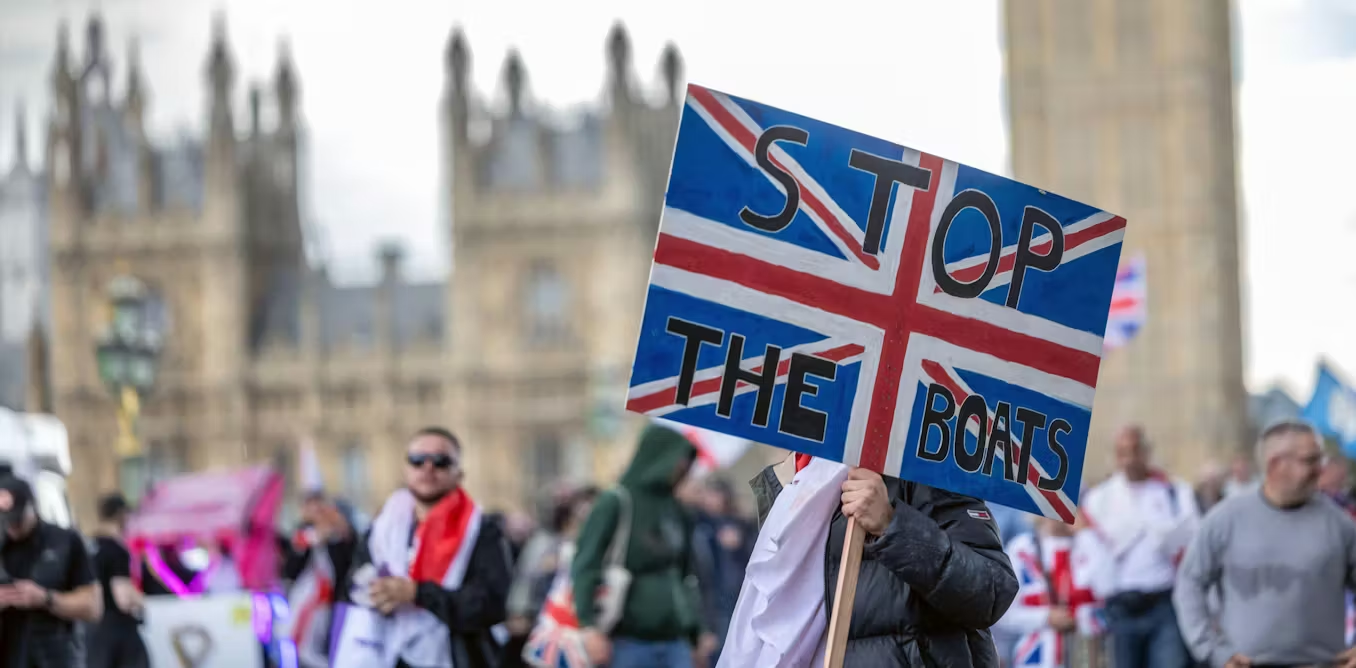
Discussions of migration in Britain often portray immigrants as “invaders”. This is evident in from the narrative around migrants arriving on small boats, to recent comments by Jim Ratcliffe, the billionaire co-owner of Manchester United.
Ratcliffe, who relocated to the tax haven of Monaco in 2020, blamed immigrants for the country’s economic challenges and claimed the UK had been “colonised”. After a public backlash, he apologised “that his choice of language has offended some people”.
A look at the history of immigration policy and rhetoric shows how this narrative came to play such a big role – and why it is so harmful.
Britain’s history is intertwined with empire and colonialism. The UK was forged as a nation-state alongside, and partly to facilitate, the growth of a global empire sustained through violence, brutality and war. It also led to immigration from Britain’s current and former colonies.
Advertisement
Although empire-related immigration began hundreds of years earlier, it accelerated after the second world war. Thousands of workers were recruited from the Caribbean and south Asia, as well as from Ireland and continental Europe, to relieve labour shortages and help staff the newly-formed National Health Service.
The 1948 British Nationality Act essentially allowed the entry of all subjects of the British empire. However, this did not reflect widespread acceptance of mass immigration. Rather, it was an attempt to maintain control over Britain’s colonial territories by formalising a specifically imperial identity for them.
Groups such as those onboard the ship Empire Windrush arrived under these conditions. However, increased immigration fuelled local anxieties, and controls were gradually tightened. Britain’s colonial and Commonwealth citizens were now recast as “immigrants”. This did not stop people from wanting to move to the UK, drawn by family or cultural ties – forged by a history of empire.
Themes of invasion
Immigration in the following decades was greater in scale and different than previous migration movements. Alongside this, a rhetoric of invasion began to solidify, one that is still politically influential today.
Advertisement
This narrative developed off the back of national myths that emerged during the second world war. The war was seen as a “people’s war” for Britain – a small, isolated island overcoming foreign enemies. Historians like Paul Ward argue that such national myths shaped ideas of a socially and ethnically homogenous British national identity, one that apparently needed “defending against foreign invasion”.
The Windrush generation of Caribbean migrants helped rebuild postwar Britain. Alamy
We can see this theme in key historical moments, such as Enoch Powell’s 1968 “Rivers of Blood”, one of modern Britain’s most notorious speeches. Powell recounted supposed conversations with white Britons fearful of being ruled by immigrants and their descendants.
A similar message was created in response to the so-called Kenyan Asian crisis (1968) and Uganda Asian crisis (1972).
These newly-independent countries were attempting to remove Britain’s imperial influences, including by expelling people of Asian descent whose families had been brought there by colonial governments.
The panic in Britain of a possible “invasion” of African Asian immigrants led to the 1968 Commonwealth Immigrants Act passing in just three days. This act restricted the rights of Commonwealth citizens to migrate to the UK.
Advertisement
The mood around immigration was hardening. Shortly before becoming prime minister, Margaret Thatcher appeared on television in 1978 sympathising with voters afraid of being “rather swamped by people with a different culture”. Immediately afterwards, Thatcher’s Conservatives gained a 11-point poll lead over Labour.
Thatcher’s governments overhauled the UK immigration system. The 1981 British Nationality Act removed citizenship for Commonwealth citizens, formally ending the link between British nationality and a shared history of empire.
Views today
In the last two decades, immigration from within and outside of the European Union has been a key response to the economic and demographic challenges of Britain’s ageing population. Workers from overseas have been recruited to fill gaps in areas such as hospitality, health and social care.
Similarly, Britain’s involvement in conflict zones, such as Afghanistan, Iraq and Libya led to increased applications from people seeking asylum in the UK. In response, anti-immigration sentiment has only grown. Ukip’s infamous “breaking point” poster portrayed refugees fleeing the Syrian conflict as a mass of people headed towards British shores, setting the tone for a debate that ultimately led to Brexit.
Advertisement
Such attitudes have continued as immigration from non-EU countries has grown since Brexit. Many contemporary anxieties around immigration stem from beliefs that a traditional British way of life is under threat. But these views are often based on information that is inaccurate or distorts general demographic change.
The suggestion that immigration is acting like a form of colonisation risks legitimising the “great replacement” far-right conspiracy theory. A recent study found that nearly a third of people in the UK believe this view, which contends that white populations are being deliberately replaced by people of colour.
Immigrants, meanwhile, have experienced not the privileges of colonisers, but discrimination. Immigration benefits Britain in various ways. Most migrants to the UK make a net positive contribution to the economy over their lifetime, paying more in taxes than they consume in public services. Yet they have faced increasing levels of hostility, policies designed to make their life in the UK harder, violence and other systemic disadvantages.
Recent years have seen the consequences of these views, in the form of more overt racism, and violent protests. The “invasion” or “coloniser” narrative is not just rhetoric – it can have harmful, physical consequences.
Polish athlete Kamila Sellier required immediate medical treatment after a skate blade caught her face during a collision in the women’s 1500m short track speed skating at the Winter Olympics on Friday
21:32, 20 Feb 2026Updated 21:32, 20 Feb 2026
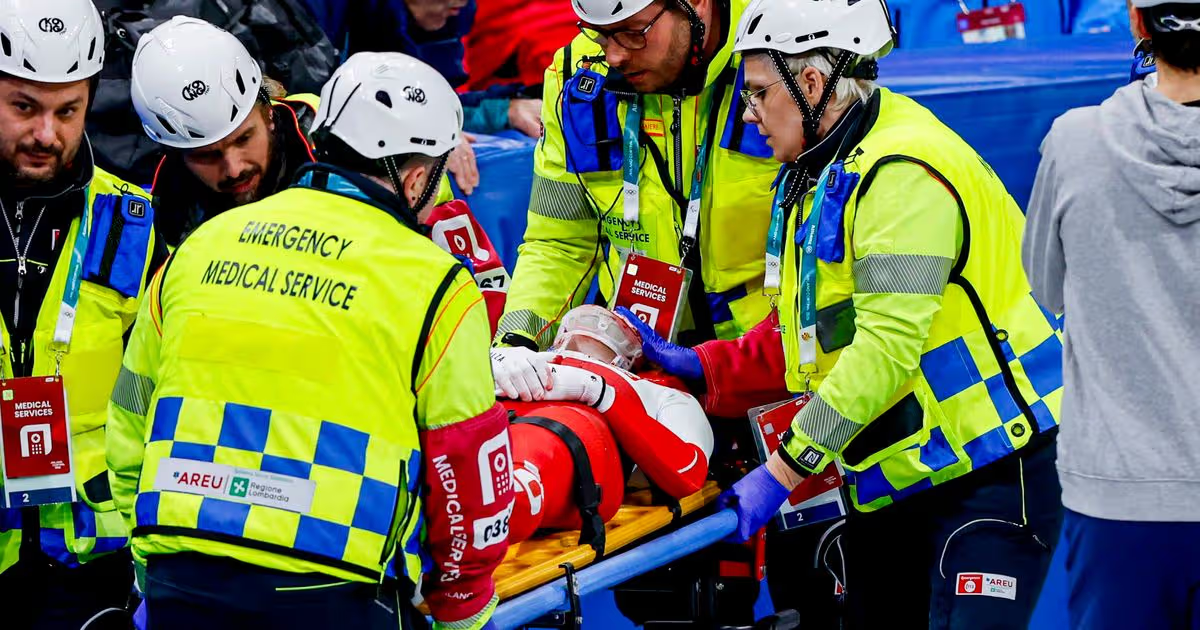
Kamila Sellier needed immediate medical attention on the ice after a terrifying incident at the Winter Olympics on Friday resulted in a cut to her face. The Polish competitor was participating in the quarter-finals of the women’s 1500 metres when she, Italy’s Ariana Fontana and USA’s Kristen Santos-Griswold collided and fell.
As they tumbled, Santos-Griswold’s skate blade struck Sellier in the face, instantly causing an injury as Sellier slid across the ice and crashed into the rink wall. The race was promptly halted whilst rink-side medics attended to the athlete.
A large white sheet was erected to provide her with privacy before she was stretchered off for further treatment, giving the crowd a thumbs-up as she left.
Advertisement
Sellier, 25, departed the ice skating arena in Milan on Friday night after receiving stitches, according to Polish officials. The skater has since gone to the hospital for more tests.
Konrad Niedźwiedzki, press attache for the Polish speed skating team and a 2014 Olympian, told media that Sellier had suffered a cut on her cheek and eyelid that required stitches. “We are waiting for what the hospital tests will show,” Niedźwiedzki said.
Sellier’s teammate, Natalia Maliszewska, appeared shaken as she spoke with reporters. “My thoughts are with her,” Maliszewska said. “I can’t think of anything else.”
Advertisement
“These aren’t common accidents, but they do happen,” another of Sellier’s teammates, Gabriela Topolska, said. “Kamila already has one of them, from a skate on her face. Kamila has a cut in her skin, with stitches.”
Ensure our latest sport headlines always appear at the top of your Google Search by making us a Preferred Source. Click here to activateor add us as Preferred Source in your Google search settings
Advertisement
American skater Santos-Griswold was ultimately disqualified from the race, which proceeded following an injury timeout. Santos-Griswold was penalised for an illegal lane pass that appeared to contribute to the accident.
Italian star Fontana saw her skinsuit damaged and received assistance from her physiotherapist for her left hip during the pause in action. The reigning Olympic silver medalist in the 1500m ultimately finished second to Hanne Desmet of Belgium, qualifying for the semi-final round.
Fontana later advanced into the finals and edged Zhang Chutong at the finishing line. The skater was bidding to become the most decorated Winter Olympian, tying Norwegian cross-country skier Marit Bjørgen.
Watch Winter Olympics 2026 live on discovery+
Advertisement
This article contains affiliate links, we will receive a commission on any sales we generate from it. Learn more
The Milano Cortina 2026 Winter Olympic Games is running from February 6-22 and fans can enjoy more than 850 hours of action live on discovery+ via Prime Video.
Throughout the games, the £3.99 discovery+ Entertainment subscription will provide access to TNT Sports 2, the home of 24/7 Olympic coverage.
Ukraine’s Elina Svitolina upset world number four Coco Gauff to set up a final against Jessica Pegula at the Dubai Tennis Championships.
American Pegula was the first to win her semi-final, fighting back from a disastrous opening set and early break of serve in the second set to defeat compatriot Amanda Anisimova 1-6 6-4 6-3.
Gauff, 21, had a chance to make it an all-American final on Saturday, but Svitolina recorded a 6-4 6-7 (13-15) 6-4 in an epic encounter that lasted three hours and three minutes.
The 31-year-old Svitolina had four match points in the second-set tie-break and could not take them, but still managed to win the decider.
Advertisement
In the men’s Qatar Open, world number one Carlos Alcaraz maintained his perfect start to 2026 with a 7-6 (7-3) 6-4 victory over Russia’s Andrey Rublev to move into the final.
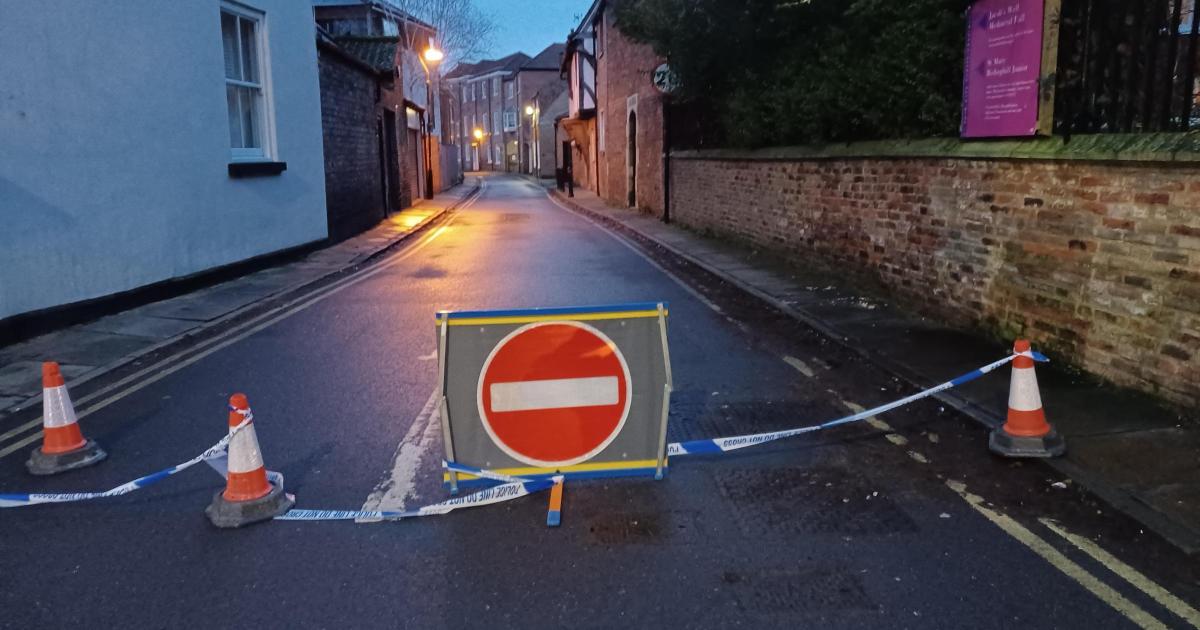
North Yorkshire Police said officers were called to an address in Micklegate at around 3.20pm yesterday (February 19) after a violent incident had taken place.
They said that a man in his 40s had received wounds consistent with a stabbing and was taken to hospital, where he remains in a critical condition.
As reported by The Press, a cordon was originally put up in the street overnight but was reduced to two properties in Trinity Lane by this morning (Friday).
Advertisement
RECOMMENDED READING:
The one-way entrance to the street from Micklegate was still closed off with police tape and no entry signs at 7am, however the entrance from Bishophill Junior up to the no entry signs was accessible.
A police spokesperson said: “Detectives are leading an investigation, which continues today. There is a police presence in the area as officers carry out enquiries and support the community.”
Two men and three women, aged between 28 and 58, have been arrested in connection with the incident and remain in custody, police said.
Advertisement
Anyone who has information that they have yet to share can contact North Yorkshire Police on 101. Please quote reference NYP-19022026-0285.
Kenworthy retired after the 2022 Olympics in Beijing and completely walked away from skiing.
He then turned his hand to acting, with credits in Will & Grace and American Horror Story, as well as guest-judging on Ru Paul’s Drag Race.
However, the itch to return grew stronger, and last year he announced his return to the sport, though he has had to self-fund his way to the Games given GB Snowsport’s athlete funding had already been allocated.
“I called it quits partly because I’d been doing it a long time and I had burnout and was over it, but I was also having some bad head injuries and so it made it easier to walk away,” said the five-time World Championship medallist.
Advertisement
“Months after, when those symptoms started to subside and I started to feel myself again, I started [thinking] it wasn’t the way I wanted it to finish.
“I kept pushing that feeling away, and finally I was at a point where I was like ‘OK, well if you’re having that feeling, it’s now or never’, and I didn’t want to live to regret it and wonder what if.
“I decided to just give it a push and make it go, and try and get there. It’s been pretty tough, because I didn’t have any funding, I wasn’t on any national team in order to get assistance, so it’s been totally self-funded, myself, my coach, both of our travel, training camps, lift tickets, insurance, all of it, food, lodgings.
“I struggled deciding if it was the right thing to do, but ultimately, money comes and goes, this opportunity won’t.”
Advertisement
Kenworthy will be 38 when the next Winter Olympics take place in the French Alps in 2030.
When asked by BBC Sport if he will be there, he replied: “I hope so. I’m having fun, I’m not done.”
Winter continues to grip the region with dry spells predicted but stubborn rain refusing to quit this weekend
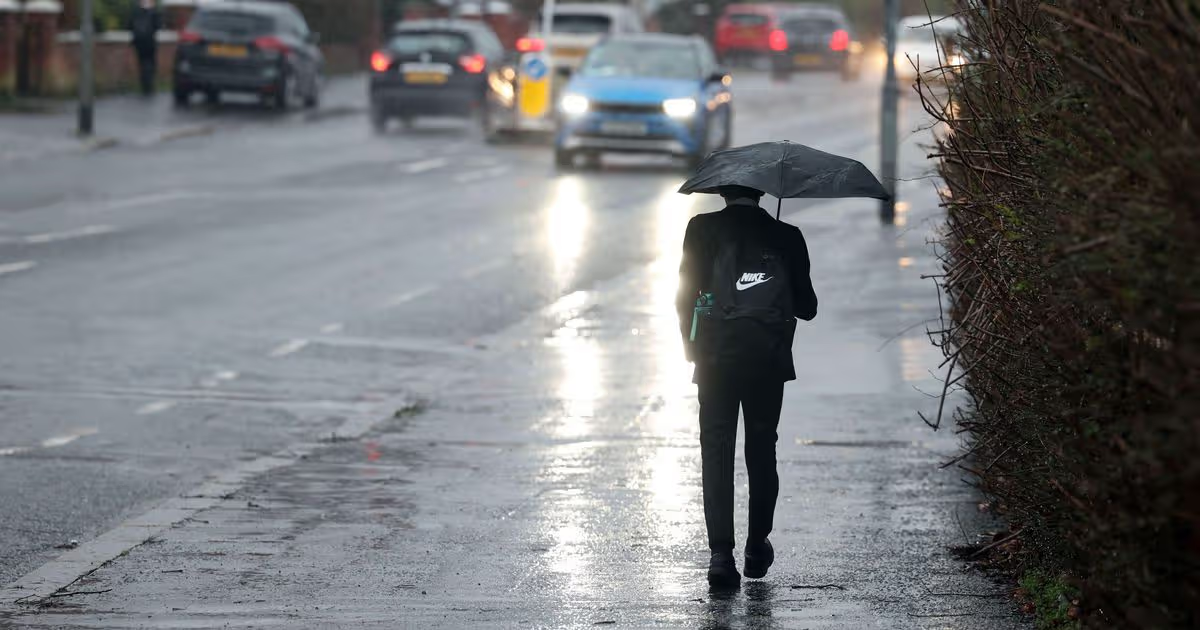
If you’re out and about across Northern Ireland this weekend then – surprise surprise – you might want to consider taking wet weather gear with you.
Advertisement
Despite temperatures being a bit warmer and some dry spells predicted, the Met Office forecast for the next two days still shows a high likelihood of rain.
Saturday will see a generally dry start to the day according to meteorologists. Expected outbreaks of rain will reach the southwest later in the morning with the afternoon likely to be cloudy. Outbreaks of rain are anticipated for most places in the region with a maximum temperature of 12C.
Sunday will remain unsettled with blustery heavy showers spreading eastwards. At times there will be longer periods of rain according to the Met Office.
Advertisement
However, the good news is there will still be some dry spells with occasional brightness and breezy periods throughout.
Want to see more of the stories you love from Belfast Live? Making us your preferred source on Googlemeans you’ll get more of our exclusives, top stories and must-read content straight away. To add Belfast Live as a preferred source, simply click here.
The town council by-election candidate continued to be listed as a Conservative despite having changed his allegiance
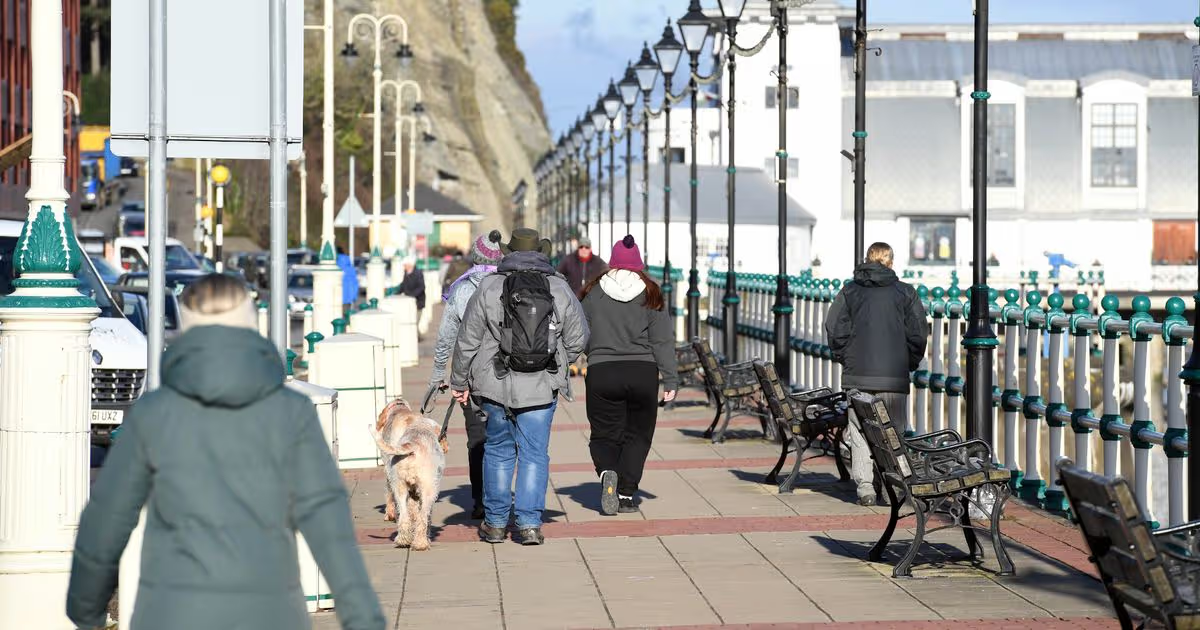
Reform UK has secured victory in a Penarth Town Council by-election, despite the ballot paper listing winner Zak Weaver as a Conservative Party candidate. Mr Weaver, the former deputy chief of staff to Welsh Conservative leader Darren Millar, won with 38% of the vote and will now represent the Plymouth ward.
Advertisement
He resigned from the Conservatives a week before the by-election meaning it was too late for the ballot papers to be altered. The results leaves the council with only one Conservative representative.
Speaking to The Cardiffian before the by-election, Mr Weaver said: “While my party may have changed, my dedication to our community has not changed. My focus has been on our town, not party politics.” For the biggest stories in Wales first sign up to our daily newsletter here
The defection was criticised in the run-up to election day by residents who described it as “totally outrageous”.
Penarth resident Conrad Bartlett said: “I really don’t see, if he did win, how he could possibly be allowed to keep his post.”
Advertisement
Meanwhile, Plaid Cymru’s by-election candidate, Aled Thomas, said Mr Weaver had “betrayed the people”.
Returning officer Rob Thomas explained that there was no provision under Welsh law “to amend the ballot or halt the election due to a change in political affiliation”.
The by-election was triggered after former Councillor Ben Gray was automatically disqualified for failing to attend the town council for six months.
Independent Mr Gray had held the seat since 2017, having been elected as a Conservative. He walked away from the party two years later over political infighting on Vale of Glamorgan Council.
Advertisement
Campaign material released ahead of Mr Weaver’s defection described his priorities as campaigning against Penarth’s controversial parking charges, which have been suspended, and the now-defunct aqua park on Cosmeston Lake.
He also pledged to fix the area’s roads, pavements and car parks.
Mr Weaver came first with 546 votes, while the Green Party’s Todd Bailey came second with 452 votes followed by Welsh Labour and Plaid Cymru who secured 221 and 204 votes respectively.
Ensure our latest news and sport headlines always appear at the top of your Google Search by making us a Preferred Source. Click here to activate or add us as Preferred Source in your Google search settings
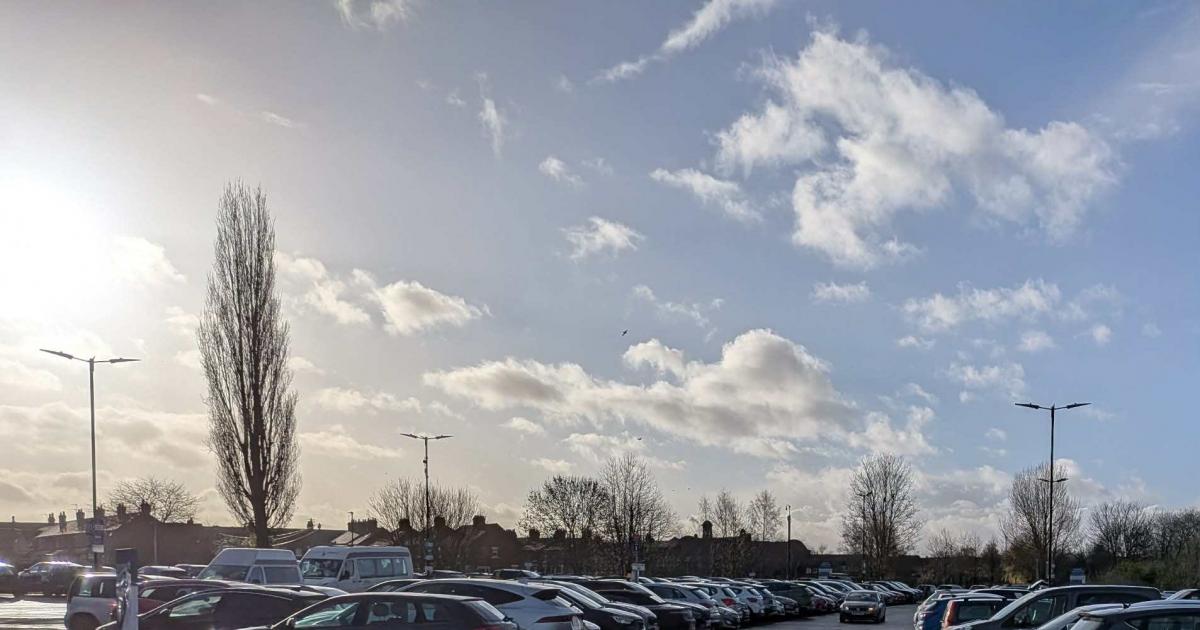
North Yorkshire Council has set out plans to increase parking charges by ten per cent from April 1, while fees will also be ‘rebalanced’ to ensure consistency across the county.
Council chiefs estimate the changes will give the authority a £3.563m boost in 2026/27
The changes will affect the council’s 170 car parks, as well as on-street parking and residents’ parking schemes.
Advertisement
The authority says the rebalancing is needed to ensure fairness and consistency, with parking previously overseen by North Yorkshire’s seven former borough and district councils.
The changes will see parking fees introduced on Sundays and evenings in areas of the county where parking is currently free at these times.
An additional cost is planned for second permits in existing residential zones to account for the increasing number of houses with multiple vehicles.
But the council has decided that blue badge parking will be free in all council-run car parks in future.
Advertisement
North Yorkshire Council’s executive member for highways and transport, Councillor Malcolm Taylor, said: “The changes to parking charges are part of our vision for a unified system that is consistent for everyone.
“After positive discussions with disability groups, we are pleased to be able to offer free parking for blue badge holders, meaning some areas will see them removed altogether.
“We have carefully reviewed the charges to ensure they deliver the best possible value while enabling the service to remain financially self-sustaining.
“In many cases, our rates are more affordable than privately managed car parks and are competitive with those set by neighbouring authorities.”
Advertisement
The council says it has committed £2.4m into improving its car parks.
Of this, £2m will be used to replace the existing 430 pay-and-display machines, including new ticketless machines in 150 of its car parks.
Lighting and signage will also be improved.
Cllr Taylor added: “We strive to improve our parking services to provide a better customer experience.
Advertisement
“We are investing in replacing parking machines, which will be more environmentally friendly, to save money and be more reliable.”
But opposition councillors have spoken of their dismay at the proposed changes.
Councillor Peter Lacey, leader of the Liberal Democrats group on the council, said it was “strange” that the changes were implemented in advance of local engagement to develop town investment plans.
He added: “This cart-before-horse centralist approach by the Tory-led administration is becoming tiresome and flies in the face of its claim to aspire to become the most local large unitary.”
Advertisement
Councillor Arnold Warneken, from the Green Party, said: “The Greens don’t support a blanket increase of parking charges because it depends on location.
“In many cases, if you significantly increase car parking charges then it puts pressure on residential streets as we have seen in places like Wetherby.
Councillor Stuart Parsons, leader of the North Yorkshire Independents group, added: “If they’re going to be rebalancing the fees, they should be doing so downwards not upwards.
“They’re supposed to be encouraging people to visit our market towns but this does the opposite.”
Advertisement
North Yorkshire Council’s executive members have recently agreed to adopt a set of parking principles with the aim of ensuring a “consistent, fair, and forward-looking approach to parking”.
The principles would be implemented in stages, with a review of tariffs being the first. This will be followed by developing localised town parking strategies over the next year, recognising that one size doesn’t fit all.
The parking plans will be discussed at a meeting next between Cllr Taylor and the council’s corporate director of environment, Karl Battersby.