Stamford Bridge Community Pool is described as one of the village’s “greatest assets”.
Hosting generations of birthday parties, swim sessions and children’s lessons, the pool in Church Road is well used, year-round.
Recommended reading:
But in recent weeks, fears have mounted about its future.
Advertisement
The pool needs up to four new lifeguards or it will be forced to close for open swims and private hires this summer.
Speaking about this, chairperson of the pool committee Shelley Lawton said: “Our two lovely lifeguards are leaving us before summer.
“Ideally we would hire up to four new lifeguards, two of whom will receive a training package kindly paid for by the parish council.”
Shelley explained that sadly, small community pools like Stamford Bridge’s do not have the resources to train their lifeguards in-house.
Advertisement
(Image: Supplied)
She said that lifeguards are required to re-train every two years – something that is usually self-funded by employees.
Faced with the possibility of losing the pool, Shelley’s committee had begun turning customers away.
She said: “We have been so stressed – our pool means everything to us.
“It caters for all ages in the community – from babies first swims, to hosting five primary school lessons, family sessions and classes for those over 55.
Advertisement
“Our elderly users particularly benefit from regular visits; it’s important to them, their health and serves as a means to make friends.”
‘Without support, we risk losing something truly special’
A spokesperson for Stamford Bridge Parish Council said that the pool was a facility most villages of its size could “only dream of”.
They added: “Without support, we risk losing something truly special.
“We were proud to give funding to the pool to ensure new lifeguards can be trained.”
Advertisement
Shelley said the pool wanted to hire the new lifeguards in time for a taster session given by the facility’s current lifeguards in the coming months.
An appeal has since been shared widely on social media – and has received more than 15 applicants, the parish council confirmed.
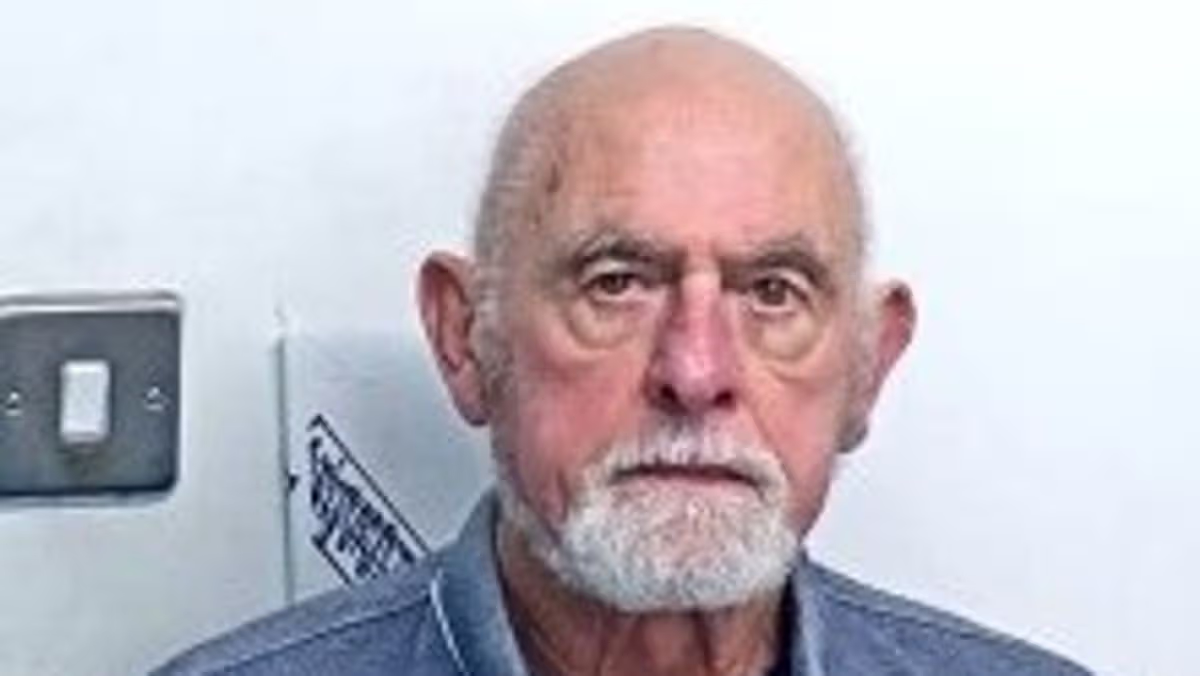
George Davey started sexually abusing young girls more than 50 years ago
A paedophile has been jailed for over 22 years for sexual offences against girls over decades of offending. George Davey, 76, abused his first victim between 1975 and 1985 and a second victim between 1983 and 1986.
Advertisement
He sexually abused a third girl between 1995 and 2003 and a fourth victim between 2001 and 2002, as well as later in 2022. Davey sexually abused his fifth victim in 1993. More recently, he exposed himself to a woman between 2019 and 2020.
Davey’s crimes were brought forward in December 2022 when one of the victims had reported she had been sexually abused by him. This encouraged other victims to come forward.
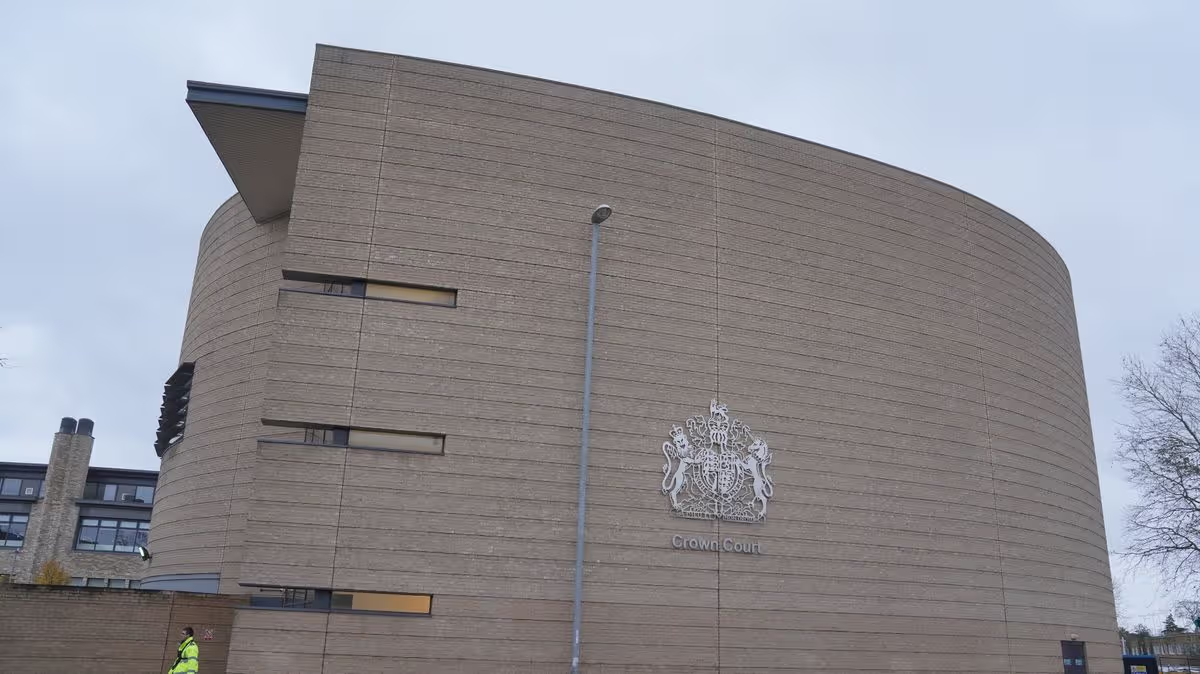
At Cambridge Crown Court on Wednesday, March 18, Davey, of Shelthorpe Road, Loughborough, Leicestershire, was jailed for 22 years and four months. He was sentenced after pleading guilty at an earlier hearing to:
Nine counts of indecency with a child,
Two counts of attempted rape of a girl under 16,
One count of indecent assault on a girl under 14,
One count of indecent assault,
One count of sexual assault on a female,
One count of exposure.
DC Louise Wick, who investigated, said: “This conviction for historic offences shows that justice is possible no matter how long ago the crimes occurred. The sentence reflects the gravity of Davey’s predatory abuse and the devastating harm it has caused to his victims.
“I would like to thank them for their remarkable courage in coming forward and supporting a prosecution, which has led to Davey being jailed for a very long time. I hope this result offers some reassurance to the victims and their families as they continue rebuilding their lives.”
Advertisement
To get more news and top stories delivered directly to your phone, join our new WhatsApp community.Click this linkto receive your daily dose of CambridgeshireLive content.
We also treat our community members to special offers, promotions, and adverts from us and our partners. If you don’t like our community, you can check out any time you like. If you’re curious, you can read ourPrivacy Notice.
Bob W, the tech-powered hospitality operator, has signed a long-term lease with Z Development for a newly built 84-unit serviced apartment property in Belfast, marking its debut in Northern Ireland.
Advertisement
The ground-up development at 57 Dublin Road will open as Bob W Belfast City Centre in Q2 2026. The 3,742 sqm building (4,173 sqm total room area) comprises 84 large, fully furnished apartments and represents Bob W’s first asset in Ireland, further strengthening its growing presence across the UK and Europe.
Located in the heart of Belfast, within walking distance of City Hall, Victoria Square, Queen’s University and the Linen Quarter, the property offers strong public transport connectivity via nearby Belfast Grand Central Station, with rail and bus links across Northern Ireland and direct connections to Dublin. Both George Best Belfast City Airport and Belfast International Airport are easily accessible.
The firm took to Instagram to announce their arrival in the city with a post that was captioned “Belfast, we’re coming for the craic”. Adding that “our first-ever Northern Ireland spot officially lands this summer. Expect hand-picked local design and the city’s best bits right on your doorstep”.
The purpose-built scheme will feature an in-house gym, rooftop garden and an externally managed café at ground level, creating an activated mixed-use environment for guests and the local community. Apartments will include fully equipped kitchens and smart room technology, supported by Bob W’s digital front desk, seamless self-service check-in and 24/7 remote guest support via the Bob W app.
Advertisement
Philip Grace, Chief Development Officer of Bob W, said: “Entering Ireland is an important milestone for Bob W. Belfast is a city with strong cultural identity, growing international appeal and a thriving business community. It fits perfectly with our strategy of launching in dynamic European cities where guests are looking for design-led, flexible accommodation in central locations.
“A ground-up development like this allows us to embed sustainability, smart technology and operational efficiency from day one, delivering a seamless experience for modern travellers while creating long-term value for our partners.”
The company has a portfolio of 7,000+ units across major cities in Europe and the UK, with additional openings planned throughout 2026 and beyond.
Worries about the British economy have long been dominated by one persistent concern – weak productivity. Since the financial crisis of 2008, growth has stagnated, leaving the UK trailing well behind the US, France and Germany across that whole period.
One familiar response to this problem is to suggest that if the British workforce could somehow produce more in less time, prosperity would follow and all would be well. New technology, particularly AI, is often presented as the solution.
The UK government certainly seems to like the idea, placing AI and technological innovation at the centre of plans to boost economic performance. At a speech to business leaders on March 17, chancellor of the exchequer Rachel Reeves promised £2.5 billion of investment in AI and quantum computing to get things moving.
But what if productivity is not the problem we should be solving?
Advertisement
Increasing the country’s “output per hour” – the unit by which productivity is measured – does not necessarily make work more secure, more fairly rewarded or more socially useful. And nor does it make the UK more economically resilient.
In fact, it can do the opposite. Prioritising efficiency to boost productivity – by cutting costs and relying on tightly configured supply chains – can make economic systems extremely fragile.
Productivity problem
The problem with focusing too much on productivity is most obvious in some of the sectors that are central to our day-to-day lives. The effectiveness of care work, healthcare and education, for example, all depend on human interaction.
But teaching a class, caring for an elderly person or treating a patient require time, attention and professional judgment, making it difficult to increase “output” in the same way as in more automated sectors. There are limits to how much faster a nurse or teacher can work without undermining the quality of what they do.
Advertisement
Economists have long recognised that services which depend on human interaction – referred to as being “labour intensive” – face limits to productivity growth, because many of the tasks involved cannot be significantly sped up or automated without affecting quality.
This dynamic is referred to as “Baumol’s cost disease” – an economic theory which shows that costs will inevitably rise over time in labour-intensive sectors, despite little or no productivity growth.
Yet these sectors are essential to long-term social wellbeing and economic stability. They sustain everyone’s health, skills and security.
Labour intensive. Monkey Business Images/Shutterstock
Another issue with increasing productivity comes down to the fact that for quite some time, the UK economy has been heavily weighted towards areas like finance, education and the creative industries. Manufacturing plays a much smaller role.
Advertisement
But in manufacturing, technological improvements can translate more directly into higher output per worker. This is what happens when industrial robots automate assembly-line tasks, allowing a single worker to oversee machines producing far more units than manual labour alone could achieve.
In contrast, much of the work undertaken in the UK, from management to care, depends on interaction, judgment and time. Its value is real but not easily measured.
The UK is therefore trying to solve a productivity problem in sectors where productivity is inherently difficult to define and improve.
Alternatives to output
This in turn points to a broader issue. The future of work is not just about how much we produce, but about how work is organised, how its rewards are shared, and how it fits into the rest of life.
Advertisement
None of this means productivity should be ignored – but it is a narrow measure. When treated as the primary goal of economic policy, it can produce an economy that appears efficient on paper yet fragile in practice, with rising output alongside stagnant living standards.
This was evident in the UK after the global financial crisis, when employment and GDP recovered while real wages stagnated for much of the 2010s. Productivity growth alone does not guarantee broadly shared prosperity.
The UK’s productivity slowdown is often framed as a failure to generate enough output per worker. A more uncomfortable possibility is that it reflects a mismatch between what the economy measures and what society needs.
Technology like AI may increase what workers can produce in an hour. But if the problem lies in how work is organised and valued, greater efficiency alone will not be enough.
Advertisement
Questions about the future of work should not begin with productivity statistics alone. They should begin with a simpler inquiry: what do we want the work we do to achieve in the first place?
Dame Jenni Murray, the legendary broadcaster who presented BBC Radio 4’s Woman’s Hour for more than three decades, has died aged 75.
Kirstie McCrum Deputy Head of News, Live News Network
18:28, 20 Mar 2026Updated 18:35, 20 Mar 2026
BBC Radio 4 icon Dame Jenni Murray has died. The legendary broadcaster, who spent more than three decades on the network, had previously been diagnosed with breast cancer in 2006.
The 75-year-old broadcaster became the longest-serving host in the BBC Radio 4 programme’s history before her exit in 2020, having first appeared on the show in 1987. Last year, she said she was “grateful” for the Christmas period, admitting she initially believed she didn’t think it would happen.
Advertisement
In November, she said that she spent hours in the hospital after suffering what she believed to have been an asthma attack. However, she was subsequently diagnosed with COVID-19.
“Several of us were lined up alongside the corridor wall waiting for attention,” she said of being in hospital.
Dame Jenni spent the night in a “squishy blue plastic chair,” as there were no beds available.
During her tenure at the BBC, Dame Jenni interviewed high-profile figures such as Bette Davis, Margaret Thatcher, Monica Lewinsky, Hillary Clinton, Kate McCann, Dame Judi Dench, Saoirse Ronan and Joan Baez, who sang Diamonds And Rust in the studio for her.
Advertisement
Dame Jenni joined BBC Newsnight in 1983, before moving to Radio 4 as a presenter on the Today programme. She became the regular presenter of Woman’s Hour in 1987 and was made a dame in 2011 in recognition of her contribution to broadcasting.
BBC director-general Tim Davie said: “Her legacy endures in the countless conversations she started, the many issues she championed and the lives she touched.”
Columnist and author Mark Urban paid tribute on X, saying: “Very sorry to see that Jenni Murray has died – as a trainee producer I was dispatched to BBC Southampton in 1984 and worked with her in the newsroom. She was whip smart, always cut through the BS, and her journalism was guided by empathy.”
Financial journalist Paul Lewis said: “Devastatingly sad that the brilliant broadcaster and journalist Jenni Murray has died aged 75. I have met her several times recently and was so impressed with her staunch feminism, great writing, wit, and empathy.
Advertisement
“RIP Jenni. You were a treasure and will be much missed.”
Mohit Bakaya, Controller, BBC Radio 4 and Director of BBC Speech Audio paid tribute, saying: “Jenni Murray was a formidable voice in British broadcasting who was warm, fearless and beloved by listeners. During her decades at Woman’s Hour, she helped shape the national conversation with intelligence, rigour and a remarkable ability to connect with audiences.
“Jenni leaves an indelible legacy on generations of listeners. We are profoundly grateful for her outstanding contribution to Radio 4, and she will be deeply missed.”
Andoni Iraola says Bournemouth need to get better at taking their chances. “In both [their latest] games we had over 20 shots.The chances in both games have been more than enough to score. We have to be more ruthless and take every chance and make the keeper work for every shot.”
How easy will be it to keep out United? “The way they are playing lately, it is hard to think that we will get a clean sheet. They are scoring for fun lately and they have top players. We will need to get goals to get something.”
Advertisement
Flo Clifford20 March 2026 19:37
Burnley and Bournemouth both damaged by dismal goalless draw
Enough about United, here’s how Bournemouth did last time out. They’re on a 10-game unbeaten run but several draws within that statistic means it flatters them somewhat.
Flo Clifford20 March 2026 19:30
Advertisement
Manchester United close to new deals for two key players under Michael Carrick regime
United are in talks with both players, who have been key figures in their renaissance under Michael Carrick, and who have revived their careers at Old Trafford.
They were at risk of losing defender Maguire on a free transfer this summer, when his current deal expires, while midfielder Mainoo was only tied down until next summer.
Flo Clifford20 March 2026 19:20
Advertisement
Two Man Utd players earn England call-ups
Tuchel has handed Kobbie Mainoo and Harry Maguire their first call-ups since he took charge of England, while Leeds striker Dominic Calvert-Lewin, who made the last of his 11 England appearances at Euro 2020, also returns to the national side. Everton midfielder James Garner and Brighton goalkeeper Jason Steele are also included for the first time.
Flo Clifford20 March 2026 19:10
Advertisement
Question marks over Carrick’s selection
No changes to the starting XI for Michael Carrick, even though his side did look a lot better at the weekend once Benjamin Sesko was on.
Perhaps it was just a case of the game being more open as time went on – in any case Bryan Mbeumo starts up front instead of the Slovenia international.
Benjamin Sesko celebrates scoring United’s third goal as Bruno Fernandes looks on (Martin Rickett/PA) (PA Wire)
Chris Wilson at the Vitality Stadium20 March 2026 19:05
Scott has chance to send message to Tuchel
Eli Junior Kroupi and Adam Smith are benched for Bournemouth while Tyler Adams is out of the squad with injury. Alejandro Jimenez and Armine Adli come into the starting XI too.
Advertisement
Midfielder Alex Scott was unlucky not to be called up to Thomas Tuchel’s latest England squad and has the chance to send the German a message as he remains a fixture in Andoni Iraola’s side.
Flo Clifford20 March 2026 18:59
Sesko still on the bench
So Michael Carrick opts to stick with the squad that impressed so much at the weekend, but that means Benjamin Sesko remains on the bench.
Advertisement
One of the problems with making yourself incredibly useful as a super-sub is you’re more likely to stay in that role, and Carrick keeps him as an impact player.
Ben Murkin had committed multiple acts of physical violence against the cat.
A man has been banned from keeping all animals for life and given a suspended prison sentence after “astonishing cruelty” that resulted in the death of a ragdoll kitten. Ben Murkin, of Mill Lane, Fordham, Ely, appeared at Cambridge Crown Court on March 6 to be sentenced in a prosecution brought forward by the RSPCA.
Advertisement
Om March 6, 2024, a veterinary practice was contacted by a family member who said Murkin’s cat Whisper had fallen and was struggling to breathe. By the time they arrived at the practice with Whisper, the kitten had already died.
Whisper’s death was reported to the RSPCA after concerns about the injuries. An independent post mortem found that Whisper had suffered injuries including a bruised head, a left eye haemorrhage, reddening and bruising of the tail area, and multiple injuries to limbs, consistent with a strong human grip.
Murkin claimed the injuries occurred when he was carrying out CPR. The post mortem also found evidence of current and old rib fractures and a fracture on the lumber vertebrae.
He had also ignored advice from the bet to bring the cat back on two occasions. These included after bringing in the kitten for limping after a supposed fall in December 2023 and in February 2024 after treatment for a fractured tooth and red gums.
Advertisement
Some of the specific acts of cruelty detailed in court included kicking Whisper against a wall, picking her up by the tail and throwing her down the stairs, and throwing Whisper against the door.
The expert vet concluded in their report: “It is my expert opinion that clearly Whisper suffered as a result of the injuries she sustained however they were caused. She sustained multiple and severe injuries both to her lip and upper canine, to her ribs on the right hand side and then to her face, chest and abdomen in the final incident.
“All of these will have caused her to suffer pain and distress. The final set of injuries the duration of the suffering will only have lasted as long as she remained conscious which is likely to have been a short period of time.
“It is my expert opinion that the injuries sustained by Whisper were the result of deliberate and intentional trauma inflicted upon her by a person with the intention of her causing her serious harm and suffering.”
Advertisement
The court heard he got Whisper with his girlfriend as emotional support as he was lonely. When the relationship ended, he started to resent the cat. The judge described Murkin’s actions as an “extraordinary response”.
The judge noted this had been “astonishing cruelty to an animal” and said Murkin had committed other acts of physical violence on the cat. The offence was placed in the highest category because the injuries were “prolonged and repeated, inflicted with significant force, and resulted in death”.
Murkin had pleaded guilty to two counts of causing unnecessary suffering to Whisper by inflicting trauma causing injury and for failing to provide prompt veterinary treatment, in respect of the injury to the cat’s gums and fractured canine tooth.
He was given a 22-month prison sentenced that has been suspended for 18 months. He has been ordered to carry out 240 hours of unpaid work and 20 Rehabilitation Activity Requirement days. He has been banned for keeping all animals for life and was ordered to pay £500 court costs and £187 victim surcharge.
Advertisement
RSPCA Inspector Emily Astillberry said: “The actions in this case were of astonishing cruelty to a defenceless animal. It is heart-breaking to hear what Whisper – this small ragdoll kitten – had to endure such cruel and sustained suffering. She was still so young when she died and had to endure such pain and suffering during this short life.”
In mitigation the court heard the defendant had expressed genuine remorse for what he had done, was deeply ashamed and disgusted with himself, and was seeking to improve himself.
To get more news and top stories delivered directly to your phone, join our new WhatsApp community.Click this linkto receive your daily dose of CambridgeshireLive content.
We also treat our community members to special offers, promotions, and adverts from us and our partners. If you don’t like our community, you can check out any time you like. If you’re curious, you can read ourPrivacy Notice.
Nicola Peltz has made a dig at the feud between husband Brooklyn Beckham and his family (Picture: Shutterstock/Instagram)
Nicola Peltz appears to have taken a major swipe at her estranged in-laws, revealing exactly how close husband Brooklyn Beckham is to her family.
Actress Nicola, 31, married Brooklyn, 27, in a lavish ceremony at her family estate in Florida in 2022, with David and Victoria Beckham in attendance, plus a plethora of celebrity pals.
But when they renewed their vows last summer, the guest list was much smaller, as the Beckham brood had not been invited due to rising tensions with their eldest, the second nuptials having been arranged so Brooklyn and Nicola could ‘create new memories’.
Now, following Brooklyn’s scathing Instagram Story takedown in January, in which he accused his parents of ‘controlling’ him, Nicola has weighed in.
Advertisement
She’s shared that, since moving across the pond to be with the Peltzes indefinitely, Brooklyn and her siblings are incredibly close.
In contrast, he is reportedly only in touch with his own family now through lawyers.
The 27-year-old chef accused parents David and Victoria of ‘controlling’ him (Picture: Vianney Le Caer/Invision/AP)
He now live in the US with wife Nicola, having claimed his family ‘disrespected’ her (Picture: Instagram)
Speaking to Elle, the Lola star said of her budding chef hubby: ‘He gets along really well with my brothers. They play soccer together a lot.’
Nicola, whose parents are billionaire tycoon Nelson, 83, and his wife Claudia, 71, also comes from a big family. She has one sister and six brothers: Brittany, Matthew, Will, Brad, Diesel, Zachary, and Gregory.
Asked how Brooklyn has been welcomed into the fold, she said he’s ‘like another son’.
Advertisement
Heaping praise on her other half, she added: ‘Brooklyn supports my dreams and is the sweetest when I get too hard on myself.
‘He has the biggest heart in the world.’
But it seemingly didn’t take long for Camp Beckham to catch wind of her dig, as middle brother Romeo took to Instagram just hours later with his own subtle comeback.
Following Nicola’s comments about Brooklyn playing football with her brothers, Romeo seemed to hit back with via Instagram Story (Picture: Instagram)
Younger bro Cruz recently said he ‘hopes’ to patch things up (Picture: Justin Goff Photos/Getty Images)
On his Story, the 23-year-old shared a video of himself playing football with his mates, proving to Nicola that he can still enjoy the sport, even if his brother now plays with someone else’s siblings.
And in case there was any doubt, Romeo couldn’t have made it clearer that he was getting his own back, adding a giggling emoji to his post.
Advertisement
Nicola’s comments emphasising the distance between Brooklyn and his once-tight-knit family come after youngest brother Cruz, 21, said he ‘hopes’ to patch up their relationship.
In fact, according to one source, both Brooklyn and Nicola were less than impressed with the gestures, saying that ‘these are the exact type of performative public actions that Brooklyn has been trying to put an end to, to no avail’.
Insiders have further claimed that Brooklyn wants his parents to stop attempting to contact him, full stop, requesting that any correspondence go through his legal team.
Advertisement
Billionaire businessman Nelson Peltz, Nicola’s father, has described his son-in-law as ‘great’ (Picture: Instagram)
In contrast, Brooklyn wasn’t impressed when his parents publicly wished him a happy birthday, having called them out for ‘performative’ posts (Picture: Instagram)
And while Brooklyn failed to make any declaration for Victoria on Mother’s Day last weekend, he’s repeatedly had nothing but good things to say about his in-laws.
For Claudia’s birthday on March 12, he shared a photo with the caption: ‘Happy birthday to the best mother-in-law. Love u so much and hope u had the most amazing day.’
The love is mutual, too, as businessman Nelson proved at the Wall Street Journal Live Event in early February.
Reporter Lauren Thomas broached the sensitive subject by connecting Nelson’s experience with ‘negotiating high-stakes situations, particularly playing out in public view’ to the recent public attention surrounding his daughter.
Chiming in on the rift for the first time, he initially joked: ‘Has my family been in the press lately? I haven’t noticed that at all.’
Advertisement
Do you think the Beckhams can ever reconcile?
No, the bridges have been burned
Asked if he had any advice on navigating ‘such situations,’ he responded: ‘I do. My advice is to stay the hell out of the press. How much good did that do?
‘My daughter and the Beckhams are a whole other story. That’s not for coverage here today, but I’ll tell you my daughter’s great, my son-in-law Brooklyn is great, and I look forward to them having a long, happy marriage together.’
Neither David nor Victoria has spoken about the feud with their son, but instead have maintained a united front and declared their love for him still via social media.
Advertisement
Got a story?
If you’ve got a celebrity story, video or pictures get in touch with the Metro.co.uk entertainment team by emailing us celebtips@metro.co.uk, calling 020 3615 2145 or by visiting our Submit Stuff page – we’d love to hear from you.
And the same is true for our pets, who will be ready to soak up the sunshine by our side.
But spending more time among nature means a heightened risk of tick bites, which can, in some cases, result in Lyme disease.
Ticks are small, parasitic spider-like creatures that feed on mammals’ blood. As they’re active outdoors, primarily in grassy and woodland areas, they pose a particular threat to animals such as cats and dogs.
If ticks go unnoticed and pets are untreated, a tick bite could lead to further complications, including Lyme disease.
Advertisement
Pet owners are being warned about how they treat their dogs after a tick bite, with veterinarian Lily Richards teaming up with TrustedHousesitters to explain why you shouldn’t buy over the counter treatments.
While many products online and in shops claim to prevent parasites, you should only trust products available or recommended by your vet, as some unlegislated products can be dangerous.
“Pet owners can protect their pets with parasite-prevention products available from their veterinary clinic”, Lily explains.
“Over-the-counter products are available but generally are less reliable and, in some cases, not controlled by medical legislation.
Advertisement
“Therefore, they do not have the backing of extensive research and testing that veterinary products have, making them potentially unsafe for purpose and ineffective.”
How to protect your dogs from ticks
Check pets after walks
It’s good practice to do a tick check anytime your dog returns from outdoors. Run your hands over their body, making sure to focus on areas like their head and ears, belly, and armpits. Try to feel for any small bumps on their skin.
Never use tick control intended for cats on dogs, and vice versa
Tick treatment for dogs include chemicals that can be lethal for cats, and a treatment intended for cats may also be harmful to your dog. Your vet will recommend the right treatment for your specific pet.
Cut back the grass in your garden
While ticks are more common in woodland areas, they can also be found in your garden. Make sure to keep the grass and vegetation in your garden cut short to avoid harbouring ticks.
Advertisement
What are ticks?
Ticks are tiny, spider-like creatures which feed on the blood of animals and humans, and are commonly found in woodland and moorland, particularly in areas with long grass.
They don’t jump or fly, but will climb on to you if you brush against something they’re on. The tick will then bite and attach to the skin, where they will feed on blood for several days before dropping off.
Ticks are most active between spring and autumn and are widespread across the UK, but the most high-risk areas include grassy and wooded areas in southern England and the Scottish Highlands.
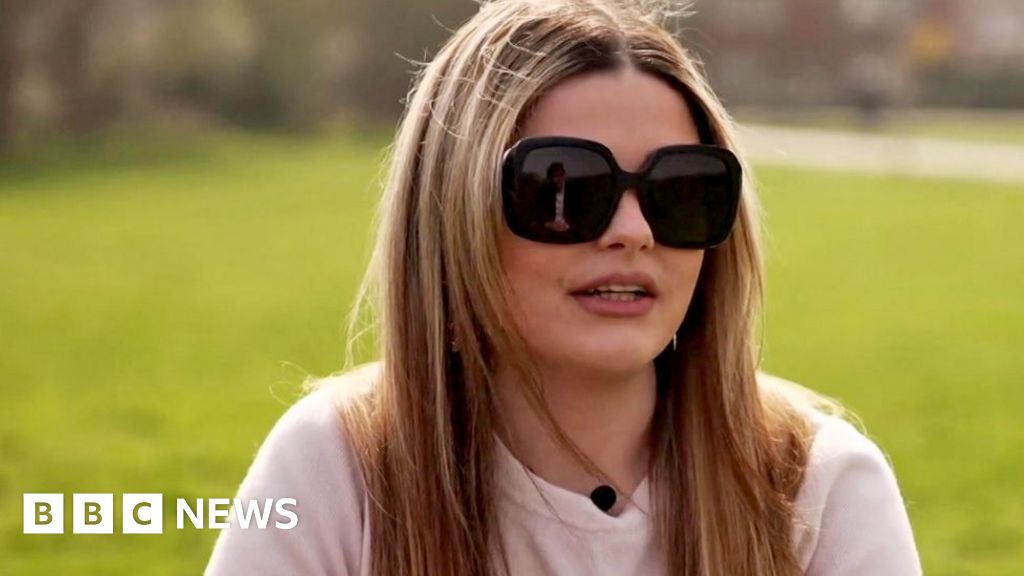
Twenty-one-year-old Annabelle Mackay has spoken to the BBC about her experience of surviving a meningitis infection.
The University of Kent law student believes she may have contracted it on 5 March at Club Chemistry, or possibly on an evening before this when she was out at a different venue.
So far, there have been 29 cases of meningitis linked to the outbreak, with a vaccination programme being rolled out for students.
“I feel so grateful to be alive and to be here. I’m still dealing with the aftereffects now, but I think I just need to focus on my recovery and getting better and back to myself,” Mackay told the BBC.
LOUISVILLE, Ky. (AP) — Federal prosecutors asked a judge Friday to dismiss the charges against two Louisville officers accused of falsifying the warrant that led police to raid Breonna Taylor’s apartment the night she was killed six years ago.
Prosecutors said in a court filing that their review of the case showed the charges against former Detective Joshua Jaynes and former Sgt. Kyle Meany should be “dismissed in the interest of justice.”
Judges have twice reduced a felony charge against each officer to a misdemeanor, saying there wasn’t a direct link between the false information in the warrant and Taylor’s death. Prosecutors said after the second ruling that they had decided to drop the cases.
“We are elated with this development,” said Travis Lock, an attorney for Jaynes.
Advertisement
Meany’s lawyer, Michael Denbow, said he is “incredibly grateful for today’s filing.”
Meany “is looking forward to putting this matter behind him and moving forward with his life,” he said.
Taylor was shot to death by police when they broke down the door of her apartment while serving a no-knock drug warrant looking for a former boyfriend who no longer lived there.
Advertisement
Advertisement
Taylor’s boyfriend at the time fired at the officers, and Taylor was killed as police fired back.
Federal prosecutors under former President Joe Biden pressed charges against the officers. Under President Donald Trump, though, the Department of Justice asked that Brett Hankison, the only officer serving prison time related to Taylor’s killing, be let out of prison while he appeals his conviction.
Taylor’s mother, Tamkia Palmer, said in a Facebook post that she is extremely disappointed in Trump’s Justice Department.
“Their phone call today informing me that charges against the police are being dropped while implying they have helped me is utterly disrespectful,” Palmer wrote. “This is the first time I’ve heard from them since they took over and it’s clear they have not served me or Breonna well.”
Advertisement
A federal judge sentenced Hankison to 2 years and nine months in prison and 3 years of supervised release for blindly firing 10 shots into Taylor’s windows on the night she was killed. None of the shots hit anyone.
Neither of the two officers who did shoot Taylor was charged, after prosecutors deemed they were justified in returning fire into the apartment.
The death of Taylor, a 26-year-old Black woman, led to months of protests in the streets of Louisville in 2020, the same year Ahmaud Arbery was killed while jogging in Georgia and George Floyd was choked to death by an officer in Minneapolis.
Advertisement
___
Collins reported from Columbia, South Carolina. Associated Press reporter Jonathan Mattise in Nashville, Tennessee, contributed to this report.





















































You must be logged in to post a comment Login