Eze joined the Gunners in a £67.5 million deal from Crystal Palace in the summer transfer window but the 27-year-old has been unable to secure a regular starting role in midfield.
The England international was handed a start in the final game of Arsenal’s Champions League league phase on Wednesday night as he delivered an impressive performance in the 3-2 win against Kairat Almaty.
But during the latest episode of Stick To Football, Neville and Ian Wright raised doubt over whether Eze can fit in Arteta’s system at Arsenal.
Advertisement
‘We’re talking about someone like Eze, now Eze is coming in now and we’re saying, ‘Eze do your thing what you did at Palace’, Eze needs to be played and just free to play,’ Wright said.
Neville replied: ‘I don’t think he’s going to get that.’
Advertisement
Get your football fix
Don’t want to miss the week’s biggest football stories? Metro’s exclusive football newsletter, In The Mixer, is your essential guide.
From the latest transfer rumours and managerial moves to analysis of the biggest games and a lot more, our experts have you covered.
Wright then said: ‘Listening to what the management is saying about enjoyment and players expressing themselves.’
Neville added: ‘He [Arteta] comes from that Pep [Guardiola] school of methodology over what would be being the maverick.
Advertisement
‘When I look at Pep’s teams and what he did with [Jack] Grealish and when I see what Mikel does, you’ve got to admire how they put that system into the players, but they do want the methodology and the process of how you play to be followed over the individual.’
Wright said: ‘You say what’s got to change, to a certain extent.’
Neville then asked: ‘Can he change that?’
Wright replied: ‘Well at some stage… if you’ve got someone like Eze who plays with freedom. The goal that [Matheus] Cunha scored and even the goal from [Patrick] Dorgu, two great goals, they’re in positions where you’d like to see someone like Eze because he can do that.
Advertisement
‘He’s got to have the freedom to play and wander into these areas. At the moment it does feel a bit rigid for him.
‘If you’re going to leave [Martin] Odegaard out and bring this Eze in who is not free, doesn’t feel free… he’s [Arteta] said about enjoyment and letting them go.’
Including goals under Darren Fletcher, who briefly took the reins following Ruben Amorim’s departure, the former RB Leipzig star has now scored six in his last seven appearances.
Advertisement
Former United captain Neville now believes Sesko will be demanding a starting role when Palace visit Old Trafford on Sunday.
‘His celebration I think was a message to everybody,’ the former United star told The Gary Neville Podcast.
‘It was a message saying “get me in this damn team now. This is my start next time”. I think he will have been really disappointed having scored a wonderful goal against west ham not to be in the team today.’
Your football fix
Metro‘s Head of Sport James Goldman delivers punchy analysis, transfer talk and his take on the week’s biggest stories direct to your inbox every week.
Sesko has turned into United’s super-sub (Picture: Getty)
He continued: ‘For Sesko now, I think on Sunday against Crystal Palace, he starts. And I haven’t always been convinced about him this season.
‘But what you have to do is move with what you see. United have struggled in the last couple of games against West Ham and Everton.
Advertisement
‘He looks like he’s growing in his game and his body and his confidence is high so I think on Sunday Michael Carrick starts him. I think it would kill the lad if he didn’t start on Sunday.’
Neville believes Amad will make way for Sesko this weekend (Picture: Getty)
Carrick has made very few changes to his starting XI in his six games in charge with injuries for Patrick Dorgu and Lisandro Martinez enforcing the two he has made to date.
But Neville believes Sesko’s form will now prompt a reshuffle with Amad Diallo set to lose his place in the side as a result.
‘We will probably see Matheus Cunha on the left, Bryan Mbeumo on the right, Sesko up top and Bruno in behind,’ Neville said, looking ahead to Sunday’s game.
‘And I think Amad will just slip in behind for a game. Amad has been really good but Sesko has to start, he’s been scoring winners and equalisers, you have to put him in.
In this episode, host Tamara Kormornick speaks to child immunisation specialist Dr Helen Bedford, professor of Children’s Health at UCL Great Ormond Street Institute of Child Health. They discuss how serious this latest epidemic is, the different factors that have led to the latest measles outbreak, as well as reality test potential solutions like keeping non-vaccinated children out of school. Plus, Tamara also speaks to the Standard’s trainee journalist, Niva Yadav, about how parents in affected areas are coping with news of the outbreak.
Top performing services are awareded ‘outstanding’ by the Care Quality Commission
GP surgeries across Cambridgeshire are committed to delivering high-quality care to their patients. The Care Quality Commission’s (CQC) assessments of healthcare providers in the country highlights the effectiveness and impact of provider’s care.
Advertisement
The CQC’s quality ratings for health and social care services in England implement a four-tier rating system with the top performing services being awarded an outstanding grade. This means that the service is performing “exceptionally well”, according to CQC.
Inspectors look at five key aspects when evaluating a service. This includes the safety, effectiveness, caring, responsiveness, and the leadership of each surgery.
These ratings are publicly available on CQC’s website and help people to make informed choices on their healthcare provider and identify any areas that need improvement. Numerous surgeries across the county have achieved outstanding, and therefore establishing themselves as the best in Cambridgeshire.
The latest inspection at this surgery was in December 2021. It received an overall rating of outstanding and was also later reviewed in July 2023. Cambridge Assess Centre is a provider of specialist GP services and offers a range of services to patients that are homeless, at risk of homelessness or housed in sheltered accommodation.
Inspectors said: “There was an outstanding caring culture within the practice and we saw many examples. Staff treated all the patients as individuals and patients we spoke with confirmed this.”
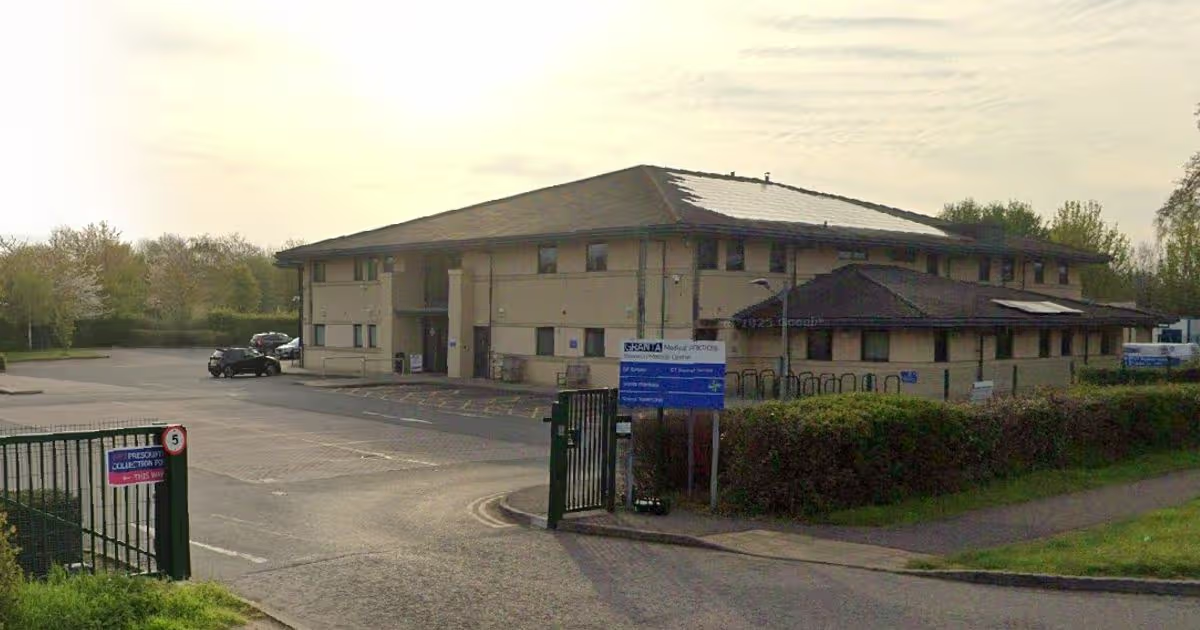
Granta Medical Practices
London Road, Sawston, Cambridge
This practice was last inspected in October 2019 and achieved an overall outstanding rating. Granta Medical Practices later had a review in July 2023. Inspectors found that the services provided were ‘outstanding’ for families, children and young people as well as for people experiencing mental health and those whose circumstances may make them vulnerable.
Advertisement
Inspectors said: “Patients were supported and tested with dignity and respect and were involved in partners in their care.”
Again, this was rated an overall outstanding in their latest inspection in January 2017. Acorn Surgery also later had a review in June 2019. Each key area was awarded outstanding except caring and safety where they were graded at good. Individual ratings for specific services were awarded outstanding including care for those with long term conditions, families children and younger people, and older people as well.
Inspectors said: “Feedback from patients about their care was consistently positive.”
Buckden and Little Paxton Surgeries earned an overall outstanding rating in their latest inspection in March 2016. It was later reviewed in July 2023. The surgery was graded outstanding for specific services including for those with long term conditions, working age people, and those experiencing poor mental health.
Inspectors said: “Patients said they found it easy to make an appointment with a named GP and that there was a continuity of care, with urgent appointments available the same day.”
Ben Shephard has spoken about how he has changed over the years, with The Summit presenter opening up a little more about the dynamic within his marriage to Annie
Christopher Sharp Trendswatch Reporter
08:00, 24 Feb 2026
Presenter of ITV’s This MorningBen Shephard has said he is “ruthless” in sticking to one rule in his and wife Annie’s family life.
Ben, 51, made the admission after talking about how important his wife had been to him. Ben has been married to Annie for over 20 years and together they share two sons, Sam, 21, and Jack, 19.
Advertisement
Speaking with The Big Issue about what he would tell his younger self, and what would surprise younger Ben about current Ben, The Masked Singer star said it would be how strict he is about dirty laundry.
He said: “Probably that my bed is made and I get really annoyed that my boys don’t put their pants in the wash basket.
“I was not a particularly tidy teenager and now my teenage boys would argue that I’m the most ruthless when it comes to keeping bedrooms tidy.
“So that would be quite a sea change. I think my final words for my younger self would be just put your washing in the basket and be nicer to your old man.”
Advertisement
Before this, Ben said how much he values his life with his wife Annie. He said: “I am very aware that in my relationship, my wife is the most important person. I have learned more from her than anyone in my life.”
Ben has previously has talked lovingly about his partner in recent weeks, despite admitting they often live separate lives due to work commitments.
Speaking to the Daily Mail, he said that Annie, an interior designer, feels content while spending time alone.
Advertisement
He explained: “Annie is much more solitary than me. She’s much happier in her own company. Half the time she’s like ‘I need a bit of space. Can you leave me alone for five seconds, please?’.”
However, Ben was quick to point out how Annie is the most important factor in their family and that they enjoy spending time together whenever they can.
He added: “We do live quite separate lives. I’m off working, she has her job, which is garden and interior design. If I’ve got spare time I want to do something physical.”
Advertisement
Ben currently hosts The Summit, a new ITV show in which 14 contestants try to reach the top of a mountain on New Zealand’s South Island, with competitors aiming to win a share of a £200,000 prize.
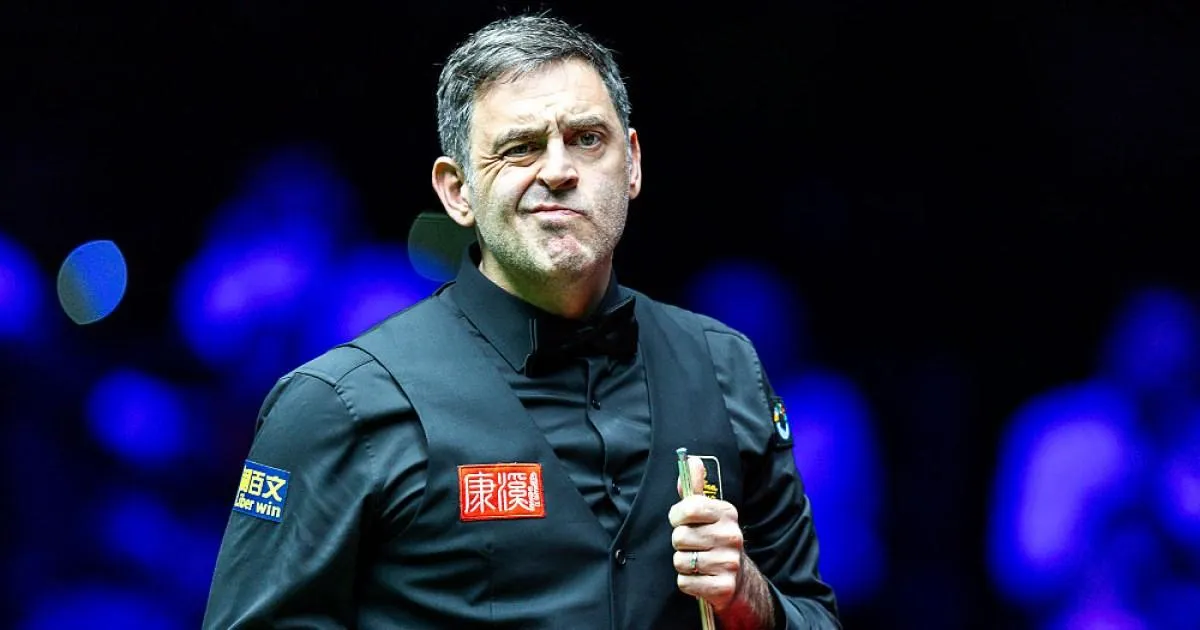
Ronnie O’Sullivan continues to play a light schedule compared to his rivals (Picture: Getty Images)
For snooker’s biggest star, Ronnie O’Sullivan has played a relatively minor role in the story of this season and his rivals do not think the main character is being missed too much.
The 50-year-old has not been totally absent, playing in eight tournaments so far this campaign, but he has opted out of more events than he has entered.
Form struggles have also made this a quiet campaign for the Rocket, with early exits at the likes of the UK Championship, International Championship and recent World Grand Prix.
There has really just been one standout run, which came at the Saudi Arabia Masters in August where O’Sullivan made the final, only losing in a deciding frame to Neil Robertson.
However, that was his highlight in an otherwise dull campaign, which could not spark into life at the Players Championship last week or the ongoing Welsh Open as the Rocket chose not to enter either.
World number one Judd Trump says that players are now entirely used to O’Sullivan not being around and feels he should not rush back, given his recent performances.
O’Sullivan’s last match was a defeat to Xiao Guodong at the World Grand Prix (Picture: Getty Images)
‘No, I don’t even think about it,’ said Trump at last week’s Players Championship. ‘It’s not until you mention it that I realise that he’s not here.
‘I just think he’s an amazing player, but the way he’s played recently, he’s been quite poor. So I think it’s better for him to take that time out and when he’s willing to put the work in and whatever it is…I think he’s still struggling with his cue as well.
Advertisement
‘I don’t think he’s found the right cue from what I’ve see him play, he’s nowhere near. The mistakes he makes he never made with his old cue, never.
‘And I think obviously the more you get older and the less he plays, the less sharp he’s going to be and it’s just going to get harder and harder.
Judd Trump has not played O’Sullivan since July 2024 (Picture: Getty Images)
‘So, I think it’s going to be difficult for him now. Ronnie can turn it on at any point, but I think he’s a little bit more vulnerable.
‘He used to be invincible against some players and he’d just have to turn up and they’d kind of crumble, wouldn’t they? Now it just doesn’t seem that that happens as much. People are a lot more comfortable playing him.
‘But I’m sure there’s going to be one tournament in the next year or two where he’s going to be unbelievable and he’s still capable of amazing things.’
Advertisement
John Higgins made the Masters final in O’Sullivan’s absence (Picture: Getty Images)
Similarly to Trump, John Higgins feels it has become normal for a tournament to be without the Rocket, but any appearance he does make should be appreciated.
‘To be brutally honest, he’s not playing really a lot now,’ said Higgins. ‘So I think all the guys just enjoy him now, when he does appear, you know what I mean?
‘But he’s obviously got different things going on in his life, and he can’t be around forever. So just enjoy him while he’s still playing some events.’
O’Sullivan is expected to be back in action at the World Open next month (Picture: Getty Images)
‘I think it’s still too reliant on Ronnie. It’s mind-boggling at times’
Mark Allen does feel that having the Rocket in a field brings an added excitement to an event, but snooker has the ideal opportunity to create new stars as the seven-time world champion slows down his schedule.
However, the Pistol does not think enough is being done to push new talents into the limelight.
‘It is what it is. Ronnie’s just at that stage of his career,’ said Allen. ‘He’s always going to do what he wants to do. I think the good thing for the game in general is that it’s becoming more common, so it’s giving the events a chance to be popular without Ronnie.
Advertisement
‘I think there’s no doubt there’s a better buzz when he’s involved. I absolutely love playing him. The crowd and stuff, that’s basically what we started playing snooker for, to play in those types of matches.
Mark Allen hopes new stars will be encouraged to shine (Picture: Getty Images)
‘But it’s up to WST and the media guys to really push the rest of the tour now because Ronnie probably doesn’t have a lot of years left and we have to try and create the next superstar.
‘I think it’s still too reliant on Ronnie. It’s mind-boggling at times, I understand he’s the big name in the sport, I completely get that, but you’re not going to create the next Ronnie O’Sullivan in the media if you don’t give them a chance.
‘There’s a lot of people that have been doing really well in recent years that haven’t got the coverage they deserve.’
They are bomb shelters, and there are hundreds all over the city. Supposedly, they’re temporary, but two years after being installed, they feel increasingly permanent.
When the Kremlin launched its invasion of Ukraine four years ago, bomb shelters on home soil were definitely not part of the battle plans.
Nor were the barricades at Belgorod’s bus stops. Nor the anti-drone nets draped over its schools and shopping centre. Nor the now frequent blackouts and power cuts.
But by exporting war, Russia also brought it home, and Belgorod has been on the frontline of Ukraine’s retaliation.
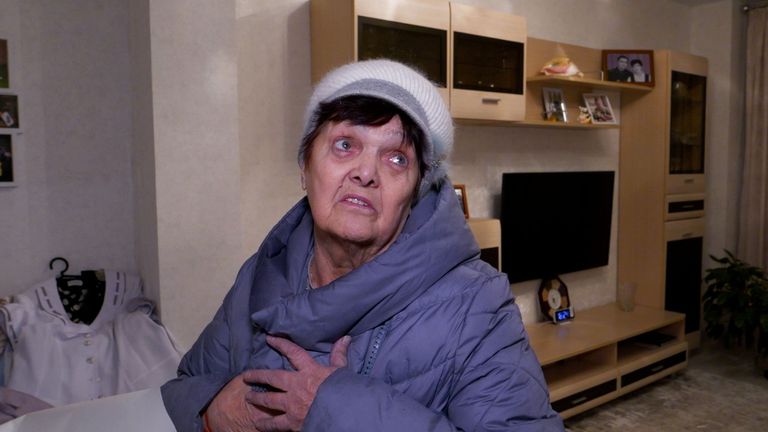
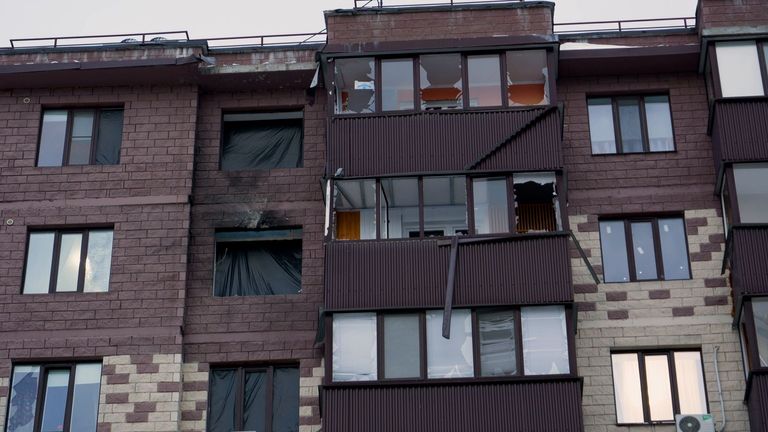
We meet 80-year-old Lyudmila outside her apartment block on the outskirts of the city, a few hours after it has been hit by drones.
One crashed into her bedroom while she and her husband Vladimir were at home.
“It flew in through the window, hit the floor, exploded and then flew into the other room,” she tells us, still in shock.
Advertisement
Image: Lydumila’s apartment building was hit by drones
As we’re looking up at the charred brickwork, an air raid siren sounds.
“Again,” Lydumila sighs, before showing us inside to take shelter.
When the siren stops, we make our way up to her apartment, where I’m hit by a smell of burning as soon as the door opens.
There are cracks in the walls and scorch marks on the floor. The furniture inside has already been removed by emergency crews because there’s nothing left to salvage.
The blast would almost certainly have killed the couple had they been in the same room.
Advertisement
“We are so tired, you cannot even imagine,” she says.
“Lord, what did we do to deserve this? We lived in Ukraine, we were friends. And look at this, now we’re fighting each other.”
Image: An apartment building in Belgorod after it was hit by drones
But Belgorod isn’t like other Russian cities. The war can feel distant and detached in other parts of the country, but not here.
There is a constant threat of attack, as we find out first-hand.
Advertisement
‘Lucky escape’
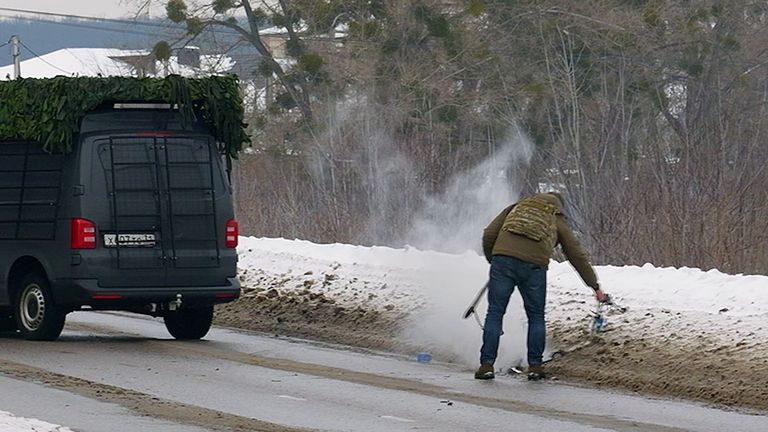
We are on our way to the town of Shebekino, five miles (8km) from the Ukrainian border, when suddenly there’s a loud bang.
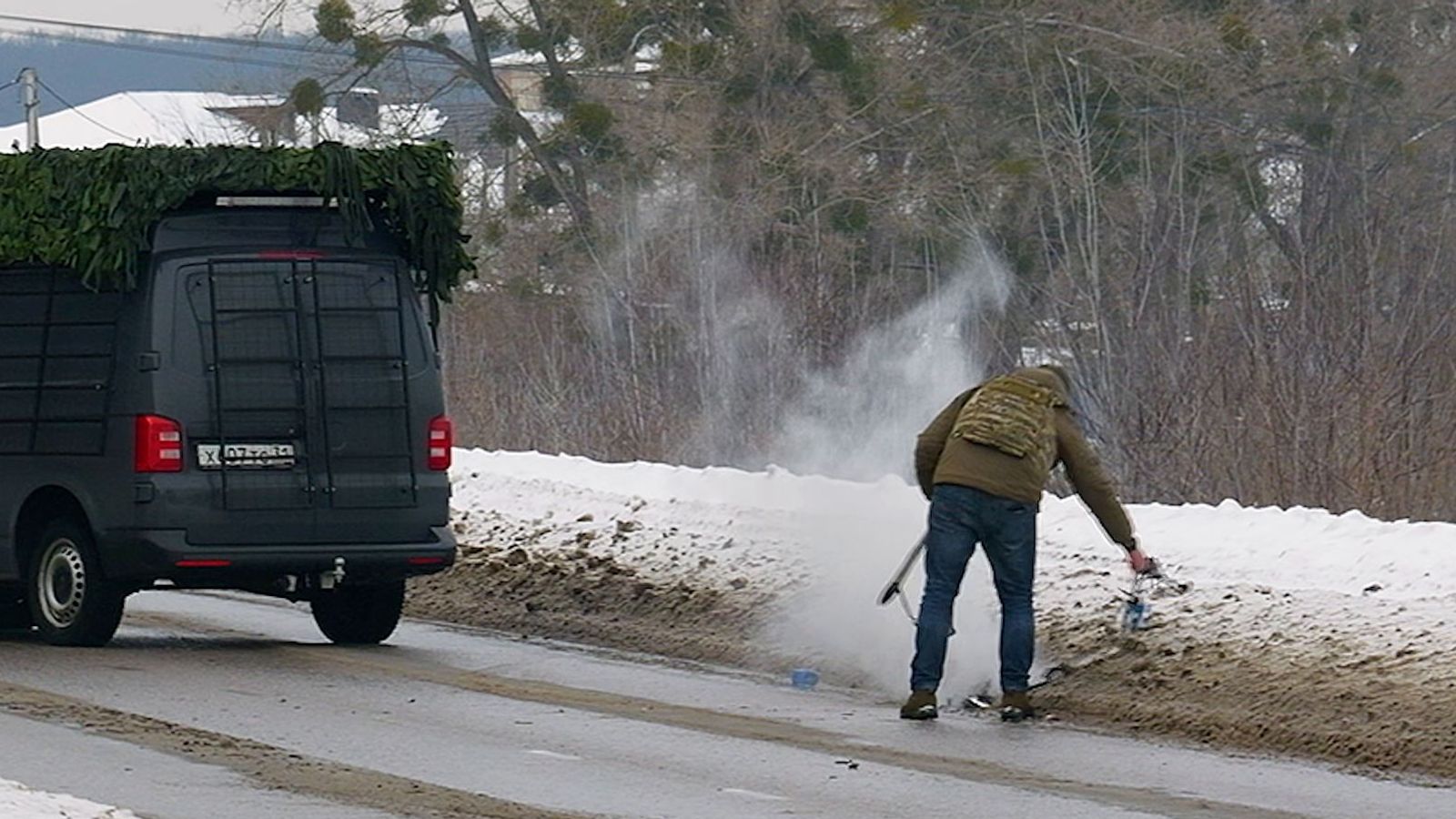
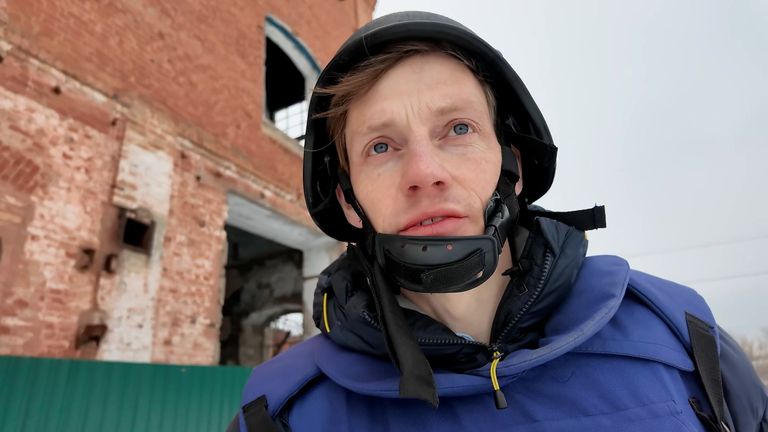
“Stop!” one of the team yells. “Quick, get out!” Our vehicle has just been hit by a drone.
We jump out and race across the ice for cover behind the wall of a derelict factory.
Advertisement
We don’t know where the drone came from. Our radar scanner didn’t show any threats.
Image: Sky News’ Ivor Bennett was forced to run after a drone hit the vehicle he was travelling in
We believe it was a “sleeper” drone that had been lying in wait for a potential target.
For some reason, its pilot, operating the machine remotely via an onboard camera, chose our car.
Laden with explosives, kamikaze drones are designed to detonate on impact.
This one didn’t. Instead, it lay smouldering in the road before the military arrived to take it away.
Advertisement
It was a very lucky escape and a terrifyingly close illustration of the everyday dangers for people in the region.
Image: The drone failed to detonate on impact
‘Alone in our grief’
Like Moscow, Kyiv denies targeting civilians.
But as in Ukraine, civilians in Russia have been killed in the war too, albeit on a much smaller scale.
At least 440 people have died in the Belgorod region since the fighting began, according to the local authorities, compared to more than 15,000 the UN says have been killed in Ukraine.
Advertisement
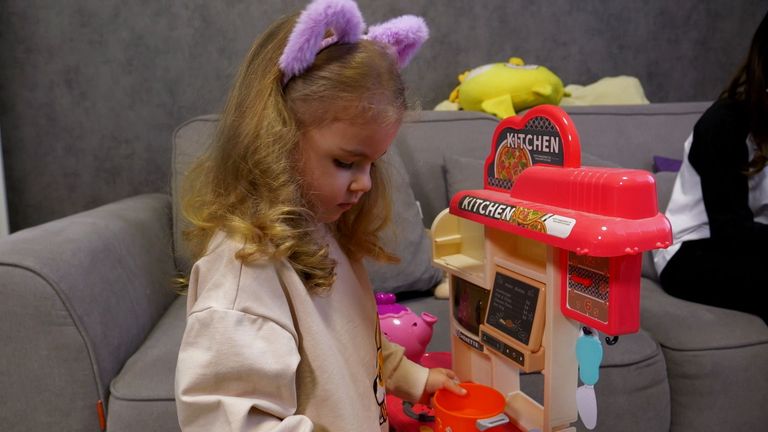
Liza’s mother, Viktoriya, died when Belgorod was shelled just over two years ago.
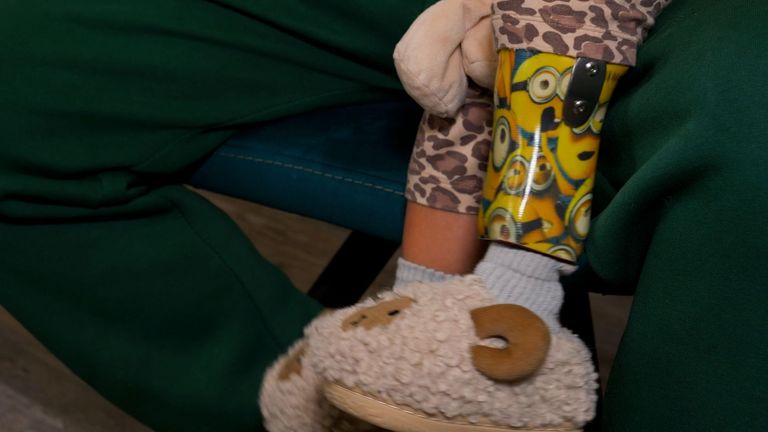
She had been out shopping with Liza, whose left leg was amputated after being hit by shrapnel. She was eight months old at the time.
Image: Liza’s mother died when Belgorod was shelled
“Those were very difficult days,” says her uncle Dmitri, who stayed with Liza in hospital for several months and adopted her.
“She and I were left alone in our grief.”
Dmitri was born in Belgorod, and that’s where his whole family lives, including his mother and grandmother. That’s why he’s stayed. But it means life is essentially on hold – spent largely indoors and under cover.
Advertisement
“I wish there was peace, for children to live full lives,” he tells me.
“Our children know what Vampire strikes are, what drones are, what an FPV [first-person-view] is. A child this age doesn’t need to know this.
“There should be a childhood, and not this situation.”
Image: Liza’s left leg was amputated after she was hit by shrapnel
At an official level, Belgorod has embraced its role as a frontline city.
A local museum has put on a special exhibition called “Angels of Victory”, which honours Belgorod’s air defences.
Advertisement
Visitors are shown the remnants of Ukrainian missiles and drones that have been shot down.
There’s no mention of why Belgorod has come under attack. No word on who started the war. The only message is that Russia is the victim.
It is the same with the bomb shelters. They’ve inspired a new line of souvenir keyrings. A sign of danger turned into a symbol of defiance.
‘Together until victory’
Advertisement
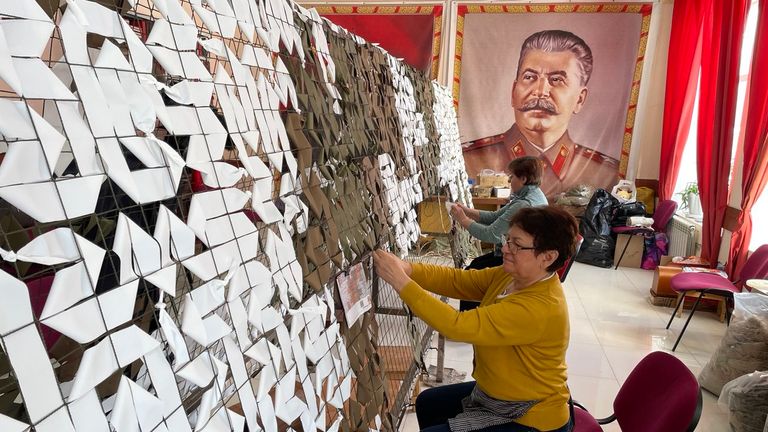
There are many here who believe the narrative. At the local Communist Party offices, a group of elderly women are weaving camouflage nets that will be sent to Russian soldiers at the front.
“[The troops] are our protection, we are their protection. Together we are strong, together until victory,” Olga tells me, under the watchful gaze of Joseph Stalin, whose giant portrait hangs on the wall.
The women say they have been making the nets every single day since the war started, and promise to continue until it ends.
Image: Women weaving camouflage nets that will be sent to Russian soldiers at the front
“We have a lot of work to do,” Raisa says, as an image of another icon of the Soviet Union, Vladimir Lenin, looms large behind her.
“We’re just glad that we’re so strong and not tired of anything. We just want peace and a real life.”
Advertisement
While some have faith in Russia’s path, it is clear there is also frustration here.
And it seems to be growing, the harder life gets.
Galina, 73, has been living by candlelight for the past five days, following a Ukrainian strike on the local power grid.
But who does she criticise? The local authorities, for not fixing the problem when they said they would.
Advertisement
“We understand the military situation, we understand, but you can’t understand lies,” she says.
Thousands in Ukraine have been living without heating and electricity for several weeks during the winter because of Russia’s targeting of energy infrastructure.
But now people here are experiencing that too, as temperatures outside hit -20C.
Tatyana has her hat and coat on as she shows us through the gloom into her apartment. She fears the blackouts will continue.
“It’s been going on for a very long time, and it’s like we’re just licking our wounds, unable to recover quickly,” she says.
Advertisement
And that’s just it – no one knows when this will end.
Volodymyr Zelensky declared on the eve of the fourth anniversary of the war in Ukraine that World War Three had already begun.
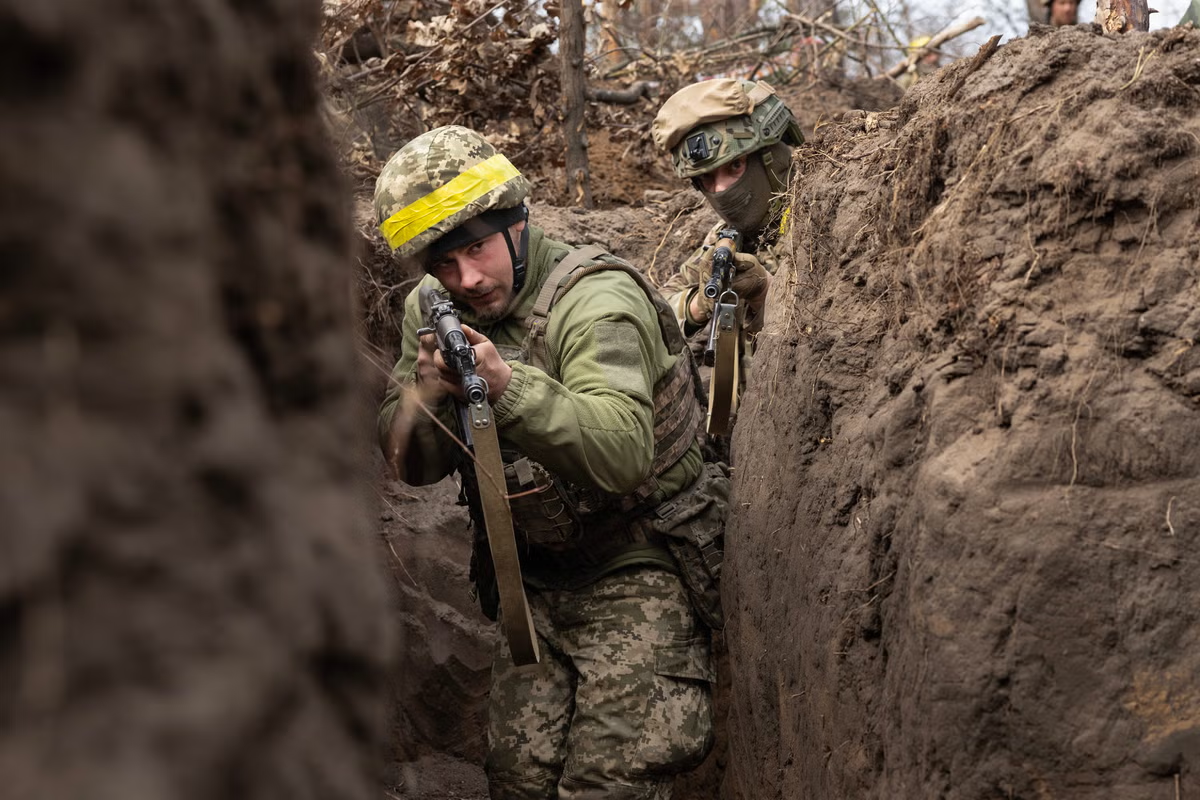
His statement reflected the increasingly global nature of Russia’s war, which has seen troops from countries across the world brought in to either bolster Putin’s aggression or support Ukraine’s resistance.
Since February 2022, around 55,000 Ukrainians have been killed in bitter fighting on the frontlines, according to Ukrainian estimates. Russia has suffered an estimated 1.2 million casualties, including at least 325,000 deaths, according to recent analysis.
Some 20,000 men from overseas are now estimated to have joined Russia’s invasion. Many have been falsely sold the promise of lucrative employment away from the frontlines. Ukraine has offered professional soldiers fixed contracts paying rates higher than what they could earn at home.
Advertisement
Moscow has used foreign troops to alleviate the strain on its forces and, crucially, delay another round of politically contentious mobilisation – a move likely to spark public anger.
Ahead of the fourth anniversary of the conflict, The Independent looks at some of the countries dragged into Russia’s war in Ukraine.
North Korea
Advertisement
North Korea assumed a major role in the conflict in support of Russia in late 2024, helping to set back a bold Ukrainian counteroffensive into Russian-held territory.
The first reports of North Koreans training in Russia came in the weeks after emboldened Ukrainian forces launched a summer offensive into Russia’s Kursk region. Pyongyang would commit some 17,000 troops to Russia in total, according to recent British estimates.
A North Korean Soldier fighting for Russia in Ukraine, according to a video shared by President Volodymyr Zelenskyy of Ukraine (Office of the President of Ukraine)
Most of the soldiers came from North Korea’s elite ‘Storm Corps’, which are trained for infiltration and sabotage operations. They remained in Kursk to help Russia recover control of its own region before mostly withdrawing.
Advertisement
The UK Ministry of Defence assessed in June that Pyongyang had likely sustained more than 6,000 casualties fighting Ukraine – a little over a third of its forces.
Emil Kastehelmi, military analyst and cofounder of the Finland-based open-source intelligence collective Black Bird Group, told The Independent that “after fighting in Kursk, they’ve taken a less active role against Ukrainians”.
He said that while multiple brigades were used in Kursk, no such force has since been transferred to Donetsk, the region of eastern Ukraine sought by Putin.
North Korea has been fighting its own propaganda war at home, glorifying the troops sent to Kursk with a new memorial complex and a housing district set aside for the families of slain soldiers. Analysis say such treatment is aimed at curbing public discontent.
Advertisement
Kenya
Harrowing footage showing the abuse of African soldiers by Russian troops sparked outrage late last year.
Francis Ndung’u Ndarua, 35, from Kenya, was filmed in viral footage with a land mine strapped to his chest as a Russian speaker hurled racial slurs at him and said he would be used as a “can opener” to assault Ukrainian positions.
Advertisement
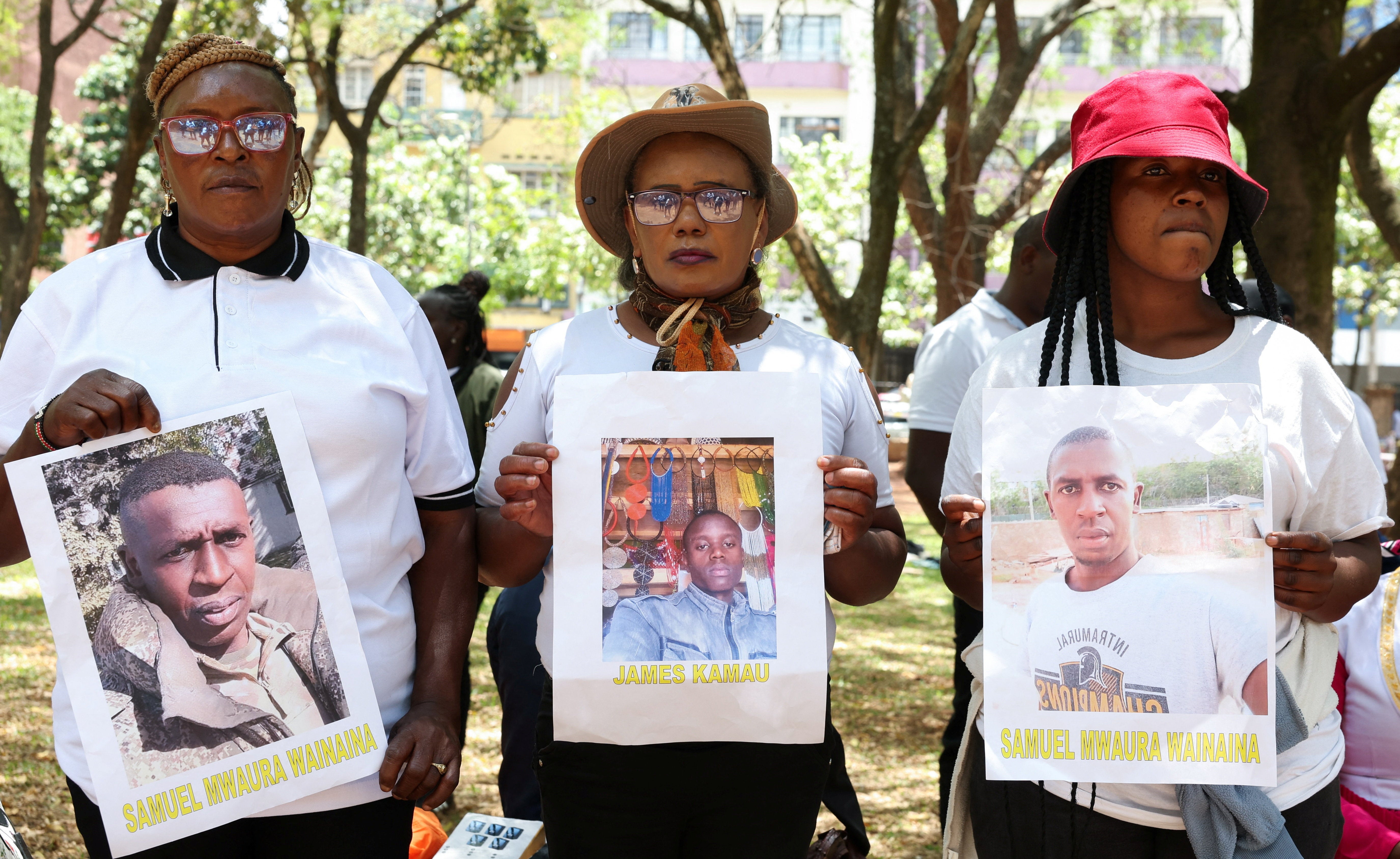
Relatives of Kenyans believed to be fighting for Russia in Ukraine (Reuters)
Anne Ndarua, his mother, told CNN that Francis had gone to Russia to become an electrical engineer. She was surprised to learn he was being forced into military training, and says he was sent to the front after just three weeks.
Families have petitioned for the Kenyan government to act in recent weeks as soldiers began to return home, recounting how they were lured in by lucrative job offers only to be sent to Ukraine.
A Kenyan intelligence report found this month that around 1,000 Kenyans have been recruited to fight in Ukraine so far. Nearly 90 were on the frontlines this month, while one has died and several have come home injured or traumatised, the National Intelligence Service (NIS) said in its report. The government has recently tried to ban the conscription of Kenyan soldiers.
“They sometimes may not fully understand what is the battlefield they are entering,” Mr Kastehelmi said, adding: “Russians probably can pay better and they may have also more effective recruiting networks.”
Advertisement
Colombia
Both Russia and Ukraine have recruited soldiers from Latin America to fill in their ranks.
Colombian veterans are considered among the most valuable foreign fighters, arriving hardened from a decades-long civil war, and familiar with Western equipment.
Advertisement
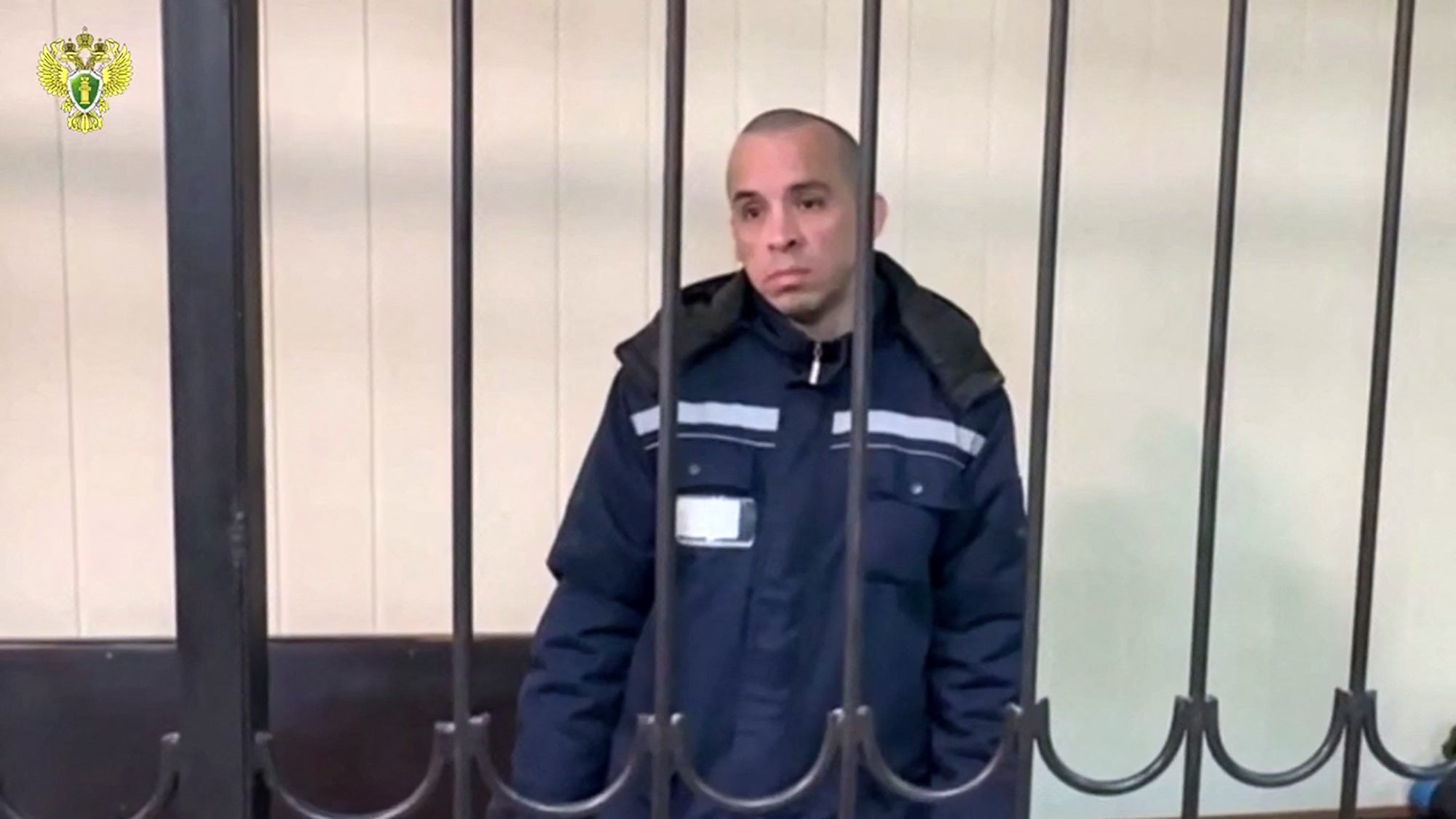
In December, a Russian-backed court in Donetsk sentenced Colombian national Oscar Mauricio Blanco Lopez to 19 years in jail for fighting for Ukraine (Russian Prosecutor General’s office)
Mario Urueña-Sánchez, a security expert at Rosario University in Bogotá, told The Economist that casualty rates remain high as Colombians arrive to meet a very different conflict from the one at home.
“In Colombia, you can patrol for six months and there isn’t as much risk involved,” a Colombian Army veteran now fighting in Ukraine told El Tiempo. “Here, with every entry (into combat) you know you might not come back or you might come back wounded.”
Figures vary, and recruitment is often informal, but it is estimated that between 3,000 and 7,000 Colombians have fought in Ukraine, on both sides, since 2022.
In 2024, Colombian fighters were offered between $3,000 to $4,000 per month to join existing Ukrainian units on six-month contracts, according to CEPA.
Advertisement
India
More than 200 Indians have been recruited into the Russian armed forces since the invasion, India’s foreign ministry reported in December, amid rising concern about citizens being lured into the military.
At least 26 people were said to have been killed and seven were still missing at the time of the report.
Advertisement
Caesar, 50-year-old, a Russian who joined the Freedom of Russia Legion to fight on the side of Ukraine, stands in front of a destroyed monastery in Dolyna, eastern Ukraine on December 26, 2022 (AFP/Getty)
Dozens of families gathered in New Delhi in November to call on the authorities to bring their relatives home, as they too heard that they had been duped into travelling to Russia for paid work only to be forced into military roles.
Among India’s casualties are Ajay Godara, 22, and Rakesh Kumar Maurya, 30, who had travelled to Russia separately on student visas, before taking up non-combat roles as cleaners and helpers, according to their families. Their bodies were returned to their families last year.
British defence minister John Healey said this month that Russia’s military is increasingly reliant on foreign fighters as losses mount faster than Moscow can replenish its frontlines.
These troops are “often recruited under false pretences and press-ganged under pressure without necessarily realising that they’re destined for the Russian meat machine on the front line of Ukraine,” he said.
The vote could have huge ramifications to a law which has hugely passionate supporters and objectors
Today (February 24) Senedd members in the Welsh Parliament will debate the assisted dying law. The law would allow adults who are terminally ill, subject to safeguards and protections, to request and be provided with assistance to end their own life.
Advertisement
It is a UK law which has to be passed by Westminster, and not directly a matter devolved to Wales but it does have an impact on areas of politics which are devolved to Wales so a vote has to take place here too.
There are often occasions where this happens, and the Senedd vote is a formality, but this one is expected to be different. Not just because of the magnitude of the law, if it passes, but also what it will mean if it doesn’t pass. For the biggest stories in Wales first sign up to our daily newsletter here
The vote on Tuesday will be seen as important and historic, but it’s important to remember – as we explain below – this isn’t a vote on Senedd members personally backing or opposing the introduction of assisted dying, it is a vote on the legal rules around how the devolved and Westminster administrations could enact it.
What would this change?
Currently it is a criminal offence, because of section 2 of the Suicide Act 1961, to intentionally assist or encourage the suicide or attempted suicide of another person. This law would mean that it would not be an offence if someone assists a terminally ill adult to end their life in accordance with procedures set out in the law.
Advertisement
It would mean neither the registered medical practitioner, nor any other person who supports the terminally ill person to seek assistance under the Act, faces criminal liability for doing so.
It would amend the Suicide Act 1961 and regulate the assistance given to someone.
What is happening with the law?
The law, formally known as the Terminally Ill Adults (End of Life) Bill, would allow adults who are terminally ill, subject to safeguards and protections, to request and be provided with assistance to end their own life.
The bill has made it through all the stages of the House of Commons, passing the final reading by 314 votes to 291 in June 2025.
Advertisement
It is now being debated by the House of Lords and that process is not yet completed. More than 1,100 amendments have been tabled- a record number for this stage – and that process is ongoing.
What is happening in Wales?
The Senedd does not have the powers over to legalise assisted dying itself as the law is part of the Suicide Act 1961. Although suicide itself is no longer a criminal act, it remains a criminal offence for a third party to assist or encourage another to commit suicide.
But because this this is a law which has an impact on areas devolved to Wales – like health – there will be a vote in the Senedd on what’s called a Legislative Consent Motion (LCM).
A LCM is a formal vote used by the Senedd when Westminster legislates on devolved matters, it is politicians here in Wales giving their consent for a piece of legislation to also apply in Wales.
Advertisement
Although not legally binding, there is a convention which is that the UK Parliament will “not normally” legislate on devolved matters without consent from the Senedd. If, for example, the Senedd didn’t give its backing it would be quite a big deal if Westminster then overruled the will of devolved politicians.
What would the law mean in Wales?
Welsh health minister Jeremy Miles has said the law will mean Welsh Ministers will need to make regulations to make provision about voluntary assisted dying services in Wales, and that they will need to ensure that anyone involved in assisted dying can do so via the Welsh language.
The Welsh Government would only be able to implement assisted dying through the NHS if the Senedd agrees. When Mr Miles was asked to clarify what role the Senedd and Welsh Government have, he was asked by Senedd health committee chair Peter Fox whether NHS Wales can offer assisted dying, fall within devolved health powers: “If they are not made by the Welsh Government and consequently approved by this Senedd, the NHS in Wales will not be able to provide assisted dying services – is that the case?”
“That is correct,” Mr Miles replied, also saying that without NHS provision, assisted dying could become available in Wales through the private sector.
They also expressed concern about long-term impact on palliative and end-of-life care in Wales if the law came into force.
The LCM includes things specific to Wales, including that people can give information, have assessments, and get reports in Welsh; that Welsh ministers will be able to give guidance specific to Wales, allowing the Welsh healthcare system (including the NHS) to provide assisted deaths.
If it does not pass, then it would not block the law, alter eligibility, nor delay implementation but it could mean those Welsh-specific elements are withdraw, and there will not be a Wales-specific service.
Advertisement
Instead, it could mean only private firms deliver assisted dying services in Wales for a fee; Welsh residents could have to travel to England for both assessment and if they continue to an assisted death and there will be no specific Welsh clinical guidance or tailored oversight reflecting Welsh communities and health needs.
Why does the LCM matter?
Supporters of the law say that if the LCM does not pass it will result in a difference in the way this could be offered between England and Wales. For example, the Humanists say: “For over 50 years, abortion was legal in England, Scotland, and Wales, but not in Ireland or Northern Ireland, leading to a quarter of a million women travelling, often alone, to access it.
“This type of injustice risks being repeated between England and Wales if Welsh politicians vote down assisted dying proposals – as then, people will need to travel to England to have the procedure on the NHS. Humanists UK and My Death, My Decision are urging politicians to give terminally ill Welsh people the same options and choices that hundreds of thousands of dying people have around the world.”
They say the abortion ban disproportionately impacted people on low incomes, those living in remote areas, or socially vulnerable people and if assisted dying becomes available only through private providers or by travelling to England, people on lower incomes will face the greatest barriers.
Advertisement
Graham Winyard, director of campaign group “My Death, My Decision”, agreed: “It would be deeply unjust for people in Wales to be denied access to assisted dying through the NHS while people in England are supported to die on their own terms. Without NHS provision, those who cannot afford private services ,or who are too unwell to travel, may be left without any meaningful choice at the end of life.”
Ensure our latest news and sport headlines always appear at the top of your Google Search by making us a Preferred Source. Click here to activate or add us as Preferred Source in your Google search settings
What do opponents say?
Those who oppose the law say there has been “inadequate” oversight of the bill and that it “undermines devolved independence in healthcare and poses unacceptable risks to patient safety and equity”. They say the law is “deeply flawed” – they are all quotes from a letter signed by 250 healthcare professionals sent to Senedd members ahead of the key vote.
It says: “We have worked across the nation with vulnerable patients, and in under-resourced health and social care services. Those who are distressed as they face a terminal illness deserve better. unachieved. We know that care provision currently fails too many, but this Bill is not the answer.”
Advertisement
The medics argue that the Bill “fails to recognise the risks from mistaken diagnosis or misinformation. Accurate prognostication is impossible…. Patients will be eligible to access lethal drugs if they feel a burden or because of a lack of services. Coercion is often covert and difficult to detect, particularly when undue influence comes from family or from a person with authority.”
An assessment by the UK Government was based on people being able to access it from October 2029, and working on financial years would mean between 17 and 80 people in Wales would likely apply in that year. By its tenth year, between 106 and 462 people would apply.
In terms of those having assisted deaths, in the first year, it would be between 10 and 48, by 2039, that would be 63 to 277.
Advertisement
What would it cost?
The impact assessment says that very roughly it would cost between £26,000 and £123,000 in the first six months, and between £163,000 and £716,000 by the tenth year (2039).
What do the governments say?
Both the UK and Welsh governments have adopted a “neutral” position.
How will Senedd members vote?
We don’t yet know how anyone will vote on January 20, but we’d expect the parties to give their members a “free vote” meaning they do not have to follow a party position. In October 2024, Senedd members did take part in a vote but it was symbolic and not legally binding.
However, that vote, which 19 members backed, 27 opposed and nine abstained on, was not quite the same as the law making its way through the Commons and it was about the whole concept of legal dying, not the legislative rules around it, as this is.
Advertisement
In that most recent vote, First Minister Eluned Morgan and Wales’ health minister Jeremy Miles both voted against.
TUCSON, Ariz. (AP) — The disappearance of “Today” show host Savannah Guthrie’s mother three weeks ago has inspired a small number of volunteers to launch their own searches in the dense desert near her home in hopes of cracking the case.
The Pima County Sheriff’s Department said while it appreciates the concern for Nancy Guthrie, it asked people inquiring about volunteering to give investigators space to do their jobs.
“We all want to find Nancy, but this work is best left to professionals,” the agency said in a statement over the weekend.
Nancy Guthrie’s disappearance
Nancy Guthrie, 84, was last seen at her home just outside Tucson on Jan. 31 and was reported missing the following day. Authorities believe she was kidnapped, abducted or otherwise taken against her will. Drops of her blood were found on the front porch, but authorities haven’t publicly revealed much evidence.
Advertisement
Despite the sheriff’s request for people not to search on their own, volunteers have continued to look. A small group reported finding a black backpack on Sunday, but it wasn’t the same brand as one identified in video surveillance that the FBI released of a masked person at Guthrie’s home the night she disappeared.
A sheriff’s spokesperson told Tucson television station KOLD that the bag and its contents didn’t appear to be viable leads. The Associated Press reached out to the sheriff’s department for comment on Monday.
Advertisement
A memorial grows outside the home of Nancy Guthrie, the missing mother of “Today” show host Savannah Guthrie, on Sunday, Feb. 22, 2026, in Tucson, Ariz. (AP Photo/Felicia Fonseca)
Advertisement
A memorial grows outside the home of Nancy Guthrie, the missing mother of “Today” show host Savannah Guthrie, on Sunday, Feb. 22, 2026, in Tucson, Ariz. (AP Photo/Felicia Fonseca)
Advertisement
Advertisement
Volunteers begin to search
Two women from the group Madres Buscadoras de Sonora, or “Searching Mothers of Sonora,” who were carrying digging tools Sunday outside of Guthrie’s home, said they, too, would join the search. They posted fliers on Guthrie’s mailbox with her picture and their contact information.
Lupita Tello, who joined the group after her son disappeared in Mexico in 2020, said Monday she and two other volunteers will continue to post flyers on bus stops and utility poles near Nancy Guthrie’s home. Members of the group plan to do the same in Nogales, Mexico.
Advertisement
She said the group was contacted by a friend of one of Nancy Guthrie’s daughters who asked them for help because of their experience. The group has found the remains of more than 5,000 people in Mexico since it was started 10 years ago by mothers with missing children.
“We know the soil. We know when someone has dug deep or when there is a shallow grave,” Tello said. “We hope we can help because we understand the pain of having a missing relative.”
She said group members have received training by Mexican forensic experts on how to conduct their searches.
The sheriff’s department said in a statement late Monday that it’s aware of differences in the masked person’s clothing depicted in various images that were released, namely with and without a backpack.
Advertisement
“There is no date or time stamp associated with these images,” the department said. “Therefore, any suggestion that the photographs were taken on different days is purely speculative.”
Authorities say search parties need to coordinate
Tony Estrada, the former long-time sheriff in neighboring Santa Cruz County, said volunteer searchers have good intentions in wanting to help and can serve as a force multiplier, but it’s crucial that their efforts be coordinated with law enforcement.
“You can’t have people all over the place looking for something and not reporting to anybody or letting them know that they’re going to be in that area,” Estrada said. “They may be trampling into things that may come out to be helpful in the future.”
Nearly all search operations for U.S. law enforcement agencies are staffed with volunteers, said Chris Boyer, executive director of the National Association for Search and Rescue.
Advertisement
Untrained volunteers who show up to help in a search may mean well, but experts say they could end up contaminating a crime scene.
“It’s painful for law enforcement when that happens,” Boyer said.
Volunteers should undergo background checks, be trained in things like administering first aid and preserving crime scenes, and work under the direction of law enforcement authorities, said Boyer, whose group provides education, certification and advocacy for search and rescue efforts across the United States and other countries.
Advertisement
A memorial grows outside the home of Nancy Guthrie, the missing mother of “Today” show host Savannah Guthrie, Sunday, Feb. 22, 2026, in Tucson, Ariz. (AP Photo/Felicia Fonseca)
Advertisement
A memorial grows outside the home of Nancy Guthrie, the missing mother of “Today” show host Savannah Guthrie, Sunday, Feb. 22, 2026, in Tucson, Ariz. (AP Photo/Felicia Fonseca)
Advertisement
Advertisement
Hundreds are working on the investigation
Several hundred people are working the Guthrie investigation, and more than 20,000 tips have been received, the sheriff’s office has said. The FBI and other agencies are assisting.
The sheriff’s office has watched around the clock lately at Guthrie’s house. It also enacted a temporary one-way flow on the road so that emergency vehicles and trash collection trucks could get through. The constant presence of news crews, bloggers and curious onlookers has drawn mixed reaction from neighbors.
Advertisement
Some appreciated the attention the case has been getting. Others have placed traffic cones and signs on their properties to keep people off.
Meanwhile, the tribute to Nancy Guthrie outside her home keeps growing, with flowers, yellow ribbons, crosses, prayers and patron saints for older adults and in desperate situations.
Aran Aleamoni and his daughter Ariana picked out a bouquet of red, pink and white flowers and placed them at the edge of Guthrie’s yard, alongside a sign that read “Let Nancy Come Home” and a statuette of an angel.
“My heart goes out to the entire family,” said Aran Aleamoni, who has known the Guthrie family for a long time. “We are all pulling for you. We’re with you in your corner.”
Advertisement
___
Billeaud reported from Phoenix. Associated Press writer Olga R. Rodríguez in San Francisco contributed to this story.
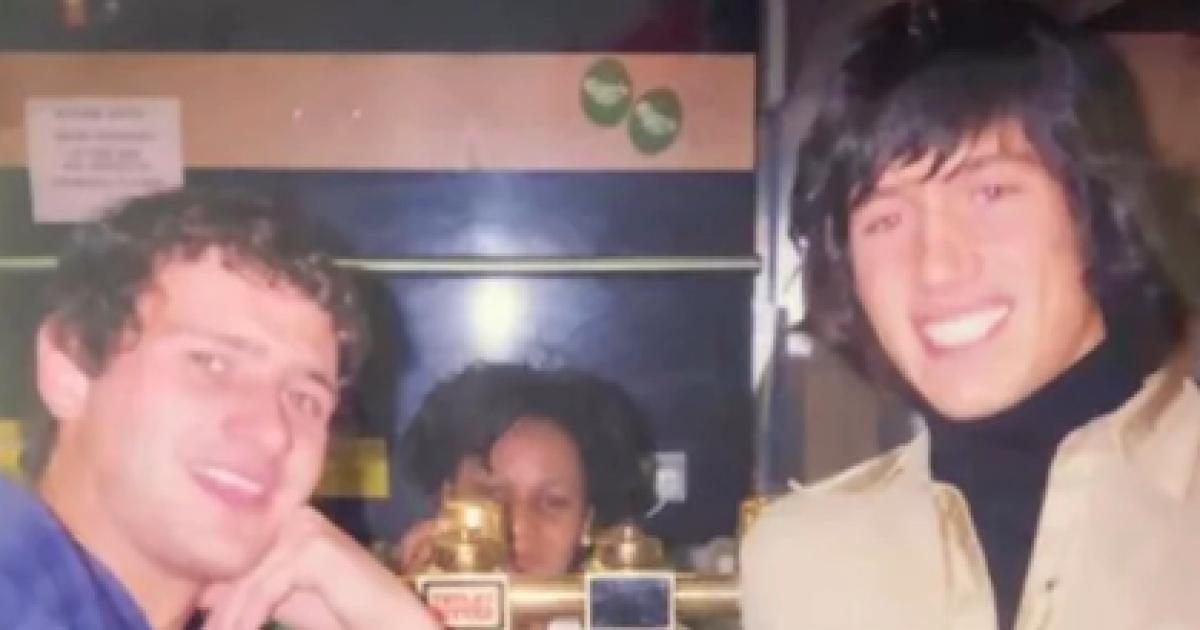
Reminiscing over a picture of himself and friend Simon Bimpson at The Clothes Show in 1996, Vernon, 51, opened up about the moment that “changed his life forever,”
The Clothes Show was a British fashion show that was broadcast on BBC One from 1986 to 1998, and from 2006 to 2009 on UKTV Style and Really.
“We went to the show on our way to see a friend of mine who had just moved from Bolton Wanderers to Aston Villa,” Vernon said.
Advertisement
“He wasn’t settling in and said, ‘look guys, come and visit me,’ so we did.”