
News Beat
Gordon McQueen’s family plea to make football safer

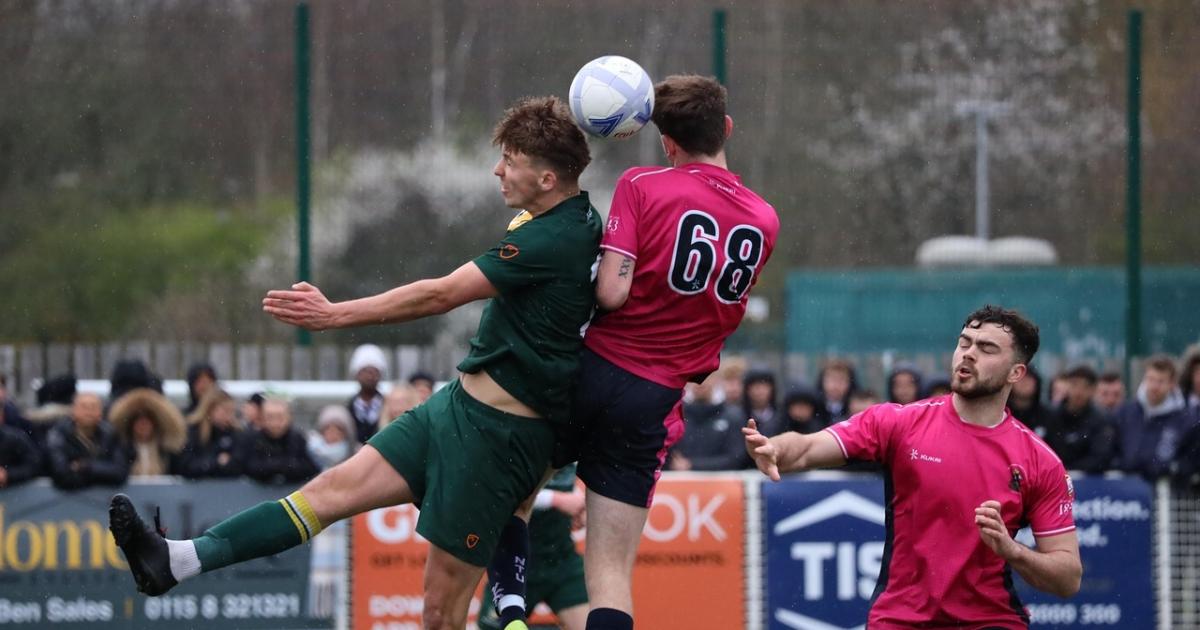
An inquest found that heading the ball was ‘likely’ to have contributed to a brain injury which was a factor in the death of ex-Scotland defender Gordon McQueen, who died at his home in North Yorkshire in June 2023, aged 70.
The cause of death was pneumonia which was a consequence of mixed vascular dementia and chronic traumatic encephalopathy (CTE), coroner Jon Heath said.

In a narrative conclusion, Mr Heath said: “It is likely that repetitive head impacts sustained by heading the ball while playing football contributed to the CTE.”
McQueen was capped for Scotland 30 times between 1974 and 1981, and played for both Manchester United and Leeds United during a 16-year career.
After the hearing, his daughter TV presenter Hayley McQueen and her sister Anna Forbes, spoke about the dangers of heading.
Ms McQueen said: “Hopefully, my dad’s legacy will not just be what he gave football on the pitch but what we can learn from this and make sure that this really horrible problem isn’t a problem for future generations.
“They need the help from the footballing authorities, but there also needs to be changes too – potential legislation and just education.
“He absolutely loved everything about football. But, ultimately, it took him in the end.
“He went through an horrendous time towards the end of his life.”
She said: “He was certain himself it was possibly from heading footballs. Now it’s not just ‘could it be this, could it be that?’ We know it is.
“I think my dad’s main message would be to warn others against the dangers of heading and protect future generations.”
Recommended reads:
She said: “It depleted my parents’ lifetime savings looking for private care for my dad and we relied on charities such as Head for Change to support his respite care because the PFA gave us nothing, no support whatsoever.”
The sisters said that the McQueen family love football and they do not want to ruin it, but they would advocate making it safer, and for clubs and coaches to follow guidelines on heading.
Ms McQueen said she had spoken to ex-players from her father’s era who were “terrified” about what might happen to them.
She said: “I know a lot of footballers whose families have reached out who have symptoms very similar to that of my dad, and I think we’re going to start to see more and more.
“I know the ’66 World Cup England team have been pretty much wiped out with neurodegenerative disease.
“I know my dad’s generation was a little after that … but I think there’s a very real problem with those that played, and certainly the ’60s, ’70s, ’80s, and even in the early ’90s as well.
“I speak to a couple of the ex-Manchester United players who’ve been offered the chance to have some kind of brain scanning, and they refuse it because they’re terrified of what they’re going to find out.”
Judith Gates, who founded the Head Safe Football charity following the death of her ex-professional footballer husband, Bill, said the outcome of the inquest was significant.
She said: “Gordon died from CTE. CTE is only caused by repeated impact. Therefore, how do you solve repetitive head impacts? You reduce the frequency.”
Giving evidence at his inquest, Ms McQueen said her father stated “heading a football for all those years probably hasn’t helped”.
She recalled how, when she was young, he would come home from training with Manchester United and lie down in a darkened room with a headache.
She said her father was very healthy and active during his playing days and after he retired but the family began to notice changes in his personality after his 60th birthday.
Ms McQueen said he had always been very sociable and outgoing, but became more withdrawn.
She said her father, despite being a defender, was well known for scoring goals from set pieces, usually with his head.
He came to prominence in England after joining Leeds in 1972, helping the club to league title success in 1973-74 and playing a key role in their run to the European Cup final in 1975.
He then joined Manchester United in 1978 and went on to win the FA Cup in 1983.
After retiring as a player, McQueen had a spell as Airdrie manager and coach at former club St Mirren, and spent five years as coach at Middlesbrough until 2001. He went on to become a pundit on Scottish TV and on Sky Sports.
The inquest heard how McQueen’s family donated his brain, after his death, to Professor Willie Stewart – a consultant neuropathologist who has conducted extensive research into brain injury in footballers and rugby players.
Prof Stewart told the inquest he found evidence of CTE – a brain disorder linked to repeated head impacts – and vascular dementia.
He agreed that the CTE “more than minimally, negligibly or trivially” contributed to the death and that “heading the ball” contributed to the CTE.
The professor said the only evidence available was McQueen’s “high exposure” to heading a football.
After the hearing, a PFA spokesperson said: “There is an ongoing need for a collective response, from football and beyond, to ensure former players affected by neurodegenerative disease, and their families, are properly recognised and supported.
“That includes the need for clarity on the status of conditions linked to repetitive head impacts, which is something we are continuing to pursue urgently with government, football’s authorities and player representatives from other sports.”



