
News Beat
Government increases farmers inheritance tax threshold

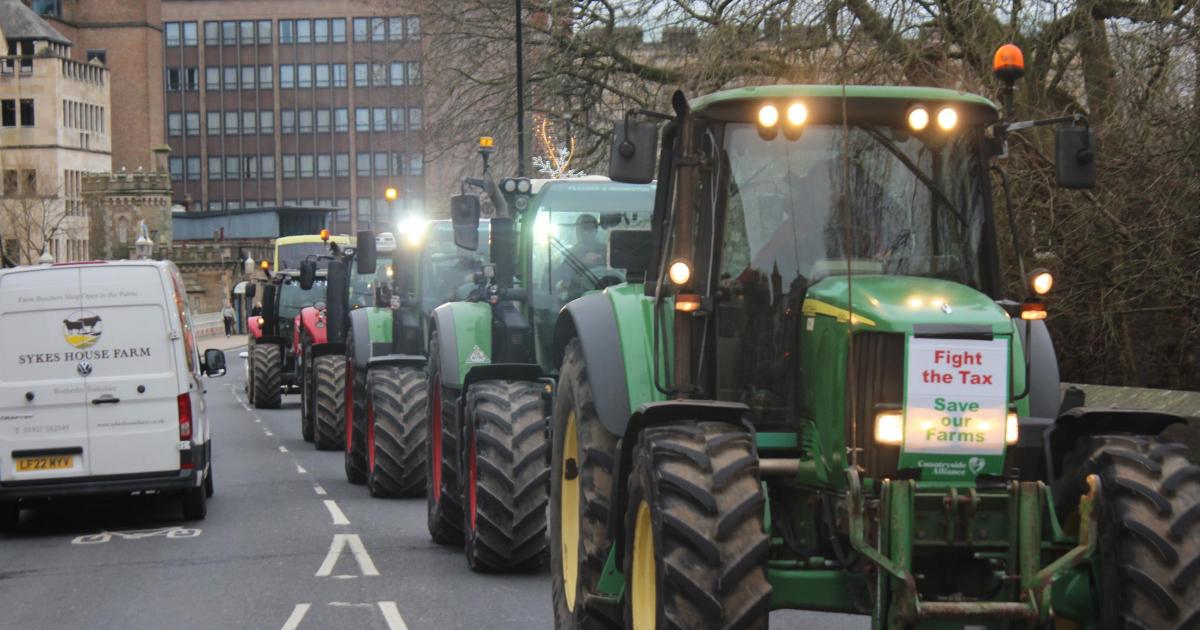
The change to the reforms initially unveiled at Labour’s first Budget in October last year comes after ministers “listened to concerns” of the farming community and businesses, the Department for Environment, Food and Rural Affairs (Defra) said today (December 23).
The original Treasury plans to raise money as farmers pass their businesses from generation to generation triggered protests with tractors outside Parliament and criticism from some Labour MPs in rural seats.
Recommended reading:
Around 140 tractors flood York in inheritance tax protest
David Skaith publishes North Yorkshire farm finance report
York and Yorkshire MPs clash in Parliament over ‘family farm tax’
In December last year, more than 100 farmers poured into York in tractors which completely encircled the inner ring road, according to organiser Stephen Ridsdale.
The 52-year-old farmer in a business owned by his 82-year-old father said he welcomed the news but there were still mixed feelings about the cost of tax planning and decisions families like his have taken, saying that the government should have consulted more with the industry before tabling the budget proposal.
His tax bill had been estimated to run to “several hundred thousand pounds” under the plans made last year.

Another event two months later, the “March to the Minster” led to more than 200 people protesting the October 2024 budget decision outside York Minster.
The higher threshold, which will take effect in April 2026, will allow spouses or civil partners to pass on up to £5 million in qualifying agricultural or business assets between them before paying inheritance tax – on top of existing allowances, Defra said.
Above that allowance, farmers will get 50 per cent relief on qualifying assets and will pay a reduced effective rate of up to 20 per cent, rather than the standard 40 per cent.
The number of estates facing higher inheritance tax will be reduced from around 2,000 under the original plans to up 1,100, hitting only the largest farms, according to the Government.
Farmers currently do not pay inheritance tax on agricultural and business assets which they pass on.
Under Labour’s initial proposal, the full 100 per cent relief was to be restricted to the first £1 million of property.
Announcing the tax relief threshold hike, Environment Secretary Emma Reynolds said: “Farmers are at the heart of our food security and environmental stewardship, and I am determined to work with them to secure a profitable future for British farming.
“We have listened closely to farmers across the country and we are making changes today to protect more ordinary family farms.
“It’s only right that larger estates contribute more, while we back the farms and trading businesses that are the backbone of Britain’s rural communities.”

NFU president Tom Bradshaw said the announcement would be a “huge relief to many” and would “greatly” reduce the tax burden for many family farms.
He said: “Changes to Agriculture Property Relief (APR) and Business Property Relief (BPR) announced in last year’s budget came as a huge shock to the farming community.
“Until that moment, the best tax planning advice was to hold on to your farm until death and pass it on to the next generation who could continue to run a viable farming, food producing business.
“The original changes to APR and BPR, contained within the Finance Bill, resulted in a pernicious and cruel tax, trapping the most elderly and vulnerable people and their families in the eye of the storm.
“The NFU and its members have stood strong for what we believed in.
“I am thankful common sense has prevailed and government has listened.”



