Trump formally announced Warsh, 55, as his pick in a Truth Social post on Friday morning, where he listed the former Morgan Stanley exec’s extensive resume.
“I have known Kevin for a long period of time, and have no doubt that he will go down as one of the GREAT Fed Chairmen, maybe the best. On top of everything else, he is “central casting,” and he will never let you down, the president wrote in part.
Warsh has stellar Republican finance credentials. Some have questioned whether he fully supports the MAGA agenda. His recent statements suggest he will back the president.
Advertisement
Crucially for Trump, he has agreed that the Federal Reserve should be more aggressive in cutting interest rates. The president has long railed against current Fed chair Jerome Powell, and lashed out again at the veteran economist on Thursday, calling Powell a “moron” after the Fed “again refused to cut interest rates.”
Trump wants a Fed governor who is more open to White House direction, which is causing consternation in Congress, as the Fed is supposed to function independently, and Warsh has been open to the idea of lowering interest rates.
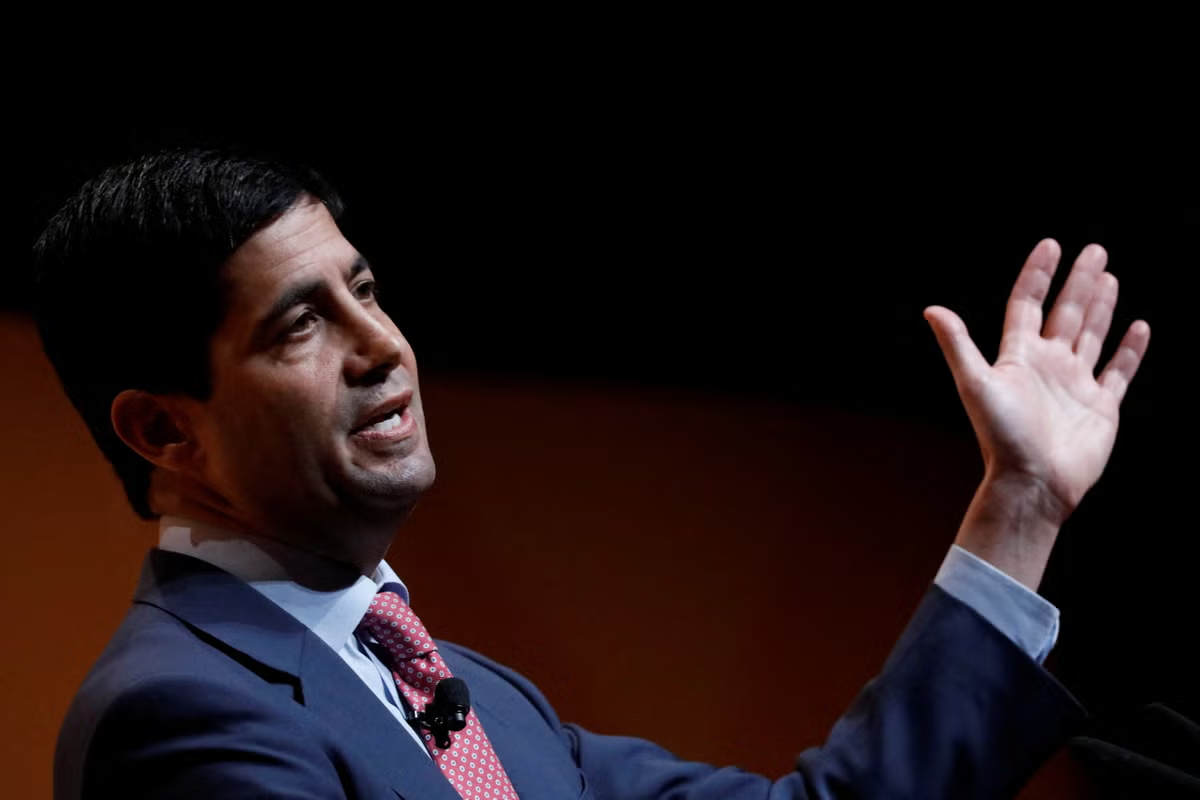
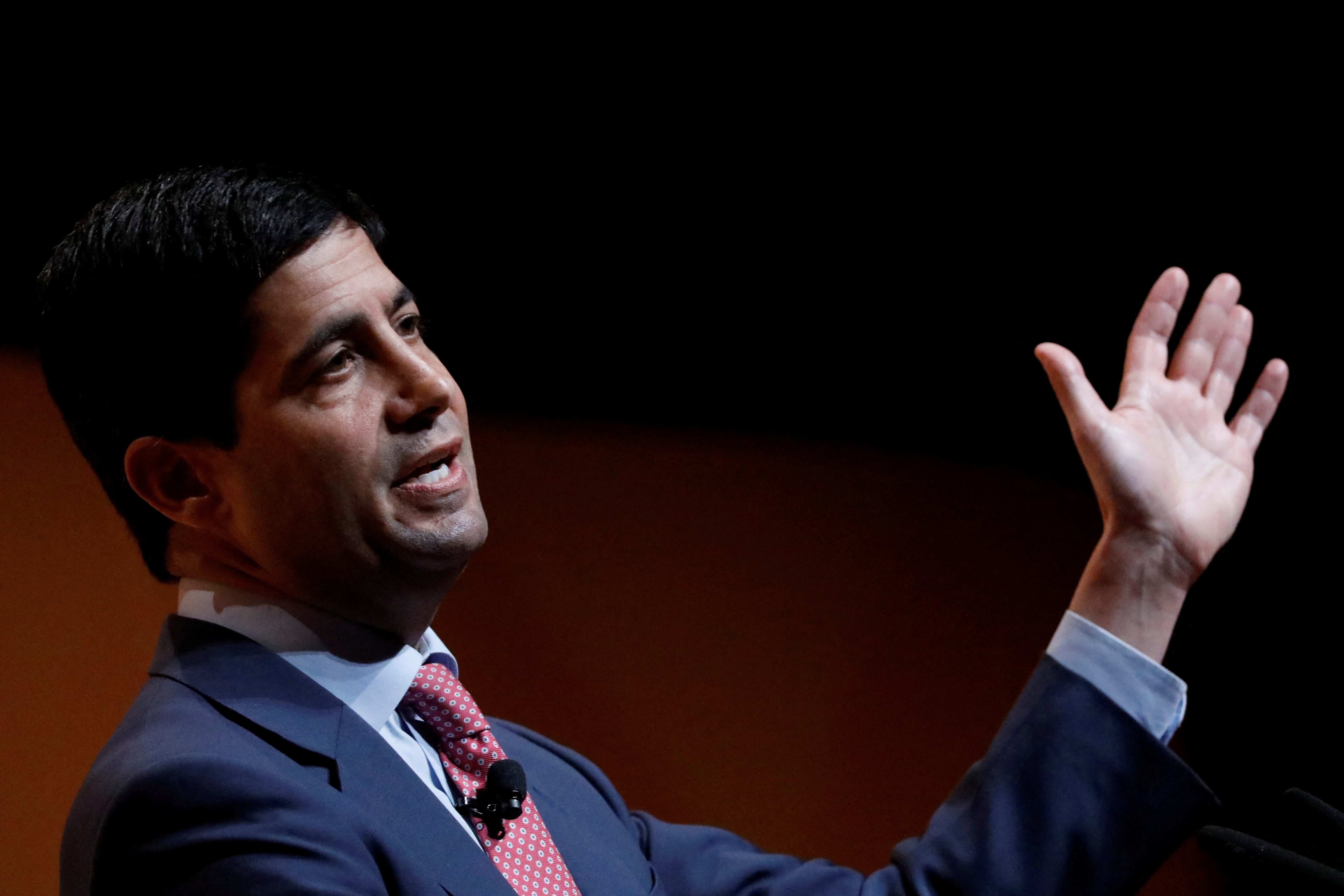
Kevin Warsh speaks at the Sohn Investment Conference in New York City in May 2017. (Brendan McDermid/Reuters)
“Their hesitancy to cut rates, I think, is actually … quite a mark against them,” Warsh said of the Fed’s board in an interview with CNBC’s Squawk Box last July, adding that the president was “right to be pushing the Fed publicly.”
Advertisement
Warsh served as a member of the Federal Reserve Board of Governors from 2006 to 2011; he was just 35 when President George W. Bush appointed him as the youngest-ever nominee.
The finance wunderkind has credited his upstate New York upbringing with teaching him “much of what he need[ed] to know about the real economy.” He studied at Stanford, Harvard, and MIT and rose quickly through the ranks after joining Morgan Stanley in New York City, eventually becoming an executive director.
After leaving Morgan Stanley in 2002, Warsh served as Special Assistant to the President for Economic Policy and Executive Secretary of the National Economic Council, advising President Bush and senior administration officials on economic issues, including domestic finance and consumer protection.
He also participated in the President’s Working Group on Financial Markets.
Advertisement
There was some opposition to his Fed appointment in 2006, mainly due to his age, but Ben Bernanke, who was Fed governor at the time, later described how Warsh had proven his critics wrong.
“His youth generated some criticism, including from former Board vice chairman Preston Martin, but Kevin’s political and markets savvy and many contacts on Wall Street would prove to be invaluable,” Bernanke wrote in his 2015 memoir.
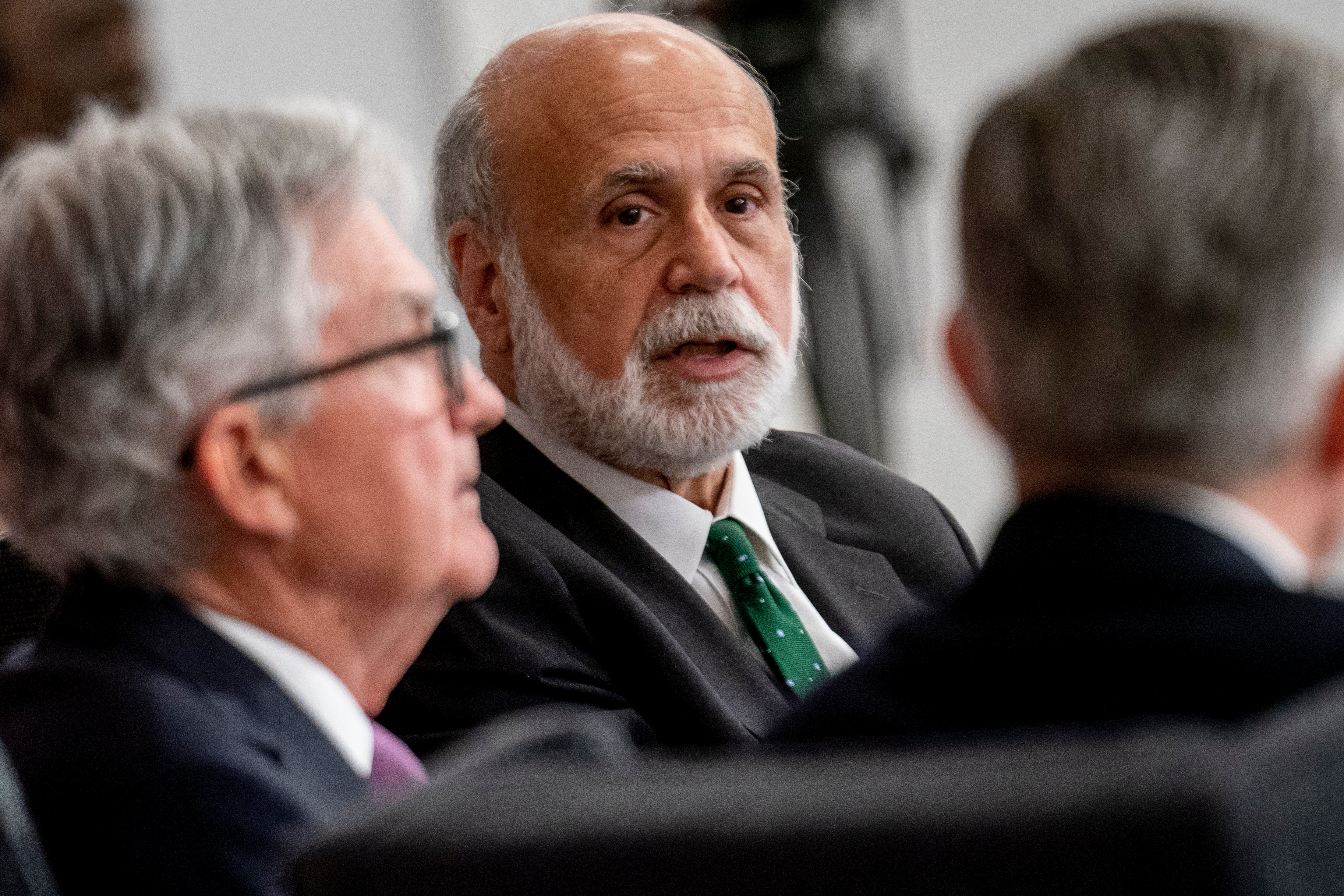
Former Fed chair Ben Bernanke championed Warsh’s ascent to the board at just 35 in 2006 (Copyright 2023 The Associated Press. All rights reserved)
Warsh played a key role in helping navigate the 2008 financial crisis, including negotiating a deal to save his former employer, Morgan Stanley, from collapse.
Advertisement
He was not afraid to take controversial stands, arguing in 2009 that the Fed should take a more hands-off approach to helping the economy recover, and in November 2010, he expressed strong skepticism of the Fed’s proposal to stimulate jobs and economic growth by lowering interest rates.
MAGA hawks have raised concerns that his past approach puts him at odds with Trump’s tariff agenda; in a 2011 op-ed for The Wall Street Journal,he called on policymakers to “resist the rising tide of economic protectionism,” and he has vocally defended globalization and free trade.
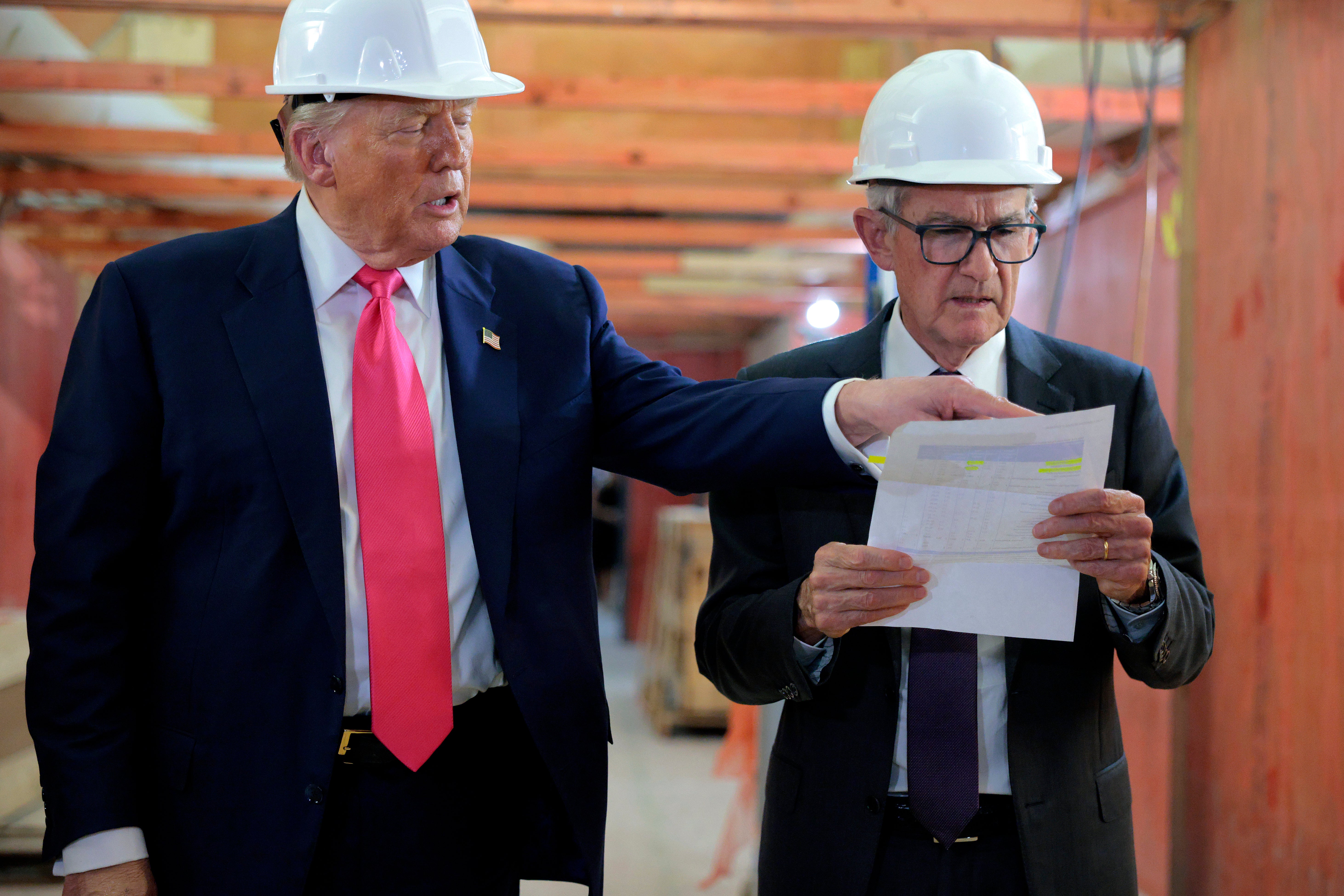
The DOJ opened a criminal investigation into Federal Reserve Chairman Jerome Powell — a frequent target of Trump’s ire. ‘That jerk will be gone soon,’ Trump said after the probe was announced in January (Getty Images)
However, in 2024, he took a tougher line, suggesting that a harsher approach should be taken towards countries that did not favor U.S. interests.
Advertisement
Warsh is well familiar with Trump’s approach and was part of a business forum assembled by the then-president-elect in 2016 to provide economic policy and strategy advice. More recently, he has served on several company boards and is a scholar and lecturer at the Stanford Graduate School of Business.
Perhaps most importantly, he has personal connections to the president: Warsh is married to Jane Lauder, a billionaire granddaughter and heiress of Estée Lauder, and his father-in-law, Ronald Lauder, is a long-time friend of Donald Trump.
Warsh’s expected nomination could face a bumpy path through the Senate; Republican Senator Thom Tillis has vowed to block any future Trump nominees to the Fed’s board in response to a Department of Justice investigation into Jerome Powell.
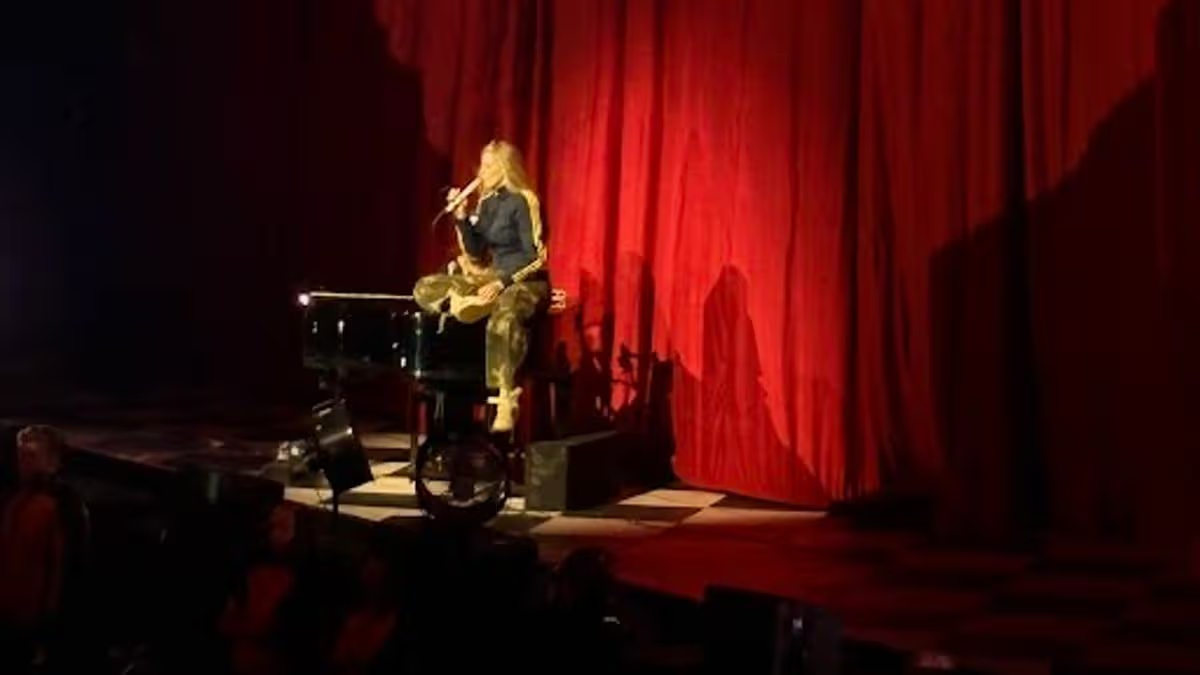
Security responded quickly and Rapp was quick to stop songs and speeches to ensure that fans were okay
Multiple fans were recovered from the crowd due to medical concerns at the AO Arena this evening (Wednesday, March 18).
Advertisement
US pop star Renee Rapp was performing at the arena this evening and had to stop the performance multiple times whilst security helped those in the crowd.
Security responded quickly and Rapp was quick to stop songs and speeches to ensure that fans were okay.
Get MEN Premium now for just £1 HERE – or get involved in our WhatsApp group by clicking HERE. And don’t miss out on our brilliant selection of newsletters HERE.
Around nine people in the crowd were attended to throughout the concert. The song I think I like You Better was halted as fans waved their touches around in the crowd to signal for medical help and during this period another two groups of fans also secured security to attend.
Advertisement
Then again, just one song later, Tummy Hurts was also stopped due to concerns for the crowd. The numbers of incidents increased as the night went on.
Rapp asked those at the back to take a step back to make room for those at the front as they were more often the ones who required attention. She often requested for the house lights to be brought up so that security could better reach fans.
During one part of the concert, the song Not My Fault, is always interrupted as part of a gag Rapp does with the audience to switch to play a different song. However tonight that did not run as smoothly as other nights as Rapp had to stop again for fans who needed help.
Rapp reassured the crowd the security were coming saying: ‘They are right here and ready to help you’.
There may not be too many ways in which this season is better than last for Liverpool but Arne Slot can at least point to a significant one. Liverpool have gone further in the Champions League, and this was progress in more ways than one.
A quarter-final was booked in emphatic and entertaining fashion. The boos that greeted the final whistle against Tottenham on Sunday were replaced by cheers, the lethargy with which Liverpool have played too often giving way to an energy and intensity. This was frenzied and fast, players and crowd feeding off each other. “There was a great dynamic between the players and fans,” said Slot. “Almost a perfect game.”
For him, it was a response when the scrutiny upon him had heightened. The Dutchman switched tactics, to something of a 4-4-2, and the team changed tack. This was much better. This was one of their best displays of the campaign. It was so good it was almost unrepeatable, Slot argued. “Because 5.02 xG on a Champions League night, conceding 0.18 xG, that is not going to be easy to copy,” he said.
Advertisement
Mohamed Salah curled home a fine goal (Liverpool FC via Getty Images)
If it was like the Liverpool of old, what could have shaped up as further evidence of Mohamed Salah’s decline instead became a cathartic evening for him. His was a throwback performance. His was a throwback performance. At half-time, when Liverpool’s dominance was not reflected by a one-goal lead, there was the possibility Salah’s missed penalty would cost them. This threatened to be his last European game for Liverpool until he had a part in three goals in 11 minutes, capped gloriously. “He scored a trademark goal that he has scored so many times in this stadium and for this club, cutting inside, finding the corner,” said Slot, who was delighted with Salah’s response to a setback. “It says a lot about his mental strength.”
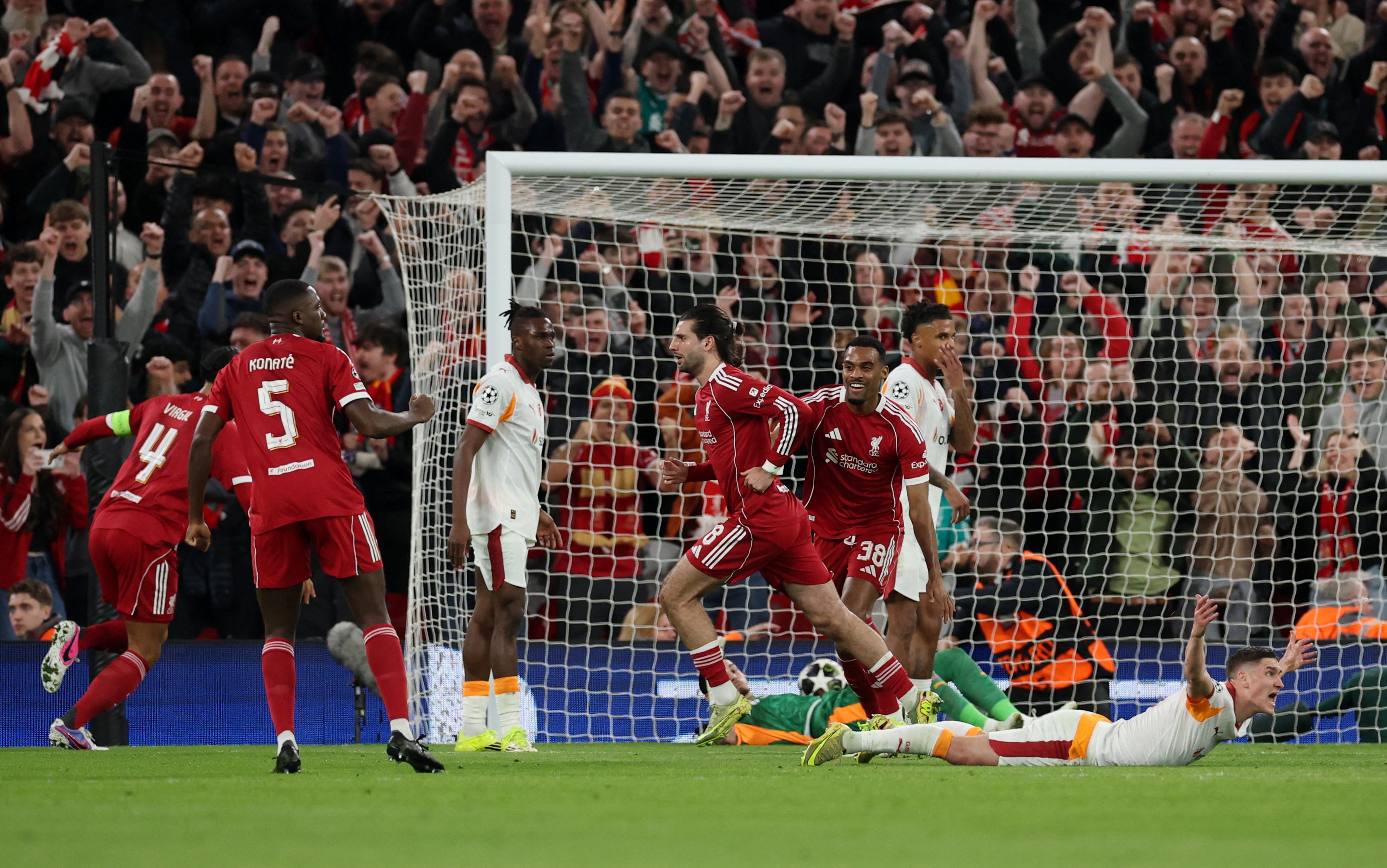
Galatasaray were overwhelmed, Liverpool’s defeat in Istanbul last week rendered irrelevant amid a blur of 32 shots, 16 of them on target. The catalyst for the turnaround, perhaps inevitably, was Dominik Szoboszlai, who added to his collection of terrific goals and who, as he often does, broke the deadlock.
If Galatasaray had a gameplan for holding on to their first-leg lead beyond timewasting, it was not visible. It got Slot more animated. “It is not something I can do anything about except running around like a lunatic,” he said afterwards. The running was not confined to his team.
They had started at pace, and got a reward. Liverpool had conceded to Galatasaray’s set-pieces twice in Istanbul this season. They scored from one on Merseyside. It was beautifully worked, Alexis Mac Allister disguising a low corner and Szoboszlai delivering a first-time, left-footed finish from 15 yards. The routine was so expertly planned in that it ended up with the man who had the technique to provide the finish. It was, remarkably, Szoboszlai’s fifth Champions League goal of the season, to add to four assists. His name echoed around Anfield; the fans he had criticised for leaving early on Sunday recognise he has become a talisman.
Advertisement
Dominik Szoboszlai has become a talisman for Liverpool (Reuters)
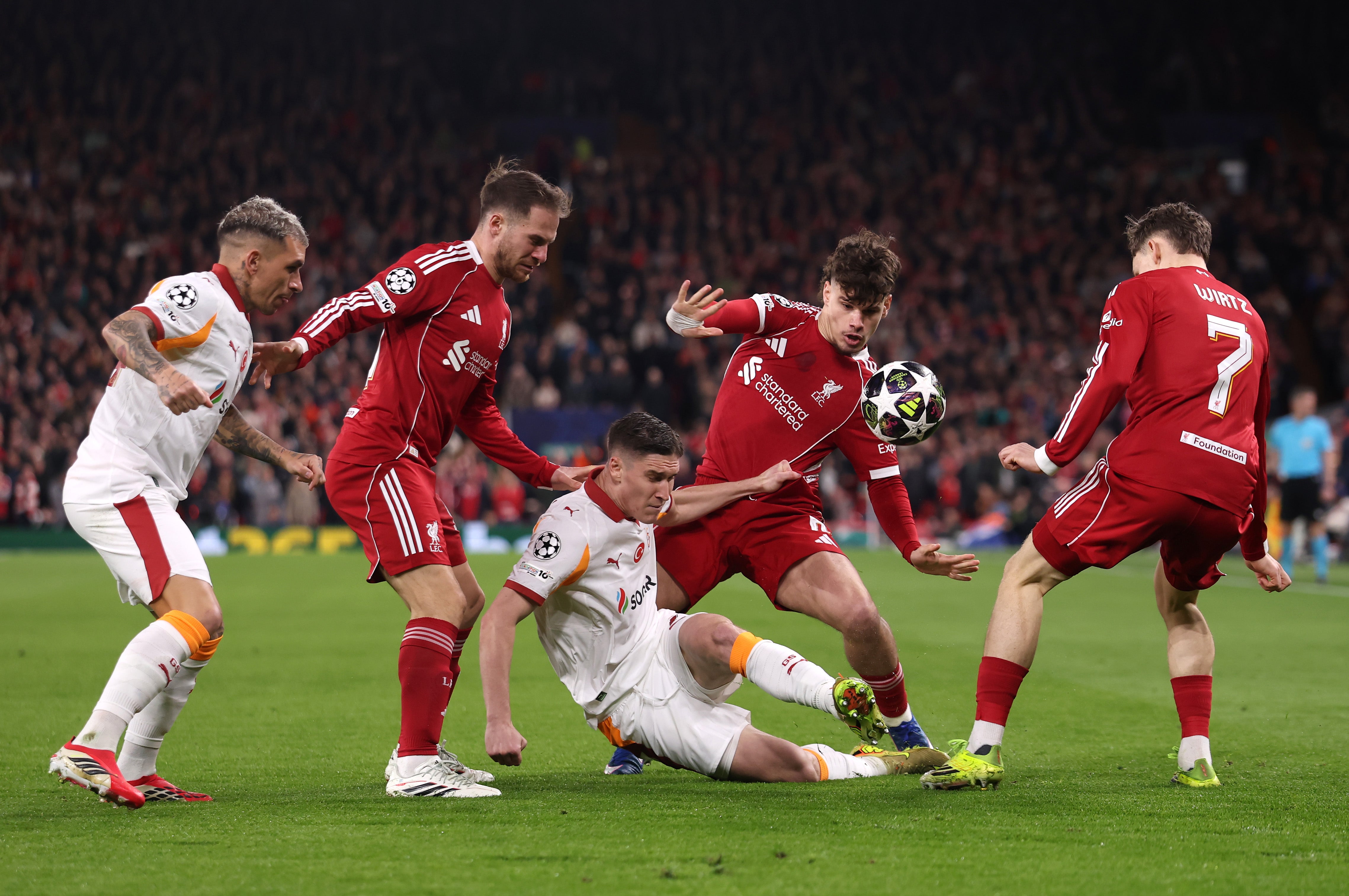
And then Liverpool mounted a ferocious onslaught. Salah, in behind the Galatasaray defence, failed to dink the ball over Ugurcan Cakir. Florian Wirtz had a ferocious shot deflected over the goal. Mac Allister headed on to the bar from four yards. Szoboszlai had a long-range shot parried. The best chance of all went to the Egyptian. It was a wild and needless challenge from Ismail Jakobs to send Szoboszlai flying. In contrast, Salah’s penalty was too tame. Cakir saved it with his trailing foot.
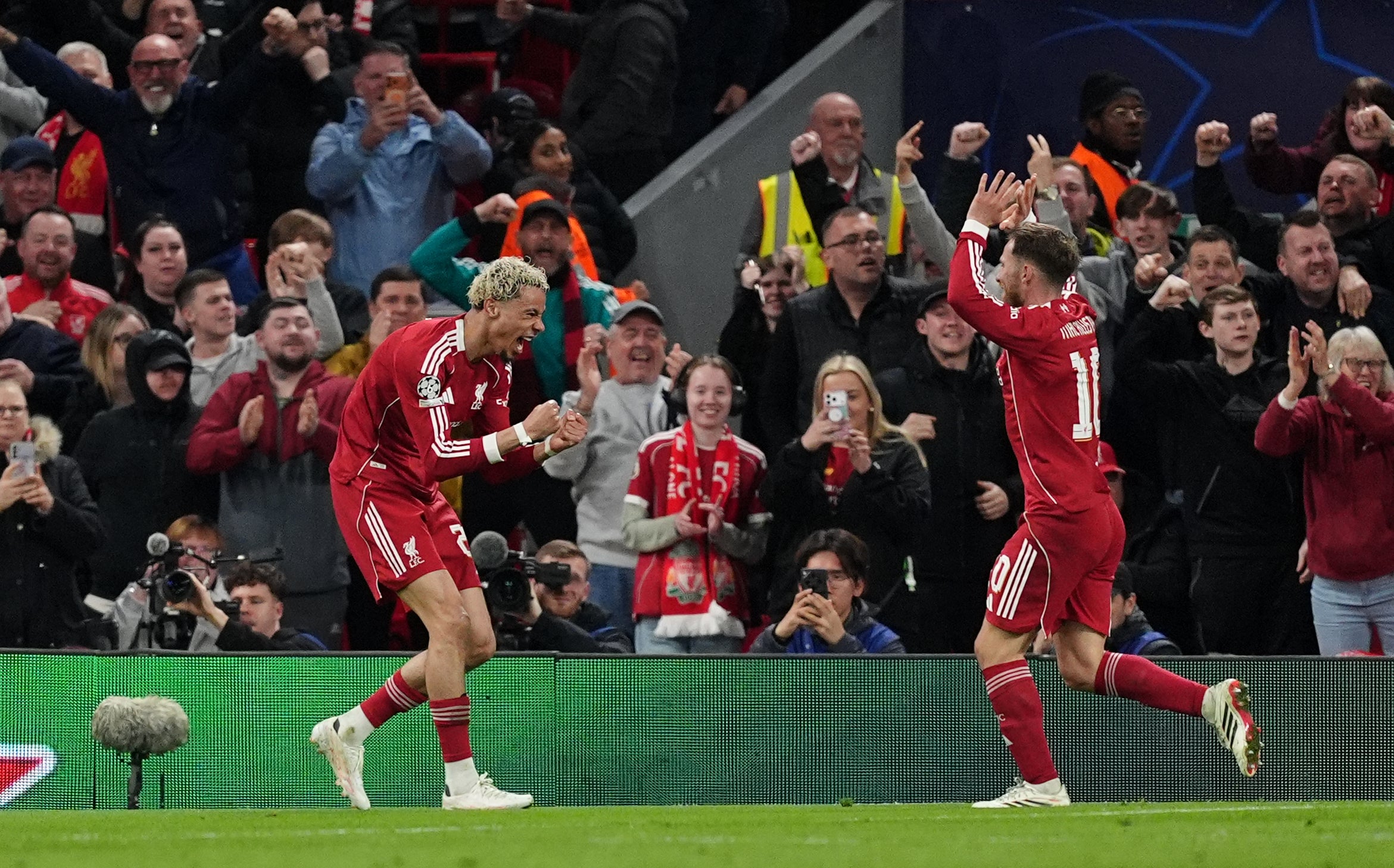
If it reinforced the sense Liverpool can be a side who struggle to double a lead, they got their second, third and fourth goals in swift succession. Each revolved around Salah. First he sprang the offside trap and centred to give Hugo Ekitike a tap in. Then, after Cakir parried his half-volley, Ryan Gravenberch bobbled in the rebound. After Wilfried Singo was spared an embarrassing own goal by an offside flag, Salah scored his 50th Champions League goal in classic fashion. A curler from outside the box nestled in the net. Salah grabbed the Liver Bird on his shirt in celebration. High in the stands, Steven Gerrard joined in the applause.
Advertisement
(Martin Rickett/PA Wire)
Salah should really have had a second, hitting the bar from Ekitike’s cutback. It nevertheless felt a sign he was irresistible; until, suddenly, he wasn’t. He went off, seemingly substituting himself for once, and headed down the tunnel for treatment. “He felt something,” added Slot.
Galatasaray’s attacking superstar was long gone by then. Hampered by an arm injury, Victor Osimhen did not reappear for the second half. His manager, Okan Buruk, thought Victor Osimhen’s arm injury was a psychological blow for his team. His top scorer departed at half-time, heading for hospital, where he was later joined by Noa Lang, stretchered off with a potentially serious finger problem.
(Getty)
It completed an awful night for Galatasaray. Having gone further than expected in Europe, they shrank from the challenge. Liverpool rose to it. And so in this season, unlike last, they will play European football in April. There is a similarity nonetheless. It is Paris Saint-Germain again, a rematch that offers the prospect of revenge. And for Salah, an opportunity to plot a course towards his fourth Champions League final.
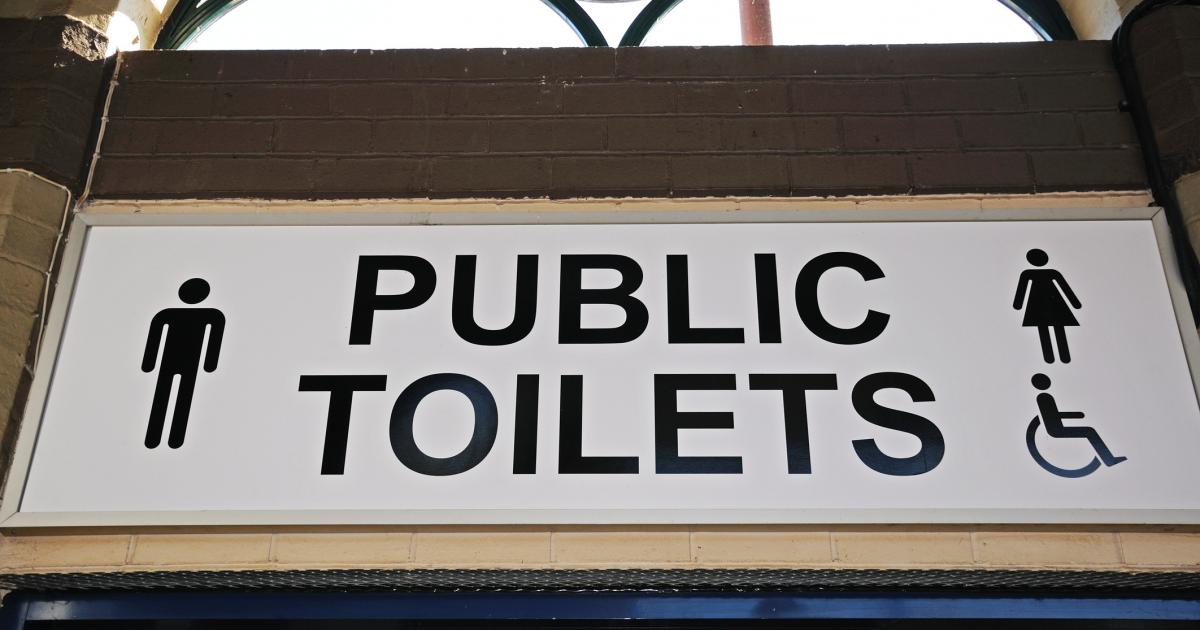
Despite the fast-approaching tourist season, North Yorkshire Council (NYC) has not been able to secure a public bathroom in Scarborough’s town centre and has asked businesses to reach to the authority. with offers.
Earlier this month, Scarborough businesses were asked to make their toilets available to the public following concerns over a lack of facilities in the town centre.
A Community Toilet Initiative (CTI) proposed by Scarborough Town Council would provide “modest financial support, signage, and inclusion in promotional materials” to cafes, pubs, and shops that voluntarily make their toilet facilities available for public use.
Advertisement
NYC said it had not been able to convince any local businesses to work with it to provide a public bathroom.
Cllr Rich Maw told a full meeting of NYC on Wednesday, March 18: “Scarborough has no public toilet provision in the town centre and residents and visitors will understandably be dismayed by this.
“What immediate and longer-term steps is the council taking to restore adequate public convenience provision in the town centre for residents and visitors alike?
“I am aware of the West Pier temporary toilet provision, but I’d remind the executive committee that it is nowhere near the town centre.”
Advertisement
Cllr Richard Foster, executive member for managing the environment, replied: “Since the closure of the Brunswick Centre, there hasn’t been any provision within the town centre.
“There was the Railway Station, and there is the indoor market and that is a seven-minute walk away from the main retail space.
“We do agree there’s a gap in the provision and officers have been working closely with businesses to get a community toilet in place, but have so far failed to negotiate one. So, maybe highlighting it today can bring forward a business that can help us with that.”
Cllr Foster said: “We realise it’s an issue and we are working on it, and there are further things officers will bring forward for consideration. But that would be the easiest solution if we could get a local firm in place to help us with that.
Advertisement
“If any members know anybody who might be willing to negotiate something with us, please come forward to council officers.”
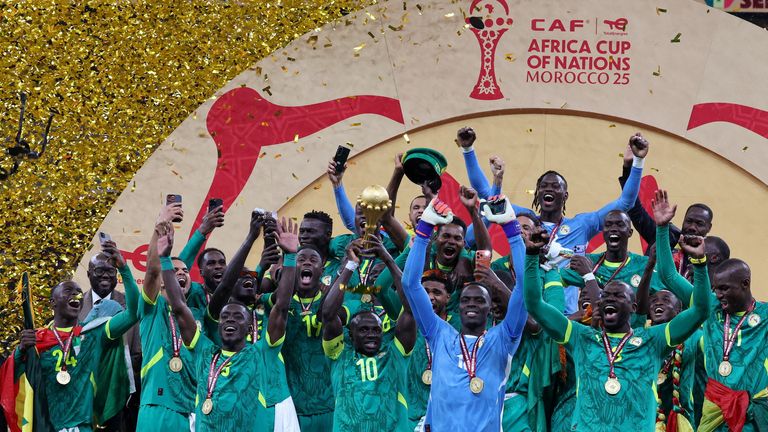
Senegal says it will appeal the “unfair, unprecedented, and unacceptable decision” to strip it of its Africa Cup of Nations title after a chaotic final against host Morocco.
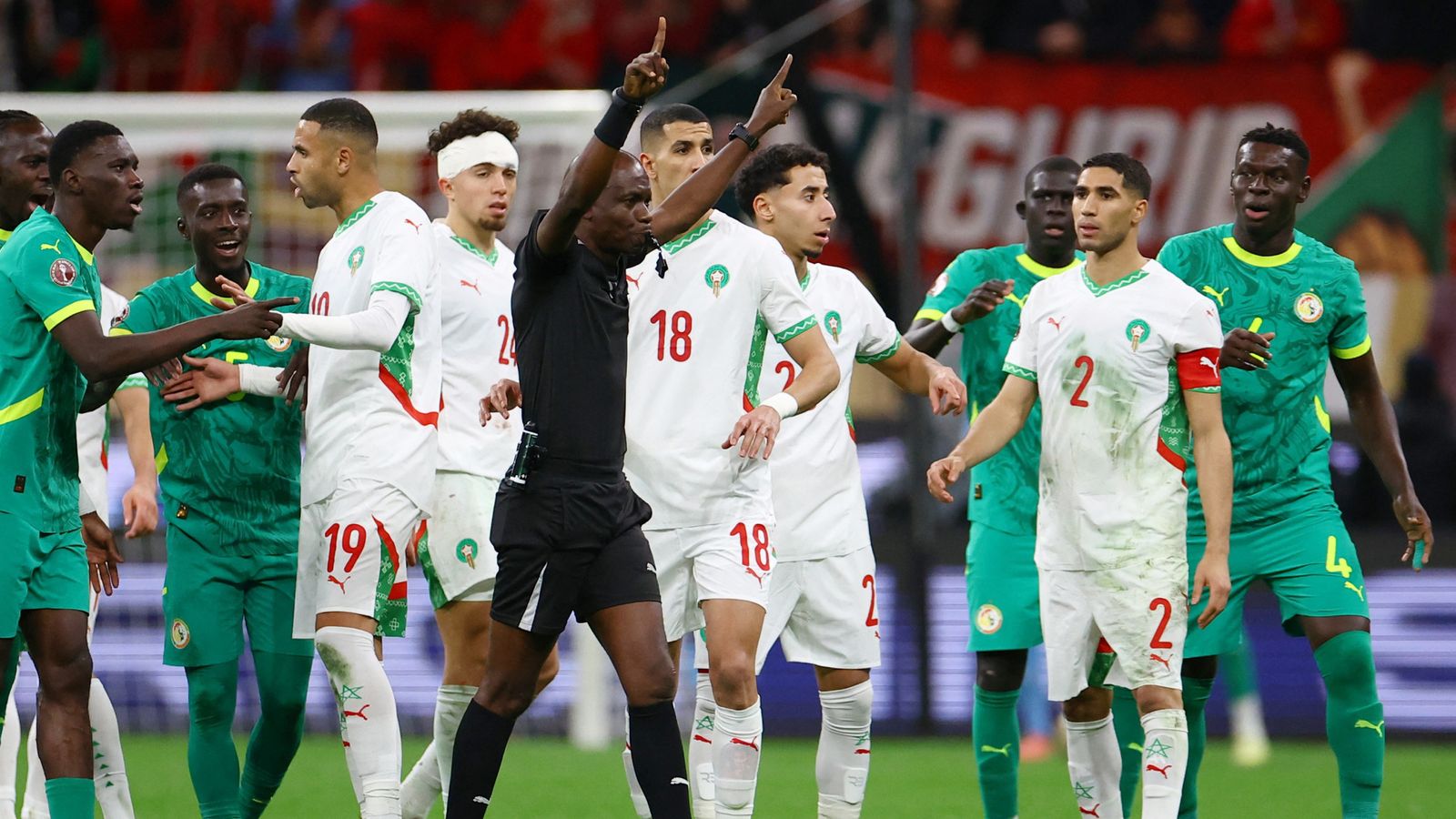
On Tuesday, the appeals board of the Confederation of African Football (CAF) ruled that Senegal had forfeited the final in January by walking off the field in extra time to protest a penalty given to Morocco.
They subsequently returned to the field, only for their rivals to miss the crucial penalty, but now the board’s decision has turned Senegal’s 1-0 win into a default 3-0 victory for Morocco, making them the tournament’s winners.
Image: Referee Jean-Jacques Ndala awards a penalty to Morocco after a VAR review. Pic: Reuters
Now the Senegalese government is pledging to “pursue all appropriate legal avenues” to challenge the ruling.
Advertisement
“This unprecedented and exceptionally serious decision directly contradicts the fundamental principles of sporting ethics, foremost among which are fairness, loyalty and respect for the truth of the game,” the government said in a statement.
The statement also branded the ruling “grossly illegal and deeply unjust” and a “manifestly erroneous interpretation of the regulations”.
Similarly, the Senegalese Football Federation said the decision was “unfair, unprecedented, and unacceptable” and “discredits African football”.
Image: Senegal’s Sadio Mane lifts the trophy with teammates as they celebrate after winning the Africa Cup of Nations. Pic: Reuters
The organisation said it would appeal “as soon as possible” to the Court of Arbitration for Sport in Lausanne, Switzerland.
Justifying its decision, the CAF referred to Articles 82 and 84 of its Africa Cup Regulations.
Advertisement
The former stipulates that a team will lose the game and be eliminated from the tournament if it refuses to play or leaves the field without the referee’s permission.
The latter article mandates a 3-0 win for the opposing team.
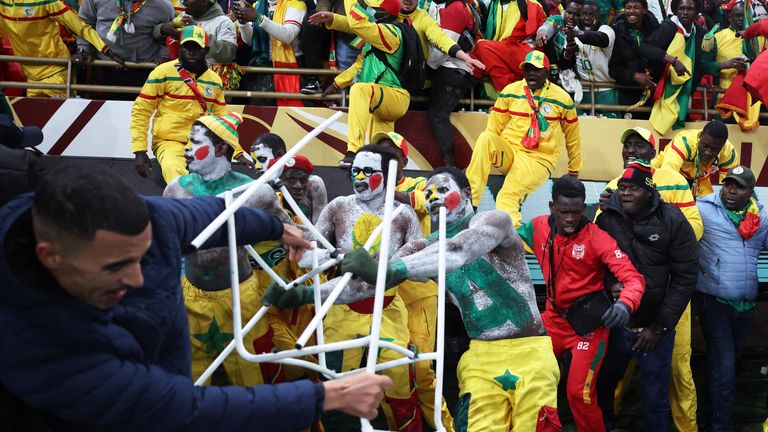
Image: Senegal fans clash with security as fans invade the pitch
However, the referee has “full authority” to decide what happens in a match under Law 5 of the International Football Association Board, which sets the rules of the game globally.
In its own statement, the Royal Moroccan Football Federation said its appeal to the CAF had “never been about challenging the sporting performance” of the teams, “but solely to ensure that the tournament rules are respected”.
Advertisement
“CAF has acknowledged that the rules, known to all and applicable to all, had not been respected,” it added.
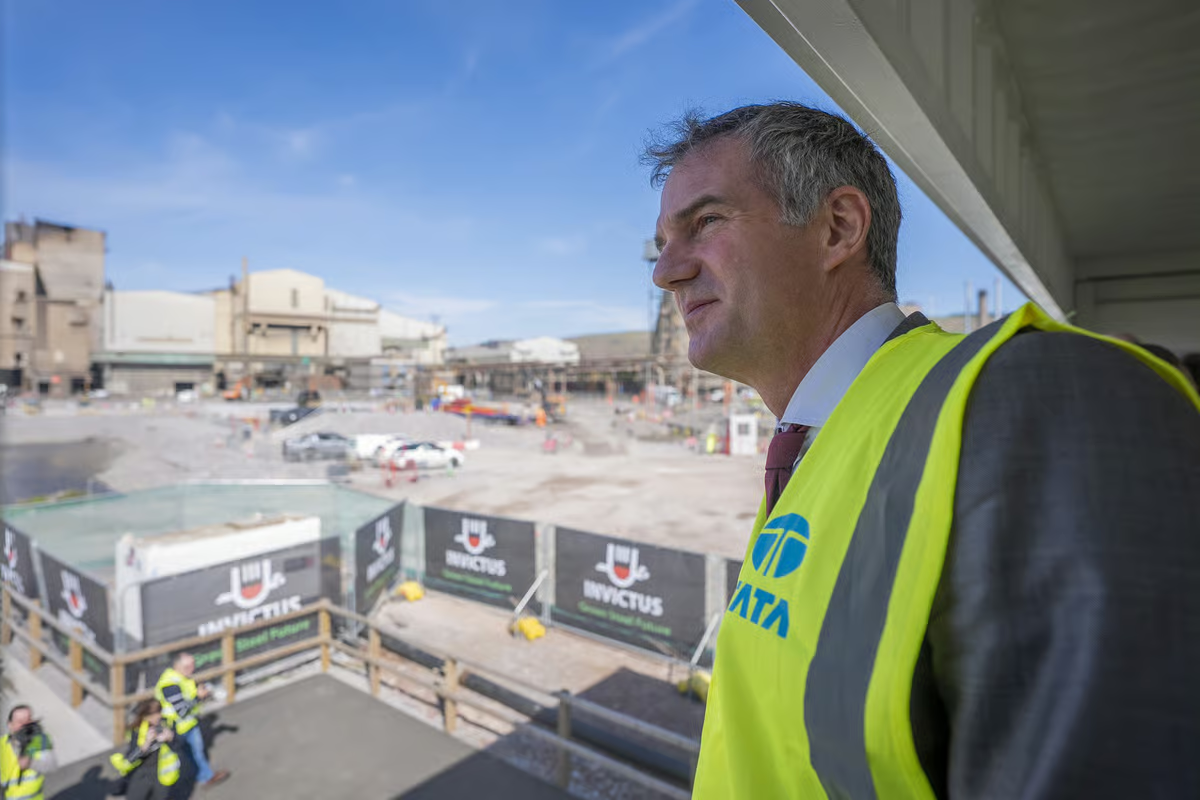
Business and Trade Secretary Peter Kyle gave details of the strategy on a visit to Tata Steel’s plant in Port Talbot, South Wales, warning that without action, the UK’s steelmaking capability faces “real jeopardy”, leaving the country reliant on overseas suppliers for materials essential to energy security, defence and transport infrastructure.
Four years after Russia’s invasion of Ukraine, the world is bracing for another energy crisis. The US-Israel bombing of Iran and then the blockade of the strait of Hormuz have forced up the price of oil. The price of natural gas in Europe has also risen sharply.
In the UK, Prime Minister Keir Starmer has announced a £50 million package to support consumers who heat their homes with oil. The government is also considering a U-turn on the decision to increase fuel duty (currently almost 53p per litre of petrol or diesel) in September after a 15-year freeze. Other taxes would need to go up to compensate.
But the main question concerns what will happen to electricity prices this summer. A sustained crisis could push prices higher for both households and businesses. It could also push the Bank of England to avoid interest rate cuts, making mortgages more expensive. And the government could even end up paying part of everyone’s bills directly as it did between 2022 and 2024, piling up tens of billions of pounds of public debt.
To secure most of the future production of electricity – wind farms or new nuclear power stations for instance – the government signs what are known as “contracts for difference” with electricity producers. These contracts fix the price of electricity for decades, typically above expected wholesale prices.
Advertisement
These guaranteed prices correspond roughly to the expected average cost of producing electricity. Unlike gas, once a wind farm is built, each additional unit of electricity costs almost nothing to produce. So, without a guaranteed price, renewable producers would fear having to sell the electricity for free and never recouping their investment.
Consumers are shouldering the risk
The UK is not as sunny as somewhere like Spain and so will never get very cheap solar power. It is also trying to build new nuclear power plants, but the first attempt (Hinkley point C, currently expected to begin delivering electricity in 2030) is so expensive that the French state-owned energy operator EDF lost £10 billion in the process. Future projects now ask taxpayers to take most of the risk and pay upfront in the form of higher bills.
Consumers mostly notice these extra costs added to their bills (called “environmental levies”) when gas prices are low. The levies currently make up 6.5% of a typical bill, which is down from 13% after the government shifted some costs so that they would be paid for through general taxation.
So given that they’re paying upfront for the infrastructure, consumers might expect renewables to cut their bills when gas prices spike. But that is not how markets work: the price is set by the most expensive unit sold. Around 85% of the time in the UK this most expensive unit uses liquefied natural gas (LNG) transported by boat.
Advertisement
If one day the UK becomes like Spain where prices are mostly set by renewables (thanks to huge leaps in wind and solar), wholesale prices will often be zero. But consumers will still pay more, because they will still be charged the environmental levies that were put in place years before to invest in the infrastructure.
This is what led the CEO of energy giant E.ON, Chris Norbury, to declare in parliament that “even if the wholesale price was zero, bills would still be where they were today”. That’s true, but also a bit misleading.
Wholesale prices only go to zero because the country invested in renewables. The alternative – going back to more gas – would probably be much more expensive for everyone. It would certainly be more risky as the current conflict in the Middle East is illustrating.
Sunshine and wind do not need to pass through the strait of Hormuz and cannot be used as leverage by dictators. And what looks like a costly subsidy heaping pressure on billpayers in good times becomes insurance in a crisis.
Advertisement
During the peak of the energy crisis in 2022, the wholesale price of electricity was higher than the guaranteed one, and renewable generators paid money to the government instead of receiving subsidies. But because the government was helping out with everyone’s bills, consumers never saw the benefit.
Investing in storage at scale will be vital. btimagery/Shutterstock
In 2025 in the UK, less than a third of electricity was generated using gas. Replacing renewables with gas would mean building power plants and importing more gas at ever-higher prices and greater geopolitical risk.
Gas is cheaper in the US where fracking makes the country almost energy independent. But fracking is much harder in places that are as densely populated as England. The government is currently planning to ban it everywhere in the UK.
Advertisement
But the UK’s vulnerable situation also gives it a chance to innovate and export. The key is making sure that consumers pay a price that reflects the real cost of electricity at any given moment.
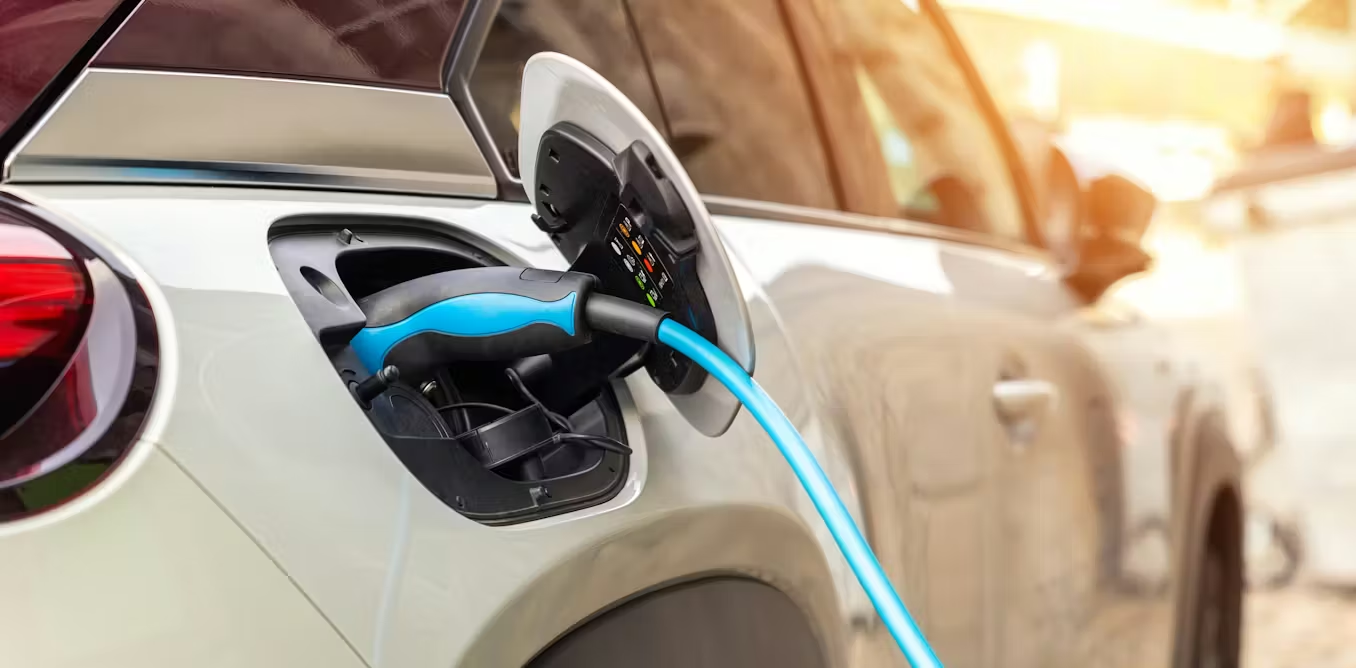
The more we switch from fossil fuels – heating, cars, trucks – to electricity, the more battery capacity we have to fill. The price signal (the gap between cheap and expensive electricity) gives industries and households a strong incentive to innovate and invest in storage.
Most people only care about their monthly bill and won’t adapt directly. But smart appliances, home batteries and vehicle-to-grid systems (where vehicles can store electricity and sell it back to the grid when required) will do it for them.
The UK can gain in efficiency what nature has not provided in resources. This could give Britain a chance to sell its innovations to the world. Selling services is what the UK does as a country, after all. The large majority of global investments in energy are in renewables, and there will be huge opportunities for the countries that figure out how to run a grid on intermittent electricity sources.
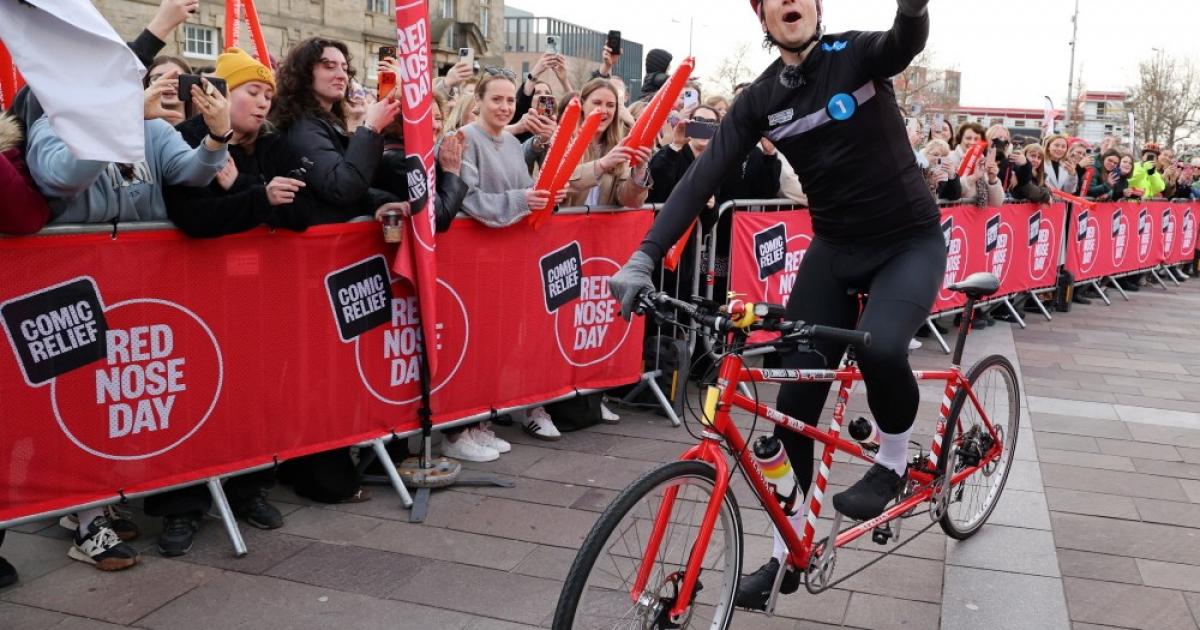
Greg set off on his sixth day of the ‘Longest Ride’ from York this morning (Wednesday, March 18), powering through the likes of Stokesley, Blackhall, Horden, Seaham, Ryhope, and the gruelling North Yorkshire Moors.
Crowds gathered all along the route to cheer him on, but no crowd was a match for the Mackem welcome he received as he arrived into Sunderland – his final stop for the day.
Crowds cheered him on through the North East towns. (Image: Sarah Caldecott)
The DJ arrived into Sunderland just after 5pm to loud cheers from supporters.
Dismounting his bike, he said: “Hello Sunderland!
Advertisement
“I’m overwhelmed and I’m knackered – what a day that was.”
null (Image: BBC)
He described the journey through the moors as particularly challenging, saying: “That bit in the Yorkshire Moors, I really nearly cracked, I really did, I don’t know how I’m still going, actually.”
Jennifer Wale, who travelled to Sunderland to see him cross the day six finish line said: “He was cycling along and we were running to get to him, then the camera van stopped, and he almost went into the back of it.”
Danielle Summers from Sunderland, who was enjoying a glass of wine at the finish line said: “If I could say one thing to Greg, it would be to just keep listening to Radio 1 and everyone that is spurring you on.”
Advertisement
Danielle Summers and Claire Porter cheered on Greg at the Sunderland finish line. (Image: Will Foxx)
The BBC announced his current total at more £1.6m so far.
Claire Porter from Seaham praised his determination despite personal challenges.
She said: “He actually drove past where I live, but I was at work.
“I work in a school and the kids were like ‘that’s easy’ – I told them, no it’s not!
Advertisement
“To push through everything that’s going on with his Dad is just amazing.”
Another fan, Judith English, brought along her therapy dog to the finish line.
Kay Robinson with dog Cooper, and Judith English with her therapy dog Bonnie. (Image: Will Foxx)
She said: “It’s phenomenal, Bonnie is a therapy dog who I’ve brought along to give Greg some TLC.”
Kay Robinson, a teacher from Middlesbrough, also showed her support.
Advertisement
She said: “I think it’s amazing.
“Our school was on the Breakfast Quiz and he was so lovely off-air, my sister died two weeks before Christmas and she donated five organs to people on waiting lists – he was so supportive of me so I’m here to support him.”
The eight-day challenge saw the DJ set off from the South Coast on March 13, and sees him riding through England and Wales before crossing the finish line on Red Nose Day, March 20.
Greg sets off today from Sunderland on his next leg to Galashiels, on the Scottish borders, before cycling his last leg up to Edinburgh on his last day.
The Liverpool-born actor was famous for appearing in the BBC’s Boys from the Blackstuff, Between the Lines and John Cleese and Michael Palin movie classic A Fish Called Wanda.
Tributes are being paid to an actor instantly recognisable to generations of TV viewers.
Advertisement
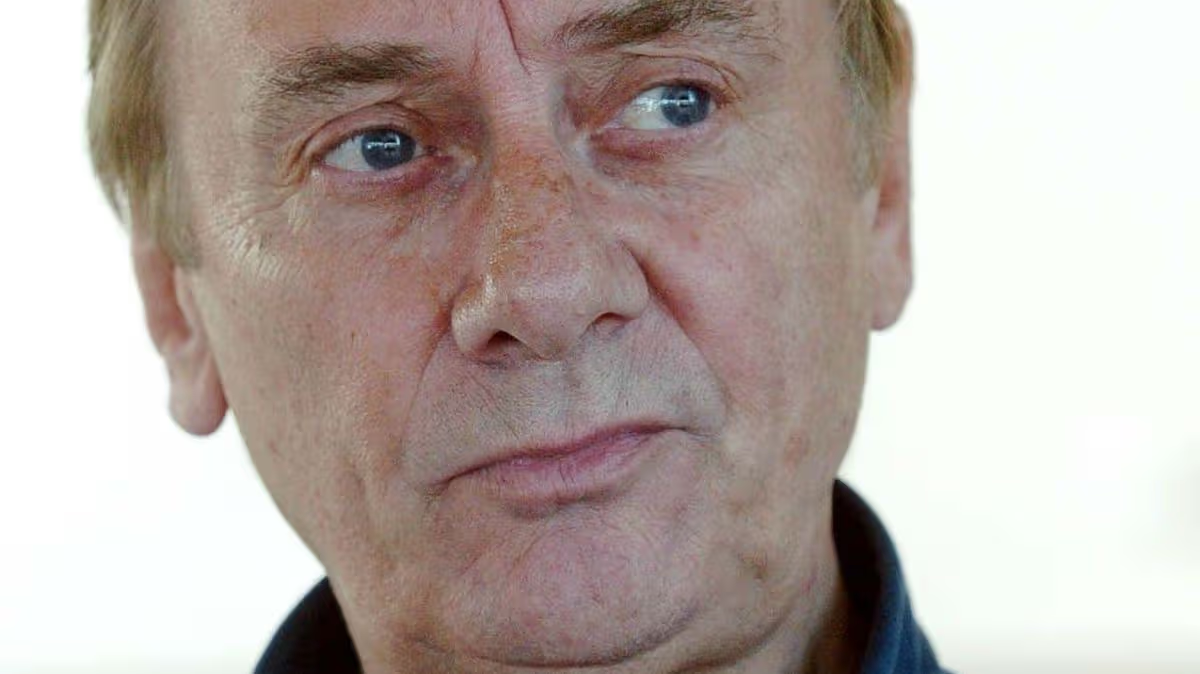
Tom Georgeson has died at the age of 88. The Liverpool-born actor was famous for appearing in the BBC’s Boys from the Blackstuff, Between the Lines and John Cleese and Michael Palin movie classic A Fish Called Wanda.
Tom appeared in many of the UK’s best-known shows, including Z Cars, Holby City, The Bill, Doctor Who, Poirot, Ashes To Ashes and Foyle’s War. He also appeared in the Alan Bleasdale drama GBH and played the clerk Clamb in the BBC’s 2005 adaptation of Bleak House.
Tom played a gangster called George Thomason – a mixed-up version of his own name – in the box office smash A Fish Called Wanda and also appeared in its 1997 follow-up Fierce Creatures.
Tom’s nephew, Danny Conway, told the Liverpool Echo he was “gutted” by the news, saying: “We weren’t expecting it. Last time I spoke to him he was in good health. I woke up to that news today and it’s just sad. I was really proud of him and felt lucky to have a famous uncle.”
He added: “The whole family has got an artistic streak through them. They’re either artists or performers. It started with my grandad, who was into amateur dramatics. He got Tom into it as well. One of his other brothers, Greg, used to read audio books. He passed away last year.”
A spokesperson for the Liverpool Everyman and Playhouse Theatres said: “We’re deeply saddened to hear of the passing of Tom Georgeson – a much‑loved Liverpool actor whose talent, generosity and unmistakable presence shaped so many moments on our stages since he first performed with us in the 1970s.
“In more recent times, Tom appeared in The Kindness of Strangers, Tony Green’s play created for the Everyman’s 40th birthday season in 2004. He returned memorably to the Playhouse in the comedy When We Are Married, sharing the stage with Les Dennis and Jodie McNee.
Advertisement
“In each of these roles, he brought the same depth, wit and humanity that defined his work across film, television and theatre. Tom was one of our city’s great actors, and we’re grateful and proud to have been an artistic home he returned to throughout his career. Our thoughts are with his family and friends.”
Tom – who was living in London when he died – is survived by his wife Prim and children Richard and Roslyn.
Get more Daily Record exclusives by signing up for free to Google’s preferred sources. Click HERE.
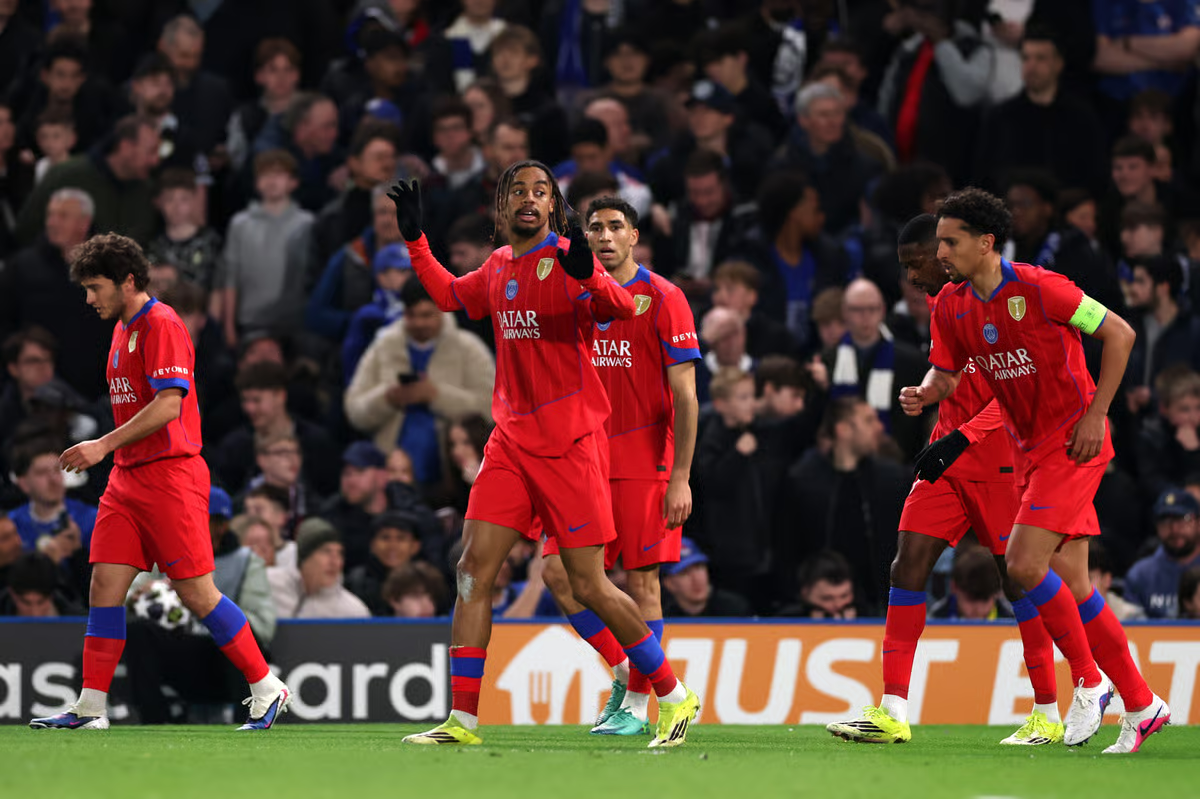
Despite the possible absence of Barcola – who has been linked with a transfer to Anfield plenty in the past – for both games against Liverpool, PSG boss Luis Enrique still has a wealth of other attacking options to choose from, with Ballon d’Or winner Ousmane Dembele likely to be joined in a three-man attack by Desire Doue and Khvicha Kvaratskhelia, availability permitting.
Footage appeared to show the group of around eight teenagers slamming the vehicle at the McDonald’s restaurant on Telford Road in Edinburgh.
Youths attack student’s car at Edinburgh McDonalds restaurant
A gang of youths have been caught on video targeting a car full of female students on St Patrick’s Day.
Footage appeared to show the group of around eight teenagers slamming the vehicle at the McDonald’s restaurant on Telford Road in Edinburgh. The incident unfolded at around 5pm on Tuesday, with one woman describing feeling ‘terrified’ by the actions of the ‘aggressive youths.’
The females, all aged between 18 and 19, filmed the ordeal and could be heard screaming after one lad tried to open a car door. The clip also appeared to show several members of the group draped in Ireland flags.
One woman claimed the feral gang had targeted staff at the fast food restaurant before turning on their vehicle. They were first attacked by the youths at the drive thru before they chased the car after spotting it in the McDonald’s car park.
Advertisement
She told Edinburgh Live: “My friends and I went to McDonald’s to try the new menu. When we went through the drive thru, we were receiving our food, when a group of young boys appeared acting aggressively towards us and the workers.
“They continued to escalate their behaviour as they started hitting the car and trying to open the doors, leaving us girls terrified by this threat and invasion of space.
Advertisement
“We continued to drive away and these boys continued to follow us chasing the car and shouting rude and cruel language as we drove off.
“It has had a psychological impact and I would like this behaviour to stop as it is harassment.”
Police Scotland have been contacted by the Record for comment.
Get more Daily Record exclusives by signing up for free to Google’s preferred sources. Click HERE.











































You must be logged in to post a comment Login