

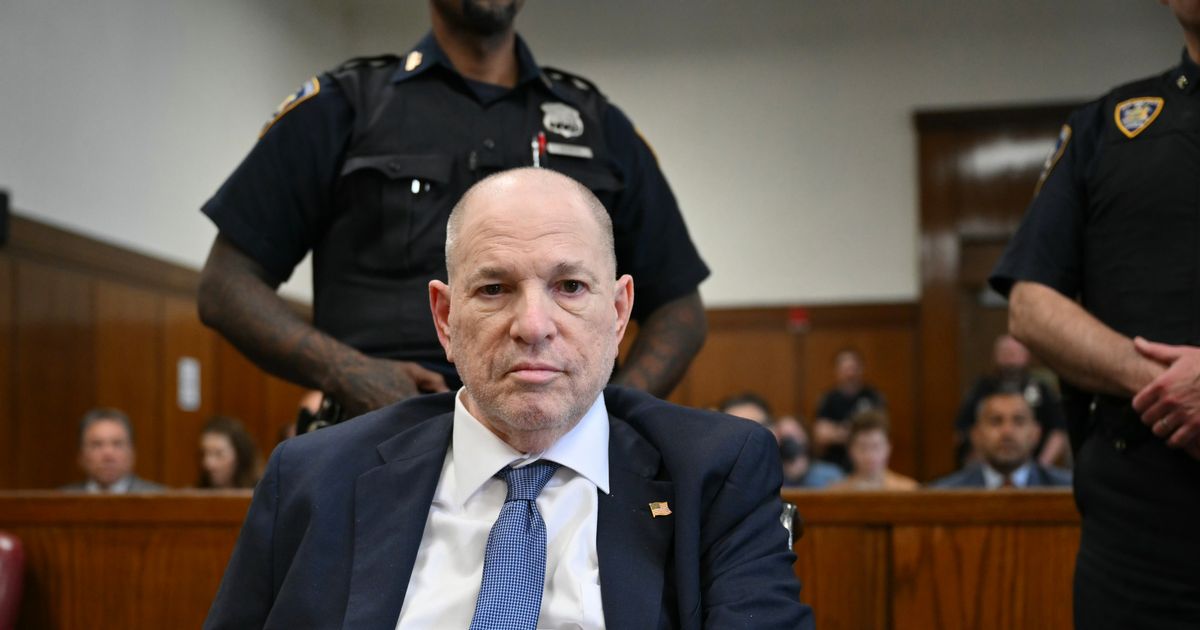
A judge has told of how Harvey Weinstein is considering a potential guilty plea to resolve an undecided rape charge.
Harvey Weinstein is considering a potential guilty plea to resolve an undecided rape charge and avoid going to trial for a third time in New York, a judge has said. But, amid the plea talk, the disgraced movie mogul struck a defiant tone.
He told a court hearing: “I know I was unfaithful, I know I acted wrongly, but I never assaulted anyone.” Weinstein spoke after Judge Curtis Farber denied his bid to overturn his lone conviction at his previous trial, a charge of forcibly performing oral sex on a woman in 2006 that carries a potential sentence of up to 25 years in prison.
The same jury acquitted Weinstein of a charge involving similar allegations involving a different woman, also in 2006, and failed to reach a verdict on a charge that he raped hairstylist and actor Jessica Mann in a Manhattan hotel in 2013. Lawyers for the Oscar-winning producer had argued that the verdict last June in state court in Manhattan was tainted by infighting and bullying among jurors.
Mr Farber rejected that and scheduled a March 3 new trial for the unresolved third-degree rape charge. The rape charge is punishable by up to four years — less than Weinstein has already served.
Weinstein told the judge: “I am disappointed in today’s decision. You witnessed the trial and saw how forces beyond my control stripped me of my most basic right to be judged fairly.”
He accused one juror of carrying a personal agenda into deliberations, intimidating others and spreading false allegations. That, he said, “shattered any hope of impartiality”.
After Mr Farber issued his decision, Weinstein’s lawyer Arthur Aidala said he wanted to “pursue plea negotiations” before going behind closed doors with the judge, prosecutors and other defence lawyers to discuss the matter. Minutes later, Mr Farber returned to the bench and said Weinstein wanted time to think about it.
It is the latest convoluted turn in the ex-Hollywood mogul’s path through the criminal justice system. His landmark #MeToo-era case has spanned seven years, trials in two states, a reversal in one and a retrial that came to a messy end in New York last year.
Weinstein has denied all the charges. They arose from a bunch of sexual harassment and sex assault allegations against him that emerged publicly in 2017 and ensuing years, fuelling the #MeToo movement against sexual misconduct.
Early on, Weinstein apologised for “the way I’ve behaved with colleagues in the past,” while also denying that he ever had non-consensual sex. At trial, Weinstein’s lawyers argued that the women willingly accepted his advances in hopes of getting work in various capacities in showbusiness, then falsely accused him to net settlement funds and attention.
The split verdict last June came after multiple jurors took the unusual step of asking to brief the judge on behind-the-scenes tensions. In a series of exchanges partly in open court, one juror complained that others were “shunning” one of the panel members; the foreperson alluded to jurors “pushing people” verbally and talking about Weinstein’s “past” in a way the juror thought improper; yet a third juror opined that discussions were “going well”.
The foreperson later came forward again to complain to the judge about being pressured to change his mind, then said he feared for his safety because a fellow panelist had said he would “see me outside”. The foreperson eventually refused to continue deliberating.
In court, Mr Farber cited the secrecy of ongoing deliberations and reminded jurors not to disclose “the content or tenor” of them. Since the trial, Weinstein’s lawyers have talked with the first juror who openly complained and with another who did not.
In sworn statements, the two said they did not believe Weinstein was guilty, but had given in because of other jurors’ verbal aggression.
One said that after a fellow juror insulted her intelligence and suggested the judge should remove her, she was so afraid that she called two relatives that night and “told them to come look for me if they didn’t hear from me, since something was not right about this jury deliberation process”.
All jurors’ identities were redacted in court filings.
Weinstein’s lawyers contend the tensions amounted to threats that poisoned the process, and that Mr Farber did not look into them enough before denying defence mistrial requests.
Prosecutors maintain that the judge was presented with claims about “scattered instances of contentious interactions” and handled them appropriately.
Weinstein, who is being held in New York, is also appealing a rape conviction in Los Angeles.



