
News Beat
Health experts scramble to contain outbreak of deadly Nipah virus

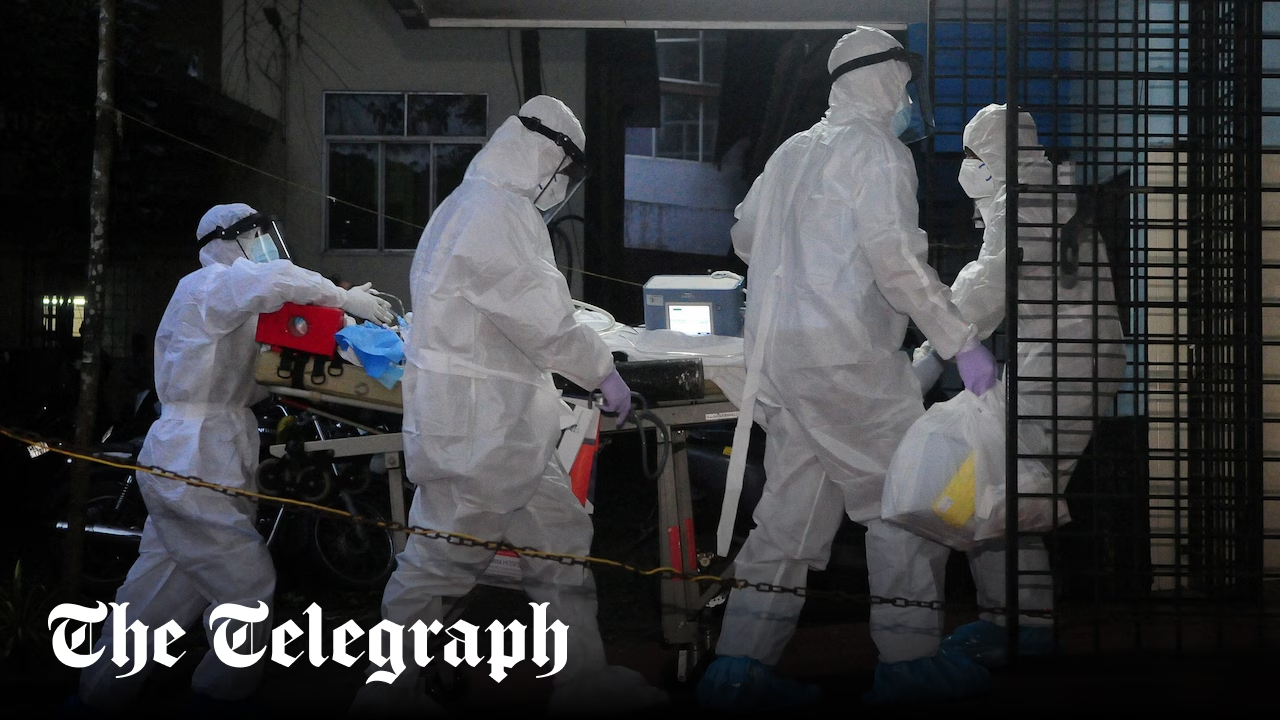

India’s Ministry of Health and Family Welfare issued a nationwide alert, urging states to strengthen surveillance, detection, and preventive measures to reduce risk and prevent any further spread.
India has faced sporadic outbreaks of Nipah in recent years. The virus lives in bats and can be passed to humans through contaminated food or by contact with the bodily fluids of infected animals. It can also jump from bats to pigs, opening up another route for onward transmission to people, where it spreads from person to person through droplets and saliva.
The virus has a fatality rate of up to 75 per cent and causes a range of symptoms, beginning with a fever, vomiting and fatigue before developing into respiratory issues and swelling of the brain. Neurological issues like encephalitis can appear months or years after an initial infection
In response to the new cases, several Indian states have directed their health authorities to strengthen surveillance for Acute Encephalitis Syndrome (AES), a broad term for brain inflammation that can be caused by Nipah infection.
“Persons admitted with AES, particularly those with travel or contact history linked to West Bengal, should be closely monitored and evaluated for possible Nipah virus infection,” reads one advisory issued by the authorities in Tamil Nadu, a state in southern India.
“Government and private hospitals must be alerted about the Nipah virus situation and directed to promptly notify all AES cases,” it said.
The focus on examining cases of AES will help stop undiagnosed Nipah infections from flying under the radar, said Ali Althaf, a senior health official at Government Medical College, Thiruvananthapuram in Kerala, who has done extensive work on the Nipah virus.
“There were over 100 cases of AES, a key indicator for diseases like Nipah, reported last year in Kerala, and if we subjected all of them to diagnostic testing, it’s plausible that we’d uncover a greater number of Nipah infections,” he told The Telegraph.
Misidentifying Nipah infections as AES or as other respiratory illnesses has serious consequences, particularly for healthcare providers, he added.
“We have repeatedly seen human-to-human transmission occurring within hospital settings,” he said. “When cases are not recognised early, healthcare workers are placed at the highest risk of exposure to this often fatal virus.”
The senior health official involved in West Bengal’s Nipah surveillance efforts denied the initial case had been misdiagnosed, but conceded the case had probably been missed.
“I wouldn’t describe it as misdiagnosis. It’s more accurate to say a missed diagnosis,” he said.
He added: “We are expanding the criteria for testing so clinicians know when to suspect Nipah and when to order broader panels. This is not only about Nipah, several emerging and re-emerging infections, including respiratory diseases, can present with AES-like syndromes. The state is therefore expanding case definitions and lab testing protocols.”
Protect yourself and your family by learning more about Global Health Security



