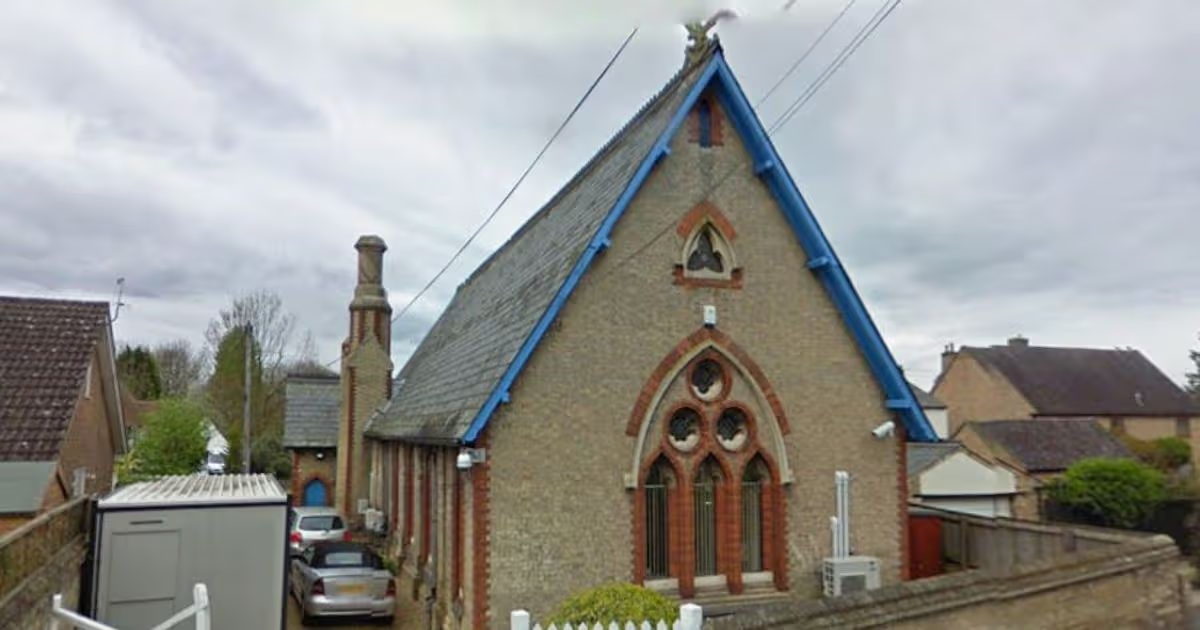
The former church building is more than 160 years old.
A gothic-style church built in the 1800s could be turned into a house. Plans have been submitted to East Cambridgeshire District Council to turn the former Mission Church of St Andrew in North Street, Burwell, into a house.
Advertisement
The church was built in 1863. It is unknown when it stopped operating as a church, but it was later used as an office.
It has been vacant since 2020 and listed as a Grade II listed building in 2024. The applicant bought the building for its “heritage value”.
The planning application said: “Their intention is to restore, maintain, and enhance its original features while adapting the interior for residential use in a sensitive and minimally invasive manner.” The proposal involves creating an open plan kitchen and dining area from the front porch.
There will then be steps down into a bedroom, utility, and study area. Above, there are two galleries which are proposed to be a bedroom and landing area.
Advertisement
The applicant proposed to keep the “gothic-style” details such as the windows, as well other original features. These also include “prominent landmark chimneys”, “queen post roof trusses”, and “gold-leaf biblical inscriptions on tie beams”.
The applicant added that by changing the former church into a house, it is “ensuring its long-term preservation and continued maintenance through active use”. The plans added that the proposals “protect key heritage features” and “complements the character” of the area.
Walls that surround the building will be kept in order to “preserve the character of the site”. The wall boundary along Silver Street will be repaired and a trellis will be added to it for privacy.
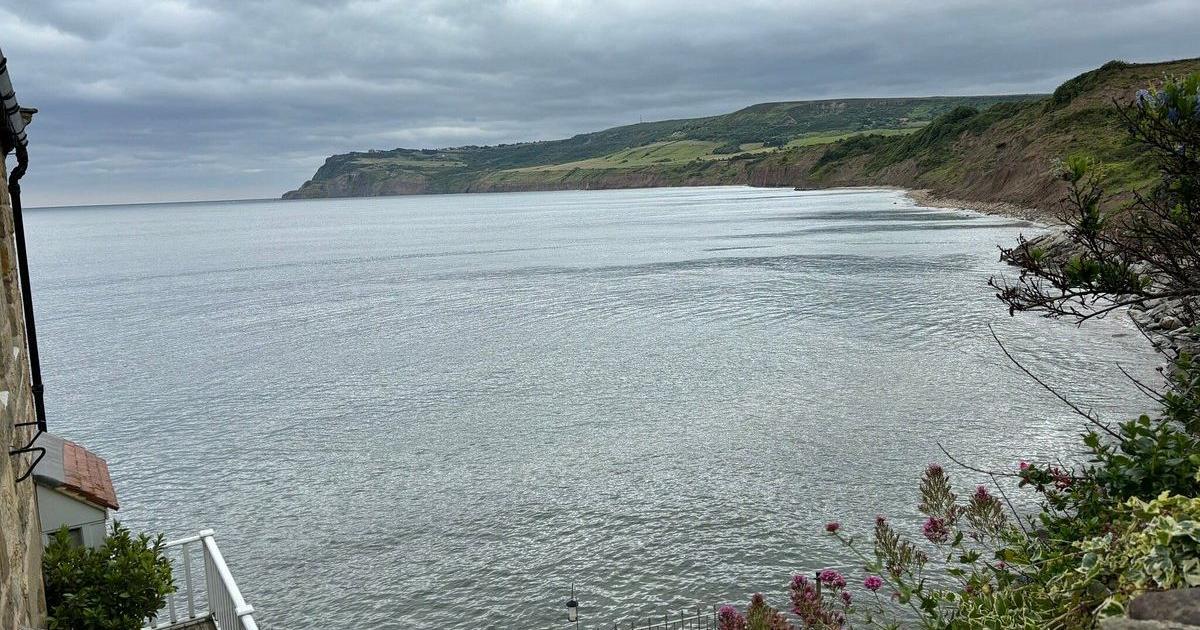
Robin Hood’s Bay, a fishing village on the North Yorkshire coast, has been praised for its tranquillity and charm.
This comes from new research by credit card brand Aqua, which evaluated various destinations across the UK.
Robin Hood’s Bay, though, scored highly as a “hidden gem,” partly due to its 117,000 Instagram posts and 22,800 average annual searches for visiting and staying.
The UK’s top hidden holiday destination, ranked higher than Robin Hood’s Bay in the list, is Broadstairs.
Advertisement
Broadstairs scored the highest of the “hidden gem” staycation destinations, with 332,000 Instagram posts and just 3,360 searches for visits and hotels.
This coastal village is ‘probably one of the most photographed and instantly recognisable locations in North Yorkshire’. (Image: Getty)
Second was Dartmouth in Devon, with 878,000 Instagram posts.
Interest in visiting or booking hotels remained relatively low at just 3,360 searches.
Whitstable, Poole, and the Scottish Highlands are all together in third place.
Advertisement
Robin Hood’s Bay has also been praised by Country Living for its “panoramic” clifftop views and was included on its seasonal outdoor guide for winter – making it a village for all seasons.
The publisher shared: “The UK’s beaches boast another level of stirring beauty in winter – not to mention the fact the off-season months are a great opportunity to get the wild and wind-beaten coast all to yourself.
“But where are Britain’s best winter beaches for a wave-crashingly scenic escape?
@thedarcytwins I cannot believe this is storybook town is a real place! 😍 #robinhoodsbay #storybook #wholesome #placestovisit #thedarcytwins #countrside #yorkshire #victorian ♬ QKThr – Aphex Twin
“Turn your collars up to the wind, wrap up warm and explore silky sands, rugged coastlines, clifftop views, wildlife-rich rock pools and picturesque coastal paths.
Advertisement
“All with the added drama and atmospheric beauty of unpredictable weather.
“There’s also nothing like the promise of a post-walk local ale or warming hot chocolate at a cosy old pub to enhance the trip.”
Israel’s prime minister, Benjamin Netanyahu, instructed the military on March 29 to expand its operations in southern Lebanon. It is the latest conflict between Israel and Hezbollah, in which Netanyahu has again promised to dismantle the Lebanese Shia group, and does not seem close to a conclusion.
This is not the first time Israel has invaded southern Lebanon. And people across the country are bracing themselves knowing that previous Israeli invasions have almost always resulted in longer-term occupation. Lebanese fears are worsened by the opaque situation on the ground.
Contradictory reports regularly break about the success or failure of Israeli incursions. The latest of these is a widespread but unconfirmed rumour that Israeli troops have captured the Beaufort Castle, a 12-century fortress that overlooks the Litani River.
The Litani splits Lebanon horizontally to form the country’s southernmost region, which is seen by Israeli officials as a buffer zone that can help protect it from Hezbollah attacks. More recently, however, extremist Israeli groups have begun to aspire to settle the area.
Advertisement
As Hezbollah fights the Israeli military in the south, a different kind of battle is taking place north of the Litani. Since the start of the war in early March, more than a million people have been forced to leave their homes. These people are mainly Shia Lebanese from the south and Beqaa Valley.
In a deeply divided society where most areas are clearly – even if unofficially – demarcated along religious lines, the influx of huge numbers of displaced Shia into traditionally Christian and Sunni areas was always bound to heighten sectarian tensions.
Reports have circulated of displaced women and children being accused of bearing loyalty to Hezbollah and turned back in some places. Many displaced men have also been judged to be Hezbollah operatives whose presence in non-Shia areas could result in targeted Israeli strikes.
The last round of conflict between Hezbollah and Israel in 2024 was met with a feeling of unity inside Lebanon. Sparked by a shocking attack in which Israel blew up communication devices used by Hezbollah operatives, killing 42 people and wounding thousands more, this conflict led to a general sense of injustice among Lebanese people.
This time, however, the war is seen by most to have been started after Hezbollah fired rockets towards Israel in retaliation for the killing of Iran’s supreme leader, Ali Khamenei. As a result, it has left many Lebanese people feeling dragged into a war they did not want.
Combined with the fact that Israel has not refrained from attacking non-Shia areas of Lebanon where it has identified targets for assassination, Christian and Sunni residents across the country have felt less ready to welcome those who have been displaced.
The government’s lack of preparation for the task of providing shelter and food for more than a million people has only aggravated the situation. While over 1,000 public schools have been converted into shelters, many displaced people are renting from private landlords. The result has been a direct integration of the displaced population into non-Shia areas.
Advertisement
On March 24, missile fragments that were later revealed to have originated from an intercepted Iranian missile fell over the Christian area of the coastal city of Jounieh. Within hours, a group of residents were filmed attempting to expel displaced people from their area, blaming them for what had happened.
A few days prior, a planned shelter in the Christian-dominated Karantina neighbourhood of the capital, Beirut, had to be cancelled because of a public campaign by residents who feared it would “bring strikes to the area”.
There is some evidence that Israel is using heightened sectarian tensions to provoke some kind of uprising against Hezbollah in Lebanon. Israeli warnings for residents in southern Lebanon to evacuate in early March included specific instructions to “move north toward [Sunni-dominated] Tripoli … and east toward [Christian-dominated] Mount Lebanon”.
And days later, on March 13, Israeli planes dropped leaflets over Beirut telling citizens that “Hezbollah is turning your homes into terrorist hideouts”.
Advertisement
Incoming political battle
Another difference to the 2024 conflict is the government in place in Lebanon. At that time, a caretaker government was in charge, while the presidential position remained vacant. In early 2025, a new president (Joseph Aoun) and prime minister (Nawaf Salam) were sworn into office and have since promised to tackle Hezbollah’s military capabilities.
Widely seen as pro-US, this government – which does include two Hezbollah ministers – has tried to take overt steps to distance itself from Hezbollah’s military operations against Israel in a clear attempt to safeguard the rest of the country.
On March 1, it became the first Lebanese government to ban Hezbollah’s military activities. And more recently it has attempted to expel the Iranian ambassador, Mohammad Reza Shibani, from the country in protest at Iran’s involvement in Lebanese politics.
Israeli soldiers gather at an undisclosed position near the Israel-Lebanon border on March 30. Atef Safadi / EPA
The fact that Hezbollah has continued fighting Israel and the ambassador has defied the government’s orders gives a clear indication of how little power the Lebanese government holds. Still, the consequences of its declarations are felt in the country as they give anti-Hezbollah elements of society grounds to accuse the party of acting against the Lebanese state.
The last time such a direct confrontation of Hezbollah occurred within Lebanon was in 2008, when the government attempted to take down the group’s clandestine infrastructure. The result of this was violent sectarian clashes in Beirut.
Advertisement
Hezbollah has rejected the government’s actions. The deputy head of Hezbollah’s political council, Mahmoud Qomati, insisted on March 17 that the group is “able to upend the country … and upend the government in the face of such decisions”. He then implied a comparison between the Lebanese government and Vichy France, the collaborationist regime that governed southern France during the Nazi occupation in the second world war.
Past experience shows that there is no hope for an end to the hostilities in Lebanon so long as Hezbollah and the Lebanese government remain as diametrically opposed as they currently are. As it stands, there is no Shia representative in the proposed Lebanese delegation for ceasefire negotiations – highlighting how distant a resolution remains.
As Hezbollah continues to fight Israel in the south, the rest of Lebanon is facing the prospect of another devastating civil conflict.
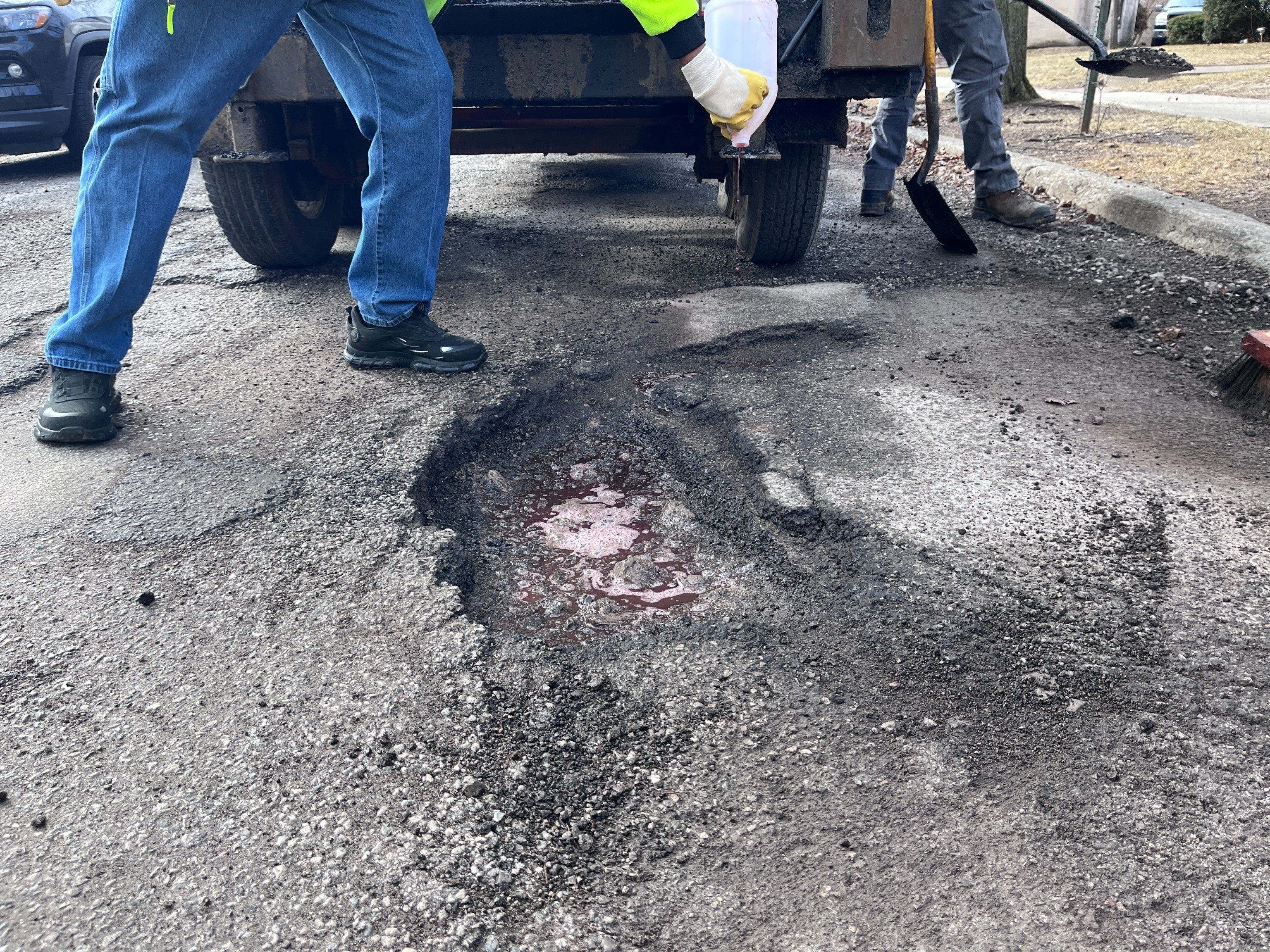
After a brutal winter storm season, cities across the United States are declaring a war on potholes as local officials race to make roads safe.
The East Coast and Midwest were battered by heavy snow and sub-zero temperatures for weeks in early 2026, leaving behind tens of thousands of potholes on roads and highways.
Baltimore Mayor Brandon Scott said his city is still dealing with the aftermath of “ice-mageddon”, even in early spring. The Maryland city is used to heavy snow that then rapidly melts but low temperatures in late January and February kept ice intact for weeks.
“We had below-freezing temperatures for basically a month,” Scott told The Independent. “So it wasn’t going anywhere, and it was chunks of ice.”
Advertisement
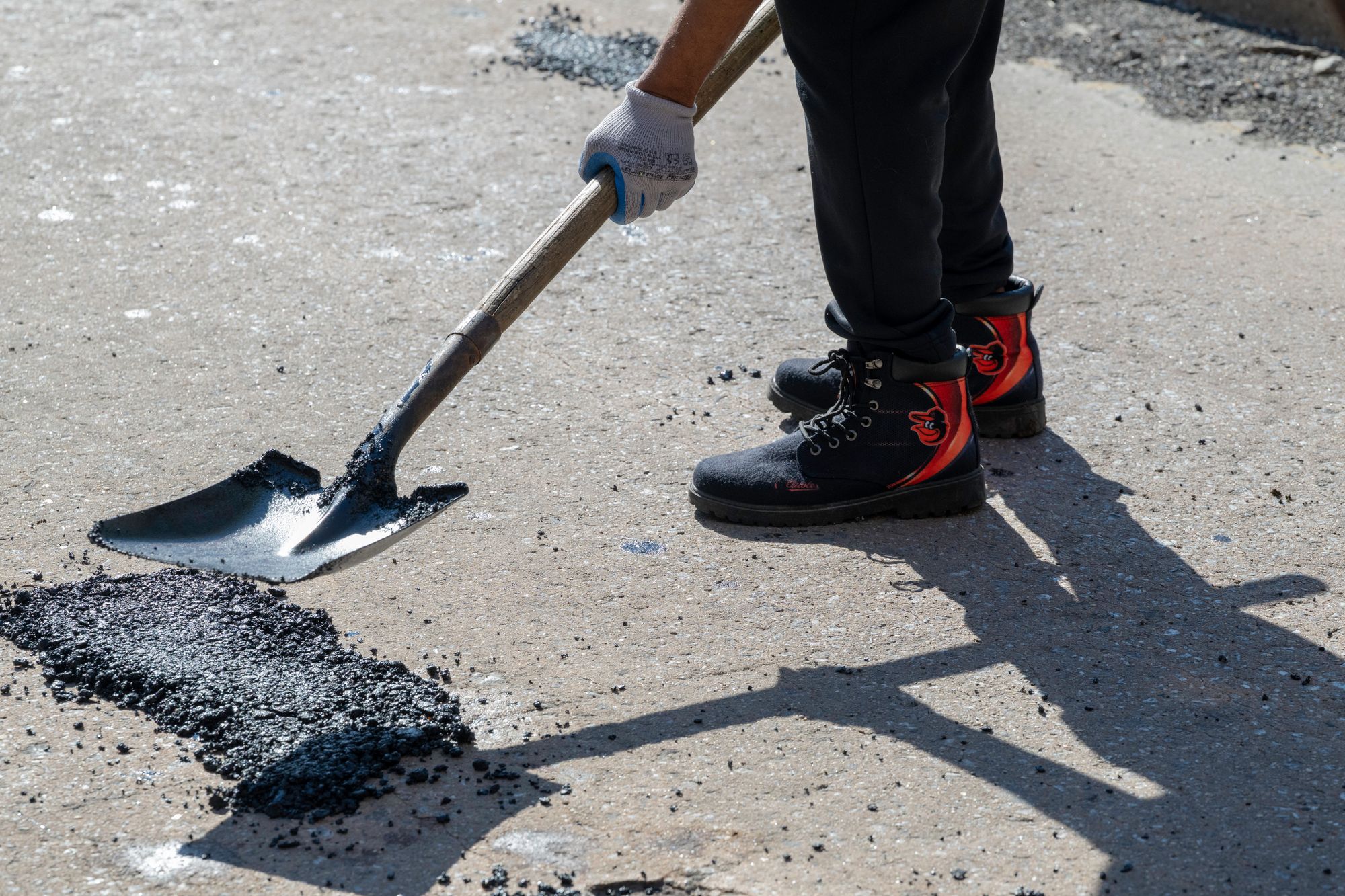
Scott, who has joined road crews filling potholes, is overhauling Baltimore’s resurfacing program with a new public data dashboard and changes to city contracting. He wants to fill 25,000 potholes in the next 90 days. The city tackled 134,000 potholes last year.
Baltimore Mayor Brandon Scott (left) is one of numerous big-city leaders working to fill potholes left behind by this year’s major winter storms (J.J. McQueen/Baltimore City Mayor’s Office)
Workers with the Department of Transportation of Toledo, Ohio, fill in a pothole in early March. The East Coast and Midwest were battered by heavy snow and sub-zero temperatures for weeks in early 2026, leaving behind tens of thousands of potholes on roads and highways (Toledo Department of Transportation)
The work has involved breaking up ice blocks that felt like concrete, he said. The salt put down to combat icy conditions unfortunately worsened the pothole problem. Road salt lowers the freezing temperature of water which then seeps into pavement, and helps develop potholes.
“With the amount of salt that we had to put down, that’s going to create potholes,” Scott said. “Where there is salt used, there will be potholes.”
He’s just one of hundreds of city leaders facing similar challenges after this winter and who are now in the midst of “pothole blitzes.”
As of late March, New York saw a 119 percent increase in pothole complaints to the city’s 311 system compared to the same period in 2025, the largest year-over-year increase ever, according to a New York Post analysis.
Advertisement
A pothole is seen on a Baltimore road on March 10. Baltimore Mayor Brandon Scott said the Maryland city is still dealing with the aftermath of “ice-mageddon”, even in early spring. Baltimore is used to heavy snow that then rapidly melts but low temperatures in late January and February kept ice intact for weeks. (J.J. McQueen/Baltimore City Mayor’s Office)
Multiple major winter storms across the East Coast this year have caused roads to freeze and thaw repeatedly, driving a worse-than-average pothole season (Getty)
In Nashua, New Hampshire, city officials warned that a “very wet winter with very low lows, and weirdly strange high temps” were creating a “perfect storm” for potholes.
Chris Leo, a resident of nearby Manchester, recently lost a tire to a massive pothole on the way home from dinner.
“Think of a black abyss, like a black hole, and then double it, is basically the deepness of these potholes,” Leo told NHPR. “It was like the Mariana Trench.”
In some jurisdictions, potholes moved from a daily annoyance to an all-out crisis.
Advertisement
In February, Sumpter Township in the Detroit metro area declared a public safety emergency over the state of its gravel roads.
Think of a black abyss, like a black hole, and then double it, is basically the deepness of these potholes. It was like the Mariana Trench.
Chris Leo, resident of Manchester, New Hampshire
Roads in the township had become “severely washboarded, rutted and potholed, contain standing water due to drainage failures, and significant segments of road are nearly impassable,” town supervisor Timothy Bowman wrote in a public declaration.
Advertisement
In Pittsburgh, Pennsylvania, however, it was business as usual, according to John Samuelson, director of public works.
“We’re doing OK,” he told The Independent. “I have not heard of any increase in potholes as a result of the rains this year.”
He said the city generally fills potholes within 24 hours of being notified.
To raise public awareness and focus city efforts, leaders in places like New York City and Baltimore have launched “pothole blitzes” to tackle the problem. The Big Apple has filled more than 66,000 potholes since January, according to the local Department of Transportation.
Advertisement
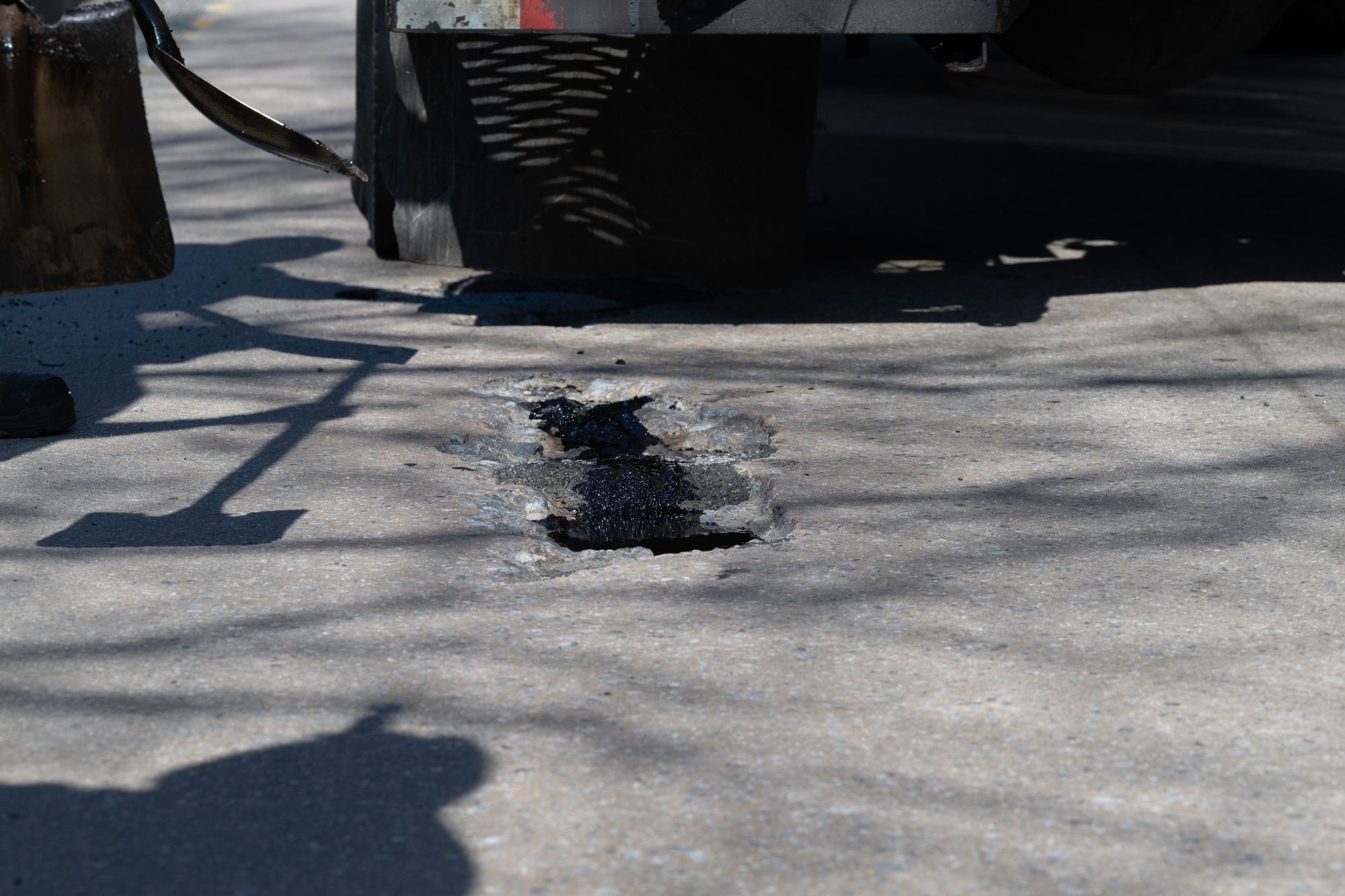
Cities have used apps, tip lines, mobile patch teams, and heaps of fresh asphalt to find and tackle the potholes (J.J. McQueen/Baltimore City Mayor’s Office)
Scott, the Baltimore mayor, said he enjoys joining the pothole crews on the job himself. It reminds him of helping out at his family’s HVAC business. “I’m a hands-on guy,” he said.
When mayoral elbow grease fails, cities have also turned to special equipment to patch up the winter-weary roads.
“We’ve had hundreds and hundreds of people calling after one of the worst winters on record — and that’s why I decided to put together a massive public facilities operation to repair the potholes, using what we like to call ‘the pothole killer,’” Bridgeport, Connecticut, Mayor Joe Ganim told News 12 last month.
The pothole killer set-up includes a truck with spray injection machines and a “hot box” asphalt recycler. Residents can also report potholes via an app, he said.
This spring, New York City saw a record spike in pothole complaints (New York City Department of Transportation)
Smaller municipalities only have so much money to patch holes. The Pittsburgh-area borough of Homestead told the Pittsburgh Post-Gazetteit has already blown through its full supply of 2,000 pounds of cold patch asphalt.
The holes can also be a major safety issue. A 46-year-old man in Queens, New York City, was fatally thrown from a motor scooter last month in the Ozone Park neighborhood when he hit a pothole.
Getting a handle on the pothole problem isn’t easy. Rising global temperatures, stronger storms, and unusual weather patterns as result of the climate crisis are expected to worsen potholes, while cities like Baltimore face persistent funding challenges.
The city, unlike others in Maryland, is responsible for maintaining both local and state roadways in its jurisdiction. It also lost nearly $1 billion in expected state funding thanks to years of budget cuts after the 2008 recession.
“You’re talking about thousands upon thousands of lanes of road that didn’t get surfaced that would have,” Scott said.
Advertisement
After securing funding increases in recent years, Scott is now lobbying state lawmakers to keep such support over the long term.
Little is certain in life, but you can always count on there being more potholes to fill.
Now, Niall, 32, has shared how he ‘made the mistake of turning on’ the TV to see coverage of Payne’s death.
Advertisement
‘Looking down at your phone, that’s shock,’ he said on The Tommy Tiernan Show. ‘Then, stupidly turning on Sky News, and then the next channel.
‘The whole world is talking about it, like it’s the biggest breaking news on the planet at that minute. I found it… because I was in the pictures with him.
Payne died on October 16, 2024 after falling from a hotel balcony (Picture: Kevin Mazur/Getty Images for iHeartMedia)
‘I have my own grief to deal with’ (Picture: The Tommy Tiernan Show)
‘I found that very weird. What your man beside me? Him there? That’s a strange one.’
He admitted he still hasn’t wrapped his head around the loss, having known Payne since they shared a room together on X Factor in 2010.
After seeing some of the coverage, Niall firmly decided he wasn’t going to watch any more or speak publicly about the loss.
Advertisement
‘I can’t go any further than this because I’ve got a funeral to go to and things like that,’ he shared. ‘I can’t be worrying about what they’re going to say next, because I have my own grief to deal with.’
Speculation of excessive drug and alcohol usage at the time was rife, with photos revealing his decimated hotel room adding to the mystery.
The Dinner Party singer said he wanted to remember Payne through his own memories rather than what was being broadcast.
Advertisement
Niall had been in Buenos Aires around two weeks before the fall and met his former bandmate for a chat and a coffee, with Payne coming to his solo gig that night.
‘He was in the dressing room before and then, yeah, came to the show. It was great to see Liam,’ he acknowledged, explaining he then continued the tour before heading home.
‘Don’t know what day of the week it was,’ Niall continued. ‘I remember, and just looked down at my phone. I’d gotten a text.
‘I was just about to go asleep, and, you know, and the phone lights up, and you have a look, one last look. It was just pure shock.’
Advertisement
Niall said he was aware of Payne’s issues, which the Strip That Down singer had been openly discussing in the years before his death.
Despite their closeness in their teen years, they had drifted and Niall shared he ‘wasn’t aware of the depth’ of his friend’s issues.
Choking up slightly, the singer added: ‘I grew up with this fella, and all of a sudden, it’s just no more. It’s such a strange thing to go through. You go through, like, what could I have done if I’d known more? Should I have dug more into it? Like, could I talk to other people to get an angle on it?”
‘What could I have done if I’d known more?'(Picture: Mark Davis/DCNYRE2016/Getty Images for dcp)
Niall is still processing his grief (Picture: David M. Benett/Getty Images for H&M)
He wrote song End of an Era for Payne (Picture: The Tommy Tiernan Show)
In a separate interview, Harry said he was still struggling to come to terms with the loss and dealing with his own grief alongside fans.
Advertisement
All remaining One Direction members are releasing (or already have released) solo albums this year, with Payne becoming a regular topic in interviews.
On his upcoming album, Dinner Party, Niall has written track End of an Era as a tribute to Payne.
Host Tommy said he felt for the former group, with Niall concluding: ‘I just haven’t wrapped my own head around it.
‘It’s a weird thing to be going through at thirty-something, that someone two weeks older than you can just be here today, gone tomorrow.’
Advertisement
Got a story?
If you’ve got a celebrity story, video or pictures get in touch with the Metro.co.uk entertainment team by emailing us celebtips@metro.co.uk, calling 020 3615 2145 or by visiting our Submit Stuff page – we’d love to hear from you.
Donald Trump with a picture of his planned ballroom, which has been put on hold (Picture: Reuters)
Donald Trump and his family could be put in serious danger if work on the $400 million White House ballroom is stopped, his administration has suggested.
A district judge in Washington DC provoked the president’s ire last week when he paused construction on the lavish extension.
White House lawyers are now urging a federal appeals court to halt that ruling and allow builders to get back on site.
In a motion filed on Friday, they argued the judge’s order is ‘threatening grave national-security harms to the White House, the president and his family, and the president’s staff’.
Advertisement
That is because materials are being installed to make the site ‘heavily fortified’, they said, with the ballroom project also including a bomb shelter and military installations according to the Guardian.
The side of the mansion has also been left ‘open and exposed’, the lawyers warned, following President Trump’s decision to go ahead with the demolition of the historic East Wing without consultation.
Elsewhere in the motion, the lawyers argued the district court did not have authority to tackle the suit, saying it ‘rests on a single pedestrian’s subjective architectural feelings’.
The East Wing of the White House was completely razed to make way for the building (Picture: Reuters)
The Guardian reported that the decision from Judge Leon – who was nominated by George W Bush – addressed national security, and he exempted construction necessary for the security of the building from his order.
Advertisement
The president ‘has complete authority to renovate the White House’, the motion adds.
Leon’s decision came as a result of a preliminary injunction from the National Trust for Historic Preservation, which asked for construction to be paused amid their lawsuit alleging Trump exceeded his authority with the project.
In a Truth Social post after the ruling, Trump described the organisation as a ‘Radical Left Group of Lunatics’.
Trump’s ballroom project prompted outrage from many across the US (Picture: EPA)
The creation of the ballroom is one aspect of the president’s ambition to reshape the heart of the US capital within his final term in office.
Other plans in the works include a 250-foot triumphal arch, while he has already unilaterally inserted his name into the title of the Kennedy Center for the Performing Arts.
Some parts of the country are much worse for the bloodsuckers than others.
12:00, 05 Apr 2026
Advertisement
The “worst places in Scotland” for midges have been named ahead of the start of summer, with hikers being advised to avoid certain parts of the country if they don’t want to be set upon. Experts have also shared a list of locations around Scotland where hillwalkers and holidaymakers are less likely to encounter the biting beasts.
Midges, particularly the Culicoides impunctatus species, are biting flies that are usually very prevalent between late spring and late summer. The small flies are infamous for ruining hikes and camping trips in Scotland across the warmer months, with their bites leaving irritating and itchy lumps.
On Wednesday, April 3, travel experts at Two Scots Abroad shared a guide to midges in Scotland to help Scots and holidaymakers in the country alike minimise the impact of the blood-sucking insects. A total of nine destinations and regions across Scotland were singled out as especially bad for midges.
One of the areas in the country where midges are particularly prevalent according to the experts is the Northwest Highlands, which comprises Wester Ross, Assynt, and Sutherland, as well as part of Caithness. The region offers conditions very favourable for midges to breed, such as wet soil, damp moss, and sheltered glens with minimal wind.
Advertisement
In particular, Glen Coe, Fort William and the Great Glen, Torridon, and the Isle of Skye were named as top hotspots for midges that should be avoided if possible. Meanwhile, Argyll and Bute and parts of the North Coast 500 were named as locations with a lower risk but where midges are still common.
The Two Scots Abroad website states: “What all of these share: sheltered, boggy, wet highland terrain with limited wind exposure. If a place is famous for dramatic scenery and moody weather, it’s probably also famous for midges.”
On the other hand, there are certain parts of Scotland where you are far less likely to be bothered by midges during the spring and summer. According to Two Scots Abroad, these generally comprise open and coastal regions where strong winds prevent the insects from thriving.
Advertisement
Among the locations in Scotland where midges are unlikely to be as much of a nuisance are the Scottish Borders, Fife, Dumfries and Galloway, Edinburgh, Glasgow, and the Central Belt. Those in Orkney and Shetland may also have better luck when it comes to midges according to Two Scots Abroad.
Additionally, the experts shared tips that can help you avoid midge bites even if you head into areas such as the Northwest Highlands. According to Two Scots Abroad, using repellent such as Smidge, wearing head nets and brightly coloured clothes, and avoiding dusk and dawn can all minimise your chances of being bitten.
Scots keen to avoid the worst of the midges this spring and summer can also use The Scottish Midge Forecast to plan their trips. The forecast uses data from biting midge traps and mini-weather stations across the country to provide a regularly updated view of midge levels throughout Scotland.
Advertisement
Two Scots Abroad’s midge guide adds: “If you’re planning a trip to the Scottish Highlands, this is the one practical topic worth actually reading up on. Not because midges are dangerous, they’re not, but because they can genuinely ruin an otherwise brilliant day out if you’re in the wrong place at the wrong time.”
See below for the full list of the worst locations in Scotland for midges and the areas in the country where you can avoid the insects according to Two Scots Abroad. More information and the full guide can be found on the Two Scots Abroad website.
When it comes to Easter, it has to be lamb for me. Always. To shake things up a bit — as you don’t want to be cooking the same thing year on year, now do you? — I like to take a shoulder of lamb (the bigger, the better), generously drizzle it with tahini and slow roast it in the oven with lemons and wild garlic. A big bowl of soft polenta is the perfect companion, it’s like eating a hug. The whole thing is simple, easy to cook, and my gosh — the flavour! If that’s not your bag, try shoulder with fresh lavender, rosemary, garlic, honey and salt. Pick your rosemary straight from the garden and blitz the leaves with salt in a blender. Remove the lavender buds from the stalks and add them to the honey. I rub the lamb all over with salt before placing in a roasting tray in the oven, covered with foil, for 20 minutes at 200°C. Remove the foil and leave to roast for a further 40 minutes before pouring over the lavender and honey and returning to the oven for a final 10 minutes. Resting is key — I do this for 10 to 15 minutes with some foil on top to keep it warm, before serving with pan juices and spring vegetables.
Resident doctors will begin their strike at 7am on Tuesday (April 7), which will run for six days until 7am on Monday (April 13).
Hospital teams across the country, including in York, say they will continue to “minimise” this disruption, with GP practices, NHS 111 and urgent and emergency care services continuing to be available throughout the industrial action.
Recommended reading:
The NHS said that patients should attend planned medical appointments unless they have been contacted to reschedule.
Advertisement
The strike is expected to be “particularly challenging” for the NHS due to a short notice period and the timing of the strike, which falls during the Easter holiday.
“The government has the power to avert this strike action”, the BMA has said (Image: PA)
In a statement, leaders of the action, the British Medical Association (BMA), said: “The government has the power to avert this strike action – by coming back to the table with a credible offer on both jobs and pay.
“We remain willing and available to re-enter negotiations, but we are not willing to risk locking in further pay erosion.
“The government shifted the goalposts on pay at the 11th hour, leaving us with no option but to make ourselves heard from the picket line.”
Advertisement
On Tuesday, Prime Minister Sir Keir Starmer gave the resident doctors committee of the BMA a 48-hour deadline to reconsider the government’s deal on pay and jobs, which included the offer of extra NHS training posts.
As the deadline approached, the BMA set out a list of demands for Government which would need to be addressed for them to call off the strike.
Wes Streeting had urged doctors to reconsider their industrial action (Image: PA)
Responding, a Department of Health and Social Care spokesperson said: “It is disappointing that the BMA has decided to press ahead with strikes next week, despite conversations we have been having in recent days in a bid to protect the NHS from strikes.
“This government offered resident doctors a generous deal to improve their pay, career progression and working lives that would have seen resident doctors on average 35.2 per cent better off than they were four years ago.
Advertisement
“Because the BMA resident doctor committee has not agreed to call off these strikes and put an offer to members, we will now not be able to deliver the 1,000 extra training places which the BMA asked for.
“These posts would have gone live this month, but as systems now need to prepare for strikes and more uncertainty, it simply won’t be operationally or financially possible to launch these posts in April in time to recruit for this year – this won’t impact the overall number of resident doctors and the NHS will be there for patients when they need it.
“Our attention and that of leaders across the NHS is now on protecting patients, staff and our NHS by minimising disruption to the health service.”
What do you think about this?
Advertisement
Write us a letter. Please write no more than 250 words and you must provide your full name, address and mobile number. Send your views by email to: letters@thepress.co.uk
In a statement issued on Wednesday evening, Dr Jack Fletcher, chairman of the doctors’ committee, said: “It is not unexpected, but extremely disappointing to see the government has scrapped 1,000 new specialty training places at a time when doctors so urgently need more jobs and patients so desperately need more doctors.
“It is genuinely disheartening to be at this point after what had been constructive talks up until a few weeks ago when the government moved the goalposts.
“It is simply wrong that the development of the doctors of the future is being used as a pawn like this.
Advertisement
“We have consistently maintained that we are willing to postpone industrial action should a genuinely credible offer be provided.
“This remains the case now, up to, and throughout any period of industrial action.”
‘Longer waits expected’
A spokesperson for York and Scarborough Teaching Hospitals NHS Trust said: “During the strikes, there may be fewer doctors working than usual, and they will need to prioritise life-saving care.
“Less urgent cases may experience longer waits during strikes.
Advertisement
“The NHS is asking patients to choose services appropriately during industrial action and take simple steps to help ensure care is available to patients who need it most.
“This includes using 111 online as the first port of call for health needs, and as ever only using 999 if it is serious or life-threatening emergency.”
One morning last week, while sipping coffee in bed and scrolling on my phone, my social media feed presented an article about parenting teenagers using the “potted plant” method.
“Get this,” I said to my husband Chris, next to me in the bed. “This article says that teenagers don’t want to engage with their parents, but they still want them nearby, hovering quietly in the background – like a ‘potted plant,’” I said using air quotes.
Chris looked up from his phone. “So first it was helicopter parents, then snow plow parents, and now potted plant parents?”
He rolled his eyes and went back to Wordle. However, I was interested enough to read on.
“While normally developing teenagers seek new levels of emotional and physical distance from their parents perhaps they, like toddlers, feel most at ease when their folks balance active engagement with detached availability,” she writes.
The research cited in the piece is convincing: physical proximity alone, whether or not you’re actually connecting, does appear to improve adolescent well-being.
Maybe, I thought to myself as I got out of bed to begin my day. But at what cost to the parents’ well-being?
Advertisement
My children are now 18, 20, and 22, technically past the teenage years the potted plant method targets. But they are not quite out of the nest, and so the article still landed. I recognised the instinct: that parental tug to stay nearby, available, just in case.
I also recognised the trap.
I know so many parents on the verge of an empty nest who don’t know what to do with themselves – who have been so busy being parents that they’ve forgotten to build a life of their own.
The potted plant method gives them permission to keep delaying that reckoning. When the baseball games end, and the rides stop, what’s left? In retrospect, refusing to disappear into the background has set me up for a full life, and I’m ready to step into it.
Advertisement
Do you remember that scene from The Goonies when Mikey Walsh gives that pivotal speech and declares, “It’s our time”? I’m ready to give that speech to myself. After 22 years of parenting, it’s my time. I am done. I know, I know. Older parents are already typing their responses: “You’re never done parenting, blah blah.” I respectfully cry bullshit. The late, great radio psychologist Dr. Joy Browne used to say: “Your job as a parent is to give your kids roots and wings. And the wings are the hardest part.” If you’ve done your job, the wings are what they’re using right now. Let them fly.
Here’s the thing. I actually was a potted plant for the first seven years of my parenting, present in body, not fully there in any other way. I suffered from the disease of alcoholism, and although I could check the boxes (packed lunches, PTA, tooth fairy), a layer of vodka acted as a barrier between my kids and me. I got sober through a 12-step program when my kids were 7, 5 and 3, and what followed were 15 years of genuine, engaged, present motherhood. However, I never gave up all of myself as these parenting trends seemed to suggest you should.
During those years, while the kids were at school, I worked part-time and took a memoir-writing class. As my children grew more independent – when they no longer needed rides and their math classes became so advanced I could no longer help with the homework – I joined the workforce full-time and dedicated more hours to my writing. My hard work paid off. My debut memoir, Sober Mom, is being published this summer.
Should I skip the writing conference because my daughter might want me in the room while she watches TV? Should Chris and I cancel our weekend away in case one of my adult sons needs someone to explain how the washing machine works?
Advertisement
What I want – what I’ve decided my kids actually need – isn’t my quiet presence on the periphery of their lives. I want them to see a woman who finished her memoir, who went to the writing conference, who kept showing up for her own life the same way she showed up for theirs. I want them to witness what a marriage looks like when two people still choose each other after 20-plus years – two people who still go away for weekends alone. And I want them to learn, by watching me, that parenting doesn’t have to mean disappearing.
So, if they pick their heads up from their phones and wonder, Where’s mom? Good. That’s the point. I’m not a potted plant.
Elizabeth Jannuzzi’s debut memoir, “Sober Mom,” will be published by She Writes Press in July 2026 and is available now for pre-order. Her work explores themes of loss, motherhood, and recovery from alcoholism. Her essays have been featured in Under the Gum Tree, The Rumpus, WOW! Women On Writing, and more. Elizabeth earned a Best of the Net nomination in 2023. She is the program director at Project Write Now, a nonprofit writing organization. She engages with her audience through a weekly Substack newsletter.
Soaps are regularly changing their schedules due to other programmes being shown in their usual time slots, including football matches.
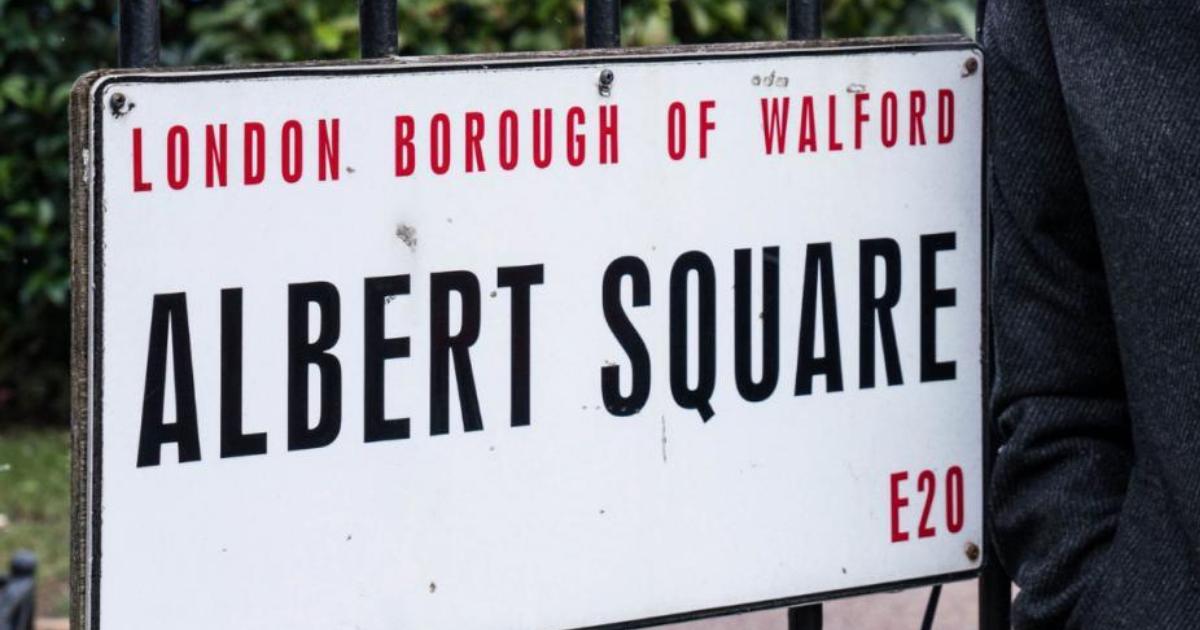
While fans of the soap will still get to watch an episode of EastEnders on Easter Monday (April 6), it will be at a later time.
Here’s what we know about the changes and when you can watch the soap this week.
Advertisement
The top five EastEnders villains
EastEnders to see TV schedule change this week
The Easter schedule will see Celebrity Escape to the Country fill EastEnders’ usual slot as it starts at 7.45pm, with EastEnders usually beginning at 7.30pm on BBC One on Mondays.
It’s not all bad news though, as you can still get your soap fix on Monday as EastEnders will start an hour later than usual – at 8.30pm on the same channel.
Despite this schedule change, soap fans will be able to watch EastEnders on Tuesday, Wednesday and Thursday at its usual time this week.
ITV makes schedule changes to Coronation Street and Emmerdale
Fans of Corrie and Emmerdale can also expect some schedule changes this year because, back in 2025, ITV announced changes to its soap schedule.
Advertisement
From January 2026, the broadcaster introduced a “soaps power hour” on weekdays with 30-minute Emmerdale episodes at 8pm and 30-minute Coronation Street episodes at 8.30pm.
Emmerdale’s most shocking deaths
Coronation Street previously aired for three hour-long episodes a week, while Emmerdale aired four 30-minute episodes and one hour-long instalment.
In May 2025, ITV chief executive Dame Carolyn McCall said the company was making “good progress” on a cost-cutting drive, and that she expected to make £30 million of non-content savings during 2025.
Advertisement
ITV also introduced changes to its popular daytime TV shows such as Good Morning Britain (GMB) and Lorraine.
From January this year, GMB has been extended by half an hour, while Lorraine Kelly’s morning talk show has been reduced to 30 minutes for 30 weeks of the year.
Are you happy about the EastEnders schedule change this week? Let us know in the comments.



























































You must be logged in to post a comment Login