


When babies struggle with poor sleep, parents often suffer right alongside them. Growing evidence shows that a baby’s gut health plays a key role in comfort, digestion and overall sleep quality. Supporting a healthy gut microbiome may help babies sleep better, which can bring much-needed relief to exhausted parents.
Newborns are not born with a fully developed sleep-wake cycle and many rely on cues from feeding, contact and environmental rhythms. Strengthening the gut microbiome can support more settled sleep. The following approaches are backed by emerging research.
Breastfed babies, if doing so is possible, tend to have better sleep patterns and a more stable sleep-wake cycle than infants fed adapted formula. Breast milk naturally contains beneficial bacteria that help seed the infant gut, as well as human milk oligosaccharides, which are specialised carbohydrates found only in human milk.
Babies cannot digest them, but beneficial gut bacteria can. These oligosaccharides act as prebiotics, feeding helpful gut bacteria such as Bifidobacteria and Lactobacillus. They also help protect the gut lining and block harmful microbes from attaching to it.
Breast milk also delivers hormonal signals that influence sleep, including melatonin and tryptophan. These can help infants settle more easily and form more regular rhythms over time. Even partial breastfeeding can offer these benefits.
Allow skin-to-skin and close contact
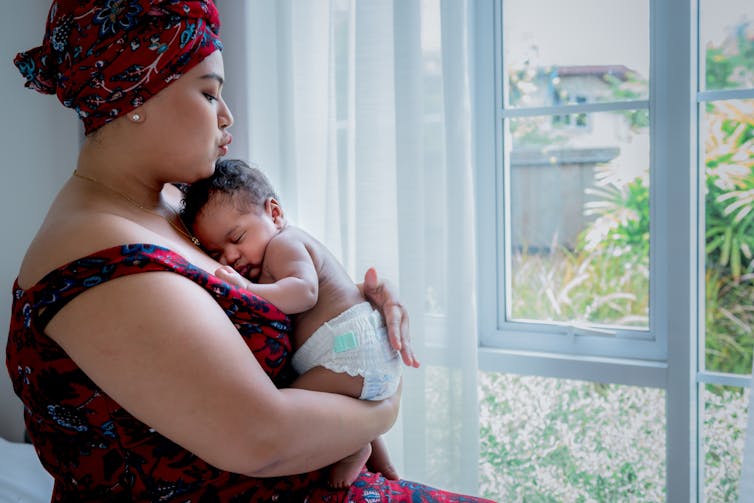
Physical closeness, also known as kangaroo care, helps transfer healthy maternal microbes and supports sleep regulation. Skin-to-skin contact stabilises an infant’s temperature, breathing and heart rate. These steady physiological rhythms reduce energy expenditure and help babies reach calmer, more predictable states that support sleep development.
Anatta_Tan/Shutterstock
Studies show that an infant’s temperature can shift by one to two degrees Celsius during skin-to-skin contact, and the caregiver’s body adjusts through close thermal coupling to help keep the baby within a comfortable range. This reduces the effort required from the infant to maintain their own temperature.
Skin-to-skin contact also reduces signs of stress and helps babies settle more easily into sleep. It activates the parasympathetic nervous system, sometimes called rest-and-digest mode, which supports digestion and relaxation. Close contact also boosts oxytocin, reducing crying and encouraging feeding, which indirectly supports sleep.
Avoid over-sanitising
Normal home-level exposure to skin bacteria, family members and pets helps diversify the infant microbiome. This does not mean all forms of close contact are risk free. Very young babies are more vulnerable to infections such as HSV, which can be transmitted through saliva, so caregivers who are unwell or have active cold sores should avoid kissing newborns and keep hands clean during feeding.
À lire aussi :
Why you should never kiss a baby
Routine use of antibacterial soaps and antibacterial wipes is not recommended unless necessary, for example when cleaning up bodily fluids, dealing with known infections in the household or following medical advice after surgery or immune-related conditions.
Support the microbiome through solids
Once a baby is developmentally ready, usually after six months, fibre-rich foods such as mashed beans, peas, lentils, sweet potato, oats and bananas can help nourish the gut.
Foods containing natural probiotics can be introduced once a baby has begun solids, provided they are offered in small amounts and prepared appropriately.
Plain yogurt is usually suitable from six months, as are fermented dairy products such as kefir when they are unsweetened and have a safe texture – smooth, runny or spoonable with no lumps – so that it can be swallowed easily and does not pose a choking risk. Other fermented foods, such as small tastes of fermented vegetable brine, should be low in salt and sugar and blended or thinned to an appropriate consistency.
Introducing allergens such as peanut and egg early, in line with current paediatric guidelines, also helps support immune balance.
À lire aussi :
Are peanut allergies actually declining?
Use antibiotics only when needed
Antibiotics can disrupt the gut microbiome by reducing microbial diversity, lowering levels of beneficial bacteria and allowing less helpful strains to dominate. They should never be avoided when medically necessary, but unnecessary courses should be minimised. Because antibiotics can deplete helpful gut bacteria, some parents consider using probiotics to support recovery.
Certain probiotic supplements may reduce colic and support sleep by improving gut comfort. Commonly studied infant strains include Lactobacillus reuteri and Bifidobacterium infantis.
These strains feed on human milk oligosaccharides, support digestion and help maintain gut barrier function. They may also reduce inflammation and produce metabolites such as short-chain fatty acids, which nourish the cells lining the gut and support immune regulation. Medical guidance is essential before introducing any supplements.
Watch for gut-disrupting issues
Healthy digestion supports better sleep and can be aided by effective burping, avoiding overfeeding and monitoring for possible food intolerances such as cow’s milk protein sensitivity. Addressing discomfort early can prevent sleep disruption. Tracking patterns around feeds, nappies and crying spells can help identify symptoms that cluster at particular times of day.
Persistent arching, pulling legs to the chest, vomiting after most feeds or stools containing mucus can signal a problem beyond routine wind. Reflux, constipation and transient lactose overload – when milk moves through the gut too quickly for the lactose to be fully digested, leading to gas, frothy stools and discomfort – are common culprits.
Allow pet exposure
Household dog exposure is linked to more robust infant microbiomes and may support healthier immune outcomes. Dogs introduce a wider range of environmental microbes into the home during a sensitive developmental window. There is no need to get a pet solely for this purpose, but research suggests that normal interaction with existing pets could be beneficial.

Regina Burganova/Shutterstock
Routine contact such as supervised play, shared floor space and the general messiness that comes with pets can all contribute. Sensible hygiene still applies. Wash hands after handling food bowls or dog waste and keep pets out of sleeping spaces.
Regulate the sleep environment
Predictable routines reduce stress and support more settled sleep. Creating a stable sleep environment helps lower arousal levels, which can otherwise unsettle digestion.
Aim for a consistent room temperature, dim lighting and a calm wind-down routine that signals the shift from stimulation to rest. White noise can mask household sounds that might otherwise wake a baby. Try to keep overnight interactions low key with minimal talking and gentle movements. These cues form a stable pattern that supports deeper, more restorative sleep.
While no single strategy guarantees perfect nights, these evidence-informed practices work together to support a healthier gut and a more settled baby. When babies sleep better, parents finally get the rest they need too.



