Connect with us
DAPA Banner

NewsBeat

How birds are spreading plastic pollution

Published

on

How birds are spreading plastic pollution

Hungry gulls do not only steal our chips and sandwiches. They learn our habits, and look for reliable sources of food. That includes waste treatment centres, landfill or anywhere food waste is concentrated. Many gull populations have moved inland from the coast to exploit these sources of food.

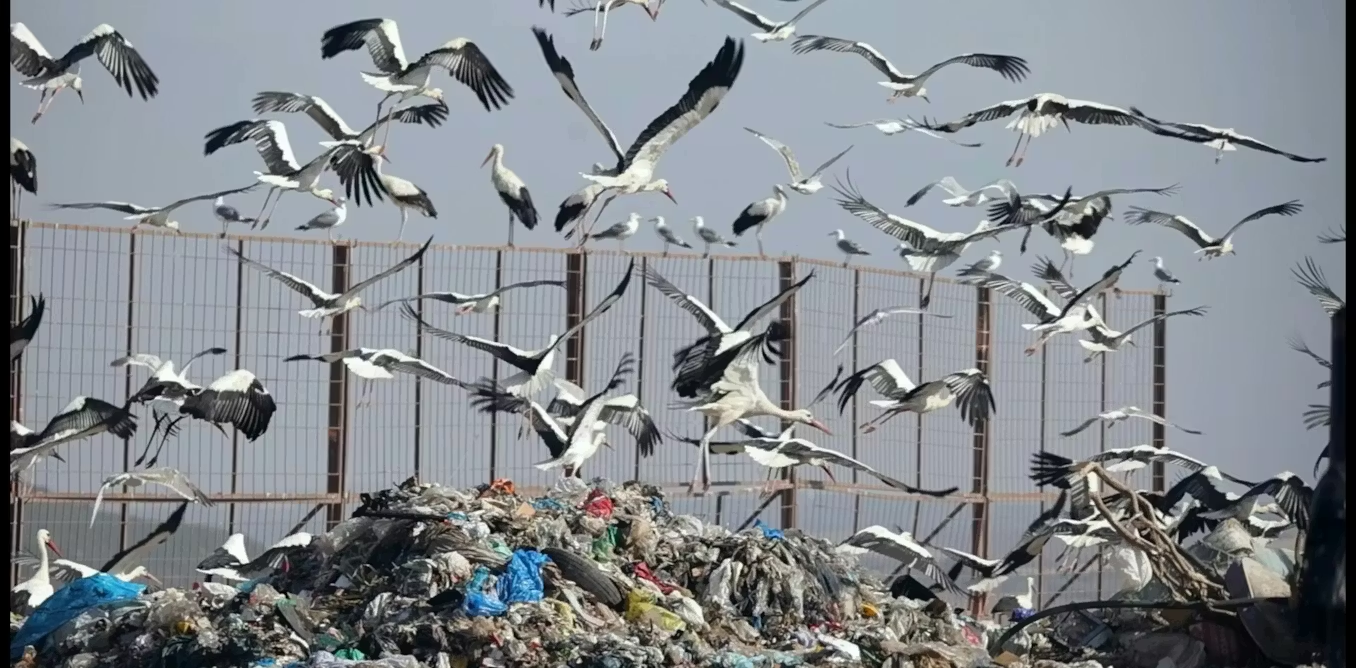
Wherever our waste is processed, gulls and other birds can forage. At landfills, gulls feed on waste before it is covered up. If there are plastic or glass pieces covered in food that are small enough, gulls will swallow them whole. Only the food itself gets digested, and when the gull flies back to its roost site, the waste gets regurgitated, polluting that site. This movement of pollutants is known as “biovectoring”.

For the first time, scientists like me are now quantifying just how much plastic and other waste is being leaked into important nature areas through the daily movements of birds.

Many lesser black-backed gulls breeding in the UK and other parts of northern Europe migrate to Andalusia in southern Spain, where they form a wintering population of over 100,000 feeding mainly in rice fields and landfills. Fortunately, many of these birds are fitted with GPS tags while breeding. This enables detailed tracking of their movements.

Advertisement


À lire aussi :
Yes, shouting at seagulls actually works, scientists confirm


Fuente de Piedra lake in Málaga is a hotspot for migrating lesser black-backed gulls. This wetland has such special natural significance, it’s designated as an internationally important site under a global convention known as Ramsar. It’s most famous for the largest breeding colony of flamingos in Spain. Gulls fly up to 50 miles to landfills to feed, then fly back to roost.

By combining GPS data with waterbird counts, and analyses of regurgitated pellets, scientists have estimated that an average of 400kg of plastics, plus more than two tonnes of other debris such as glass, textiles or ceramics, are deposited by this gull species into the lake each year. This lake has no outflow, making it salty and hence flamingo friendly. Those imported plastics remain in the lake, breaking down into microplastics. They can be ingested by flamingo chicks, aquatic insects and other animals.

Advertisement

Two yellow-legged gulls chase a white stork that is carrying plastic in its bill, which it picked up at a landfill.
Enrique García Muñoz (FotoConCiencia), CC BY-NC-ND


À lire aussi :
Plastic pollution threatens birds far out at sea – new research


In coastal Andalusia, these gulls join the resident yellow-legged gulls (equivalent to our herring gulls) and a mixture of migratory and resident white storks as the three major waterbird visitors to landfills.

In the Cádiz Bay wetlands (another Ramsar site), surrounding the historical city that is now a favourite stop for cruise ships, the three species combine to spread different types and sizes of plastics into different microhabitats. Annually, 530kg of plastics are deposited into wetlands via regurgitated pellets. Although a stork is bigger, so transports more waste per bird, most of the plastic is again moved by the lesser black-backed gulls that winter there in larger numbers.

Advertisement
hand holding plastic waste that had been eaten by a bird and partly digested

Plastic film regurgitated by a gull roosting in a field in Atherton, Greater Manchester.
Kane Brides, CC BY-NC-ND

This waste ingestion has strong effects on the birds themselves, through direct mortality from diseases, choking or becoming entangled with plastics, and toxic effects of the additives within them. Then after regurgitation in pellets, those plastics are a threat to all fauna and readily enter our food supply through aquaculture and table salt production, both important in Cádiz Bay.

These studies in Spain address a problem that is ongoing all over Europe. There are no comparable quantitative studies yet in the UK, but similar problems occur wherever gulls concentrate to feed on our waste. If white storks become abundant in the UK future, they will probably visit our landfills, together with gulls and perhaps cattle egrets.

The sealing of many landfills, and improvements in waste management may have contributed to recent declines in many gull populations in the UK and elsewhere. But these problems of plastic leakage will continue so long as our consumer society generates so much waste. Reducing waste, and reusing things is better than recycling, partly because food containers may get eaten by birds before they can be recycled. Cleaning our food containers before we bin them, and composting our own food waste, can also help to reduce this phenomenon.


Source link

Advertisement
Continue Reading
Click to comment

You must be logged in to post a comment Login

Leave a Reply

NewsBeat

Hazelgrove Court Care Home Saltburn pensioners pen book

Published

on

Hazelgrove Court Care Home Saltburn pensioners pen book

The residents from Hazelgrove Court Care Home in Saltburn, have taken part in an intergenerational project as part of The Together Project’s Crafting Connections.

As part of the scheme, residents were encouraged to write short stories for their young Crafting Connections friends.

Eight-year-old Iris Sutherland with a story written by her Crafting Connections friend Joyce Tibbett, 92, a resident at Hazelgrove Court Care Home (Image: Supplied)

Sharon Lewis, the care home’s activities co-ordinator, said: “Our residents came up with some amazing stories, so we decided to have them made into a book.

“They are very excited about seeing their stories in print and we are going to send a copy to each one of their Crafting Connections friends as a gift.”

Advertisement

The stories were so well received that Ms Lewis arranged to have them printed as a professionally bound book titled “Our Stories for our Crafting Connections Friends.”

Sheila O’Neill, 85, with the book of children’s stories written by residents at Hazelgrove Court Care Home. (Image: Supplied)

Among them is The Panda That Asked Why, written by 92-year-old Joyce Tibbett.

Mrs Tibbett said: “I wanted to write a story about a panda as I know this is Iris, my Crafting Connections friend’s, favourite animal.”

Ninety-five-year-old Joyce Baxtrem based her story on her young partner.

Advertisement

Joyce Tibbett, 92, a resident at Hazelgrove Court Care Home. (Image: Supplied)

She said: “Sam has been my friend for a long time, and he is like a superhero to me, cheering me up every month, so I wrote about a superhero called Sam.”

Other stories include The Frog Who Wanted To Sing, written by 94-year-old Ellen Else.

She said: “I love to sing, so wanted to write a story about singing, so wrote the frog who wanted to sing.”

– Ellen Else, 94, showing her story, The Frog Who Wanted To Sing, published in a book of children’s tales written by residents at Hazelgrove Court Care Home. (Image: Supplied)

One of those friends is eight-year-old Iris Sutherland, who received Joyce Tibbett’s panda story.

Advertisement

She said: “I really like the story that Joyce sent me because my favourite animal is a panda and it keeps asking questions – it was a funny story.”

Iris’ mum, Alex Sutherland, who works for The Together Project, said: “The thing they loved about the story was that the panda was just like Iris – always asking questions and looking at the world in a funny way.”

Hazelgrove Court Care Home plans to continue taking part in Crafting Connections, with residents already discussing ideas for future projects.

Advertisement

Source link

Continue Reading

NewsBeat

The best rattan garden furniture for 2024, recommended by experts

Published

on

The best rattan garden furniture for 2024, recommended by experts

As we approach longer days and warmer weather, now’s a good time to look for the best rattan garden furniture. You’ll want garden chairs on the patio, the barbecue going and a bottle of rosé chilling in an ice bucket.

Former Telegraph gardening writer Cinead McTernan is a rattan enthusiast. “My modular corner sofa has absolutely transformed how much we use our outdoor space,” she says. “I go for synthetic polyethylene rattan because it’s so light and easy to look after. A quick blast with a pressure washer at the start of the season and you’re ready to go.”

As McTernan suggests, synthetic rattan garden furniture is a good choice because it’s usually more waterproof and sold with a long warranty. McTernan bought her set from Sweeek but there are great selections at Maze and Outsunny among others, ranging from under £300 to over £2,000. You can find our full reviews of the best rattan garden furniture below, followed by answers to frequently asked questions. But if you’re in a hurry, here’s a quick look at our top five:

Advertisement

The best rattan garden furniture: At a glance


What makes good rattan furniture?

There’s an assumption that natural rattan is superior, McTernan says, but it’s not weatherproof and is only suitable for sunny days: “Natural rattan does look more beautiful, but isn’t as hard wearing and fades in the sunlight.”

PE rattan (polyethylene – also known as synthetic rattan or polyrattan) can shrug off rain, snow and, as long as you give it an occasional light scrub with soapy water, mould and algae.

“The properties of the polymer PE are in between a plastic and a wax,” says Peter Bridgman, founder of Bridgman furniture store, which specialises in rattan furniture. “That gives it a very natural look and feel. It doesn’t look plasticky and it also has no toxins.” For more detail, read the FAQs at the end of this feature.


How we chose the best rattan furniture

The experts, including McTernan, The Telegraph’s own gardening writer of more than 10 years, were our guide to the quality and durability of rattan furniture, but we also took into consideration affordability, style and a range of uses from sun lounging to outdoor entertaining. All the furniture below is chosen from the respective retailers’ most popular products, at a range of budgets.

Advertisement

Remember to check out our guides to the best patio heaters and fire pits, too. That way you can enjoy outdoor seating all year round.


The best rattan garden furniture of 2026

Source link

Continue Reading

NewsBeat

Scarborough’s armed forces day will return this year

Published

on

Scarborough's armed forces day will return this year

Scarborough will host this year’s Armed Forces Day on Saturday, June 27, with the free free public event featuring a full day of parades, air displays, live music and family activities.

It is hosted by North Yorkshire Council as part of its commitment to the Armed Forces Covenant.

Armed Forces Day in Scarborough is really special for military veteran David “Johnny” Purvis (Image: Supplied)

David Purvis, known as Johnny, is a former sergeant with the Green Howards and the Military Provost Guard Service who lives in Scarborough.

Mr Purvis said: “Armed Forces Day in Scarborough is something really special and the atmosphere is always fantastic.

Advertisement

“The seafront becomes a sea of colour and energy, with families lining the streets and people of all ages gathering to watch the parade.

“Standing alongside fellow veterans, supporting the community stalls and marching in the parade is a powerful reminder that events like this bring the Armed Forces and the public together, strengthening that bond of respect and understanding.”

Mr Purvis joined the British Army in 1983 and became part of the 1st Battalion, The Green Howards the following year.

Scarborough will host Armed Forces Day on Saturday, which will see spectacular air displays alongside colourful parades, musical performances and family activities (Image: John Westgarth)

He completed operational tours in Northern Ireland, including postings in West Belfast and Londonderry, and spent two years in Northern Ireland during the period of ongoing security operations.

Advertisement

He later worked with the King’s Division Recruiting Team, helping to guide new recruits into the Army.

He described the pride he feels during the event’s dramatic aerial displays.

Mr Purvis said: “When the aircraft come over the bay and the crowds look up together, it creates a real sense of pride and excitement that you don’t easily forget.”

This year’s full air display programme and additional attractions will be announced in the coming weeks.

Advertisement

The event will include the traditional parade of veterans, standard bearers and cadets—among them, the iconic Chelsea pensioners.

On display will be a Jackal military vehicle equipped with a deactivated machine gun, which will lead the parade.

Army Cadets will be leading the flag-raising ceremony at Scarborough Town Hall on Monday, June 22 to mark the official opening of the event.

Councillor Carl Les, leader of North Yorkshire Council, said: “Scarborough Armed Forces Day is more than an event – it’s a show of unity, pride and community spirit.

Advertisement

“The event is one of hundreds held across the country on this day to show our support for the men and women who make up the Armed Forces community to selflessly and bravely serve our country, from the troops currently serving to service families, veterans and cadets.

“As the countdown begins, together we thank and celebrate all who serve or have served.”

North Yorkshire is home to more than 12,000 Ministry of Defence personnel and 3,000 children from service families.

The county also supports a wide network of barracks and military infrastructure, including Catterick Garrison, one of the largest in the UK.

Advertisement

Councillor Kevin Foster, North Yorkshire Council’s Armed Forces champion, said: “Scarborough Armed Forces Day is one of the biggest and most popular annual events in Yorkshire.

“The breath-taking air displays are, for many spectators, the main highlight of the day and this year’s line-up will be no exception.

“I am proud of Scarborough’s involvement in the annual day, which is an opportunity to celebrate the contribution and sacrifice of the Armed Forces present and past.”

The event is being sponsored for the second year by Skipton Building Society.

Advertisement

David Travis, group secretary and general counsel at Skipton, said: “We look forward to being part of this important annual event for the town and sharing it with the people of Scarborough and thousands of visitors.”

Further information about this year’s event is available at www.scarborougharmedforcesday.co.uk.

Source link

Advertisement
Continue Reading

NewsBeat

Motorcyclist rushed to hospital after crash on busy Bridgend road

Published

on

Wales Online
Motorcyclist rushed to hospital after crash on busy Bridgend road | Wales Online