Connect with us

NewsBeat

How Denmark is inviting visitors to rediscover analogue play

Published

on

How Denmark is inviting visitors to rediscover analogue play

Currently hitting headlines for being the sovereign state to which Greenland belongs, it’s also the birthplace of Lego and Hans Christian Andersen. Play is in this country’s DNA, making it ideal for a family getaway

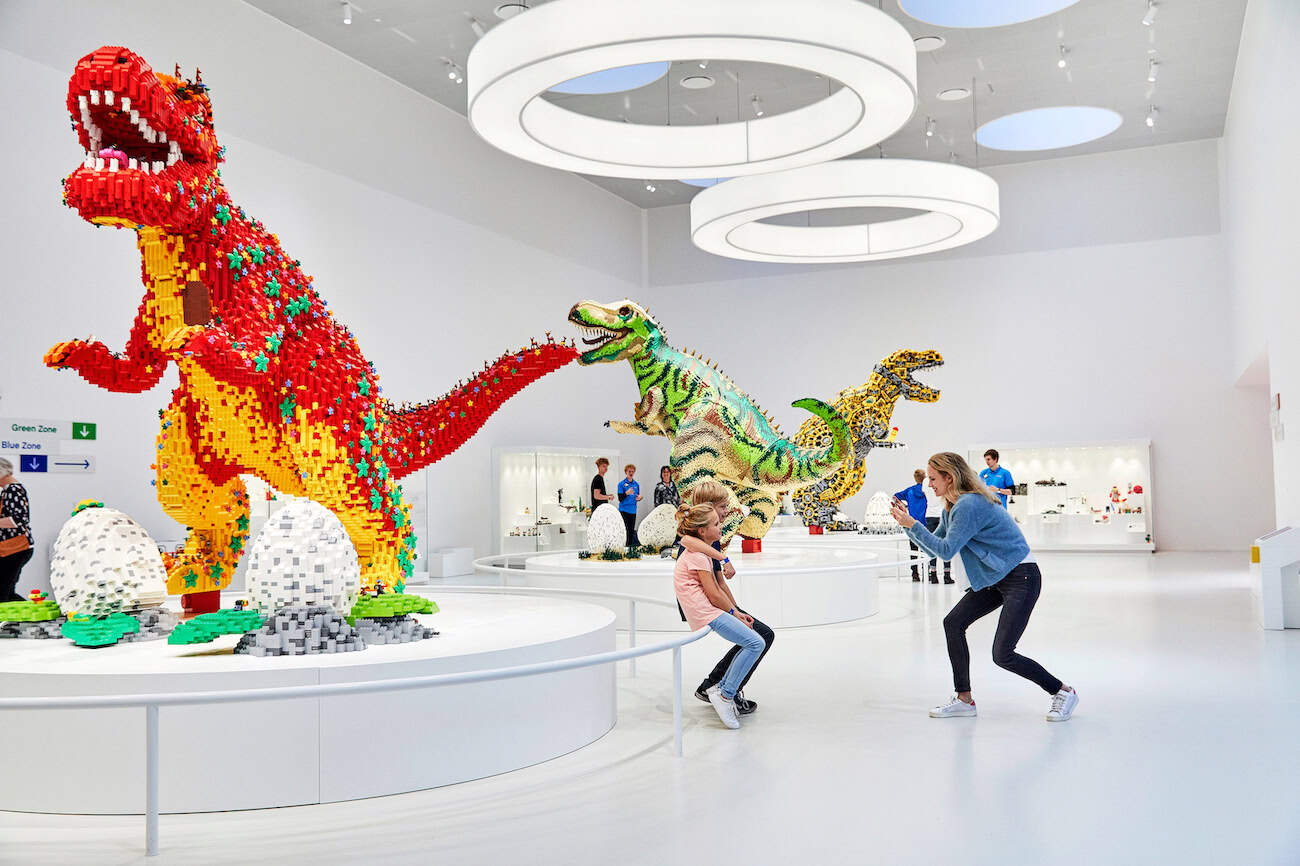
Children here don’t reach for devices – they reach for bricks. At Lego House in Billund, Denmark, my three-year-old kneels in front of a tumbling rainbow waterfall of blocks, fully absorbed in the creation of a Duplo mansion. Nearby, my six-year-old works on a Lego electric vehicle charging station, calm and content, focusing intently.

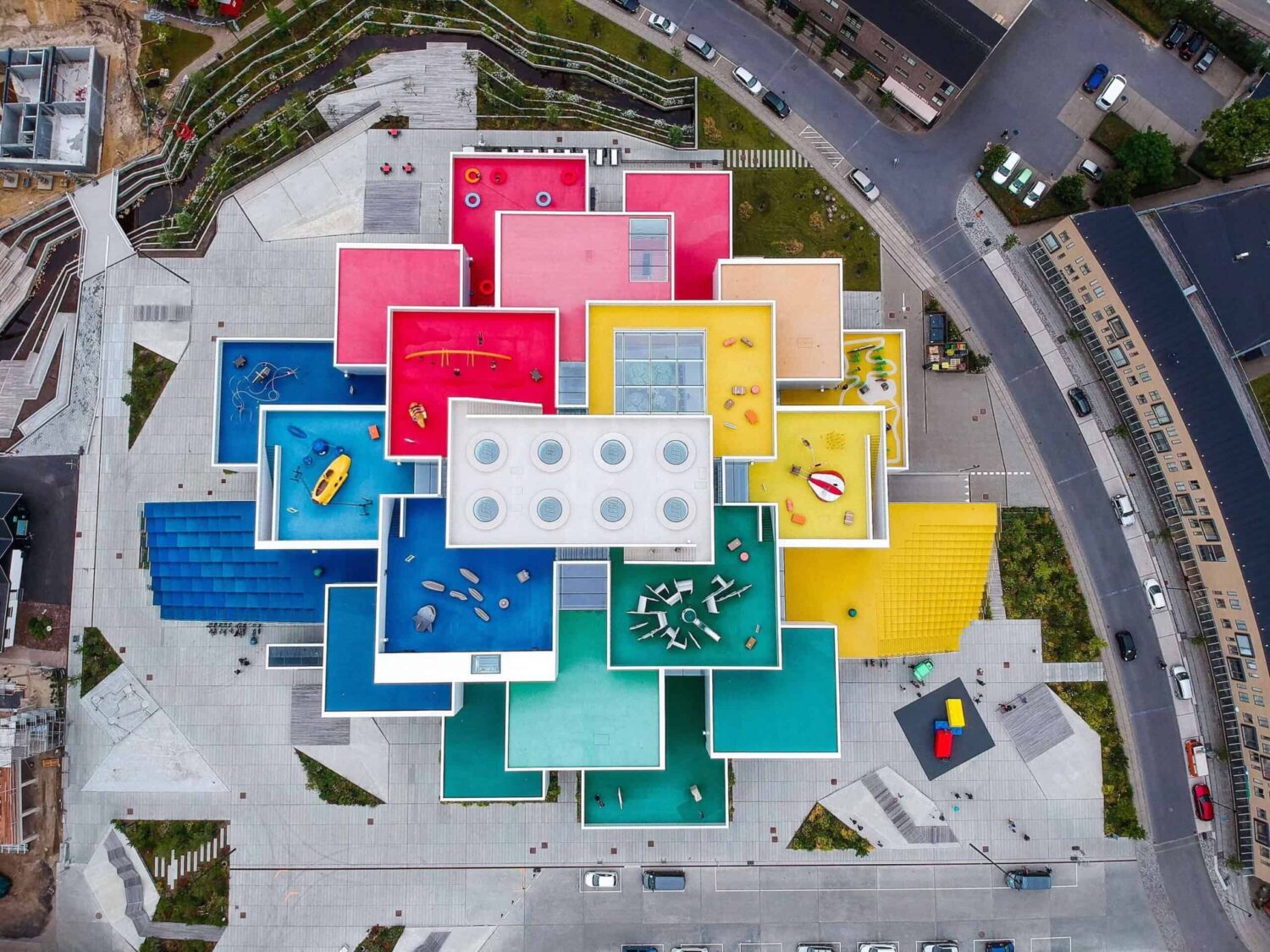
Lego House – a stone’s throw from the bustling Legoland theme park resort – is a sprawling temple to play. Part museum, part playground, it’s filled with 25m bricks and hands-on building zones that are designed for kids and adults alike. You can create and test Lego vehicles on ramps and tracks, make Lego flowers and ‘plant’ them into a shared creation garden. You can even order your lunch via mini Lego models that get scanned at your table; the meals arrive down a spiralling turquoise conveyor belt, presented by Robert and Roberta the robots. The building’s striking stacked-block structure and crisp white walls are designed to make the world-famous bricks stand out to maximum eye-popping effect.

Advertisement

In this room at least, there are no screens, no notifications, just the delicate rattle of pieces, and quiet concentration. In a world where our indoor environments are dominated by devices, it strikes me as unusual, even radical. And, as Denmark announces plans to restrict children’s access to social media, the country’s experiments with unplugged play – from Lego bricks to fairy tales – feel more urgent, and complex, than ever.

Advertisement

Since the company was founded in 1932, just metres away from where Lego House sits today, Lego has rooted its ethos in the concept of det gode leg – ‘good play’ – the idea that children learn best when they’re free to follow their curiosity, test ideas and make mistakes. The name Lego is itself clipped from the Danish leg godt, ‘play well’.

As we drive through the Jutland peninsula and on to the island of Funen, I’m reminded that this is a country where play is considered a tool for resilience. Imagination is almost a national virtue. Forest kindergartens, where Danish children spend their days climbing trees and building shelters, sit alongside degree-trained pædagoger, who specialise in nurturing curiosity rather than drilling phonics.

There are play-focused after-school clubs, maker-space libraries that offer everything from prototyping labs to woodworking and welding workshops, and a workplace culture that appears, at least, to put hygge and imagination on a par with productivity.

Advertisement

Lego House in Billund, Denmark, is part museum and part interactive playground. Image: Lego House

Even the national curriculum leans into this ethos, legally embedding play and experimentation as the foundation of early learning. It all adds up to a quiet assertion that imagination is something worth protecting.

Prof Helle Marie Skovbjerg, an expert on play and childhood at Design School Kolding, is among those exploring this national obsession. Genuine play, Skovbjerg says, must be allowed to unfold freely on its own terms, rather than as a tool for learning or even, shudder, preparing kids for a future jobs market. Play, she insists, is a “state of being” – a mood that opens us up to others and to new meaning.

Advertisement

So what can we learn from the ‘homeland of play’? Is this just quaint nostalgia packaged up to the tune, in Lego’s case, of profits of £1.6bn in 2024? Or could it be a deliberate counter-model to screen-saturated childhoods elsewhere?

Lego has rooted its ethos in the concept of det gode leg – ‘good play’ – the idea that children learn best when they’re free to follow their curiosity, test ideas and make mistakes

Advertisement

Someone who didn’t have to compete with the pull of screens in his time was Hans Christian Andersen, author of classic fairy tales including The Little Mermaid, The Princess and the Pea and The Snow Queen. Andersen was born into poverty in the city of Odense, but while he lacked in material terms, his imagination ran in wild and inexhaustible supply. A poor boy overcoming trials and tribulations to become world-famous, his biography is like a fairy tale in itself.

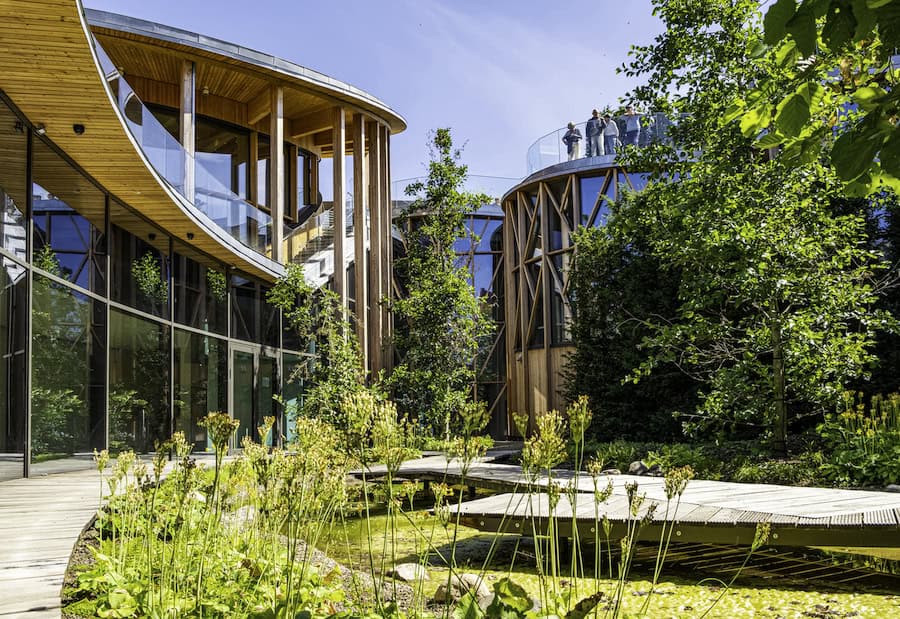
As well as his experimental, boundary-pushing writing style – childlike wonder meets surreal dread, surface-sweet, often sharp underneath – Andersen also drew and made papercuts and picture books. His weird and wonderful world is conjured up beautifully at Hans Christian Andersen’s House, a museum designed by Japanese architects Kengo Kuma and Associates, which opened in Odense in 2021. Here, you can summon the swans from The Ugly Duckling with a wave of your arms, use a special mirror to ‘try on’ ornate kimonos and enter the garden of giants, where even the tallest guest can feel as tiny as Thumbelina.

This is a country where play is considered a tool for resilience. Imagination is almost a national virtue

His life and work are woven together in a magically trippy way. As Henrik Lübker from the museum puts it: “H.C. Andersen’s House does not talk about H.C. Andersen – it speaks as H.C. Andersen.”

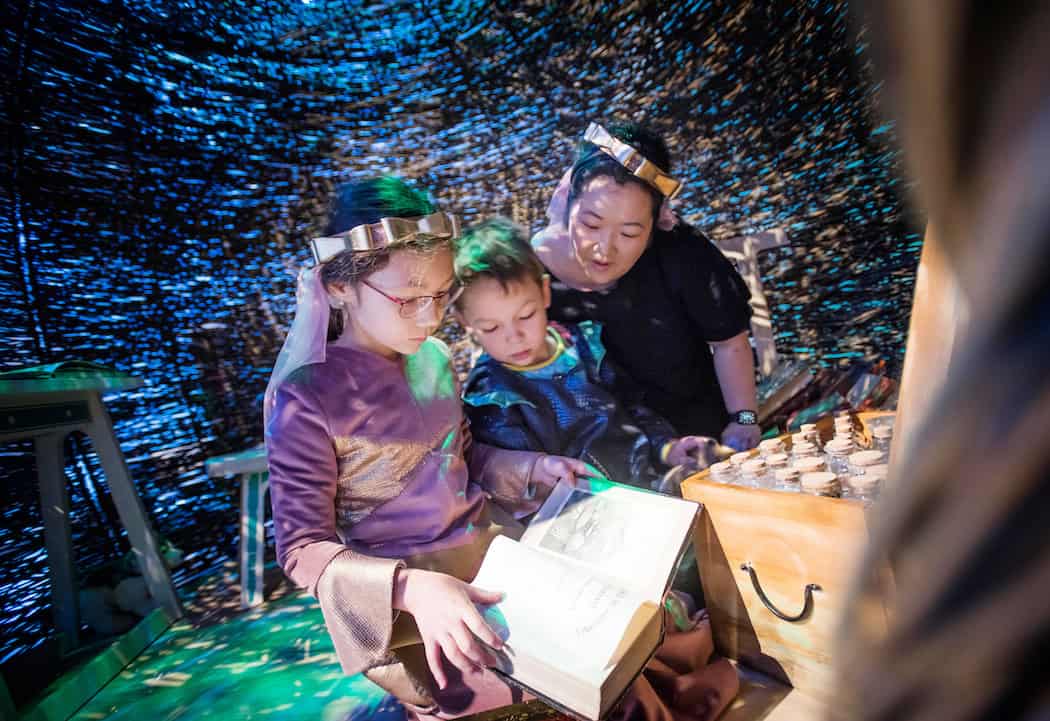
But for families, the standout feature of this most un-museum-like museum is Ville Vau in the basement. The name of this make-believe land, taken from one of Andersen’s children’s song books, has no literal meaning, but to borrow a famous Danish slogan, it’s probably the best make-believe centre in the world.

Advertisement

There are multiple zones, including a little town with shop fronts, a palace and a horse-drawn carriage. Huge tactile fabric pebbles sit alongside brimming baskets of pretend food and racks and racks of gleaming dress-up outfits, headwear and jewellery. It’s less ‘Look but don’t touch’ and more ‘Look and touch everything and dive with total imaginative abandon into your own stories and games until your parents literally drag you out at closing time’.

The space is dimly lit, which makes it feel mysterious and a little bit thrilling, everything is unapologetically child-height and best of all, created to top-tier theatrical production-level quality. You won’t find any shoddy polyester Disney princess costumes here, more like embroidered linen polka dot tunics in multiple size options and painstakingly crocheted Danish pastries in the make-believe bakery. My children are in heaven.

Advertisement

“It often feels to me as if every fence, every little flower says, ‘take a look at me, and my story will unfold within you,’” wrote Andersen. Aside from being amid mud, stones and sticks in nature, this is one of the spaces I’ve been in with my children where that sense of creative stimulation and flow has felt most alive. As if the stories themselves are pressing to be discovered.

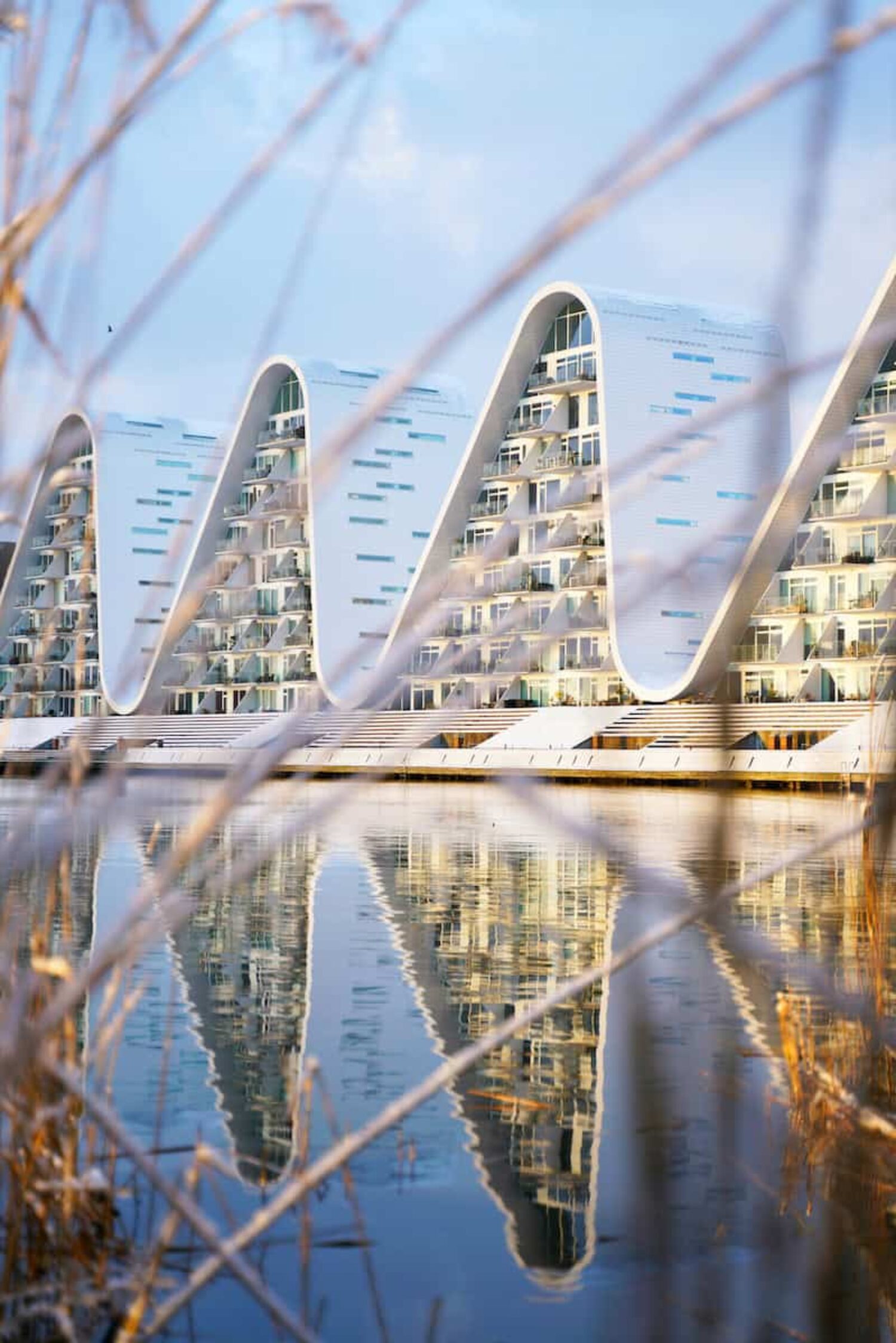
We travel on to the city of Vejle, where the graceful curls of the Bølgen apartment complex rise like liquid waves against the fjord. The kids haven’t watched (or asked for) any TV all week and their dad and I have been reaching for our phones less too. I’m thinking about how hollow the ready-made narratives offered by screens can feel. On the opposite end of the scale, I’m reminded about how my partner manages to summon up some fantastical, obscure characters from the depths of his tired brain at bedtime, rewarded by the rich closeness of a shared story.

Waves etched in concrete – the Bølgen complex in Vejle rises over the fjord. Image: Morten Elsborg

Advertisement

I’m grateful for Denmark’s reminders to take time to create alongside, or with, our children.

Neuroscientist Ruth Feldman published research in 2012 about how coordinated play between parent and a child releases oxytocin simultaneously in both. Her work showed that music, art and other tactile activities trigger this faster than verbal affirmation – helping to explain why creative sessions can shift a child’s mood quicker than lectures or advice. Their nervous system literally feels a sense of safety through creation. On the other hand, what does it say to their neural networks if we’re constantly clutching our phones? That danger could strike at any moment, we ‘might’ need to be ready.

You may well be sceptical about Denmark’s utopian promises. After all, the country has recently made headlines over immigration debates, housing shortages and tax controversies to mention a few, but some people here seem to understand the slow, quiet work that’s needed to create stories.

Advertisement

It’s making me think that imagination isn’t a luxury but a skill nurtured slowly, in playful moments: tinkering with bricks, in a fleeting fairytale corner of a museum. Perhaps we don’t need a Danish blueprint to reclaim it – just permission to let curiosity lead, to follow ideas wherever they tumble, and to remember that the most magical inventions often start with nothing more than a child kneeling on the floor, lost in play.

Unplugged inspiration: three more Danish detours to fire up your imagination

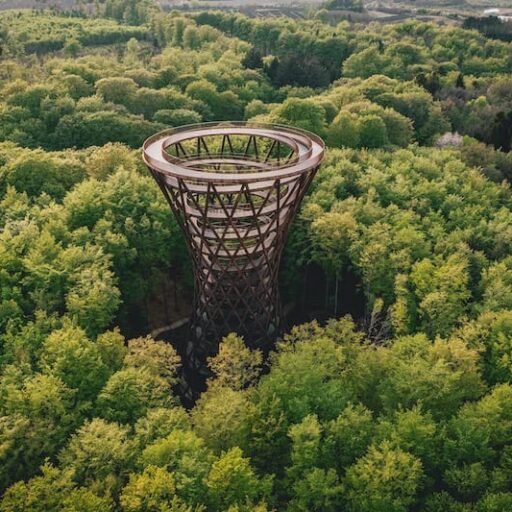
1) Forest Tower (Skovtårnet), near Copenhagen
Advertisement

A slow-rising spiral through the treetops of the Gisselfeld Castle’s forest, the Forest Tower turns a simple walk into a theatrical ascent. As visitors circle higher, the canopy thins and the structure’s form becomes more apparent, the architecture interacting with its surroundings. This is Danish creative problem-solving in practice: using design to frame nature in new ways and encourage visitors to notice familiar environments differently.

Image: Mads Tolstrup

Advertisement
2) Restaurant Remouladen, Vejle

Restaurant Remouladen serves Danish open sandwiches (smørrebrød) and simple mains built around traditional local ingredients. Recent dishes include yuzu-marinated herring on malt rye with daikon and grilled spidskål (pointed cabbage) with poached egg, cashew hummus and mixed greens. The kitchen captures how Danish cooking can evolve without losing its roots.

Image: Remouladen


Advertisement
3) Økolariet, Vejle

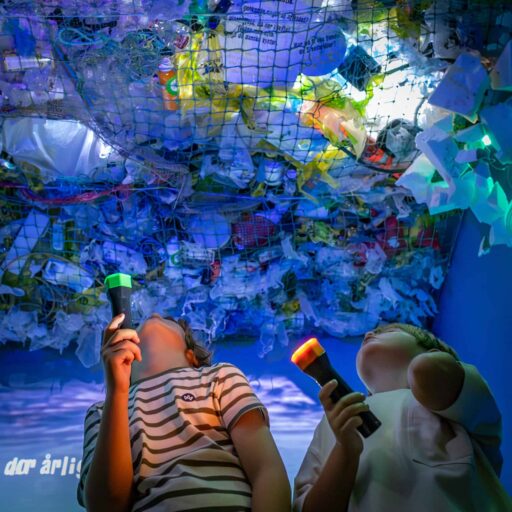
In Vejle, Økolariet is a hands-on sustainability centre where visitors can experiment and explore environmental issues in playful, unexpected ways. Generate energy with mini wind turbines, test water quality with simple kits, or watch food waste turn into compost. Økolariet makes climate action tangible and immediate, showing that learning can come from doing, not lecturing.

Advertisement

Image: Økolariet


Advertisement

Main image: Lego House 

Travel to and from Denmark, accommodation, attraction entry fees and meals were partly covered by VisitDenmark 

Advertisement

Support solutions in 2026

At Positive News, we’re not chasing clicks or profits for media moguls – we’re here to serve you and have a positive social impact. We can’t do this unless enough people like you choose to support our journalism.

Give once from just £1, or join 1,800+ others who contribute an average of £3 or more per month. Together, we can build a healthier form of media – one that focuses on solutions, progress and possibilities, and empowers people to create positive change.

Support Positive News

Advertisement

Source link

Continue Reading
Click to comment

Leave a Reply

Your email address will not be published. Required fields are marked *

NewsBeat

Starmer brands Mandelson a ‘liar who betrayed Britain’ as King axes disgraced peer from Privy Council

Published

on

Starmer brands Mandelson a 'liar who betrayed Britain' as King axes disgraced peer from Privy Council

On the Mandelson scandal, Mr Streeting told Sky News: “I suspect that not just my colleagues in this Government, but people down the generations, whether in Labour governments, Conservative governments, coalition governments, have all experienced that same sensation of our jaws hitting the floor.

Source link

Continue Reading

NewsBeat

Peter Mandelson ‘Betrayed’ Britain, Keir Starmer Says In Tense PMQs

Published

on

Peter Mandelson 'Betrayed' Britain, Keir Starmer Says In Tense PMQs

Keir Starmer has accused Peter Mandelson of “betraying” Britain over his friendship with convicted paedophile Jeffrey Epstein.

The prime minister admitted that he was aware the pair had maintained contact before appointing him the UK’s ambassador to Washington – and that he now “regrets” giving him the plum diplomatic job.

Starmer said Mandelson had “lied repeatedly” about the extent of his friendship with Epstein while he was being vetted for the role.

Mandelson is now facing a criminal investigation over allegations he shared market sensitive information with Epstein when he was business secretary in Gordon Brown’s government between 2008 and 2010.

Advertisement

“To learn that there was a cabinet minister leaking sensitive information at the height of the response to the 2008 crash is beyond infuriating,” Starmer said at prime minister’s questions.

“I am as angry as the public and any member of this house. Mandelson betrayed our country, our parliament and my party.

“He lied repeatedly to my team when asked about his relationship with Epstein before and during his tenure as ambassador.

“I regret appointing him. If I knew then what I know now, he wouldn’t have been anywhere near government.

Advertisement

“The cabinet secretary with my support took the decision to refer the material to the police and there is now a criminal investigation.”

The prime minister said he had asked officials to draft legislation to strip Mandelson of his title too, and “wider legislation” to remove disgraced peers.

He added that he agreed with the King to remove Mandelson from the list of privy counsellors “on the grounds that he has brought the reputation of the privy council into disrepute.”

Starmer said: “He is responsible for a litany of deceit.”

Advertisement

When asked about just how much No.10 knew about Mandelson’s friendship with Epstein before the ambassador appointment, the PM said: “What was not known was the depth, the sheer depth and the extent of the relationship.

“He lied about that to everyone for years, and new information was published in September showing the relationship was materially different from what we’d been led to believe. When the new information came to light, I sacked him …

“So I can be totally open with the house, I should also disclose that the Metropolitan police have been in touch with my office this morning to raise issues about anything that would prejudice their investigations. We’re in discussion with them about that, and I hope to be able to update the house, but I do think I should make that clear.”

Mandelson was sacked as ambassador when it emerged he had continued his friendship with Epstein after the disgraced financier was convicted of soliciting underage sex back in September.

Advertisement

The US Department of Justice released more than three million documents detailing Epstein’s personal correspondence with elite figures around the world at the weekend.

Mandelson quit the Labour Party on Sunday to avoid “further embarrassment” and then decided to step down from the House of Lords on Tuesday, though that does not automatically mean he loses his title.

Source link

Advertisement
Continue Reading

NewsBeat

Poet laureate’s new work for Yorkshire Cancer Research

Published

on

Poet laureate's new work for Yorkshire Cancer Research

Darren Pattie, from Poppleton, shared his story with poet Simon Armitage who said he was “very moved” by the experience.

Simon, who was appointed poet laureate by Queen Elizabeth in 2019, was asked to pen the poem by Yorkshire Cancer Research for World Cancer Day on Tuesday (February 4).

The poem, titled The Campaign, uses the stories of 17 people affected by cancer from Yorkshire to highlight a century of progress in cancer prevention, diagnosis and treatment, while acknowledging the work still needed to create a cancer-free future in the county.

Its release comes after people from across Yorkshire united for the cancer charity’s White Rose campaign, calling on the government to address the region’s long-standing cancer inequalities in its upcoming National Cancer Plan.

Advertisement

Darren was among the more than 2,700 people across Yorkshire to sign up to the campaign and send a white rose, the region’s emblem, to London last summer.

The 59-year-old underwent chemotherapy and a stem cell transplant at St James’s University Hospital in Leeds for a rare blood cancer.

His wife, Sarah, travelled to Manchester for treatment for her own rare neuroendocrine tumours.

“There are serious imbalances in access to cancer treatment across our region,” Darren said. “I feel lucky I was able to travel for mine, but because Yorkshire has many large remote areas, not everyone is able to benefit from the treatment they need.”

Advertisement

Recommended reading:


Simon said it was “saddening to hear experiences of illness and bereavement” when he met with the people who shaped the poem at the Yorkshire Cancer Research Centre in Harrogate.

“I felt very moved by their experiences,” the poet said. “It was also a privilege to listen to testimonies of determination, resilience and hope, and to learn about how Yorkshire Cancer Research has given people a positive focus in their lives.” 

He said the poem “ran with the idea of cancer as an ‘enemy’ that must be tackled through ingenuity, decades of research and painstaking discovery”. “Cancer is also a dragon in the mind, demanding a certain bloody-mindedness – a true Yorkshire characteristic – to overcome this shadow and threat to our daily lives,” said Simon, from Huddersfield.

Advertisement

Poet laureate Simon Armitage with Kathryn Scott, chief executive at Yorkshire Cancer Research (Image: Yorkshire Cancer Research)

Kathryn Scott, chief executive at Yorkshire Cancer Research, said it was a “privilege” to work with the poet laureate.

“Simon’s words capture the spirit of Yorkshire – its resilience, generosity and determination – and gives voice to a century of breakthroughs driven by people in our region, whose efforts have saved countless lives around the world,” Kathryn said. 

“As we look to the future, the poem serves as a powerful reminder of why the charity began this mission and why we must keep moving forward to bring more cancer cures to Yorkshire. Together, we will continue to make great progress toward a Yorkshire free from cancer.”

For more information about poet laureate Simon Armitage’s The Campaign, visit: https://www.ycr.org.uk/TheCampaign 

Advertisement

Source link

Continue Reading

NewsBeat

Climate ‘fingerprints’ mark human activity from the top of the atmosphere to the bottom of the ocean

Published

on

Climate ‘fingerprints’ mark human activity from the top of the atmosphere to the bottom of the ocean

The world is warming. This fact is most often discussed for the Earth’s surface, where we live. But the climate is also changing from the top of the atmosphere to the bottom of the ocean. And there is a clear fingerprint of humanity’s role in causing these changes through greenhouse gas emissions, primarily from burning fossil fuels.

Over the last several decades, satellites have monitored the Earth and measured how much heat enters and leaves the atmosphere. Over that time, as greenhouse gas concentrations have increased in the atmosphere, there has been less heat escaping to space, causing an imbalance with more heat being retained.

The consequence is a rapidly heating planet.

The “warming stripes” are one striking and simple way of visually highlighting the resulting variations in Earth’s surface temperature using shades of blue and red for cool and warm, with one stripe per year.

Advertisement

One billion individual measurements of a thermometer combine to produce the clearest picture of our warming planet from 1850 to 2025. The last 11 years have been the warmest 11 years on record and this sequence is unlikely to end anytime soon.

Warming stripes representing changes in global average surface temperatures from 1850 to 2025.
Ed Hawkins / University of Reading, CC BY

We recently extended this concept upwards through the atmosphere and downwards into the ocean, although the available datasets are shorter.

Satellites have monitored the temperature of different layers of the atmosphere since 1979. The warming stripes for the troposphere (the lowest layers of the atmosphere, within which commercial flights operate) are very similar to the warming stripes of the surface, with the warmest years predominantly occurring over the last decade. Instead of using surface temperature measurements from thermometers, the atmospheric temperature is measured by instruments on satellites called radiometers that detect how much infrared radiation is emitted from air molecules. These satellite-based estimates help corroborate the surface warming that we have already observed.

Higher up in the atmosphere, the picture changes.

Advertisement

The warming stripes over the upper atmosphere (the part called the stratosphere that’s above typical airline cruising height) reveal a cooling trend, with the warmest years around 1980 and the coolest years over the past decade. This feature may appear surprising. If the atmosphere is gaining heat, shouldn’t the stratosphere be warming too?

Actually, this feature is a clear fingerprint of how human activities are the direct cause of our changing climate.

Global temperature change from the top of the atmosphere to the bottom of the ocean.
Ed Hawkins / University of Reading, CC BY

Why is there this pattern of temperature change? The concentrations of greenhouse gases have increased throughout the atmosphere, making the atmosphere more efficient at absorbing and giving off heat. In the lower atmosphere, this effect acts as a blanket, retaining more heat and warming the surface.

Higher up, where the air is thin and very little heat arrives from below, extra carbon dioxide allows the stratosphere to lose more heat to space than it gains, so the stratosphere cools. Another factor is the destruction of stratospheric ozone by substances known as chlorofluorocarbons (CFCs), which produces cooling in the lower stratosphere.

Advertisement

This human-caused fingerprint of a warming troposphere and cooling stratosphere was first suggested by scientists as a consequence of increasing atmospheric carbon dioxide levels in the 1960s, long before the cooling stratosphere was observed. Importantly, this pattern would not be seen if, for example, changes in the sun’s brightness were the primary cause of global warming, which instead would lead to warming throughout the atmosphere.

Beneath the surface

Warming stripes for different depth levels in the ocean reveal a broadly similar warming trend as at the surface, with the warmest years occurring over the past decade. The timing of the warming also suggests the heat moves downwards into the ocean from the surface, again consistent with a human influence.

This uptake of heat by the ocean is important, as otherwise there would be a much greater rise in surface air temperature. Globally, the ocean accounts for around 90% of the extra heat stored by the planet. We also see sea levels rising due to sea water getting warmer and expanding, and because land ice is melting and entering the ocean as extra water.

All these observations tell a very clear story. The burning of fossil fuels increases the amount of greenhouse gases in the atmosphere. The physics of why such an increase should warm the surface was understood in the 1850s, before the warming was observed. And the pattern of change observed from the top of the atmosphere to the bottom of the ocean indicates that greenhouse gas emissions are the dominant cause.

Advertisement

Past and future ‘warning’ stripes showing changes in global temperature for two different choices for the future.
Ed Hawkins / University of Reading, CC BY

But, what happens next? Because our emissions are causing the climate to change, our collective global choices about future emissions matter.

Rapid action to reduce emissions will stabilise global surface temperatures but delayed action means worse consequences. Which choice will we make?


Imagine weekly climate newsletter

Don’t have time to read about climate change as much as you’d like?

Get a weekly roundup in your inbox instead. Every Wednesday, The Conversation’s environment editor writes Imagine, a short email that goes a little deeper into just one climate issue. Join the 47,000+ readers who’ve subscribed so far.


Source link

Advertisement
Continue Reading

NewsBeat

Melania Trump movie fails to crack top 25 as documentary film flops in UK

Published

on

Melania Trump movie fails to crack top 25 as documentary film flops in UK

Melania, the documentary about the US first lady, might have generated a media firestorm, but it has failed to dent the UK box office in its first weekend of release, opening at just No 29.

Brett Ratner’s film amassed £32,974 from 155 cinemas in total, a screen average of £212.80. While the takings are a far cry from the reported $75m (£54.6m) paid by Amazon to distribute and promote the film, it’s not the disaster that was projected.

Ahead of its premiere, UK ticket sales were described as “soft”, according to Tim Richards, the chief executive of Vue, and on the day of release, many screenings across the UK were sparsely attended, with the film even playing to empty rooms in several locations over the weekend. However, some screening rooms, namely in Vue Islington, were booked up and filled with journalists.

Reporters rushed to see the film on Friday (30 January) after Amazon decided not to preview it ahead of time. The Independent attended a near-empty screening at Vue Westfield in Stratford where four other audience members were present, two of whom were reporters.

Advertisement

In the US, the film exceeded predictions on its opening day, grossing $2.9m (£2.1m) from 1,778 cinemas, but was still a flop. It was ultimately beaten at the box office by Iron Lung, an independently financed horror film made by YouTuber Mark Fischbach.

Inspired by the 2022 horror game created by David Szymanski, Iron Lung was made for $3m (£2.1m) and has made $21m (£15.3m) to date – seven times its budget. In the UK, the film reached No 4 at the box office, with takings of £948,731, beating the week’s big release, Jason Statham action film Shelter (£946,903).

Melania follows the 20 days leading up to her husband Donald Trump’s second inauguration in January 2025.

Melania Trump attending premiere of her documentary
Melania Trump attending premiere of her documentary (Getty Images)

Since its release, reviews have been largely negative, with the film sitting at a measly 10 per cent on the platform. However, viewers on the site have given the documentary a 99 percent score, in an apparent demonstration of support for Trump.

In a one-star review for The Independent, Nick Hilton wrote: “Perhaps Melania is merely a piece of post-modern post-entertainment. After all, it is transparently not a documentary.”

Advertisement
Apple TV+ logo

Watch Apple TV+ free for 7 day

New subscribers only. £9.99/mo. after free trial. Plan auto-renews until cancelled.

Try for free

ADVERTISEMENT. If you sign up to this service we will earn commission. This revenue helps to fund journalism across The Independent.

Apple TV+ logo

Watch Apple TV+ free for 7 day

Advertisement

New subscribers only. £9.99/mo. after free trial. Plan auto-renews until cancelled.

Try for free

ADVERTISEMENT. If you sign up to this service we will earn commission. This revenue helps to fund journalism across The Independent.

Hilton continues: “Melania spends most scenes playing a staged version of herself, and shots of the first lady are composed with all the deliberateness Ratner brought to his work on X-Men: The Last Stand. This is somewhere between reality TV and pure fiction.”

Source link

Advertisement
Continue Reading

NewsBeat

Councillors renew calls for banking hub in Stokesley

Published

on

Councillors renew calls for banking hub in Stokesley

Councillors in Stokesley have this week renewed their call for a banking hub in the town, warning that residents and businesses are being left behind as bank branch closures continue across the region.

Liberal Democrat councillors Bryn Griffiths and Chris Johnson spoke out after Santander announced its Northallerton branch would close on May 6.

The Santander branch in Northallerton will close on May 6. Photo: LDRS.

The closure is one of 44 announced by the company.

With Santander’s branch in Stokesley closing last year, its customers will be directed to Darlington or Stockton in future.

Advertisement

The councillors say the situation regarding bank closures has worsened sharply since a banking hub proposal for Stokesley was previously explored and rejected in March 2025.

At this point, the town still had an operating Santander branch and a 24-hour cash machine on the High Street.

Both have since gone.

Cllr Griffiths said: “The closure in Northallerton is shocking news — yet another nail in the coffin for high streets in market towns.

Advertisement

“Yet again, both the public and businesses are being let down by the banks. Banks should not be allowed to close without having a banking hub already in place, to deal with non-cash and face-to-face transactions.”

Banking Hubs are shared facilities funded by major high street banks and delivered through Cash Access UK.

They allow customers of multiple banks to access essential services, including cash withdrawals and deposits and in-person support.

Cllr Johnson raised the need for a banking hub at North Yorkshire Council in December, securing the support of councillors at the Richmond area committee.

Advertisement

He has also visited the Richmond Banking Hub, speaking directly to staff and customers to see how the model works in practice.

He said: “My visit to the Richmond Banking Hub confirmed exactly what we already know — this is the solution Stokesley needs.

Market towns must retain essential services like banking if they are to remain viable.

“We need this Banking Hub and we need it fast. We are working with Stokesley Town Council to drive this forward.”

Advertisement

Source link

Continue Reading

NewsBeat

I tested the Philips OLED+950 TV for a month and the picture quality blew me away

Published

on

I tested the Philips OLED+950 TV for a month and the picture quality blew me away

Picture quality is what Philips is aiming for, and this is one of the best-looking OLED TVs that you can buy. It has an advantage over Samsung, Sony and LG in that it supports both Dolby Vision and HDR10+ formats for great HDR results, regardless of the source. Philips has put extra effort into making scenes come to life with bright highlights and vibrant colours.

There’s support for Filmmaker Mode, which is comfortably watchable on this TV. This can be too dark on some models and I’ve needed the “Movie” Motion Style to remove judder, but the Philips OLED+950 presents this content as the director intended.

The picture processing can push things to be brighter, sharper and, in some cases, ultra-real, through the HDR Crystal Clear mode, which sometimes works and sometimes doesn’t. Crystal Clear offers a cooler picture with brighter highlights and more contrast. I watched Guardians of the Galaxy in this mode and the action jumped off the screen.

Advertisement

Watching sci-fi series The Expanse, highlights were distractingly bright, with details like a white shirt losing all texture. In short, choose the picture mode with care and be prepared to switch, and take advantage of the settings to control how you want the picture to look.

There’s loads of contrast with great handling of dark scenes. It’s great for daytime viewing, with an effective anti-reflective finish to the screen, just not quite as good as Samsung’s glare-killing matte finish on its top TVs.

Both HDR and SDR (like broadcast TV) look excellent, with skilled upscaling of lower quality content.


Sound

Score: 8/10

Advertisement

Source link

Continue Reading

NewsBeat

Tickets for ‘sold-out’ Premier League Darts in Belfast being touted online for 10 times face value

Published

on

Belfast Live

Standard tickets closer to the stage have appeared on resale sites like StubHub and Viagogo for up to £850 each for the SSE Arena event at the end of February

Tickets for the sellout BetMGM Premier League Darts event at the SSE Arena in Belfast later this month are being sold for up to £850 each on resale platforms online.

Advertisement

World champion Luke Littler will aim to take the Premier League title from Luke Humphries this year, with the Belfast leg of the tournament to be held on February 26th.

Tickets for the event sold out during the pre-sale period three months ago, and fans wishing to either purchase or re-sell tickets can do so via official Ticketmaster resale.

Standard tickets were originally sold for between £50-£83 for the event but were snapped up fast. At the time of publication, no tickets for the Belfast event are available on the official Ticketmaster resale platform. The only tickets left officially are hospitality tickets which start at £299. That includes pre-show hospitality, dining, and meet and greet with players at Titanic Belfast.

However, regular tickets are now available on resale platforms like StubHub and Viagogo for eye-watering prices.

Stageside tickets can be bought on StubHub for £847, that is at a table in row four. There are also tickets available in the same site elsewhere in the arena for £489 each.

The prices on Viagogo are slightly cheaper but still up to 10 times over their face value. Viagogo have ‘front row’ tickets priced at £647, with only a handful remaining. Tickets dotted all around the arena on their site are priced anywhere from £174 to £313 each.

Late last year, the UK government began implementing legislation to make it illegal to resell tickets for live events for more than their original face value, including capping service fees on resale platforms. According to GOV.UK, tickets can only be sold for their original cost plus unavoidable fees.

Advertisement

The Professional Darts Corporation (PDC) don’t make any comment around specific tickets but they do have a policy of cancelling tickets that can be identified if they are being resold above face value. Those are then placed back on general sale.

That happened extensively around the World Championship and recent World Masters. However, the process of identifying tickets is difficult and not helped by the resale platforms.

“The PDC only sells tickets directly through its official outlets and warns against purchasing from other sources, however official they claim to be,” say the PDC. “Tickets are sold subject to terms and conditions, which include agreement by buyers that tickets will not be re-sold whether at face value or otherwise.

Advertisement

“The PDC shall be entitled to cancel any tickets that have been re-sold or offered for re-sale. The PDC therefore cautions purchasers of re-sold tickets that they may be denied entry into events.

“The PDC shall be entitled to blacklist any ticket holders found to have re-sold tickets or to have offered tickets for re-sale. The relevant individual’s details may be circulated to all PDC official ticket offices. In appropriate circumstances, details may be passed to the Police.

“We welcome reports of tickets that are being offered for sale through third-parties so that we can ensure that tickets are sold through the correct channels and that tickets on re-sale are removed from sale immediately.”

The PDC added: “Receipts from tickets which are re-sold by the PDC through official channels will be donated to charities and good causes through the Matchroom Sport Foundation.”

Advertisement

As well as the official Ticketmaster resale platform, PDC ticketing partner SeeTickets also has a genuine fan-to-fan resale option where tickets can only be sold within face value and are linked to an original booking.

Click here to sign up to our sport newsletter, bringing you the latest sports news, headlines and top stories

Source link

Advertisement
Continue Reading

NewsBeat

Lloyds Bank tells savers ‘fastest’ ways to lower bills now and says cut two things

Published

on

Daily Mirror

Lloyds Bank has shared money saving tips and finance tools that could help people build their savings faster

Lloyds Bank provides straightforward financial tools and a range of tips that could transform people’s approach to cutting bills and to saving. The banking giant even suggests that one particular strategy is the ‘fastest way’ to accumulate savings, potentially delivering greater peace of mind through a more substantial nest egg.

Advertisement

In a blog, Lloyds Bank explains: “There might be many reasons why you may want to save money quickly. You might want the security of a larger savings pot or have a significant purchase on the horizon.

“The fastest way to save money is to resist those purchases of non-essential items. There are some things that simply can’t be avoided, meaning it can be harder than ever to put money into savings. That said, there’s still a few things you can do to cut down on your monthly outgoings.”

Within its advice on ‘helpful money savings tips and tools’, the bank emphasises that establishing a savings strategy is an essential initial step towards understanding your spending habits. Reviewing bank statements and identifying common patterns is a helpful approach, covering everything from large expenses like mortgages to smaller costs like morning coffee.

Advertisement

Using one of Lloyds Bank’s Savings Calculators may then help you identify where you could save and how much you will need to reach your financial goals. For instance, one of its tools lets users calculate a realistic savings timeline, while another helps you determine what may work for an emergency fund, according to the Mirror.

The bank goes on to explain that implementing minor yet significant lifestyle adjustments could further boost these savings. Importantly, this might involve planning meals ahead, verifying your benefit entitlements, or ditching subscriptions you no longer need.

It highlights two things in particular you may be able to cut back on. “Cancelling subscriptions you no longer use or could do without can be a quick way to save money,” the bank’s advice continues. “Maybe you haven’t logged into a streaming service in months? Or still receive a monthly delivery of lunchtime snacks you no longer want?

Advertisement

“The subscription management tool in our mobile banking app gives you more control over these types of payment.” To learn more about Lloyds Bank’s saving tips, visit its website by clicking here.

Could I be eligible for benefits?

The UK Government’s website explains that several free, anonymous benefits calculators are available, enabling people to check what they may be entitled to. This could give you an estimate of:

  • The benefits you could get
  • How much your benefit payments could be
  • How your benefits will be affected if you start work or increase your hours
  • How your benefits will be affected if your circumstances change – for example, if you have a child or move in with your partner

The Government recommends that people make use of the following calculators:

For more information, you can also visit GOV.UK here.

For the latest money-saving tips, shopping and consumer news, go to the new Everything Money website

Advertisement

Source link

Continue Reading

NewsBeat

Anas Sarwar accuses Stephen Flynn of ‘disgusting’ attack in row over Labour MSP’s friendship with paedophile

Published

on

Daily Record

The Scottish Labour leader accused Flynn of a “disgusting attack” and said his actions stood in contrast with the Nationalists when it came to dealing with former MP Patrick Grady.

Anas Sarwar has launched a blistering attack on Stephen Flynn after the SNP leader at Westminster questioned why a Labour MSP has not lost the party whip over her friendship with a serial paedophile.

Advertisement

Pam Duncan-Glancy lost her shadow cabinet role in December and will stand down from Holyrood next month after the Record revealed she had continued her friendship with ex-councillor Sean Morton after his conviction for possessing indecent images of children.

Flynn today demanded action from Sarwar after criticism of the Prime Minister for not acting sooner on the scandal of Lord Mandelson’s ties to paedophile Jeffrey Epstein.

The SNP MP said: “Pam Duncan-Glancy should not be a member of the Labour Party, nor a member of the Scottish Parliament. Just like Keir Starmer, Anas Sarwar has shown a chronic lack of judgement, and leadership.”

Sarwar accused Flynn of a “disgusting attack” and said his actions stood in contrast with the Nationalists over the behaviour of former SNP MP Patrick Grady.

Advertisement

The Scottish Labour leader was pressed on the issue during a press conference in Pollok today where he repeated his calls for a social media ban for kids under the age of 16.

Asked by the Record if his message on kids’ safety was credible, given Duncan-Glancy remained a Labour MSP, Sarwar said: “Let’s take the actions I’ve taken, with the actions of other parties who try and throw mud.

READ MORE: Criminals to walk free from Scots prisons after serving just 30% of sentence under ‘dangerous’ SNP planREAD MORE: SNP Government orders investigation into safety levels at scandal-hit hospital

“The bottom line here is – Pam Duncan-Glancy should not have maintained that relationship. She did not give me answers I felt were good enough, that’s why she’s no longer a member of the shadow cabinet, and why she’s no longer a candidate. She will remain an MSP for a matter of weeks.”

Advertisement

Asked if the only reason he was not removing Duncan-Glancy from the party was because Parliament will rise next month, Sarwar continued: “I think the robust approach is very clear. It’s very clear to Pam Duncan-Glancy. I think it’s very clear to our existing MSPs. I think it’s very to our candidates.

“I will not tolerate friendships with paedophiles. I do not want anyone to be associated with anyone like that. The contrast I am making is the approach I take, with the approach the SNP takes. They have one rule, and one standard for everybody else, but try and throw muck at other political parties.

“Pam Duncan-Glancy did not give me answers I was satisfied with. She did not break any laws, I think it is important to stress that. But she did not give me the answers I was satisfied with, and she clearly had made a huge error of judgement.

“That’s why she’s no longer a member of the shadow cabinet, that is why she is not candidate, and she will be an MSP for a matter of six or seven weeks.

Advertisement

“Contrast that with the actions – and I will direct this at Stephen Flynn, but also other members of the SNP. He wants to shamefully use the crimes of Jeffrey Epstein, who abused women and clearly abused positions of power, to try and make comparisons with the situation with Pam Duncan-Glancy. It’s frankly disgusting and beneath him.

“Let’s contrast my actions with Stephen Flynn’s actions. Pam Duncan-Glancy is no longer a member of the shadow cabinet. They stood by and defended someone who was found guilty by (House of Commons) Standards for sexual offences – Patrick Grady.

“If he wants to question my actions and my judgement, I think he needs to seriously question his own actions and judgement.”

Advertisement

The SNP restored the whip to Glasgow MP Grady in 2022 following his suspension for making a sexual advance to a teenage member of staff.

Grady was given a two-day ban from the Commons in June after a panel ruled he had engaged in “unwanted physical touching”.

At the time, he told MPs he was “profoundly sorry” for his behaviour at a social event in 2016.

To sign up to the Daily Record Politics newsletter, click here

Advertisement

Source link

Continue Reading

Trending

Copyright © 2025