Throughout 1,460 days of the Ukraine war, two figures have remained central.
The decisions made by Ukraine’s Volodymyr Zelenskyy and Russia’s Vladimir Putin, their leadership styles, and their standing on the international stage have shaped a conflict soon entering its fifth year.
But how have the war’s two central figures changed in the past four years?
Sky News has explored each leader’s domestic and global image, as well as how the conflict has shaped them personally, in this piece.
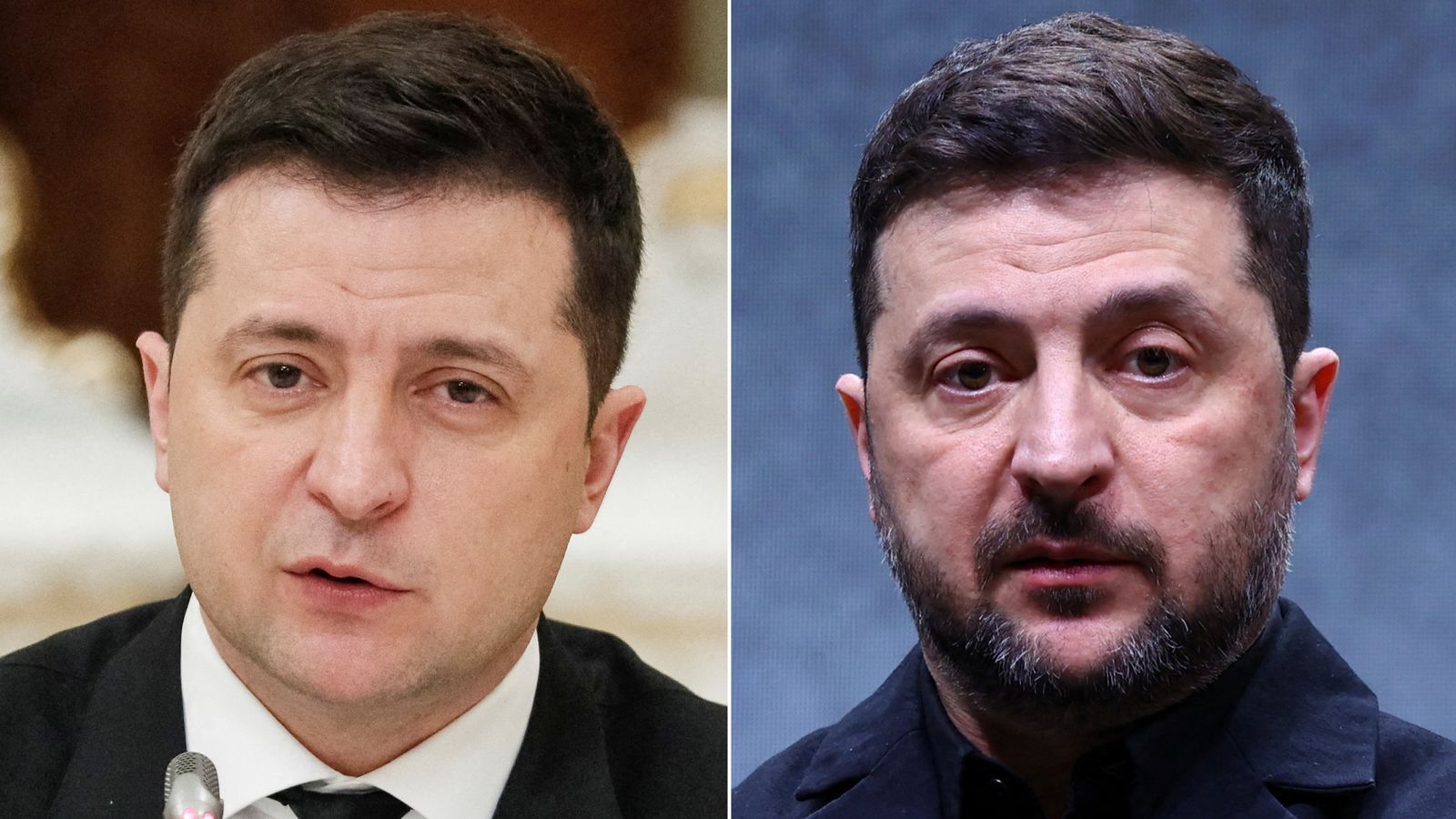
Mr Zelenskyy has undergone one of the most dramatic image transformations of any contemporary leader in the past four years, going from a relatively inexperienced president to a central symbol of resistance and democratic defiance.
While his background in acting made his rise to Ukraine’s highest office an unlikely one, Mr Zelenskyy fit the presidential mould in his early years, at least in appearance.
Advertisement
Often seen clean-shaven and suited, images of Ukraine’s leader from before the full-scale Russian invasion in 2022 now make him appear boyish compared to the hardened wartime leader of 2026.
Mr Zelenskyy is now rarely spotted in anything other than military fatigues, something that famously irked Donald Trump when he hosted the Ukrainian president for a disastrous meeting at the White House last year.
Zelenskyy at home
Domestically, the 2022 invasion saw Mr Zelenskyy experience an initial surge in approval and trust as Ukrainians rallied behind their leader.
Advertisement
His decision to stay in Kyiv and lead from the capital, even after offers to evacuate for his own safety, became symbolic of Ukrainian resistance, enhancing his credibility and sense of purpose.
“The fight is here; I need ammunition, not a ride,” he reportedly told US officials as Russia’s 35-mile armoured convoy closed in on the capital.
February 2022: Zelenskyy says he’s staying in Kyiv as his country comes under Russian attack
From that moment on, Mr Zelenskyy has remained a central unifying figure in Ukraine, providing nightly video updates to inform and rally his people and making visits to frontline towns to inspire his troops.
Mr Zelenskyy’s global standing skyrocketed after 2022. He became not just Ukraine’s leader but the face of its diplomatic effort, repeatedly addressing parliaments, world leaders and public audiences to sustain foreign support.
By framing the war with Russia as a broader struggle between democracy and authoritarianism, Ukraine’s president positioned his country on the world stage as defending both European and Western values.
Advertisement
He’s been successful in his repeated attempts to bring financial and military support to Ukraine and maintained working relationships with key allies throughout the war. He even wrestled Donald Trump back from the brink after their disastrous White House meeting last February.
Advertisement
Sky’s David Blevins takes us through the Ukrainian and US presidents’ meeting at the White House
Outside questions remain – largely from Europe – over Mr Zelenskyy’s ability to tackle corruption at home, while his reputation in Russia has remained negative, but his image on the world stage overall remains positive.
Zelenskyy the man
Advertisement
So, what about how the last four years have changed Mr Zelenskyy personally?
There is no doubt about the toll the war has taken on the president and his family, as it has for millions of Ukrainians.
In the early months of the war, his family were evacuated and taken to secret locations to keep them safe. That separation had a clear impact on Mr Zelenskyy.
According to First Lady Olena Zelenska, her husband now appreciates the simple things more, such as communication with his family.
Advertisement
“Send him a photo of his son or tell him what his daughter said. And it touches him very emotionally now,” she said in 2023.
“He wasn’t so sensitive to it before.”
Vladimir Putin
Image: File pics: Reuters
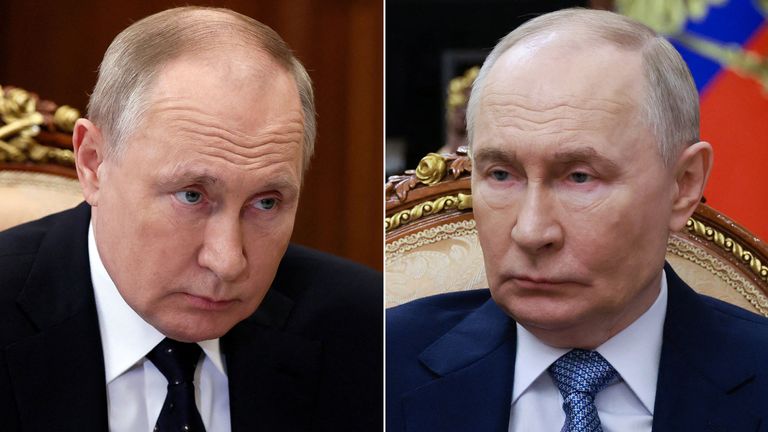
Despite hoping to see Ukraine capitulate within days, Russia’s invasion has now dragged into its fifth year. In that time, Mr Putin’s global standing has largely deteriorated to pariah status.
The Ukraine war has recast his image, both domestically as the wartime leader Russia “needs” (in state narratives) and internationally as a more marginalised, conflict-driven figure.
Advertisement
Personally, the Russian president has become more isolated since the invasion, both in terms of his public appearances and his demeanour – claiming he “jokes less” since the war began.
Putin at home
Inside Russia, Mr Putin’s popularity has been sustained by a mix of state-controlled messaging, repression of dissent and wartime patriotic mobilisation, even amid economic strain and military setbacks.
His approval ratings initially rosesharply after the invasion began, reaching some of the highest figures in years, with a surge in patriotic sentiment and support for “defending Russia”.
Advertisement
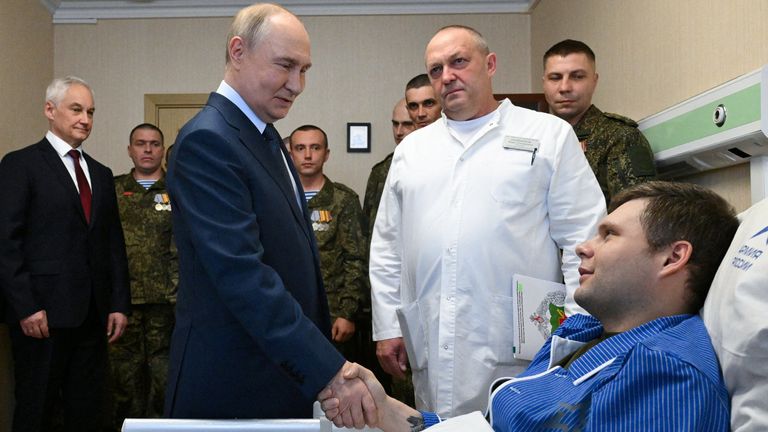
Image: Vladimir Putin shakes hands with a wounded Russian soldier in Moscow, December 2025
And while sanctions, mobilisation and economic pressures dented some support, independent and state pollsters still often report significant backing for Mr Putin among many Russians.
Even so, it can be difficult to gauge public opinion of the president inside Russia thanks to censorship and media control.
The Kremlin has demanded active participation in and support for the war from society since 2022, not just quiet compliance.
Opposition politics are outlawed, independent media has been almost entirely dismantled or subjected to strict “foreign agent” laws, and even mentioning the war in ways that contradict official narratives can lead to prison sentences.
But that hasn’t stopped some direct criticism. One womanwrote to Mr Putin demanding an explanation as to why her late son, an 18-year-old conscript, had been involved in combat.
Advertisement
The spiralling cost of living has also damaged Mr Putin at home. For many households, everyday essentials – from basic groceries to fuel and housing – have become markedly more expensive, squeezing incomes despite official assurances of economic resilience.
During his2025 annual address, Russians sent messages for the president to answer, many of which raised concerns over the state of the economy.
The key moments of Putin annual press marathon
Putin abroad
Advertisement
Outside Russia’s borders, Mr Putin’s reputation has worsened markedly.
While relations with many Western governments were already strained before 2022, the invasion of Ukraine transformed long-standing suspicion into broad diplomatic isolation.
Mr Putin no longer sits comfortably at global tables and forums frequented by world powers, while several Western governments have severed ties entirely.
In response, Russia’s president has kept relationships with his few remaining allies close, narrowing his diplomatic circle.
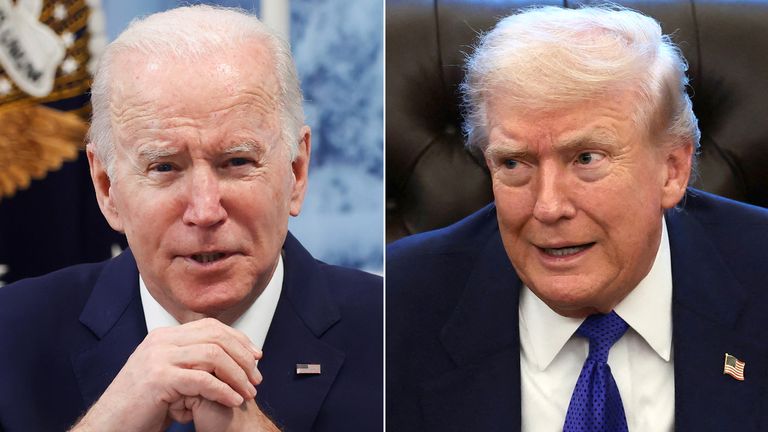
Mr Putin had no contact with the White House during the early stages of the war under Joe Biden. But the return of Donald Trump brought a shift in approach: several phone calls and a face-to-face meeting in Alaska have suggested a desire to redefine the two powers’ relationship.
Advertisement
Image: Donald Trump replaced Joe Biden as US president in 2025. File pics: Reuters
Putin the man
As with Mr Zelenskyy, there is little doubt that four years of war have also taken a significant toll on Russia’s leader.
During his 2024 year-end press conference, he stated that the ongoing war in Ukraine had changed him, causing him to “joke less” and “almost stop laughing”.
Advertisement
He also said that his focus has shifted, stating his happiness would not be complete until all Russian forces return from the frontline.
Mr Putin also appears to have become more physically and socially isolated during the war, with fewer spontaneous public interactions and reduced foreign travel compared with pre-war years.
That match saw Bruno Fernandes continue his quest to break the English top flight’s single-season record for assists, notching his 15th and 16th of the campaign to break David Beckham’s club record in the process.
Amad Diallo, Matheus Cunha and Casemiro scored the others that day for the hosts under former boss Ruben Amorim, but the Cherries pegged their opponents back three times and even led at one stage.
Andoni Iraola and co will be out for revenge on home soil as they bid to secure a top-half finish and possibly European football for themselves.
Worryingly for Carrick, whose tenure has brought a general upturn in form to the red half of Manchester, their recent record in this fixture suggests they could get it.
Advertisement
Date, kick-off time and venue
Bournemouth vs Manchester United is scheduled for an 8pm GMT kick-off on Friday, March 20, 2026.
The match will take place at Vitality Stadium, in Bournemouth.
Where to watch Bournemouth vs Manchester United
Advertisement
TV channel: In the UK, the game will be televised live on Sky Sports.
Coverage starts at 7.30pm on Sky Sports Main Event, with the match also being aired on Sky Sports Premier League and Sky Sports Ultra HD.
Live stream: Sky Sports subscribers can also catch the contest live online via the Sky Go app.
Live blog: You can follow all the action on matchday via Standard Sport’s live blog.
Advertisement
Bournemouth vs Manchester United team news
For Bournemouth, the trio of Julio Soler, Lewis Cook and Justin Kluivert remain out, while Tyler Adams is not ready to return.
Adams limped out of the Cherries’ last meeting with United after mere minutes had been played, having torn a knee ligament. He spent two months on the sidelines before returning in February, but then missed last weekend’s stalemate with Burnley due to having “felt something” in training beforehand.
As for United, Noussair Mazraoui and Mason Mount were both unused substitutes in the win over Villa last weekend. Both may play a role, but will struggle to break into Carrick’s largely consistent lineup even if fully fit.
Advertisement
Arguably, Carrick’s main decision to make is once again in attack.
Amad, Bryan Mbeumo, Cunha and Benjamin Sesko are still battling for three spots, with Cunha adding to Casemiro’s opener against Villa before Sesko – who replaced the ineffective Mbeumo in the 74th minute – provided the finishing touches, netting for the fifth time in his last seven Premier League appearances.
Only one of the Slovenian’s goals in that time have come in a game he has started, so it remains to be seen whether Carrick will keep him as an impact sub or use his aerial presence to try to cause Bournemouth problems from the jump.
Benjamin Sesko has made the most of his relatively limited gametime so far under Carrick
Advertisement
Martin Rickett/PA Wire
Bournemouth vs Manchester United prediction
Man United began Carrick’s reign with three clean sheets in six games, but they haven’t managed one in the three matches since then.
There will be some expectations of another shut-out here, though, given Bournemouth have scored just once in their last four outings.
Advertisement
However, the Cherries have themselves conceded just once in that time, registering four clean sheets in their last seven attempts. That apparent defensive solidity will be put to the test by a Red Devils side that have scored at least once in every game under their interim gaffer, albeit while labouring to a few of their results.
While the reverse fixture was an eight-goal thriller, aforementioned changes in form since then suggest this could end up being a cagier affair.
Still, United have lost just once under Carrick, making them the most in-form side in the Premier League’s top-four race. The general feel-good factor around the club – plus the comparative quality within the two squad’s – should see them pick up another three points here.
Manchester United to win, 2-1.
Advertisement
Head to head (h2h) history and results
While the Red Devils have the edge in the overall head-to-head history of this tie, they have notably failed to beat Bournemouth in five attempts since a 1-0 victory on the south coast in May 2023, when Casemiro scored the winner for an Erik ten Hag-led team.
Three of the five fixtures that followed between these clubs have ended in draws – a 2-2 and a 1-1 at the Vitality, and then this season’s 4-4 – while the Cherries have won the other two, both 3-0 at Old Trafford under Ten Hag and then Amorim.
Wales coach Steve Tandy gave the choirs his nod of approval as he arrived at the stadium with the squad, who went on to end a 15-game losing streak
14:43, 19 Mar 2026Updated 14:48, 19 Mar 2026
Welsh choir serenade Wales team
Wales brought their Six Nations losing streak to an end with a hard-earned victory over Italy at the Principality Stadium on Saturday, March 14. But unseen footage has emerged capturing the goosebumps moment the Welsh team arrived at the stadium, serenaded by two male voice choirs.
The result on the pitch sparked emotional scenes in Cardiff, but one of the most powerful moments of the day happened well before kick-off, and largely out of sight.
Advertisement
As the Wales squad arrived beneath the stadium, they were met by the sound of two choirs singing in the concourse as players stepped off the team bus. Don’t miss a rugby story, sign up for our newsletter
The renditions of Calon Lân and Bread of Heaven echoed through the corridors – a warm welcome for the team and staff ahead of the match.
Advertisement
One of the choirs, Morriston RFC Male Choir, suggested their performance may have even played a small part in the game result. Performing alongside Cowbridge Male Voice Choir, they described a “great atmosphere” as the squad arrived, adding that they received a thumbs-up from Wales coach Steve Tandy.
For those who witnessed it, it was a fitting pre-match moment – one that set the tone for a long-awaited Welsh win.
The win was the first Welsh victory in the Six Nations competition for three years, and ended a 15-game losing streak.
Advertisement
Wales were in control for long spells in Cardiff, with Aaron Wainwright crossing twice and Dan Edwards adding the extras. Dewi Lake then powered over for a third converted try before the break.
Edwards got on the scoresheet himself early in the second half, going over for a converted bonus-point try as Wales pulled clear in what became a relatively comfortable afternoon for Steve Tandy’s side.
Though it was not a flawless performance as Wales faded somewhat after a strong start – the result was never seriously in doubt.
Advertisement
If nothing else, the game served as a reminder that this group is more capable than many had previously thought. And, perhaps most importantly, it offered something Welsh rugby has been short of for some time: a sense of hope.
Get daily rugby updates on your phone by joining our WhatsApp community here. We occasionally treat members to special offers, promotions and ads from us and our partners. See our Privacy Notice
“The fact that we can extend to another DEA is great, but I would if possible like to see it rolled out across the entire council area.”
Rural patients of two health trusts could benefit from “vital” hospital transport across Northern Ireland amid concerns of a “postcode lottery” for vulnerable people.
Advertisement
Newry, Mourne and Down District Council’s environment committee this week signed off on £45k of funding for voluntary drivers across three of its district electoral areas (DEA).
The community scheme will now expand after a recent consultation paper in chambers showed one DEA with over 70% of its pensioners living alone and 55% of them having missed a hospital appointment due to transport issues.
Slieve Gullion UUP councillor David Taylor said: “This is a vital scheme and it has been very helpful to my constituents who are very vulnerable.
“It can be a very worrying time for them when they need to go for a hospital appointment, so this is a very important service for them.
“The fact that we can extend to another DEA is great, but I would if possible like to see it rolled out across the entire council area.”
The transport scheme is currently provided free of charge in the DEAs of the Mournes and Slieve Gullion with a pilot scheme to start this September in Crotlieve DEA.
Slieve Croob Alliance councillor Helena Young said: “We absolutely support this very valuable service extending to Crotlieve.
“It is my understanding that there is no volunteer driver scheme or community bus for Annalong, Newcastle and the hinterlands.
“If they continue to not be served it would be preferable to join up the existing services to prevent it turning in to a postcode lottery.”
Advertisement
The expansion of the transport initiative has come about after a council paper addressed concerns over multiple public transport journeys, high cost of taxis and a non-emergency ambulance services being “rarely available.”
Multiple health care connections for vulnerable people in rural settings have been made possible including appointments for Belfast, Craigavon, Downpatrick and Tyrone from the NMDDC area.
Mournes DUP councillor Henry Reilly added: “Our home to hospital service seems to concentrate on the Southern Trust area, though areas like Newcastle are in the South Eastern Trust area.
Advertisement
“If you need to go to the Royal in Belfast, it’s three bus journeys and a taxi.
“If you want to go to Craigavon it’s four bus changes from Annalong.
“It is disappointing they don’t have access to the home to hospital service.”
A council officer responded: “A consultation was carried out in Crotlieve and the funding has now been provided.
Advertisement
“That would be something that we could look at if we were going to expand into Annalong and Newcastle and I can pick up on that with councillors.
“It will just take resources to fund that, which will take some time.”
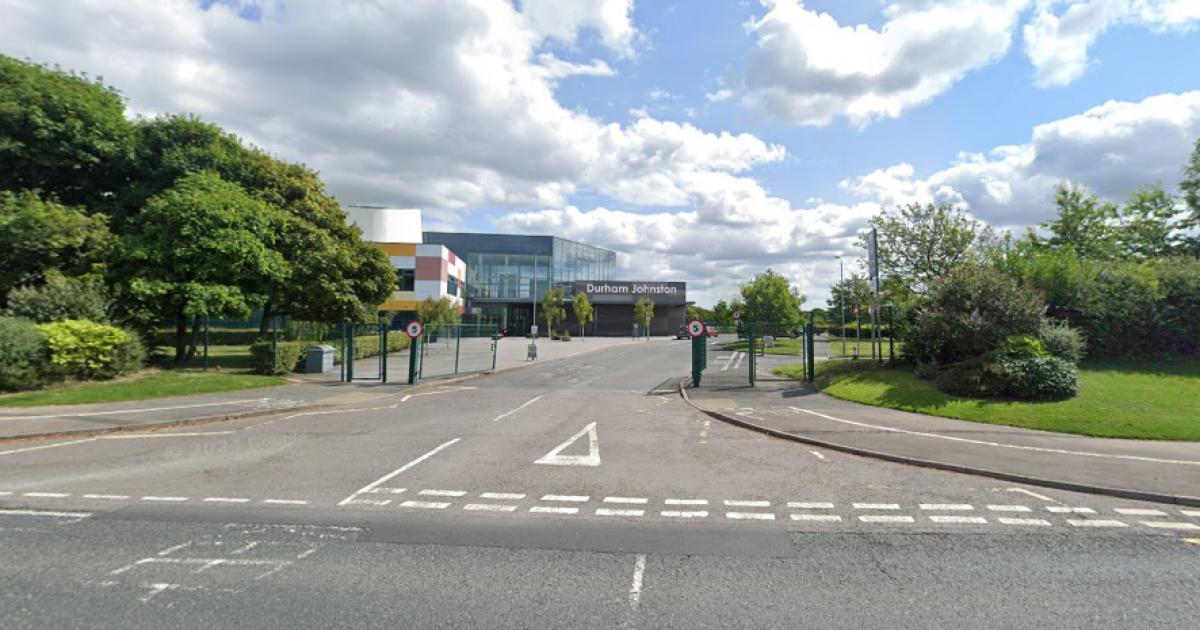
Durham Johnston School at Crossgate Moor has sent all students home after the outage caused issues on site, including reduced access to essential facilities.
In a statement on the schools website, the school said: “There is a power cut that has affected the wider area.
“Updates indicate that we will not be able to provide a full lunch service and we have limited running water and limited functioning toilets. We have therefore made the difficult decision to send pupils home.”
Advertisement
Sixth Form students who were able to do so had already left the site to continue their studies remotely.
However, arrangements for younger students required additional coordination. The school said: “Sixth Form students who are able have already left to work from home. We cannot allow younger students to leave without parental consent.
“We will allow children to use their phones to contact home to seek consent. If you see this message and you consent for your child to go home please send them a text to confirm this.”
Transport arrangements were also put in place, with buses being notified to assist with getting students home safely.
Advertisement
The statement added: “We have alerted school buses who will be arriving shortly to take students home. If you need to collect your child please communicate with them directly.
“This is logistically very complicated and our phone system is also down and we have no Internet. Please bear with us and we will provide further updates if needed. Thank you for your support.”
Asked how bad the results could be for her party, she said: “The world has changed, we are in in a multi-party system, it’s quite clear it’s not as it used to be, so we will have different types of election results, but what I’m saying is that when there are many parties anything can happen.”
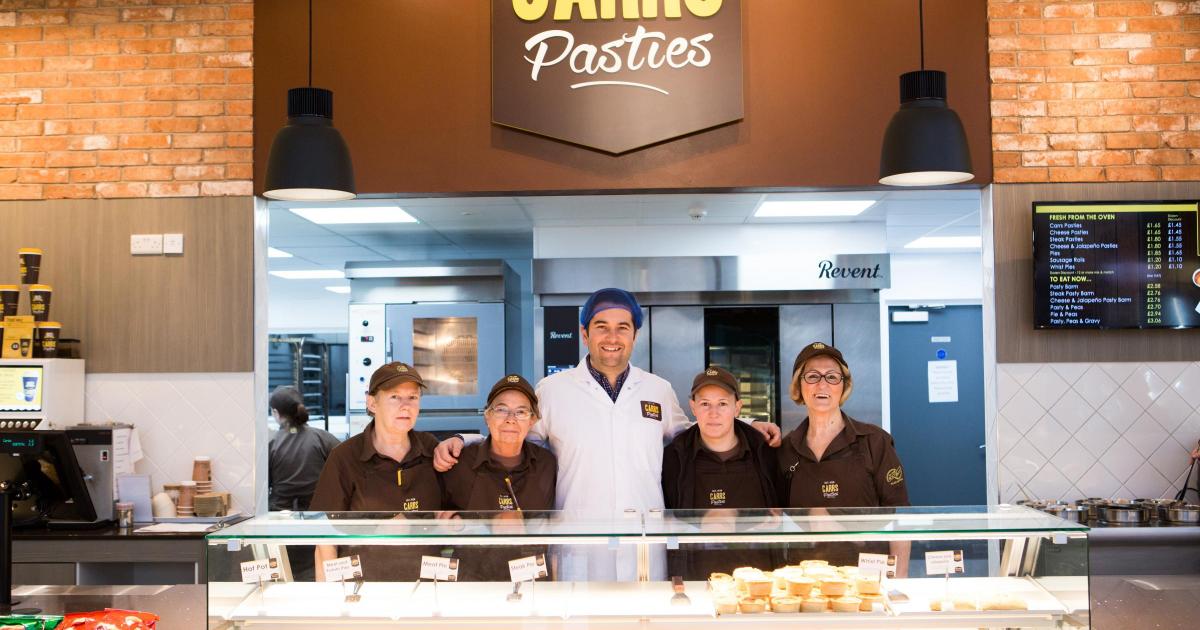
Bolton-based Carrs Pasties is expanding beyond its hometown and opening a new shop in Bury town centre, located between The Rock and The Mill Gate Shopping Centre.
Carrs Pasties Bury Bakehouse will be the company’s first shop outside Bolton.
The new store had initially planned a ‘soft launch’ on Wednesday (March 18), but a spokesperson at the store told the Bury Times that this could not take place.
However, a grand opening on Saturday, March 21, is still taking place and was confirmed by the bakery on Thursday.
Advertisement
The company says the first 100 customers to visit on the day will receive a free pasty.
Director, Joe Carr and his team at their flagship store in Bolton. (Image: GM Business Growth Hub)
The Bury store’s opening hours will be from Wednesday to Saturday between 10am and 4pm, but these may change over time.
Joe Carr, Managing Director at Carrs Pasties, said: “We’re really looking forward to being part of the Bury community.
“It feels like a natural step as we branch out of Bolton, and it’s been great to see the response so far from customers who are ready to welcome us into the town.
Advertisement
“It’s a really exciting time for Carrs Pasties and we can’t wait to open the doors!”
The Bury location will serve the full range of pastry products, including the classic Meat & Potato Pasty, Cheese Pasty, Steak Pasty, Cheese & Jalapeño Pasty, Chicken Curry Pasty, Classic Vegetable Pasty, Sausage Rolls and Lancashire Potato Hash, along with cakes and hot drinks.
Carrs Pasties new look
Sandwiches and salads will be introduced to the range at the store in Bury at a later date, along with a Click & Collect service and delivery platforms.
This will be the fifth Carrs Pasties shop with The Original Shop on Halliwell Road opening back in 1938, followed by the Bakery Shop on Manchester Road, which is also home to Pasty HQ where products are made.
Advertisement
The Market Place Shop opened in 2016, and the Middlebrook Store followed in 2023.
The family-owned bakery business has over 80 years of heritage and serves customers across the north-west and beyond.
Frozen products can be ordered nationwide via a delivery service, and a catering service is offered locally for fresh from the oven products.
The controversial policy – widely blamed for pushing families into hardship – has been abolished, after the government passed new legislation.
Ministers say the move could lift around 450,000 children out of poverty by the end of this parliament—calling it the biggest reduction of its kind on record.
“A turning point” for families
The Work and Pensions Secretary, Pat McFadden, said the decision marks a major shift:
Advertisement
“Today is a turning point for hundreds of thousands of children across Britain.”
He added the reform is about more than immediate support: “It’s about the Britain we’re building for tomorrow.”
Employment minister Dame Diana Johnson said the policy had unfairly impacted children: “It has held children back through no fault of their own.”
What the change to the two-child benefit cap actually means
The two-child limit, introduced in 2017, restricted support in Universal Credit and Child Tax Credit to a family’s first two children.
Advertisement
Its removal – under the Universal Credit (Removal of Two Child Limit Act) – will take effect from April 2026, with payments updated automatically for existing claimants.
The government estimates up to 1.5 million children could benefit overall.
Govt announced its ending the two-child benefit limit, but there’s a lot of confusion about what it is. So here is a bit of a primer…
1. It is nowt to do with Child Benefit, a universal payment for every child you have (clawed back from higher earners)
One of the most striking aspects of the policy is who it hit.
Around 60% of affected households have at least one parent in work, underlining that the cap largely impacted working families – not just those looking for work or who are sick or disabled.
Charities and campaigners have welcomed the move, while warning it is only a first step.
Advertisement
UNICEF UK said: “This is a landmark moment… one of the most powerful actions the UK can take to lift children out of poverty.”
Save the Children UK described the change as ending: “A cap on childhood.”
Meanwhile, Child Poverty Action Group said the reform would give children: “a better today and brighter tomorrow.”
Despite the change, the scale of the issue remains stark.
Advertisement
Around 4.5 million children in the UK are living in poverty
That’s roughly 31% of all children
Levels have risen significantly over the past decade
Experts say removing the cap is one of the fastest ways to reduce poverty—but warn that housing costs, low wages and access to services still need to be tackled.
When will payments change for families?
For many families, the immediate impact will be simple: more support, automatically applied, from April.
The policy change forms part of a wider government strategy, including expanded free school meals and childcare support.
Taken together, ministers say these measures could lift up to 550,000 children out of poverty by the end of the parliament.
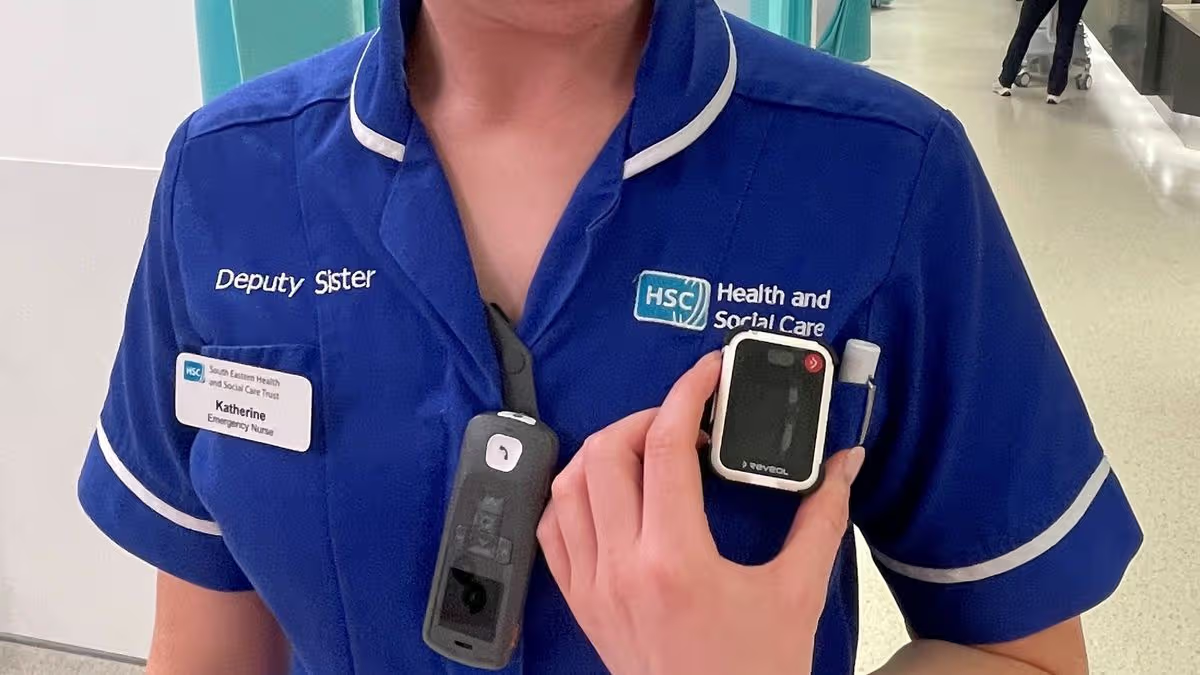
It’s hoped the introduction of the cameras at the hospital from next Monday will help to improve staff safety
Body worn cameras are to be introduced for staff working in a Northern Ireland hospital’s Emergency Department from next week in a bid to combat increasing violent attacks and abuse.
The South Eastern Trust recorded 1911 incidents of violence and aggression towards staff, between April to December last year, which it says is “completely unacceptable”. It’s hoped the introduction of the cameras in the Ulster Hospital’s ED will help improve staff safety.
Advertisement
The Trust said it does not tolerate any form of abuse, aggression or violence towards its staff, who are working hard to care for people when they are at their most vulnerable.
Staff who choose to wear the devices from next Monday will attach them to their uniforms and can activate the cameras if they feel unsafe or if a situation begins to escalate. Once activated, the cameras will record both video and audio.
Staff who are wearing the cameras will announce when the device is being activated and when recording has stopped.
Advertisement
Clinical Manager for Emergency Medicine, Maggie Magowan said: “Every day, our staff come to work with one purpose, to care for people who may be frightened, in pain, or going through some of their most difficult moments of their lives. Providing safe, compassionate and respectful care is at the heart of everything we do.
“It is deeply distressing that we continue to see increasing levels of violence and aggression directed towards our staff. No one should ever feel afraid while doing their job, especially when that job is to support and protect some of the most vulnerable members of our community.”
Director of Unscheduled Care, Medicine & Cancer Services, Marc Neil added: “The introduction of body worn cameras is a supportive measure designed to help keep our staff safe. These cameras will only be activated if a member of staff feels unsafe or a situation begins to escalate.
Advertisement
“Our goal is always to de‑escalate and to prevent harm and we hope the presence of these cameras will reassure staff, while also acting as a deterrent to aggressive behaviour.
“We want our teams to know that their wellbeing matters deeply to us. We are committed to doing everything we can to make their working environment as safe and supportive as possible. Staff deserve to feel protected, valued, and cared for, just as they care so tirelessly for others.”
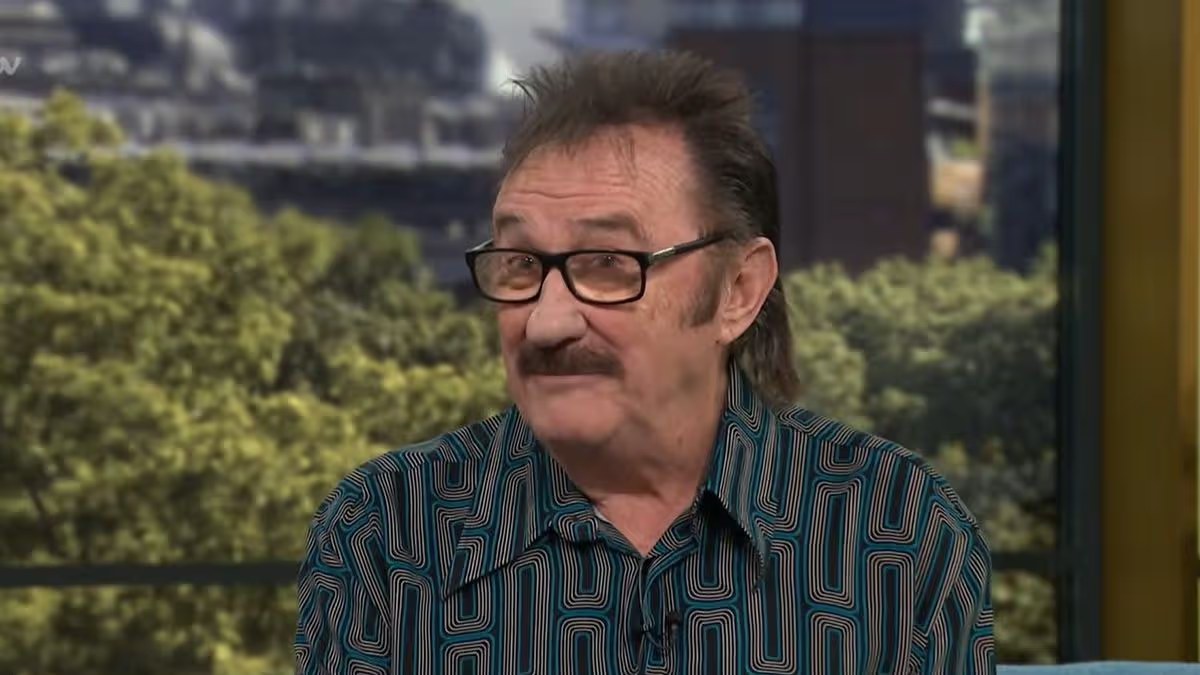
Paul Chuckle has said he feels the presence of his late brother Barry with him all the time as he opened up about the loss ahead of receiving his MBE.
The veteran entertainer, whose real name is Paul Elliott, found fame alongside Barry as one half of the Chuckle Brothers and the pair became a staple in British homes with their TV show ChuckleVision.
The 78-year-old said he knows Barry, who died from bone cancer aged 73 in 2018, is “there with me” and is always by his side. Speaking on ITV’s This Morning on Thursday (March 19) Paul said: “It’s just a lovely feeling right from since he’s passed away.
“You have dreams, everybody dreams at night. He was never in my dreams, because I was with him all the time. We were always together. But as soon as he died, from that day on, every dream I had, he was there with me doing stuff so I knew he was with me.”
Advertisement
Get MEN Premium now for just £1 HERE – or get involved in our WhatsApp group by clicking HERE. And don’t miss out on our brilliant selection of newsletters HERE.
Paul said that following his brother’s death he starred in a pantomime, marking his first performance without Barry in almost 55 years. He recounted standing backstage waiting for his cue, telling hosts Ben Shephard and Cat Deeley: “I thought, ‘I’m on my own’. And I looked across as, usually, Barry is at the other side of the stage.”
Paul said that whenever the duo performed together they would gesture to each other as they were waiting to go onstage, and added: “I swear that I saw him suddenly appear and I felt good then. I walked out, and the audience lifted me. I’ve never turned back since. And I just feel he’s there all the time.”
Paul also spoke about his recent fundraising efforts for charity Marie Curie, which saw him travel across the UK from John O’Groats to Land’s End, making stops in a two-seater pedal car, similar to the Chuckle Bike featured in ChuckleVision.
He said: “Punters would come along and want a picture with me in the bike, which was brilliant, because they grew up watching ChuckleVision. Every time they got in I said, ‘You know, Barry is with me. You’re sitting on his knee’ – because he always is (with me).”
When Cat said she felt it was ‘so lovely’ Paul could still feel his brother’s presence was ‘still with him’, to which he replied: “He’s here now.” Paul continued: “It’s been a lovely feeling since he’s passed away really – everybody dreams at night, but he was never in a dream when I was with him all the time. But when he’d died, from that day on, every dream I had he was there, so I knew he was with me…
Advertisement
‘Doing a pantomime after he died, I’d never been on stage on my own, it was always the two of us for 55 years, and I was standing waiting to go on… and I thought, “I’m on my own”.
Paul also hailed the charity, which he and his brother became official ambassadors for in 2016, as “wonderful”. The charity’s nurses provided end-of-life care for Barry, and Paul has previously spoken about how the nurses looked after his brother “with incredible care and kindness”.
Paul was recognised as a Member of the Order of the British Empire in the King’s New Year Honours list for his charitable service and his work with Marie Curie. “I had to read (the letter) four or five times. It was a wonderful feeling. I can’t wait to get it,” he added on This Morning.











































You must be logged in to post a comment Login