

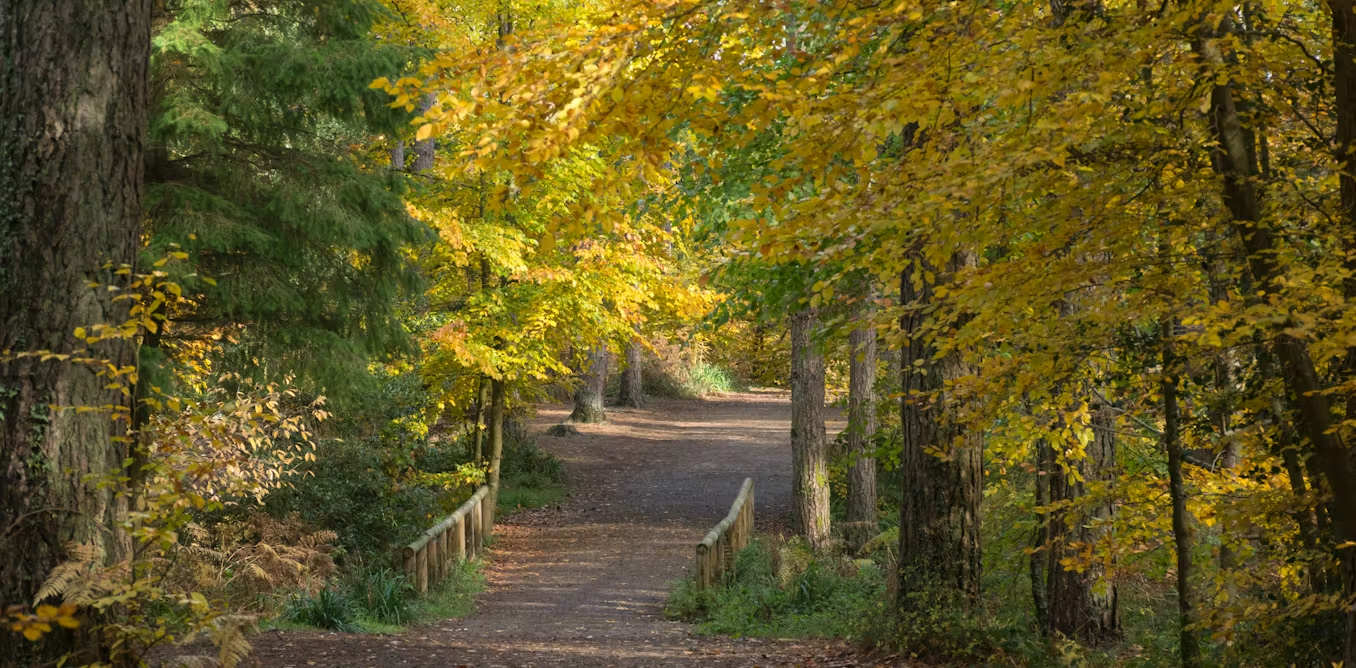
I was walking in Alice Holt Forest on England’s Surrey-Hampshire border when I stopped to listen. Despite there being nobody nearby, a slow “breathing” sound filled my ears. This was not a trick. An artwork was turning live forest data into sound, making the air feel like it was gently rising and falling. In that moment, “climate change” stopped being abstract and became something I could hear.
The piece I could hear is called Dendrophone by composer Peter Batchelor. It maps sunlight, humidity and carbon dioxide readings into a multichannel sound field in real time. Wetter air sounds “stickier”, drier air “crisper”, bright light introduces a fine hiss. When CO₂ uptake is high, you can hear longer, steadier “breaths”.
This is part of a soundscape installation called Sensing the Forest that has been produced by a cross‑disciplinary team at Queen Mary University of London, De Montfort University and the public agencies, Forest Research and Forestry England. The aim is straightforward: to help people make sense of forests and climate through listening, not screens.
Dendrophone captures three easy‑to‑tell textures from live data. Humidity is heard as a “dry/wet” sound; sunlight energy as a subtle hiss (more juddery when activity is high, smoother when calm); and carbon dioxide uptake as “breathing” that becomes longer and steadier when uptake is higher, shorter and more uneven when uptake is lower.
Played over several speakers around the site in the woods, these sounds blend with birds, wind and visitors’ footsteps so people can hear the forest’s state as it unfolds in real time.

Shuoyang Zheng, CC BY-NC
The team also installed two DIY, solar‑powered off‑grid audio streamers (essentially tiny radio stations) that broadcast the forest online and auto‑record at sunrise, midday, sunset and the midpoint between sunset and the next sunrise. Recordings are uploaded and stored online, building a long‑term installation soundscape dataset.
Crackles blended with light rain/wind at around 3pm (18 March 2025)
Sounds can also include species cues, the noises that various animals make. Tree Museum, by sound artist Ed Chivers, is another installation in the same exhibition that uses artificial woodpecker drumming to draw attention to the lesser-spotted woodpecker (an endangered species down in numbers by 91% since 1967 in the UK). If a sound disappears, what else do we lose?
The mix of the soundscape changes constantly. Listen at different times and you’ll notice the balance of natural sound, human sound and installation sound shifting. Weeks of rain make everything feel “wetter”; bright days bring out the hiss; busy weekends sound busier. Each is a clue to what the forest is experiencing at that moment.
Tubular bells blended with bird songs and a plane in the background at noon (28 May 2025)
In the forest, there’s a survey QR code to capture instant reactions, plus a guided walk to make “how to listen, what to notice” clear for everyone.
Sensing the Forest doesn’t claim to fix the climate crisis, but it offers something valuable – a sensory language for data and a not‑so‑distant threat. In a time of ecological strain, technology here is less about control and more about translation; a way to foster ecological empathy.
Next time you step into a forest, pause and listen. You might hear not just the present, but the future we share.

Don’t have time to read about climate change as much as you’d like?
Get a weekly roundup in your inbox instead. Every Wednesday, The Conversation’s environment editor writes Imagine, a short email that goes a little deeper into just one climate issue. Join the 47,000+ readers who’ve subscribed so far.



