Arsenal and Bayern Munich were already guaranteed a spot in the last-16 ahead of Wednesday night’s dramatic final round of league phase action, while four clubs at the other end of the table knew they were eliminated.
That meant the race was on for the other 30 teams to either secure a place in the top eight, and therefore go straight through to the last-16, or finish in the top 24 and with it take a spot in the knockout phase play-offs.
Real Madrid finished ninth – a point behind Manchester City – after failing to score a late equaliser against Benfica who, themselves, scored in the final seconds through Anatoliy Trubin to stay alive in the competition.
Advertisement
Interestingly, the two sides could meet again in the play-offs while Bodo/Glimt are Real Madrid’s other potential opponent.
Meanwhile, PSG will face either Qarabag or Ligue 1 rivals Monaco after missing out on a top-eight finish in successive seasons.
Newcastle are the sole Premier League representatives at this stage and have been paired with PSG which means they have the same potential two opponents.
How to watch Champions League knockout phase play-off draw for FREE
Advertisement
TV channel: TNT Sports 1 will broadcast live coverage of the draw in the UK, beginning at 11am GMT.
Live stream: The draw will be streamed live on the UEFA.com website, as well as on TNT Sports’ YouTube channel and via the Discovery+ app and website.
LIVE coverage: You can follow the draw with Standard Sport’s dedicated live blog.
What’s in store for you today? (Picture: Metro.co.uk)
The Moon aligns with Pisces in Mars today, giving you a certain power to get in touch with your feelings. Dig deeper, for not just the ‘what’, but also the ‘why’.
Sagittarius, Scorpio and Taurus, empathy comes naturally. Compassionate words and caring actions will serve you well.
Today may not be about balance, but rather feeling emotions to their full extent, don’t place restrictions on yourself today.
Ahead, you’ll find all star signs’ horoscopes for today: Tuesday March 17, 2026.
Advertisement
Like checking your horoscope every morning?You can now sign up to our free daily newsletter to get a personalised reading for your star sign delivered straight to your inbox.
This is not the time for loud declarations or impulsive moves – instead, swim deeper. Let your actions be guided by sympathy, wisdom and mystery. You are a warrior, but even warriors need quiet times. Channel your energy into healing, art or compassion-led causes. Be fierce and gentle. The world does not need volume – it needs you to create a serene path forward today.
The Moon aligns with Mars in Pisces, so you will need to know why you are doing something before you do it. Tasks done with feeling matter more than ticking boxes. Creativity flows like jazz – improvisational, emotional and brilliant. You are driven, but by compassion, not competition. Use this vibe to pursue hobbies or help a friend, as it will nurture your spirit.
Your quicksilver mind dives into deeper waters. Logic takes a back seat while instinct is in the driving seat. You may feel sensitive to others’ moods, but you are also gifted with charm and visionary ideas. Action flows best when wrapped in feeling or artistic flair. Avoid scattering energy, as today’s line-up can blur boundaries. Tread softly but move with purpose.
The Moon-Mars merger stirs your emotions, so your warmth becomes your superpower, fuelling compassion and gentle determination. You are not charging ahead with force but flowing forward with feeling. Creative urges surge, so paint, write or dream. Relationships deepen through silent understanding, so trust what is not said, as it can be utterly crucial.
You are invited to swap the spotlight for candlelight. Action takes a softer, soulful form, so consider wise choices over powerful declarations. Your inner world hums with emotion and imagination, making this a golden day for creativity, compassion and courage. You may not feel like conquering kingdoms, so let your fire simmer. Tenderness is your secret power now.
The Moon-Mars conjunction can prompt the soulful waters of your opposite sign, encouraging you to loosen your grip on logic and embrace the art of surrender. You are often the master of details but today be kind and welcome chaos. If people are more complicated than usual, soften your stance rather than be critical. Energy is best spent on connection or compassionate action.
Cosmic messages for Cosmic messages for Virgo today
Libra
September 24 to October 23
Your natural charm meets a wave of determination, which is ideal for channelling compassion into action. Do not be surprised if your sixth sense is louder than logic right now – just trust it. Emotions may ebb and flow, but there is sparkle in movement, so dive into creative pursuits or lend a helping hand. It is not about balance today – it is more about surrendering to the moment.
You may be a powerhouse of passion, but your intense focus moves like mist – gentle and emotional. Your usual energy softens into empathy and actions speak with quiet depth. Creative sparks flicker in dreamlike moments, so dare to capture them. You are also more attuned to others. Even so, do not go rescuing someone if you are not wearing a life jacket.
As the Moon aligns with Mars, your fiery side takes a dip in ethereal waters. You are still on the move, but now it is more of a soul quest than a road trip. Your instincts are sharp, but your actions can be driven by feelings you cannot name. Channel that into creativity, compassion or a wild idea you have shelved. Even so, it is best not to gallop into the mist without taking a map.
Your steady pace might meander into a hazy reroute. Yet this is a time for intuitive action, not strategy, so trust your gut over your deadlines. A soft touch can get you further than a firm approach today. Creative pursuits, quiet connections or letting your mind wander can yield insights. Let your ambition swim instead of march and you will reach a meaningful destination.
You are a true visionary, but today you are also knee-deep in feelings. A lunar alignment nudges you to act on intuition rather than intellect, which may complicate matters a little. A dreamy idea or emotional nudge might lead to your next major breakthrough. If you feel a touch vague, that is okay, as insight can show up through music, dreams or even serendipitous chats.
With the Moon cuddling up to Mars in your sign, you are a cocktail of wisdom and initiative, and you have got the energy to chase your visions. Emotions rise like ocean tides and bring out your passionate, poetic and persuasive side. If something touches your soul, do not just feel it – act on it. Mars gives momentum, so dance, create or act boldly. You are the tide-turner today.
Your daily Metro.co.uk horoscope is here every morning, seven days a week (yes, including weekends!). To check your forecast, head to our dedicated horoscopes page.
As a loyal Metro reader, we want to make sure you never miss our stories when searching for your news. Whether it is the latest politics news explained, live football coverage or a showbiz scoop.
Click the button below and tick Metro.co.uk to ensure you see stories from us first in Google Search.
The NSPCC said the Police Service of Northern Ireland were included in the data
The number of child sex abuse image crimes logged by police forces across the UK has risen by 9%, prompting renewed calls for tech companies to block nude images from being taken and shared on children’s devices.
Advertisement
Young people continue to face exposure to the risk of grooming, extortion, online abuse and having intimate images shared, the NSPCC said.
The charity said its research had shown that between April 1 2024 and March 31 2025 there were 36,829 recorded offences of indecent and prohibited images of children across the UK.
A total of 42 of 45 UK police forces responded to its Freedom of Information request, and a year-on-year comparison suggested there had been a 9% increase in recorded offences from 33,886 the previous year.
The Government’s strategy, published in December, to tackle Violence Against Women and Girls (VAWG), stated an aim to “make it impossible for children in the UK to take, share or view a nude image” and said it was “working constructively with companies to make this a reality”.
Advertisement
But the NSPCC said this must be made mandatory, with the Government urged to take action against tech companies if they fail to embed existing technology on children’s phones that blocks nude images from being created, shared or viewed.
The charity said these “device‑level protections” should be embedded by default, meaning children are automatically protected and adult users could go through a process to opt out.
Such technology can block a nude image taken, sent or received on a device, and the NSPCC said that because the image is never created or sent in the first place, there is nothing to encrypt and that this method can stop abuse at source.
The NSPCC said that of the 10,811 crimes where police forces recorded the platform used by perpetrators, 43% or a total of 4,615 took place on Snapchat.
Advertisement
Overall, Meta platforms still accounted for almost a quarter of all offences (24%), with 8% on Instagram, 7% on WhatsApp, 5% on Facebook and 4% on Messenger, the charity said.
But the NSPCC said because of end-to-end-encryption, the true scale of abuse children are experiencing online remains “hidden”.
NSPCC chief executive Chris Sherwood said: “Children across the UK are being completely failed by tech companies that should be protecting them online. We cannot keep letting them off the hook when they can do more to prevent this from happening in the first place.”
He added: “Technology already exists that could be deployed today to stop children from taking, sharing or receiving nude images. So, the real question is: what’s stopping them? If they continue to drag their feet, Government must show their might by stepping in and compelling them to act.”
Advertisement
Kerry Smith, chief executive of the Internet Watch Foundation, said the data “should be yet another wake-up call”, adding: “Mandatory introduction of on-device protections will protect children from unsolicited nude imagery, and from being coerced into sending sexually explicit material.
“We must see these measures applied across the board.”
Safeguarding minister, Jess Phillips, said the data uncovered by the NSPCC was “nothing short of deeply shocking”.
She added: “Predators cannot continue like this – unstopped and unchecked. We plan to stop them.
Advertisement
“We have committed to making it impossible for children in the UK to take, share or view nude images, and have already announced a ban on so‑called ‘nudification’ apps to stop abusive images being created and spread in the first place.
“We will not hesitate to go further until our children are safe from sexual abuse online.”
A spokesperson for Snapchat said: “We work closely with NSPCC and police to help keep our platform safe and combat child sexual exploitation.
“This report does not accurately reflect our efforts to tackle these horrific crimes and fails to recognise that information sent to police (through what are known as CyberTips) helps support their investigations to bring criminals to justice.
Advertisement
“We will continue to do our part because we know that seriously addressing these issues requires collaboration from stakeholders across many segments of our society, including law enforcement, experts, parents, educators, advocates and tech companies.”
Earlier this year it was announced that nudification apps would be criminalised as part of the Crime and Policing Bill, which is currently going through Parliament.
The latest data comes after two watchdogs last week warned big tech it must do more to protect young people online.
Communications regulator Ofcom wrote to Facebook, Instagram, Snapchat and others, giving them until the end of April to explain what actions they are taking on age checks and grooming protections.
Advertisement
Alongside Ofcom’s demands, the Information Commissioner’s Office (ICO) also wrote to Snapchat, Facebook, Instagram, and others asking them to set out how their age assurance policies keep children safe.
– The NSPCC said the Police Service of Northern Ireland and Police Scotland were included in the data but forces missing were Gloucestershire, Hampshire and Thames Valley.
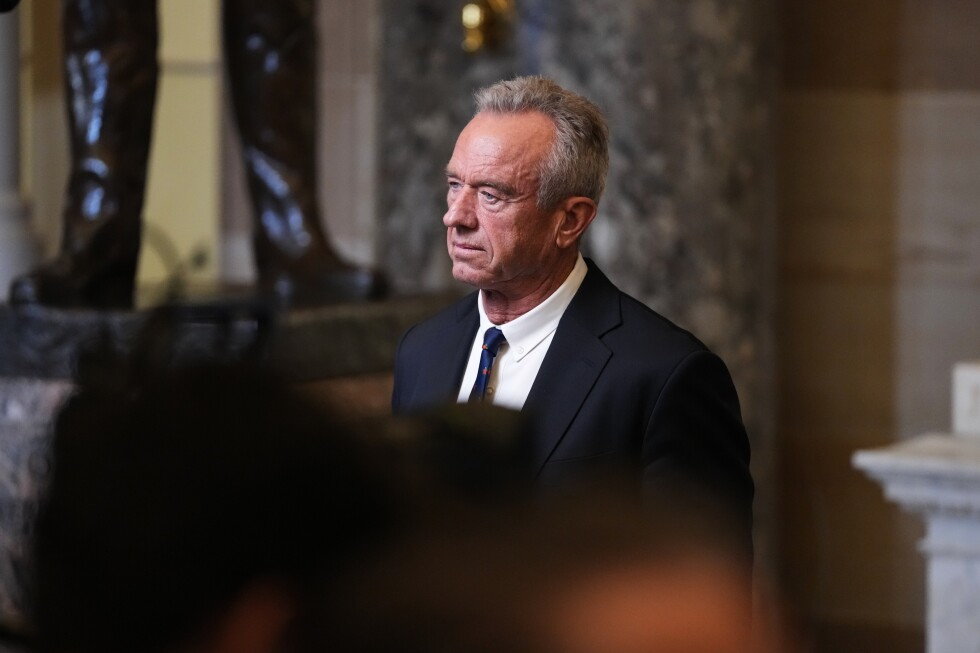
A federal judge on Monday temporarily blocked federal health officials from cutting the number of vaccines recommended for every child, and said U.S. Health Secretary Robert F. Kennedy Jr. likely violated federal procedures in revamping a key vaccine advisory committee.
The decision halted an order by Kennedy — announced in January — to end broad recommendations for all children to be vaccinated against flu, rotavirus, hepatitis A, hepatitis B, some forms of meningitis and RSV.
It also stopped a meeting of a Kennedy-appointed vaccine advisory committee, which was set to convene this week in Atlanta.
The judge’s order, however, is not the final word. The blocks are temporary, pending either a trial or a decision for summary judgment.
Advertisement
Federal health officials indicated they planned to appeal.
“HHS looks forward to this judge’s decision being overturned just like his other attempts to keep the Trump administration from governing,” said Department of Health and Human Services spokesman Andrew Nixon.
The order issued Monday is the latest development in a lawsuit filed last July by the American Academy of Pediatrics and some other medical groups. The lawsuit in federal court in Boston originally focused on Kennedy’s decision to stop recommending COVID-19 vaccinations for most children and pregnant women.
The lawsuit was updated as Kennedy took more steps that alarmed medical societies, causing the plaintiffs to ask Judge Brian E. Murphy to take steps to address those policy changes too.
Advertisement
For example, the plaintiffs amended the lawsuit to stop the scaling back of the nation’s childhood vaccination schedule. They also asked the court to look at Kennedy’s actions concerning the Advisory Committee on Immunization Practices, which advises public health officials on what vaccines to recommend to doctors and patients.
Kennedy, a leading anti-vaccine activist before becoming the nation’s top health official, fired the entire 17-member panel last year and replaced it with a group that includes several anti-vaccine voices.
Murphy, who was nominated to the bench by President Joe Biden, said Kennedy’s reconstitution of ACIP likely violated federal law. He ordered the appointments — and all decisions made by the reformed committee — put on hold.
The ACIP was scheduled to meet this week to discuss COVID-19 vaccine safety, among other issues, but that gathering was postponed, officials said.
Advertisement
“ACIP as currently constituted cannot meet,” said Richard Hughes IV, an attorney representing the AAP. “How can a committee meet without nearly the entirety of its membership?”
Jason Schwartz, a Yale University vaccine policy expert who has studied the committee, called the halting of an ACIP meeting for legal reasons “unprecedented” in its 62-year existence.
Hughes called the judge’s order “a momentous step toward restoring science-based vaccine policy,” and he was echoed by leaders of several doctors’ groups and public health organizations.
When Trump administration officials overhauled the childhood vaccine schedule, they said it wouldn’t result in families losing access to them or cause insurers to stop covering them. But it left many Americans confused, as doctors’ groups, public health organizations and many states continued to recommend licensed vaccines, said Dr. Andrew Racine, president of the American Academy of Pediatrics.
Advertisement
Several doctors’ groups said the changes were not based on good evidence, and advised doctors and patients to follow guidance that was previously in place. Health officials in 30 states have rejected at least some of the new recommendations.
The judge’s order should bring clarity, Racine said.
“If anyone has any questions about what’s the appropriate vaccine schedule for their children, the best thing to do is to talk to their pediatricians,” he said.
Schwartz said he expected federal health officials to keep expressing “their deep skepticism regarding the importance of vaccination” and to keep embracing “unsupported vaccine safety allegations.”
Advertisement
After the ruling, one of Kennedy’s appointees to the committee, Dr. Robert Malone, urged the Trump administration to keep pursuing Kennedy’s vaccine policy changes.
“A district court order is a delay, not a defeat,” he wrote Monday on Substack.
___
The Associated Press Health and Science Department receives support from the Howard Hughes Medical Institute’s Department of Science Education and the Robert Wood Johnson Foundation. The AP is solely responsible for all content.
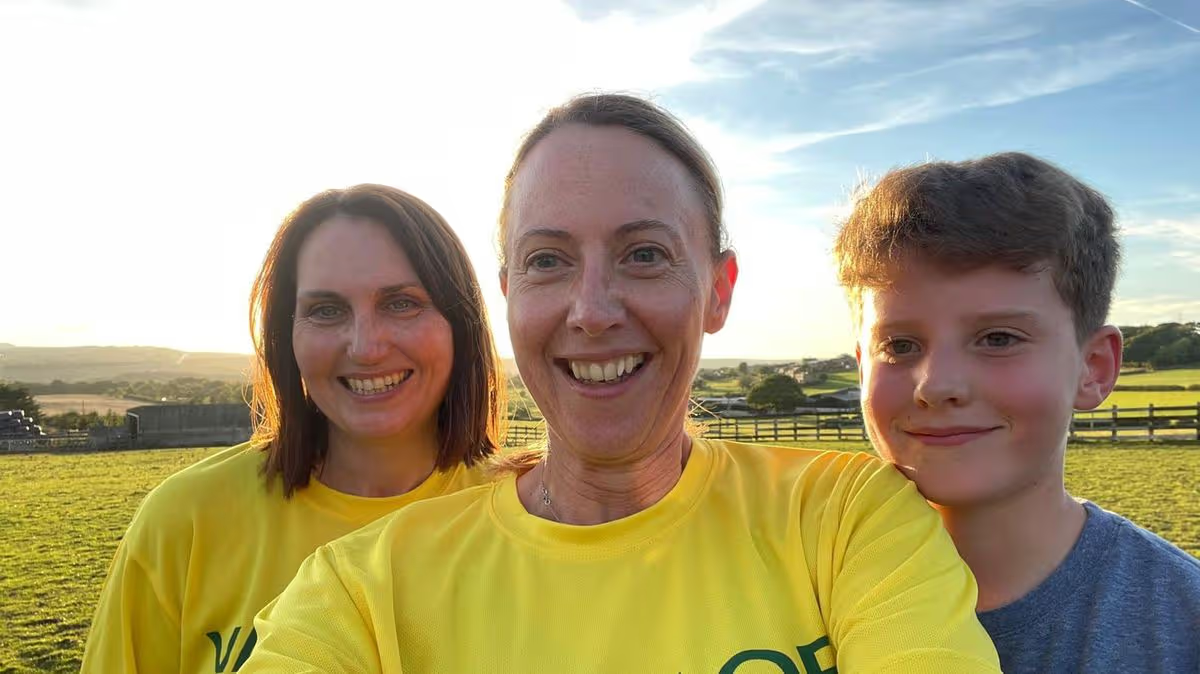
Vanessa Kendall first noticed her running time was dipping and that she was struggling to complete her usual runs at the start of the summer 2024
A super-fit runner who blamed her slower race times on her asthma was horrified to learn the truth. Vanessa Kendall first noticed her running time was dipping and that she was struggling to complete her usual runs at the start of the summer 2024.
Advertisement
The mum of two claimed she ‘didn’t think much of it’ – but after her family all caught the flu in December 2024 she noticed she struggled to shake it off. The 46 year old first went to her local GP in February 2025 when her coughing became so bad she would have to mute herself on work calls.
She was diagnosed as asthmatic by a nurse and prescribed an inhaler which initially left her feeling ‘relieved’ to have an explanation for her breathing issues. The office manager said the inhaler helped for a few weeks and she continued running but, after chatting with a friend at a Park Run in June, decided to ring her GP to request a chest X-ray.
A month later, Vanessa received the heartbreaking news that she had stage four metastatic cancer that had spread from her lungs to her liver, spine, lymph nodes, kidneys and brain. Vanessa, who is mum to 16-year-old Jacob Kendall and 13-year-old Devon Kendall, underwent a three-month course of chemotherapy, where the main 5cm tumour in her lungs shrunk.
But by December 2025 she began to feel unwell. CT scans in January showed further spread with more tumours in her liver, lungs and her brain. Due to limited treatment on the NHS treatment options, Vanessa is now fundraising to get treatment privately.
Advertisement
Vanessa, from a town near Huddersfield, West Yorkshire, said: “I’m a regular runner and I used to run two or three times a week. I took part in Park Runs every week and I noticed my time was dropping off a little bit. I wasn’t able to complete the full 5km, but didn’t think much of it.
“I did a half marathon in October before I was diagnosed and would run every Wednesday after work with a work running club. In the May school holidays we did one of the Yorkshire Three Peaks with my youngest son, we did Ingleborough, so still fit and active, so it was a massive, massive shock getting the diagnosis.
“I was initially relieved to have an asthma diagnosis but then I had a couple of asthma reviews and I just felt like it wasn’t getting any better. I was expecting to get something back from these chest X-rays that say it’s scar tissue or infection. I wasn’t expecting a cancer diagnosis at all.
Advertisement
“It’s just a complete freak, rare, genetic mutation, and this is why my treatment options are limited because it is one of the rarest types of lung cancer. You just feel totally lost and isolated in having to process this information. It was hugely traumatic.”
As Vanessa has a rare mutation of lung cancer called Exon 20, it means treatment is limited on the NHS so she’s now fundraising for private treatment. Vanessa, who is married to 53-year-old Paul Kendall, said: “I’m absolutely overwhelmed by the amount of support I have had already, it’s unbelievable.
“Not having that financial burden just means we can refocus our energy on getting that treatment. “We have now exhausted the line in terms of NHS treatment and the next most effective treatment is only available privately.”
With the new tax year approaching, workers are being urged to check their payslips carefully as changes from HM Revenue & Customs (HMRC) take effect on April 6.
Experts say millions of employees may unknowingly be paying the wrong amount of tax due to payroll errors or incorrect tax codes – problems that can quietly drain household finances over time.
At a time when many households are already grappling with rising living costs, even a small error in pay or deductions can quickly create financial strain.
Advertisement
Many workers rarely check their payslips
Despite how important accurate pay is, many employees admit they don’t routinely review their payslips.
Research by HR and payroll platform HBHR found nearly half of UK workers either skim through their payslip or rarely check it in detail.
This leaves significant room for mistakes to go unnoticed. According to the same survey of 2,000 employees, almost a quarter (23%) said they had spotted a mistake on their payslip in the past year.
Payroll problems are not always minor. The research found that:
Advertisement
32% of workers say they couldn’t cope financially if their main pay was wrong or late even once
24% say payroll errors have made it harder to afford essentials such as rent, mortgage payments, food or energy bills
20% say a mistake in their pay caused them to miss a bill or regular payment
The impact is even more pronounced in high-cost areas such as London, where over a third of workers said a payroll mistake had left them unable to cover a bill.
Less than 30 days left until Making Tax Digital! ⏳
If your combined turnover from self-employment and property is over £50,000, you’ll need to use recognised software and send quarterly updates from 6 April.
Beyond simple payroll errors, incorrect tax codes are another major issue affecting employees.
Advertisement
Analysis cited by accounting firm The Accountancy Partnership suggests that around 5.6 million UK workers overpaid tax during the 2023–24 tax year, with an estimated £3.5 billion paid in excess due to incorrect tax codes.
Tax codes determine how much income tax is deducted from wages through the PAYE system operated by HM Revenue & Customs. If the information HMRC holds about a worker’s circumstances is incorrect or outdated, the tax code may also be wrong.
Lee Murphy, managing director at The Accountancy Partnership, said many workers assume automated tax deductions are always accurate.
“Many people assume that because tax is deducted automatically through PAYE, the amount must be correct,” he said.
Advertisement
“But tax codes are based on the information HMRC has about your circumstances, and if that information is outdated or incorrect, you could end up paying too much tax without realising it.”
Why tax codes can change
Tax codes are regularly updated to reflect a person’s circumstances, and sometimes these changes happen without workers noticing.
Common triggers include:
starting a new job
having multiple jobs or sources of income
receiving workplace benefits such as a company car or private healthcare
HMRC adjusting the code to recover tax owed from previous years
If HMRC’s records don’t fully reflect a person’s situation, the code issued could lead to the wrong amount of tax being deducted each month.
Recommended reading:
Advertisement
What workers should look for
Experts say checking a payslip only takes a few minutes but could prevent costly mistakes from continuing for months.
Workers should review:
the tax code listed on their payslip
their gross pay and deductions
whether any unexpected changes appear between payslips
Employees can also confirm their tax code through their HMRC personal tax account or by contacting their employer’s payroll department.
A timely reminder before the new tax year
With payroll and tax changes coming into effect in April, specialists say now is a good moment for workers to review their pay information.
Even small tax code errors can add up significantly over time – and in the current cost-of-living environment, making sure your payslip is accurate could help prevent unnecessary financial pressure.
ATLANTA (AP) — Hundreds of flights were canceled or delayed Tuesday, one day after powerful storms swept across the eastern half of the country and upended air travel in a cross-section of cities. Travelers have been facing additional jams at airport security checkpoints as a partial government shutdown strains screener staffing.
The disruptions come at an already challenging time for air travel, in part because the shutdown that began Feb. 14 has pressured staffing at some security checkpoints. At the same time, airports are crowded with spring break travelers and fans heading to March Madness games, the annual NCAA men’s and women’s college basketball tournaments.
More than 550 flights scheduled to fly into, out of or within the U.S. have been called off as of early Tuesday, and over 460 were delayed, according to flight-tracking site FlightAware.
Flight delays and cancellations piled up Monday at some of the nation’s largest airports, including those in New York, Chicago and Atlanta. The storm system that dumped heavy snow across the Midwest raced toward the East Coast with the potential for high winds and tornadoes, the National Weather Service warned Monday.
Advertisement
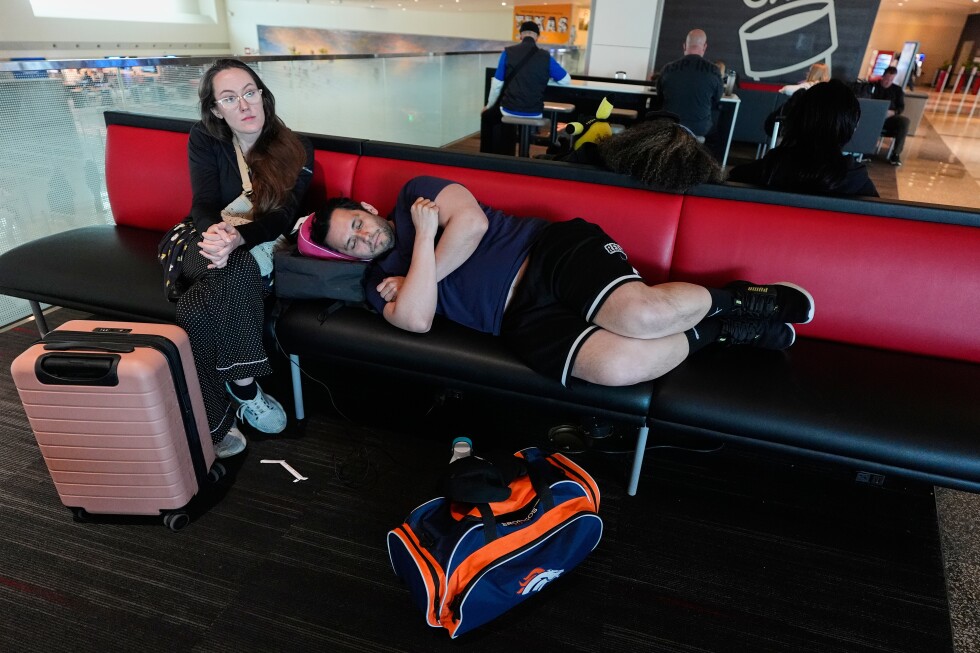
Kelly Price, who was trying to get home to Colorado after a family vacation in Orlando, Florida, said her Sunday night flight wasn’t canceled until early Monday.
“By that time the only place for us to sleep was the airport floor. So we’re all tired and frustrated,” she said, adding that the soonest she and her family could book another flight doesn’t leave until Tuesday afternoon.
Impact to major airport hubs
The nationwide cancellations on Monday included about 600 in and out of Chicago O’Hare International, more than 470 at Atlanta’s Hartsfield-Jackson International and over 450 at LaGuardia Airport in New York City, according to FlightAware.
Citing severe weather, the Federal Aviation Administration ordered ground stops at Hartsfield-Jackson and Charlotte Douglas International Airport and ground delays at JFK and Newark Liberty International Airport.
Advertisement
Danielle Cash found herself stranded in St. Louis on Sunday while trying to get home to Tampa, Florida, after a weekend girls’ trip to Las Vegas. Now she’s spending several hundred dollars more than planned on a hotel room in a snowy city she wasn’t dressed for.
“It was 80 degrees in Tampa when I left and then going to Vegas,” she said. “And it was 90 degrees in the desert.”
Cash said she’s now booked on a flight that will take her to Tennessee before finally returning to Tampa by Tuesday afternoon.
TSA staffing strains some checkpoints
The storms unfolded just as airport security screeners missed their first full paycheck over the weekend. The current partial government shutdown affects only the Department of Homeland Security, which includes the Transportation Security Administration.
Advertisement
Democrats in Congress have said Homeland Security won’t get funded until new restrictions are placed on federal immigration operations following the fatal shootings of Alex Pretti and Renee Good in Minneapolis earlier this year.
Some airports have reported longer security lines because of staffing shortages as more TSA workers take on second jobs, can’t afford gas to get to work or leave the profession altogether. Homeland Security has said more than 300 TSA agents have quit since the start of the shutdown.
Security wait times could worsen
TSA union leaders in Atlanta held a news conference Monday outside Hartsfield-Jackson, warning that air travelers could face increasingly long wait times as the shutdown continues. Even so, union leaders said, many officers are still reporting to work despite mounting financial strain.
Advertisement
Many TSA workers “are coping with eviction notices, vehicle repossessions, empty refrigerators and overdrawn bank accounts,” said Aaron Barker, a local leader with the American Federation of Government Employees. Supporters behind him held signs reading, “We want a paycheck, not a rain check.”
Travelers flying out of New Orleans on Sunday and Monday were advised to arrive at least three hours early “due to impacts from the federal government’s partial shutdown,” Louis Armstrong International Airport said on X. And the airport in Austin, Texas, shared a video on X taken at 5:30 a.m. local time showing the security line spilling out onto the sidewalk outside.
Back in Atlanta, Mel Stewart and his wife arrived four hours earlier than usual for their flight out of Hartsfield-Jackson to make up for longer TSA lines.
“I think it’s being politicized way too much — way too much,” Stewart said Monday of the shutdown. “And these people are working. They work hard, and for TSA people not to get paid, that’s silly.”
Advertisement
___
Yamat reported from Las Vegas. Associated Press reporters Margery A. Beck in Omaha, Nebraska and Audrey McAvoy in Honolulu contributed to this report.
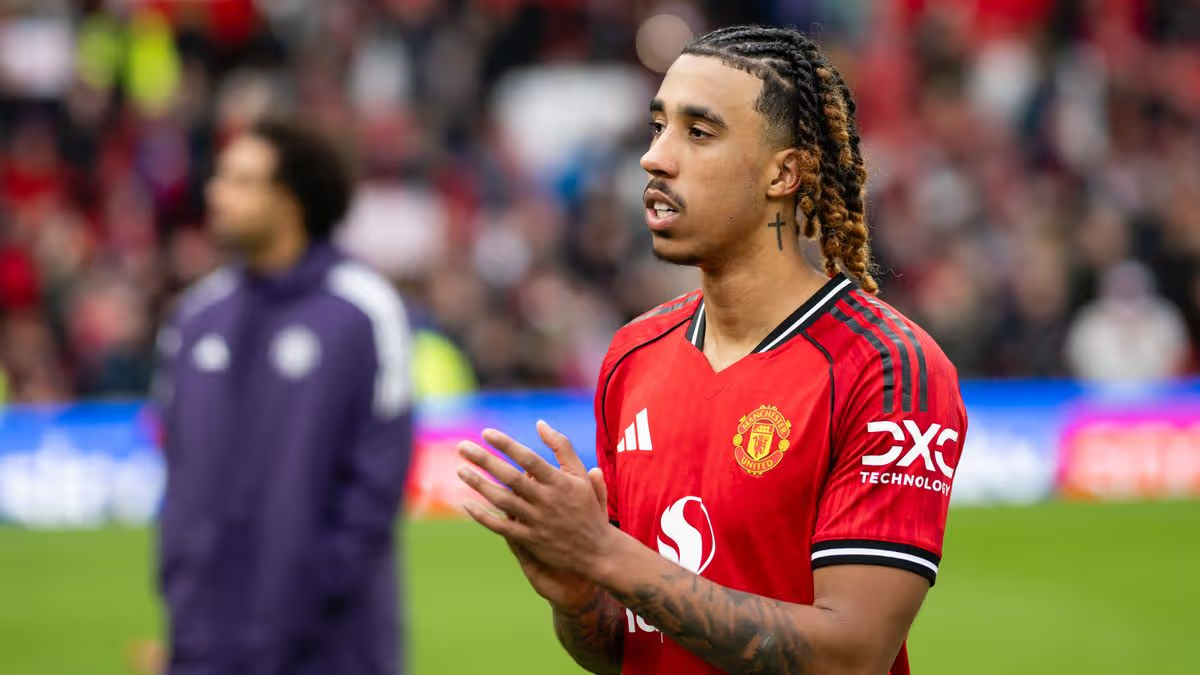
Man Utd’s Leny Yoro has endured ups and downs this season, but last weekend suggested he may have turned a corner.
Leny Yoro’s first season at Manchester United was a baptism of fire. When he touched down in Manchester, he didn’t know he was about to be part of the worst campaign at the club for 51 years.
Advertisement
It was a rollercoaster for Yoro. He fractured his metatarsal in pre-season, which delayed his debut until December. He won a starting role in the team and helped United to the Europa League final, but he was half-fit at the San Mames Stadium after suffering an ankle injury two weeks previously.
Yoro was absent from the squad on the final day of the campaign, taking a seat in the stands due to the injury he played through in the Europa League final defeat.
Get MEN Premium now for just £1 HERE – or get involved in our United WhatsApp group by clicking HERE. You can also join our United Facebook page by clicking HERE and don’t miss out on our brilliant selection of newsletters HERE.
However, Yoro emerged with credit from last season, having acquitted himself well in a struggling dressing room and delivered a handful of excellent individual performances.
Advertisement
With that experience under his belt, fans were excited to see what Yoro could achieve this term, but there have been further peaks and troughs, a reminder that youth development is not a linear process.
Yoro only celebrated his 20th birthday in November. “I’ve been really impressed with Leny. He’s still so young,” said Michael Carrick last weekend. “As a centre-back playing at that age, in this league and at a club like this, takes a lot of understanding and composure to cope. He takes it in his stride.
“There is loads to come, that will happen naturally as he learns and his experience. At his age, he is doing really well, and you can see him growing in confidence and getting back in the flow of games and playing in a back four. He’s a pleasure to have, he’s desperate to learn, does a lot with Jonny and Woody.”
Carrick referenced coaching from Jonny Evans and Jonathan Woodgate. Both have worked with United’s defenders on an individual basis since Carrick’s appointment, and they have made inroads.
Advertisement
Yoro spoke to reporters after the win over Aston Villa and provided further insight into their coaching. “We speak a lot with them, do a lot of extra work,” he said. “They explain a lot of things to us, and having them as part of the team is just a plus for us. It helps us every day to improve.
“I work a lot on videos, a lot of stuff on the pitch about the opponent, so they know the work they’re doing [coaching staff], so this helped me, I’m just listening and working.”
He continued: “I know I’m really young, I have a lot of things to improve, so they helped me to find that, to work every day on what I have to improve. They speak a lot with me about, not just about football, but about outside football also, because for a young player it’s important to be good outside football, so they know I have lot to improve and they helped me a lot with this.”
Advertisement
It was interesting to hear Yoro discuss the guidance he has received about living “outside” of football. His comment could be perceived as confirmation that he received counsel at the club after being banned from driving for six months for speeding at more than 70mph in a 30mph zone.
On the other hand, it may have simply been a reference to receiving advice from staff on doing the right things to prepare for games away from Carrington, like recharging and mental work.
Yoro seemed to be in a better mental place when he spoke to journalists on Sunday, perhaps buoyed following his best performance in a United shirt for a few months.
He lost his place in the team after a bad performance against Crystal Palace in November, when he was hooked for Noussair Mazraoui in the 55th minute. Yoro conceded a penalty in the first half, and his battle with Palace striker Jean-Philippe Mateta was a mismatch.
Mason Mount put an arm around Yoro at the final whistle at Selhurst Park, and Ruben Amorim spoke to him privately in the days after the game.
“He thinks too much, he makes a mistake in the game and then he struggles because he’s too young and he wants to do everything so well,” Amorim explained.
“He’s growing, with games and with setbacks, it’s not easy for him as a young guy. He cannot give that to the people the way he came to the bench, he understands that but he was really frustrated.
Advertisement
“On the good side, it shows that he cares, he knows it wasn’t his best game but he did some things well and I showed him that also. He’s fit and ready for the next challenge.”
Ayden Heaven leapfrogged Yoro in the centre-back pecking order and Lisandro Martinez returned from injury. Yoro started in Amorim’s last game in charge against Leeds but was removed just after the hour mark.
Reflecting on a challenging winter, Yoro said: “I think every player has this phase in a season, sometimes you have bad moments, bad performances, and I’m happy to do good games now, to rebound well.”
He came back into the XI due to Martinez picking up an injury in the build-up to the Everton game and while he was shaky against Crystal Palace again when they visited Old Trafford, and Newcastle gave him a stern physical test, his performance against Villa was a big step in the right direction.
“I think when the player comes to the Premier League, they know physicality will be hard, so my body is still growing, and I have to deal with that,” he said about coping with the top-flight’s style.
There are eight games of the season remaining and Yoro is hoping to end strongly to guide United back into the Champions League. “I think the win today was really important for us,” he added after Villa.
“We know that every game is important, but this one is especially important because they’re right behind us. So, we are really happy with the result today. Every player wants to play Champions League, especially when you play for United. This club has to play the Champions League, so hopefully we’re going to get it.”
Advertisement
Yoro will be ready for the Champions League after two seasons’ experience at United. He should be a better player after coming through a tough period.
Content cannot be displayed without consent
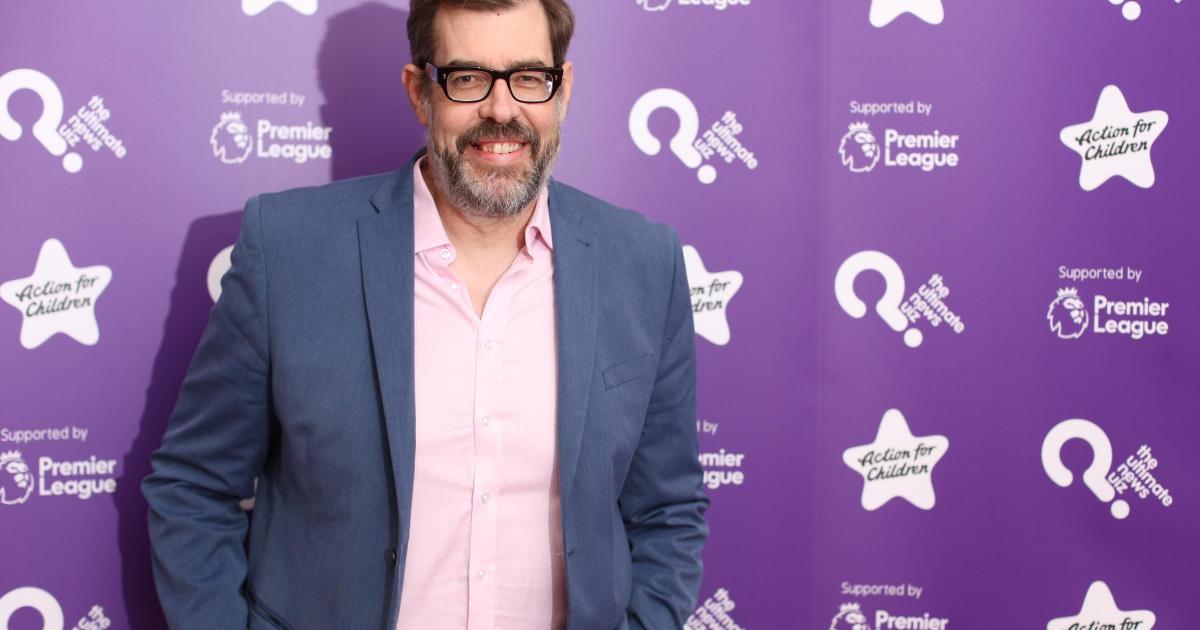
The Welsh actor, 57, who is known for his roles in shows and films such as Good Omens, The Damned United and Frost/Nixon, will take the helm for 100 episodes set to air later this year.
The appointment marks Sheen’s first role as a quiz show host.
In a statement, Sheen said: “Quite literally very large shoes to fill, but as a huge fan of the show I’m incredibly excited to be able to move into the House and at long last see my silhouette on a fondue set.”
Advertisement
Osman announced earlier in March that he would be leaving the popular BBC quiz show after nine years.
Tamara Gilder, Joint MD for Remarkable Entertainment, added: “We are thrilled to be handing Michael Sheen the keys to House of Games.
“The show has always been a love letter to those who adore quizzes – and we have a new host who loves them as much as we do.
“We can’t wait to start filming.”
Caroline O’Neill, BBC Commissioning Executive, added: “We’re delighted to have Michael Sheen stepping into the House of Games.
Advertisement
“His charisma and passion for playfulness will be a joy for audiences and we’ve no doubt he’ll relish throwing himself into a fiercely fought Answer Smash.
“We can’t wait to share this next era of the show with viewers at home.”
House of Games fans praise Michael Sheen as a ‘great choice’
Michael Sheen’s announcement was shared on the House of Games Instagram page, and fans seemed to be happy with the choice.
One person commented: “Wow; that’s a great choice. Please get David Tennant to do house of games!”
Advertisement
Another posted: “I’d better go fetch my TV out of the skip I chucked it in when Richard announced his departure.”
A third said: “I am beyond thrilled with this choice!”
What is House of Games?
House of Games launched on BBC Two in 2017, with the latest season pulling in consolidated ratings of over 1.6 million viewers.
Recommended reading:
Advertisement
It is played on a weekly basis, with four celebrities playing on five consecutive days to win daily prizes.
There is also the weekly prize of being crowned as ‘House of Games’ champion.
Points are accrued depending on where each celebrity finishes on each day, and the points are doubled on Friday’s show.
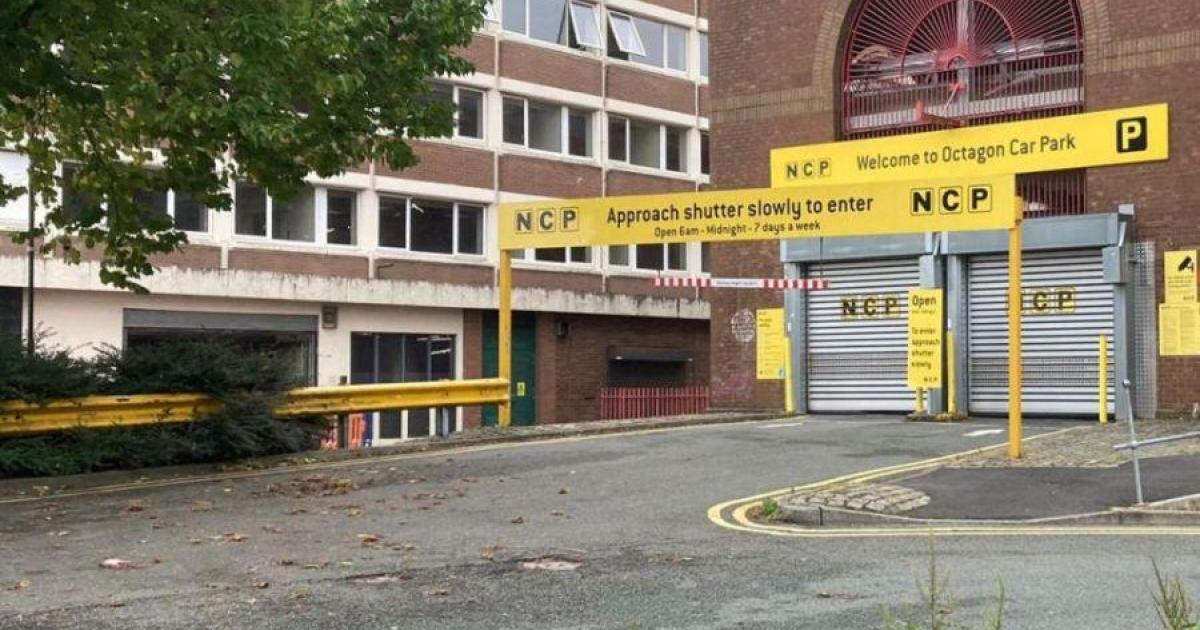
NCP, which runs car parks on Deane Road, King Street, Topp Way, the Octagon Theatre and elsewhere announced today that it had called in the administrators PriceWaterhouseCooper.
The 95-year-old company, owned by Japan based Park24, was reported to have been struggling with losses nationwide.
A Bolton Council spokesperson said: “We are aware of the situation regarding NCP and the intention to appoint an administrator.
“All NCP car parks in Bolton are open and operating as normal.
Advertisement
The NCP car park on Deane Road (Image: Newsquest)
“We are in close discussion with NCP, and the public will be informed if there is any change to NCP car parks in Bolton.”
The Bolton News understands that in Bolton’s case all of the NCP car park buildings are owned by the council, meaning the sites are not at risk of closure.
This could give the council the option of either bringing in new operators or taking over the running of the borough’s car parks directly.
NCP operates about 340 car parks across the UK including in major towns and city centres, airports, hospitals, and train stations.
Advertisement
The company said that it was hit by a fall in demand around the time of the Covid pandemic and that it has still not yet recovered to historic levels.
NCP said this has also partly come about because of a change to commuting and consumer driving patterns which have impacted occupancy across its car parks.
In January 2024 Bolton Council finalised a proposal to write off around £1.2M worth of debt that NCP owed to it after around 100 days of often heated debate.
This was out of around £4M of debt the company owed to the council that had built up since the Covid crisis.
Advertisement
A majority of councillors voted for a motion to reject the debt write off proposal at a town hall meeting in November 2023.
But a final decision to agree the debt write off was agreed by the council cabinet the following January.
Falling into administration has now put 682 jobs across the country at risk.
PwC joint administrator and partner Zelf Hussain said: “NCP has faced a challenging trading environment over several years, with changing consumer behaviours impacting volumes, and a high fixed cost-base leading to trading losses.
Advertisement
“Our priority on appointment is to ensure continuity of service while we undertake a detailed review of the business.
“All sites are open, staff remain in post, and trading continues as normal.
“We will be engaging with landlords, employees and other stakeholders as we explore all options, including the potential sale of all or part of the business, to secure the best possible outcome for creditors.”
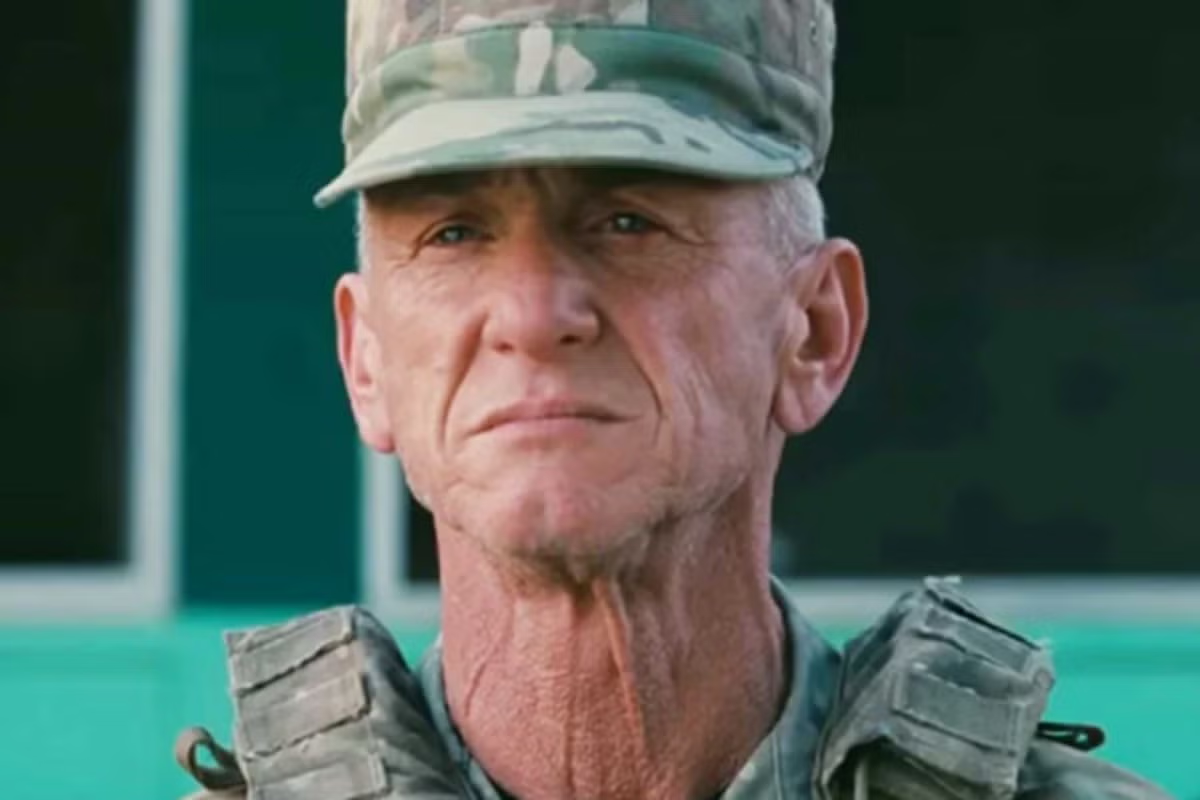
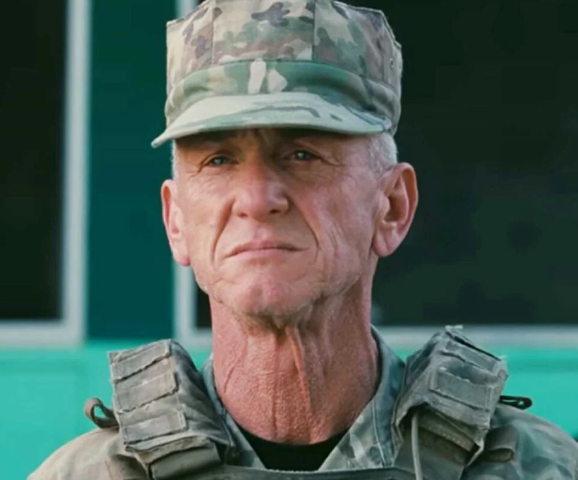
At the 2026 Oscars ceremony, actor Sean Penn joined a small coterie of male performers who have three Academy Awards to their name. But the 65-year-old, who was named Best Supporting Actor for his brilliant portrayal of a racist military officer in Paul Thomas Anderson’s One Battle After Another, wasn’t among the stars gathered at Los Angeles’ Dolby Theatre on Sunday night.
“Sean Penn couldn’t be here this evening, or didn’t want to, so I’ll be accepting the award on his behalf,” Succession star – and last year’s Best Supporting Actor winner – Kieran Culkin quipped after opening the golden envelope.
So where was Penn on one of the biggest nights of his acting career? According to a report from the New York Times, the actor, who previously earned Oscars for Mystic River in 2004 and for Milk in 2009, chose to skip the ceremony in order to head to Europe.
Advertisement
Penn won best supporting actor for his performance as Colonel Steven J Lockjaw in ‘One Battle After Another’ (Warner Bros)
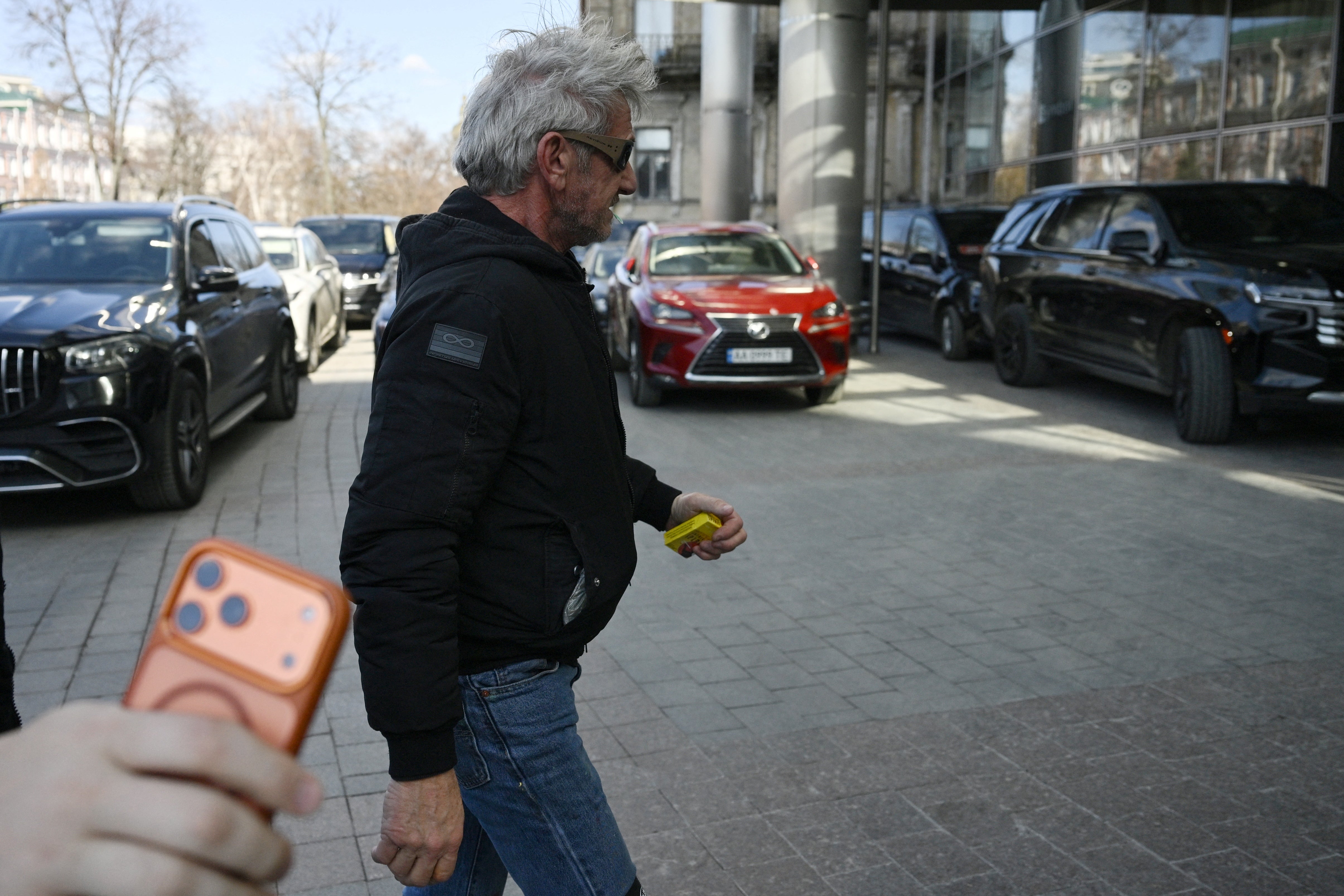
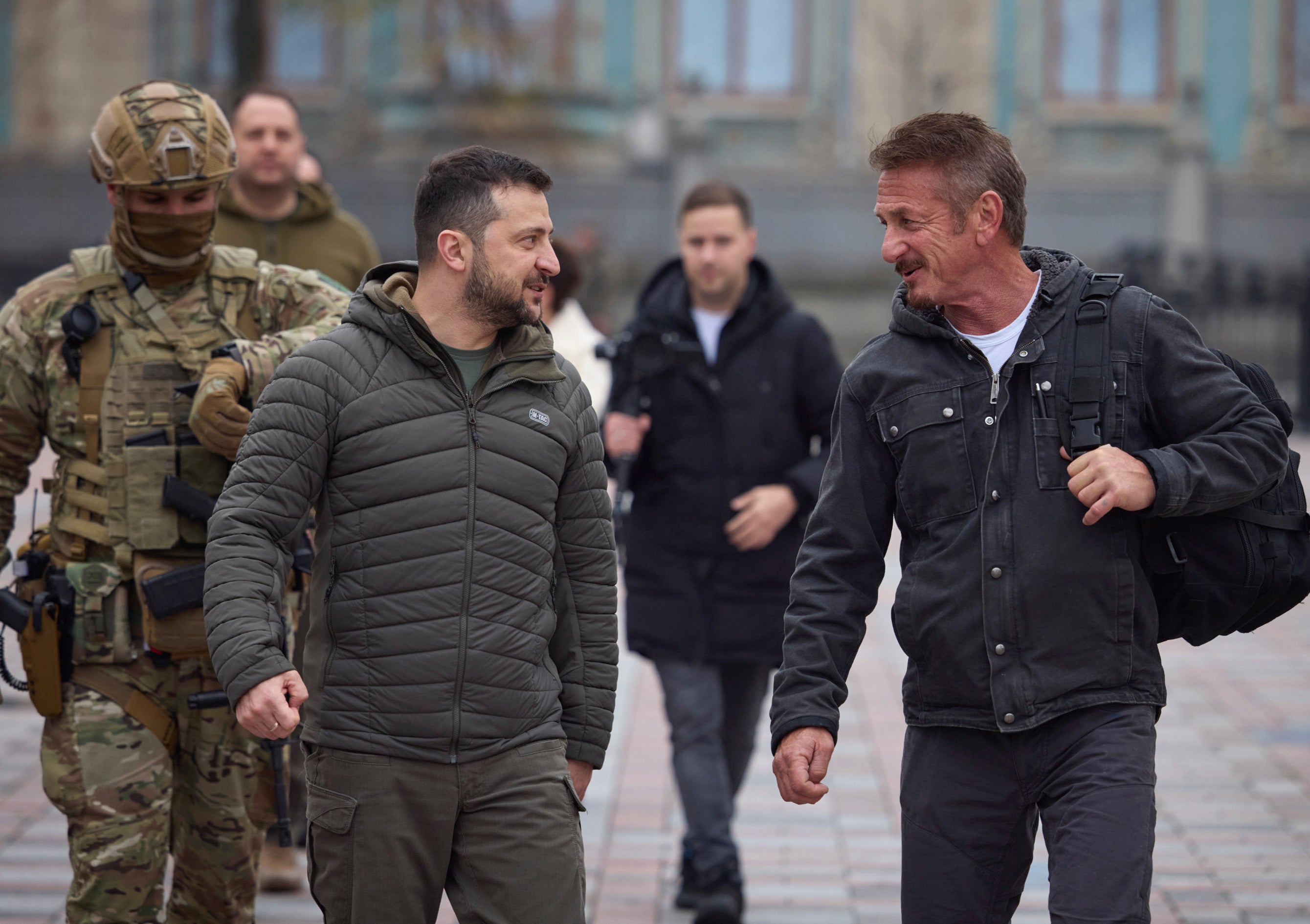
His plan “as of late last week”, anonymous sources told the paper, was to visit Ukraine, although they “did not specify what he would be doing there or where precisely within the country he would be going”. On Monday, an AFPreporter spotted Penn leaving a car in Kyiv, and he has since been photographed in a meeting with president Volodymyr Zelensky.
Swapping a glitzy Hollywood party to spend time in a country torn apart by war – it’s not exactly your usual A-list behaviour, but it is certainly quite typical of the unusual turn that Penn’s life and work has taken in recent years.
This is, after all, the man who lent one of his Oscar statuettes to Zelensky, promising that it should remain in the capital city of Kyiv until Ukraine wins the war against Russia – and who previously debated melting down his two little gold men to make “bullets they can shoot at the Russians”.
Advertisement
Penn met up with Zelensky after being awarded another Oscar (Ukrainian Presidential Press Service)
What is perhaps particularly notable is, where other celebrities’ activism has notably waned in the years since Russia invaded in 2022, replaced by other splashier and more of-the-moment causes, Penn has remained stalwart, persisting as one of America’s loudest voices in the defence of Ukraine.
So how did Penn, the star who was once best known for his tumultuous marriage to Madonna in the late Eighties, become such a passionate supporter of Zelensky? It’s worth noting that this is not the first cause that Penn has taken up. Far from it.
Sean Penn was photographed in Kyiv on Monday (Genya Savilov / AFP via Getty Images)
His activism has roots in his family’s liberal politics. His father, the actor and director Leo Penn, was blacklisted from Hollywood in the Fifties after refusing to testify before the House Un-American Activities Committee (HUAC), the organisation designed to root out alleged Communist sympathisers.
Advertisement
Watch Apple TV+ free for 7 day
New subscribers only. £9.99/mo. after free trial. Plan auto-renews until cancelled.
ADVERTISEMENT. If you sign up to this service we will earn commission. This revenue helps to fund journalism across The Independent.
Penn Jr, meanwhile, emerged as one of the film industry’s most outspoken activists in the early Noughties, when George W. Bush went to war in Iraq in the wake of the September 11 attacks. Penn, sceptical of the existence of “weapons of mass destruction”, took out an ad in The Washington Post in 2002, in which he called on the then-president to change his mind.
Months later, he travelled to Baghdad “to personally record the human face of the Iraqi people so that their blood – along with that of American soldiers – would not be invisible on my own hands”, as he put it in a powerful statement to the press.
Advertisement
A few years on, he operated a rescue boat during the aftermath of Hurricane Katrina in New Orleans, managing to pick up survivors who had been trapped in their homes. Then, in 2010, following the devastating earthquake in Haiti, he set up and ran what would become one of the country’s biggest refugee camps. It was an endeavour that, unlike many celebrity brushes with humanitarianism, won praise from experienced aid workers for making a tangible difference, and Penn was later named as an ambassador-at-large for Haiti to recognise his hands-on work.
Sean Penn has a long history of political and humanitarian activism (Getty Images)
Not all of his ventures have been as well received, though. Penn has been criticised for his past defence of controversial South American leaders such as Venezuelan president Hugo Chavez, with whom the actor became close friends, and Cuban president Raul Castro. And in 2015, he embarked on a bizarre trip to Mexico to interview the drug lord El Chapo for Rolling Stone magazine; the circus surrounding the venture overshadowed Penn’s aim to “contribute to this conversation on the war on drugs”. “I have a terrible regret,” he later reflected on the whole debacle.
His work has also attracted many of the usual barbs prompted by A-list activism, namely that his ventures are prompted less by genuine altruism and more by a desire to be at the heart of the story, like some sort of real-life Hollywood hero (who can pop home to Malibu for a bit of rest and relaxation whenever he fancies).
Advertisement
His involvement in Ukraine initially began when he was searching for a lighter directing project to pursue, after planned documentaries about the exiled Syrian dictator Bashar al-Assad and the assassination of Saudi journalist Jamal Khashoggi didn’t pan out.
The story of Zelensky – an actor and comedian who had starred in a TV series about an ordinary bloke who ends up as president after his rant about government corruption goes viral, and had then himself successfully won a presidential election on an anti-corruption platform – seemed like good material for a film.
“We thought we’d follow this kind of interesting story that would have been a light-hearted take,” Penn said at the time.
The Covid pandemic meant that filming ended up being delayed, and it wasn’t until late 2021 that Penn finally headed to Ukraine. He and Zelensky eventually met on 23 February 2022; their initial encounter wasn’t filmed, the actor has said, so that the politician could figure out whether he could trust him or not.
Advertisement
What neither of them could have predicted was that on that night, Russia would invade Ukraine. The following day, which the pair had agreed would mark the start of filming, would be the first day of the war.
Sean Penn presented Vlodymyr Zelensky with one of his Oscar trophies in 2022 (Ukrainian Presidential Press Office)
Inevitably, the project moved in an entirely different direction. What had been intended as a lightly comic portrait of a celebrity-turned-politician would morph into a depiction of a nation thrown into conflict. Zelensky, though, kept his planned appointment with Penn on 24 February.
It seems as if this second meeting stoked an abiding admiration on the American’s side. “I saw a very big change in him from one day to the next,” Penn recalled. “At that moment, he was the significant target. But he wasn’t going anywhere. That day, he found out that he was born for this.”
Advertisement
The fact that Zelensky chose to stay in the capital city, rather than accepting offers to leave his country for his own safety, seemed to especially impress Penn. “President Zelensky and the Ukrainian people have risen as historic symbols of courage and principle,” he said in a statement released a few weeks later. “Ukraine is the tip of the spear for the democratic embrace of dreams. If we allow it to fight alone, our soul as America is lost.”
Penn’s documentary Superpower premiered at the Berlin Film Festival the following year. The unabashedly pro-Zelensky movie – “If it’s propaganda, I’m proud,” he told one audience – shows the star traipsing through the rubble and meeting with civilians who have had their lives turned upside down.
The response was mixed. While The Independent’s Geoffrey Macnab praised Penn and his co-director Aaron Kaufman for their “sprawling and uneven but also heartfelt and inspiring” effort, other critics questioned the star’s apparent need to place himself at the heart of the story once again.
The Guardian’s two-star review described it as “a queasy-making examination of the celebrity-blighted news cycle where somebody like Penn is the de facto messenger of tragedy”. Was the film more concerned with Sean Penn, real-life action hero, than it was with the heroism of the Ukrainian people? Or was the actor doing vital work in keeping the Ukraine conflict front of mind for American viewers?
Advertisement
The president and the actor have struck up a friendship over the years (Ukrainian Presidential Press Office)
Penn, perhaps to his credit, kept up his friendship with Zelensky long after the cameras stopped rolling. In late 2022, he made headlines for handing over his Oscar statuette to the president, telling him to bring it “back to Malibu” after a Ukrainian victory. “It’s just a symbolic silly thing, but if I know this is here with you then I’ll feel better and stronger for the fight,” the actor said. Zelensky, in response, presented him with a very different accolade: Ukraine’s Order of Merit.
Then in 2025, following a tense moment between president Donald Trump and Zelensky during a White House meeting, Penn doubled down on his praise for his friend, hailing him as “constantly, extemporaneously genuine” in his desire to secure freedom for Ukraine. “I think the last significant moment that we [Americans] were bridging a division was in support of Ukraine and its head of state,” he said. “And if we lose track of that, we really have to ask ourselves if we’re losing track of the value of democracy.”
Just a few weeks later, Penn headed to Ukraine to meet with special forces, and at the Cannes film festival in May, he posed on the red carpet with soldiers, along with U2’s Bono and The Edge.
Advertisement
With his latest visit to Kyiv, the latest member of the Oscars’ three-timers club shows no erosion of his own unique form of activism. Where other actors might have opted to pledge support for Zelensky in their winner’s speech (and be praised for their “powerful” words on social media), Penn clearly prefers a more hands-on approach.
“It’s his personal visit, that’s how he sees it, that he needs to be in Ukraine,” a senior Ukrainian official told AFPon Monday. “He just wants to support Ukraine.” Whether he offers up his latest trophy to Zelensky remains to be seen.
















































You must be logged in to post a comment Login